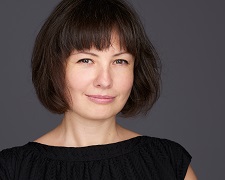
Friederike Busse is a Research Fellow in the Department of Differential Psychology and Psychological Diagnostics at Ulm University, a position she has held since December 2023. Her educational background includes: Master's degree in Psychology from Ulm University (2021-2023) Master's studies in Cognitive Systems at Ulm University (2020-2021, 2 semesters) Bachelor's degree in Psychology from Ulm University (2016-2020) Her research focuses on Visualization Abilities, Emotional Intelligence, Working Memory Capacity, Aptitude Diagnostics for educational settings, and Meta-analytic Methods. She integrates these interests to investigate cognitive and emotional assessment processes through empirical studies and meta-research, with applications in university admissions and school diagnostics.
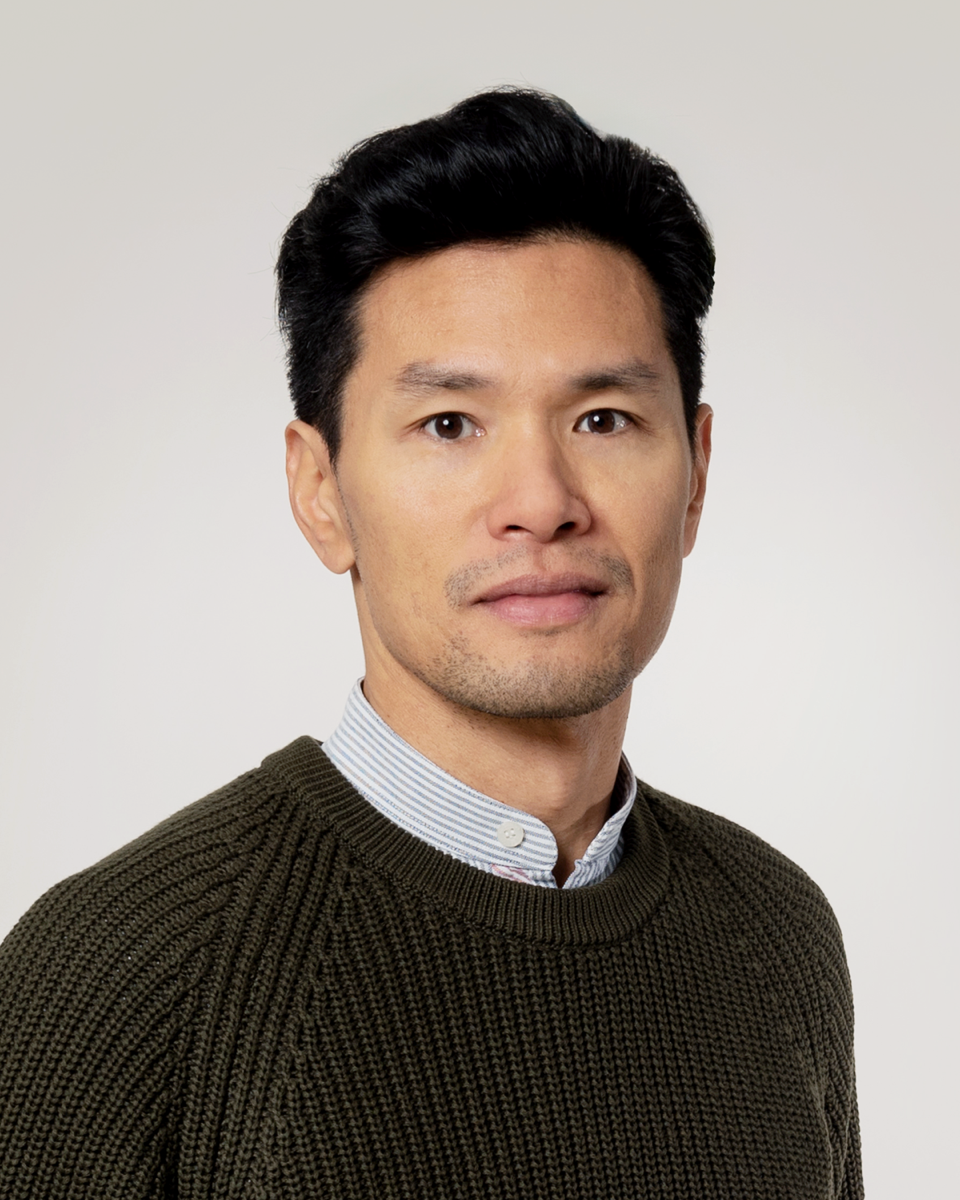
Univ.-Prof. Dr. Chris Tedjasukmana holds the Chair of Everyday Media and Digital Cultures at Johannes Gutenberg University Mainz's Institute of Film, Theatre, Media and Cultural Studies (Department 05: Philosophy and Philology). He serves as a confidant for BIPOC, FLINTA*, LGBTQIA+ students, and students with disabilities or chronic illnesses. His research bridges critical theory and digital media practices with emphases on: Video activism and political aesthetics in social media ecosystems Intersections of race, gender, and queerness in media representation Phenomenological approaches to cinematic experience Postcolonial and decolonial media frameworks Ethnographic studies of digital cultures His publications demonstrate consistent engagement with the politics of representation across three decades, evolving from early work on cinematic melancholy and queer theory to contemporary analyses of algorithmic activism and platform resistance. Recent projects include co-directing the Volkswagen Foundation-funded initiative 'Attention Strategies of Video Activism in the Social Web' (2018-2023) and co-founding Research Training Group 3064 'Techniques of Witnessing' (DFG-funded, starting 2026). Professor Tedjasukmana actively supervises graduate research, requiring thesis proposals to align with his expertise in media theory, digital cultures, and critical race/gender studies. He maintains extensive editorial commitments, having co-edited volumes like Classical Film Theories (2021) and special issues of Montage AV journal.
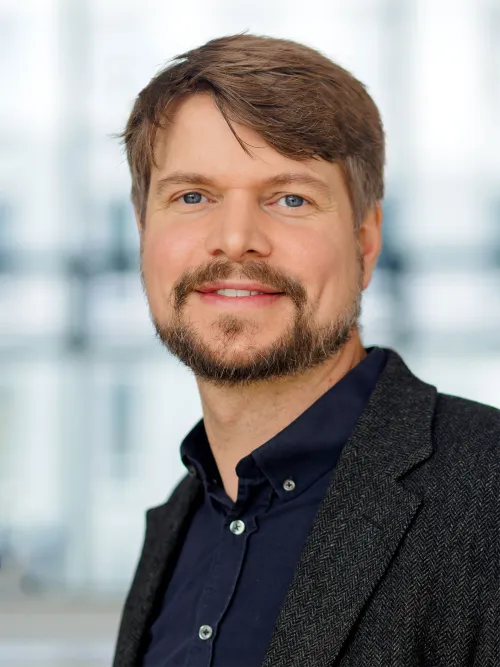
Prof. Dr. Ben Heuwing is a Part-time Professor for Usability and User Experience at the University of Applied Sciences Potsdam and concurrently serves as Unit Manager at ]init[ AG in Berlin, specializing in administration digitization and process automation. His academic work focuses on bridging industry practices with research in human-computer interaction. Education: 2015: Doctorate (Dr. phil.) in Information Science from University of Hildesheim, dissertation: Usability results as a knowledge resource in organisations 2008: Master's degree in International Information Management from University of Hildesheim, thesis: Tagging for personal and collaborative information management 2005: Semester abroad at Dublin City University Research focuses on practical applications of user-centered design across multiple domains. Primary interests include web accessibility frameworks, agile development methodologies for public sector digitization, information architecture optimization, and gesture-based interface design. His work emphasizes empirical validation of usability methodologies in real-world organizational contexts. Publications demonstrate strong cross-disciplinary trends, with recent work converging on public administration digitization (33% of post-2018 publications) and historical text analysis tools (40% of 2016-2017 outputs). Earlier research established foundations in mobile interaction patterns and usability knowledge management systems, showing consistent focus on practical implementation of HCI theories. Professional activities include establishing and managing the Usability Lab at University of Hildesheim (2008-2017) and keynote presentations like Nutzerzentrierte Bürger-Services at BITKOM 2019. Industry contributions feature digitalization labs for governmental transformation at ]init[ AG.
Prof. Dr. Tina Seufert is a full Professor for Research on Learning and Instruction at the University of Ulm, affiliated with the Faculty of Engineering, Computer Science and Psychology. Since 2022, she has served as Scientific Director of the School of Advanced Professional Studies (SAPS). She previously held leadership roles including Dean of the Faculty (2013–2016) and Director of the Institute for Psychology and Education (2009–2013). Research Interests: Self-regulated learning and cognitive load Promoting knowledge acquisition with multiple representations (multimedia research) Instructional Design for Online-based Continuing Education Influence of learner characteristics Learning with VR Promotion of learning strategies Measurement of cognitive load Her recent publications show a strong focus on integrating cognitive load theory with self-regulated learning, refining measurement tools, and enhancing multimedia instruction through disfluency, coherence training, and individual differences. Her work bridges theoretical psychology and practical instructional design, particularly in digital and continuing education contexts. Scientific Service and International Engagement: Assistant Editor, Instructional Science (since 2018) Member, European Association for Learning and Instruction (EARLI) since 1998 Coordinator, EARLI SIG 6 'Instructional Design' (2007–2011) Active participant in program and organizing committees for EARLI SIG conferences on Text and Picture Comprehension and Instructional Design She advises graduate students and leads research in instructional psychology, though specific advisees are not listed. Her work is supported by academic grants implied through publication output and leadership roles. She leads a research group focused on learning and instruction, contributing significantly to the development of evidence-based teaching practices.
Mark Allan Rhodes II is an Assistant Professor of Geography at Michigan Technological University, affiliated with the Industrial Heritage and Archaeology Program within the College of Social Sciences. His research intersects cultural and historical geography, focusing on memory, heritage, landscape, and post-industrial transitions, particularly in transnational contexts such as Wales. PhD in Geography, Kent State University MA in Geography, Kent State University Rhodes’ research interests include cultural and post-industrial geographies, national identity formation, political ecology, memorial landscapes, and sustainable heritage. His work critically examines how memory is spatially constructed through museums, monuments, and everyday practices, with a special focus on figures like Paul Robeson and institutions such as National Museum Wales. He explores how industrial heritage is interpreted and repurposed in ways that impact community identity and sustainability. His recent publications analyze UNESCO World Heritage sites, memorial entrepreneurship, food-based living memory, and the political ecologies of heritage. These works demonstrate a consistent engagement with scalar analysis, critical theory, and transdisciplinary methodologies. Funding from the Fulbright U.S. Scholar Program, the American Philosophical Society, and the National Park Service supports his ongoing research on industrial heritage policy, literary geographies, and equitable cultural resource management. Rhodes has received research grants including: Fulbright U.S. Scholar Program (2025) American Philosophical Society Franklin Research Grant (2025) National Park Service Cultural Resources Management Grant (2024) Michigan Tech Research Seed Grant (2020) He actively mentors collaborative research projects and has co-led major interdisciplinary grants focused on sustainable futures in industrial cultural resource management. While no formal student advisees are listed, his work involves extensive collaboration with students and partners across institutions. Rhodes is involved in key research initiatives such as: Equitable and Sustainable Futures in Industrial Cultural Resource Management Landscaping, Scaling, and Routing Policy in EU Industrial Heritage Writing the Nation: Literary Geographies of National Museums Scotland Memory and Memorialization of Paul Robeson Political Ecology of Living Memory
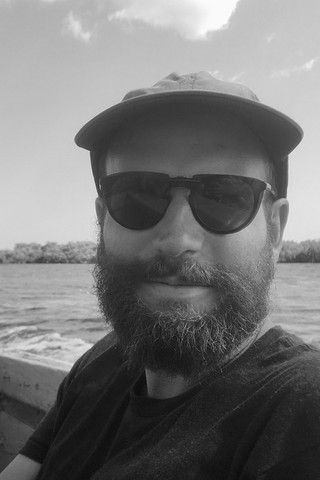
Dr. Sandro Simon is a Researcher in the Department of Social and Cultural Anthropology at the University of Cologne, affiliated with the Global South Studies Center (GSSC). He leads the Volkswagen Foundation-funded project "Medium-Scale Farmers in Rural Africa" and co-founded the MESH network, focusing on anthropological investigations of delta environments and multispecies relations in Senegal's Sine-Saloum Delta. His research centers on Environmental Anthropology and Multispecies Ethnography , exploring gleaning practices, rhythm, and sensory dimensions of human-nonhuman cohabitation. Key methodologies include multimodal and visual ethnography , with emphasis on waterworlds, mollusc lifeworlds, and aesthetic formations. His work bridges anthropology with creative practices through visual essays, poetry, and audiovisual experimentation. Analysis of Simon's 15 most recent publications (2019-2025) reveals three dominant trajectories: (1) delta ecologies examining volatility in riverine communities, (2) multispecies entanglements with molluscs as co-constitutive actors, and (3) rhythmic aesthetics analyzing temporalities of gleaning under capitalist pressures. His scholarship consistently employs innovative formats that challenge traditional academic boundaries. Scientific Awards: No awards documented in source materials As principal investigator of the Volkswagen Foundation project on African medium-scale farmers, Simon directs fieldwork investigating agricultural transformations. His collaborative publications indicate mentorship of early-career researchers, though no formal advisees are listed. The MESH network he co-founded provides infrastructure for multimodal anthropology collaborations across Europe and Africa. Simon operates within the Global South Studies Center's interdisciplinary framework, contributing to the journal Entanglements editorial collective. His fieldwork in Senegal involves partnerships with local communities, artists, and filmmakers, particularly through audiovisual documentation of delta lifeworlds. Current projects emphasize decolonial approaches to environmental knowledge production in West African contexts.
Prof. Dr. Linda Simonis holds a Professorship for General and Comparative Literature at the Ruhr University Bochum's Faculty of Philology, specializing in European literary history. Her research focuses on literary and cultural criticism, myth reception, performance politics in early modern drama, and secret writings. She leads the subproject C03 'Metaphors of Everyday Life' within the DFG-funded SFB 1475 'Metaphors of Religion'. Notable doctoral advisees include Carina Reidick and Laura Frölich. Her teaching spans decades, covering courses like 'Sustainable Antiquity', 'Dynamics of Religious Metaphors', and 'Metaphor Analysis'. She co-edits journals like Comparatio and komparatistik online , and has authored influential works such as Genetic Principle (1998) and The Art of the Secret (2002). Her research explores intersections of literature with science, religion, and media, including studies on apocryphal texts, inscriptions, and global poetics. Key projects include editing volumes on 'Geopolitical Fictions', 'Poetics of the Inscription', and organizing interdisciplinary conferences. Her work bridges historical analysis with contemporary theory, addressing topics from Machiavelli's political thought to modern ecological poetics.
Ulrich Rehm is a Professor and Chair of Medieval Art History at the Institute of Art History, Faculty of History, Ruhr University Bochum. His research focuses on medieval and early Renaissance visual arts, book illumination, art theory, and the history of art historiography. He has held this position since at least 2002, contributing extensively to scholarly publications and edited volumes. Rehm's work bridges interdisciplinary approaches, analyzing text-image relations, iconology, and cultural contexts. He has led projects like the CERES Research Department and 'Bildliche Mythenrezeption im Mittelalter und der Epochendiskurs moderner Kunsthistoriographie.' His publications span monographs, journal articles, and reviews, emphasizing critical analysis of medieval and Renaissance art. He advises no listed students but collaborates on grants and projects, such as the edited volume on Alois J. Schardt. His lab/teams include the Institute of Art History and affiliated research groups. Rehm is actively engaged in academic consultation and peer review across multiple disciplines.
Dr. Helena Holzberger is a Post-Doc Research Assistant at the Ludwig-Maximilians-Universität München, affiliated with the Department of History of East and Southeast Europe and the Chair of Russian-Asian Studies. Her research bridges maritime history, global history, infrastructure studies, and cultural history through the lens of the Soviet merchant fleet and its geopolitical implications during the Cold War. Education: Master of Arts in Eastern European History and European Art History from Heidelberg University (2014) Habilitation Project: 'Red Sailors in Troubled Waters' examining Soviet maritime infrastructure and globalization Dissertation (2020): Photography's role in Russian/Soviet representation of Central Asia Her work spans interdisciplinary approaches including mobility history, visual culture analysis, and postcolonial theory. Publications focus on photographic documentation, Soviet orientalism, and cultural representation in imperial and socialist contexts. She actively contributes to academic discourse through conference organization and editorial work at H-Soz-Kult. Scientific awards include: Max Weber Network Eastern Europe scholarship (2023) DAAD Conference Travel Scholarship (2019) LMU mentoring program travel grant (2019) German Institute of Humanities in Moscow fellowship (2016) HSE St Petersburg scholarships (2015)
Ralf Hertel is Professor of English Literature at the University of Trier, Germany, where he also serves as director of the Center for Canadian Studies (ZKS). He has previously taught at the Free University Berlin, Humboldt University Berlin, and the University of Hamburg. His academic work bridges Early Modern and Contemporary Literature, with a strong emphasis on cultural encounters, especially between East Asia and Europe, as well as Canadian literature and sensory studies in narrative. Professor of English Literature, University of Trier Director, Center for Canadian Studies (ZKS) Guest Professor, Academia Sinica, Taipei (2015) Organizer, 'English Favorite Novels' literary event, Trier City Library Hertel's research interests include Shakespeare and national identity, the role of sensory perception in literature, postcolonial and transcultural narratives, and the intersections between literature and cultural history. His scholarship critically examines how identity—national, ethnic, gendered—is constructed and deconstructed in literary texts, particularly through performance, space, and embodiment. His recent publications and edited volumes demonstrate a consistent focus on cultural exchange, failure in intercultural dialogue, and empowerment in contemporary fiction. The articles span early modern drama, travel writing, and 20th- and 21st-century Anglophone literature, revealing a methodological commitment to interdisciplinary and transnational approaches. Hertel has supervised several graduate students, including Tereza Brala, Barbara Plunien, Diana Thiesen, and Eva-Maria Windberger. His scholarly leadership is evident in major edited collections and monographs that have shaped discourse in literary and cultural studies. He has published widely with academic presses such as Routledge, Brill, and De Gruyter. Notable works include Staging England in the Elizabethan History Play and co-edited volumes on John Berger, East Asian encounters, and empowerment in fiction. His research is frequently cited in studies of national identity, sensory perception, and postcolonial literature.
Dr. Patrick Felix Krüger is a Research Associate in South Asian Religious History and Jain Studies at the Centrum für Religionswissenschaftliche Studien (CERES), Ruhr-Universität Bochum. He is affiliated with the Collaborative Research Center SFB 1475 'Metaphors of Religion' and leads the 'Forschungsstelle Jainismus'. His work bridges art history, religious studies, and museology, with a focus on Jain iconography and interreligious contact. Education: Doctorate in South Asian Art History, Free University of Berlin MA in Indian Art History and East Asian Art History, Free University of Berlin MA in South Asian History and Islamic Studies, Humboldt University of Berlin His research interests include the visualization of dharma in Jainism, the history and theory of religious images, museum studies, and missionary collections. He explores how metaphors shape religious understanding and how artifacts function in cross-cultural contexts. His work often centers on Kalpasūtra manuscripts, Jina imagery, and the role of museums as contact zones. His recent publications (2020–2025) reveal a strong focus on religious metaphors, intercultural visual exchange, and the role of images in religious identity. Key themes include kingship metaphors in Jain art, the depiction of deities in manuscripts, and the function of art in interreligious dialogue. His work spans journals such as Art of the Orient , Entangled Religions , and Jaina Studies , reflecting interdisciplinary engagement. Scientific Awards: Käte Hamburger Fellowship (2016) Dr. Krüger has led and contributed to numerous research projects, including 'The Visualization of the Dharma' and 'Forschungsschwerpunkt Missionssammlungen'. He has co-edited volumes on missionary collections and contributed to exhibition catalogs. While no formal students are listed, he mentors through collaborative research. He has been involved in curatorial and educational projects, including 'Zwischen Bilderflut und Bildersturm', emphasizing the societal role of religious images. Labs and Research Teams: Centrum für Religionswissenschaftliche Studien (CERES) SFB 1475 'Metaphors of Religion', Project B04 Forschungsstelle Jainismus (Project Leadership) Forschungsschwerpunkt Missionssammlungen
Prof. Dr. Josef Memminger holds the Professorship for History Didactics and Historical Culture at Goethe University Frankfurt am Main since 2021. As Managing Director of the Department of History Didactics, he bridges academic research with practical education. His career spans roles at University of Regensburg (2007-2021) as Academic Director, editorial work with Geschichte lernen journal since 2014, and international collaborations with Masaryk University. Current projects: PI of Dynamiken des Religiösen (2024-), founder of ALiVE research group (2024) Key research: Pragmatics of history teaching, narrativity, public history, and digital educational tools Recent publications (2023-2024) explore narrative structures in history education, digital media applications, and museum pedagogy. His 2024 article „Eintauchen – Erleben – Erinnern?“ analyzes temporal layering in digital historical culture, while 2023 contributions examine textual genres and museum storytelling. Awards & Grants include: 2024: eLearning-Förderfonds grant for VR teacher education 2023-2025: DigiTeLL-Partnership on historical controversy 2015-2019: FALKE research on historical explanation Teaching legacy includes textbook authorship (since 2004), teacher training programs (2008-present), and transnational educational collaborations. His work emphasizes creative writing in history classes and critical engagement with historical narratives.
Dr. Andy Lücking is a postdoctoral researcher at Goethe University Frankfurt, specializing in multimodal communication and cognitive semantics. He serves as Principal Investigator for the GeMDiS project within the ViCom SPP initiative, and previously held research fellowships at Université Paris Cité's Laboratoire de Linguistique Formelle and Frankfurt's Text Technology Lab. Current research focuses on neurocognitive semantics Developed iconic gesture theory with TTR/RTT frameworks Created multimodal corpora (FraGA, DoTT, TGVCorp) Active in computational educational linguistics Contributed to annotation tools (TextAnnotator, DependencyAnnotator) His work combines theoretical modeling with experimental methods, spanning over a decade of contributions to dialogue semantics, gesture-speech integration, and semantic role labeling. Recent projects explore VR-based multimodal research (Va.Si.Li-Lab) and diachronic dependency parsing. He has co-authored 20+ publications including proceedings in SemDial, LREC, and Springer HCI volumes. Collaboration network includes: Jonathan Ginzburg (dialogue theory), Alexander Mehler (computational linguistics), Alexander Henlein (VR research), and Max Planck Institute researchers. Key methodologies involve corpus creation, machine learning, and cognitive modeling of referential phenomena.
Prof. Jerzy Kutnik (b. Maria Curie-Skłodowska University graduate, 1977) is a Professor at Maria Curie-Skłodowska University (UMCS) and former Head of the Department of American Studies (2005-2014). He holds a 1985 Ph.D. in American Literature from Adam Mickiewicz University and a 1997 postdoctoral degree (habilitation) at UMCS. His career spans roles as Dean of Social Sciences at Vincent Pol University, President of the Polish Association for American Studies , and organizer of international conferences including CAGE100 (2012) and Wordstruck (2014). Education: MA (1977), Ph.D. (1985), Habilitation (1997) Key Appointments: Department Head (2005-2014), Dean (2002-2013), Fulbright Fellow (1991-1992) Research Interests focus on American avant-garde literature , John Cage studies , and interdisciplinary connections between literature and music . His work explores postmodern aesthetics, language experimentation, and cultural representations of identity. Publications like The Novel as Performance (1986) and CAGE111 (2023) demonstrate his long-term engagement with Raymond Federman, Ronald Sukenick, and Cage's conceptual approaches. Recent Scholarship (2012-2023) examines Cage's Indeterminacy project, the CAGE100 symposium, and intersections between music and holiness . His Wordstruck conference (2014) and CAGE111 (2023) book highlight collaborations with Linda Hirst and Edyta Frelik on avant-garde interdisciplinary frameworks. Major Awards : Silver Cross of Merit (2000), Cultural Merit Decoration (2005), multiple Rector's Awards Translation Work : Polish translations of Raymond Federman and John Cage Editorial Roles : Co-editor of Re-Visioning Democracy (1995), CAGE100 (2015)
Prof. Dr. Georg Juckel serves as a Professor at the Clinic for Psychiatry, Psychotherapy and Preventive Medicine within the Faculty of Medicine at Ruhr University Bochum, based at LWL University Hospital Bochum. His clinical and research leadership spans sensory neuroscience, social cognition, and psychiatric disorders, utilizing advanced neuroimaging and clinical methodologies. His research program integrates two core domains: Sensory-Cognitive Neuroscience : Investigating basal auditory cortex processing under serotonergic modulation and neurochemical influences. Social Cognitive Mechanisms : Elucidating neurobiological foundations of social cognition in healthy and psychiatric populations, emphasizing serotonergic interactions. Methodologically, his work leverages 1.5/3T structural and functional MRI, spectroscopy, and clinical assessments to explore memory systems and psychiatric pathophysiology. Analysis of his 2018-2022 publications reveals dominant themes in postpartum depression, psychosis subtyping, suicide risk, and personality disorders. His research consistently bridges neuroimaging data with clinical phenomena like alexithymia, meta-cognition, and emotional processing across schizophrenia, depression, and ADHD cohorts. Prof. Juckel directs an interdisciplinary research team at LWL University Hospital Bochum, fostering collaborations between psychiatry, neuroscience, and psychology to advance mechanistic understanding of mental health disorders through integrated biological and cognitive frameworks.