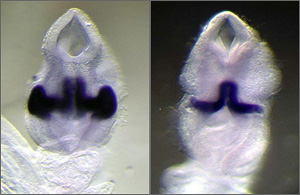
Peter Mathers is an Associate Professor at West Virginia University School of Medicine, affiliated with the Departments of Biochemistry and Molecular Medicine, Neuroscience, and the Rockefeller Neuroscience Institute. His research focuses on the molecular genetics of sensory system development, particularly the eye and ear. Education: PhD, California Institute of Technology Research Interests: The lab investigates transcription factors regulating sensory organ development via transgenic and knockout mouse models. Key areas include retinal progenitor proliferation, auditory brainstem relay centers, and stem cell-based tissue regeneration. Techniques span molecular genetics, biochemical assays, and fluorescent imaging. Publication Trends: Recent work emphasizes developmental gene expression (e.g., Rx, Rax), sensory system pathologies (e.g., anophthalmia), and synaptic organization in auditory circuits. Studies often employ conditional gene deletion and mutational analysis to link genotypes to sensory phenotypes.
Daniel J. Graham is a Professor of Psychological Science at Hobart & William Smith Colleges (HWS), where he has been a faculty member since 2012. He is affiliated with the Department of Psychological Science within the School of Humanities and Sciences, contributing to interdisciplinary research and teaching in vision science, brain networks, and neuroaesthetics. Graham holds a Ph.D. in Psychology and an M.S. in Physics from Cornell University, and a B.A. in Physics from Middlebury College, reflecting his strong foundation in both the natural and cognitive sciences. Ph.D. in Psychology, Cornell University M.S. in Physics, Cornell University B.A. in Physics, Middlebury College His research integrates computational, behavioral, and theoretical approaches to understand how the brain processes visual information, particularly in natural scenes, art, and faces. He is a leading proponent of the 'internet metaphor' for brain function, proposing that neural communication operates similarly to packet-switched networks. His work emphasizes efficiency, statistical regularities, and network dynamics in cortical and whole-brain systems. Key research themes include efficient coding, neuroaesthetics, and models of neural communication. The most recent publications reveal a strong trend toward interdisciplinary synthesis, combining neuroscience, computer science, and psychology. His work increasingly explores machine learning models to predict human affective responses to visual stimuli, critiques of dominant theoretical frameworks like the free energy principle, and educational innovation in perception teaching. The research spans from foundational vision science to philosophical reflections on brain function. Scientific Awards and Recognition: Winner, Outstanding Student Presentation Award at MAA MathFest (2021) Invited speaker at numerous national and international conferences, including the Redwood Neuroscience Institute and the Bernstein Conference Media coverage of PNAS work in Nature , NPR , BBC , and IEEE Spectrum Teaching and Advising: Graham mentors numerous undergraduate students, many of whom co-author his publications. He has developed innovative lab courses involving electrophysiology, perceptual experiments, and creative demonstrations. He teaches core courses such as Introduction to Psychology, Sensation and Perception, and advanced seminars on art and neuroscience. His teaching philosophy emphasizes critical thinking, interdisciplinary reasoning, and active student participation. Research Labs and Collaborations: Graham collaborates closely with Prof. Yan Hao (HWS Mathematics) on modeling neural communication. His research group involves students in computational modeling, data analysis, and experimental design. He is involved in conferences and workshops focused on the mathematics of neuroscience and AI, reflecting his commitment to cross-disciplinary science.
Dr Alison Wright is a Research Fellow specializing in epidemiology and pharmacy, with expertise in analyzing large-scale electronic health databases including the Clinical Practice Research Datalink (CPRD), UK Biobank, and SAIL Databank. Her research focuses on epidemiologic and pharmacoepidemiologic questions, particularly in diabetes and psoriasis. Her educational background includes: BSc in Mathematics and Statistics & Operational Research from The Queen's University of Belfast (2010) MSc in Medical Statistics from The University of Leicester (2011) PhD in Pharmacoepidemiology from The University of Manchester (2015) GradStat (Graduate Statistician) from The Royal Statistical Society (2015) Dr Wright's research spans diabetes prediction models incorporating sleep traits, cardiovascular events in diabetes patients, and multimorbidity patterns in psoriasis through the Global Psoriasis Atlas project. Her fingerprint analysis shows strong engagement with Maturity Onset Diabetes of the Young (100%), Cohort Analysis (75%), and Diabetes research (59%), with additional work in cardiovascular systems, clinical practice, and primary medical care. Her recent publications reveal a clear trajectory toward global health applications, with studies spanning Brazil, Afghanistan, and international collaborations, demonstrating how large health databases can generate meaningful insights across diverse populations and healthcare settings. Her scientific recognition includes: Winner of Best Poster (adherence category), 2014 Dr Wright collaborates extensively with Professor Darren Ashcroft and Dr Martin Rutter. Her research has received significant media attention, including national coverage of her work on diabetes drugs potentially saving lives (2021-2022) and cardiovascular risk for women developing Type 2 diabetes (2019), demonstrating the public health impact of her epidemiological research. She maintains active professional memberships as a Fellow (GradStat) of The Royal Statistical Society, Member of the International Society for Pharmacoepidemiology, Member of the Society for Epidemiologic Research, and Professional member of Diabetes UK. Her work contributes directly to UN Sustainable Development Goals related to health and well-being.
David Gamm, MD, PhD, is a Professor of Ophthalmology and Visual Sciences at the University of Wisconsin–Madison. He holds the Sandra Lemke Trout Chair in Eye Research and serves as the RRF Emmett A. Humble Distinguished Director of the McPherson Eye Research Institute. He is affiliated with the Waisman Center and leads the Gamm Lab, focusing on stem cell-based approaches to treat retinal degenerative diseases. Gamm earned his MD and PhD from the University of Michigan–Ann Arbor. His research centers on using human pluripotent stem cells to model retinal diseases such as retinitis pigmentosa and macular degeneration. Key areas include retinal differentiation, disease modeling, and cell-based therapies. His lab develops 3D scaffolds for photoreceptor maturation and investigates synaptic connectivity in retinal organoids. Recent work emphasizes translational strategies to restore vision through stem cell-derived therapies. Gamm's publications highlight advancements in organoid modeling, gene therapy efficacy, and biomaterials for retinal tissue engineering. His work spans disciplines including stem cell biology, biomedical engineering, and clinical ophthalmology. The lab actively collaborates on preclinical studies and clinical trial preparations for retinal disorders.
Manish Kumar, MPH, PhD, is an Adjunct Associate Professor in the Department of Public Health Leadership and Practice and the Department of Health Behavior at the University of North Carolina at Chapel Hill's Gillings School of Global Public Health. He currently leads the Global Health Finance Data team at Guidehouse, Inc., focusing on strategic data-driven solutions for health systems strengthening and digital health. His prior roles include Technical Lead at the Carolina Population Center and Principal Investigator for USAID-funded projects. Education: PhD (ABD) in Health Informatics from the Carolina Health Informatics Program, University of North Carolina at Chapel Hill; MPH in Public Health Leadership (specializing in public health informatics); MSc degrees from Wageningen University (Netherlands) and Pant University (India). Research interests include health information systems, digital health maturity models, and implementation science. He has contributed to global initiatives such as the U.S. President’s Emergency Plan for AIDS Relief (PEPFAR) and malaria surveillance systems. Awards include the Rotary Peace Fellowship (2013-2015), Delta Omega Service Award (2015), and induction into the Frank Porter Graham Graduate Honor Society. His work emphasizes health equity, data utilization, and evidence-based decision-making in low-resource settings.
Alejandro Lecuna is a Professor at the Department of Design , Anhalt University of Applied Sciences , where he serves as Director of the Bauhaus Innovation Lab and Head of International Affairs. He is also Program Director for the Master in Intermediales Design , currently transitioning into a Strategy and Innovation Master program. His academic affiliations span institutions including HTW Berlin, Hasso Plattner Institute, Oxford University, and Tecnológico de Monterrey. Role: Professor, Director of Bauhaus Innovation Lab, Head of International Affairs Institution: Hochschule Anhalt (Anhalt University of Applied Sciences) Department: Department of Design (Dept. 4 DESIGN) Location: Bauhaus Campus, Dessau His research and teaching focus on Integrated Design, Strategic Design, and Future Design , integrating speculative methodologies with environmental, technological, and societal foresight. He emphasizes experiential learning, interdisciplinary collaboration, and the development of innovative design frameworks. His work bridges analog and digital domains, with applications in user experience, storytelling, and strategic innovation. The trends in his recent publications reveal a strong emphasis on design methodology, speculative futures, and collaborative innovation . His work explores how design can navigate uncertainty through tools like the Idea Arc and Future Archeologies, contributing to both academic discourse and practical applications in sustainability and team dynamics. He is an active member of the Fachbereichsrat (Faculty Council) and contributes to academic governance. His industry experience includes leadership roles at Frog Design, Meta Design, Scholz & Friends, DDB , and Takeoff Technologies , working with clients such as Mercedes-Benz, Adidas, and Coca-Cola, and collaborating with prominent film directors. His recent research initiatives include the Future Archeologies project, presented at HICSS, and speculative design workshops with Constructlab and the Hasso Plattner Institute. He is currently leading the transformation of the Intermediales Design Master program into a forward-looking Strategy and Innovation program, reinforcing his commitment to evolving design education for future challenges.
Professor Dr. Constance Richter is a faculty member at Aalen University, affiliated with the Faculty of Optics and Mechatronics and the Human Centricity department. She serves as Vice Dean and Dean of Studies, demonstrating significant academic leadership. Her work spans teaching, research supervision, and applied projects in human-centered design and user experience. Her research interests lie at the intersection of human-computer interaction, information design, and digital transformation. She focuses on user experience in automotive interfaces, virtual reality for education, AI in technical communication, and organizational UX maturity. Her work emphasizes practical application, often in collaboration with industry leaders like Porsche, Bosch, and Mercedes-Benz. The supervised theses reflect a strong trend toward applied research in adaptive interfaces, usability, digital twins, and immersive technologies. Her publications, inferred from thesis titles and abstracts, span topics from VR learning environments to AI integration in product development, indicating a multidisciplinary and industry-relevant research profile. Scientific Awards: No awards mentioned in the provided text. She actively supervises numerous bachelor's and master's students, guiding research in UX, technical communication, and digital innovation. Her projects often involve prototyping, user testing, and real-world implementation, supported by industry partnerships. She is involved in educational innovation, including hybrid learning and virtual workspaces. She leads and contributes to initiatives in digital transformation, including the development of digital mindsets, lean UX practices, and the use of VR in academic settings. Her work extends to organizational change, as seen in projects on becoming UX-driven companies and adapting to post-pandemic work environments.
Prof. Dr. Stefanie Scheu is a molecular immunology researcher focusing on cytokine dynamics in infectious and autoimmune diseases. Since 2024, she has held a W3 Professorship and directed the Institute of Immunology at University Medical Center Rostock while maintaining leadership in Düsseldorf for ongoing projects. Her work bridges immunology, microbiology, and neuroinflammation. Studied biology at TU Munich (Diploma 1998) PhD in Medical Microbiology (2002, TU Munich) Postdoc at University of California, San Francisco (2003-2006) DFG Emmy Noether Group Leader (2006-2012) W2 Professor at HHU Düsseldorf (2012-2024) W3 Professor at University of Rostock (2024-present) Research centers on type I interferon-producing immune cells, particularly plasmacytoid dendritic cells (pDCs) and microglia. Her team uses fluorescence reporter mice to visualize IFNβ-producing cells during infections and autoimmune responses, revealing specialized pDC subpopulations and novel regulators of interferon expression. Current projects investigate: Spatiotemporal cytokine dynamics in Listeria and Toxoplasma infections Tetraspanin Tspan2's role in anti-infective immunity Natural product libraries for immune-activating compounds Post-sepsis immune dysregulation mechanisms Publications highlight her contributions to understanding: IFNβ's dual role in viral infections and multiple sclerosis DC-SCRIPT's regulation of type I interferon in cancer TLR9-stimulated pDC gene expression profiles HDAC inhibitors' immune-activating properties Her lab has trained numerous doctoral students and postdocs in immune cell biology while collaborating across disciplines to translate findings into: Novel vaccination strategies Autoimmune disease therapies Antimicrobial compound development Neuroinflammation modulation approaches
Theresa H. McKim is a Teaching Assistant Professor in the Department of Biology at the University of Nevada, Reno , where she teaches Introduction to Data Science and advises neuroscience students. She is affiliated with UNR’s Institute of Neuroscience and is passionate about inclusive STEM education and public outreach. Education Ph.D. in Behavioral and Integrative Neuroscience, University of North Carolina at Chapel Hill, 2016 B.S. in Biobehavioral Health, The Pennsylvania State University, 2010 Research Focus Dr. McKim investigates how the prefrontal cortex supports cognitive control . Her interdisciplinary work spans three main themes: (1) leveraging non-invasive brain stimulation to curb habitual addictive behaviors, (2) comparative studies of prefrontal function between humans and non-human primates, and (3) understanding how brain maturation across the lifespan relates to behavioral change. Publications & Scholarly Impact Her recent publications (2023-2025) reveal a trajectory from single-unit primate electrophysiology to whole-brain connectomics, consistently emphasizing sequence processing , executive control , and translational addiction neuroscience . Collaborative studies with German and US teams underscore her commitment to cross-species and cross-method validation. Honors & Fellowships NRSA (F32) Research Fellowship, National Institute on Drug Abuse (NIDA), 2017–2021 Grants & Support Her post-doctoral work was supported by the competitive NRSA fellowship, and she has participated in multi-institutional collaborations funded by federal and international agencies, although specific grant numbers are not listed. Labs & Teams She collaborates broadly: Brown University (habit neuroscience), Uniklinik Würzburg & TU Dresden (cross-species prefrontal physiology), and currently mentors students through the Institute of Neuroscience at UNR while engaging community partners in outreach programs.
Luís Miguel da Silva Laureano is an Assistant Professor at ISCTE Business School and an associate researcher at BRU-Iscte - Business Research Unit . He holds a PhD in Management (Finance specialization) and has authored/co-authored multiple publications in national and international journals. PhD in Management (Finance) - ISCTE-IUL (2010) Master's in Information Systems Management - ISCTE-IUL (2001) Bachelor's in Business Organization and Management - ISCTE-IUL (1996) His research focuses on Corporate Finance and Financial Markets , with recent work on gold hedging properties, debt maturity structures, and financial incentive management. He has co-authored several Portuguese finance textbooks. His recent publications analyze topics like gold's safe haven role , asymmetric banking profitability , and predictive models for EU financial incentives , with citations across Web of Science (424), Scopus (320), and Google Scholar (696).
Florije Ismaili is a Full Professor at the Faculty of Contemporary Sciences and Technologies at South East European University (SEEU) in Tetovo, Macedonia. With a PhD in Computer Science from Technical University of Sofia and a Master's in Informatics from New Bulgarian University, her research focuses on Machine Learning , Semantic Web , Internet of Things (IoT) , and Data Mining . She has led research initiatives and taught courses including Web Programming and Distributed Systems. Doctor of Computer Science (2011), Technical University of Sofia, Bulgaria Master of Science (2005), New Bulgarian University, Sofia Bachelor of Mathematics (2003), EGE University, Izmir, Turkey Her publications demonstrate expertise in applying Machine Learning to domains like education, healthcare, and smart farming. She specializes in Semantic Web techniques for IoT data integration and causal reasoning in complex datasets. Recent work includes predictive modeling of student success and ethical considerations in AI applications. Professor Ismaili's research spans IoT semantic annotation, Cloud Computing architectures for healthcare, and causal rule mining. She has contributed to journals such as IEEE Transactions and Springer publications, with a focus on contextual data integration and ethical data analysis. Her career at SEEU includes prior roles as Assistant Professor, Head of Research Office (CST Faculty), and Young Assistant. She has collaborated on projects addressing database migration, hate speech detection, and e-Government maturity assessment.
Marty G. Woldorff is a Professor in Psychiatry and Behavioral Sciences, Professor of Psychology and Neuroscience, and Professor in Neurobiology at Duke University. He holds multiple affiliations including Associate of the Duke Initiative for Science & Society, Faculty Network Member of the Duke Institute for Brain Sciences, Affiliate of the Center for Brain Imaging and Analysis, and Member of the Center for Cognitive Neuroscience. Dr. Woldorff's primary research focuses on the cognitive neuroscience of attention, investigating how the brain selects and processes sensory information from our environment. His work employs a multimethodological approach combining electrophysiological techniques (ERP, MEG) and functional neuroimaging (fMRI) to study attentional processes across five major research lines: (1) The influence of attention on sensory and perceptual processing; (2) Cognitive and attentional control mechanisms; (3) The role of attention in multisensory environments; (4) The interactive relationship between attention and reward; and (5) The role of attention in perceptual awareness. His recent publications demonstrate a strong emphasis on clinical applications of attention research, particularly in aging populations, postoperative cognitive outcomes, and neural mechanisms underlying attentional processes. The research spans developmental neuroscience (studying preadolescents), cognitive aging, and clinical populations with conditions like mild cognitive impairment. Methodologically, his work integrates EEG, fMRI, TMS-EEG, and behavioral paradigms to provide comprehensive insights into attentional mechanisms. Dr. Woldorff has secured substantial funding for his research, with active grants spanning from 2024 through 2029 focusing on neural mechanisms of attention in aging, adaptive neuromodulation of working memory networks, and low neurophysiologic resistance to anesthetics as markers for Alzheimer's pathology. He teaches research independent study courses (PSY 393, NEUROSCI 493, NEUROSCI 494), mentoring students in neuroscience research methodology and experimental design.
Prof. Dr. Imke Keimer is a Professor at the Lucerne University of Applied Sciences and Arts (Hochschule Luzern) in the Department of Economics within the Business School. She is based at the Campus Zug-Rotkreuz and works at the Institute for Financial Services Zug (IFZ) in the CC Controlling (IFZ CO) division. Her work focuses on the intersection of digital transformation and financial management, particularly in the field of controlling. Her educational background includes: 2016: Appointed Professor at Lucerne University of Applied Sciences and Arts 2013: Certificate in University Teaching, Lucerne University of Applied Sciences and Arts 2011: Financial Risk Manager (FRM), Global Association of Risk Professionals (GARP) 2005-2009: Dissertation (Dr. rer. oec.), University of Bern, Topic: "Accounting Policy, IT Investments and the Strategic Orientation of Cost Management - Empirical Work in the Field of Accounting" (summa cum laude) 1999-2005: Studied Business Mathematics (M.Sc.), Technical University of Dortmund (overall grade: very good) Prof. Keimer's research primarily centers on digital transformation in controlling, business analytics, and agile finance. She has developed frameworks for assessing digital maturity in controlling functions and has pioneered approaches to integrate agile methodologies into financial management. Her work bridges theoretical research with practical applications, often through collaborations with industry partners. She has established herself as a thought leader in how digital technologies are reshaping the controller role from traditional accounting functions toward strategic business partnership. Her recent publications reveal a clear trajectory from foundational research on digital controlling frameworks toward more specific applications in sustainability, agile methodologies, and educational technology. The articles show increasing focus on practical implementation challenges, with notable attention to sustainable business practices and the evolving role of controllers in complex organizational environments. Her work consistently emphasizes the human dimension of digital transformation - how skills, mindsets, and organizational culture must evolve alongside technological changes. Scientific awards and recognitions include: Publication Award 2021 in the "Teaching" category for "PLAYMOBIL pro im Controlling: Mit Plastikfiguren das zukünftige Controlling-Rollenprofil gestalten" Financial Risk Manager (FRM) certification from GARP Prof. Keimer has been actively involved in advising and research projects. She served as Program Director for the MSc International Financial Management program and has led several significant research initiatives including the Innosuisse Project "Digital Transformation in Controlling" (2017) and the "Business Analytics in Controlling" project (2019). Her grant portfolio demonstrates strong industry-academia collaboration, with projects often co-developed with financial institutions and corporate partners seeking to modernize their controlling functions. She has also been instrumental in developing continuing education programs that bridge academic research with professional practice. She is closely associated with the Institute for Financial Services Zug (IFZ), where she contributes to research and teaching in the CC Controlling division. Her work often involves cross-disciplinary collaboration, particularly with colleagues in information systems and organizational behavior. She has developed a distinctive approach to teaching and research that combines academic rigor with practical applicability, frequently using case studies and industry partnerships to ground theoretical concepts in real-world challenges.
Véronique Legrand is a Researcher at the Conservatoire National des Arts et Métiers (CNAM), working within the School of Engineering's Computer Science and Security department. She is affiliated with the CEDRIC (Centre d'études et de recherche en informatique et communications) Laboratory, focusing on secure systems research. Her career spans over two decades with continuous publication output from 2003 through 2025. Dr. Legrand's research focuses on cybersecurity, particularly trust management systems, intrusion detection, security event correlation, and cyber incident analysis. Her work bridges theoretical frameworks with practical applications, evident from her extensive publication record in both conference proceedings and journals. Recent work shows increasing focus on digital twin technology for critical infrastructure security and cybersecurity policy development. Her publication trends reveal a consistent focus on behavioral analysis for security monitoring, with early work on Bayesian modeling evolving into sophisticated multi-layer frameworks for threat analysis. The 2018-2025 period shows increased emphasis on ontology engineering for incident root cause analysis and practical cybersecurity policy development, reflecting the maturation of her research into applied security solutions. Dr. Legrand has contributed significantly to security frameworks including OMMA (Operator-guided Monitoring of Multi-step Attacks) and HuMa (Multi-layer Framework for Threat Analysis), demonstrating her expertise in developing practical security architectures for complex environments. Her collaborative work spans multiple institutions including INRIA, with consistent partnerships with researchers like S. Ubéda, J. Saraydaryan, and others throughout her career. This extensive collaboration network demonstrates her integration within the French cybersecurity research community.
Graydon B. Gonsalvez is currently a Professor at the Medical College of Georgia , Augusta University in the Department of Cellular Biology & Anatomy . His research focuses on the molecular mechanisms underlying cell polarity establishment and maintenance, particularly through mRNA localization and endocytic trafficking pathways. BA - Carthage College, Kenosha, WI (1994-1998) PhD - Medical College of Wisconsin, Milwaukee, WI (1998-2004) Postdoctoral Training - Case Western Reserve University (2004-2007) and University of North Carolina, Chapel Hill (2007-2009) Research in the Gonsalvez lab investigates two fundamental processes: mRNA Localization: Using Drosophila melanogaster oocytes to study oskar mRNA transport, demonstrating the critical role of Kinesin-Dynein motor coordination. Endocytic Trafficking: Revealing Dynein's essential function in endocytic maturation, with abnormal vesicle morphology when motor function is compromised. Recent work explores novel BAR domain protein Sh3px1's role in membrane curvature generation and its implications for tissue morphogenesis. The lab employs Drosophila genetics, mammalian cell biology, and biochemical techniques (RT-PCR, Western blot, immunoprecipitation) to investigate these mechanisms. Current funding includes: National Institutes of General Medical Sciences (NIGMS) R01 Grant (2013-2018) Past American Cancer Society Grant Intramural Augusta University Grant Lab members include: Phylicia Allen (Graduate Student) Jessica Pride (Graduate Student) Hannah Neiswender (Research Associate)