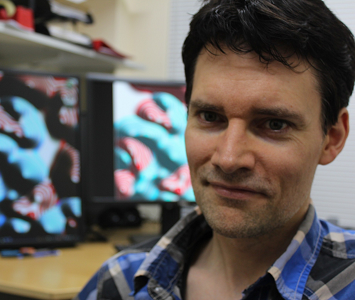
Robert S. Allison is a Professor in the Department of Electrical Engineering & Computer Science at York University's Lassonde School of Engineering. His research focuses on human perceptual responses in virtual environments, stereoscopic vision, and eye movement analysis. He is affiliated with the York Centre for Vision Research, Sensorium (Digital Arts & Technology), and the Centre for Innovation in Computing at Lassonde. His research interests include depth perception in natural and virtual environments, human-computer interface design for VR, machine vision applications, and the measurement of human motion. He has supervised multiple graduate students and contributed to over 260 publications. His work spans topics like cybersickness mitigation, display lag effects, and perceptual adaptation in VR. Key grants include NSERC-funded projects on perception in virtual environments and collaborations with institutions like the Australian Research Council. His teaching includes courses on human perception in human-computer interaction and digital logic design. Recent articles highlight advancements in understanding motion perception, VR-induced sickness, and multisensory integration. He collaborates widely, with affiliations including the VISTA program and York's Connected Minds initiative.
Zeynep Devrim Gürsel is an Associate Professor and Graduate Director in the Department of Anthropology at Rutgers University, School of Arts and Sciences. Her research bridges media anthropology, visual culture, and historical studies, focusing on photography’s role in governance, migration, and news production. She holds a PhD in Anthropology (2007) from UC Berkeley, with a Designated Emphasis in Film Studies. Her work includes the book Image Brokers: Visualizing World News in the Age of Digital Circulation (2016) and the award-winning film Coffee Futures , exploring Turkish politics through coffee fortune-telling. Current projects examine Ottoman Armenian emigration photographs and late Ottoman medical imagery. She was a NOMIS Fellow (2018-2019) at eikones Center in Basel. Education: B.A. (magna cum laude), Yale University, 1995 M.A., University of California, Berkeley, 2001 PhD, University of California, Berkeley, 2007 Research Interests: Media anthropology, visual ethnography, Ottoman history, migration studies, photography’s role in statecraft, and the anthropology of imagination. Her work analyzes how visual practices shape citizenship, knowledge production, and political subjectivity across historical and transnational contexts. Publications: Over 15 peer-reviewed articles and book chapters on photojournalism, Ottoman bureaucracy, and digital media. Her scholarship appears in Cultural Anthropology , American Ethnologist , and Grey Room . Awards & Fellowships: NOMIS Fellowship, eikones Center, 2018–2019 Award-winning ethnographic film Coffee Futures Labs/Teams: Affiliated with the eikones Center for Theory and History of the Image (Basel) and ongoing collaborations with the Başbakanlık Osmanlı Arşivleri (Istanbul).
Tao Huan is an Associate Professor in the Department of Chemistry , University of British Columbia , and holds the Canada Research Chair in Metabolomics and Exposomics . His research focuses on advancing mass spectrometry (MS) for metabolomics , integrating bioinformatics to address challenges in cancer metabolism , disease biomarker discovery , and exposome characterization . Education: Ph.D. in Analytical Chemistry (University of Alberta, 2015), Postdoctoral Research Associate (The Scripps Research Institute, 2015-2018). Dr. Huan’s work emphasizes systems biology , combining metabolomics with genomics and proteomics to decode complex biological mechanisms. He has pioneered methods for chemical isotope labeling and multimodal data integration , enhancing metabolite identification and pathway analysis. His recent publications (2020-2019) highlight innovations in LC-MS/MS workflows , freeze-thaw sample stability , and applications in colorectal cancer and Alzheimer’s disease . Dr. Huan’s lab actively recruits students and postdocs in analytical chemistry, metabolomics, and bioinformatics. Awards: Fred Beamish Award (2025), President’s Award, Metabolomics Society (2025), UBC Killam Faculty Research Award (2024), Michael Smith Health Research BC Scholar Award (2023). He serves as a faculty member in UBC’s Graduate Program in Bioinformatics , Genome Science and Technology , and the Cluster for Microplastics, Health and Environment . Lab alumni include Ph.D. and M.Sc. students now in academia and industry.
Prof. Cornelia Bohn is a Professor of General Sociology at the University of Lucerne's Department of Sociology, within the Faculty of Humanities and Social Sciences. She holds a Ph.D. from the University of Bielefeld and a habilitation from the University of Trier. Her career includes roles as Associate and Assistant Professor at several institutions, and she has been a visiting scholar at Toyo University, Stanford, and the University of Chicago. Bohn's research focuses on sociological theory, media theory, monetary systems, and inclusion/exclusion dynamics. She co-edits the journal Soziale Systeme and collaborates with prestigious research networks like NCCR 'Iconic Criticism' and SFB 600 'Strangers and Poor People'. Her work bridges historical and contemporary social analysis, emphasizing visual and monetary systems. Key achievements include a fellowship at the Institute for Advanced Study (University of Constance), editorial leadership, and international research engagements. Her theoretical contributions address autonomy, societal structures, and cultural representation. Current research explores the intersection of art, documentation practices, and modern sociological frameworks.
Gabriella Giannachi is Professor of Performance and New Media and Director of the Centre for Intermedia at the University of Exeter's Faculty of Humanities, Department of English. She leads interdisciplinary collaborations between artists, academics, and scientists to advance research in performance and digital arts. Her educational background includes: BA in Modern Languages and Literatures from Turin University's Faculty of Letters and Philosophy PhD in English from Cambridge University, researching silence in modern European Drama with Trinity Hall scholarship Giannachi's research pioneers performance documentation in mixed reality environments, examining how digital archives function as mobile interpretation hubs for cultural engagement. She investigates mobile user-generated documentation's role in knowledge production, museum visitor dynamics, memory formation, and identity construction within ecological and heritage contexts, with significant focus on copyright and accessibility implications. Her publication trends reveal consistent exploration of presence theory across physical-digital boundaries, with award-winning CHI conference papers (2009-2013) and books like 'Performing Mixed Reality' (2011) establishing frameworks for understanding mixed reality performance, environmental art, and digital heritage preservation. Her scientific recognition includes: Three consecutive CHI Best Paper Awards (2009, 2012, 2013) Theatre Library Association Book Award nomination for 'Performing Presence' (2012) Royal Society of Arts Fellowship nomination (2012) While specific advisees aren't documented, her research partnerships demonstrate extensive collaborative supervision across institutions including Tate, Imperial War Museum, British Library, and Stanford Libraries, securing projects that integrate artistic practice with scientific research. As Centre for Intermedia Director, she cultivates experimental teams investigating how digital archives transform cultural engagement through mobile platforms, particularly in environmental contexts via partnerships with Met Office Hadley Centre and Ludwig Boltzman Institute.
Elizabeth Miller serves as Department Chair and Professor of Marketing at the Isenberg School of Management, University of Massachusetts Amherst. Her academic leadership includes roles as PhD Coordinator since 2013 and prior appointments as Assistant and Associate Professor at UMass and Boston College. Her research centers on affect-driven consumer behavior , with specialization in health decisions, consumer well-being, and social impact. Key themes include emotional influences on information processing, CSR authenticity, and crisis-driven behavioral shifts during events like the COVID-19 pandemic. Her work bridges marketing theory with practical applications in food security, medical decision-making, and sustainable consumption. Miller's recent publications reveal strong trends in emotional drivers of pro-social behavior (e.g., awe in environmental actions, community philanthropy during crises) and methodological innovation in health communication (e.g., data visualization for medical choices). Her scholarship increasingly focuses on collective well-being frameworks and youth-led social entrepreneurship ecosystems. Best Research Paper, Direct/Interactive Marketing Research Summit (2013) Research Excellence Award, Isenberg School (2013) Mellon Mutual Team Mentorship Grant (2012) As PhD Coordinator, she mentors doctoral candidates in consumer behavior and experimental design. Her teaching spans doctoral seminars on experimental methodology to undergraduate courses in advertising and services marketing. Miller directs research partnerships with social impact organizations, focusing on food access equity and community resilience building. Her lab initiatives emphasize translational research through collaborations with public health agencies and social enterprises, particularly in post-pandemic food systems and medical decision support tools. Current projects explore linguistic humanization of service robots and youth entrepreneurship ecosystems.
Jesook Song is a Professor at the Department of Anthropology, University of Toronto. She serves as Department Chair and Graduate Chair (Tri-Campus), focusing on sociocultural anthropology, contemporary urban transformation, and welfare issues including homelessness, youth unemployment, and single women's housing in East Asia, particularly South Korea. PhD in Cultural Anthropology (2003), University of Illinois, Urbana-Champaign B.A. in Education Science, Yonsei University Her research examines neoliberal capitalism's impact on welfare systems, labor practices, and gendered experiences in urban South Korea. Key themes include: Financial techniques in everyday life Post-development welfare states Gendered care work in public policy Homelessness and urban marginality Single women's spatial autonomy Recent publications analyze pandemic-era welfare policies, financial subjectivity, and urban marginality. Her books include Living on Your Own (2014) and On the Margins of Urban South Korea (2019). American Anthropological Association Sylvia H. Forman Prize (2002) Academy of Korean Studies Distinguished Paper Award (2010) She has advised graduate students Sophia Jaworski, Celeste Pang, and Kristina Alda, while securing multiple grants from SSHRC, Korea Foundation, and Academy of Korean Studies for research on financial techniques in everyday life and welfare systems.
Natalia Villanueva-Rosales is an Associate Professor in the Department of Computer Science at The University of Texas at El Paso (UTEP). As Co-Principal Investigator at the NSF-funded Cyber-ShARE Center of Excellence, she leads the iLink Research Group focusing on semantic technologies and smart city initiatives. Ph.D. in Computer Science, Carleton University (2011) M.Sc. in Artificial Intelligence, University of Edinburgh (2005) B.Sc. in Computer Science & Statistics, Universidad Panamericana & CINVESTAV-IPN (2002) Her research bridges Semantic Web technologies with Smart Cities applications, particularly in Water Sustainability and Senior Mobility . Key projects include ontology-based frameworks for freight performance data integration and community-driven smart mobility solutions. Recent publications demonstrate her interdisciplinary approach across Environmental Informatics (2022-2025) and Urban Mobility (2019-2022). She holds editorial and leadership roles in semantic science initiatives while actively mentoring through the ACM-W WICS student group. 2019 HEENAC Education Award 2019 NCWIT Undergraduate Research Mentoring Award Her NSF grants include IRES-1658733 for US-Mexico Smart Cities collaboration and OAC-1835897 for the SWIM water sustainability project. The iLink Research Group under her leadership develops ontological frameworks for cross-domain data integration and trust establishment in collaborative environments.
Dr. Terje Haukaas is a Professor of Structural & Earthquake Engineering at the University of British Columbia (UBC), Department of Civil Engineering, Faculty of Applied Science. He holds a PhD and Master's from UC Berkeley (2003, 1999) and a bachelor's from the Norwegian University of Science and Technology (1996). His research focuses on probabilistic modeling, structural reliability, and earthquake engineering, with contributions to software development (e.g., FERUM, OpenSees). He teaches courses like Structural Analysis, Nonlinear Analysis, and Reliability & Safety. Education: PhD in Civil Engineering, UC Berkeley, 2003 Master's in Civil Engineering, UC Berkeley, 1999 Bachelor's in Civil Engineering, NTNU, Trondheim, 1996 Engineering Degree (Stavanger University College, 1994) and Technician Degree (Stavanger Technical College, 1992) Research Interests: Probabilistic mechanics and reliability analysis Seismic vulnerability and risk assessment Software tools for finite element analysis (FERUM, OpenSees) Timber engineering and structural optimization Awards & Recognition: UBC Killam Teaching Prize (2016) President of CERRA (2015–2019) Keynote/Semi-plenary speaker at major conferences (ICASP12, COMPDYN 2017) Student Appreciation Awards (Top Professor rankings) Grants & Labs: Recipient of grants supporting seismic risk research Developed computational frameworks for structural analysis
Christine Eckhardt is an Assistant Professor in the Department of Neurology at the T.H. Chan School of Medicine (UMass Chan Medical School), specializing in Neurocritical Care. She earned her MD from Harvard Medical School and holds an MS degree. Education: MD, Harvard Medical School, Boston, MA MS (unspecified field) Dr. Eckhardt's research focuses on neurocritical care, neurotoxicity syndromes, and EEG-based diagnostics. She develops quantitative EEG methods for assessing immune effector cell-associated neurotoxicity (ICANS) and delirium severity, with applications in CAR T-cell therapy and critical care neurology. Her recent publications (2022–2023) emphasize automated neurotoxicity detection , EEG signal processing , and health equity disparities in heart failure care. Key subfields include neurocritical care, computational neuroscience, and clinical outcome modeling.
Dr. Ihab Hijazi is a researcher at the Chair of Geoinformatics , Technical University of Munich, specializing in 3D geospatial modeling and BIM-GIS integration . He teaches courses such as CAFM - Facility Management and GIS and contributes to advancing CityGML standards and urban digital twins . Research Focus : Hijazi’s work bridges Building Information Modeling (BIM) and Geographic Information Systems (GIS) , emphasizing interoperability , semantic transformation , and smart city infrastructures . His projects include the Smart Sustainable Districts (SSD) and Smart District Data Infrastructure , focusing on urban energy systems and data harmonization. Publications highlight his contributions to CityGML utility networks , urban growth simulations , and semantic modeling frameworks. He actively develops 3DCityDB and participates in standardization initiatives like the DIN Spec 91607 Digital Twin for Cities .
Nicole Files-Thompson is an Associate Professor in the Mass Communications Department at Lincoln University. Formerly a television producer and writer, she brings industry experience to academia. She earned her PhD in Mass Communications and Media Studies from Howard University, where she also obtained graduate certificates in Women’s Studies, Distance Learning, and Preparing Future Faculty. Her interdisciplinary research explores marginalized groups through the lenses of Communication Studies, Gender Studies, and Cultural Theory. Key areas include: Sexual identity formation and negotiation Intersectionality in media representations Queer theory applications in tourism spaces Critical pedagogy in digital environments Race/ethnicity dynamics in mass communication Her publications engage with popular media texts like Beyoncé’s Formation, Noah’s Arc, and Love & Hip-Hop. These works examine power dynamics, identity performance, and cultural critique through feminist and queer frameworks. Scientific achievements include: Outstanding Ph.D. Dissertation award (Fethiye, Turkey) Leadership roles in National Communications Association (NCA) and Eastern Communications Association (ECA) Pioneering curriculum development for students of color As an educator, she has developed 24 communications courses, mentored students through research initiatives, and implemented pathways to graduate school. Her professional engagement spans both academic leadership and intersectional analyses of media systems.
Jens Krause is a Professor and Head of Department at the Leibniz Institute of Freshwater Ecology and Inland Fisheries (IGB) in Berlin, leading the Research Group on Mechanisms and Functions of Group-Living. He holds a full professorship in Fish Ecology at Humboldt-Universität zu Berlin, Faculty of Life Sciences, Thaer-Institute, and since 2018 has been an Adjunct Professor at Technical University Berlin within the Excellence Cluster 'Science of Intelligence'. His research is centered on collective intelligence, social networks, decision-making, and behavioural ecology in fish and other animals. Full Professor in Fish Ecology, Humboldt-Universität zu Berlin Adjunct Professor at Technical University Berlin (since 2018) Head of Department, IGB Berlin PhD, University of Cambridge Diploma, Free University Berlin His work integrates experimental biology, network analysis, and biomimetic robotics to understand how animals make collective decisions. His expertise spans animal behaviour, evolution, and ecological physiology, with a strong focus on group-living dynamics. Recent research explores group hunting, predator evasion, social foraging, and the impact of environmental stressors on collective behaviour. The analysis of his recent publications reveals a strong trend in understanding collective behaviour in fish, including escape waves, social foraging, group hunting in marlins and sailfish, and the use of robotic agents to study social integration. His interdisciplinary approach combines marine biology, physics, robotics, and data science to uncover the mechanisms behind collective intelligence in both animal and human systems. Editorial Board, Behavioral Ecology Editorial Board, Fish and Fisheries Executive Board, Excellence Cluster 'Science of Intelligence' Advisory Board, Bimini Biological Field Station Foundation He advises numerous PhD students and postdoctoral researchers, and leads major research projects, including 'Developing exploration behaviour' funded by the Excellence Cluster. His work has been supported by extensive collaborations across Europe and North America, and he frequently publishes in top-tier journals such as Nature , Science Advances , Proceedings of the Royal Society , and Current Biology . His lab employs cutting-edge methods including automated tracking, social network analysis, and interactive robotics to study animal groups. His research group, 'Mechanisms and Functions of Group-Living', is embedded within the Excellence Cluster 'Science of Intelligence', where they investigate collective cognition, social information use, and the role of individual differences in group performance. The team combines field studies with laboratory experiments and computational modelling to understand the evolution and function of collective behaviour across species.
Nikolaus Kriegeskorte is a Professor of Psychology and Neuroscience, and Director of Cognitive Imaging at the Mortimer B. Zuckerman Mind Brain Behavior Institute at Columbia University. He is affiliated with the Departments of Psychology, Neuroscience, and Electrical Engineering. Institution: Columbia University Academic Roles: Professor of Psychology and Neuroscience; Director of Cognitive Imaging Email: nk2765@columbia.edu Location: Jerome L. Greene Science Center, 3227 Broadway, L3-064 Research Focus: The lab explores the cognitive neuroscience of vision, modeling biological visual systems with artificial neural networks. Key areas include developing statistical inference and visualization techniques to bridge theory and experimental data, understanding representational geometry in neural systems, and optimizing deep learning frameworks for neuroscience. Recent Publications: Highlighted work spans neural network modeling of visual perception, representational similarity analysis, and the topology of brain representations. The lab's methods, such as the TorchLens Python package, enable transparent extraction and visualization of hidden layer activations in neural networks. Grants: Projects are supported by funding from the National Science Foundation (NSF) - Cognitive Neuroscience and the National Institutes of Health (NIH) - NIMH. Laboratory: The Visual Inference Lab (kriegeskortelab.zuckermaninstitute.columbia.edu) is located at Quad 3D, Zuckerman Institute, 3227 Broadway.
Huaizu Jiang is an Assistant Professor at Khoury College of Computer Sciences, Northeastern University. His research bridges computer vision, graphics, and natural language processing to develop AI systems that understand and reconstruct 3D visual environments. Prior to joining Northeastern, he was a Postdoc Researcher at Caltech and Visiting Researcher at NVIDIA. He holds a Ph.D. from UMass Amherst (advised by Prof. Erik Learned-Miller), and M.E./B.E. degrees from Xi'an Jiaotong University. His research focuses on fundamental challenges in 3D scene understanding, including geometry reconstruction, semantic interpretation, novel view synthesis, motion generation, and optical flow estimation. Core interests span video processing, human-object interactions, multimodal reasoning, and efficient edge-device implementations. Recent publications emphasize diffusion models for motion/scene generation, transformer-based 3D perception, and video interpolation. Key trends include multi-view consistency techniques, text-to-3D synthesis, and efficient real-time algorithms for robotics applications. Awards & Honors: Winner of the VQA Challenge 2020 He advises 15+ graduate students on projects spanning 3D reconstruction, motion synthesis, and vision-language models. His group collaborates with institutions like NVIDIA and Caltech, focusing on generative AI for dynamic scene understanding.