Dr. Dorian Tsai is a Research Fellow and Associate Investigator at the Queensland University of Technology (QUT) Centre for Robotics, affiliated with the School of Electrical Engineering & Robotics. His research focuses on environmental robotics, robotic vision, and deep learning applications for large-scale environmental challenges. He currently leads the Technology Development stream in the Reef Restoration and Adaptation Project (RRAP), developing robotic technologies for coral monitoring and endangered species tracking. Education: Bachelors in Engineering Science (University of Toronto), Masters in Space Science & Technology (Lulea Technical University), Robotics & Automation (Aalto University), and a PhD in Robotics from QUT. His doctoral work involved light field features for camera motion control, completed under supervisors Prof. Peter Corke, Dr. Donald Dansereau, and Dr. Thierry Peynot. Research emphasizes robotic solutions for marine conservation (e.g., Great Barrier Reef preservation), precision agriculture, and autonomous systems. His work combines machine learning, computer vision, and robotics engineering to address real-world environmental and industrial challenges. Prior to QUT, he worked at the Canadian Space Agency and completed thesis research at NASA's Jet Propulsion Lab on rover docking systems.
Dimos Dimarogonas is a Professor and Head of Department at the Department of Automatic Control, School of Electrical Engineering and Computer Science, KTH Royal Institute of Technology. His research and teaching focus on advanced control systems, robotics, and multi-agent systems with applications across various engineering domains. His primary research interests include Control Systems, Robotics, Multi-agent Systems, Formal Methods, Signal Temporal Logic, and Distributed Control. Professor Dimarogonas has made significant contributions to the field of formal methods for control systems, particularly in applying signal temporal logic to robotic motion planning and control. His work bridges theoretical control theory with practical applications in robotics and autonomous systems, with a strong emphasis on safety-critical control and formal verification of system behavior. His recent publications demonstrate a clear trend toward integrating formal methods with distributed control of multi-agent systems. The research focuses on signal temporal logic specifications, control barrier functions, and distributed optimization approaches for complex multi-robot coordination tasks. His work addresses fundamental challenges in ensuring safety, stability, and performance guarantees for networked robotic systems operating under complex spatiotemporal constraints. Professor Dimarogonas serves as examiner for numerous advanced degree projects at KTH, including the Sustainable Engineer in Systems Engineering course and multiple degree projects in computer science, computer engineering, and electrical engineering with focus areas in systems engineering, robotics, and embedded systems. His teaching and supervision cover both theoretical foundations and practical implementation of advanced control systems.
Ahmed Nait Chabane is a Professor and teacher-researcher at CESI Engineering School in Saint-Nazaire, France, where he serves as the educational manager of the first year of the integrated preparatory cycle. His academic home is within the School of Engineering, specifically focusing on Electronics and Signal Processing. Education: Doctor of Signal and Image Processing from UBO Brest / ENSTA Bretagne (2013), Thesis: "Grazing-invariant segmentation of side-scan sonar images using a competitive neural approach" Specialized Master's degree in Image Processing and Geographic Information Systems from USTHB University, Algiers, and Télécom Bretagne (2009) Electronics Engineer from University of Bejaia (2007) Professor Nait Chabane's research spans multiple domains including acoustic signal and image processing, machine learning algorithms, decision systems, and Industry 4.0/5.0 applications. His early work (2010-2015) focused on acoustic signal processing and classification algorithms, while his current research (2017-present) emphasizes decision algorithms, heterogeneous data analysis, knowledge extraction, and human-robot collaboration systems. His work bridges theoretical research with industrial applications, particularly in aerospace and manufacturing sectors. His publication record shows a clear evolution from sonar image processing toward broader applications of machine learning in industrial settings, with recent work heavily focused on human-robot collaboration, Industry 4.0 applications, and optimization algorithms for manufacturing processes. The research demonstrates increasing interdisciplinary collaboration with industry partners through CIFRE theses. Professor Nait Chabane actively supervises multiple PhD students through CIFRE partnerships with industry, including Guillaume Morin-Duponchelle (completed), Pierre Hemono, and Houssein Olleik (ongoing). His teaching portfolio includes Electronics, Electricity, Signal and Image Processing, Artificial Learning, Statistics, and Operational Research. His Engineering and Digital Tools Research Team focuses on practical applications of advanced algorithms in industrial contexts, with particular emphasis on solving real-world constraints in confined environments, resource optimization, and human-robot interaction challenges.
Dr. Jonathan M. Aitken is a Senior Lecturer in Robotics at the University of Sheffield's School of Electrical and Electronic Engineering. Previously a Research Fellow at the Autonomous Control Laboratory (ACSE), his work focuses on autonomous robotic systems with emphasis on quadcopters, computer vision, spatial awareness, and multi-robot collaboration. Expert in safe autonomous drone deployment Specializes in collaborative robotics (cobots) Qualified UK commercial drone pilot Research spans: Autonomous reconfiguration of robotic systems Dynamic risk assessment for systems-of-systems Visual SLAM for feature-sparse environments Formal verification of UAS systems Human-robot co-working interfaces Recent publications examine: Robust localization in sewer pipes Visual saliency algorithms for mobile robots Cobotic safety controller synthesis Modular digital twinning frameworks Spatial awareness for multi-robot teams Major grants include EPSRC Programme Grants for buried pipe sensing and Lloyds Registry Foundation funding for cobot safety integration.
Felix Pancheri is an employee at the Chair of Microtechnology and Medical Device Technology (MiMed) at the Technical University of Munich (TUM) since February 2021. Holding an M.Sc. in Mechatronics and Information Technology, he actively contributes to research and teaching within the MiMed group, supervising courses including Mechatronic Device Technology (MGT), Development of mechatronic devices (SMG), and Mathematical Tools (MTT). His research spans interdisciplinary domains with core focus areas: Robotics : Specializing in bio-inspired quadruped locomotion, soft robotics, and medical robotics applications Mechatronic Systems : Integration of mechanical, electronic, and software components for medical devices Advanced Manufacturing : Leveraging topology optimization and additive manufacturing for rapid prototyping Computational Design : Developing automated systems for custom mechanical structures Analysis of his 2021-2024 publications reveals consistent innovation in topology-optimized robotic mechanisms, particularly for legged locomotion and gripper systems. His work demonstrates strong bio-inspiration trends, translating natural movement principles into compliant mechanical designs fabricated through 3D printing. Medical applications form a significant thread, including surgical instrument development and 3D digitization techniques for surgical planning, reflecting the MiMed group's translational research focus. No scientific awards are documented for Felix Pancheri in available records. As an academic contributor, he supervises key courses: Mechatronic Device Technology (MGT) exercises Development of mechatronic devices (SMG) seminars Mathematical Tools (MTT) instruction While no individual grants are specified, he participates in MiMed's funded projects including IndiPrint, Arburg Automated Design, and CarrierBot, which advance automated design methodologies and robotic applications. The MiMed research environment provides state-of-the-art facilities for robotics prototyping, medical device development, and additive manufacturing, supporting his work on bio-inspired mechanisms and surgical robotics systems with strong industry-academia collaboration.
Yik Lung Pang is a researcher at the School of Electronic Engineering and Computer Science, Queen Mary University of London, based in the Peter Landin building (Room CS 440). His work bridges robotics, computer vision, and machine learning to advance human-robot collaboration in real-world environments. His research specializes in human-robot interaction with a focus on handover behaviors, 3D scene reconstruction, and object pose estimation. Key contributions include: Developing LaVA-Man for visual action representation learning in robot manipulation Creating stereo-based hand-object reconstruction systems for safe human-to-robot handovers Pioneering incremental 6D pose estimation techniques for dynamic object tracking Integrating audio-visual modalities to enhance object classification in collaborative tasks His methodology consistently emphasizes safety, adaptability to unseen environments, and real-time performance. From 2021-2025, Pang's publication trajectory reveals an escalating focus on multimodal perception (combining vision, audio, and depth data) and robustness in unstructured settings. His work addresses critical gaps in human-robot teaming, particularly for domestic and industrial applications involving unknown containers and complex handovers. No scientific awards, student supervision, or laboratory affiliations were documented in the provided sources.
Sylvain Durand Chamontin serves as an Associate Professor at INSA Strasbourg, affiliated with the ICube research laboratory (UMR 7357) and the AVR (Automation, Vision, Robotics) team. His teaching encompasses advanced automation (anti-windup, Smith predictor, LQ control), embedded systems/IoT, motorization/axis control, linear automation (state feedback, observers), and sequential automation (GRAFCET, GEMMA) for electrical engineering, mechatronics, and mechanical engineering students across 2nd–5th year programs. His research centers on frugal design and control of embedded cyber-physical/robotic systems under resource constraints, with a dedicated focus on non-periodic sampling and event-driven techniques . Key domains include event-driven control architectures, dynamic vision sensor-based visual servoing, aerial robotics (UAVs/aerial manipulators), and swarm robotics. This work systematically reduces computational load, communication overhead, and energy consumption while maintaining robust performance in resource-limited environments—critical for embedded implementations in drones and cyber-physical systems. Analysis of Durand's 15 most recent publications (2022–2025) reveals a dominant trend in event-driven control for robotics, increasingly integrating machine learning for adaptive tuning. His work targets practical applications in aerial robotics, including UAV stabilization under ground effects, elastic-suspension aerial manipulation, and event-based visual servoing. A strong emphasis on frugality permeates techniques like non-periodic sampling and resource-aware control strategies, directly addressing hardware limitations in embedded platforms. Durand mentors award-winning PhD students including M. Pivert (Best Student Paper Award, IFAC Robotics 2025), T. Paul (i-PhD Innovation Contest 2022), and A. Yiğit (Best PhD Award in French Robotics 2021). He leads multiple ANR-funded projects: e-VISER (event-driven visual control, 2018–2021), DexterWide (cable robots, 2015–2018), and current initiatives eSWARM (modular UAVs, 2023–2025), muteSWARM (acoustic swarm control, 2023–2027), STRAD (street art drone, 2022–2026), TIR4sTREEt (urban micro-climatology, 2022–2026), and dark-NAV (GPS-denied navigation, 2021–2025). Within ICube's AVR team, Durand drives laboratory development of the dextAIR robot (omnidirectional aerial manipulator with elastic suspension) and embedded control systems for cable-driven parallel robots and swarm robotics. His experimental work emphasizes real-time implementation, energy efficiency, and frugal engineering principles—translating theoretical event-driven control into hardware solutions for resource-constrained robotic applications.
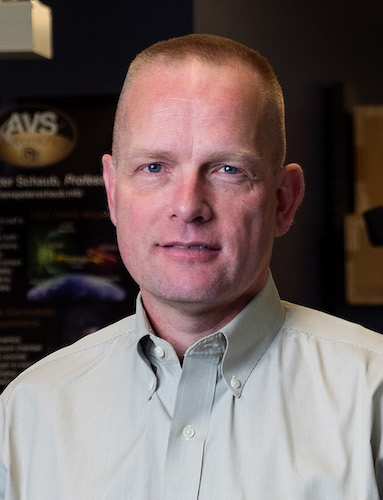
Hanspeter Schaub is a Distinguished Professor and Department Chair of Aerospace Engineering Sciences at the University of Colorado Boulder, affiliated with the College of Engineering and Applied Science. He holds the Schaden Leadership Chair and the Glenn Murphy Endowed Chair. His academic career includes roles at Virginia Tech and Texas A&M University. Education: PhD (1998), M.S. (1994), and B.S. (1992) in Aerospace Engineering from Texas A&M University. He also completed a Matura Typus C in Switzerland. Research focuses on orbital mechanics, attitude dynamics, Coulomb spacecraft actuation, space debris removal, and autonomous systems. Notable projects include the Basilisk simulation framework and the Autonomous Vehicle Systems (AVS) Lab. Awards include National Academy of Engineering membership, Hazel Barnes Prize, and multiple AIAA recognitions. Leadership roles: Department Chair, Associate Chair for Graduate Affairs, and chair of ADCA. Grants and funding include the Glenn Murphy Chair, Al and Betty Look Professorship, and numerous research grants. He advises visiting scholars and leads international collaborations, hosting researchers from institutions like NTNU and Politecnico di Torino. Labs: Colorado Center for Astrodynamics Research (CCAR) and AVS Lab, specializing in spacecraft dynamics, simulation, and autonomy. Key software tools include Basilisk and the Black Lion communication architecture.
Woojin Kim is a Professor in the Department of Mathematics at Duke University, Durham, NC, USA. His research spans interdisciplinary domains including Machine Learning , Biomedical Engineering , Human-Computer Interaction , and Wireless Sensor Networks . He has made significant contributions to medical imaging analysis , autonomous driving systems , and AI in education , with recent work focusing on fairness evaluation in machine learning and vision-language models for healthcare applications . His publications demonstrate expertise in: AI-driven medical diagnostics (CT scans, MRIs) Exoskeleton and robotic systems Autonomous vehicle transition dynamics Privacy-preserving clinical data processing Memory hardware testing frameworks Knowledge tracing algorithms in education Recent article trends highlight increasing emphasis on AI ethics (fairness evaluation), multimodal models (vision-language), and knowledge graph applications for scientific data organization. Collaborations with interdisciplinary teams across biomedical, engineering, and computer science domains underscore his cross-domain impact.
Luis Mejias Alvarez is an Associate Professor and Researcher in the School of Electrical Engineering & Robotics at Queensland University of Technology (QUT). He specializes in Unmanned Aerial Systems (UAS), focusing on vision-based guidance, collision avoidance, and autonomous navigation technologies. His work integrates computer vision, sensor fusion, and control systems to advance UAV applications in aerospace and robotics. Education: Electronic Engineer (UNEXPO, Venezuela, 1999) MSc in Networks and Telecommunication Systems (Universidad Politécnica de Madrid, 2001) PhD in Robotics and Automation (Universidad Politécnica de Madrid) Research Interests: His research spans Unmanned Aerial Systems (UAS), including autonomous helicopters, vision-based navigation, collision avoidance, and forced landing technologies. He develops algorithms for computer vision, sensor fusion, and control systems, with applications in aerospace engineering and artificial intelligence. His work aims to enhance UAV safety and autonomy in complex environments. Awards & Fellowships: 2017 Endeavour Executive Fellowship Visiting Professorships at Université de Bretagne Occidentale (2017) and UTIS (2017) Editor of Springer Tracts in Advanced Robotics (2016) Keynote Speaker at CIIMA 2014 Program Chair for UAS Conferences (2013) DECRA Fellowship (2012–2015) IRSES Grant (2009) Advising & Grants: Supervised PhD/Masters students in areas like vision-based collision avoidance and UAV navigation. Key grants include ARC DECRA and international IRSES collaboration with European institutions. Labs & Collaborations: Active in QUT’s Centre for Robotics and the Australian Research Centre for Aerospace Automation. Collaborates globally on projects like drone ship landing under adverse conditions and beyond-line-of-sight navigation.
Cristiana Mirandade Farias is a postdoctoral researcher at the Intelligent Autonomous Systems (FG-IAS) group, Department of Computer Science, Technische Universität Darmstadt. Her work focuses on data-efficient robotic grasping, manipulation, and integration of multimodal sensory data with uncertainty handling. PhD in Robotics from University of Birmingham (Extreme Robotics Lab) MSc and BSc in Control and Automation Engineering from University of Brasilia Her research combines tactile sensing, active perception, and geometric methods to enhance robotic manipulation capabilities. Publications emphasize dual quaternion algebra, spectral analysis, and functional mapping techniques. Article trends show consistent contributions to robotic grasping (data efficiency, deformable objects, partial observability), visual servoing, and geometric modeling, with a focus on cross-modal integration and mathematical formalisms like dual quaternions. Current work addresses challenges in grasping unknown/moving objects using tactile exploration and uncertainty-aware pipelines.
Stanimir Yordanov Yordanov is an Associate Professor at the Department of Automation, Information and Control Technology within the Faculty of Electrical Engineering and Electronics at Technical University - Gabrovo. With a Doctorate in Technical Sciences and over 30 years of professional experience since 1993, he has established himself as a leading researcher and educator in control systems and automation. His educational background includes a Master of Engineering from VMEI - Gabrovo (1992) with specializations in Computer Engineering, Management Technologies, and Pedagogy, followed by a Doctorate (2006) and Associate Professor qualification (2010) in specialized technical fields. His teaching portfolio encompasses System Programming, Operating Systems, Digital Control Systems, and Industrial Robotics, among others. Professor Yordanov's research focuses on automated control systems, intelligent management of technological processes, industrial system monitoring, and object/system modeling. His work demonstrates a consistent trajectory toward increasingly sophisticated control algorithms and applications across diverse domains from electrohydraulic systems to environmental monitoring. The recent publications reveal a strong emphasis on advanced control techniques including neuro-PID regulators, model predictive control, and applications of artificial intelligence in industrial contexts. His extensive project portfolio includes 22 significant research initiatives, ranging from national projects like the 'Competence Center for Intelligent Mechatronic Systems' to international collaborations such as the 'MechMate' project focused on European SME growth. These projects demonstrate his ability to secure funding and lead research teams across various technical domains. Professor Yordanov has mentored six PhD students to completion, with several successfully defending dissertations on topics including intelligent energy systems, embedded real-time operating systems, and robotic systems. His academic leadership extends to serving as an academic mentor for over 600 student internships. His laboratory work centers on electrohydraulic control systems, robotic manipulation, and intelligent monitoring applications, with recent projects developing smart dispensers, beehive monitoring systems, and low-cost health monitoring devices for pregnant women, demonstrating practical applications of his theoretical research.
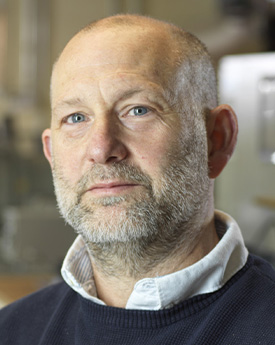
Professor Andrew Kennedy is the Chair in Advanced Manufacturing and Head of the Department of Engineering at Lancaster University . A graduate of Imperial College and Cambridge University, he previously held academic positions at Nottingham University. His research focuses on novel manufacturing methods for advanced materials, particularly multi-phase materials like metal matrix composites, metal foams, and porous materials, using techniques such as additive manufacturing, powder processing, and gel casting. Research Interests: Development of lightweight and energy-absorbing structures, novel batteries and energy storage systems, thermal/fluid flow management, and medical devices. Collaborations: Leads the TWI-Lancaster Joining 4.0 Centre and works with experts in AI, robotics, and machine learning to enhance manufacturing processes. Scientific Achievements: Published over 140 peer-reviewed papers, holds 2 patents, supervised 40+ PhD students, and led 65+ research projects including EU initiatives with 10+ industrial/academic partners. International Collaborations: Partnerships with institutions in Spain, Germany, Finland, Romania, Greece, Italy, Switzerland, China, Thailand, India, Malaysia, Mexico, Chile, Australia, and Canada.
Loic Cuvillon is a Lecturer at the University of Strasbourg, affiliated with Télécom Physique Strasbourg and the ICube Laboratory. He serves as Head of the 3rd year specialty in Automation, Robotics (ISAV) for the general engineering diploma, is an elected member of Télécom Physique Strasbourg's improvement council, and represents staff on the ICube Laboratory's Hygiene and Safety Council. His educational background includes: Engineering diploma from ENSPS (2002) Doctoral thesis in robotics from University of Strasbourg (2006) Dr. Cuvillon's research centers on Robotics with emphasis on fast visual servos , predictive ordering , manipulation robotics , medical and surgical robotics , and physiological movement compensation . Current projects include the ANR STRAD project (STReet Art Drone, 2022-2026) developing drone-based street art systems, and the ANR Tir4Street project (2022-2026) applying thermal infrared for urban tree monitoring. His work integrates robotics, data science, and healthcare technologies through partnerships with ICube, GIPSA-lab, INRAE, and industry collaborators. He has secured competitive research funding through: ANR STRAD project: Partners include ICube, GIPSA-lab, Polyvionics, and Spacejunk ANR Tir4Street project: Partners include ICube, INRAE, and Strasbourg Eurometropole No scientific awards were documented in the source materials. As an educator, Dr. Cuvillon designs and supervises advanced robotics practical work including UR5 manipulation systems, mobile robotics with Lego EV3/Turtlebot3 platforms, Segway control systems, and real-time computing under Linux Xenomai. His teaching directly supports student skill development in automation and robotics engineering. He operates within the ICube Laboratory (UMR 7357), a joint research unit of University of Strasbourg and CNRS, contributing to medical robotics and data science research themes while participating in Télécom Physique Strasbourg's InnovLab technical committee.
Lyudmila Rezunik is an academic and researcher at the National Research University Higher School of Economics (HSE), affiliated with the Faculty of Computer Science and the Department of Software Engineering . She also serves as a Junior Research Fellow at the Research and Educational Laboratory of Cloud and Mobile Technologies . Since joining HSE in 2023, her work focuses on bridging academic research and practical application in software engineering. Education: Bachelor's degree in Software Engineering (2023, HSE) Advanced training in pedagogy (2024), educational program modernization (2025), and team communication (2025) Research Interests: Mobile and web development Cloud services and game development Application of process mining in mobile app development Publications highlight her expertise in LLM-driven code generation and process mining for application families . She has developed patent-registered software for DICOM medical image visualization and remote web server-controlled servo drives . Recent recognitions include HSE Faculty of Computer Science awards and inclusion in the university's personnel reserve.