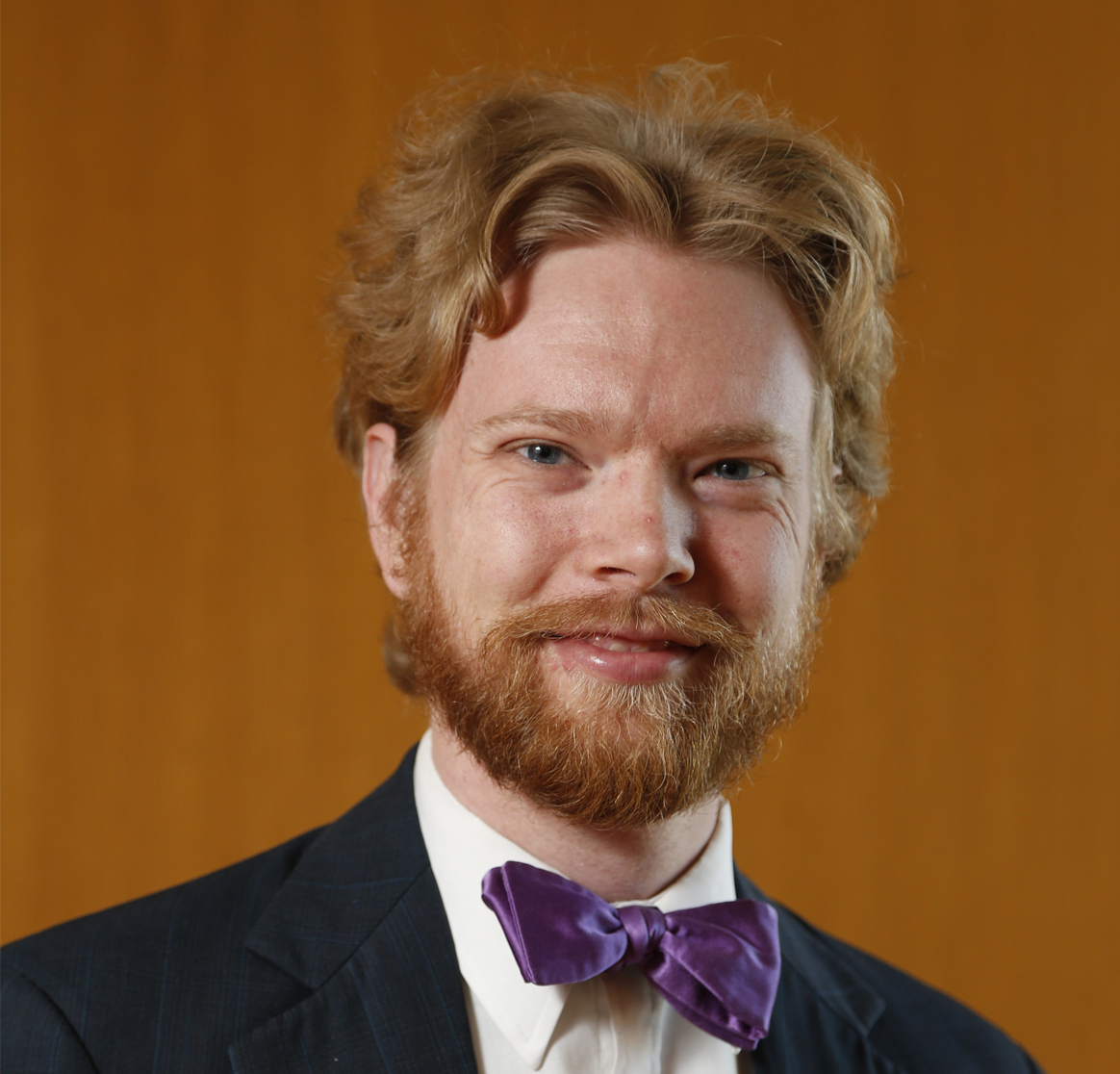
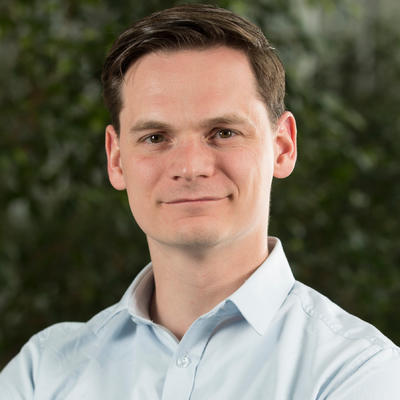
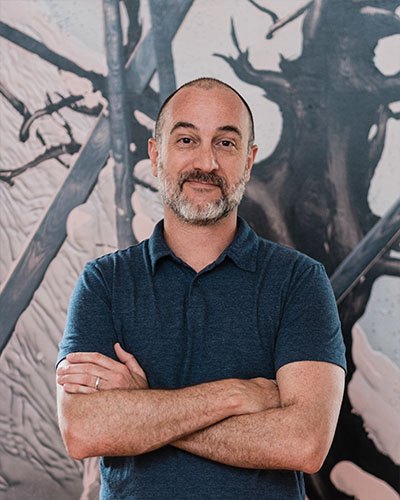
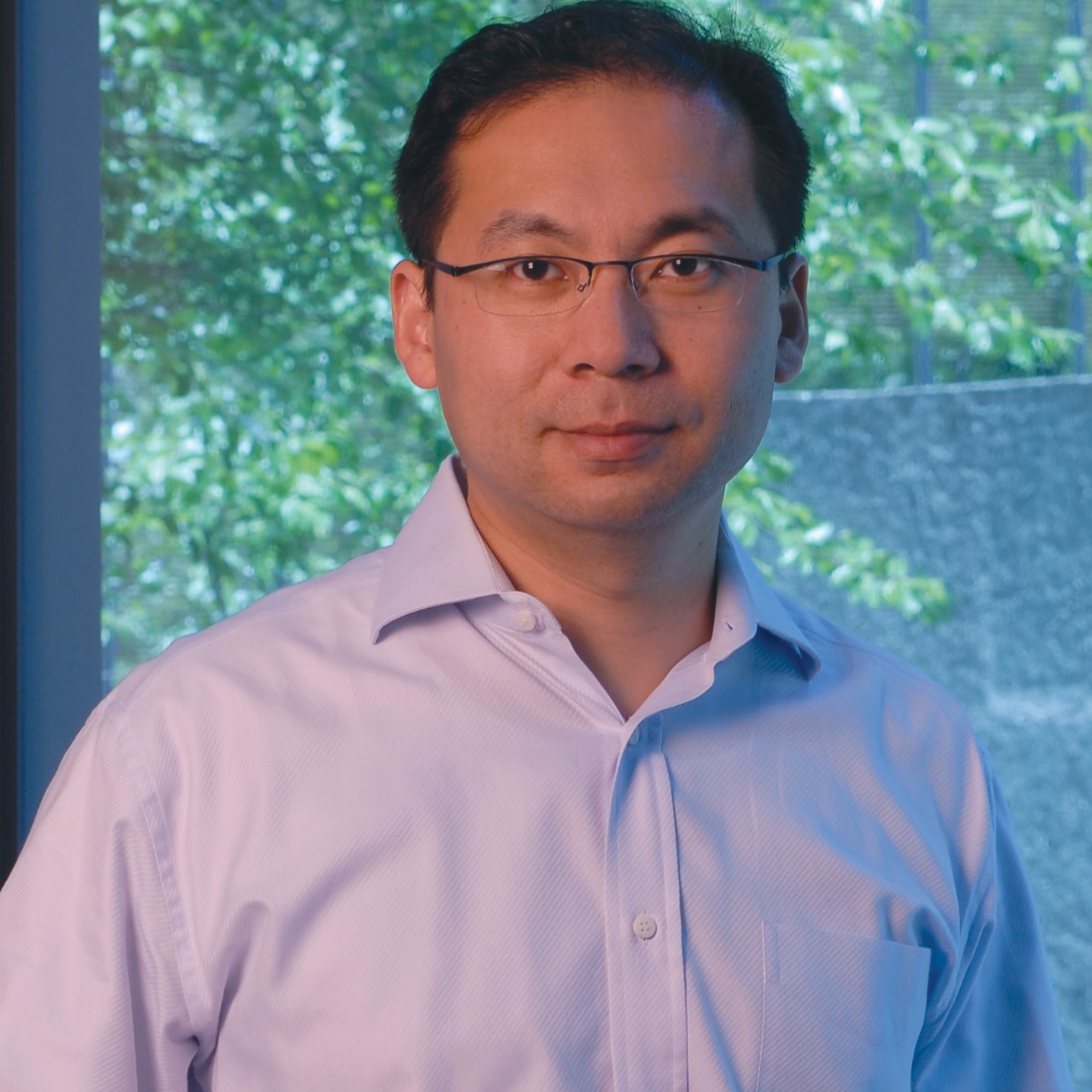
Kevin Darby is an Assistant Professor in the Department of Psychology at Florida Atlantic University's Charles E. Schmidt College of Science. His research focuses on cognitive development, memory binding, interference effects, and attention allocation across the lifespan. He leads the Lifespan Cognition Lab, which emphasizes computational modeling and transparency in cognitive aging research. Ph.D. from The Ohio State University (2017) M.S. from The Ohio State University (2014) B.S. from University of Houston (2010) His research explores how memory binding mechanisms evolve from childhood to old age, using eye-tracking and computational models. Recent work examines temporal delay effects, confidence judgment dynamics, and cross-species cognitive flexibility comparisons. He advocates for replicable methodologies in cognitive aging studies. Key article trends from 2013–2025 reveal expertise in memory interference, developmental attention allocation, computational modeling, and lifespan cognitive changes. Subfields span object-scene integration, forgetting prevention, and neural binding mechanisms.
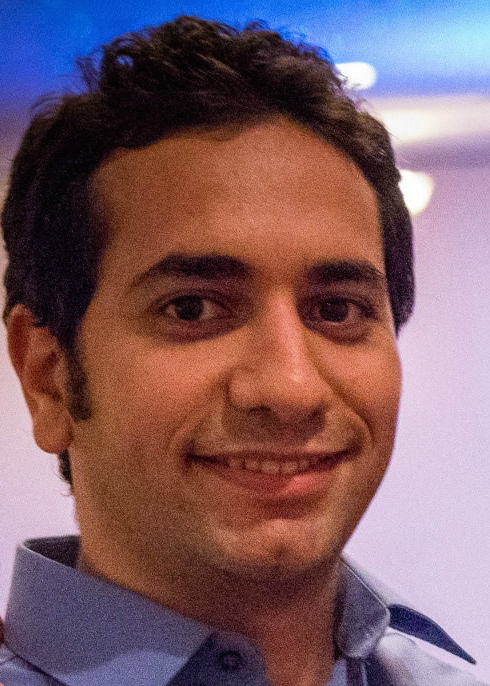
Ahmed Alkhateeb is an Associate Professor at Arizona State University's School of Electrical, Computer and Energy Engineering. His work bridges wireless communications, machine learning, and sensing technologies, with a focus on 6G networks and beyond. He leads the Wireless Intelligence Lab and has contributed to datasets like DeepSense 6G and DeepMIMO. Ph.D., Electrical Engineering, University of Texas-Austin (2016) M.S., Electrical Engineering, Cairo University (2012) B.S., Electrical Engineering (with distinction), Cairo University (2008) Research Interests: Machine learning for wireless communication Integration of sensing and communication for 6G Multi-modal sensing (LiDAR, radar, cameras) for channel optimization AI-based wireless sensing and perception Recent publications emphasize digital twin applications, robust beamforming, and real-world testing of reconfigurable intelligent surfaces (RIS), with a focus on sim-to-real transfer and hardware constraints. His work spans vehicular/drone networks, OTFS modulation, and terahertz communication. Scientific Awards: 2012 MCD Fellowship (University of Texas-Austin) 2016 IEEE Signal Processing Society Young Author Best Paper Award NSF CAREER Award (2021) His lab develops tools like DeepSense 6G and ViWi datasets, advancing AI-driven wireless system design. He explores decentralized interference management and cell-free MIMO architectures for next-gen networks.
Sang Hong is an Associate Professor in the Charles E. Schmidt College of Science at Florida Atlantic University, Boca Raton, specializing in visual perception research. His work bridges cognitive science and neuroscience to investigate how sensory inputs shape perceptual experiences and cognitive behaviors. Ph.D. from University of Chicago Dr. Hong's research focuses on neural mechanisms of color vision, motion perception, and visual awareness, with particular emphasis on facial expression processing and binocular rivalry phenomena. Using psychophysics and fMRI methodologies, he examines how color representation occurs in the lateral geniculate nucleus (LGN), how color and motion interact, and how emotional expressions are processed under conditions of visual suppression. His work reveals fundamental principles of sensory integration and perceptual organization. Analysis of his 2013-2021 publications shows consistent exploration of visual awareness mechanisms, with increasing attention to multisensory integration (audio-visual interactions) and individual differences in perception. Key trends include investigations of sex differences in emotional processing, neural correlates of color-motion interactions, and clinical applications examining visual context processing in bipolar disorder and schizophrenia. His research demonstrates how low-level perceptual phenomena inform higher cognitive functions. Dr. Hong actively contributes to scholarly discourse as an ad hoc reviewer for major journals including Journal of Vision, Vision Research, and Frontiers in Psychology. His service supports rigorous evaluation of research in visual neuroscience and cognitive psychology. His laboratory employs advanced techniques including continuous flash suppression, binocular rivalry paradigms, and fMRI to probe the neural basis of visual awareness. Current projects investigate how feature binding occurs during perceptual organization and how emotional content modulates sensory processing under conditions of limited awareness.
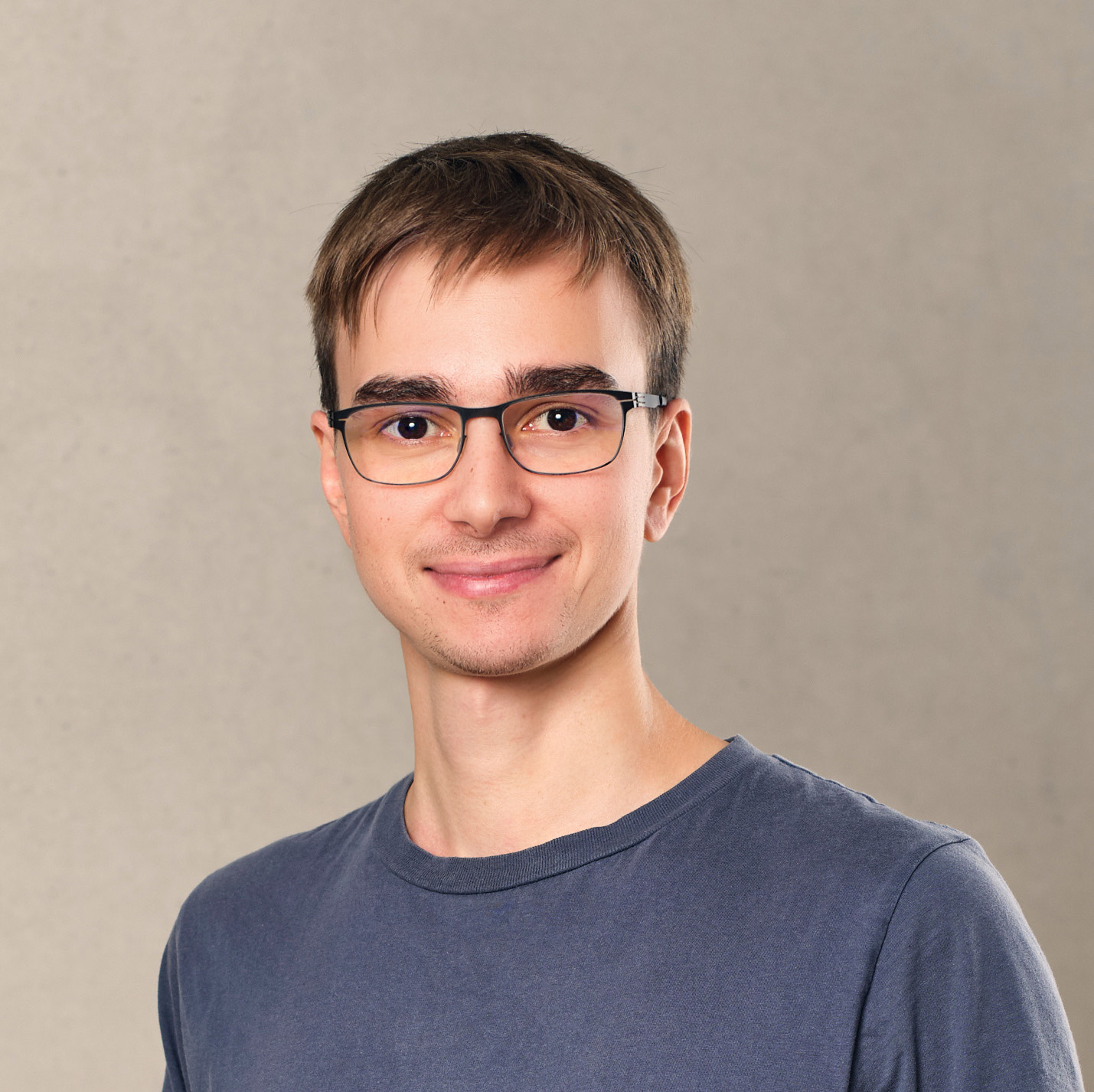
Dr. Nikita Araslanov is a Postdoctoral Researcher at the Technical University of Munich (TUM) in the School of Computation, Information and Technology, Department of Informatics 9 (Computer Vision Group). He also serves as a visiting faculty member at Google. His research focuses on semantic and 3D visual inference from video data, aiming to bridge perception and understanding in complex visual scenes. Dr. Araslanov earned his PhD in Computer Science from TU Darmstadt in the Visual Inference Lab, graduating with highest distinction. He holds a Master's degree in Computer Science from the University of Bonn, where he graduated with distinction in 2016. His research spans multiple areas of computer vision, with a particular emphasis on 3D reconstruction, semantic segmentation, and deep learning approaches for visual understanding. His work often combines theoretical insights with practical applications, addressing challenges in dynamic scene understanding, vision-language correspondence, and unsupervised learning paradigms. He has made significant contributions to bundle adjustment for dynamic scenes, hierarchical semantic segmentation using hyperbolic geometry, and novel approaches to unsupervised panoptic segmentation. Dr. Araslanov's research has been recognized with several prestigious awards, including being selected as a Best Paper Candidate at ICCV 2025 for his work on dynamic scene reconstruction, and having his Scene-Centric Unsupervised Panoptic Segmentation paper designated as a Highlight Paper at CVPR 2025 (top 3% of submissions). He has also received multiple oral presentation awards at major computer vision conferences including GCPR 2024, CVPR 2024, and ICLR 2024. Actively involved in the academic community, Dr. Araslanov serves as an Area Chair for CVPR 2025. He is committed to mentoring the next generation of researchers and regularly supervises master's theses, guided research projects, and research assistant positions (HiWi). His teaching includes courses on Deep Learning for Spatial AI (Summer Semester 2025) and Computer Vision 3: Segmentation, Detection and Tracking (Winter Semester 2024/25). As a member of the Computer Vision Group led by Prof. Dr. Daniel Cremers at TUM, Dr. Araslanov collaborates with a diverse team of researchers working on cutting-edge computer vision problems. The group maintains strong connections with industry partners and contributes significantly to the advancement of computer vision research through publications at top-tier conferences and journals.
Melissa L.-H. Võ is a Professor at the Faculty of Psychology and Sport Sciences , Goethe University Frankfurt. Her research focuses on scene perception , visual search , and cognitive neuroscience , particularly how scene grammar and spatial priors guide attention and locomotion in naturalistic environments. Her recent work, including the 2021 Psychological Science study on auxiliary anchor-object information, demonstrates the critical role of environmental regularities in behavioral efficiency. She has secured significant funding from the German Research Foundation and the Hessian Ministry of Science and Art , and her 2022 Nature Reviews Psychology paper on remote VR highlights methodological innovations. Key Research Areas: Scene grammar and contextual prediction Attentional guidance in immersive environments Interplay of semantic and syntactic scene processing Major Awards: German Research Foundation (DFG) Grant No. SFB/TRR 135 Hessian Ministry project 'The Adaptive Mind' She supervises researchers like Jason Helbing and Dejan Draschkow , and her work bridges cognitive psychology , neuroscience , and virtual reality applications.
Tony Tang is a tenured Associate Professor at the School of Computing and Information Systems , Singapore Management University , leading the RICELab (Rethinking Interaction, Collaboration and Engagement). His research spans Human-Computer Interaction (HCI), Computer Supported Cooperative Work (CSCW), and Ubiquitous Computing. Previously affiliated with the Faculty of Information at the University of Toronto and the Department of Computer Science at the University of Calgary , he has built a career focusing on technologies that enhance human-AI interaction, mixed-reality collaboration, and immersive analytics. Education : PhD in Electrical and Computer Engineering (2010, University of British Columbia), MSc in Computer Science (2005, University of Calgary), BSc in Computer Science and Psychology (2002, Simon Fraser University) His research explores human-AI interaction (user intent expression, AI feedback), mixed reality interfaces for collaborative learning, and digital workrooms with large interactive surfaces. Recent work focuses on embodied AI agents, VR gesture design, and neurodiverse engagement in digital spaces. Key trends in his publications include immersive analytics , haptic feedback systems , and inclusive design for marginalized user groups. His work bridges theoretical insights from HCI with practical implementations in virtual and augmented environments. Grants & Funding : Current: SMU-SUTD Tier 1 Grant (S$100,000), NAVER ($1,250,000 over 5 years), Meta gift ($30,000) Past: SSHRC Partnership Engage Grant, NSERC Discovery Grant, GRAND NCE funding, MITACS Accelerate Program Scientific Awards : NSERC Post-Doctoral Fellow (2011) Eyes High Doctoral Recruitment Award (University of Calgary, 2010) Teaching & Supervision : Supervised 3 postdoctoral fellows, 26 graduate students, and 35 undergraduate students. Served as PhD Director at the University of Toronto. Developed frameworks for graduate student competencies and research proposal writing. Service & Leadership : General Co-chair for CSCW 2022 , Associate Editor for International Journal on Human-Computer Studies and HCI Journal . Held administrative roles including Associate Dean, Research at the University of Toronto (2020-2022). Labs & Teams : Leads the RICELab , which investigates novel interaction paradigms for collaboration and engagement. Collaborated on projects involving drones, 360 video systems, and haptic proxies.
Nils Daniel Meyer-Kahlen is a Postdoctoral Researcher at Aalto University's Department of Information and Communications Engineering in Espoo, Finland. Affiliated with the Virtual Acoustics research group and Aalto Acoustics Lab, his work bridges theoretical audio engineering with practical virtual reality applications through cutting-edge spatial audio research. His research focuses on room acoustics modeling, binaural rendering, and perceptual evaluation in virtual environments. Key interests include blind estimation of acoustic parameters, machine learning applications for audio synthesis, and the development of transfer-plausible audio for augmented reality. He investigates how humans perceive spatial audio cues and develops methods to improve authenticity in mixed reality through psychoacoustic validation. Recent publications reveal strong trends in deep learning for room impulse response generation, novel reverberation techniques like Dark Velvet Noise, and perceptual evaluation frameworks. His work consistently addresses virtual reality audio challenges including motion-to-sound latency, room transition rendering, and the impact of early reflections on spatial perception. As part of Aalto's Acoustics Lab team, Dr. Meyer-Kahlen contributes to Finland's leading spatial audio research hub known for chamber music hall studies, sauna acoustics exploration, and open dataset creation like the multi-room transition energy decay collection. The lab maintains strong industry collaborations while advancing fundamental audio science.
Marianne Greated is a faculty researcher at The Glasgow School of Art, School of Fine Art, Department of Painting & Printmaking. Her academic practice bridges landscape painting, environmental art, and innovative pedagogical frameworks with a focus on compassionate assessment practices. She holds a PhD evidenced by her 2014 exhibition presenting doctoral research outputs. PhD in Fine Art (completed prior to 2014) Her research centers on landscape as both subject and pedagogical tool, examining industrial environments, Scottish art history, and interdisciplinary connections between visual art and sound studies. Recent work emphasizes compassionate feedback systems to reduce inequity in art education, developed through the QAA Collaborative Enhancement Project. Her scholarship reveals consistent engagement with environmental sustainability, historical analysis of women artists, and sensory perception in artistic practice. Greated's publication trajectory shows increasing focus on educational frameworks since 2020, while maintaining strong connections to landscape painting and Scottish art history. Her collaborative projects with institutions like UAL demonstrate commitment to systemic change in art education assessment practices. Through initiatives like the Practising Landscape seminar series and international symposia, Greated fosters collaborative knowledge exchange across academic and artistic communities. Her work with the QAA project establishes frameworks for compassionate assessment that prioritize student belonging while maintaining academic rigor. Active in both studio practice and academic research, Greated maintains dual engagement with creative production (exhibited internationally across China, India, Belarus, and UK venues) and scholarly contributions to art education discourse. Her current projects indicate continued development of compassionate pedagogy models and deeper exploration of landscape representation.
Dr. Denise Kahl , affiliated with the Saarland Informatics Campus and the German Research Center for Artificial Intelligence , is a Researcher at the Ubiquitous Media Technology Lab . Her work focuses on Augmented Reality , Tangible User Interfaces , and Visualization , with a strong emphasis on prototyping interactive systems. Email: Denise.Kahl@dfki.de Office: Building Gebäude D3 4, Room +1.79, Saarbrücken, Germany Research Interests : Dr. Kahl specializes in Tangible Augmented Reality , exploring how environmental lighting affects AR perception, gaze-based interaction design, and adaptive scrolling algorithms for collaborative reading. Her projects include IRL APPsist , KoPoSaB , and ForeSight , aiming to integrate AR into daily applications like retail, smart homes, and educational tools. Key areas: Human-Computer Interaction , User Experience Design , and Smart Glasses Recent trends: Optical See-through AR , Peripheral Vision Clarity , and Motion Gestures for Mobile Payment Teaching & Advising : She has coordinated Programming for Engineers (Summer 2017) and led Multi-User Gaze-Based Interaction seminars in 2014 and 2017. She supervises Master's theses on topics like virtual scene authoring, performance support via smart glasses, and adaptive gaze direction in AR.
Donald Degraen is a Lecturer at the University of Canterbury 's Human Interface Technology Laboratory (HIT Lab NZ) within the Faculty of Engineering . His research intersects haptic perception , digital fabrication , and virtual reality , focusing on physical artifacts that enhance digital experiences. Current appointments: Lecturer at HIT Lab NZ (2024-present) Education: PhD in Computer Science (2023), M.Sc. in Electrical Engineering (2012), B.Sc. in Industrial Engineering (2005) Research Expertise spans multiple domains: Human-Computer Interaction : User-centered design methods, psychophysical experiments Virtual Reality : Physical gamification, haptic feedback systems Digital Fabrication : 3D printing (FDM, SLA, SLS), procedural generation Haptic Experience Design : Tactile texture generation, sensory substitution Living Media Interfaces : Ambient feedback systems, plant-based interfaces Recent publications demonstrate expertise in: Haptic feedback mechanisms (TactStyle, WinDirect) Physical gamification (EcoMeal, Hakoniwa) VR interaction techniques (CollabJam, spatial haptics) Exergaming applications Metamaterials for haptics Passive haptic devices Supervision : Registered to guide Master's/Doctoral students with 6 research-based degrees supervised (2023-2025). Courses taught include Human Interface Technology - Design and Evaluation (HITD602) and Human Interface Technology - Prototyping and Projects (HITD603).
Thao Nguyen is an Assistant Professor in the Department of Computer Science at Haverford College . She focuses on robotics and artificial intelligence, particularly in areas like visual object search, language-conditioned observation models, and hierarchical planning systems. Her office is located at KINSC L303. Her research bridges human-guided robot learning with advanced state abstractions and multimodal interaction frameworks. Key contributions include integrating gesture-based inputs and natural language queries into robotic object retrieval systems, enabling more intuitive human-robot collaboration. Recent publications highlight her work on language-visual alignment , contextual robotics , and non-Markovian planning . Her projects leverage Bayesian inference, deep learning, and temporal logic to enhance robot perception and task execution.
Dr. Dan Xu is a Postdoctoral Researcher at the Visual Geometry Group (VGG) within the Department of Engineering Science at the University of Oxford. His research focuses on computer vision, machine learning, and deep learning, particularly for 2D/3D scene understanding tasks including depth estimation, object detection, and image generation. Ph.D. in Computer Science (2018), University of Trento Research Assistant, Chinese University of Hong Kong Dr. Xu's research spans computer vision and deep learning , with specific interests in scene depth prediction , visual SLAM , object contour detection , and generative adversarial networks . Recent work explores 3D Gaussian splatting , diffusion models , and multi-task learning . Key research trends include 3D scene reconstruction , controllable video generation , and multi-modal alignment . His publications emphasize neural radiance fields , attention mechanisms , and generative models for advanced visual tasks. Best Paper Award Nominee at ACM Multimedia 2018 Best Scientific Paper Award at ICPR 2016 Student Travel Grant (SIGMM/ACM Multimedia 2016) Dr. Xu contributes to open-source projects and provides training/testing code for his research. He actively reviews for premier journals and conferences including CVPR , NeurIPS , and TPAMI .
David Kastner is an Adjunct Instructor in the Department of Psychiatry at the University of California, San Francisco (UCSF) , affiliated with the UCSF Weill Institute for Neurosciences . Holding a MD-PhD in Neuroscience from Stanford University (2014) , his research spans interdisciplinary neuroscience, computational biology, and neurophysiology.
Jason Willome is a Professor of Instruction in the Department of Art & Art History at the University of Texas at San Antonio (UTSA), where he also serves as Undergraduate Advisor of Record and WOO Lab Coordinator. He holds an M.F.A. from the University of Colorado at Boulder and a B.F.A. from the University of Texas at Austin, with prior education at Santa Reparata International School of Art in Florence, Italy. His research focuses on abstract art, exploring the tension between illusionistic denial and surface assertion in painting and drawing. He investigates philosophical interpretations of human consciousness, trepanation, and astronomy through material experimentation, often using house paint, faux techniques, and unconventional textures. Recent exhibitions include Bewilderment in the Presence of Mirrors (2022) and We Are All Unreliable Narrators (2022), reflecting his exploration of disaster imagery and cognitive paradoxes. His work has been featured in Beautiful Decay , Agave Magazine , and Glasstire , with international showings in Colombia, Palestine, and Germany. 2023: Residency at Künstlerhaus Bethanien, Berlin 2019: Finalist for DoSeum Artist in Residence 2016: Agave Magazine Cover Image 2002: University of Colorado Art Hardware Scholarship Willome’s teaching spans over two decades, including roles at UTSA (2012–present), Northwest Vista College (2009–2014), and the University of Hawaii Manoa (2007–2009). His work interrogates perception, materiality, and the human condition, emphasizing the role of abstraction in both art and daily life.
Jianbo Shi is a Professor in the Department of Computer and Information Science at the University of Pennsylvania . He leads research in computer vision with additional interests in artificial intelligence and machine learning . Key projects: First Person Vision , Human Recognition , Image Segmentation , Medical Imaging Developed Normalized Cuts algorithm for image segmentation Research Interests : Focus on first-person vision for social interaction modeling, human behavior analysis through motion and pose estimation, and advanced segmentation techniques using spectral graph theory. His work bridges AI with robotic applications and medical imaging solutions. Scientific Contributions : Received IEEE Longuet-Higgins Prize (2007) NSF CAREER Award (2005) for foundational work in vision algorithms Academic Legacy : Advised 12+ PhD students including Stella Yu (Computational Models of Perceptual Organization) and Katerina Fragkiadaki (Multi-Granularity Human Interaction Models) Developed CIS581 (Computer Vision & Computational Photography) and CIS580 (Machine Perception) courses Software Contributions : Created publicly available Normalized Cuts MATLAB code for image segmentation and data clustering applications.