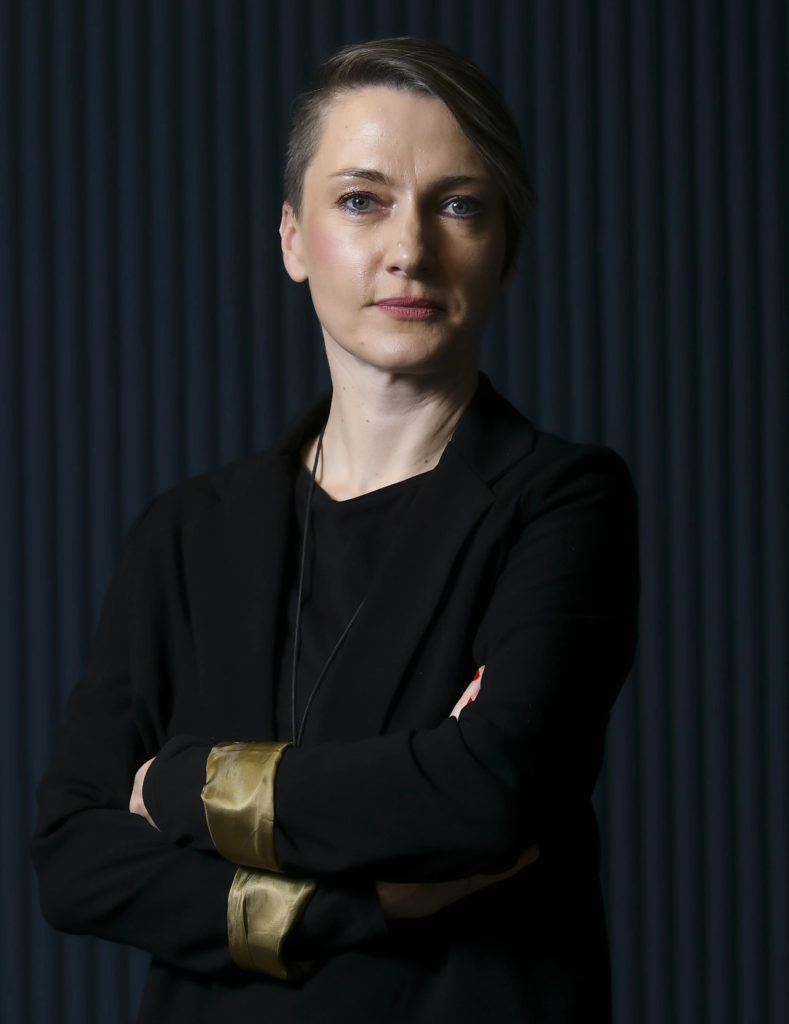
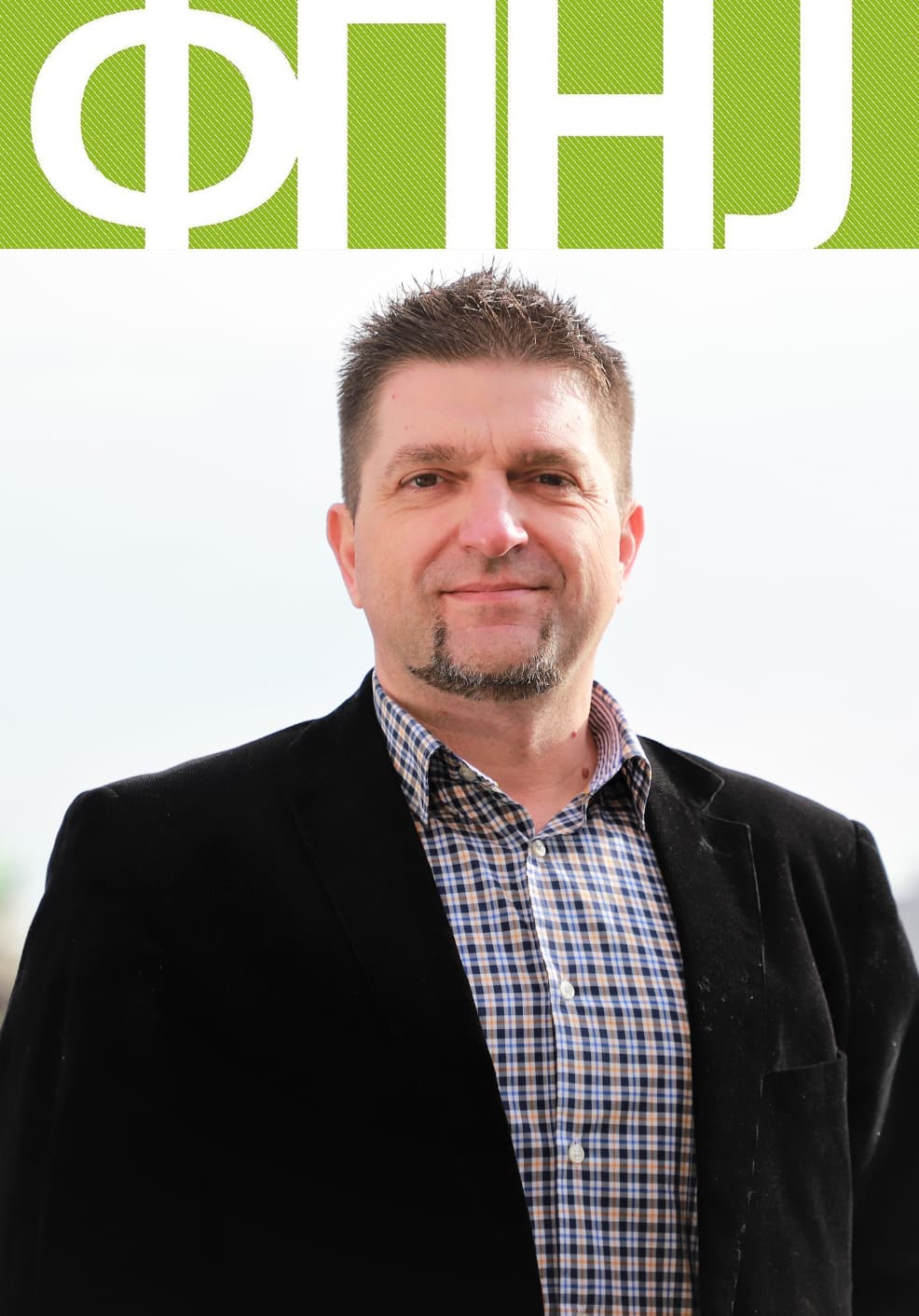
Aleksandra Krstić is a full professor at the Faculty of Political Science, University of Belgrade, where she teaches courses including Political Journalism , Visual Representation of Politics , and Media and Journalism in a Global Context . She serves as Vice-Dean for Research Activities and leads the Center for Media and Media Research. PhD in Culture and Media (2015) from University of Belgrade Master's and BA in Journalism from Faculty of Political Science Her research examines media representation of EU institutions , authoritarian communication , digital journalism ethics , and migrant portrayal in Serbian media . Recent work analyzes visual security narratives , presidential communication strategies , and opinion dynamics in social media . Scientific awards include the Đoko Vlajković Foundation Award (2018) and multiple European integration media awards. She leads international projects like DepolarisingEU (COST Action 22165) and Strengthening Local Media in Serbia (US Alumni Grant). Krstić collaborates with institutions including International Organization for Migration (IOM) and European Commission, and serves on editorial boards for Journal of Regional Security and Political Perspectives .
Prof. Dr. Novica Milić serves as a full professor at the Faculty of Media and Communications (FMK), Singidunum University in Belgrade, Serbia. His academic appointments include teaching Renaissance literature and contemporary literary theory at the Faculty of Philology until 2008, followed by media and communication theory at the Faculty of Arts. He has held visiting positions at Yale University, the University of Sheffield, and the University of Vienna, establishing an international scholarly profile. His educational background features: Graduation from the Department of General Literature and Literary Theory, Faculty of Philology, University of Belgrade (1982) Master's degree (1987) with thesis "Literary understandings of Paul de Man and the theory of deconstruction" Doctorate (2001) with dissertation "Theoretical problems of reading as the basis of modern understanding of literature" Professor Milić's research critically examines intersections between Communication Theory, Media Theory, Political Theory, and Aesthetics. His work investigates how media shapes democratic processes, analyzes power structures in contemporary art through post-aesthetic frameworks, and explores philosophical underpinnings of communication. With roots in literary deconstruction, his scholarship bridges historical perspectives with current challenges in digital media landscapes, emphasizing the role of critical theory in understanding modern societal transformations. His recent publications (2020-2024) demonstrate sustained interdisciplinary engagement across democracy studies, political narratology, and post-aesthetic theory. These works reveal consistent thematic threads connecting media philosophy, political communication, and aesthetic critique, particularly examining how digital platforms reshape democratic discourse and how power operates through contemporary art forms. The publications reflect deep integration of literary theory with political philosophy, showing evolution from classical textual analysis toward modern media ecology concerns. No scientific awards were documented in the available materials. While specific student advising details and grant information remain unmentioned, his extensive publication record (approximately 100 works) and course development—including advanced seminars on political philosophy and methodology—suggest significant mentorship activities and research leadership within the Faculty of Media and Communications ecosystem. Though no dedicated laboratories or formal research teams are referenced, his work operates within FMK's interdisciplinary structure encompassing Media and Communications, Digital Arts, and Political Studies departments, indicating collaborative engagement across Singidunum University's academic framework.
Prof. Dr. Урош Недељковић is a Regular Professor at the Faculty of Technical Sciences (University of Novi Sad), Department of Graphic Engineering and Design. He holds a Master's in Fine Arts (2007) and a PhD (2016) from the Academy of Arts, Novi Sad. His academic career began in 2005 as an assistant, advancing to Associate Professor (2010) and Full Professor (2015). He specializes in graphic communication, typography, and visual rhetoric. His research focuses on advertising effectiveness, readability of typefaces, and visual communication strategies. He has authored/co-authored over 50 academic papers and 30 conference presentations, including the textbook Писмо и типографија . Notable recognitions include the Forma Award (2011) and inclusion in the Докторати у прози publication (2017). He teaches courses on Typography, Visual Culture, and Graphic Design. Previously served as Chair of the Art Council (UPИДИВ) and President of UPИДИВ (2013–2015). Active in professional organizations like the Novi Sad Art Circle and promotes Serbian design through exhibitions and academic projects.
Marko Đorđević is a Full Professor at the Faculty of Pedagogical Sciences, University of Kragujevac, Jagodina, affiliated with the Department of Social and Human Sciences. He holds a PhD in Communicology (2022), a Master's in Journalism and Communication (2012), and a Diploma in Art and Media Theory (2008). His research spans communication studies, rhetoric, media philosophy, and educational pedagogy. Doctorate: Communicology (2022) Master's: Journalism and Communication (2012) Diploma: Art and Media Theory (2008) His work focuses on teacher communication competence, digital communication environments, media literacy, and political oratory. Recent publications examine flipped classroom models, minority media, and the intersection of media and existential meaning. He contributes to journals like Pedagogika-Pedagogy , The New Educational Review , and Uzdanica . Đorđević teaches subjects including Communicology, Rhetoric and Communication Skills, Media Literacy, and Media Communication. He participated in a bilateral project (2017–2019) on innovative teaching models aimed at enhancing transparency in university education and competitiveness in the labor market. His interdisciplinary approach bridges communication theory, educational practice, and sociocultural analysis.
Aleksandar Bošković serves as a Lecturer in Bosnian-Croatian-Serbian language at Columbia University's Department of Slavic Studies. His academic profile centers on Russian and Eastern European Modernist literature, Yugoslav and Post-Yugoslav Studies, and Balkan Studies, with methodological grounding in Comparative Literature, Critical Theory, and Visual Studies. Bošković specializes in avant-garde literature and experimental artistic practices, particularly through comparative media analysis. His current research project examines negation practices across literature, film, visual arts, and radio in former Yugoslavia in relation to the concept of value. He contends that Yugoslav Zenithism's legacy must be understood as "conceptually unconscious" of socialist Yugoslavia's experimental art, and that negation practices are fundamentally linked to value systems (symbolic, economic, social, and political). This perspective positions communal responsibility, rather than identity, as the cornerstone for collective futures in post-Balkan and European contexts. His publications consistently engage with avant-garde movements through theoretical frameworks bridging historical analysis and critical theory. Recent co-edited works like Zenithism: A Yugoslav Avant-Garde Anthology (2023) demonstrate his commitment to recovering experimental cultural narratives while revealing how negation mechanisms operate across artistic media to redefine value systems. Bošković's scholarly contributions have been recognized through competitive fellowships: Collegium de Lyon Fellowship (2019-2020) Michael I. Sovern/Columbia Affiliated Fellowship at the American Academy in Rome (2023-2024) His current Rome fellowship advances research on negation and value in Yugoslav experimental art, while public records indicate no active graduate student advising. His work remains anchored in textual and theoretical analysis of avant-garde movements, with implications for understanding contemporary European communal formations beyond identity politics.