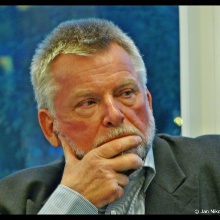
Gerhard Hirschfeld is an Honorary Professor at the Department of History, University of Stuttgart, and has served as Director of the Bibliothek für Zeitgeschichte since 1989. His research focuses on Social and Cultural History of World War I , Comparative Occupation History of World War II , 20th Century Netherlands History , and Academic Emigration post-1933 . He has been a Fellow of the Netherlands Institute of Advanced Studies in the Humanities and Social Sciences (1996/1997, 2006/2007) Fellow of the German Historical Institute London and held leadership roles including Chair of the German Committee for the History of WWII (1991–2000) and President of the International Committee for the History of WWII (2000–2010). His publications span monographs, edited volumes, and essays on occupation policies, collaboration, and exile studies. Recent works emphasize the media representation of WWI , continuity of nationalist rhetoric , and ethical dimensions of historical taboos . He contributes to journals like Zeithistorische Forschungen and Tijdschrift voor Geschiedenis . Scientific awards include Fellowships at NIAS and DHIL Editorial leadership in academic series like Zeit der Weltkriege and Schriften der Bibliothek für Zeitgeschichte and advocacy for interdisciplinary war studies.
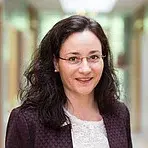
Prof. Dr. Isabelle Stauffer holds the Professorship for Modern German Literature at the Catholic University of Eichstätt-Ingolstadt , where she also serves as Vice Dean of the Faculty of Languages and Literature and Deputy Director of the Center for Religion, Church, and Society in Change (ZRKG) . She co-leads the ZRKG Research Field III on "Religiosity in Contemporary Transformation Processes" and examines intersections of literature with gender/queer studies , postcolonial theory , and cultural history of gallantry . Studied at University of Zurich and Humboldt University Berlin Doctorate (2006) and Habilitation (2015) from Johannes Gutenberg University Mainz Previously held positions at Goethe University Frankfurt, Philipps University Marburg, and Saarland University Her research spans early modern to contemporary German literature , with specializations in intermediality (film, digital media), epistolary culture , and dandyism/fashion history . Current projects include organizing the 2025 IVG congress panel "Figures of Crisis – Crisis of the Figure" and editing the complete works of Aurora von Königsmarck. She has published extensively on topics including: Postcolonial transformations in early modern texts Religious discourse in contemporary literature Intermedia reflexivity in digital age narratives Queer performativity in historical and modern contexts Translation as cultural transfer mechanism Surface aesthetics in cinema and art
Katrin Bromber is a German Researcher at the Centre for Modern Oriental Studies in Berlin, where she has led the research group "Progress and its Discontents: Ideas, Practices, Materiality" since 2014. Her career spans senior research roles at ZMO and academic teaching positions at the University of Vienna. Nationality: German. Language skills: Native German, fluent English/Swahili, moderate Amharic, good reading knowledge in French/Russian, basic Tigrinya. Habilitation (2009–): African Studies, University of Vienna PhD (1993): African Linguistics, University of Leipzig MA (1988): Swahili Studies, University of Leipzig Katrin Bromber's research interrogates intersections of body politics , sports history , Swahili linguistics , and Ethiopian modernity . Her work traces how physical culture, media representation, and colonial/imperial narratives shape national identities across Africa and Asia. Current focus: "Progress" as contested concept in Ethiopian and Gulf urbanism. Key article trends reflect her translocal methodology: 2017 studies on Ethiopian stadiums and fitness culture ; 2014-2013 publications analyzing East African military press , sports branding in the Gulf , and Swahili poetry ; 2007-2000 works on colonial linguistic politics , Indian Ocean slavery , and German colonial Swahili promotion . Recurring sub-fields: body as political text, translocal modernity, media historiography. Scientific Awards: Research Grant of the Berlin City Council (1999-2000): Gendered Slavery study Service to the Scientific Community: Chairwoman, Academic Association for Horn of Africa Studies (2012–) Editorial Advisory Board - Stichproben. Vienna Journal of African Studies (2015–) Editorial Advisory Board - Studies of Department of African Languages and Cultures (2015–) Teaching Experience: Textlinguistics, Mediacommunication, African Linguistics, Swahili (elementary/advanced), Swahili Literature, Swahili in Arabic Script at Leipzig, Humboldt-Berlin, Free Berlin, and Vienna universities Anthropology of the Body at Mekelle University Summer School Field Research: Tanzania (1993-2003): Swahili Poetry, Intellectual History Kenya (2005): Indian Ocean WW2 UAE/Bahrain (2009): Sports and Body Cultures Ethiopia (2009-2015): Sports, Body Politics
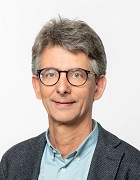
Prof. Dietrich Erben holds the Chair of Theory and History of Architecture, Art and Design at TUM since 2009. He specializes in art/architecture history from the early modern period onward, focusing on political iconography and architectural theory. His career includes teaching at Ruhr-Universität Bochum (2003–2009) and research fellowships in Paris, Florence, and Venice. He earned his PhD (1994) and habilitation (2002) in art history. Research interests: Interplay between architectural forms and societal structures Global art relations and transnational architecture Baroque/Rococo cultural dynamics Publications highlight theoretical frameworks for architectural analysis and historical studies of built environments. Recent works explore transformation processes in modern societies and the role of humanistic values in architecture. Awards include DFG Fellowship (1998) and prestigious research grants from Max Planck Institute (Florence) and German Study Center Venice.
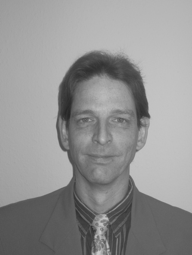
Dr. Alexander Heinemann is a Lecturer and curator at the University of Tübingen's Institute of Classical Archaeology. Previously, he held a lecturer position at Freiburg University (2006-2017) and participated in archaeological projects across Turkey, Greece, and Italy. His work centers on Roman state monuments, visual narratives, and classical reception studies. PhD in Classical Archaeology (Heidelberg, 2003) Magister Artium in Classical Archaeology (Heidelberg, 1999) Research focuses include Roman Imperial topography , Greek vase painting , and visual culture analysis . His monograph on Dionysian imagery and co-edited volumes on symposion culture and visual narration highlight interdisciplinary approaches. Recent publications analyze Roman imperial iconography, Hellenistic ivory art, and Dante's archaeological engagement. Key themes involve political symbolism , ritual practices , and artifact contextualization . Traveling Fellow, German Archaeological Institute (2004/5) Gerda Henkel Foundation Fellow (2003/4) Active in public outreach through exhibitions like 'Vom Trinken und Bechern' and collaborative editorial projects, he serves as co-founder of das Rollpodest platform for archaeological collections.
PD Dr. Jens Wolff is a German theologian and researcher at the Faculty of Theology, University of Rostock . His work bridges image theory , cultural hermeneutics , and negative theology , with a focus on Lutheran theology and its intersections with literature and art . Education : Studied at Eberhard-Karls-Universität Tübingen, Martin-Luther-Universität Halle/Wittenberg, Ludwig-Maximilians-Universität München. Academic Timeline : 1995–1998 Heidelberg Academy researcher, 1998–2002 assistant at Münster's Faculty, 2003 PhD, 2005 ordained pastor, 2009–2012 DFG project on Sigmund von Birken, 2012–2015 DFG project on Image Theory, 2015 habilitation. Wolff's research explores image and media theory through theological lenses, interrogating figurative knowledge , religious rhetoric , and intercultural hermeneutics . His work connects Baroque literature (e.g., Klopstock, Hamann) with contemporary philological and deconstructive methods , examining tensions between sacralization and secularization . His recent publications analyze the word of God as performative polysemy in Lutheran thought, death and utopia in Stefan Andres' work, and iconic anthropology in Reformation contexts. He co-edited the two-volume Bild und Tod (2016), a foundational text on image-death relations. Awards: Martin-Luther-Preis für den akademischen Nachwuchs (2005) for his dissertation on Metapher und Kreuz . Wolff's advising and collaborative work focus on interdisciplinary image studies , including DFG-funded projects and symposia like the Image and Sound conference (2014). He maintains links to institutions in Bratislava , Frankfurt , and Brazil .
Yashar Mohagheghi is a Researcher at the Department of German and General Literary Studies, RWTH Aachen University, where he has worked since 2018 under Prof. Dr. Caroline Torra-Mattenklott. His academic trajectory includes a postdoctoral fellowship at Bielefeld University's Graduate School of Linguistics and Literary Studies (2012–2017), a research stint at the Bibliothèque Nationale de France (2015), and a Junior Lecturer position at Johns Hopkins University (2011). His research interests span Literary Theory, Cultural History, and German Literature with specialized focus on Time Theory, Festival Culture, Material Philology, and Small Literary Forms. Mohagheghi's work bridges systematic analysis of concepts like Festkultur and Zeitlichkeit with historical investigations of Early Modern literature, Goethe-era writings, Aestheticism, and Modernism. His scholarship frequently examines intersections between material culture, sensory theory, and political communication across different historical periods. Mohagheghi's publications reveal a trajectory emphasizing temporal aesthetics in Hölderlin's work, material philology in 19th-century literature, and sociological analyses of Weimar Republic culture. His research demonstrates increasing engagement with ecological perspectives in literary studies, particularly regarding resource economies in book production and sustainability in literary materiality. Publikationspreis 2021 der Philosophischen Fakultät der RWTH Aachen Dissertationspreis 2018 der Kulturwissenschaftlichen Gesellschaft As an active academic organizer, Mohagheghi has co-chaired significant conferences including Wissenschaften des Konkreten (2023) and Ressource ‚Schriftträger‘ (2021), demonstrating leadership in contemporary literary theory discussions. His scholarly network extends across German, French, and American institutions, with particular strength in European literary theory and cultural history.
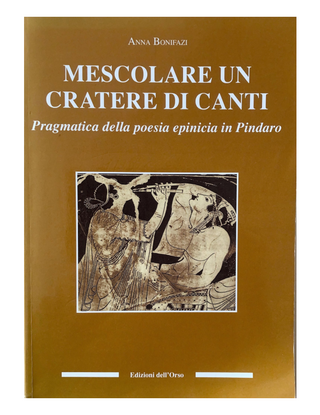
Prof. Anna Bonifazi holds a Professorship in Discourse Studies at the Department of Linguistics, University of Cologne. Her research spans Discourse Analysis, Pragmatics, Cognitive Linguistics, and Multimodal Communication with a focus on Ancient Greek Linguistics and Oral Epic traditions. She investigates phenomena like anaphoric cohesion in long texts, multimodal storytelling in film and oral traditions, and ancient Greek particles' discursive functions. Her work explores how multimodal elements (e.g., visual, musical, gestural) interact in communication, particularly analyzing films (e.g., mystery genres), ancient texts (e.g., Homeric epics), and South Slavic oral narratives. She examines cross-modal iconicity, viewpoint blending, and the cognitive underpinnings of discourse structures. Recent publications address topics like anaphoric strategies in crime stories and syntactic patterns in ancient Greek conversational frameworks. Prof. Bonifazi's research often bridges classical philology and modern cognitive theories, emphasizing embodied cognition and the interplay between language and other semiotic systems. She collaborates internationally on projects involving gesture analysis in storytelling and ancient papyrological studies. Her interdisciplinary work integrates linguistics with musicology, film studies, and cognitive science. Administratively, she oversees the Discourse Studies research group at Cologne and mentors assistants like Dr. Sandra Debreslioska and Madeleine Frings. Her lab focuses on multimodal discourse analysis using experimental and corpus-based methods.
Cecilia Valenti is a Junior Professor for Film Studies at the Institute for Film, Theatre, Media and Cultural Studies, Johannes Gutenberg University Mainz. Her research spans feminist postcolonial theory, archival practices of world cinema, television history, and militant documentary traditions. She actively organizes the IMACS Master's program and participates in academic self-governance via the Georg Forster Forum. Valenti's publications focus on global film heritage, feminist media critique, and political film practices. Her work intersects with 1930s left-wing cinema, archival activism (e.g., Cinemien network), and feminist reworkings of militant film. She teaches seminars on anti-colonial film practice, including Sarah Maldoror's work. She is affiliated with the Zeughauskino Berlin's archival department and co-founded the curatorial collective 'The Canine Condition,' which organized film series in Berlin, Frankfurt, Vienna, and London (2009–2017). Her contact details: cevalent@uni-mainz.de, phone +49 (6131) 39-31750, office hours Wednesday 4-5 PM by appointment.
Prof. Dr. Birgit Ulrike Münch serves as Professor of General Art History with focus on Dutch Art and Vice Rector for International Affairs at the University of Bonn's Faculty of Arts and Humanities. Her academic leadership includes directorship of the Institute of Art History (2018-2020) and membership in university-wide committees including the Faculty Council and Habilitation Commission. Her educational background encompasses Magistra Artium in Art History and Medieval/Modern History from Heidelberg University (1995-2003), with additional studies at Paris-Sorbonne and FU Berlin. Her doctoral dissertation Geteiltes Leid. Die Passion Christi in Bildern und Texten der Konfessionalisierung (2007, summa cum laude) and habilitation Jenseits der Académie: Studies on Alternative Art Publics in France and the Netherlands from 1450 to around 1815 (2016) established foundational contributions to Northern European art historiography. Münch's research spans Flemish, Dutch, German, and French art (15th-18th centuries), with pioneering work on genre painting genesis, proverb visualization, and illness representation. She investigates how emotions like existential anxiety shaped artistic production during crises such as the Reformation, and examines court dwarf agency through interdisciplinary collaborations. Recent projects analyze syphilis's impact on art and colonialism's representation in Dutch still lifes, demonstrating her commitment to methodological innovation at the intersection of art history and medical humanities. Her publication trajectory reveals increasing engagement with postcolonial frameworks, particularly in re-examining Northern European art's entanglement with slavery and dependency systems. The 2022-2025 works demonstrate sophisticated interdisciplinary approaches connecting visual culture with critical race theory, gender studies, and economic history. International Wolfgang-Ratjen Prize (2008) for research on graphic arts Nomination for DFG's Heinz Maier-Leibnitz Prize (2016) Senior Global Fellowship at University of St Andrews (2022) Membership in Comité International d'histoire de l'Art (CIHA) As Principal Investigator for the Bonn Center for Dependency and Slavery Studies (2020-present), she directs the project "Prostitution, Serfdom, Slavery: Picturing Female Dependencies in Early Modern Amsterdam." Her leadership in the GOTH Symposium and MeWo Mentoring Program for women at the Centre d'Excellence Denis Mukwege highlights commitment to gender equity. Major grants include DFG Excellence Cluster funding and BMBF research fellowships for collection recontextualization projects. She co-founded the Kunsthistorisches Forum Irsee (2014-2020), producing 7 edited volumes on premodern art communities. Current leadership includes the "Aby Warburg's Bonn Years" research group and the Crossroads project on Frankfurt's 16th-century art market with North American collaborators. Her curation of the "A Feast for the Eyes? Dutch Still Lifes in Detail" exhibition exemplifies her commitment to public scholarship and decolonial museum practices.
Peter Schneck is a Professor and Chair of American Studies at Osnabrück University, founder of the International Osnabrück Institute on the Cultural Study of the Law (OSI), and co-director of the research cluster 'Cognition and Poetics'. He actively engages in interdisciplinary research at the intersection of legal and cultural studies. Director, Osnabrück Summer Institute on the Cultural Study of the Law Member, German Association for American Studies (DGfA) board (2006–present) President, DGfA (2008–2011) His research focuses on law and literature, cognitive poetics, media history, and cultural studies. Recent work examines rhetorical strategies in legal conflicts, ethical dimensions of postmodern fiction, and transatlantic responses to terrorism in literary and media contexts. Publications highlight trends in interdisciplinary methodologies, exploring connections between legal evidence and literary narratives, as well as the cultural impact of terrorism on fiction. Collaborations include institutions like the University of Münster’s SFB 1385 and UC Berkeley’s Center for the Study of Law & Society. Scientific Awards: Fellow, National Museum of American Art, Smithsonian Institution Peter leads the OSI and co-directs the 'Cognition and Poetics' research cluster, fostering international academic exchange on cross-disciplinary legal and cultural regimes. His work bridges American studies, legal theory, and literary analysis.
Oliver Janz is Professor of Modern History at the Department of History and Cultural Studies at Free University of Berlin, where he has been teaching since 2007. He previously served as Dean of the Department from 2017-2021 and has held visiting professorships at institutions including the German Historical Institute in Rome, University of Bern, and University of Trient. His academic leadership extends to editorial roles for multiple book series and journals focusing on modern Italian history, transnational history, and World War I studies. Doctorate (1991): Freie Universität Berlin - History of Protestant clergy in Prussia 1850-1914 (summa cum laude) Magister Artium (1985): Freie Universität Berlin - History Studies (1978-1985): History, Philosophy and Sociology at University of Heidelberg, Bielefeld, and Freie Universität Berlin Professor Janz specializes in several interconnected research areas that examine European history through transnational and comparative lenses. His primary focus is on the history of World War I, particularly examining commemoration practices, the cult of fallen soldiers, and the war's transnational dimensions. He has extensively researched the history of the European bourgeoisie, nation and nationalism in Europe, and the intersection of family, gender, and political identity. His work on Italian history spans from the Risorgimento through the Fascist period, with particular attention to religious and cultural dimensions of political movements. Janz is a leading scholar in transnational history methodology, exploring how historical phenomena transcend national boundaries and how comparative approaches can illuminate shared European experiences. Janz's scholarly output demonstrates a consistent focus on memory, commemoration, and the cultural dimensions of warfare, particularly World War I. His work reveals how societies process collective trauma through rituals, monuments, and narratives that intertwine religious, familial, and national identities. The international encyclopedia project 1914-1918-online represents a significant contribution to digital humanities, creating a global platform for understanding the war's multifaceted impacts. His research increasingly examines the digital representation of historical memory, bridging traditional scholarship with contemporary digital culture. Research fellowship from the DFG (2000-2004): "The Cult of the Fallen: Soldiers in Italy during the First World War" DAAD Fellowship (1996): "Exchange of Young Scholars between Italy and Germany" Fellow of the FAZIT-Stiftung (1990) Maison des Sciences de l'Homme Fellowship (1985) Fellowship Grant from the "Studienstiftung des Deutschen Volkes" (1979-1985) Professor Janz has supervised numerous master's students at Freie Universität Berlin, with thesis topics spanning European history from the 19th century to the contemporary period. His students have examined subjects including war commemoration, gender history, colonial encounters, and political movements across Europe. As editor of the "1914-1918-online" International Encyclopedia of the First World War, he has coordinated significant international research funding. His leadership extends to multiple research projects including Collaborative EuropeaN Digital/Archival Infrastructure (CENDARI), Making War, Mapping Europe, and studies on German Soldiers and the Ottoman Empire. Janz leads the research team focused on World War I studies at the Friedrich-Meinecke-Institut, which includes multiple researchers working on the 1914-1918-online encyclopedia project. His team collaborates with international partners across Europe and beyond, creating a network of scholars dedicated to transnational approaches to war history. The research group maintains strong connections with institutions including the German Historical Institute in Rome and participates in the Berlin Program for Advanced German and European Studies.
Prof. Dr. Gerd Bayer is a faculty member at the Department of English and American Studies, Friedrich-Alexander University of Erlangen-Nürnberg. He holds the academic rank of Professor and has been an Akademischer Direktor since 2016, with an außerplanmäßiger Professor title since 2017. His educational background includes an M.A. and 1. Staatsexamen in English and American Studies and Geography from FAU (1998), a Ph.D. (2003), and a Habilitation (2012). Current research focuses on Restoration prose fiction, Holocaust literature/film, postmodernism, and epistolary culture. Grants include the Thyssen-Foundation Grant (2018-2023) and DFG Grant (2009-2012). He has served on editorial boards for journals like The Journal of Popular Culture and Humanities (Switzerland) , and as Associate Editor for The Journal of Postcolonial Writing (2012-22). Peer review activities span 25+ journals and publishers, including Cambridge University Press and Routledge. His supervision includes Christof Beer (2021), Jaroslaw Jasenowski (2024), and others. He is currently on leave from April to September 2025 and will deliver a keynote on metal documentaries in Sevilla (June 2025).
Dr. Katharina Fink is a researcher and lecturer with expertise in Art Studies, African Studies, and Cultural Studies. She has been affiliated with the University of Bayreuth since 2009, primarily through the Bayreuth Academy of Advanced African Studies, and serves as an Affiliated Researcher at the University of Johannesburg's Department of Historical Studies since 2008. Her career spans teaching roles at the Universities of Tübingen, Johannesburg/South Africa, and Hof-Münchberg, alongside self-employment as a cultural worker and author. Education 2015: Dr phil in Art Studies and African Relations at BIGSAS, University of Bayreuth Magistra Artium in Empirical Cultural Studies, Comparative Literature, and Rhetoric from the University of Tübingen Research and Publications Her research explores intersections of African art, postcolonial theory, and visual culture. Recent publications include "Ghosts, spectres, revenants" (2020) on hauntology's role in envisioning futures, "Revolution 3.0" (2019) analyzing radical political iconography, and "Women's life worlds 'in-between'" (2011) focusing on gender dynamics in African cultural contexts. Awards Vilakazi Award 2015 for African Studies Professional Roles Katharina contributes to teaching, research, and publications in African Studies, with affiliations across Germany and South Africa. Her academic work is complemented by cultural projects via her self-owned company, www.himmelgruen.net.
Christiane Kruse is a Professor of Art History and Visual Cultures at the Muthesius University of Art and Design Kiel since 2011. She serves as the Managing Director of the Institute for Art, Design, Media (IKDM) since 2014 and previously held the Equal Opportunities Officer role until 2020. Education: Doctorate (Dr. phil.) at LMU Munich (1994) Habilitation at University of Konstanz (2002) with Venia Legendi Studies in Art History, Modern German Literature, and Medieval Studies (1983–1989) Research Interests span art history, visual cultures, image anthropology, media theory, and cultural studies. Her work explores the intersection of art, technology, and identity, with a focus on iconoclasm, gender representation, and sustainability in design. She investigates how visual media shape historical memory and contemporary discourse. Recent Publications address topics like contemporary iconoclasm, eco-art practices, and the role of masks in global visual cultures. Her edited works trace historical dialogues between art and science, religious imagery, and interdisciplinary approaches to image-making. Scientific Awards: Research Fellowship from Herzog August Library Wolfenbüttel (2007) Fellow at the Wissenschaftskolleg zu Berlin (2010–2011) Other Roles include Visiting Professorships at Humboldt University Berlin (2013/14) and University of Karlsruhe (2004/05), Acting Professorships at TU Dresden and Braunschweig University of Fine Arts, and contributions to curatorial projects like documenta 13.