Abey Campbell is an Assistant Professor in Computer Science at the School of Computer Science, University College Dublin. He holds roles such as Deputy Programme Director for Computer Science, Director of UCD VR Lab, and 1st Year Stage Coordinator. His research focuses on Augmented Reality (AR), Virtual Reality (VR), Mixed Reality (MR), and Multi-Agent Systems with applications in education, healthcare, and human-computer interaction. Campbell has coordinated modules like Augmented and Virtual Reality, Computer Graphics, Game Development, and Mobile Computing. He earned his BSc and PhD in Computer Science from University College Dublin. His work explores touchless interaction technologies, machine learning agents in STEM education, and ethical implications of emerging technologies. Notable contributions include RenderKernel for real-time rendering systems and studies on AR's role in decision support systems. Campbell has secured a grant from Enterprise Ireland for collaborative design documentation and participates in professional activities like peer reviewing for Frontiers in Virtual Reality and IEEE conferences. His collaborative projects include developing AR tools for veterinary training and evaluating immersive VR experiences in nursing education. The UCD VR Lab under his direction focuses on applied research in spatial computing and interactive systems.
Helena Mentis is a Professor in the Department of Information Systems and Affiliate Professor in the Department of Computer Science and Electrical Engineering at the University of Maryland, Baltimore County (UMBC). She directs the Bodies in Motion Lab (BiMLab) and is a core member of the Human Centered Computing graduate program and the Interactive Systems Research Center. Her work focuses on sociotechnical systems in healthcare, including telemedicine, surgical collaboration, and technologies for older adults with cognitive impairments. Mentis holds a PhD from Penn State, an MS from Cornell, and a BS from Virginia Tech. Her research spans human-computer interaction (HCI) , computer supported cooperative work (CSCW) , and health informatics . Key projects include developing telemedicine systems for surgical training, sensor-based systems for Parkinson’s patients, and online safety tools for older adults with mild cognitive impairment. She has received significant NSF funding, including a $518k CAREER grant for surgical telementoring systems and $499k for cybersecurity research with older adults. Her articles analyze topics like the effectiveness of telementoring in surgery, ethical design of medical systems, and collaborative security settings for couples facing cognitive challenges. Mentis has pioneered frameworks for responsible computing education and peer-led ethics training in computing curricula. Prior to UMBC, she held postdoctoral roles at Harvard Medical School, Microsoft Research, and the University of Cambridge. Current initiatives include expanding healthcare workforce access via telemedicine and designing inclusive systems that address marginalized groups in digital health. Her work emphasizes participatory methods, ensuring often-overlooked stakeholders (e.g., trainee surgeons, motor disability patients) shape technological solutions.
Robert Sitnik is a Professor and Dean of the Faculty of Mechatronics at Warsaw University of Technology, where he is affiliated with The Institute of Micromechanics and Photonics. He earned his Doctorate in 2002 and has established himself as a leading researcher in 3D optical measurement techniques and applications. His research focuses on 3D light measurement, optical shape analysis, structured light techniques, and 3D data processing with applications spanning cultural heritage documentation and medical imaging. As the leader of the 3D/4D Optical Surface Measurement Team, he has pioneered innovative approaches to surface measurement and documentation. His work demonstrates strong interdisciplinary connections between mechanical engineering, computer vision, and practical applications in both cultural preservation and healthcare. His research has led to significant advancements in 3D scanning technologies, particularly for human body analysis and cultural heritage conservation. His publications reveal a consistent research trajectory focused on improving accuracy, efficiency, and applicability of 3D measurement systems. His scientific impact is evidenced by 159 publications, an h-index of 18 in Scopus and 17 in Web of Science, and 103 promoted theses. His research has been supported by 22 projects, resulting in 1 patent and substantial contributions to both academic knowledge and practical applications. As an academic leader, he has supervised numerous students and researchers, contributing significantly to the development of expertise in optical measurement technologies. His work bridges theoretical research with real-world applications in medical diagnostics, cultural heritage preservation, and industrial measurement systems.
Dr. Hisham AbouGrad is a Senior Lecturer in Computer Science and Digital Technologies at the University of East London, within the School of Architecture Computing and Engineering. With over 20 years of experience in IT industry and higher education, he has taught at multiple UK institutions including Falmouth University, Northumbria University, Roehampton University London, and University of Plymouth. Department of Computer Science and Digital Technologies School of Architecture Computing and Engineering University of East London Dr. AbouGrad holds a DProf (DBA) in Workflow Information Systems Performance from London South Bank University (2020), an MSc in Software Engineering from University of Bradford (2002), and an MBA in Management from University of Lincoln (2002). His research spans multiple domains including Business Process Management (BPM), Decision Support Systems (DSS), Workflow Systems Performance, Enterprise Content Management (ECM), Machine Learning, and Geographic Information Systems (GIS). His recent publications demonstrate a strong focus on applying AI and machine learning to solve real-world problems in finance, healthcare, agriculture, and transportation. His publication trends show a clear progression from foundational work on business process management and enterprise content systems toward cutting-edge applications of deep learning, blockchain, and computer vision in diverse domains. The breadth of his research covers financial technology, healthcare monitoring, agricultural optimization, transportation safety, and food security systems. Fellow of the Higher Education Academy (FHEA) Project Management Professional (PMP) in IT Professional member of the British Computer Society (BCS) since 2009 Member of the Central & North London Branches (CeNLB) Committee of BCS Dr. AbouGrad actively supervises doctoral research (ProfDoc, PhD), master's dissertations, and undergraduate degree projects. He has participated in doctoral research workshops and academic events to support university researchers. His teaching portfolio includes modules on Database Systems, Software Engineering, Information Systems, and Business Information Systems. He is a member of the Intelligent Systems Research Group and contributes to Research Enhanced Learning & Teaching initiatives at UEL.
Ani Nahapetian is a researcher affiliated with the University of California, Los Angeles, USA , specializing in Wearable Computing , Mobile Health , and Computer Security . Her work explores the intersection of sensor technology, human-computer interaction, and secure system design. Research Interests span wearable devices for health monitoring, side-channel security vulnerabilities in mobile systems, and adaptive wireless technologies. She has contributed to Machine Learning applications in interval training and context modeling. Recent Publications highlight trends in Wearable interfaces using motion sensors Privacy risks in smart device ambient sensors Mobile systems for medical diagnostics and environmental sensing Collaborative Work includes projects with researchers in biomedical engineering, computer security, and embedded systems.
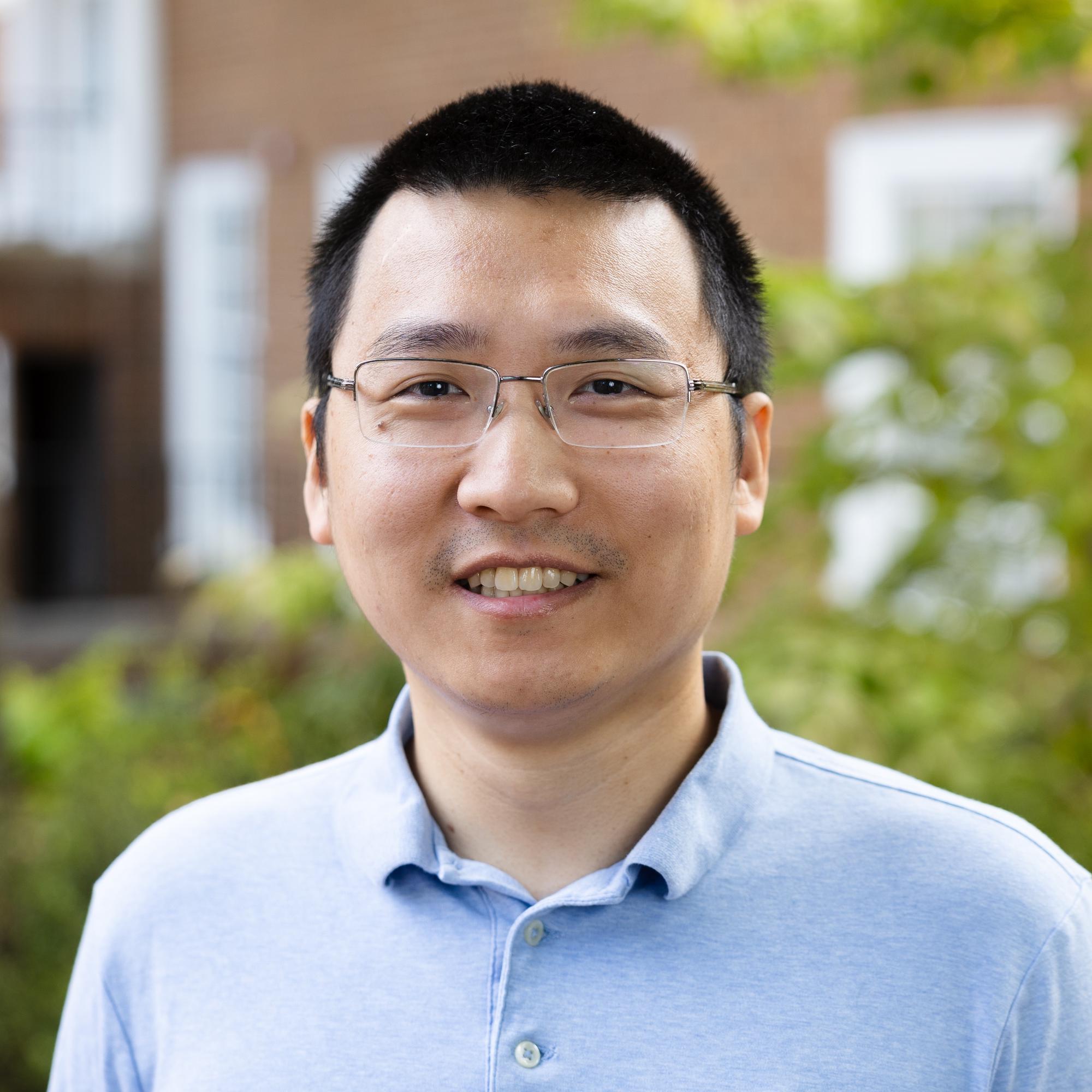
Kun Qian is an Assistant Professor in the Department of Computer Science at the University of Virginia , affiliated with the Link Lab and WINK (Wireless Intelligence & NetworKing) Lab . His research focuses on ambient intelligence and ubiquitous connectivity through wireless technologies. Ph.D., Tsinghua University (2019) B.E., Tsinghua University (2014) His work spans wireless networking , smart sensing , and mobile computing , with applications in next-generation communication , IoT sensing , and autonomous driving . Recent publications highlight advancements in millimeter-wave coverage expansion , wireless spoofing detection , and visual-RF fusion for channel modeling. Notable awards include the SenSys Best Paper Award (2023) and MobiCom Best Paper Award (2020) . He leads courses like CS4501: Wireless for the Internet of Things and mentors PhD students Shunqiang Feng and Mohan Zhao .
George Evangelou is a researcher at Goldsmiths, University of London, specializing in the intersection of human-computer interaction, cognitive psychology, and haptics technology. He completed his Doctoral thesis in 2025 titled 'Investigating the effects of mid-air haptics on the sense of agency,' examining how haptic feedback influences users' sense of control in virtual and automotive environments. His work focuses on mid-air haptics integration, gesture-based interactions, and the psychological mechanisms underlying agency perception. PhD: Goldsmiths, University of London (2025) Research interests include evaluating how sensory modalities and feedback mechanisms affect user agency in virtual reality, automotive interfaces, and touchless systems. His studies explore implicit and explicit measures of agency, trust in technology, and the design implications of haptic feedback systems. He has collaborated extensively with researchers like James W. Moore and Orestis Georgiou on projects involving driving simulators, automotive infotainment systems, and virtual object interaction paradigms. Key contributions include demonstrating that mid-air haptics enhance user agency and trust in gesture-based systems, particularly in automotive contexts. His work bridges psychological theory with practical HCI applications, offering insights into improving user experience through optimized haptic feedback designs.
Tomasz Bednarz is a Professor at the University of New South Wales' School of Engineering and Information Technology, with affiliations at CSIRO Data61 and Kyushu University (PhD). His work bridges Artificial Intelligence , Virtual Reality , and Human-Computer Interaction , focusing on data visualization and creative computation . Key collaborations include researchers from biomedical imaging to urban analytics. University of New South Wales, Sydney, NSW CSIRO Data61, Sydney, NSW Kyushu University, Japan (PhD) His research explores immersive analytics through projects like VR-based emotion elicitation, physics-informed AI for simulations, and AI-enhanced visual storytelling frameworks. Recent work applies Generative AI to graphics and reinforcement learning for location recommendation systems. Publications highlight interdisciplinary impact across conservation , healthcare , and disaster management . Article trends show: (1) 2025 focuses on AI-driven graphics and location recommendation systems (2) 2023-2024 emphasizes VR analytics, wildfire modeling, and AI-human collaboration (3) 2018-2022 expands visualization narratives, eye-tracking, and emotion analysis (4) pre-2015 foundational work in heterogeneous computing and VR tele-operation. Major contributions include: Co-developing Gravity++ for interactive data storytelling Advancing VR for conservation and mining robotics Pioneering touchless biofilm interaction systems Establishing frameworks for 3D urban analytics and medical imaging
Paul Lukowicz is a distinguished researcher affiliated with the University of Kaiserslautern and DFKI, Kaiserslautern, Germany. His work focuses on Human Activity Recognition (HAR) using wearable sensors, Augmented Reality for surgical navigation, and Quantum-Inspired Computing for AI efficiency. He leads interdisciplinary projects involving capacitive sensing , bio-impedance , and large language models (LLMs) in real-world applications. Research Trends from his recent publications (2024-2025) reveal a focus on Energy-efficient AI for wearables Context-aware AR systems Physics-informed neural networks Quantum machine learning Human-in-the-loop training frameworks Medical device innovation His work spans health applications , industrial IoT , and human-AI collaboration , often involving partnerships with institutions like University of Passau and international collaborators. Key technical approaches include sensor fusion , cross-modal learning , and edge computing for wearable systems.
Mohamed Kari is a Presidential Postdoctoral Fellow at the Department of Computer Science, Princeton University , and an Associate Member at the University of Duisburg-Essen 's Integrated Information Systems research group. His work bridges Mixed Reality , Human-Computer Interaction , and Machine Learning , with a focus on semantically coherent, sensor-rich systems. PhD in Computer Science from University of Duisburg-Essen (with highest distinction) Fulbright Full Grant recipient for studies in the U.S. Research Interests span immersive technologies, sensor integration, and context-aware systems. He investigates how to seamlessly blend virtual actions with physical environments through Scene Responsiveness and develops audio-augmented reality applications like SoundsRide for automotive contexts. Article Trends reveal his focus on environmental manipulation in mixed reality affordance-synchronized user experiences pose-aware object substitution mobile and constrained VR input methods automotive context modeling Scientific Awards include Best Paper Awards at ACM UIST 2021 and 2023 Honorable Mention , as well as recognition for his dissertation with the highest distinction. Thesis Supervision at UDE involves rigorous requirements: English-language theses using LaTeX , original research with structured problem statements, and mandatory video presentations of contributions. He has guided students in topics like Intra-Company Networking Platforms and Automated UI Testing . Laboratory Affiliations include Princeton's Situated Interactions Lab , ETH Zurich's Sensing, Interaction & Perception Lab , and industry labs at Apple , Meta , and Porsche Emerging Tech Research .
Dean Mohamedally is a Professor in Computer Science at University College London, specializing in Software Engineering and Industry Projects. He leads the Software Systems Engineering Group and is the Projects Director for the UCL Industry Exchange Network (IXN), co-founding it in 2011 with Dr Graham Roberts and Geoff Hughes. His work focuses on bridging academic and industrial collaboration through applied software engineering projects, particularly in healthcare via the NHS IXN Programme. He is Co-Chair of the National Framework for IXNs, a government-recognized initiative. His research emphasizes constructionist learning methodologies, touchless computing (via the MotionInput project), and technology transfer. Notable contributions include the NHS England Topol Review recognition (2019) and partnerships with Microsoft, Intel, and NHS trusts. He also coordinates student initiatives like hackathons, internships, and special interest groups in areas such as healthcare tech, accessibility, and AI-driven applications. Dean holds a Fellowship of the Higher Education Academy and membership in the British Computing Society. His work spans over 900 student projects annually, with 470 engaged in industry-oriented modules. He advocates for open-source tools, diversity in education, and humanitarian tech applications.
Dr. Muhammad Zahid Iqbal is a Lecturer in Immersive Technologies at Teesside University, with affiliations as associate faculty at the University of Glasgow and National College of Ireland. He holds a PhD in Computer Science from University College Dublin, specializing in Immersive Technologies and Intelligent Agents. His research focuses on Augmented Reality, Virtual Reality, Digital Twins, and the Metaverse, emphasizing their applications in education, healthcare, and industry. He leads projects funded by Innovate UK and collaborates on security, ethics, and immersive training initiatives. Zahid is actively involved in academic service, including roles as a reviewer for ACM SIGCHI and organizer of iLRN2023. He mentors PhD students in immersive tech, XR & AI, and digital transformation. His work bridges cutting-edge technologies with societal impact, addressing challenges in education, healthcare, and environmental sustainability. Education: PhD in Computer Science, University College Dublin (2018–2022) MS in Computer Science, Information Technology University (2014–2016) Advance HE Diploma/Fellowship (2024) Research Interests: Human-Computer Interaction, Digital Twins, Metaverse, AI in Education, and Ethical XR. Zahid explores how immersive technologies can transform sectors like healthcare, manufacturing, and rural education, with a focus on digital twin frameworks and ethical implications of emerging tech. Grants & Projects: Innovate UK AI Feasibility Study (£50K) Real-time Hand Interaction & Machine Learning Agents (Immersive Learning) Metaverse & Emerging Opportunities in Immersive Tech Generative AI & XR for Menopause Awareness (2024–2025) Publications: Over 30 peer-reviewed articles in journals like Multimodal Technologies and Interaction and conferences such as ACM IUI. Recent work addresses predictive maintenance, AR gamification, and security in extended reality. Lab/Teams: Part of Teesside University's Immersive Technologies group, collaborating on interdisciplinary projects with industry partners. Active in ACM Metaverse Chapter committees and iLRN organizing committees.
Professor Janusz Konrad is a distinguished faculty member in the Department of Electrical and Computer Engineering at Boston University's College of Engineering, where he has served since 1992 with increasing responsibilities, becoming a full Professor in 2008. He leads the Visual Information Processing (VIP) laboratory and is a key member of the Machine Learning, Information and Data Sciences (MINDS) group, the Center for Information and Systems Engineering (CISE), and the Rafik B. Hariri Institute for Computing and Computational Science & Engineering. Dr. Konrad earned his PhD from McGill University in 1989 and his M.Eng. from the Technical University of Szczecin, Poland in 1980. His academic journey began as a Lecturer in Poland (1980-1984), followed by research positions at McGill University and INRS-Telecommunications in Montreal before joining Boston University. His research focuses on computer vision, visual sensor networks, image and video processing, stereoscopic and 3-D imaging, and multidimensional digital signal processing. Recent work includes developing the COSSY (Computational Occupancy Sensing System) for energy-efficient HVAC control, plasmonic phase-imaging meta-sensors for cell classification, and privacy-preserving techniques for human activity recognition. His work bridges theoretical signal processing with practical applications in biomedical imaging, cybersecurity, and sustainable building technologies. Analysis of his recent publications reveals a strong trajectory toward practical applications of computer vision in public health (particularly post-pandemic social distancing monitoring), energy conservation through intelligent building systems, and biomedical diagnostics using advanced optical techniques. His work increasingly integrates machine learning with traditional signal processing approaches, particularly in the development of optical-digital hybrid neural networks. IEEE Fellow (2008) IEEE Signal Processing Society Distinguished Lecturer (2019-2020) ECE Outstanding Faculty Teaching Award, BU (2011) Faculty Service Award, BU (2024) EURASIP Fellow (2025) Multiple best paper awards including PETS Challenge Winner (2021), AVSS Best Paper (2010) Professor Konrad has secured significant research funding from diverse sources including NSF, DOE, NIH, DOD, and NSERC of Canada. His $1 million DOE ARPA-E contract for the COSSY project exemplifies his ability to translate theoretical research into practical solutions addressing energy conservation and public health concerns. As Deputy Editor-in-Chief of IEEE Transactions on Image Processing and through extensive service on conference committees, he has significantly shaped his field. He leads the VIP laboratory, which focuses on computer vision applications including event recognition, clutter analysis, human-computer interfaces, fisheye camera networks, and visual privacy. His lab collaborates extensively with the MINDS group and CISE, creating synergies between theoretical signal processing and practical applications in healthcare, cybersecurity, and sustainable infrastructure.
Abraham Glasser serves as an Assistant Professor in the Department of Accessible Human-Centered Computing within Gallaudet University's School of Science, Technology, Accessibility, Mathematics, and Public Health. His teaching portfolio includes graduate courses such as AHC-604 Applied Information Accessibility, AHC-691 Thesis Accessibility Project Planning, and specialized topics in accessibility standards and data visualization, reflecting his commitment to advancing accessible technology education. Professor Glasser's research centers on dismantling digital barriers for deaf and hard of hearing communities through innovative human-computer interaction solutions. His work pioneers sign language interfaces for personal assistants, investigates captioning system optimization, and explores AI-driven accessibility enhancements. Methodologically, he combines empirical user studies with technical development to create genuinely inclusive technologies that address real-world communication challenges faced by deaf users in digital environments. Analysis of his recent publications reveals a strong trajectory toward integrating artificial intelligence with accessibility needs, particularly through large language models for caption customization and robust sign language recognition systems. His research consistently prioritizes deaf user perspectives in technology design, with increasing focus on ethical AI implementation and workplace accessibility solutions as evidenced by his 2025 publications on employment barriers and AI action planning. Professor Glasser actively mentors graduate students, currently advising five master's candidates in accessibility-focused research. His professional service includes leadership roles as Chair for the ASSETS 2023 Student Research Competition and Associate Chair for ACM CHI 2024, demonstrating significant contributions to the accessibility research community. He has secured internal funding through Gallaudet's Faculty Development Committee grant to advance his accessibility initiatives.
Florian Geiselhart is a Professor of Interaction Design at Hochschule für Gestaltung Schwäbisch Gmünd since October 2016. His research focuses on gesture-based interaction, depth camera systems, and virtual reality (VR) technologies. He leads projects such as ASSIST (gaze/gesture assistance for users with disabilities) and INTERACT (human-centered workplace assembly systems). Key contributions include pseudo-haptic feedback for VR, gaze interaction on head-mounted displays, and scalable motion tracking frameworks. His work bridges HCI principles with industrial applications, particularly in manufacturing and accessibility. Awards include the 2015 Best Industrial Paper Award for markerless tracking research. Teaching roles include leading 'Mensch-Computer-Interaktion I' and 'Research Trends in Media Informatics' courses. He advises students on thesis topics in gesture interaction and depth camera systems. Peer-reviewed venues include CHI, UIST, and IEEE VR. His tools like FusionKit and EyeVR demonstrate practical implementations of theoretical insights. Research trends span VR/haptic feedback, gaze-based interfaces, and sensor fusion. Articles analyze perceptual illusions (e.g., weight perception via tracking offsets) and 3D gaze reconstruction. Active in reviewing for top conferences (CHI, TEI, NIME), he contributes to advancing interactive systems' design and evaluation methodologies.