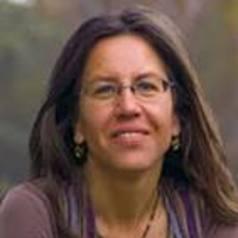
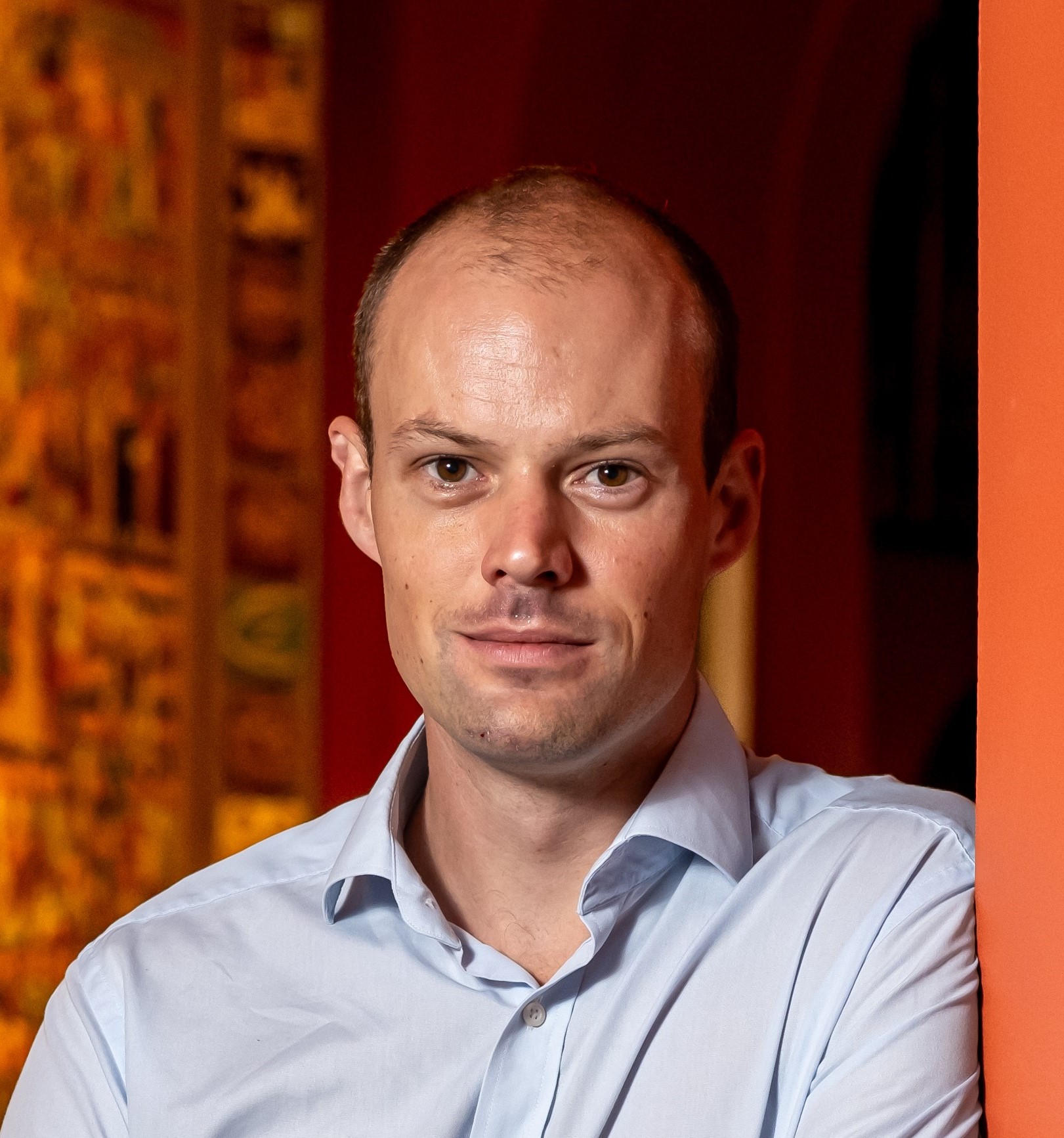
Karine Charry is a Professor at the Louvain School of Management (LSM) within the University of Louvain (UCLouvain), affiliated with the Louvain Research Institute in Management and Organizations (LouRIM) . Her work focuses on behavioral responses to marketing strategies in health and sustainability contexts. Email: karine.charry@uclouvain.be Office: Building B, Floor 02, Office B207, Chaussée de Binche 151, 7000 Mons Research Interests: Behavioral impact of sustainability labels and nudges Effectiveness of environmental NGO campaigns Role of social media influencers in dietary and ecological behaviors Prosocial communication via platforms like Twitter Co-branding and packaging strategies for child-targeted products Key Article Trends (2006-2025): Her publications span food marketing ethics, social media dynamics, threat appeals in youth campaigns, gamification for health apps, and sustainability labeling. Notably, she investigates how social norms and digital engagement shape pro-environmental and healthy eating behaviors in children and adolescents.
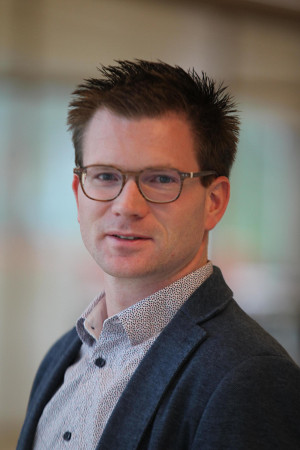
Sandy Claes is an Assistant Professor in the Department of Communication Science at KU Leuven, affiliated with the Faculty of Social Sciences. She serves as a researcher in the Media Culture & Policy Lab and is a member of the DigiSoc – KU Leuven Digital Society Institute. Her roles include Co-Promotor and Promotor in various research projects, and she is an invited member of the Council of the Faculty of Social Sciences. Claes’ work focuses on public displays, Human-Computer Interaction, interactive storytelling, participatory design, and media design. Her research projects span topics like environmental data visualization, participatory design for science engagement, and the role of mixed reality in fostering community. Notable projects include 'Designing Interactive Data Stories to Uncover Uncertainty' and 'Aerial and Airing: Mapping Environmental Data'. Claes’ publications highlight themes such as uncertainty communication in science, immersive dome experiences, and co-creating public spectacles. She actively contributes to conferences like the EGU General Assembly and Design Research Society events. Her advising and grants involve leading multiple projects with roles as Promotor or Co-Promotor, emphasizing interdisciplinary collaboration. She is part of the Media Culture & Policy Lab and the Digital Society Institute, exploring intersections between technology, culture, and policy.
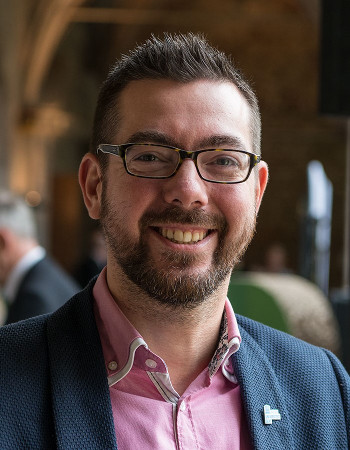
Elvira Crois is an Assistant Professor and postdoctoral researcher at the Brussels Research Centre on Innovation in Learning and Diversity (BILD) at Vrije Universiteit Brussel. Her interdisciplinary research focuses on participatory arts, climate education, and worldmaking processes for social change. She coordinates the Erasmus+ project 'Codename Seedling', exploring youth-led climate activism through arts. Her work bridges education, performance studies, and environmental advocacy. Elvira holds a joint PhD from the University of Antwerp (Theatre and Intermedia) and Vrije Universiteit Brussel (Adult Educational Sciences). Her doctoral thesis examined performer training in participatory theatre, using second-person ethnography to analyze audience-performer dynamics. She also leads the 'Worldmaking' community of practice, fostering collaborations between arts educators and social justice practitioners. Her research interests include climate justice pedagogy, participatory methodologies, and the role of creativity in youth activism. She has coordinated EU-funded projects across Belgium, Denmark, the UK, Portugal, and France, emphasizing arts-based advocacy tools and impact-driven strategies. Key Projects: Codename Seedling (Climate Justice), Wave Makers (Youth & Ocean Health) Grants: Erasmus+ KA2, Erasmus+ Youth in Action Professional Roles: Erasmus+ Project Assessor, Apaya Network Member Elvira’s work extends to public engagement through comics (e.g., 'Cave Comic') and innovative educational resources. She advocates for 'slow science' approaches to counter academic pressures, emphasizing collaborative and reflective research practices.
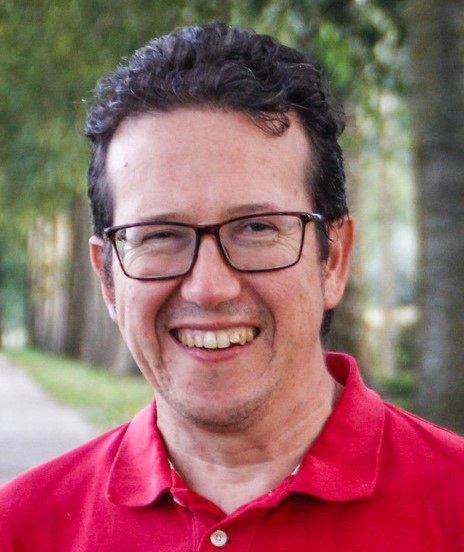
Stef Aupers serves as Professor of Media Culture at KU Leuven's Institute for Media Studies within the Faculty of Social Sciences. His research centers on cultural sociology of media, examining meaning production, representation, and consumption in contemporary digital cultures with particular focus on conspiracy theories, game studies, and religious mediatization. His primary research domains include: Conspiracy Theory Discourse in Digital Spaces Digital Game Culture and Social Dynamics Religion-Media Intersections Popular Culture Analysis Mediatization of Modern Myth Analysis of his 2021-2025 publications reveals consistent exploration of how conspiracy theorists construct worldviews through digital platforms, the commodification of religion in gaming ecosystems, and socio-technical exclusion mechanisms. His work demonstrates methodological sophistication in analyzing YouTube/Reddit communities, audiovisual rhetoric, and epistemological boundary work between mainstream and alternative knowledge systems. Aupers actively contributes as keynote speaker, conference organizer, and academic journal reviewer, with expertise spanning media analysis, conspiracy culture interpretation, and science-religion discourse. His research provides critical frameworks for understanding contemporary digital culture's most contentious phenomena through cultural sociological lenses.
Liane Gabora is a Full Professor in the Department of Psychology at the University of British Columbia's Okanagan Campus, affiliated with the Irving K. Barber Faculty of Arts and Social Sciences. She holds additional research affiliations with the Australian National University's School of Music, University of Waterloo's Institute for Complexity & Innovation, and Free University of Brussels' Centre Leo Apostel for Interdisciplinary Studies. Her educational background includes a BSc from the University of Western Ontario, PhD from the Free University of Brussels, and postdoctoral positions at UC Berkeley and the Free University of Brussels. Gabora's research program explores creativity, cultural evolution, and cognitive transitions through interdisciplinary approaches. Her work examines: How concepts combine and adapt to new contexts The origins of modern cognition and human creativity Computational models of cultural evolution Quantum formalisms for concept interactions Self-Other Reorganization (SOR) theory of cultural evolution Honing theory of creativity integrating complex systems and memory Her publications demonstrate strong cross-disciplinary integration spanning psychology, physics, anthropology, and computer science. Major research awards include the 2011 Berlyne Award from the American Psychological Association for outstanding research by a junior scholar. She has secured over $1 million in funding from NSERC, SSHRC, and private donors. Gabora supervises graduate students in Psychological Science and Digital Humanities programs and leads research on cognitive transitions underlying cultural evolution. Her laboratory focuses on mathematical and computational modeling of creativity mechanisms, with ongoing projects exploring AI creativity, quantum models of cognition, and the evolution of behavioral modernity through autocatalytic network frameworks.
Pieter Simoens is an Assistant Professor at Ghent University and affiliated with the imec research institute. He works at the intersection of distributed artificial intelligence, edge computing, and collective intelligence, with a focus on AI applications for resource-constrained environments and robotic systems. His research explores innovative approaches to machine learning deployment in heterogeneous infrastructures, task planning for IoT-integrated robotics, and modeling collective decision-making processes. He has contributed to frameworks like DIANNE for distributed deep learning and developed methods for cognitive modeling in reinforcement learning scenarios. With over 100 publications, his recent work spans adaptive neural networks, privacy-preserving surveillance, UAV hyperspectral data analysis, and computational fairness in AI systems. He leads research initiatives within the Internet Technology and Data Science Lab (IDLab) and contributes to educational programs in software engineering and applied machine learning. Responsible for courses on software engineering, mobile development, system design, and applied machine learning Active in edge computing and neuromorphic algorithms research Develops AI solutions for robotics, surveillance, and industrial IoT applications
Peter Rober is a Professor at the KU Leuven , affiliated with the Institute for Family and Sexuality Studies and the Department of Neurosciences . He holds a PhD in Psychology (University of Ghent, 2006) and advanced degrees in Marital and Family Therapy (KU Leuven, 1988) and Educational Sciences (KU Leuven, 1984). His clinical work is conducted at Context , the university's center for marital and family therapy. Education: PhD in Psychology (University of Ghent, 2006) Post-graduate in Marital and Family Therapy (KU Leuven, 1988) Master of Science in Educational Sciences (KU Leuven, 1984) Rober’s research centers on family communication , particularly silences and secrets , and family therapy with children . He emphasizes the therapist’s inner conversation , not-knowing in dialogical therapy, and reflexive practices to address therapeutic impasses. His work includes qualitative studies on topics like parentification , donor-conceived families , and emotion regulation in bereavement . His publications span peer-reviewed journals like Family Process , Journal of Family Therapy , and Death Studies , covering dialogical approaches, micro-analyses of therapeutic sessions, and narrative processes in trauma and loss. He has authored books such as Together in Therapy and The Naked Therapist , contributing to systemic and discursive qualitative methods in clinical practice.
Christoph De Spiegeleer serves as an unpaid guest professor at the Vrije Universiteit Brussel (Free University of Brussels), affiliated with the History, Archaeology, Arts, Philosophy and Ethics faculty. His academic work centers on the Secular Studies Association Brussels, where he has been active from 2011 to 2024. His research interests primarily focus on secularization processes, particularly examining the historical development of secular thought and practices in Belgium. His work spans several interconnected fields including funeral practices, 19th century Belgian history, freethinkers movements, and the evolution of atheism in European contexts. A significant portion of his research analyzes how secular alternatives to religious funeral practices developed in 19th century Belgium, exploring the cultural, political and social dimensions of this transformation. De Spiegeleer's publications reveal a strong emphasis on the intersection of religion, death culture, and political identity in Belgian history. His recent work has examined topics such as the moral dimensions of disbelief among Brussels freethinkers (1854-1870), secular burial practices, and the historical context of the Peasants' War. His research often employs transnational perspectives, as seen in his work on Charles Potvin and the Risorgimento. Among his notable recognitions are the De Bock-Doehard Prize for best historical dissertation at the Vrije Universiteit Brussel (2009-2010) and the Emile Zola dissertation award (third place, 2012). De Spiegeleer has been actively involved in academic collaborations, including the Workshop on Secularism and Biography (March 2024) and the conference 'THE NON-RELIGIOUS AND THE STATE' (October 2022), where he served as an organizer. His ORCID profile (0000-0002-4927-8607) documents his extensive scholarly output across multiple formats including journal articles, book chapters, books, and conference papers.
Peter Lambert is a full-time Associate Professor at Ghent University – imec (Belgium), affiliated with the Internet Technology and Data Science Lab (IDLab) where he coordinates the MEDIA research team since 2013. His academic background includes a Master's degree in Science (Mathematics) and Applied Informatics from Ghent University, followed by a Ph.D. in Computer Science from the same institution in 2007. Prior to his current role, he served as a Technology Developer at Ghent University (2010-2013). Lambert's research focuses on: Multimedia signal processing and visual communication systems Computer graphics and computational geometry Augmented and virtual reality (AR/VR) technologies Video compression and perceptual quality assessment Multimedia security and digital watermarking His recent publications (2024-2025) demonstrate strong emphasis on real-time multimedia systems, VR/AR applications, perceptual quality metrics, and multimedia security. Research trends include deep learning-based video forensics, light field rendering optimizations, perceptual hashing techniques, and adaptive video streaming solutions. As leader of the IDLab-MEDIA team, Lambert oversees research on emerging visual media formats with applications in immersive experiences. The team develops technologies like OpenDIBR (real-time light field renderer) and maintains datasets such as SILVR (Synthetic Immersive Large-Volume Plenoptic Dataset).
Jacqueline Leybaert is a Professor at the Université libre de Bruxelles (ULB) in the Faculty of Psychological and Educational Sciences. She is a leading researcher in the LCLD (Language, Cognition, Learning, and Development) laboratory, focusing on multimodal language perception, particularly in the context of deafness and hearing disabilities. Her work bridges psychology, linguistics, and audiology with significant implications for deaf education and communication strategies. Her research interests encompass multimodal language perception, audiovisual speech integration, deafness, hearing disabilities, orthographic learning, and numerical cognition. Dr. Leybaert has made substantial contributions to understanding how Cued Speech—a system that uses handshapes near the mouth to disambiguate speech sounds—can enhance language acquisition and speech perception for deaf and hard-of-hearing individuals. Her work explores the cognitive and perceptual mechanisms underlying language development in deaf children, particularly those using cochlear implants or Cued Speech. Analyzing her recent publications reveals a consistent focus on how multimodal information (auditory, visual, and manual cues) integrates in speech perception, especially in challenging listening conditions. Her research demonstrates how Cued Speech can improve speech recognition in noise, enhance orthographic learning, and support language development in deaf children. The interdisciplinary nature of her work connects cognitive psychology, linguistics, audiology, and educational practices for deaf individuals. Dr. Leybaert has supervised doctoral students, including Sabatier, E., whose dissertation focused on orthographic representations in deaf children. Her collaborative work extends to researchers such as Cécile Colin, Caron Jirschik, and Vilain, indicating strong research networks in deaf education and speech science. Though specific grant information isn't detailed in the provided text, her extensive publication record suggests significant research funding and project leadership. Her laboratory work centers on the LCLD lab at ULB, which appears to focus on language development, cognitive processes, and learning mechanisms, particularly in special populations including deaf and hard-of-hearing individuals. The lab's research employs various methodologies including behavioral experiments, eye-tracking, and potentially neuroimaging techniques to investigate language processing and development.
Chris Cornelis is a full-time Professor in fuzziness and uncertainty modelling at Ghent University's Department of Applied Mathematics, Computer Science and Statistics. His research integrates fuzzy logic and rough set theory to advance machine learning methodologies for complex data analysis. Education: M.Sc. in Computer Science, Ghent University (2000) Ph.D. in Computer Science, Ghent University (2004) Research Focus: Cornelis pioneers fuzzy-rough hybrid systems for uncertainty handling in machine learning. His work spans theoretical foundations (e.g., implication operators, granular approximations) and practical applications including emotion detection, medical diagnosis, and imbalanced data classification. Key innovations include FRNN-OWA classifiers and polar encoding for missing values, demonstrating exceptional versatility in bridging abstract mathematics with real-world AI challenges. Publication Trends: Recent work (2023-2025) reveals intensified exploration of topological data analysis (Mapper-based rough sets), advanced granular computing (disjoint/adjacent fuzzy granules), and ethical AI ("No Imputation Without Representation"). His research shows consistent progression from foundational fuzzy-rough theory toward multi-disciplinary applications while maintaining mathematical rigor, particularly in Choquet integration and quantifier-based frameworks. Scientific Awards: No specific awards were documented in the provided sources. Research Support: Cornelis has secured competitive funding including FWO postdoctoral mandates, a Ramón y Cajal contract at the University of Granada, and an FWO Odysseus Type II project at Ghent University. These grants enabled foundational work in fuzzy-rough set theory and its applications to complex data problems. Research Unit: He leads research within Ghent University's Computational Web Intelligence (CWI) unit, focusing on intelligent data analysis systems that leverage fuzzy-rough methodologies for web-scale information processing.
Frank Maet is a Special Guest Lecturer at KU Leuven's Art, Technology & Medium Exploration unit in Ghent. He is affiliated with the DigiSoc Institute for Digital Society and serves on the Committee for Scientific Integrity (CWI). His research focuses on the intersection of philosophy, technology, and art, exploring themes like 'Art as Technology' and 'Technology as Art.' Key projects include investigations into AI collaboration in art, ethical dimensions of care robots, and digital art practices. He has presented at venues such as TRANSfarm Leuven and LUCA, engaging in dialogues on AI's role in creative processes and philosophical critiques of technology. Maet’s work bridges art and technology through interdisciplinary projects like the 'Data Imagination' exhibition and seminars, which examine human-AI interaction. His recent publications address topics ranging from AI ethics to humor theory, reflecting his commitment to redefining artistic and philosophical boundaries in the digital age.
Yvette VANDEN BEMDEN is a full Professor in the Department of Art History at the Faculty of Philosophy and Arts, Université de Namur, specializing in stained glass conservation and Belgian cultural heritage. Her research spans medieval to contemporary art with interdisciplinary approaches bridging material science and visual culture. Her primary research interests focus on Stained Glass Conservation (particularly 19th-20th century Belgian works), Visual Arts and Disability Studies , and Art Gallery Curation methodologies . She employs scientific techniques like PIXE-PIGE for material analysis while examining social representations in visual media. Her work integrates historical context with modern conservation challenges. Her publication trends reveal deep specialization in stained glass material analysis (2005 Nuclear Instruments paper) alongside interdisciplinary explorations of art's societal role, notably in disability representation (2008 Art & Handicap) and wartime imagery (2006 Images de guerre). The research consistently centers on Belgian artistic heritage with methodological diversity spanning physics-based analysis to cultural theory. Professor VANDEN BEMDEN has supervised 4 graduate works and led 10 significant research projects since 1968, including long-term studies on Enghien Castle stained glass (ENGHIEN project) and interdisciplinary investigations into art display stakes. Her collaborative projects frequently bridge humanities and scientific departments. She directs research through the university's cultural heritage labs, notably collaborating with physics departments on material analysis projects. Her teams integrate art historians, conservators, and scientists for comprehensive artifact studies, with recent focus on elemental composition mapping of historical glass pieces.
Benoit Delhaye is a Professor at Universite catholique de Louvain , affiliated with the Louvain Polytechnic School (EPL) and Mathematical Engineering Center (INMA) . His research bridges tactile neuroscience and biomechanics to understand how tactile receptors encode object information and how the brain uses these signals for dexterous manipulation. He also contributes to Institute Of NeuroScience (IoNS) . Email: benoit.delhaye@uclouvain.be Email: delhayeben@gmail.com His research focuses on three main areas: Tactile Signal Processing : Analyzing skin deformation patterns during object interactions using advanced imaging and computational models Neuroprosthetic Applications : Developing biomimetic afferent response simulations for bionic hand feedback systems Haptic Perception : Investigating how tactile receptors encode friction, slip, and edge orientation The articles demonstrate his contributions to understanding: tactile mechanics (6 papers), grip force adaptation (4 papers), skin strain patterns (5 papers), and neuroprosthetic simulations (3 papers). Key 2024 publications include collagen-induced anisotropy analysis and 3D fingertip deformation modeling. Benoit's technical innovations include: TouchSim - A MATLAB package for simulating tactile afferent responses Open-source instrumented objects for manipulation studies Advanced skin deformation measurement systems His collaborative network spans institutions in Belgium, the USA, and Germany, working with researchers in Philippe Lefevre 's and Jean-Louis Thonnard 's labs. Current teaching includes LEPL1506 Project and LGBIO2110 Clinical Engineering courses.
Maarten Bassier is an Assistant Professor (tenure track) at KU Leuven, affiliated with the Department of Civil Engineering within the Faculty of Engineering Technology. He is based at the Geomatics unit operating at the Ghent and Aalst Campuses. His academic profile combines research, teaching, and institutional service, with significant contributions to the field of digital construction technologies. As senior academic staff, he serves on both the Council of the Faculty of Engineering Technology and the Civil Engineering Department Council, actively participating in institutional governance while maintaining a robust research program focused on Scan-to-BIM methodologies and geospatial applications in construction. Dr. Bassier's research centers on Scan-to-BIM methodologies, which involve converting 3D scans of existing buildings into Building Information Models. His work bridges geomatics, computer vision, and civil engineering, with applications in construction progress monitoring, infrastructure inspection, and heritage documentation. He applies machine learning techniques to automate aspects of the modeling process, particularly semantic segmentation of point clouds and integration of UAV (drone) data. His research increasingly incorporates deep learning approaches for object detection, segmentation, and completion in complex built environments, with practical applications spanning road construction, bridge inspections, and electrical substation modeling. His interdisciplinary approach connects civil engineering with computer science to solve practical construction challenges through digital innovation. Bassier's recent publication record demonstrates a strong focus on automating the Scan-to-BIM process through advanced computational techniques. His work spans multiple application domains while maintaining a consistent methodological thread of integrating sensing technologies with semantic understanding of construction environments. The trajectory of his research shows increasing sophistication in machine learning applications, moving from basic point cloud processing to complex semantic understanding and automated model generation. His publications appear in high-impact journals across civil engineering, remote sensing, and computer vision domains, reflecting the interdisciplinary nature of his work. SESAME - Semantic Segmentation of Electrical Substations and Derived Models for Engineering (2024-2026) - Promotor UAV-assisted bridge inspections (2022-2027) - Co-promotor XR-empowered dynamic reality modeling for AECO applications (2021-2026) - Co-promotor Digitization in road construction: automating as-built models (2020-2026) - Co-promotor SCAN-to-BIM Automation of as-built BIM production through digitization and machine learning (2020-2025) - Co-promotor As a member of the Division Digital and Sustainable Civil Engineering and the Subdivision Geomatics Ghent, Dr. Bassier contributes to KU Leuven's research ecosystem focused on digital transformation in civil engineering. His teaching portfolio includes courses on BIM, industrial measurements, Scan-to-BIM, 3D modeling, and geomatics, preparing the next generation of civil engineers for the digital construction landscape. His work represents the cutting edge of digital construction technologies, with practical applications that address real-world challenges in infrastructure development and maintenance.