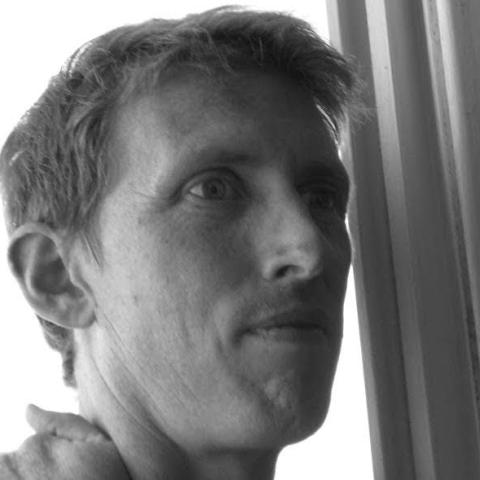
Romain Grandchamp is a Researcher at Université Grenoble Alpes , affiliated with the Laboratoire de Psychologie et Neurosciences Cognitives (LPNC) and the Consciousness, Memory and MetaCognition (CoMMet) team. His work bridges neuroscience , brain-computer interfaces (BCI) , and cognitive modeling to study mental states , mind wandering , and inner speech . PhD in EEG and BCI (2012, Université Paul Sabatier) Developed tools like NeuroTRIP and Brainarium for BCI training and immersive neuroeducation Focus on electromyographic correlates of rumination, ICA decomposition , and neurofeedback applications Prior research includes neuroplasticity in meditation practitioners and verbal rumination mechanisms. Collaborations span institutions in France, Australia, Netherlands, and Morocco.
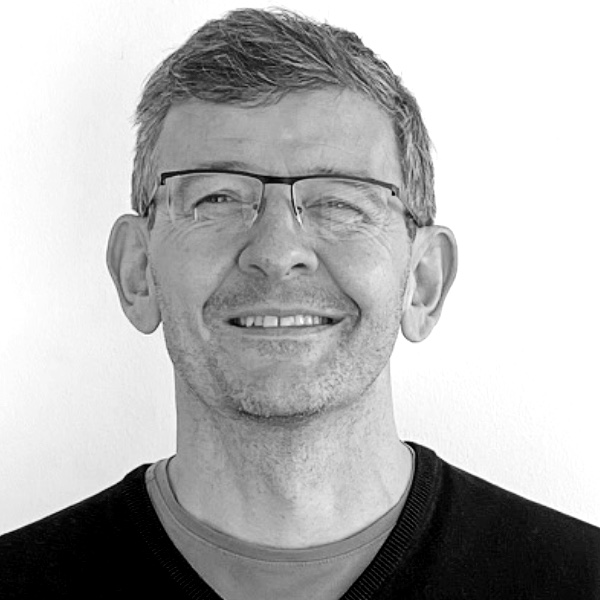
Associate Professor Jenny Richmond is a faculty member at the University of New South Wales (UNSW) within the School of Psychology. She serves as the Director of Academic Programs in the School of Psychology, demonstrating her leadership role in shaping psychology education at the institution. Her academic home is clearly situated within the psychological sciences at one of Australia's leading research universities. Professor Richmond's research focuses on how changes in the brain drive changes in memory and emotion during infancy and childhood. She employs converging methods including behavioral measures, eye tracking, and electrophysiology to understand the development of functions that depend on the hippocampus. Her work spans developmental psychology, cognitive neuroscience, and educational psychology, with particular interest in infant memory development, relational memory, episodic memory, and the neural underpinnings of emotional development. She has also developed significant expertise in applying technological approaches to psychological research. Analysis of Professor Richmond's recent publications reveals a strong trajectory in developmental psychology with increasing interdisciplinary connections. Her work demonstrates consistent focus on infant and childhood cognitive development while expanding into educational applications and mental health implications. Recent publications show growing interest in technology integration (including AI applications in education), open science practices in psychology, and translational research connecting basic developmental findings to clinical applications in preventative psychiatry and early intervention. Professor Richmond has demonstrated commitment to academic leadership through her role as Director of Academic Programs. While specific grant information isn't detailed in the provided text, her extensive publication record across multiple high-impact journals suggests successful research funding. Her collaborative approach is evident through numerous multi-author publications involving interdisciplinary teams across psychology, neuroscience, and clinical fields. As Director of Academic Programs in the School of Psychology, Professor Richmond leads curriculum development and academic initiatives within the department. Her recent work on using generative AI to promote psychological literacy indicates innovation in educational approaches and commitment to preparing psychology graduates for contemporary professional environments that increasingly incorporate technological solutions.
Max Rädler is a researcher focusing on Human-Computer Interaction, Computer Science, and Engineering, with a strong emphasis on technologies like Automated Vehicles (AVs), Extended Reality (XR), and Personal Fabrication. His work explores how visualizations affect user trust, situation awareness, and cognitive load in emerging transportation and design systems. Co-authored 5 recent publications in interdisciplinary fields Active in Human Factors and User Experience research His studies span from 2022 to 2025, addressing challenges in digital eye strain, urban air mobility perception, and parametric design for personal fabrication. Collaborations include Enrico Rukzio, Mark Colley, and Pascal Jansen.
Dr. Brett Cochrane is a Lecturer at the School of Psychology, University of Aberdeen. His research investigates how humans extract environmental information through attention, memory, and cognition systems, employing methods like eye movement tracking, brain electrophysiology, and behavioral analysis. Education : Not explicitly mentioned Teaching : PS1009 (Introductory Psychology), PS3524 (Cognitive Neuroscience), PS4040 (Current Topics in Psychological Studies) His research focuses on visual imagery-attention interactions , 3D spatial cognition , and cognitive control mechanisms , particularly in visual search tasks. Publications highlight effects like distractor-induced quitting, imagery-modulated attention, and depth perception dynamics. Key article trends span visual attention , mental imagery , and cognitive neuroscience , with subfields including spatial processing, repetition priming, and top-down instruction effects. He supervises PhD students in Psychology and uses interdisciplinary methods to study perception-cognition interplay.
Claire Robertson is a PhD student and part-time academic staff member at the School of Psychology, University of Aberdeen. Her work focuses on health comics as tools for accessible public health communication, supervised by Professor Ben Tatler, Professor Chris Murray (University of Dundee), and Dr Clare Kirtley. Education: BSc Psychology (Hons) (1st class) from Abertay University (2021) MSc Health Psychology (Merit) from the University of St Andrews (2022) Research Interests: Health comics for public health education Evaluating visual engagement through eye-tracking Improving accessibility of health messaging Teaching Roles: Demonstrator for Introductory Psychology modules at the School of Psychology Student Support Assistant providing academic accommodations Professional Affiliations: Associate Fellow (AFHEA) of Advance HE Graduate member of the British Psychological Society (GMBPsS) Awards: Interdisciplinary Poster Showcase winner (2023)
Dr. Johra FATIMA is a Senior Lecturer in Marketing at the University of Canberra, with a focus on consumer psychology, service encounters, and relationship-building in business contexts. Her research spans both B2B and B2C environments, emphasizing emotional decision-making and employee well-being. Research Interests: Service quality, consumer behavior, omnichannel retailing, chatbot-assisted services, ecotourism, and social business for tourism growth. Recent Article Trends: Her 2023-2025 publications explore omnichannel shopping habits, chatbot humanization, and team performance dynamics. These works often integrate socio-cognitive theories and digital transformation frameworks. Advising: Dr. Fatima is accepting PhD students interested in frontline service employees, service encounters, consumer psychology, and related fields. Leadership: She edited the book Wilderness of Wildlife Tourism (2017) and co-authored key studies on sustainability reporting in Bangladesh’s banking sector.
Professor Eric Lecolinet is a faculty member at Télécom Paris, Institut Polytechnique de Paris, leading the DIVA (Design, Interaction, Visualization & Applications) research team within the LTCI laboratory. He is also President of the French-speaking Human-Machine Interaction Association ( AFIHM ). Education & Qualifications He earned his Habilitation à diriger des recherches (HDR) in 2018 from Université Paris-Saclay, specializing in Computer Science and Human-Computer Interaction, with a thesis entitled “Making Interaction Gestural: Expressivity and Memorability of Gestures” . Research Interests His research spans: Touch and tactile interfaces, including artificial skin and multi-modal feedback. Graphical and gestural user interfaces for mobile, wearable, and immersive systems. Virtual and augmented reality interaction techniques, with emphasis on safety and memory effects. Interactive visualization and novel display platforms, notably the Digiscope high-performance visualization network. Publications & Trends Over the past five years, Professor Lecolinet’s work has concentrated on: Understanding and designing haptic interfaces that leverage artificial skin (Skin-On) and pneumatic feedback for affective communication. Exploring security and ethical implications of perceptual manipulations in VR, including memory distortions and physical risks. Developing compact gesture vocabularies for small surfaces and confined spaces, combining marking menus, finger-count shortcuts, and multi-modal feedback. Scientific Awards & Honors No specific awards are listed in the provided material, but he is recognized through leadership roles: President of AFIHM, member of the LTCI laboratory council, and scientific head of Télécom Paris Fablab. Teaching & Advising He directs the Master Interaction, Graphics & Design (IGD) at IP Paris and co-directs the 3D & Interactive Systems engineering track (IGR). He teaches courses on: Human-Computer Interaction Interactive 2D/3D and mobile application development Programming paradigms (C/C++, Qt, Swing) Current PhD students include Yang Liu and Elise Bonnail . Labs & Teams He leads the DIVA group (≈25 researchers) and oversees the PIXLS and IRIS platforms within the Equipex+ Continuum and former Digiscope networks. He also manages the Télécom Paris Fablab , a digital fabrication laboratory serving both research and education.
Dr. José Enrique Callejas Aguilera is a researcher at the University of Jaén's Department of Psychology, focusing on cognitive psychology and behavioral neuroscience. His work explores predictive learning, extinction processes, and aesthetic perception. 2025: Role of Formal Artistic Education in Golden Proportion and Perceived Beauty 2024: Eye-tracking in Virtual Reality survey 2020: Morris Maze in VR development Research interests include context specificity in human learning , golden proportion in aesthetics , and virtual reality applications in psychological studies . Recent publications analyze extinction's impact on predictive learning and VR experimental design. His 15 most recent articles (2025-2019) span psychology , neuroscience , and data management domains, with subfields including cognitive flexibility, contextual learning, and digital experimental methods.
Tumasch Reichenbacher is a Senior Lecturer at the Department of Geography , University of Zurich, with a focus on modern geographic information technologies, eye-tracking methods, and virtual environments. His work primarily investigates spatial cognition, mobility patterns, and mobile map usability. Institution: University of Zurich College: Faculty of Science Department: Department of Geography Email: tumasch.reichenbacher@geo.uzh.ch Research Interests center on geographic information analysis and visualization. Key areas include: Spatial cognition in mobile environments Context-aware cartographic adaptation Eye-tracking for map usability Mobile GIS and location-based services Visual complexity in thematic mapping Attention-guiding geovisualization Recent Research Trends demonstrate a consistent focus on adaptive map design. His 2024 publications address AI-driven personalization, color theory applications, and psychological factors in navigation. Earlier works (2023-2001) explore contextual adaptation, user experience metrics, and foundational principles of mobile cartography. Labs & Collaborations include contributions to the University of Zurich's MapOnTap project, which investigates context-based map adaptation. His work bridges traditional cartography with modern digital challenges, particularly in mobile and ubiquitous mapping environments.
Julia Braun is a Scientific Staff member in the Chronic Lung Disease Epidemiology Team at the Epidemiology Department at the University of Zurich's Epidemiology, Biostatistics and Prevention Institute (EBPI) . She also serves as an assistant lecturer at the Biostatistics Department. Her work bridges methodological innovation and healthcare applications, focusing on biostatistical modeling, causal inference, and reproducible research. Research Departments: Chronic Lung Disease Epidemiology Biostatistics Healthcare Epidemiology Academic Contributions: Expertise in longitudinal data analysis, missing data imputation, and mixed models Development of visualization tools for clinical data (e.g., Visual Clot, Visual Patient Avatar) Leadership roles in multi-center clinical trials and cohort studies Julia's research emphasizes methodological rigor and practical implementation in healthcare settings. Her recent publications explore topics like post-COVID interventions, COPD management, patient satisfaction metrics, and innovative medical visualization technologies. She advocates for open science and reproducible methodologies in clinical research. Her work trends highlight interdisciplinary applications of biostatistics across anesthesia, cardiology, pulmonology, and geriatrics . Key themes include optimizing patient monitoring systems, understanding cardiovascular risk factors, and improving diagnostic accuracy through visual tools. Collaborative projects span Swiss national studies (e.g., Swiss ChiCo pilot) and international trials. Teaching & Affiliations: Julia contributes to biostatistical education and is affiliated with EBPI's four core areas: research, research methods, teaching & training, and services. She participates in the PRC Lunch Colloquium at the Population Research Center.
Nizar Ouarti is an Associate Professor at ISIR (Institute of Intelligent Systems and Robotics), Sorbonne University, and a member of the ASIMOV research team. His work focuses on robotics, haptics, and human-computer interaction. His research spans haptic communication of emotions using air jet stimulation, operator-controlled nanomanipulation with virtual reality, and gaze tracking systems enhanced by visual attention models. He also applies signal processing techniques, including non-stationary wavelet packets, to denoising problems. His work bridges human perception and machine interfaces for applications in medical and industrial robotics. His publications demonstrate a strong trend in multimodal human-robot interaction, with emphasis on tactile and visual feedback. Key areas include nanomanipulation, emotion recognition through haptics, and real-time gaze tracking, showing interdisciplinary integration of robotics, signal processing, and cognitive science. Ouarti is an active member of the ASIMOV team at ISIR, which develops intelligent robotic systems for precise manipulation and human-centered applications.
Krista Lagus is a Professor at the Faculty of Social Sciences of the University of Helsinki, where she leads the Centre for Social Data Science (CSDS). Her work bridges artificial intelligence, natural language processing, and social sciences to analyze digital communication, societal trends, and cognitive modeling. PhD in Computer and Information Sciences, Aalto University (2000) Co-founder and Director of CSDS (2019) Academy Research Fellow at Finnish Academy of Sciences (2006-2012) Key projects: WEBSOM, Citizen Mindscapes, Morfessor Her research spans digital social science , machine learning , and cognitive modeling , with recent focus on sentiment analysis, survey data wrangling, and emotional dynamics in social media. Publications appear in journals like IEEE Transactions on Neural Networks , Cognitive Science , and Human Brain Mapping . She has received awards such as the Best paper award at DHN 2020 and serves as a reviewer for grants and academic appointments, including the ERC Cog SH3 panel (2021). Lagus supervises doctoral students and teaches in the Contemporary Societies Master's Programme .
Johan Pel is an Associate Professor at Erasmus MC in the Neurosciences department. His research focuses on visual impairment, eye-tracking, and neurodevelopmental disorders. Core expertise in visual search and gaze metrics Active in studying CVI, ADHD, and glaucoma Collaborates across neuroscience and pediatric domains Recent work includes developing gaze-based diagnostic tools for children with cerebral visual impairment and analyzing visual processing abnormalities in neurodevelopmental conditions. His publications frequently integrate eye-tracking technology with clinical neuroscience. Supervised 9 academic works and contributed to 124 research outputs. Current projects explore developmental trajectories in preterm children and cross-disorder visual processing differences.
Alexandra Jesse is an Associate Professor in the Department of Psychological and Brain Sciences at the University of Massachusetts Amherst, where she has held a faculty position since 2010. She additionally maintains an adjunct appointment in the Department of Linguistics and serves on the Executive Board of the Auditory-Visual Speech Association (AVISA). Her research examines how humans integrate auditory and visual information to recognize speech, with particular focus on the role of visual cues from speakers' faces in comprehension. Dr. Jesse earned her Ph.D. in Psychology from the University of California, Santa Cruz in 2005 under Dr. Dominic Massaro's supervision. Prior to joining UMass, she conducted independent research at the Max Planck Institute for Psycholinguistics in the Netherlands, supported by awards from the German Research Foundation, Max Planck Society, and a VENI career grant from the Netherlands Organization for Scientific Research. Her research program investigates audiovisual speech perception across multiple dimensions including lexical influences on phonetic processing, adaptation to speaker-specific idiosyncrasies, and the impact of aging and dyslexia on multisensory integration. She employs methodologies ranging from behavioral experiments and eye-tracking to fMRI, with consistent emphasis on how visual information modulates auditory processing in challenging listening conditions. Current work explores fine-phonetic detail in visual speech for unfamiliar talker recognition and cross-linguistic stress pattern acquisition. Analysis of her recent publications reveals sustained investigation into top-down lexical influences on speech perception, with growing emphasis on neurocognitive mechanisms (evidenced by fMRI studies) and developmental applications. Her work consistently bridges theoretical psycholinguistics with practical implications for aging populations and clinical conditions like dyslexia, demonstrating how visual cues compensate for auditory degradation in speech-in-noise scenarios. Dr. Jesse's scientific recognition includes: Fulbright Scholarship (1999) VENI award from the Netherlands Organization for Scientific Research She has secured research funding from major organizations including the German Research Foundation and Max Planck Society during her postdoctoral phase, and continues to lead an active research program through university support and potential current grants. Her advising focuses on training graduate and undergraduate researchers in experimental methods for speech perception studies, though specific student names aren't publicly listed. Dr. Jesse directs a research laboratory at UMass Amherst that employs multimodal approaches to investigate speech processing across the lifespan, with particular attention to audiovisual temporal alignment and its implications for language comprehension in diverse populations.
Robert Teather is an Associate Professor and Director at the School of Information Technology , Carleton University . With a PhD in Computer Science from York University (2013) and postdoctoral experience at McMaster University (2015), Dr. Teather specializes in Human-Computer Interaction with focus on 3D user interfaces, virtual reality systems, and game interface design. PhD: Computer Science, York University (2013) Postdoc: McMaster University (2015) His research explores Virtual Reality interaction fundamentals including input device comparison , cybersickness mitigation , and haptic feedback systems. He has developed 3D interface evaluation frameworks for comparing mouse vs 3D tracker inputs, and investigates mobile game control schemes and diegetic display design in gaming contexts. Dr. Teather's recent publications demonstrate focus on VR interaction techniques (58% of recent work), input device evaluation (33%), and mobile XR systems (9%). NSERC Postgraduate Scholarship Ontario Graduate Scholarship Best Demo Award - ACM Symposium on Spatial User Interaction (SUI 2017) Best Paper Honourable Mention - ACM Symposium on Applied Perception 2020 He supervises graduate students in Human-Computer Interaction and Digital Media programs, and leads research in CFI-supported labs exploring shape-changing haptic interfaces and VR scalability frameworks .