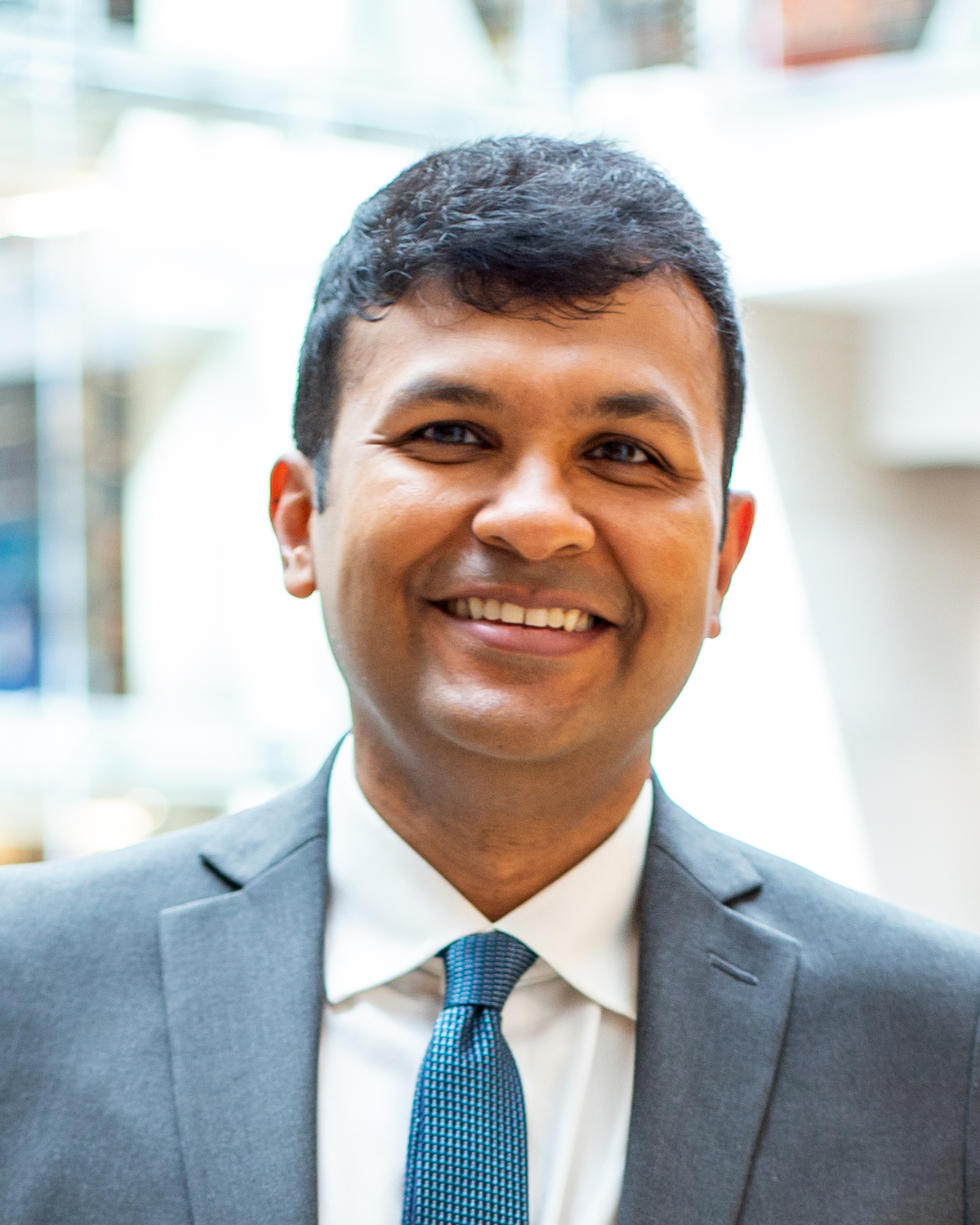
Arnab Nandi is a Professor in the Department of Computer Science & Engineering at The Ohio State University. His work bridges human interaction with data infrastructure, focusing on database systems, LLM-augmented analytics, and immersive query interfaces. Education: PhD in Computer Science & Engineering from the University of Michigan Leadership: Co-founder of OHI/O Hackathon Program and STEAM Factory interdisciplinary network Research spans human-in-the-loop data analytics , vibe querying (natural language + gestural interfaces), LLM integration into education, and climate response systems . Key projects include Omni (multimodal exploration), GestureDB , and Icarus (clinical pipelines). Recent publications analyze LLM-driven query stacks (HILDA 2025), video analytics (SIGMOD 2022), and data sunglasses for cognitive limits (HILDA 2025). Awards include NSF CAREER Google Faculty Research Award IEEE TCDE Early Career Award ACM Distinguished Member Advises students in database innovation , with alumni at Amazon, AWS, Roblox, and Meta. Teaches CSE 3241 (Database Systems), CSE 5889 (Software Startups), and CSE 5242 (Advanced Databases).
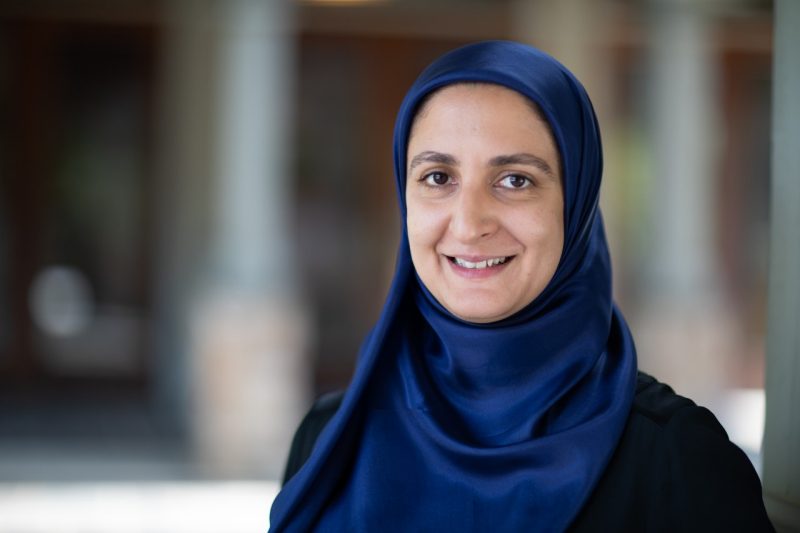
Katherine Romanak is a Research Professor at the Bureau of Economic Geology, The University of Texas at Austin, specializing in geochemistry and carbon capture/storage (CCS) technologies. She pioneered the process-based soil gas monitoring approach for detecting CO2 leakage, which has become a global standard. Her work bridges scientific research and policy, with contributions to UNFCCC COPs and U.S. Class VI CCS regulations. Ph.D. in Geology (1997), UT Austin M.S. in Geology (1988), UT Arlington B.S. in Geology (1984), Southern Methodist University Her research focuses on: Geochemistry of carbon cycling in vadose zones and aquifers Development of environmental monitoring protocols for CCS sites CO2 leakage attribution and stakeholder engagement Integration of machine learning with field monitoring techniques Recent publications emphasize simplifying monitoring complexity, offshore CCS applications, and machine learning for anomaly detection. She holds two U.S. patents and collaborates globally on projects in Japan, Australia, Canada, and the U.S. Gulf Coast. Scientific awards include: 2015 BEG publication award 2017 U.S. patents for CO2 leakage detection Her team seeks partnerships with vadose zone modelers and microbiologists to advance industrial-scale monitoring systems. Romanak also co-developed UT Austin’s online CCS certification program and provides technical training for petroleum professionals transitioning to CCS roles.
Dr. Shabnam Sadeghi Esfahlani is an Associate Professor in Robotics at the School of Engineering and the Built Environment, Anglia Ruskin University , where she serves as Deputy Leader of the BORI research group and leads the Automation & Robotics MSc program. Her interdisciplinary expertise spans mechatronics, artificial intelligence, virtual reality, and serious games , with a focus on applications for rehabilitation, medical training, and autonomous systems . As a Chartered Engineer and Senior Fellow of the Higher Education Academy , she has secured significant funding from Innovate UK, Horizon 2020, and GCRF , with grants exceeding £3 million. Education PhD in Mechanical Engineering, Anglia Ruskin University BSc (First Class) in Statistics & Mathematical Science, Shahid Beheshty University Her research integrates AI with robotics for societal impact, exemplified by the open-source SROBO ground robot and projects like Rehabgame and the Assistive Feeding Robot . She has published over 45 peer-reviewed articles and contributes to academic communities as a journal guest editor and conference organizer . Key collaborations include IET, IMechE, and the Nuffield Foundation as a mentor for young students. Scientific Awards & Recognitions: Chartered Engineer (CEng), Engineering Council UK Senior Fellow (SFHEA), Higher Education Academy Student-Voted 'Made a Difference Award' (2018) Post-Graduate Certificate in Higher Education
Dr. Colin Palmer is a Visiting Fellow in the School of Psychology at the University of New South Wales (UNSW), where he conducts research on visual perception with a focus on social features of our sensory environment. His work examines how the brain processes elements like eyes, faces, and behaviors of people around us using visual psychophysics, computational modeling, and 3D graphical rendering. Dr. Palmer completed his Ph.D. in 2016 and Bachelor of Behavioural Neuroscience (Honours) in 2009, both at Monash University. His doctoral research explored how neurocognitive models of sensory processing relate to differences in sensory integration and social cognition in autism. His primary research interests center on understanding the perceptual and neural mechanisms underlying our sensitivity to dynamic social cues, particularly eye and head movements. Dr. Palmer investigates how the visual system extracts basic environmental elements (color, shape, motion) and develops a mechanistic understanding of how our experience of the social world arises from nervous system activity. His work has clinical applications for understanding sensory and social difficulties in conditions like autism and schizophrenia. Dr. Palmer's recent publications reveal a consistent focus on social vision, particularly gaze perception, face processing, and animacy detection. His research increasingly incorporates computational modeling approaches to understand visual perception mechanisms. There's a strong emphasis on how lighting and shading affect face and gaze perception, with growing attention to clinical applications for neurodevelopmental conditions. Dr. Palmer has received recognition for his work through several awards: Emerging Investigator Award, Australasian Cognitive Neuroscience Society, 2017 Postdoctoral presentation award, Australasian Cognitive Neuroscience Society, 2016 Dr. Palmer is actively involved in research supervision and teaching. He teaches PSYC 3221 Vision and Brain and is available to supervise research students. His research is supported by significant funding: ARC Discovery Project (2020-2022): "Extracting meaning from motion" ($492,000) ARC Discovery Early Career Researcher Award (2019-2021): "Human sensitivity to the dynamics of other people's eye movements" ($356,000) Experimental Psychology Society Study Visit Grant (2017): "Testing computational theories of autism spectrum disorder in the social domain" (£2,580) Dr. Palmer collaborates extensively with Professor Colin Clifford at UNSW and maintains international collaborations with researchers in the UK and Australia, particularly on projects related to autism spectrum disorders and social cognition.
Xin Li is a Professor in the Department of Electrical and Computer Engineering at Duke University and serves as the Associate Vice Chancellor at Duke Kunshan University. He holds a Ph.D. from Carnegie Mellon University (2005) and has held leadership roles in research consortia like the FCRP Focus Research Center and the Center for Silicon System Implementation (CSSI). His research bridges integrated circuits , machine learning , and cyber-physical systems , with applications in autonomous driving, battery lifetime prediction, and smart buildings. Education : Ph.D., Carnegie Mellon University (2005); M.S., Fudan University (2001); B.S., Fudan University (1998) His work emphasizes robust design methodologies for analog/RF circuits, data-driven predictive modeling , and Bayesian inference for high-dimensional variation spaces. Recent publications focus on generative adversarial networks for circuit design, multi-view imputation for incomplete data, and knowledge-driven autonomous systems . He has received numerous accolades, including the NSF CAREER Award (2012) , IEEE Donald O. Pederson Best Paper Awards (2013, 2016) , and IEEE Fellow (2017) . He has served as Editor for journals like IEEE Transactions on Biomedical Engineering and as Chair for conferences including ISVLSI and CAD/Graphics.
Jim Tørresen is a Professor of Computer Science at the Department of Informatics, University of Oslo, where he has been employed since 1999 (Associate Professor 1999-2005, Professor since 2006). He serves as group leader for the Robotics and Intelligent Systems (ROBIN) research group and is also a Principal Investigator at the Centre for Interdisciplinary Studies in Rhythm, Time and Motion (RITMO). His academic career includes visiting positions at Cornell University's Creative Machines Lab (2010-2011) and Kyoto University in Japan (1993-1994). His educational background includes a Dr.ing. (Ph.D.) in Computer Architecture from the Norwegian University of Science and Technology (1996) and an M.Sc. in Computer Architecture from the same institution (1991). Before his academic career, he worked in industry at Navia Aviation (1998-1999) and NERA Telecommunications (1996-1998). Tørresen's research spans artificial intelligence, robotics, and bio-inspired computing. His work focuses on biology-inspired algorithms, programmable logic (FPGA), robotics (simulation, prototyping, control), and human-robot interaction. He has made significant contributions to areas including evolutionary computing, reconfigurable hardware, and adaptive systems. His research often bridges theoretical computer science with practical applications in healthcare, music, and industrial settings. His recent publications demonstrate a strong focus on human-robot interaction, particularly in healthcare contexts for elderly care, as well as applications in sports science, musical robotics, and geological engineering. His work shows a consistent pattern of interdisciplinary research that combines machine learning techniques with domain-specific challenges. Tørresen has also authored a popular science book on artificial intelligence in the "what is" series by Universitetsforlaget, which discusses fundamental concepts, methods, future perspectives, and ethical aspects of AI. He has been active in academic leadership, serving as General Chair for the 22nd International Conference on Field Programmable Logic and Applications (FPL) in 2012 and the 9th Joint IEEE International Conference of Developmental Learning and Epigenetic Robotics in 2019. As group leader of ROBIN, he oversees research on intelligent systems that operate in dynamic environments requiring runtime adaptation. The group works at both fundamental and applied levels, using evolutionary algorithms for robot learning and machine learning techniques for classification and recognition tasks in various application domains.
Prof. Dr. Angelika Braun is a full Professor of Phonetics at the University of Trier since October 2009, with a career spanning forensic phonetics, sociophonetics, and cross-cultural speech analysis. She previously held roles at the Bundeskriminalamt (Wiesbaden/Düsseldorf) and Philipps-Universität Marburg, where she habilitated in Phonetics and Speech Processing (2000). Her work bridges academic research with forensic practice. Research Focus: Her Sociophonetics (language and emotions, gender-specific speech) Forensic Phonetics (speaker identification, voice analysis) Contrastive and Hawaiian Phonetics Speech prosody and toxin effects (smoking, alcohol) Intercultural dubbing studies Academic Contributions: Over 15 recent articles explore voice quality, emotional speech, forensic age estimation, and cross-cultural dubbing effects. Key conferences include Interspeech, International Congress of Phonetic Sciences, and ISCA. Her work appears in journals like Forensic Linguistics and The Phonetician . Scientific Honors: Fellow of the American Academy of Forensic Sciences (AAFS) Founder Member and former Chairperson of the International Association for Forensic Phonetics (IAFP) Life-Member of the International Phonetic Association (IPA) Leadership roles in ISPhS and GAL Practical Impact: Developed the Almeida-Braun Transcription System for dialect analysis and contributed to forensic audio enhancement protocols (e.g., Rodney King case). Serves as reviewer for Language and Speech , Forensic Linguistics , and JIPA . Collaborates on longitudinal studies of vocal aging and speaker identification.
Jon Andoni Duñabeitia is a Full Professor at the School of Languages and Education of Universidad Nebrija in Madrid. He serves as Director of the Centro de Investigación Nebrija en Cognición (CINC) and the International Chair in Cognitive Health . With an h-index of 43 (Scopus), he has published 170+ articles across psycholinguistics, multilingualism, cognitive training, and virtual reality applications in education. His research examines how language processing interacts with cognitive load, emotional modulation, and technological innovation. Principal Investigator for 8+ projects funded by Spanish Government, Basque Government, BBVA Foundation Associate Editor and Editorial Board Member of high-impact journals Recognized among Spain's top 3% scientists across all disciplines Recent publications span topics including: Second-language reading dynamics in VR environments Multilingual cognitive interactions in neurological conditions Emoji/typographic effects on word processing Computerized cognitive assessment and training systems He actively contributes to scientific meetings as invited speaker across Europe, Asia, and Americas. His work bridges basic research in psycholinguistics with applied technologies for cognitive health.
Bradley Hayes is an Associate Professor in the Department of Computer Science at the University of Colorado Boulder, affiliated with the College of Engineering and Applied Science. He leads the Collaborative AI and Robotics (CAIRO) Lab, focusing on creating autonomous robots that collaborate effectively with humans through advances in explainable AI, machine learning, and human-robot interaction. His prior research includes foundational work at MIT's Interactive Robotics Group and Yale's Social Robotics Lab. Research interests span Explainable AI, Learning from Demonstration, Hierarchical Reinforcement Learning, Computer Vision, Natural Language Processing, and Cognitive Science. His work emphasizes making human-robot teams more efficient and safe through innovations like emotionally expressive robotic motion, socially aware navigation, and AR-based collaboration tools. Key contributions include techniques for robust robotic exploration, generative occupancy mapping, and systems for improving human trust through predictable robot behavior. His work has been applied to teleoperation training, surgical assistance, and space exploration scenarios. Grants and partnerships support development of assistive robotic canes and AR interfaces for collaborative tasks. Lab activities emphasize translating theoretical advancements into practical systems through close collaboration between researchers, engineers, and end-users. Education efforts include developing foundational robotics curricula addressing autonomy, perception, and control systems.
Hoda Eldardiry is an Associate Professor in the Department of Computer Science at Virginia Polytechnic Institute and State University (Virginia Tech), and Director of the Machine Learning Laboratory. Her research focuses on artificial intelligence, machine learning, data mining, and their applications in policy, ethics, and complex systems analysis. Education: Ph.D., Computer Science, Purdue University M.S., Computer Science, Purdue University B.E., Computer and Systems Engineering, Alexandria University, Egypt Research Interests: Eldardiry’s work spans machine learning modeling (e.g., hypergraph neural networks, time-series forecasting), AI ethics and policy education, and interdisciplinary applications in transportation, healthcare, and cybersecurity. She emphasizes socially responsible AI development through curriculum design and policy frameworks. Recent Research Themes: Her 2025 publications highlight advancements in graph-based learning, policy-aware AI education modules, and novel techniques in multi-modal data analysis. Key areas include zero-shot learning, sparse control systems optimization, and collaborative machine learning frameworks. Labs & Teams: Directs the Machine Learning Laboratory at Virginia Tech, fostering innovation in ethical AI systems and data-driven decision-making.
Ester Appelgren is an Associate Professor in Journalism and Head of School at the School of Natural Sciences, Technology and Environmental Studies at Södertörn University. She holds a PhD in Media Technology and focuses on Data Journalism, Media Leadership, and Digital Integrity. Her work bridges technological innovation with ethical journalistic practices, particularly in crisis communication and public service media contexts. Educatio: PhD in Media Technology. Research interests include data-driven storytelling, media management during crises, and the evolving role of interactivity in journalism. She chairs the Journalism division of Nordmedia and serves on editorial boards for Digital Journalism and Journalistica . Her recent research explores pandemic-era media responses, ethical use of sensor data in journalism, and the paternalistic implications of interactive media. She has published widely on Nordic journalism trends and media convergence challenges. Currently, she is not participating in active research projects but remains active in editorial and academic leadership roles. Key contributions include analyzing media leadership during the pandemic, evaluating digital transformation in Swedish public service news, and critiquing technological determinism in journalism studies. Her work emphasizes balancing innovation with ethical accountability in data journalism practices.
Yannis Stylianou is Professor of Speech Processing at University of Crete and Senior Research Scientist at Apple. Former positions include AT&T Labs Research, Bell-Labs, and Toshiba Cambridge Research Lab. IEEE Fellow with PhD from ENST-Paris and over 200 publications. Research spans: Adaptive speech/audio modeling Neural speech synthesis/enhancement Biomedical signal processing Awards include: IEEE Fellowship French Ministry Research Fellowship ENST Graduate Scholarship Recent work focuses on neural TTS architectures, intelligibility enhancement, and multimodal synthesis. Organizes annual International Summer School on Speech Processing.
Yee Man (Margaret) Ng is an Associate Professor in Journalism and the Institute of Communications Research at the University of Illinois. She combines data science methodologies with communication research to study social media dynamics, digital journalism, and technology adoption patterns. Her research interests include: Computational social science Social media analytics Data visualization techniques Communication technology impacts Journalism innovation Post-adoption technology behavior Ng's methodology integrates big data analysis, machine learning algorithms, and traditional survey/experimental approaches. Current work extends diffusion of innovations theory by examining social media users' discontinuance and readoption behaviors. Academic contributions span both empirical research and educational practice. She has taught courses like: JOUR 460 - Data Storytelling JOUR 410 - Data Storytelling for Journalism JOUR 425 - Multimedia Editing and Design JOUR 199 - Hands-on Media Technology Her publications analyze topics ranging from YouTube's recommendation algorithms to digital sustainability in news media, with particular focus on: Platform migration patterns Algorithmic content moderation Political communication dynamics Media technology adoption Regional web usage differences Incivility measurement techniques
Anders Björn is a Professor at the Department of Mathematics (MAI) at Linköping University (LIU), affiliated with the Analysis and Mathematics Education (ANDI) division. His research focuses on Nonlinear Potential Theory , particularly p-harmonic functions , quasiminimizers , and Newtonian Sobolev spaces in metric spaces. He co-leads the research group in this area and contributes to Analysis on Metric Spaces . He teaches undergraduate and graduate courses, including Real Analysis and Functional Analysis . Organizational Roles: Organizer of the Mathematical Colloquium, Local Representative for Svenska Matematikersamfundet (Swedish Mathematical Society). Editorial Work: Former Technical Editor for Acta Mathematica (2004–2015) and Arkiv för Matematik (1993–2015), both published by Institut Mittag-Leffler. His research explores foundational questions in mathematical analysis, blending pure mathematics with interdisciplinary applications. He emphasizes understanding properties of solutions to differential equations in general settings, akin to constructing an 'identikit' of mathematical phenomena. His work is published in collaboration with the ANDI group, and he actively engages in promoting mathematics through outreach and academic service.
Hao Zhang is an Associate Professor in the Department of Computer Science at the Manning College of Information and Computer Sciences (CICS), University of Massachusetts Amherst. He directs the Human-Centered Robotics Laboratory (HCRLab), focusing on lifelong collaborative autonomy, robot adaptation, and human-robot teaming. His research integrates robotics, AI, and machine learning to develop algorithms for real-world applications like manufacturing, autonomous driving, and environmental monitoring. He holds an NSF CAREER Award and DARPA Young Faculty Award, among other recognitions. Dr. Zhang earned a PhD from the University of Tennessee, Knoxville (2014) and an MS from the Chinese Academy of Sciences (2009). His work addresses challenges in unstructured environments through innovations like self-reflective terrain adaptation and graph-based perception systems. He actively promotes equity in robotics through his PROGRESS outreach program. His research sponsors include NSF, DARPA, and industry partners such as Toyota. Publications span conferences like RSS, ICRA, and IROS, with best paper awards. He serves on editorial and program committees for top-tier journals/conferences including RA-L, NeurIPS, and AAAI.