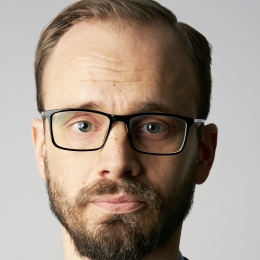
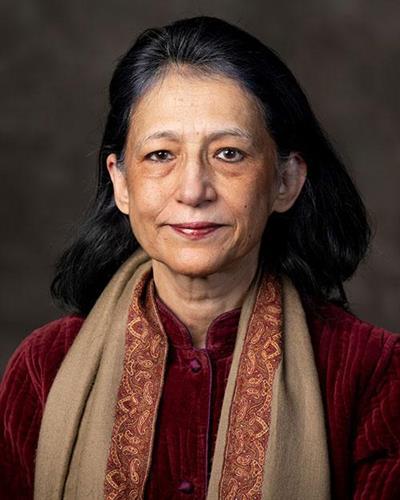
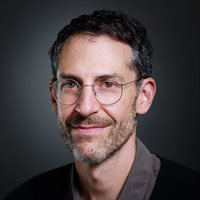
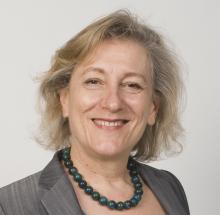
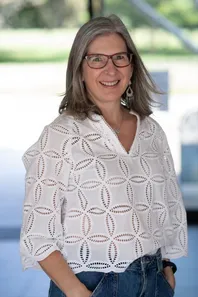
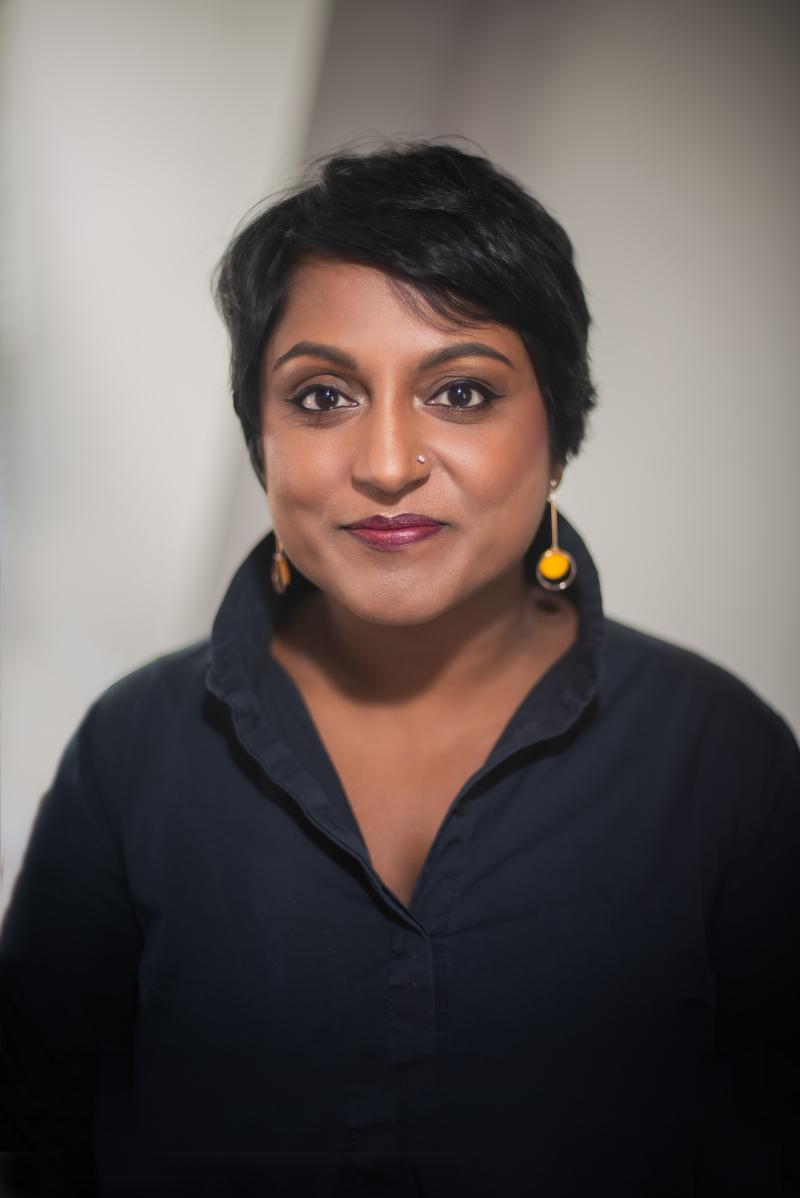
Karl Gustafsson is a Professor at Stockholm University within the Department of Economic History and International Relations. His work bridges security studies , collective memory , and digital research methods in international relations. Current Role: Professor of International Relations, Stockholm University Previous Positions: Post-Doc at Lund University, Researcher at Swedish Institute of International Affairs Visiting Appointments: University of Tokyo, Osaka University, Keio University, Academia Sinica, Nordic Institute of Asian Studies Research Focus: Karl specializes in memory politics , ontological security , and anxiety-driven international dynamics , particularly in Sino-Japanese relations and digital platforms . His studies explore how historical narratives and online memory construction influence state identity and policy. Awards & Grants: Recipient of the Wang Gungwu Prize (2014) and Stockholm University Association’s award (2011). Holds Swedish Research Council and Marianne & Marcus Wallenberg Foundation grants for projects on apologies in international politics and digital memory in East Asia . Publications: His work appears in journals such as International Studies Quarterly , European Journal of International Relations , and Memory Studies , addressing topics like narrative power in East Asia, anxiety’s role in policy change , and digital humanities applications in IR.
Professor Simon Buckingham Shum is a leading academic in Learning Informatics at the University of Technology Sydney (UTS), serving as inaugural Director of the Connected Intelligence Centre since 2014. His work bridges Human-Computer Interaction, Educational Technology, and Learning Analytics to develop AI-driven tools like OnTask that enhance student belonging through personalized feedback. Key research areas: Human-Computer Interaction, Learning Analytics, AI in Education, Collective Intelligence Recent work focuses: LLM-augmented qualitative analysis, Belonging Analytics frameworks, and ethical AI implementation in education CIC received the 2024 Vice-Chancellor’s Student Experience Award for scaling OnTask across multiple faculties. His contributions span over 30 years, including founding roles at The Open University’s Knowledge Media Institute and innovations in Open Educational Resources (OER), SocialLearn, and FutureLearn platforms. Notable awards: 2024 Student Experience Award (OnTask), Fellow of the Royal Society of Arts (RSA), DEFI STRI Researcher at University of Cambridge Education: B.Sc. in Psychology (York), M.Sc. in Ergonomics (UCL), PhD in Human-Computer Interaction (York) He leads multidisciplinary collaborations with teams across Business, Law, and Education faculties, pioneering tools like Theme Explorer and Qreframer bot. His recent focus on the "metacrisis" reframes educational technology’s role in addressing global systemic challenges through transdisciplinary approaches.
Ayesha Jalal is a distinguished Professor of History at Tufts University's School of Arts and Sciences and holds a joint appointment at The Fletcher School of Law and Diplomacy. She currently serves as the Mary Richardson Professor and directs the Center for South Asian and Indian Ocean Studies. With a career spanning over three decades, Professor Jalal has established herself as a leading scholar in South Asian history, particularly focusing on Pakistan studies, the partition of India, and Muslim political thought in the region. Professor Jalal's academic journey began with a double major in History and Political Science from Wellesley College in 1978. She then pursued doctoral studies at the University of Cambridge, earning her PhD in History in 1983. Her early career included prestigious fellowships at Trinity College, Cambridge (1980-84), the Centre of South Asian Studies (1984-87), the Woodrow Wilson Center for International Scholars (1985-86), and the Harvard Academy for International and Area Studies (1988-90). Professor Jalal's research primarily centers on South Asian history with special emphasis on Pakistan, the partition of India, and Muslim political thought. Her work explores the complex interplay between religious identity, nationalism, and state formation in the region. She has made significant contributions to understanding democratic development in Pakistan, sectarian dynamics in South Asia, and the historical connections between the Indian subcontinent and the wider Indian Ocean world. Her recent scholarship has focused on 'Oceanic Islam,' examining transregional Muslim networks and universalist aspirations that transcended colonial boundaries. Professor Jalal's extensive publication record demonstrates a consistent focus on South Asian political history, with particular attention to Pakistan's formation and development. Her recent works show a progression from studies of partition and state formation toward broader examinations of Muslim intellectual history and transregional connections. The 2020-2024 publications reveal a sophisticated engagement with themes of democratic erosion, sectarianism, and the historical roots of contemporary political challenges in South Asia, while also exploring more cultural and religious dimensions through works on Muslim enlightened thought and oceanic connections. Patrus Bukhari Award for the best English language book, The Pity of Partition , Academy of Letters, Government of Pakistan (2015) Britannica Book of the Year recognition (2015) MacArthur Fellowship (1998-2003) As an educator, Professor Jalal has mentored numerous graduate students through thesis supervision and directed research projects. Her teaching portfolio includes courses on Modern South Asia, Contemporary South Asia, Islam and the West, and specialized seminars on South Asian history. She has taught at several prestigious institutions including the University of Wisconsin-Madison, Columbia University, and Harvard University before joining Tufts in 1999. In her role as Director of the Center for South Asian and Indian Ocean Studies, she has fostered interdisciplinary research and provided guidance to emerging scholars in the field. Professor Jalal directs the Center for South Asian and Indian Ocean Studies at Tufts University, which serves as a hub for interdisciplinary research on South Asia and its connections to the wider Indian Ocean world. The center facilitates collaborative projects, hosts visiting scholars, and organizes events that bridge historical, political, and cultural perspectives on the region. Under her leadership, the center has become a prominent institution for South Asian studies, promoting dialogue between academic research and contemporary policy issues.
Rachel Leow is an Associate Professor in Modern East Asian History and Fellow of Murray Edwards College at the University of Cambridge. She holds a PhD and MPhil from St Catharine’s College, Cambridge, and a BA from Warwick University. Her research critiques rigid nationalisms in East Asia, focusing on transregional cultural and intellectual histories. Her book Taming Babel: Language in the Making of Malaysia (2016) won the 2018 Harry J. Benda Prize for Southeast Asian studies. Current projects include an anti-diasporic history of Chinese migration and early 20th-century Asian thought-worlds. Leow emphasizes public engagement, contributing to blogs, literary reviews, and collaborative manifestos. She teaches World History courses, including Part IA’s Outline 11 and specialized modules on East/Southeast Asia. She supervises postgraduate students exploring transnational East Asian history from 1850 to the present. Professional affiliations include the Royal Historical Society, Center for History and Economics, and editorial roles at The Historical Journal and Global Intellectual History . Awards include the Harry J. Benda Prize and RHS Fellowship. Her digital work includes a visualization of Afro-Asian Cold War networks and a short film on diasporic identity.
Gerhard Hirschfeld is an Honorary Professor at the Department of History, University of Stuttgart, and has served as Director of the Bibliothek für Zeitgeschichte since 1989. His research focuses on Social and Cultural History of World War I , Comparative Occupation History of World War II , 20th Century Netherlands History , and Academic Emigration post-1933 . He has been a Fellow of the Netherlands Institute of Advanced Studies in the Humanities and Social Sciences (1996/1997, 2006/2007) Fellow of the German Historical Institute London and held leadership roles including Chair of the German Committee for the History of WWII (1991–2000) and President of the International Committee for the History of WWII (2000–2010). His publications span monographs, edited volumes, and essays on occupation policies, collaboration, and exile studies. Recent works emphasize the media representation of WWI , continuity of nationalist rhetoric , and ethical dimensions of historical taboos . He contributes to journals like Zeithistorische Forschungen and Tijdschrift voor Geschiedenis . Scientific awards include Fellowships at NIAS and DHIL Editorial leadership in academic series like Zeit der Weltkriege and Schriften der Bibliothek für Zeitgeschichte and advocacy for interdisciplinary war studies.
Austin Zeiderman is an Associate Professor in the Department of Geography and Environment at the London School of Economics (LSE), with interdisciplinary expertise in urbanization, environmental governance, and political dynamics in Latin America and the Caribbean. His research integrates anthropology, geography, sociology, and history, focusing on Colombia, particularly the Magdalena River and Bogotá’s urban periphery. Zeiderman holds a PhD in Anthropology from Stanford University, an MA in Environmental Science from Yale, and a BA in Economics from Colgate University. He has led projects like LSE’s Urban Uncertainty initiative and remains a Research Associate at LSE Cities. His work explores how security, risk, and environmental challenges shape marginalized communities, with notable monographs including *Endangered City* (2016) and *Artery* (2025). Research interests include racial ecologies, colonial capitalism, urban futures, and the interplay of race, environment, and security. He has been recognized with fellowships from the Fulbright Program, Wenner-Gren Foundation, and others. His recent scholarship critiques infrastructure projects like Colombia’s Magdalena River logistics corridor, linking environmental crises to systemic racial inequalities. Publications span journals like *Antipode* and *Public Culture*, and he engages public discourse through media like the Guardian and podcasts. His work bridges academic rigor with societal impact, addressing urgent global issues such as climate adaptation and post-conflict urban resilience.
David Mwambari serves as Associate Professor at KU Leuven's Faculty of Social Sciences within the Unit Leuven International and European Studies (LINES). He leads the ERC-funded TMSS project on Life Narratives of Violence Among Refugees from Africa's Great Lakes Region and holds affiliations with the Oxford Consortium on Human Rights and the Centre for Mediation in Africa at the University of Pretoria. His educational background includes BA/MA in International Relations from United States International University-Africa, MA in Pan-African Studies from Syracuse University, and PhD in History from La Trobe University. He previously held academic positions at King's College London, Ghent University, and United States International University-Africa. Mwambari's research centers on memory studies with emphases on post-genocide Rwanda, colonial durabilities, and refugee narratives. His work examines how cultural memory shapes state formation, peacebuilding, and identity politics through interdisciplinary methodologies blending historical analysis, ethnography, and critical theory. Recent projects investigate vernacular memory practices during crises and the spatial dimensions of post-conflict reconstruction. His scientific contributions include the monograph Navigating Cultural Memory (Oxford University Press, 2023), co-edited volume Beyond History (Rowman & Littlefield, 2020), and editorial roles for Qualitative Research journal and Brill's 'Mobilizing Memory' series. His publications demonstrate evolving focus from leadership studies toward memory politics and decolonial research methodologies. European Research Council (ERC) Grant for TMSS Project Fellow at Churchill College, University of Cambridge African Academic Diaspora Fellow at CODESRIA FWO Postdoctoral Research Fellowship Mwambari actively mentors early-career scholars across Africa, Latin America, and East Asia while contributing to public discourse through Al Jazeera and community projects training history teachers in East Africa. His consultancy work addresses cross-disciplinary challenges in healthcare, education, and security, reflecting his commitment to applied scholarship beyond traditional academic boundaries.
Dr. Tani Barlow is the George & Nancy Rupp Professor of Humanities and Professor of History at Rice University, affiliated with the Chao Center for Asian Studies and the Center for the Study of Women, Gender, and Sexuality. A leading scholar in Modern Chinese intellectual history, her work bridges gender studies, media culture, and transnational feminism. She co-founded the Chinese Commercial Advertising Archive and edits the acclaimed journal positions: asia critique . Her research examines late 19th to early 20th century China through lenses of consumer culture, feminist theory, and cultural ephemera. Notable books include In the Event of Women (2018) and The Question of Women in Chinese Feminism (2004). Barlow holds visiting professorships at Tsinghua University, Hitotsubashi University, and the University of Bologna. She has directed major projects like the Rockefeller Foundation's Critical Asian Studies initiative and the Luce Foundation’s Ephemera Project. Her articles span journals like Boundary 2 and differences , analyzing topics from advertising art to Marxist sociology. Her recent work explores digital humanities applications in historical research and the intersections of capitalism with gendered identities in China. Barlow mentors advanced graduate students specializing in modern Chinese history with technical skills in data analysis and cultural theory. Her interdisciplinary approach integrates visual studies, political economy, and feminist critique to reframe understandings of China’s modernization processes.
Serra Hakyemez is Assistant Professor of Anthropology and Global Studies at the University of Minnesota, currently on leave until January 2023. Her research examines the intersection of counterinsurgency warfare and judicial violence in Turkey's Kurdish regions, focusing on prison solidarity networks and decolonial resistance. She employs interdisciplinary methods combining political anthropology, legal studies, and ethnography to analyze state violence and resistance movements. Education includes: Ph.D. in Cultural Anthropology, Johns Hopkins University, 2016 M.A. in Sociology and Anthropology, Central European University, 2008 M.Sc. in Social Policy, London School of Economics, 2006 B.A. in Political Science & Business Administration, Bogazici University, 2005 Her research investigates the juridical and visual economies of counterinsurgent violence, with ongoing work on prison-based solidarity and insurgent justice frameworks in Kurdistan. Publications explore themes including feminist resistance in conflict zones, archival politics of state violence, and the anthropology of dissent. Awards include: ACLS Fellowship Wenner-Gren-Hunt Fellowship
Nicola Pratt is a Professor of International Politics of the Middle East at the University of Warwick's School of Politics and International Studies (SPAIS). She previously served at the University of East Anglia and has extensive field experience in Egypt focused on human rights and democratization. Her work bridges feminist international relations theory with Middle Eastern politics, emphasizing grassroots activism, gender dynamics, and popular culture's role in political movements. Pratt's research explores democratization, gender politics, and peace/security in the Middle East, with notable projects like the digital archive documenting Egypt's 2011 uprising. She has held leadership roles, including President of the British Society for Middle Eastern Studies (2024-). Her 2020 book Embodying Geopolitics won the BISA Susan Strange Prize, analyzing women's activism across Egypt, Jordan, and Lebanon. Her recent articles address feminist responses to Israel's actions in Palestine, the political economy of tourism-related violence, and decolonial praxis in academia. Pratt also advises PhD students on Middle Eastern studies and critical approaches to international relations.
Crytal Lee is an Assistant Professor in Computational Media and Design at MIT, with a joint appointment in the Schwarzman College of Computing and Comparative Media Studies/Writing. She is also a Faculty Associate at Harvard's Berkman Klein Center for Internet & Society, co-leading the Ethical Tech Working Group, and a Senior Fellow at Mozilla's Responsible Computing Challenge. Her research focuses on data visualization, disability studies, and ethical technology, emphasizing the 'life-cycle of data representations.' Education: PhD in History, Anthropology, Science, Technology, and Society from MIT (2022); MA and BA (High Honors) in History of Science from Stanford University (2016 and 2015). Research Interests : Crystal examines how data is curated, visualized, and contested, with a particular lens on disability justice and accessible design. Her work bridges STS, HCI, and critical data studies, addressing issues like misinformation, algorithmic bias, and inclusive technology. Awards & Grants : Honorable Mentions at EuroVis 2022 and CHI 2021; NSF Dissertation Improvement Grant; SSRC Social Data Fellowship. Advising & Mentorship : Advised projects on accessible visualization, participatory AI, and disability inclusion. Current book project: Crip Computation . Labs & Teams : Co-leads Ethical Tech Working Group at Berkman Klein; involved in MIT's Data + Feminism Lab and Accessible Interactions projects.
Deen Freelon is the Allan Randall Freelon Sr. Presidential Professor at the University of Pennsylvania's Annenberg School for Communication, where he leads research in digital politics and computational methods. His work centers on identity dimensions in social media, misinformation ecosystems, and political communication. Previously, he held tenured positions at American University and the University of North Carolina at Chapel Hill. Freelon earned a B.A. with honors from Stanford University (2002), followed by an M.A. (2008) and Ph.D. (2012) from the University of Washington. His endowed chair honors his great-grandfather, Allan Randall Freelon Sr., a Penn alumnus and prominent Philadelphia artist. Freelon's research explores intersections of technology and society with emphases on: Computational analysis of social media discourse Race, gender, and ideological asymmetry in online spaces Misinformation propagation and mitigation strategies Impact of personalized information environments on democracy His publications consistently address how digital platforms reshape political engagement and identity expression. Freelon has secured over $6 million in research funding from organizations including the Knight Foundation, Hewlett Foundation, Spencer Foundation, and US Institute for Peace. As a founding member of UNC Chapel Hill's Center for Information, Technology, and Public Life, he contributes to interdisciplinary efforts examining technology's societal impacts.
Ali Yaycıoğlu is an Associate Professor of History at Stanford University, serving as Director of the Abbasi Program in Islamic Studies and Middle Eastern Studies Forum. His work focuses on Ottoman Empire and Modern Turkey, integrating digital tools to analyze political, economic, and legal institutions. He holds affiliations with the Center on Democracy, Development and the Rule of Law, and the Freeman Spogli Institute for International Studies. B.S. in International Relations (Middle East Technical University, 1994) M.A. in History (Bilkent University, 1997) Graduate Studies in Islamic Studies (McGill University, 1998) Ph.D. in History and Middle Eastern Studies (Harvard, 2008) His research explores Ottoman political and financial systems, with current projects examining debt networks (The Order of Debt) and Ottoman political communities. He leads digital initiatives like Charting the Empire and Mapping Ottoman Epirus, using spatial analysis to map fiscal records and power structures. His work bridges historical analysis with digital humanities, producing visualizations of Ottoman networks. Notable publications include Partners of the Empire (2016) and essays on Ottoman global connections. He co-edited a special digital humanities issue of the Journal of Ottoman and Turkish Studies (2023). His research has been supported by grants including the Stanford Data Science Seed Grant (2018). Yaycıoğlu advises the Stanford Ottoman World Series and engages in public scholarship through media commentary on Turkish politics. His artistic projects under 'Critical Imagination' explore historical themes through visual arts, further bridging academic and creative domains.
Dr. Meera Sabaratnam is an Associate Professor of International Relations at the University of Oxford and a Tutorial Fellow in Politics at New College. She previously held positions at SOAS University of London, the University of Cambridge, and the London School of Economics (LSE), where she earned her MSc and PhD. Her work focuses on the colonial and postcolonial dimensions of world politics, challenging Eurocentric frameworks in International Relations (IR) theory and practice. Education MA in Philosophy, Politics, and Economics (PPE), Balliol College, University of Oxford MSc and PhD in International Relations, London School of Economics (LSE) Her research examines how imperial histories shape contemporary international order, with a particular focus on structural violence , epistemic justice , and anti-colonial resistance . She is currently writing a book titled Complex Indebtedness , analyzing material and moral debts in the liberal international order. Scientific Awards and Grants : Senior Fellowship of the Higher Education Academy Leverhulme Trust Research Fellowship RF-2021-235 Co-investigator for Czech Science Foundation grant (2025-2027) on postcolonial order Previous funding from the Economic and Social Research Council (ESRC) Dr. Sabaratnam co-founded the Colonial/Postcolonial/Decolonial Working Group at the British International Studies Association (BISA) and serves on editorial boards of International Studies Quarterly , Security Dialogue , and Cambridge Review of International Affairs . Her methodological innovations include contrapuntal analysis and histories from below , particularly in studying the Great War's impact on southeast Africa.
Dr. Hilary Cremin is the Head of the Faculty of Education at the University of Cambridge and holds the rank of Professor. Her work centers on peace education, conflict transformation, and innovative methodologies such as photo-voice, poetry, and autoethnography. She chairs the Cambridge Peace Education Research Group (CPERG), which promotes research and practice in peace education through seminars and online resources. Her research explores the intersection of education and peacebuilding, emphasizing ethical and embodied approaches to conflict resolution in schools and communities. Education : PhD in Education, University of Leicester PGCE, University of Oxford (Wolfson College) BA (Hons) in French and European Literature, University of Warwick Research Interests : Hilary’s work addresses global challenges in education and peacebuilding, including: Developing transrational approaches to peace education Reducing epistemic violence through reflexive methodologies Empowering youth through restorative justice and civic pedagogy Exploring embodiment and arts-based practices in educational research Awards : Fellow of the Royal Society of Arts Leadership and Service : In addition to her academic role, Hilary serves as Chair of the Degree Committee in the Faculty of Education and has extensive experience as a mediator and educational consultant. She has collaborated with schools, communities, and international organizations to advance conflict transformation and peacebuilding initiatives. Labs/Teams : Cambridge Peace Education Research Group (CPERG) — fostering global dialogue and practical resources for peace education researchers and practitioners.