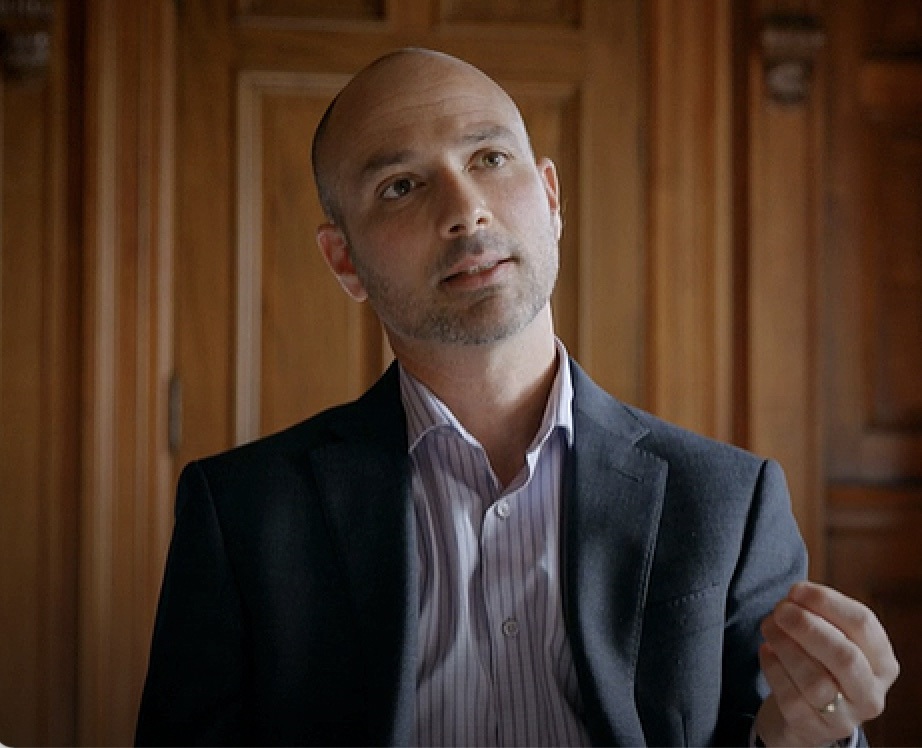
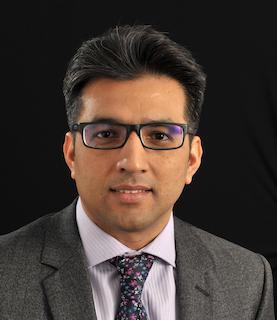
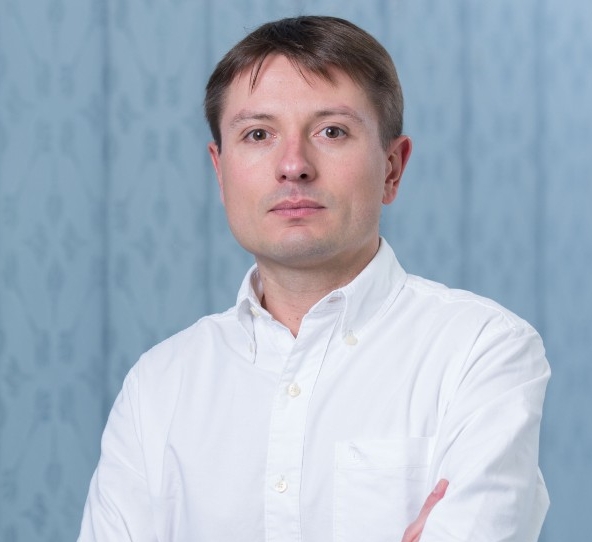
Richard Aslin, Ph.D., is a Senior Scientist at Haskins Laboratories, an independent research institution affiliated with Yale University. He joined Haskins in 2017 to re-establish the BabyLab, focusing on developmental research in infant cognition and statistical learning mechanisms. His work explores how infants implicitly learn from environmental stimuli without prior knowledge, emphasizing statistical learning processes across domains like speech, vision, and motor skills. His research employs advanced neuroimaging techniques such as fMRI, EEG, and fNIRS to study brain function in infants and adults. Notable projects include investigating spoken word recognition via eye-tracking and neural decoding, as well as studying functional connectivity changes during learning. Aslin leads grants funded by NIH and the Gates Foundation, focusing on statistical learning, word recognition, and neurodevelopmental outcomes. Key collaborators include David Lewkowicz (BabyLab co-director) and Elizabeth Newport. He mentors a team of researchers, including postdoctoral fellows and Yale graduate students. His findings bridge cognitive and developmental neuroscience, highlighting the neural underpinnings of early learning and its lifelong implications.
Jason Ford is a Professor of Electrical Engineering at Queensland University of Technology (QUT), leading research in trustworthy autonomous systems and decision-making under uncertainty. He holds positions in QUT's Centre for Robotics and Centre for Data Science. Ford earned his PhD from the Australian National University (ANU) and has over 20 years of experience in aerospace, energy, and defense sectors. His research focuses on model-based filtering, estimation, and decision systems for dynamic environments, with applications in aerial autonomy, infrastructure inspection, and low-signal-to-noise detection. Education: B.Sc. and B.E. (1995), PhD (1998), all from ANU. Professional Experience: Research Scientist at DSTG (1998-2004), Research Fellow at UNSW (2004-2005), QUT faculty since 2005, promoted to Professor in 2019. Research Interests: Robust autonomous systems, vision-based sense-and-avoid, model-driven decision systems, and resilient robotic technologies. His work on ROAMES asset management systems has saved Queensland $40M/year and won international awards. Awards: 2019 Academic of the Year (Australian Defence Industry), multiple best paper awards, and industry recognition for collision avoidance and UAV technologies. Grants: Over $10M in competitive research funds since 2009. Supervision: 8 completed HDR students since 2008, teaching control systems and autonomous systems to 1000+ undergraduates. Labs/Teams: Program Lead for Decision and Control in QUT's Robotics Centre, collaborator with industry partners like Insitu Pacific and Caterpillar.
Sergio Davies is a researcher at Sheffield Hallam University, actively contributing to the fields of neuromorphic computing, spiking neural networks (SNNs), and cognitive robotics. His work focuses on the development and application of biologically inspired neural systems, particularly using the SpiNNaker neuromimetic platform, for real-time learning, robotic guidance, and human-robot interaction. His research interests include neuromorphic computing, spiking neural networks, cognitive and developmental robotics, event-based vision, neural engineering, and real-time learning systems. These areas are consistently reflected in his publications, which explore both theoretical and applied aspects of brain-inspired computation. The recent articles highlight a trend toward real-time, adaptive robotic systems using event-driven sensors and neuromorphic hardware. Key themes include gesture recognition with event cameras, dynamic attention mechanisms for object tracking, supervised learning in SNNs using STDP and homeostasis, and the development of communication protocols for neural hardware. His work bridges the gap between neural modeling and practical robotic applications, emphasizing efficiency, real-time performance, and biological plausibility. Sergio Davies has collaborated extensively with researchers such as Alessandro Di Nuovo, Steve Furber, and Alexander Rast, indicating strong integration within the international neuromorphic and cognitive robotics communities. He is actively publishing, with works in 2025, and maintains a consistent institutional email, confirming his current affiliation. No formal awards or grants are listed in the provided texts. Sergio Davies has contributed to projects involving the iCub humanoid robot and the SpiNNaker platform, working within interdisciplinary teams focused on cognitive neuromorphic systems. His work on data specification protocols and model translation systems suggests involvement in core software and infrastructure development for neuromorphic hardware.
Erez Freud is an Associate Professor in the Department of Psychology at York University, Faculty of Health. He leads the Freud Lab, which is affiliated with the Centre for Vision Research and the VISTA program. He is eligible to supervise graduate students in the Biology Graduate Program and the Brain, Behaviour and Cognitive Science stream. Position: Associate Professor Department: Psychology Faculty: Faculty of Health Institution: York University, Toronto, Canada Lab: Freud Lab Research Affiliations: Centre for Vision Research, VISTA program Dr. Freud's research centers on the cognitive and neural mechanisms of visual perception and object interaction. His work explores how humans recognize objects, guide actions through vision (vision-for-action), and how these systems develop and break down due to aging or brain injury. He investigates the interface between perception and action, with a focus on developmental trajectories and neural reorganization after cortical damage. His lab uses a multidisciplinary approach combining functional MRI, neuropsychological testing, motion tracking, and behavioral experiments in diverse populations including children, older adults, and patients with brain lesions. The recent publications (2022–2025) reflect a strong trend in perception-action dissociation, neural plasticity after brain surgery, face perception under pandemic conditions, and the functional organization of dorsal and ventral visual pathways. Topics include depth perception, attention allocation, motor control, and the impact of environmental changes (e.g., face masks) on social and visual cognition. The research spans cognitive neuroscience, developmental psychology, and clinical neuropsychology, with methodologies rooted in advanced neuroimaging and behavioral analysis. No scientific awards are explicitly mentioned in the provided text. Dr. Freud actively mentors a diverse team of graduate and undergraduate researchers. His lab includes PhD and Master’s students in Psychology, Biology, and Neuroscience programs, working on topics such as visuomotor control in autism, depth perception, memory, and neurodivergence. He has co-supervised students with other faculty members and has hosted postdoctoral researchers. While specific grant details are not listed, the involvement of students in NSERC USRAs suggests participation in funded research projects. The Freud Lab is a dynamic research group within the Department of Psychology at York University, focused on vision science and cognitive neuroscience. It is part of the Centre for Vision Research and the VISTA program, indicating strong interdisciplinary collaboration. The lab investigates brain representations for visual behavior, developmental changes, and neural resilience after injury. Resources include shared fMRI datasets, behavioral paradigms, and stimulus sets (e.g., possible/impossible objects) made publicly available under Creative Commons licensing.
Joni Pajarinen is an Associate Professor in the Department of Electrical Engineering and Automation at Aalto University. His research focuses on reinforcement learning, robotics, and autonomous systems with applications in multi-agent coordination, control systems, and object-centric learning. He has contributed to advancements in policy optimization, imitation learning, and underwater vehicle control. Key research areas include: Reinforcement learning algorithms for robotics Multi-agent systems and cooperative control Autonomous underwater vehicle navigation Machine learning for industrial applications His recent work emphasizes scalable reinforcement learning frameworks, such as AgentMixer for correlated policy factorization and entropy-regularized task representations. He explores vision-language models (e.g., RGB-Th-Bench) and large-scale motion datasets (RP1M) for humanoid robotics. Publications span top venues like AAAI, ICLR, and IEEE Robotics and Automation Letters. His research bridges theory and real-world applications in robotics, marine engineering, and manufacturing automation.
Saturnino Maldonado Bascón is a full Professor at the Universidad de Alcalá, affiliated with the Signal Theory and Communications Department. His research focuses on advanced signal processing techniques, machine learning applications, and computer vision systems. He earned his doctorate from Universidad de Alcalá in 1999 with a thesis on multiresolution analysis for image compression. Key research interests include traffic sign recognition, video surveillance algorithms, 3D object recognition, and noise reduction in digital images. His work frequently employs support vector machines (SVM), spatial pyramids, and clustering methods to address challenges in robotics, autonomous systems, and sensor data analysis. Publications highlight contributions to vehicle tracking, odometry correction in differential robots, and efficient video annotation techniques. His research group (GRAM) develops multisensorial analysis solutions for intelligent infrastructure systems like the WHISNU platform. Maldonado has explored diverse applications from biomedical signal processing to traffic management systems through grants and collaborative projects. No scientific awards are explicitly mentioned, but his extensive publication record reflects sustained academic impact. He leads a research team focused on real-time systems, sensor fusion, and computer vision applications in both academic and industrial contexts.
Orhan Ozguner, PhD, is an Assistant Professor in the Department of Computer and Data Sciences at the Case School of Engineering, Case Western Reserve University. His research focuses on developing visually-guided robotic control systems for autonomous surgical tasks, with expertise in algorithm development, human-robot interaction in medical robotics, and medical data analytics. He teaches foundational courses including programming in Java, data science for majors, C/C++ programming, algorithms, and database systems. Education: PhD in a relevant field (not explicitly stated in text) Research interests include scene identification, object tracking in surgical robotics, and medical applications of data sciences. No specific awards, grants, or lab affiliations are mentioned in the provided text. Teaching responsibilities span core computer science disciplines, leveraging his interdisciplinary experience in robotics and medical engineering.
Bria Long is an Assistant Professor in the Department of Psychology at the University of California, San Diego, leading the Visual Learning Lab (vislearnlab.org). Her research focuses on how humans, especially infants and children, learn visual concepts through perception and interaction. She combines behavioral experiments, computational methods, and ecological approaches to study visual learning across development. Key areas include object recognition, drawing production, and the role of real-world visual experiences in shaping cognition. She holds a Ph.D. from Harvard University, an M.S. from École Normale Supérieure in Paris (funded by a Fulbright Award), and a B.A. from Stanford University. Her work is supported by an NIH K99/R00 Pathway to Independence Award. Notable projects include the BabyView dataset (egocentric infant vision) and studies on children’s drawing development. She has contributed to open science initiatives like Peekbank, a repository for developmental eye-tracking data. Her research has been published in journals spanning cognitive science, psychology, and neuroscience. She advises students on projects related to visual learning, cognitive development, and computational modeling.
Wasim Ahmad is a Senior Lecturer (Associate Professor) in Signal Processing and Machine Learning at the School of Engineering, University of Glasgow. He earned his PhD from the University of Surrey (2011) and held prior academic positions at the University of Hull (2013–2015) and the University of Surrey (2011–2013). He is part of the Communication, Sensing and Imaging (CSI) research group at Glasgow, focusing on applications of signal processing and machine learning in sound modeling, robot audition, healthcare technologies, and IoT-based systems. Education: PhD in Engineering from the University of Surrey (2011), followed by postdoctoral roles at Hull and Surrey before joining Glasgow in 2015. Research Interests: His work spans signal processing for assistive technologies, teleoperation systems, activity recognition, and IoT-enabled healthcare monitoring. He has pioneered projects like radar-based indoor navigation for visually impaired individuals and emotion recognition for human-robot interaction. Publications: Over 40 peer-reviewed articles, with recent focus on edge computing optimization, immersive VR education, and teleoperation interfaces. His work bridges theoretical advancements with practical applications in robotics, healthcare, and education. Grants: Recipient of the University of Glasgow Learning and Teaching Development Fund (2017–2018) for student-staff partnership in assessment innovation. Teaching: Leads courses on real-time systems, microelectronics, and programming, emphasizing hands-on engineering projects. Supervised MSc/PhD students in telerobotics and edge computing. Labs/Teams: Active contributor to the CSI group, collaborating on projects involving sensor networks and AI-driven systems.
Simona Ghetti is a Professor in the Department of Psychology at the University of California, Davis, and a faculty member at the UC Davis Center for Mind and Brain. She holds editorial roles in journals such as Memory , Journal of Experimental Psychology: General , and Frontiers in Developmental Psychology . Her research focuses on the development of memory and metamemory in children, employing behavioral and neuroimaging methods in her Memory and Development (MaD) Lab. She studies both typical and atypical memory development, with a particular interest in episodic memory, spatial-temporal binding, and decision-making processes. Dr. Ghetti’s educational background includes a B.S. (Summa Cum Laude) from the Università di Padova, Italy, and a Ph.D. in Psychology from UC Davis. She has received multiple prestigious awards, including the UC Davis Chancellor’s Fellowship and the James F. McDonnell Foundation Scholar Award. Her work bridges cognitive neuroscience and developmental psychology, addressing questions about how memory systems mature and interact with neurocognitive processes. Her lab’s research extends to clinical applications, such as studying neurocognitive risks in children with conditions like asthma and diabetes. She also explores interventions to enhance memory and metacognitive skills in educational settings. Collaborations include studies on diabetic ketoacidosis’s effects on cognition and the development of data integration methods for neuroimaging. Dr. Ghetti’s teaching includes courses on the Development of Memory and Developmental Psychology. She actively contributes to professional organizations like the Cognitive Neuroscience Society and the Society for Research in Child Development, emphasizing interdisciplinary approaches to understanding memory systems.
Robert Volcic is an Associate Professor of Psychology at New York University Abu Dhabi (NYUAD) and a Global Network Associate Professor in the Faculty of Arts and Science at NYU. He leads the Volcic Lab , which investigates multisensory perception and the integration of perception and action, particularly focusing on vision and haptics in spatial perception and grasping. Affiliation: NYU Abu Dhabi, Science Division Position: Associate Professor of Psychology Lab: Volcic Lab Volcic earned his PhD from Utrecht University and a Laurea (MSc) from the University of Trieste. Prior to joining NYUAD in 2015, he was a postdoctoral researcher at the University of Münster (Germany) and the Istituto Italiano di Tecnologia (Italy). He teaches key courses including Statistics for Psychology , Perception , Lab in Multisensory Perception and Action , and Capstone Project in Psychology . His research lies at the intersection of neuroscience, cognitive systems, and sensorimotor control . Using psychophysics, movement tracking, virtual reality, and computational modeling, he explores how humans integrate visual and haptic information to guide actions like reaching and grasping. A recurring theme in his work is the application of Weber’s Law to motor behavior and the role of sensory uncertainty in multisensory integration. His recent publications, spanning journals like Journal of Experimental Psychology: General , Cognition , and Scientific Reports , reveal a strong focus on visuo-haptic integration, grasping under uncertainty, sensory recalibration, and depth perception . He has also developed the open-source MOTOM toolbox for motion tracking in Matlab, widely used in experimental neuroscience. Tool-sensed object information in grasping Perception of depth from blurred contours Neural signatures of motor imagery in VR Grasping compliance with Weber’s law Calibration of reach-to-grasp actions Volcic actively mentors students and postdoctoral researchers and presents his work at leading conferences such as Vision Sciences Society (VSS) and European Conference on Visual Perception (ECVP). His lab fosters interdisciplinary research, combining psychology, engineering, and computational methods to understand human perception and action. He has advised numerous undergraduate capstone students and research assistants, contributing significantly to student training in experimental psychology and neuroscience. His work continues to advance our understanding of how the brain integrates multiple sensory streams to guide precise motor behavior.
Gabriel Hanssen Kiss is currently an Associate Professor at the Department of Computer Science (IDI), Norwegian University of Science and Technology (NTNU), and Senior Engineer at the Operating Room of the Future, St Olavs Hospital. He holds a PhD in Engineering from K.U. Leuven, Belgium, with a focus on visualization and automated polyp detection in virtual colonoscopy, and a computer science engineer diploma from Technical University of Cluj-Napoca, Romania. Education: PhD in Engineering (K.U. Leuven), Computer Science Engineer (Technical University of Cluj-Napoca) Affiliations: NTNU (Associate Professor), St Olavs Hospital (Senior Engineer) His research focuses on medical image processing and visualization, extended reality (XR) systems, and ultrasound technology. Key subfields include volumetric data visualization, image registration/fusion, and XR applications in both medical and non-medical domains. Recent publications highlight AI-driven echocardiography, LiDAR-GNSS data fusion for localization, and mixed reality in surgical training. Collaborative work spans AI applications in transesophageal echocardiography for left ventricular function, 3D segmentation models, and augmented reality systems for medical education. He works with teams at NTNU and St Olavs Hospital, focusing on systems like the Operating Room of the Future (FOR).
Jinsheng Sun is a prolific researcher with active contributions to Control Theory , Complex Networks , and Image Processing , often collaborating with scholars from institutions like the University of Melbourne and Harbin Institute of Technology . His work spans theoretical advancements and applied methodologies. Key Affiliations : Co-authored papers with researchers from diverse domains, indicating interdisciplinary collaborations. Research Themes : Focus on control systems for nonlinear dynamics, synchronization in complex networks, and forensic analysis of digital media. Research Interests revolve around: Designing adaptive control mechanisms for nonlinear systems and vibration systems , as seen in his 2025 work on transient performance design. Advancing complex network analysis through novel algorithms for identifying vital spreaders and secure synchronization protocols. Developing digital forensics techniques for JPEG compression and watermarking, with applications in information security . Recent Article Trends highlight his focus on control theory (e.g., neural network-based tracking control, H∞ fault detection) and network science (e.g., pinning synchronization, spreader identification). His 2024 work also includes robotics (object-driven navigation) and point cloud segmentation via interactive frameworks. Advising and Grants are not explicitly mentioned, but his extensive co-authorship network suggests mentorship roles. Funding details remain absent in the provided data. Labs and Teams : Collaborated with teams working on TCP/AQM systems , image encryption , and metabolic network reconstruction (e.g., 2018 work on Eriocheir sinensis).
Shujie Deng is a Researcher affiliated with Bournemouth University under the Faculty of Media and Communication . Her work focuses on Human-Computer Interaction and Virtual Reality , particularly exploring multimodal interaction , eye tracking , and gesture control in immersive environments. Research Trends Developing semantic frameworks for interactive animation and digital storytelling Investigating gaze-informed mid-air gestures for 3D object manipulation Advancing haptic feedback in serious games and virtual environments Her publications highlight collaborations with colleagues like Hui Liang, Jian Chang, and Jian Jun Zhang, emphasizing multimodal interaction and virtual puppetry .
Jeffrey Yackley is an Assistant Professor of Computer Science in the Department of Computer Science, Engineering, and Physics at the College of Innovation and Technology, University of Michigan-Flint. He holds a Ph.D. in Computer & Information Science from the University of Michigan-Dearborn (2022), where he also earned his M.S. and B.S. in the same field, along with a B.Sc. in Biochemistry from the University of Michigan (2009). Ph.D. in Computer & Information Science, University of Michigan-Dearborn (2022) M.S. in Computer & Information Science, University of Michigan-Dearborn (2019) B.Sc. in Computer & Information Science, University of Michigan-Dearborn (2016) B.Sc. in Biochemistry, University of Michigan (2009) Dr. Yackley's research spans software engineering, software testing, refactoring, AI in education, cybersecurity, gamification, and educational technology. His work emphasizes both empirical software engineering and innovative pedagogical approaches, particularly active learning and gamification in computing education. He investigates refactoring practices, software quality, and trustworthiness in open-source software supply chains, while also exploring the impact of AI, VR, and digital platforms on learning outcomes. His recent publications in IEEE Access, IEEE FIE, ASEE, and Springer reflect a strong trend toward interdisciplinary research at the intersection of software engineering and education. He frequently publishes on AI-assisted learning, student engagement, and the ethical use of generative AI in computing education. His technical work includes refactoring detection, software testing, and cybersecurity tools, often developed through student-led projects. Golden Apple Award (2024, University of Michigan-Flint) Dara Knot Award (2024, UM-Flint Honors Program) MWIN Fellowship (2023, UM-Flint) Dr. Yackley actively mentors undergraduate and graduate students, advising numerous research projects and capstone teams. He has secured significant external funding, including an NSF REU site on digital accessibility and a Google Research Scholar award on software testing in open-source supply chains. His grants total over $2.5 million, supporting student research, innovation, and entrepreneurship. He leads the 'SSTEM: BlueShirting' project and contributes to initiatives on lean business models and secure authentication systems. He advises student teams on projects such as the TCP Cybersecurity Game, Automated Security Scanner, and Critical Path Tool, fostering hands-on learning and real-world problem solving. His lab environment emphasizes collaborative, student-centered research with practical impact.