Petr Motlíček is an Associate Professor at the Faculty of Information Technology , Brno University of Technology. He works in the Department of Computer Graphics and Multimedia, focusing on accessibility navigation, content engineering, and interactive systems. Contact: Email: motlicek@fit.vut.cz Phone: +420 54114 1279 Office: L232 Research interests include computer graphics , multimedia systems , and user interface design , with emphasis on accessible digital solutions for diverse user groups.
Lionel Garreau is an Associate Professor qualified to supervise research (Habilitation à Diriger des Recherches) at the DRM (Dauphine Research Management) laboratory of Université Paris-Dauphine. His academic position focuses on strategic management research with particular expertise in qualitative methodologies and sense-making processes within organizational contexts. Garreau's research interests center on the construction of meaning in relation to strategic practices within organizations, with recent work focusing specifically on the agricultural and agri-food sector. He investigates the underlying logic of meaning that shapes current and future developments in this sector, examining how organizations create and interpret strategic significance. His methodological expertise in qualitative approaches has led to significant contributions in advancing research techniques and frameworks for strategic management studies. Analysis of his recent publications reveals a strong trend toward systemic thinking in business model research, strategic sensemaking processes, and the exploration of organizational hybridity. His work increasingly examines how organizations navigate complexity through narrative construction and visual representations, with growing attention to ethical considerations in strategic decision-making. The agricultural sector remains a consistent empirical focus for testing theoretical frameworks related to strategic change and sense-making. Garreau has served as co-director of significant academic publications including the 6th edition of Le mémoire de master (Dunod, 2023) and co-edited Méthodes de Recherche Qualitatives Innovantes (Economica, 2019), demonstrating his commitment to advancing research methodology in management studies. His research is frequently published in top-tier management journals including M@n@gement , Strategic Organization , and Scandinavian Journal of Management , with regular contributions to Harvard Business Review France on practical applications of strategic management concepts. Garreau maintains an active research agenda with multiple publications appearing in 2024 across various management topics. Garreau's work demonstrates strong connections with professional practice through numerous collaborations with industry partners and applied research projects, particularly evident in his case studies of retail and agricultural organizations. His research often bridges theoretical development with practical implementation challenges faced by contemporary organizations.
Markus Enzweiler serves as Professor of Computer Science and Autonomous Systems at Esslingen University of Applied Sciences within the Department of Computer Science and Engineering. He concurrently holds the leadership position of Director at the Institute for Intelligent Systems, where he oversees research initiatives focused on intelligent systems development for real-world autonomous applications. His research program centers on computer vision for autonomous systems , with specialized expertise in visual-inertial SLAM, collective perception, and neural rendering techniques. Key investigation areas include environmental robustness across agricultural and urban settings, real-time processing constraints for embedded systems, sensor fusion methodologies (particularly camera-radar integration), and the application of generative models for perception enhancement. His work consistently addresses practical implementation challenges such as computational efficiency and sensor calibration in unstructured environments. Analysis of his 2023-2025 publications reveals three dominant research trajectories: (1) Advancement of lightweight perception systems through stixel-based representations and neural rendering; (2) Development of infrastructure-supported collective perception frameworks with datasets like CoopScenes and OPNV; and (3) Rigorous benchmarking of SLAM components in domain-specific contexts including agricultural robotics and multi-season navigation. His recent systematic review on LLM-based vulnerability detection also demonstrates expanding interest in software security for autonomous systems. As Director of the Institute for Intelligent Systems, Prof. Enzweiler leads a research ecosystem focused on translating theoretical advances into practical autonomous vehicle technologies. His team develops specialized datasets (Rover, OPNV) and software stacks for smart city environments, emphasizing the integration of novel perception approaches with vehicle dynamics modeling and real-time operational constraints.
Ezequiel Goldschmidt, MD, PhD is an Assistant Professor in the Department of Neurological Surgery at the University of California, San Francisco (UCSF) . He is affiliated with the Brain Tumor Center and specializes in treating brain, skull base, and pituitary gland tumors using minimally invasive approaches . A proud member of the Latinx community, his research focuses on improving surgical techniques through human anatomy studies and exploring how developmental biology can enhance tumor growth understanding and brain recovery post-injury. Education: MD and PhD from Universidad de Buenos Aires Facultad de Medicina (2009) Residency in Neurosurgery at University of Pittsburgh Medical Center (2020) Postdoctoral Surgical Fellowship in Neuroplasticity at Karolinska Institute (Sweden) Research Interests: He investigates neurosurgical anatomy , endoscopic techniques , and brain tumor biology . His work includes determining risk factors for postoperative complications , application of indocyanine green (ICG) angiography , and genetic profiling of brain tumors . Clinical Trials: Dr. Goldschmidt leads trials on optic nerve stimulation to prevent visual deficits and ICG angiogram as a predictor of postoperative visual function. Scientific Awards: Fellowship in Skull Base Surgery at University of Pittsburgh Medical Center (2019) Fellowship in Neurosurgery Spine at University of Pittsburgh Medical Center (2015) Postdoctoral Surgical Fellowship in Neuroplasticity at Karolinska Institute Publications: His research spans minimally invasive neurosurgery , brain tumor classification , and intraoperative monitoring , with recent works on HPV-associated sinonasal cancer and immune checkpoint inhibition in meningiomas.
Elin Strand Larsen serves as an Associate Professor in the Department of Information Technology and Communication at Østfold University College, where she is Deputy Head of the Area Studies Research Group (AreaS) and contributes to the Digital Communication (DIGICOM) research group. Based in Halden, she teaches core courses in the Bachelor in International Communication and Bachelor in Digital Media and Design programs, including spring 2024 coordination of Media Studies (SFB50316) and supervision of bachelor theses (SFB58022). Her academic foundation stems from a 2014 PhD in media and journalism from the University of Oslo, where her dissertation When a woman has to apologize... Mediated scandals, female politicians and rhetorical defense strategies analyzed rhetorical defenses by eight female politicians and trade union leaders during political scandals. This work established her expertise in gendered political communication and apology rhetoric. Dr. Larsen's research centers on media integrity in digital environments, with key interests spanning fake news and fact-checking mechanisms, political scandal dynamics, female politicians' rhetorical strategies (apologia), and crisis communication frameworks. Her work critically examines how misinformation spreads during conflicts like the Israel-Hamas war, how female politicians navigate media scandals, and how trust erodes in polarized digital societies—often revealing gendered double standards in political accountability. Analysis of her 15 most recent publications (2015-2024) shows persistent engagement with misinformation combat through fact-checking initiatives (e.g., CrossCheck), rhetorical analysis of political crises, and interdisciplinary explorations of borders/trust in digital societies. Her scholarship frequently appears in edited volumes on trust, alliances, and border studies, demonstrating strong collaborative patterns with researchers like Franck Orban and Sondre Lindahl. As an educator, she integrates research into bachelor-level teaching on media systems and digital design, emphasizing real-world applications of crisis communication theory. Her leadership in AreaS and DIGICOM facilitates cross-disciplinary projects examining digital society challenges, though specific lab structures or grant funding isn't detailed in available texts.
Mathieu Brédif is a Permanent Researcher at LASTIG, Gustave Eiffel University, affiliated with the National School of Geographic Sciences (ENSG) and IGN. He serves as co-chair of ISPRS Working Group II/3 on Point Cloud Processing (2016-2020) and chaired ISPRS Working Group III/5 on Graphics and Remote Sensing (2012-2016). His academic appointments include Assistant Professor at École Polytechnique teaching Image Analysis and Computer Vision (INF573) and 3D Computer Graphics (INF443) since 2019-2020. Telecom ParisTech PhD (2005-2010) Stanford University Master in Computer Science (2004) École Polytechnique Engineering Degree (2000-2005) Brédif's research focuses on Lidar processing, 3D reconstruction, and geovisualization , with significant contributions to point cloud analysis, urban scene modeling, and historical image integration. His work bridges computer vision, photogrammetry, and geographic information systems, emphasizing practical applications in urban planning and cultural heritage. He has developed novel algorithms for point cloud inpainting, visibility estimation, and distributed 3D reconstruction. His publications reveal consistent focus on urban modeling through point cloud processing (58% of works), image-based rendering techniques (22%), and geovisualization systems (15%). The research trajectory shows increasing emphasis on deep learning applications for LiDAR data since 2016, alongside continued development of geometric algorithms for photogrammetric processing. ANR project leadership in geospatial data valorization (structurAtion et vaLorisation du patrimoinE géoGraphique - 9) iSpace&Time 4D web GIS development (5) European project participation in high-volume point cloud analysis (8) Brédif actively mentors doctoral candidates, currently supervising Melvin Hersent, Alexane Nghien, and Florent Geniet, with 8 completed PhDs including Pierre Biasutti and Murat Yirci. His laboratory work centers on the GEOVIS research team , developing the iTowns open-source framework for 3D geospatial visualization, which powers the Géoportail's 3D data engine and supports multiple ANR projects in cultural heritage visualization.
Eva Boxenbaum is a Professor in the Department of Organization at Copenhagen Business School (CBS), Denmark, with significant contributions to organizational theory and institutional work. Her research intersects with United Nations Sustainable Development Goals through studies of organizational identity, hybrid forms, and sustainability. Her primary research focuses on organizational identity construction in professional contexts like management consulting, institutional work in experimental spaces, and the role of visual imagery in micro-foundations of institutions. Recent work explores hybrid organizational forms and the impact of large language models on organization theory, employing qualitative process-oriented methodologies. Analysis of her recent publications reveals a strong trajectory toward technology-organization interactions (particularly AI) while maintaining core expertise in identity work and institutional theory. Her scholarship consistently addresses how professionals navigate ambiguity in rapidly changing organizational landscapes. Professor Boxenbaum actively disseminates knowledge through 18 recorded academic activities including keynote lectures on category formation and hybrid organizational forms. She has supervised at least one graduate student and engaged extensively with public discourse through 24 media appearances covering topics from regional healthcare disparities to leadership in social housing projects.
Dr. Torsten Sattler is a computer vision researcher at RWTH Aachen University, Germany, specializing in image-based localization and 3D scene reconstruction. His work focuses on developing efficient algorithms for camera pose estimation relative to large 3D models, with significant contributions to mobile localization systems and scalable reconstruction techniques. His primary research interests include: Image-based localization and pose estimation Large-scale 3D scene reconstruction Structure-from-Motion techniques Efficient correspondence search algorithms Mobile vision applications Point cloud processing and rendering Dr. Sattler's publication record shows a clear progression from fundamental algorithm improvements to practical systems for real-world applications. His research demonstrates particular expertise in optimizing RANSAC implementations, developing direct 2D-to-3D matching techniques, and creating memory-efficient solutions for mobile devices. The trend in his work moves toward increasingly complex systems that address practical challenges in urban-scale localization and reconstruction. Award: Best Paper Award at the ICCV Workshop on Big Data in 3D Computer Vision (2013) Dr. Sattler has maintained strong collaborations with researchers including Bastian Leibe and Leif Kobbelt. His work bridges theoretical computer vision with practical applications in augmented reality, robotics, and mobile navigation systems, often providing publicly available source code and project pages to support reproducibility and further research.
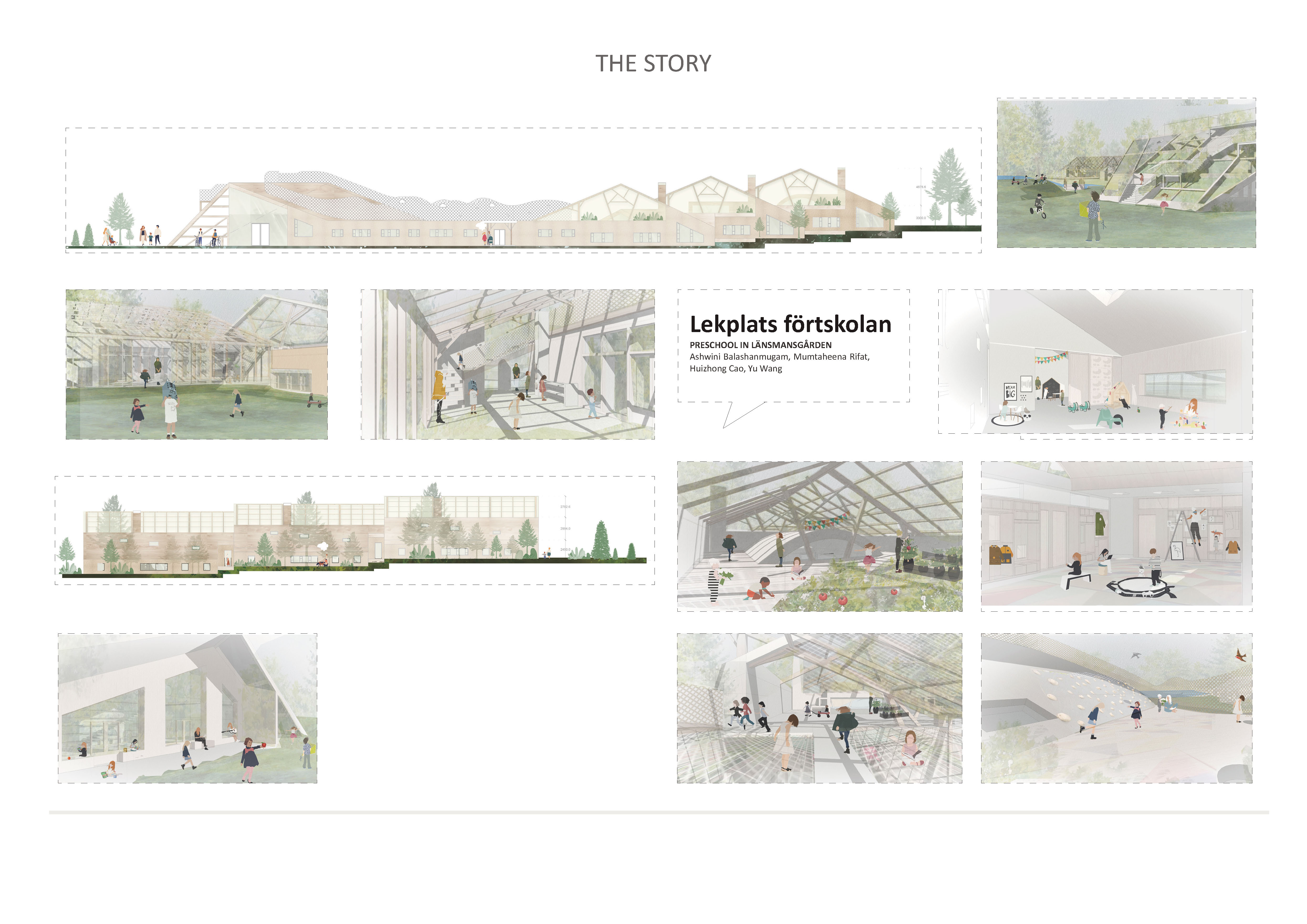
Huizhong Cao is a researcher at Production Systems , Chalmers University of Technology. With a background in architecture and sustainable urban planning, she bridges design and technology through projects involving XR platforms , digital twins , and human-centered design . MSc in Sustainable Urban Planning (Chalmers) BSc in Architecture (Wuhan University) Her research focuses on mental workload assessment , XR interface design , and sustainable smart cities . Key projects include: RILIK - Immersive learning framework XR-TBP - Extended reality training for battery production TRIREME - Digital & Green Skills development DIGITALIS - Cognitive work optimization Recent publications analyze: VR interface design for collaborative manufacturing XR applications in environmental sustainability Digital twin integration with IoT Scientific recognition includes: IPOET Scholarship LEXUS Design Award Finalist KTH Innovative Incubator Program UIA-HYP Cup Third Prize She has contributed to UX design and XR development across multiple projects, often combining participatory design with game engine technology . Contact: huizhong@chalmers.se | huizhongcao1@gmail.com
Prof. Monika Sester is a distinguished Professor and Executive Director of the Institute of Cartography and Geoinformatics at Leibniz University Hannover, within the Faculty of Civil Engineering and Geodetic Science. She also serves as Spokesperson for the Leibniz Research Center FZ:GEO and holds multiple leadership roles including Faculty Information Officer (FIO) for the Faculty of Civil Engineering and Geodetic Science, Ombudsman for Good Scientific Practice, and Exchange Coordinator for Geodetic Science and Geoinformatics. Her research focuses on the intersection of geospatial information science, cartography, and urban mobility. Prof. Sester's work spans several key areas: Geospatial data processing and analysis Cartographic representation and visualization Urban mobility and transportation systems Spatial data uncertainty and quality Digital mapping technologies and applications Historical map analysis and interpretation Prof. Sester's recent publications demonstrate a strong focus on applying advanced computational techniques to geospatial problems. Her work shows increasing emphasis on machine learning applications for map analysis, urban mobility optimization, and 3D spatial modeling. She has been particularly active in researching applications of deep learning for historical map interpretation, urban mobility patterns, and spatial uncertainty visualization. Her contributions to the field have been recognized through leadership positions in major research initiatives: Executive Director, Institute of Cartography and Geoinformatics Spokesperson, Leibniz Research Center FZ:GEO Faculty Information Officer, Faculty of Civil Engineering and Geodetic Science Ombudsman for Good Scientific Practice Member of multiple academic committees including the Admissions and Examination Board Prof. Sester actively collaborates with students and researchers across multiple projects focused on geospatial information systems, urban mobility, and cartographic visualization. Her leadership extends to guiding research directions within the Leibniz Research Center FZ:GEO, which brings together interdisciplinary expertise to address complex spatial challenges.
Luis Merino is an Associate Professor at the School of Engineering, Universidad Pablo de Olavide (UPO), Seville, Spain. He founded and leads the Service Robotics Laboratory and contributed to establishing the Systems Engineering and Automation division at UPO. He served as Vice-Dean for five years and currently coordinates the Computer Science degree program. Education: Ph.D. in Robotics from the University of Seville (2007), supervised by Anibal Ollero. Research: Focuses on cooperative robotic systems, human-robot collaboration, localization/navigation techniques, and machine learning in social robotics. His work includes leading 2 H2020, 4 FP7, 3 National R&D, and 3 Andalusian regional projects. Notable projects: MBZIRC 2020 (PI), collaboration with Honda Research Institute Japan, and EU-funded initiatives. He advocates for open-source code/datasets and industry technology transfer. Scientific Awards: ABB Award to the Best Doctoral Dissertation on Robotics (2007) Best Paper Award at ROBOT2019 Professional Roles: Associate Editor for Image and Vision Computing and IEEE Robotics and Automation Letters . Serves on ICRA/IROS conference program committees. Grant reviewer for FONDECYT (Chile), SBIR (USA), and ERC.
Manuel Morato Moreno is a Professor at the University of Seville's Department of Graphic Engineering, affiliated with the School of Engineering. His work focuses on cartographic methodologies, historical geographic representation, and computer-aided design (CAD) applications in engineering and education. University: University of Seville School: School of Engineering Department: Department of Graphic Engineering His research explores the evolution of cartographic practices, particularly in 16th-century Spanish American territories, analyzing empirical and scientific approaches to terrain representation. He has contributed to studies on B-spline surfaces in digital terrain modeling and the integration of CAD tools in descriptive geometry education. Recent publications examine colonial cartography, including maps of the Coatzacoalcos River (2021), Tlacotalpa (2017), and the López de Velasco longitude project (2016). Key themes include historical GIS, topographic visualization, and mapmaking symbolism. Morato Moreno has participated in numerous research projects (e.g., TEP-156 group consolidation) and technical conferences, presenting studies on inclined roadway design (2005), CAD pedagogy (1999), and AutoLISP programming for topography (1997).
Dr. Jordi Cornella Detrell is a Senior Lecturer in Hispanic Studies at the University of Glasgow, specializing in 20th-century Catalan and Spanish literature, literary multilingualism, and the legacy of Francoist censorship. His research explores how cultural repression under Franco impacted literary translation, book circulation, and identity formation in Catalonia. Current projects focus on textual multilingualism and the long-term effects of dictatorship-era censorship on contemporary publishing. His scholarly work bridges literary analysis with socio-political history, examining how writers navigated ideological constraints and how these practices persist in modern cultural discourse. He has collaborated with Professor Albert Rossich on multilingual literary strategies and contributed to Catalan-Spanish translation studies. Key themes in his publications include the Spanish Civil War’s representation in media, erotic literature under censorship, and the role of translation in resisting authoritarian regimes. While no scientific awards are listed, his research has garnered media attention from outlets like The Times and El Periódico. Dr. Cornella Detrell’s recent articles span topics like James Baldwin’s reception in Spain, clandestine book circulation during Francoism, and the persistence of censored texts in post-democratic Spain. His work underscores the intersection of language, power, and cultural memory.
Wendy Rogers is the Shahid and Ann Carlson Khan Professor at the University of Illinois at Urbana-Champaign , holding appointments in the Department of Kinesiology and Community Health , Educational Psychology , and multiple research institutes including the Coordinated Science Lab , Beckman Institute , and Center for the Study of Global Gender Equity . As a leading expert in human factors and gerontechnology, her work focuses on designing technologies for older adults and individuals with disabilities. Her research explores assistive robotics , smart home systems , mHealth applications , and participatory design methodologies . Recent publications address topics like AI-powered virtual assistants for aging populations, adaptive systems for cognitive support, and inclusive design frameworks for mobility-impaired adults. She has contributed to journals such as Human Factors in Healthcare , Gerontologist , and Frontiers in Robotics and AI . Key article trends show emphasis on technology acceptance models , feedback visualization , digital activities of daily living , and human-robot interaction in home environments. Her work often involves cross-disciplinary collaboration with healthcare professionals and engineers.
Tao Li is an Assistant Professor at the Purdue Polytechnic Institute of Purdue University, specializing in security and privacy challenges for networked and mobile systems. His work bridges AI/machine learning with practical applications in indoor localization, cloud/edge computing, and mobile crowdsourcing.