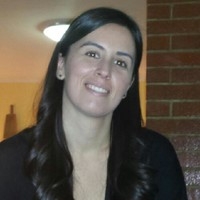
Martina Battisti is a Tutor in the Department of Information Engineering and Computer Science at the University of Trento, with a focus on integrating Artificial Intelligence into educational practices. She is affiliated with the Agriculture, Food and Environment Center-C3A, where she contributes to interdisciplinary courses. Research Interests: Her work centers on data processing, visualization, and presentation using traditional software and AI, particularly applied to experimental laboratories and challenge-based learning in the winemaking supply chain domain.
Francesco Leccese is Associate Professor of Environmental Technical Physics at the University of Pisa’s Department of Energy, Systems, Land and Building Engineering and serves as Vice-Rector (Pro-Rettore) for Construction and Real Estate since 2022. He has been a full-time faculty member since 2006 and leads the Lighting and Acoustics Laboratory. Education PhD in Energetics, University of Pisa, 2002 Laurea (MSc) in Civil Engineering (Buildings), University of Pisa, 1997 Research Interests Professor Leccese’s research spans the entire spectrum of Environmental Technical Physics . His core themes include: Physical-technical performance of opaque and glazed building-envelope components Thermal, visual and acoustic comfort in indoor environments Energy performance of buildings and HVAC systems Human exposure to physical agents at workplaces Environmental pollution from anthropogenic and natural sources Smart monitoring, IoT and data-driven control for energy savings He combines advanced experimental measurement campaigns with modelling and simulation, leading to over 200 scientific publications and a co-owned national patent for an innovative illuminating device for radiodiagnostic stations. Recent Publication Trends Between 2023 and 2025 his work has concentrated on urban overheating mitigation , textile-based solar shading , thermal resilience of building envelopes , and integrated indoor-environmental-quality (IEQ) assessment . These studies often merge on-site infrared thermography, sensor networks and occupant-centred data analysis to optimise both energy demand and human comfort. Scientific Awards & Patents Co-owner, National patent for an illuminating device for radiodiagnostic reporting stations Institutional Service & Grants President, Joint Council of the Master’s programmes in Structural & Building Engineering and Civil Infrastructure & Environmental Engineering (since 2021) Member, Doctoral School of Energy, Systems, Land and Construction Engineering (since 2015) Member, School of Engineering Council (since 2022) Head, Lighting and Acoustics Laboratory, School of Engineering (since 2006) Laboratory & Teams Professor Leccese directs the Lighting and Acoustics Laboratory at the School of Engineering, where interdisciplinary teams of researchers and graduate students conduct experimental and simulation studies on lighting, acoustics and environmental physics.
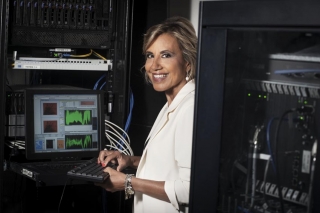
Tiziana Catarci is a Full Professor ( Professore Ordinario ) at the Department of Computer, Automation and Management Engineering Antonio Ruberti (DIAG) within the Faculty of Computer Engineering, Computer Science and Statistics at Sapienza Università di Roma since November 2000. She has had a distinguished academic career marked by numerous leadership roles at Sapienza, including serving as Pro-Rector for Infrastructure and Technologies (2010-2014) and directing the DIAG department (2018-2024). Her research focuses on Human-Computer Interaction , Data Quality , and Database Systems . In recent years, she has expanded her interests to include Ethics of Artificial Intelligence and Gender Issues in STEM , co-founding the Italian Society for AI Ethics (SIpEIA) in 2020 and serving as its president since 2024. She has published over 200 articles in prestigious journals and conferences, and has edited or authored more than 20 books. She has been actively involved in numerous national and international research projects including KIM, VENUS, FADIVA, LAURIN, SEWASIE, DELOS, Interop, WORKPAD, SM4All, PROMISE, and SmartVortex. Her recent publications cover topics ranging from visual analytics solutions to data management architectures, and from ethical considerations in AI to declarative process modeling. Dr. Catarci has received several honors throughout her career, including: Stanford University's World's Top 2% Scientists (2020) Premio Le Tecnovisionarie (2021) Fellow of the European Alliance for Innovation (2018) Nominated among 100 Donne per la Scienza by Fondazione Bracco (2016) Commendatore della Repubblica Italiana (2015) IBM Eclipse Innovation Award for the SEAWER project (2003) She is also a pioneer in promoting women in STEM fields, with activities that have been recognized by the Levi Montalcini Association in 2017, and has been included in InspiringFifty, a list of 50 women who serve as role models in the technology world.
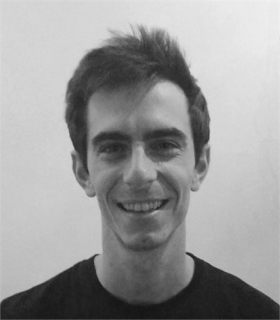
Simone Lenti is an Assistant Professor (Ricercatore RTDa) at the Department of Computer, Control, and Management Engineering of Sapienza University of Rome. He is an active member of the A.WA.RE research group , which specializes in visual analytics. Lenti obtained his Ph.D. in 2021 with a dissertation on visual analytics techniques for cybersecurity. His research bridges cybersecurity , visual analytics , and human-computer interaction , focusing on: Developing computational methods for vulnerability analysis (e.g., NLP for CVE relevance, smart contract taxonomies) Designing visual tools for threat detection (e.g., attack graphs, firmware fuzzing) Enhancing interpretability in data-driven systems (e.g., partial dependence analysis, process mining) Lenti's publications (2019–2025) demonstrate a consistent focus on applying visual analytics to cybersecurity challenges , with recent expansions into bioinformatics and education. Key trends include automated vulnerability management, human-centered explainability, and scalable threat modeling. Awards: IEEE VizSec 2018 Best Paper for contributions to cybersecurity visualization. He contributes to academic infrastructure through tools like easyDeclare (declarative process modeling) and BUCEPHALUS (business-centric cybersecurity analysis), emphasizing practical applications of his research.
Jlenia Toppi is an Associate Professor at the Department of Computer, Control and Management Engineering, Sapienza University of Rome. With a background in Biomedical Engineering (B.Sc. and M.Sc. summa cum laude from University of Rome, Ph.D. from University of Bologna), she leads research at the Neuroelectrical Imaging and BCI Laboratory, IRCCS Fondazione Santa Lucia, focusing on EEG signal processing, brain connectivity modeling, and graph theory applications in cognitive and clinical neuroscience. Education: B.Sc. Clinical Engineering (2006), M.Sc. Biomedical Engineering (2009), Ph.D. Biomedical Engineering (2013) Awards: IEEE EMBC Student Paper Finalist (2012), Young Bioingegneria Award (2012), IEEE EMBS Best Poster (2011) Her research develops advanced EEG methodologies for brain mapping and dynamic connectivity estimation , applied to disorders of consciousness, stroke rehabilitation, and social neuroscience. She pioneered hyperscanning EEG for interpersonal brain-to-brain analysis and contributed to BCI systems like RECOM and The Promotoer. Recent publications highlight her work on hybrid BCI rehabilitation , muscle synergy extraction , and multi-modal assessment of therapeutic interventions . She serves as editor for Computation and Mathematical Methods in Medicine and collaborates with international projects including Horizon 2020.
Tomaso Poggio is the Eugene McDermott Professor in the Department of Brain and Cognitive Sciences at the Massachusetts Institute of Technology (MIT) and holds a position at the Artificial Intelligence Laboratory. He serves as Co-Director of the Center for Biological and Computational Learning (CBCL) and is an Investigator at the McGovern Institute for Brain Research, a role he assumed in 2000 after joining the MIT faculty in 1981 following a decade at the Max Planck Institute for Biology and Cybernetics in Tubingen, Germany. A foundational figure in computational neuroscience, Poggio pioneered models of the fly's visual system and human stereovision, introduced regularization theory to computational vision, and made seminal contributions to the biophysics of computation and learning theory. His research bridges neuroscience and artificial intelligence, with significant impact on deep learning, pattern recognition, and computational vision. He is recognized as one of the most cited researchers in his field due to his influential model of visual cortex recognition. Dr. Poggio's distinguished honors include: the Otto-Hahn-Medaille Award of the Max-Planck-Society the Max Planck Research Award (with M. Fahle) from the Alexander von Humboldt Foundation the MIT 50K Entrepreneurship Competition Award the 2003 Gabor Award the 2009 Okawa prize He holds memberships in the Italian Academy of Sciences as a Foreign Member and the American Academy of Arts and Sciences as a Fellow. His leadership at CBCL and the McGovern Institute drives interdisciplinary research integrating biological principles with computational models to advance artificial intelligence and neural understanding.
Nicu Sebe is a Professor at the University of Trento, Italy, leading research in multimedia information retrieval and human-computer interaction for computer vision applications. He holds a PhD from Leiden University, The Netherlands, with prior affiliations at the University of Amsterdam and the University of Illinois at Urbana-Champaign. His research expertise encompasses Multimedia Information Retrieval, Human-Computer Interaction, Computer Vision, Pattern Recognition, Machine Learning, Deep Learning, Computational Intelligence, and Ambient Assisted Living, focusing on intelligent systems that bridge human-centered multimedia analysis with advanced visual computing. His professional recognitions include: Fellow of the International Association for Pattern Recognition (IAPR) Senior Member of the Association for Computing Machinery (ACM) Senior Member of the Institute of Electrical and Electronics Engineers (IEEE) Sebe has held pivotal leadership roles in major conferences: General Co-Chair: IEEE FG 2008, ACM ICMR 2017, ACM Multimedia 2013 Program Chair: ACM Multimedia 2007/2011, ECCV 2016, ICCV 2017, ICPR 2020 General Chair: ACM Multimedia 2022 Program Chair: ECCV 2024 He currently serves as Vice Chair of ACM SIGMM (Special Interest Group on Multimedia), driving innovation in multimedia systems and applications.
Walter Vesperi is a researcher at the Department of Cultures and Society , University of Palermo. His work spans interdisciplinary themes in Knowledge Management , Corporate Social Responsibility , and Organizational Behavior , with applications in family businesses , public administration , and healthcare management . University: University of Palermo School: School of Cultures and Society Academic Rank: Researcher His research explores AI adoption in family firms , telemedicine systems , and knowledge transfer mechanisms , particularly in agrifood and healthcare sectors. Recent publications highlight cross-country analyses of educational impacts on human capital and smart city initiatives for urban-regional health projects. Key trends in his work include digitalization in public organizations , sustainability education , and post-pandemic cultural adaptations . He supervises Master’s theses in Communication Sciences for Media and Institutions and offers office hours via Microsoft Teams or in-person.
Onofrio Rosario Battaglia serves as an Associate Professor in the Department of Physics and Chemistry at the University of Palermo, Italy, where he teaches Applied Physics for Biotechnology and Physics for Elementary and Kindergarten Schools. His academic profile centers on innovative physics pedagogy with emphasis on accessible experimental methods. His research expertise spans Physics Education , Science Education , and Educational Technology , specializing in inquiry-based learning frameworks and technology integration. Battaglia develops research-based teaching sequences using smartphone sensors and computer simulations to demystify complex phenomena including surface tension, thermally activated processes, and rotational dynamics. His work targets conceptual understanding across educational levels from primary schools to engineering programs, with notable focus on cluster analysis for evaluating student reasoning patterns and growth mindset development. Analysis of his publication trajectory reveals consistent innovation in making abstract physics tangible through low-cost experimentation, particularly in surface phenomena and thermodynamics education. Recent work integrates pandemic-era teaching adaptations and historical instrument studies, demonstrating responsiveness to evolving educational challenges while maintaining rigorous pedagogical validation. Within the Department of Physics and Chemistry, Battaglia contributes to curriculum development for teacher training programs and STEM laboratory initiatives, supporting the department's mission through evidence-based educational design and cross-disciplinary collaboration in science-mathematics integration projects.
Giancarlo Fedeli is an Associate Professor at the University of Bergamo's Department of Business Management Sciences, combining expertise in business management, marketing, and tourism. His research explores technology's role in service industries, focusing on user experience, digital marketing, and social interactions, with notable publications in Annals of Tourism Research and Journal of Travel Research . PhD in Marketing (Glasgow Caledonian University) MSc in Tourism Destination Management (NHTV Breda University) Bachelor in Business Economics (University of Bologna) His work addresses misinformation in tourism, climate change impacts on attractions, and game theory applications for public sector promotion during crises. Research spans Europe, Asia, and Africa, emphasizing practical outcomes for stakeholders like the EU, UNESCO, and Mercedes-Benz through €2.5M+ in funded projects. Current teachings include CSR strategies, international marketing, and logistics. He facilitates workshops globally and has reviewed for top journals.
Edoardo Battegazzore is a Research Fellow at the Department of Control and Computer Engineering (DAUIN) at Politecnico di Torino , where he also serves as an external lecturer and teaching assistant. His work spans virtual and augmented reality applications in medical training, cognitive psychology, and public safety, supported by funded projects such as Holo-BLSD (2024-2025). Education: Completed his PhD (XXXV Cycle) with a thesis titled "Virtual and Augmented Reality Applications for Public Health and Safety" (2024), advised by Andrea Bottino and Fabrizio Lamberti Research interests focus on: Virtual Reality (VR) and Augmented Reality (AR) for medical training and cognitive testing Human-Computer Interaction in collaborative AR environments Simulation Modeling for seismic and pedestrian evacuation dynamics Gamification in education and behavioral studies Recent publications highlight trends in VR/AR applications for prosthetics, airway management, and public health, alongside behavioral studies on cooperation and competition. His work also covers usability evaluations of AR/VR devices for industrial and emergency training. Current affiliations include: CGVG - Computer Graphics and Vision Group (DAUIN) Collaborator on funded projects like Holo-BLSD (2024-2025)
Salvatore Freni is a Ph.D. candidate in Artificial Intelligence (40th cycle, 2024-2027) at the Politecnico di Torino , affiliated with the Department of Control and Computer Engineering (DAUIN). He serves as an External Lecturer and Teaching Assistant at DAUIN and is a member of the VANDAL - Visual and Multimodal Applied Learning Laboratory . His research interests include Artificial Intelligence, Machine Learning, Computer Vision, and Multimodal Learning. He is involved in teaching activities for the Bachelor of Science in Computer Science and Aerospace Engineering courses (Academic Year 2025/26) and is supervised by Professors Tatiana Tommasi and Ciro Cattuto.
Alessandro Marinai is a Lecturer and PhD candidate in Artificial Intelligence at the Department of Control and Computer Science (DAUIN) of Polytechnic University of Turin. His current academic activities include teaching collaborations for Master's Degree courses such as Advanced Machine Learning (Computer Engineering, 2025/26), Data Analysis and Artificial Intelligence (Automotive Engineering, 2025/26), and Machine Learning for Mathematical Engineering (2024/25). He is affiliated with the VANDAL - Visual and Multimodal Applied Learning Laboratory. Education: Pursuing a PhD in Artificial Intelligence at Polytechnic University of Turin (Cycle 40, 2024-2027). His research focuses on visual and multimodal learning applications within artificial intelligence. As an external lecturer and teaching assistant, he contributes to academic programs in computer, automotive, and mathematical engineering disciplines.
Jacopo Perazzoli is a Research Fellow (RTD-A) in Contemporary History at the Department of Humanities, Philosophy, and Communication Studies, University of Bergamo, since December 1, 2022. Previously, he served as an Adjunct Professor of Contemporary History at the University of Milan and a Research Fellow at the Department of Foreign Languages, Literatures, and Cultures, University of Bergamo. His academic focus intersects with disciplines like Cultural Studies, Political History, and International Relations. University: University of Bergamo Department: Humanities, Philosophy, and Communication Studies Academic Rank: Research Fellow Perazzoli's research examines: Social democracy and socialist internationalism Anti-fascist movements and their transnational connections Italian political crises in global contexts Historical memory in democratic transitions His recent publications focus on: Resistance commemoration (e.g., 80 Liberation sites in Milan) Interwar political exiles US-Latin American cultural relations Italian-Chilean post-coup dynamics He contributes to academic discourse through editorial boards of journals like Rivista Storica del Socialismo and Annali Fondazione Francesco De Martino .
Giuseppe Ruscica is an Associate Professor in the scientific disciplinary sector ICAR/11 (Building Production) at the Department of Engineering and Applied Sciences of the University of Bergamo. He has been with the university since 2012, initially serving as a Researcher until 2023 before being promoted to his current position. Dr. Ruscica earned his PhD in "Architectural, Urban, and Environmental Design and Restoration" from the University of Catania in 2009 and a Degree in Building Engineering with highest honors (110/110 cum laude) from the same institution in 2004. His research focuses on innovative approaches to architectural design and construction, with particular emphasis on responsive and shape-shifting architectures, tensegrity systems, reciprocal structures, and origami-like operations. He also investigates automation for self-supporting masonry shells and develops building components with electromagnetic radiation shielding capabilities using sustainable materials like biochar. His work extends to low-cost IoT sensor systems for environmental monitoring in construction contexts. Dr. Ruscica's publications reveal a strong trend toward integrating sustainable materials with advanced construction technologies, particularly focusing on electromagnetic shielding applications using biochar composites. His research bridges traditional construction methods with cutting-edge digital technologies including Building Information Modeling (BIM), augmented reality, and virtual reality applications for construction sites. He serves as Lecturer for courses including "Technology of Construction Elements and Building Information Modeling" and "Building Ergonomics" for the Building Technologies Engineering program, and co-teaches "Building Information Modeling (BIM)" for the Master's Degree in Construction Engineering.