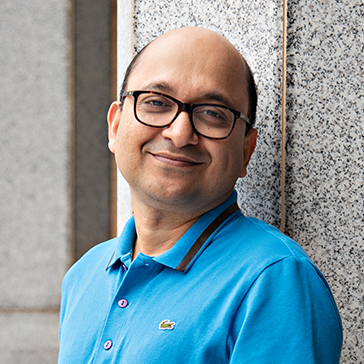
Ayhan Kural is an Associate Professor in the Department of Mechanical Engineering at Istanbul Technical University. His research focuses on neural networks, control systems, and autonomous systems, with notable contributions to visual inspection, energy management, and unmanned vehicle control. He leads projects such as 'Modeling and Control of a Pneumatic System' (2021-2022). Research Interests: Neural Network Applications in Manufacturing and Robotics Autopilot and Control Systems for Aerospace and Automotive Applications Energy Management Strategies for Electric Vehicles Feature Detection and Localization in Robotics Awards: Recipient of the TUBITAK Incentive Award in 1994, 2009, and 2014. Grants & Projects: PI of the BAP-funded project 'Modeling and Control of a Pneumatic System' (2021-2022).
Anthony Weir is a researcher at the Department of Electronics & Computer Engineering, University of Limerick, affiliated with the Centre for Robotics and Intelligent Systems. His work focuses on underwater robotics, control systems, and marine engineering applications. Role: Researcher Institution: University of Limerick Department: Electronics & Computer Engineering Research Interests: Specializing in Remotely Operated Vehicles (ROVs) and autonomous underwater systems , his research addresses challenges in offshore wind farm inspection, ship hull repair, and robotic manipulation. Key technologies include visual servoing , inverse kinematics , and friction stir welding . Recent Publication Trends (2023-2024): Recent work demonstrates advancements in autonomous visual inspection , path planning algorithms , and underwater repair systems . Collaborative projects with engineers like Santos, Omerdic, and Toal highlight applications in offshore wind turbines and damaged ship hulls. Collaborations: Active collaborations span marine robotics, control systems, and renewable energy engineering, with frequent contributions to IEEE-conference proceedings and journals like IEEE Access and Journal of Intelligent and Robotic Systems .
Andreas Uhl is a University Professor in Artificial Intelligence and Human Interfaces at the Department of Computer Science, University of Salzburg. With a prolific research career spanning from 1996 to present, he has authored or co-authored 534 publications and led or participated in 59 research projects. His work demonstrates sustained academic productivity with recent publications and projects extending through 2025. Professor Uhl's research interests span multiple domains at the intersection of artificial intelligence and practical applications. His primary focus areas include computer vision, biometrics, biomedical imaging, and digital forensics, with significant contributions to pattern recognition and image analysis. His work bridges theoretical computer science with practical applications in cultural heritage preservation, medical diagnostics, and security systems, demonstrating a versatile research portfolio that addresses both fundamental challenges and real-world problems. His recent publications reveal a strong emphasis on temporal image forensics, biomedical image analysis, and biometric security. The research shows a clear trajectory toward increasingly sophisticated applications of AI in specialized domains, with particular attention to validation methodologies and limitations of current approaches. His work on cultural heritage applications demonstrates an innovative application of computer vision techniques to historical artifacts. Best paper award @ 25th ACM Symposium on Applied Computing (Applications Track), 2010 Best Paper award @ 2nd European Workshop on Visual Information Processing (EUVIP'10), 2010 IEEE Biometrics Council Best Paper Award (TBIOM), 2022 Kurt Zopf Preis, 2023 Professor Uhl actively leads multiple significant research initiatives, including the CDL-POSA project on People and Object Surface Authentication (2025-2032), Artificial Intelligence driven Biomedical Imaging Innovation (2025-2029), and the AIBIA Research and Transfer Junior Lab (2023-2025). His research group maintains active collaborations with institutions like Carnegie Mellon University, as evidenced by his recent research stay there in September 2024. The scope and duration of his current projects indicate substantial grant funding and institutional support for his research agenda. His laboratory activities focus on AI applications in biomedical imaging, border security through vehicle-integrated technologies (AutoBorder project), and cultural heritage analysis. The research environment appears to integrate academic inquiry with practical transfer through initiatives like the FFG Student Internships program, suggesting a strong commitment to both fundamental research and real-world implementation.
Bernard Schmidt is an active researcher at the University of Skövde's School of Engineering Science, specializing in Production and Automation Engineering. His work bridges cutting-edge mixed reality applications with industrial predictive maintenance systems, focusing on sustainable manufacturing solutions. Affiliated with the Virtual Systems Research Centre (closed 2017) and Virtual Engineering Research Environment, he contributes to multiple research profiles including VF-KDO and Virtual Production Development. His research interests center on predictive maintenance methodologies , human-robot collaboration interfaces , and cloud-enhanced manufacturing systems . Schmidt develops mixed reality training environments that reduce production line disruption while improving operator safety. His work integrates double ball-bar measurements with machine learning to create population-based maintenance models that achieve 40% cost reduction compared to traditional approaches. Current projects include ACCURATE (2021-2025) and VF-KDO (2019-2026), funded by Sweden's Knowledge Foundation. Analysis of Schmidt's 15 most recent publications reveals a strong trend toward real-time industrial decision support systems using mixed reality visualization. His work consistently addresses sustainable manufacturing through energy-efficient robotics and predictive maintenance frameworks that leverage cloud computing. Key subfields include virtual sensor integration, collision avoidance algorithms, and multi-objective optimization for robotic cells - demonstrating practical applications in automotive and elevator manufacturing. Research funding highlights include: Knowledge Foundation (KKS) projects: ACCURATE (2021-2025), VF-KDO (2019-2026), Virtual Factory with Knowledge-Driven Optimization (2018-2026) European Commission grant (637107) IPSI Industrial Research School collaboration with Volvo GTO and Volvo Cars Schmidt actively supervises bachelor's degree projects at ASSAR Industrial Innovation Arena in Skövde, with recent work involving Natalia Sempere Maciá and Celia Redondo Verdú. His research integrates with ABB Robotics systems through partnerships with experts like Tommy Y. Svensson. Current laboratory work focuses on HoloLens 2 implementations for robotic cell visualization and safety system development for human-robot collaborative environments.
Bandaru Sunith is an Associate Professor at the University of Skövde's School of Engineering Science, with previous affiliation to The Virtual Systems Research Centre (closed May 2017). His research spans multi-objective optimization, digital twins, and knowledge-driven decision support systems for manufacturing applications. He actively leads the Virtual Factories with Knowledge-Driven Optimization (VF-KDO) research profile and contributes to the ADOPTIVE project focused on vehicle ergonomics optimization. Dr. Sunith's research interests include: Multi-objective optimization and evolutionary algorithms Digital twin frameworks for manufacturing systems Knowledge discovery and visualization for decision support Anomaly detection in industrial processes Factory layout optimization integrating human well-being metrics His recent publications (2023-2025) demonstrate a clear trend toward integrating advanced AI techniques with traditional optimization methods. The research increasingly focuses on practical industrial applications, particularly in automotive manufacturing, with strong emphasis on translating theoretical advances into usable tools. His work bridges the gap between computational optimization and real-world manufacturing challenges, often incorporating human factors considerations. Dr. Sunith has secured significant research funding from Swedish innovation agencies: Virtual Factories with Knowledge-Driven Optimization (VF-KDO) funded by Knowledge Foundation (Grant 2018-0011) Integrated Manufacturing Analytics Platform for Predictive Maintenance (IMAP) funded by Vinnova (Grant 2021-02537) LITMUS project on human-centric sustainable production funded by Knowledge Foundation He has supervised multiple researchers including Henrik Smedberg and Mahesh Kumbhar, resulting in collaborative publications and the development of practical tools like Mimer - a web-based platform for knowledge discovery in multi-criteria decision support. His research group maintains strong industry connections, particularly with automotive manufacturers in Sweden.
Subhajit Chakrabarty serves as Associate Professor and Director of the Master of Science in Computer Systems Technology program within the Department of Computer Science at Louisiana State University Shreveport's College of Arts & Sciences. He joined LSUS in 2020 after relocating to the USA in 2016 to pursue research in data science and machine learning, bringing three decades of professional experience spanning IT management, government service, and corporate leadership. His educational credentials include: PhD in Computer Science from University of Massachusetts Lowell (2020) PhD in International Business from Indian Institute of Foreign Trade, New Delhi Alumnus of INSEAD (France/Singapore) Chakrabarty's research spans data science, machine learning, deep learning, bioinformatics, cybersecurity, and econometrics, with recent emphasis on biomedical applications of deep learning. His interdisciplinary approach integrates computer science with business analytics, neuroscience, and educational technology, reflecting his dual expertise in technical and business domains developed through extensive industry experience. His publication record from 2016-2022 demonstrates consistent innovation across multiple domains, with significant contributions to ensemble learning for financial forecasting, independent component analysis for high-dimensional data processing, and educational assessment tools for computer science pedagogy. Key trends include the adaptation of transformer networks for stock volatility prediction, novel denoising techniques for sensor data, and evidence-based studies on programming skill development. No scientific awards were documented in the source material. As an educator, Chakrabarty directs the MS in Computer Systems Technology program while teaching core courses including Introduction to Programming, Database Implementation, Machine Learning, and Deep Learning. His prior industry roles as Deputy Commandant in India's Border Security Force and National Security Guard, plus Director of IT & IS in corporate settings, inform his practical teaching methodology and student mentorship approach.
Santa Di Cataldo is an Associate Professor at the Department of Control and Computer Engineering (DAUIN) of Politecnico di Torino. His research focuses on computer vision, pattern recognition, digital image processing, and medical image processing, with applications in industrial systems and AI for manufacturing. Scientific Branch: IINF-05/A - Information Processing Systems ERC Sectors: PE6_8 - Computer graphics, computer vision, multi media, computer games ERC Sectors: PE6_11 - Machine learning, statistical data processing His work includes developing AI-driven anomaly detection frameworks, physics-informed neural networks for additive manufacturing optimization, and neuro-symbolic approaches for Industry 4.0 applications. He supervises PhD students in Artificial Intelligence and Computer Engineering programs, collaborating on projects like BIG (Blue Is Green) and PNRR-Complementary Plan. Premio Donna Innovazione (2010) He leads courses such as Machine Learning in Applications and Applied AI and Machine Learning , while contributing to bioinformatics and robotics-related teaching. His research is supported by IAM@PoliTo and EDA groups, utilizing LADISPE laboratory facilities.
Professor Norman S. Matloff is a prominent figure in the Department of Computer Science at the University of California, Davis , with research spanning parallel processing , statistical computing , and machine learning . His work emphasizes practical implementations through open-source R packages like qeML , regtools , and dsld , the latter focusing on discrimination analysis. He maintains two influential blogs: Mad (Data) Scientist (data science, R, statistics) and Upon Closer Inspection (tech industry, STEM education, China). Research Focus : His methodological contributions include advanced regression techniques, kNN-based quantile regression, and novel approaches to causal analysis. He critically examines the assumptions behind structural equation models and propensity score matching, advocating for more transparent statistical practices. Current work involves integrating neural networks into the qeML package via Torch. Key Publications : The dsld package (2024) provides tools for discrimination litigation and bias detection, while the 2021 paper on Randomization within Neighborhoods introduces a data privacy framework compared to differential privacy. Education & Mentorship : While formal education details aren't provided, he actively mentors students through software development. Notably, Aditya Mittal contributed to the qeMittalGraph visualization function in qeML 1.2.
Jakob Evertsson is an Associate Professor at both Uppsala University (2021) and Åbo Akademi University (2015) in Church History. Affiliated with the Department of History under the Faculty of Arts at Uppsala, he focuses on historical intersections of education, religion, and material culture. His research spans history of education , material culture , and church-state dynamics , particularly examining elementary school reforms in Sweden (1861–1930), school inspection systems, and the professionalization of educators. His Swedish Research Council-funded project (2020–2022) analyzes how inspection mechanisms shaped early Swedish public schooling. Recent publications dissect gender dynamics in 19th-century Swedish education ( "Making teaching cheap" ), transitions from religious to secular curricula ( "Från katekes till naturlära" ), and the role of visual aids like wallcharts ( "Materiality, Wallcharts..." ). His work bridges educational policy and religious history , with a focus on Sweden’s institutional evolution.
Current research associate and doctoral student at ETH Zurich's Chair of Production and Operations Management (POM), focusing on industrial engineering and augmented reality applications in manufacturing. Holds M.Sc. with distinction in Industrial Engineering and Management from Karlsruhe Institute of Technology (KIT), with research conducted at University of Cambridge's Institute of Manufacturing. Educational background: B.Sc. & M.Sc. Industrial Engineering and Management, KIT, Germany Master's thesis research at University of Cambridge, UK Research integrates machine learning and augmented reality into manufacturing processes, particularly for quality inspection and guided assembly systems. Publications examine data application frameworks in VUCA environments and evaluate AR technology effectiveness in industrial settings. Recent publications highlight: Contextual AR evaluation methodologies Smart manufacturing data integration User-centered quality inspection systems Scientific achievements: Published in IEEE Transactions on Visualization and Computer Graphics Presented at IEEE ISMAR-Adjunct Contributed to Springer LNCS series publications Also develops public transport navigation apps integrating 50+ networks across Germany, Austria, and Switzerland, while maintaining active engagement in sports and outdoor activities.
Jakob Evertsson is Senior Lecturer in Education at the Department of Education and Didactics, Stockholm University. He holds a Ph.D. from Åbo Akademi (Finland) and an M.St. from Oxford University (UK), with associate professorships in History (Uppsala University) and Church History (Åbo Akademi University). His research focuses on the historical sociology of education, particularly the evolution of educational systems through state intervention, professionalization processes, and curriculum transformations in Sweden from the 11th to 20th centuries. Ph.D., Åbo Akademi, Finland M.St., Oxford University, UK Associate Professor in History, Uppsala University His scholarly work examines school inspection mechanisms (1861-1930), the material history of educational tools like wallcharts, and the feminization of teaching professions during Sweden's elementary school expansion. Current projects analyze the university as a referential body (1968-2022), building on his Swedish Research Council-funded study about school inspections (2020-2023). He teaches courses spanning educational history, leadership, conflict management, and project organization at basic levels, with advanced responsibility for communicative leadership instruction. Through publications in journals like Paedagogica Historica and History of Education , Evertsson's scholarship reveals patterns in educational reform, visual pedagogy evolution, and institutional power dynamics between church and state. His work combines archival analysis of inspection reports with material culture studies of classroom artifacts to trace how physical and bureaucratic changes shaped teacher professionalization and curriculum implementation. Research Group Affiliation: History of Education and Sociology of Education
He Kong is an Associate Professor at Southern University of Science and Technology (SUSTech), affiliated with the School of Automation and Intelligent Manufacturing, where he also serves as Deputy Director of the SUSTech Institute of Robotics. Previously, he was an Assistant Professor in the Department of Mechanical and Energy Engineering at SUSTech from January to May 2022. Prior to joining SUSTech, he was a Research Fellow at the Australian Centre for Field Robotics, University of Sydney (2016-2021), and at Cranfield University's Advanced Vehicle Engineering Centre (2015-2016). He received his Ph.D. in Electrical Engineering from the University of Newcastle, Australia (2014), M.E. in Control Science and Engineering from Harbin Institute of Technology (2010), and B.E. in Electrical Engineering and Automation from China University of Mining and Technology (2004). His research focuses on robotic intelligent perception and decision making, robot audition, optimal filtering and estimation, and advanced control methods. Specifically, he works on active multi-mode perception, parameter calibration of robot audition systems, optimal filtering under unknown inputs, and fully actuated system approaches. His work has significant applications in precision agriculture, environmental monitoring, and robotic inspection of hazardous industries such as chemical and mining operations. His recent publications reveal a strong emphasis on multi-modal perception systems, particularly combining visual and auditory sensing for robotic applications. His research shows a progression from theoretical control methods toward practical implementations in field robotics, with increasing focus on real-world applications in agriculture and hazardous environments. Finalist for Youth Author Prize, IFAC Workshop on Robot Control (2019) Fifth China Robotics Academic Annual Conference Best Poster Award (2024) 14th International Conference on Indoor Positioning and Indoor Navigation Best Paper Award (2024) The Equity Scholarship, Council of International Students Australia (2011) Outstanding Postgraduate Students Award, Harbin Institute of Technology (2010) Professor Kong actively supervises numerous PhD and Master's students and has established a productive research group focused on active intelligent systems. His laboratory is equipped with advanced facilities including over 30 motion capture systems, Unitree humanoid robots, robot dogs, wheeled mobile robots, and custom-developed platforms like Cubli and acoustic perception systems. He serves on editorial boards for several prestigious journals including IEEE Robotics and Automation Letters and IEEE Sensors Letters, and has been an Associate Editor for major robotics conferences such as IEEE ICRA and IEEE/RSJ IROS.
Giovanni Buccolieri serves as a University Researcher at the Department of Mathematics and Physics "Ennio De Giorgi" at the University of Salento. He maintains a dual teaching appointment, delivering courses for both the Department of Mathematics and Physics and the Department of Cultural Heritage, demonstrating his interdisciplinary expertise bridging physics and cultural preservation. His primary research interests focus on Physics Applied to Cultural Heritage , with specialized expertise in Optics , Colorimetry , X-ray Analysis , and Infrared Reflectography . His work centers on developing and applying physical methodologies for the diagnostics, analysis, and conservation of cultural artifacts. His research integrates theoretical physics with practical conservation needs, creating bridges between scientific analysis and heritage preservation. Analysis of his recent publications reveals a consistent focus on developing non-invasive diagnostic techniques for cultural heritage objects. His work spans from fundamental optical principles to practical applications in museum settings, with particular emphasis on color analysis, radiation-based techniques, and geometric optics applications. His research demonstrates a strong commitment to creating scientifically rigorous yet practically applicable methods for conservators and heritage professionals. Buccolieri actively contributes to academic training through his teaching roles in both the Cultural Heritage and Optics and Optometry degree programs. His courses include Fundamentals of Physics Applied to Cultural Heritage , Geometric Optics with Laboratory , and Visual Optics , reflecting his dual expertise in both cultural heritage applications and optical science.
Prof. Dr. Kiran Varanasi serves as a Professor in Virtual and Extended Reality at the Faculty of Computer Science and Media, Leipzig University of Applied Sciences. His research focuses on 3D shape processing, real-time facial animation, and convolutional neural network applications in computer vision. University: Leipzig University of Applied Sciences School: Faculty of Computer Science and Media Academic Rank: Professor Research Interests: Varanasi's work bridges virtual reality , machine learning , and interactive systems . Key areas include: 3D reconstruction using deep learning Facial animation pipelines Light field data processing Surface defect classification with CNNs Interactive character control Publication Trends (2018–2021): His recent articles emphasize monocular 3D reconstruction , real-time feature extraction , and immersive VR environments , often leveraging convolutional networks and geometric warping techniques. Advising and Grants: No specific students or advisory roles are listed in the provided text. The faculty participates in collaborative projects like website redesign for the Egyptian Museum, though Varanasi's direct involvement isn't specified. Labs and Teams: The faculty includes multimedia labs and research groups in digital transformation, but Varanasi's direct affiliations with these units are not explicitly stated.
Burak Kılıç is a Ph.D. candidate in Mechanical Engineering at Istanbul Technical University and a full-time Research Assistant at Işık University's Faculty of Engineering and Natural Sciences. His work bridges materials science, smart manufacturing, and AI through projects in computer vision, IoT, and big data applications. Ph.D. Candidate, Mechanical Engineering, Istanbul Technical University (2022–Present) M.Sc., Materials and Manufacture, Istanbul Technical University (2016–2022) B.Sc., Mechanical Engineering, Bulent Ecevit University (2008–2014) His research focuses on AI-driven solutions for real-world engineering challenges, including: Medical image segmentation (Swin-Unet, PyTorch) Smart agriculture systems (IoT, ESP32, MQTT) Industrial quality inspection (U-Net, Apache NiFi/Kafka) Big data analytics for earthquake correlations Recent publications highlight his work on Swin-Unet for MRI segmentation, age regression models for neurodegenerative analysis, and AI-powered marble slicing optimization. He collaborates across disciplines to connect industry needs with innovative research. Scientific awards include: TensorFlow Developer Certificate (2023) Google Machine Learning Bootcamp (2023) IBM Big Data Certification (2023) PADI Advanced Open Water Diver (2023) He mentors students through GitHub repositories and course materials development, while contributing open-source tools like MOOZE for AI assistant management. His work remains active in AIoT and precision manufacturing domains.