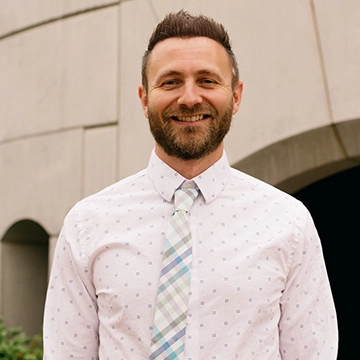
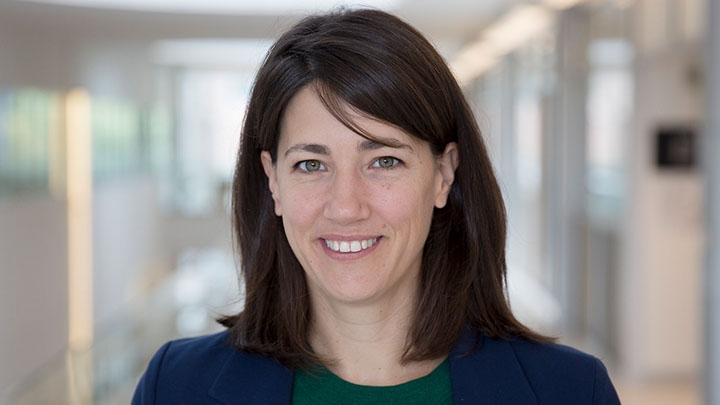
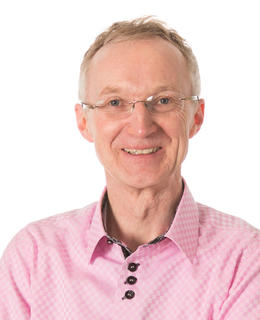
Manon Jones is a Professor in Psychology and Director of Research at Bangor University's School of Psychology and Sport Science. She directs the Miles Dyslexia Centre, a research hub providing assessment services and professional development for practitioners, and leads the RILL project—a bilingual literacy program for primary schools funded by UKRI, Nuffield Foundation, and Welsh Government. Her research explores cognitive and neurocognitive foundations of reading, dyslexia, and bilingualism. Key themes include: Cross-modal learning in dyslexia Orthographic processing across languages Remote literacy instruction efficacy Neurodivergent cognition models Syntax acquisition in bilinguals Analysis of her 15 most recent publications (2014–2025) reveals dominant foci on dyslexia mechanisms (9 papers), bilingual language processing (7 papers), and literacy intervention design (4 papers). Methodologies include eye-tracking, ERP, and randomized controlled trials, with increasing emphasis on computational modeling since 2021. She leads multiple grants including: RILL randomized control trial (Welsh Government, 2022–2026) Welsh literacy scale-up project (2024–2025) Neurodevelopmental disorder screening tool development (2022–2023) COVID-19 remote teaching research (2020–2022) She directs the Reading Brain lab and collaborates with NHS services to translate research into clinical/educational practice.
Ayman Abouraddy is UCF Trustee Chair Professor of Optics & Photonics, directing the Space-Time Optics and Photonics Lab at CREOL. He holds BE from Alexandria University (1994) and PhD from Boston University (2003), both in Electrical Engineering. His research develops space-time wave packets, omni-resonant imaging systems, and structured light for quantum information applications. Recent breakthroughs include universal propagation-invariant pulse structures, relativistic transformations of wave packets, and ultra-compact synthesis techniques using chirped volume Bragg gratings. Abouraddy pioneered multi-material optical fibers at MIT and authored 100+ publications. Honors include OSA Fellowship and UCF Research Incentive Award. His textbook contributions and patent portfolio advance mid-infrared optics and quantum photonics implementations.
Shafaq Khan is an Assistant Professor in the School of Computer Science at the University of Windsor. She holds a PhD in Computer Science from the University of Salford (2017). Her research spans machine learning, deep learning, data analytics, and database systems with applications in healthcare informatics, agricultural technology, educational systems, and blockchain. Recent work focuses on AI-driven healthcare transformation, privacy-preserving data methods, federated learning for disease prediction, and computer vision applications in agriculture. Additional interests include educational technology for addressing disparities, blockchain implementations in government services, and open-source search engine development. Her work demonstrates consistent integration of cutting-edge computing techniques with practical domain applications.
Palash Bera is Professor and Chair of Operations and IT Management at Saint Louis University's Chaifetz School of Business. His research develops analytical methods for conceptual modeling, requirements engineering, and business intelligence systems. Bera employs eye-tracking technology to study how users comprehend models, revealing cognitive patterns that inform better design practices. Bera's recent work bridges conceptual modeling with agile software development, creating tools that automatically generate test cases from behavioral requirements. He has secured funding from SERDP, USDA, and other agencies for projects on supply chain analytics and resource recovery. Bera directs the Business Analytics Practicum, connecting students with industry partners like Nestlé Purina. His research has appeared in MIS Quarterly, Information Systems Research, and other leading journals.
Alexandru G. Bardas is an Associate Professor at the University of Kansas in the Department of Electrical Engineering & Computer Science (EECS) and the Institute for Information Sciences (I2S) . He received his PhD from Kansas State University under advisors Xinming (Simon) Ou and Scott A. DeLoach. His research focuses on cybersecurity from a systems perspective , including moving target defenses, security operations center (SOC) metrics, DevOps security, power grid cybersecurity, and defensive technologies for political activists. He explores UDP-based DDoS detection, DNS traffic analysis, and the intersection of AI with cybersecurity, emphasizing foundational knowledge over tool-specific training. Key research areas: Cybersecurity, Systems Security, Moving Target Defenses, SOC Metrics, DevOps Security Recent publications in ACSAC 2024 , USENIX Security 2024/2023 , and IEEE Security & Privacy 2022 Dr. Bardas has received significant recognition including: NSF CAREER Award (2022) for SOC automation Bellows Scholar (2021) at KU NSA SoS Honorable Mention (2023) He actively advises students across disciplines, with graduates now at Sandia National Laboratories , Blue Cross Blue Shield , and Pacific Northwest National Laboratory . Dr. Bardas participates in NSF grant reviews , serves on program committees for SOUPS and MILCOM , and leads outreach initiatives like the GenCyber Summer Camp .
Dr. Yang Wang is an Associate Professor in the Department of Computer Science and Software Engineering at Concordia University. His research focuses on computer vision and machine learning, with a particular emphasis on domain adaptation, meta-learning, and privacy-preserving techniques. He actively advises prospective graduate students through a dedicated webpage outlining application procedures. Research interests include few-shot learning, test-time adaptation, and cross-modal applications such as handwritten text recognition and gaze estimation. His work explores how models can adapt dynamically to new domains using limited labeled data, with applications in crowd counting, medical data analysis, and cybersecurity. He also investigates privacy-preserving methods for deep learning models to protect user attributes and sensitive information. Recent publications highlight advancements in meta-auxiliary learning frameworks and efficient user adaptation techniques. His contributions span journals and conferences, showcasing innovations in both foundational machine learning methodologies and real-world applications.
Jonathan Hasford is an Associate Professor of Marketing at the Haslam College of Business, University of Tennessee, Knoxville. He holds an endowed Horne Professorship and is a Stewart Bartley Family Faculty Fellow. His research focuses on emotions and decision-making, with expertise in consumer behavior, marketing research, and professional selling. Education: Ph.D. in Marketing, Gatton College of Business and Economics, University of Kentucky (2013) M.B.A. in Marketing, Gatton College of Business and Economics, University of Kentucky (2008) B.S. in Business Management, College of Business, University of Louisville (2007) Research Interests: Dr. Hasford explores how emotions shape consumer decisions, including emotional intelligence in sales, advertising persuasion, and the impact of relationship motives on brand preferences. His work bridges marketing and psychology, addressing topics like awe in marketing, brand recovery strategies, and social media dynamics. Publications & Trends: His recent articles analyze emotional responses to marketing stimuli, the effects of brand failures, and the role of racial cues in consumer preferences. His work emphasizes practical applications for businesses seeking to optimize communication strategies and consumer engagement. Awards & Editorial Roles: He serves on the editorial review boards of the Journal of Retailing and Journal of Business Research , contributing to peer review in marketing and psychology journals. While no specific awards are listed, his editorial roles highlight his scholarly impact. Teaching & Advising: He has taught at multiple universities, including the University of Nevada, FIU, and UCF, covering courses like Principles of Marketing and Data Analysis. He has also developed specialized emotional intelligence training for sales students. No formal advisees are listed, but his teaching spans undergraduate to doctoral levels. Labs & Teams: Though specific labs are not mentioned, his research collaborations are evident through co-authored publications and editorial activities.
Dr. Indratmo is an Associate Professor and Chair of the Department of Computer Science at MacEwan University. He holds a PhD from the University of Saskatchewan, an M.Sc. from the University of Manitoba, and a B.Eng. from Petra Christian University. His research focuses on information visualization, human-computer interaction, and social computing, with a particular emphasis on developing tools for analyzing social media data. He has contributed to projects like a visual analytical tool for sentiment analysis in Edmonton's traffic-related social media data and studies on multimedia content effectiveness in communication strategies. Indratmo teaches a range of computer science courses, emphasizing student engagement through transparent pedagogical practices. His work bridges technical innovation with social impact, aiming to enhance communication strategies for organizations through data-driven insights. He has published extensively in journals like Big Data Research and Visual Informatics , and his research spans topics from educational visualization tools to smart mirror applications and geospatial heritage systems. Outside academia, he enjoys outdoor activities in the Canadian Rockies. Notable collaborations include work on stacked bar chart efficacy, web-based course registration models, and exploratory browsing frameworks. His research portfolio demonstrates a commitment to both theoretical advancement and practical applications in computing.
Kathleen H. Sienko is the Arthur F. Thurnau Professor in the Department of Mechanical Engineering at the University of Michigan's College of Engineering. She directs the Sienko Research Group, a multidisciplinary lab focused on developing technological solutions at the intersection of healthcare and engineering. Her work spans medical device design, design science, and engineering education with a strong emphasis on global health contexts. Dr. Sienko earned her Ph.D. in Medical Engineering and Bioastronautics from the Harvard-MIT Division of Health Sciences and Technology (HST) program in 2007, an S.M. in Aeronautics & Astronautics from MIT in 2000, and a B.S. in Materials Engineering from the University of Kentucky in 1998. Ph.D., Medical Engineering and Bioastronautics, Harvard-MIT Division of Health Sciences and Technology, 2007 S.M., Aeronautics and Astronautics, Massachusetts Institute of Technology, 2000 B.S., Materials Engineering, University of Kentucky, 1998 Her research focuses on sensory augmentation, rehabilitation engineering, biomechanics, and medical device design with emphasis on global health contexts and task-shifting devices. She has pioneered efforts to incorporate global health technology constraints within engineering design education at undergraduate and graduate levels, establishing field sites in sub-Saharan Africa and Asia where numerous devices have been conceptualized and refined with local stakeholders. Her work in design science examines how and when designers use prototypes in development cycles and how prototypes assist during stakeholder interactions and user requirements identification. Her recent publications reveal a strong trend toward human-centered approaches in global health design, with increasing focus on stakeholder engagement, contextual factors in engineering design, and equity considerations in health technology development. Her work bridges biomechanics, rehabilitation engineering, and design methodology with applications in balance assessment, medical device development for low-resource settings, and engineering education. Dr. Sienko has received numerous prestigious awards including the NSF CAREER Award, University Undergraduate Teaching Award, Provost's Teaching Innovation Prize, and the Miller Faculty Scholar Endowed Award. Her recognition spans teaching excellence, research innovation, and outreach contributions. NSF CAREER Award, 2009 Provost's Teaching Innovation Prize, 2012 Miller Faculty Scholar Endowed Award, 2013 University Undergraduate Teaching Award, 2012 Raymond J. and Monica E. Schultz Outreach and Diversity Award, 2011 She has advised numerous graduate students including Nick Moses (who defended his dissertation in December 2023), Lucy Spicher, Marty Kilbane, and Ibrahim Mohedas. Her research has been supported by significant grants from the National Science Foundation, including the CAREER program, Research Initiation Grants in Engineering Education, and the Graduate Research Fellowship program, as well as funding from the University of Michigan's Rackham Merit Fellows program and Center for Research on Learning and Teaching. The Sienko Research Group operates as a talented multidisciplinary lab developing novel methodologies to create technological solutions addressing pressing societal needs at the healthcare-engineering intersection. Current research thrusts include Design Science, Autonomous Vehicles, Balance, Sensory Augmentation, and Wearable Devices, with particular emphasis on how design ethnography can inform medical device development and how engineering students develop ethnographic skills for global health contexts.
Dr. Jia Wu is an Associate Professor and Research Director of the Centre for Applied Artificial Intelligence at Macquarie University. He holds a PhD in Computer Science from the University of Technology Sydney (2009) and is an IEEE Senior Member. His research focuses on artificial intelligence, data mining, graph neural networks, and anomaly detection, with over 200 publications in top-tier journals/conferences like IEEE TPAMI, TKDE, and conferences like KDD, IJCAI, and NeurIPS. He has received awards including the Heidelberg Laureate Forum Fellowship (2019) and multiple best paper awards. Education: PhD in Computer Science (UTS, 2009). Current roles include Director of HDR (Higher Degree Research) and Associate Editor for IEEE TNNLS and ACM TKDD. He leads projects in AI-driven cybersecurity, personalized banking solutions, and disaster response systems. Research interests emphasize graph-based learning, fake news detection, and deep learning applications. His recent work explores hypergraph neural networks for fraud detection and brain graph analysis for neurological disorders. He has pioneered scalable semi-supervised clustering techniques and transformer-based hypergraph models for anomaly detection. Awards include CIKM'22 Best Paper Runner-Up, ICDM'21 Best Student Paper, and the 2023 Faculty of Science and Engineering Collaboration Award. His work spans 13 active research projects, including mitigating AI deepfakes in identity systems and enhancing disaster response networks through graph-based simulations. Labs/Teams: Leads teams in the Data Horizons Research Centre, Future Communications Research Centre, and Hearing Research Centre. Collaborates internationally in AI, data mining, and social network analysis.
Professor Daniel Angus is a faculty member at Queensland University of Technology (QUT), holding the position of Professor of Digital Communication in the School of Communication and serving as Director of QUT's Digital Media Research Centre (DMRC). His research focuses on computational methods applied to communication and media studies, with a particular emphasis on AI, automation, misinformation, and digital societal impacts. He holds a PhD in computer science from Swinburne University of Technology and has extensive experience in interdisciplinary research across computer science, design, communication, linguistics, and journalism. Affiliations: ARC Centre of Excellence for Automated Decision Making & Society, ARC Centre of Excellence for the Dynamics of Language. Research Projects: Leads projects like 'Using Machine Vision to Explore Instagram’s Everyday Promotional Cultures' and 'Evaluating the Challenge of ‘Fake News’ and Other Malinformation'. Research Interests: Daniel’s work bridges technology and society, exploring AI ethics, algorithmic transparency, social media governance, and computational methodologies for analyzing communication patterns. He develops tools like Discursis and PauseCode to study discourse and conversational dynamics in healthcare, aged care, and media contexts. Grants & Awards: Principal Investigator on multiple ARC grants and collaborates with industry stakeholders to address challenges like unhealthy food advertising and platform accountability. His research has informed policy submissions to parliamentary committees on social media regulation and AI adoption. Supervision: Current PhD students focus on topics like algorithmic transparency, computational methods for meme analysis, and AI in publishing. Labs/Teams: Directs the Digital Media Research Centre, fostering interdisciplinary projects on digital culture and platform studies.
Christian Jacob is a Professor in the Department of Computer Science within the Faculty of Science at the University of Calgary . He holds a B.S. in Computer Science and a Doctor of Engineering Science from Erlangen University . His research focuses on nature-inspired algorithms, biocomputing, and agent-based simulations applied to biological systems and education. Key initiatives include the LINDSAY Virtual Human Project , which uses immersive virtual reality to explore human anatomy and physiology. He contributes to the university's strategic priorities in Digital Worlds and Health and Life initiatives. His work integrates evolutionary algorithms, cellular automata, and swarm intelligence into creative and medical applications. Notable achievements include the ASTech Award (2015) from Alberta Science and Technology. His projects emphasize interactive education through tools like LeukemiaSIM , Eukaryo , and the Giant Walkthrough Gut . Jacob also explores visualization techniques, such as evoVision3D and LifeBrush , to enhance scientific understanding. His research bridges computational methods with real-world applications in healthcare, architecture, and game design. Collaborative efforts include developing agent-based models for immune systems, nervous responses, and crowd behavior. Jacob's work spans interdisciplinary fields, blending computer science with biology, engineering, and the arts.
Daniel Beat Müller serves as Professor at the Industrial Ecology Programme within the Department of Energy and Process Engineering at the Norwegian University of Science and Technology (NTNU), Trondheim. His office is located at Realfagbygget Gløshaugen (E4-120) with contact details daniel.mueller@ntnu.no and +4791897755. His research centers on analyzing human needs in relation to material/energy flows and environmental impacts, with two primary focus areas: (i) urban evolution and associated material flows for managing building/infrastructure stocks, and (ii) national/global metal cycles to identify supply constraint reduction strategies. His methodology integrates design, modeling, and decision-making through transdisciplinary stakeholder engagement. Müller teaches Material Flow Analysis and Systems Analysis of the Built Environment for Industrial Ecology and Civil Engineering Master's students. His research outputs demonstrate strong trends in circular cities, critical mineral management, and urban metabolism, with recent publications emphasizing building information modeling, electric vehicle battery systems, and phosphorus cycling. His work consistently addresses resource criticality within energy transition contexts. As (ad interim) chair of the International Society of Industrial Ecology’s MFA-ConAccount section, he contributes to methodological standardization. He previously served on the U.S. National Research Council’s Committee on Defense Stockpiles and remains active in Switzerland's National Research Programme 65 "New Urban Quality". Müller supervises numerous Master's and doctoral students, with thesis topics spanning lithium-ion battery recycling, building stock dynamics, and urban resource flows. His projects frequently involve industry collaboration for practical implementation of material stewardship strategies.
Daphna Buchsbaum is an Associate Professor of Cognitive and Psychological Sciences at Brown University, leading the Computational Cognitive Development Lab and Brown Dog Lab. She holds a dual background in Psychology and Statistics from UC Berkeley, a Master’s in MIT Media Lab, and a Brown undergraduate degree. Her work explores causal and social reasoning in children and non-human animals like dogs, focusing on how learners combine social and observational data. Education: A.B. in Human Biology, Brown University (2002) M.Sc. in Media Arts & Sciences, MIT Media Lab (2004) M.A. and Ph.D. in Psychology, UC Berkeley (2013) Research Focus: Investigates how children and animals form causal beliefs through social interactions and direct observation. Key topics include: Canine cognition and problem-solving Children’s causal reasoning and pretend play Computational models of belief systems Key Achievements: NSF/Office of Naval Research grants Templeton World Charity Foundation funding 2021 Society for Research in Child Development Early Career Award 2018 APS Rising Star designation Lab Activities: Conducts participatory studies with children and dogs, using eye-tracking and behavioral experiments. Recent projects include: Head-mounted eye-tracking in dogs Cross-cultural studies of causal reasoning Analysis of canine visual environments
Professor Carl Thompson is a leading academic in applied health research at the University of Leeds' School of Healthcare within the Faculty of Medicine and Health. His roles include being a registered nurse with extensive NHS experience, from nursing assistant to NHS Trust non-executive director. Previously, he held a personal chair in health sciences at the University of York. His expertise spans clinical decision making, implementation science, and evidence-based healthcare. Research focuses include care home quality improvement, wearable technology applications, and computerised decision support systems. Notable projects include the £2m CONTACT study on Bluetooth wearables for contact tracing in care homes and the STaRQ study examining nurse staffing impacts on care quality. He collaborates internationally with institutions in Australia, the Netherlands, Canada, and the US. Education: DPhil in Social Policy (University of York, 1996), BSc Hons in Social Policy (1st class, 1993), RN qualification (York College of Nursing, 1989). Grants: Secured or collaborated on £20m+ projects from NIHR, MRC, and ESRC. Teaching: Covers medical informatics, decision making, and leadership in healthcare education. Awards: No specific awards listed, though his extensive funding and leadership roles reflect professional recognition. Leadership: Former Director of Research in the School of Healthcare and Pro Dean for Applied Health Research. His research emphasizes 'how people use information in clinical practice and policy making,' with a focus on translating evidence into practice. He advises on national funding panels (NIHR HSDR, Irish Health Research Board) and mentors PhD students in decision science and implementation research. Current initiatives include the Nurturing Innovation in Care Homes (NiCHE Leeds) collaboration and membership in the NIHR Yorkshire and Humber CLAHRC's Improvement Science theme. He actively supports implementation science through visiting professorships at the Universities of Alberta and East Anglia.