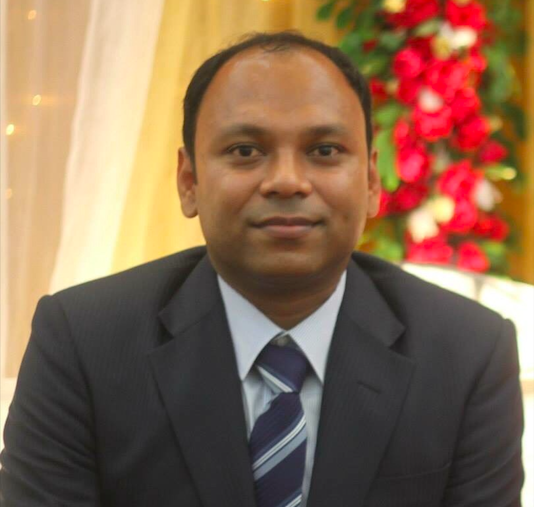
Professor Tuck Wah Leong is Deputy Dean (Learning & Teaching) at RMIT University's School of Computing Technologies. His research focuses on human-centered computing, data science, and applied computing with particular emphasis on narrative visualization, healthcare communication, and inclusive technology design. Leong has contributed significantly to understanding usability challenges in self-service technologies and virtual training systems. His work bridges academic research with practical applications, addressing issues like queer youth experiences on social platforms and ethical considerations in AI-driven self-care tools. Leong collaborates across disciplines to develop innovative solutions for diverse populations including Indigenous communities and elderly users. His recent studies explore the impact of immersion levels in VR training and the role of generative AI in mental health support systems. Leong maintains active engagement in educational technology, co-designing tools like XRAuthor for immersive learning content creation. His research consistently emphasizes participatory methodologies to ensure technologies align with user needs and societal values.
Dr. Susanne Baumgartner is an Associate Professor in the Faculty of Social and Behavioural Sciences at the University of Amsterdam, specializing in Youth & Media Entertainment. Her research examines the effects of digital media on attention, well-being, and development. Her work investigates: Media multitasking and attention processes Smartphone usage patterns and effects on sleep Digital stress and well-being interventions Adolescent development in digital environments Longitudinal effects of media use Dr. Baumgartner's current research employs mobile tracking, experience sampling, and experimental methods to understand how digital behaviors affect psychological functioning. Her work on notification-disabling interventions and grayscale smartphone displays examines practical approaches to digital well-being. She contributes to the Centre for Research on Children Adolescents and the Media and the Digital Communication Methods Lab, developing innovative approaches to studying digital behaviors in everyday life contexts.
Ivan Adriyanov Nikolov is an Assistant Professor at the Department of Architecture, Design and Media Technology within Aalborg University's Technical Faculty of IT and Design. He specializes in Computer Graphics, Computer Vision, and Augmented Reality, with a focus on 3D reconstruction techniques like Structure-from-Motion (SfM). His work bridges academic research and industrial applications, particularly in wind turbine blade inspection and educational technology. His educational background includes contributions to computer science education through innovative teaching methods. He has led projects like 'Drone Application for Pioneering Reporting in Wind Turbine Blade Inspection' (2017–2019) and 'Leading Edge Roughness - Wind Turbine Blades' (2015–2019), advancing drone-based inspection and 3D modeling for wind energy sectors. Research interests include synthetic data generation, environmental monitoring datasets (e.g., BrackishMOT, DigiWeather), and improving VR/AR user experiences. He has developed tools for dynamic lighting in pixel art games and multimodal guardian systems in VR. His datasets, such as Sewer Defect Point Clouds and Wind Turbine Blade SfM Reconstructions, are publicly available for academic use. He actively contributes to educational innovation, such as flipped classroom strategies to boost programming class engagement. His interdisciplinary approach spans computer graphics, AI-driven NPC interactions, and collaborative mixed-reality games for trust-building. Labs/Teams: Member of the Computer Graphics Group and Visual Analysis and Perception team at Aalborg University. Collaborates with industry partners on drone technology and environmental surveillance systems.
Kim Christian Schrøder is a Professor of Communication at Roskilde University's Department of Communication and Arts, where he has held a permanent position since 1999. His research focuses on media democracy, audience studies, and cross-media news consumption, with significant contributions to understanding how citizens engage with news as democratic resources. He co-directs the 'Beyond the Here and Now of News' project examining young people's news consumption and leads Denmark's annual news media usage surveys. His research interests bridge media democracy and audience behavior, analyzing news consumption 'from a high altitude' through national surveys while conducting qualitative investigations into how young people navigate news media. Schrøder has pioneered methodologies for studying cross-media news repertoires and their relationship to democratic engagement, with particular expertise in how audiences interpret climate news and navigate information overload in digital environments. His publications reveal consistent focus on evolving news consumption patterns, with recent work examining Nordic media systems, AI skepticism among news audiences, and podcast adoption as complementary news sources. Key thematic threads include news avoidance behaviors, trust in journalism across platforms, and the economic implications of payment willingness for digital news. Knight of the Dannebrog Order (2013) for 'meritorious civil service and contribution to arts and sciences' George Orwell Award for Distinguished Contribution to Honesty and Clarity in Public Language (1985) Fellow of The International Communication Association (2018) Top extended abstract award from ICA journalism studies division (2020) Senior Visiting Research Fellow at Oxford's Reuters Institute (2018) Schrøder has secured substantial research funding including leadership of the 'DREAM' research center and the 'Beyond the Here and Now of News' project funded by the Independent Research Fund Denmark. He has advised numerous PhD candidates through his role as former Director of the National Danish PhD School in Media, Communication and Journalism (2008-2010). His lab work includes the Journalism and Democracy research group and the Centre for News Research at Roskilde University.
Kai Mikkonen is a Professor of Comparative Literature at the Department of Philosophy, History and Art Studies , University of Helsinki , since August 2020. He has held multiple academic roles at the same university, including Senior Lecturer (2004–2020), Research Fellow (2003–2006), and Docent (2000–present). Mikkonen also served as a Visiting Fellow at Clare Hall College, Cambridge University (2014–2015). Education: PhD in Comparative Literature (University of Tampere, 1997), MA in Comparative Literature (University of Iowa, 1991). Supervisory Role: Supervisor for the Doctoral Programme in Philosophy, Arts, and Society at the University of Helsinki. Mikkonen’s research spans narrative theory , graphic narratives , travel literature , and literary interpretation , with a focus on French/British literature and intermediality. His recent projects include Menetelmä ja materiaalisuus (Method and Materiality, 2024–2025) and Kuvalliset tekstit ja lukijoiden silmänliikkeet (Visual Texts and Eye Movements, 2016). Mikkonen’s publications highlight hybrid narrative forms (picturebooks, comics, metafictional works) and their impact on reading practices. His 2023 article "Between Picturebooks and Comics" explores interstitial genres, while 2024 outputs address interart rivalry, fantasy narratives, and political reinterpretations of classical texts. Scientific Honors: 2023: Life member, Finnish Academy of Science and Letters. 2018: Life member, The Finnish Society of Sciences and Letters. 2015: Life member, Clare Hall College (Cambridge). Mikkonen supervises doctoral theses and participates in international academic networks, including peer review and grant assessment. He also contributes to public discourse through media appearances on topics like literature, AI-generated audiobooks, and the Nobel Prize in Literature.
Jannelle Legg is an Assistant Professor of History at Gallaudet University with a joint appointment in the Drs. John S. and Betty J. Schuchman Deaf Documentary Center. Her research focuses on digital history, 19th-20th century American religious history, and deaf history. She holds a Ph.D. from George Mason University (2021), where her dissertation examined the Episcopal Mission to Deaf-Mutes (1850–1920). Currently, she teaches courses like U.S. Women’s History and Special Topics in History. Education: Ph.D. in History and Art History from George Mason University (2021). Research interests include religious institutions’ engagement with deaf communities, digital methods for preserving deaf histories, and labor histories of deaf workers. Her work bridges historical scholarship with accessible digital storytelling, as seen in projects like the Deaf Printers Pages and Visualizing Deaf Spaces. Awards: 2022 Robert W. Prichard Prize for distinguished scholarship, 2023 Mason Multi-Media Award for innovative digital projects. Grants/Committees: Faculty Development Committee Chair (2023), Provost Research Excellence Award (Gallaudet), consulted on archival practices for Coda International and the Roy Rosenzweig Center for History and New Media. Lab/Initiatives: Active in Gallaudet’s Deaf Documentary Center, focusing on multi-media preservation of deaf narratives and community histories.
Ewa Bobrowska is an Assistant Professor at the Faculty of Media Arts, Academy of Fine Arts in Warsaw, and an active member of the Polish Philosophical Society, Polish Society of Aesthetics, and Athens Institute for Education & Research. Her career uniquely bridges visual art practice and academic philosophy. Her educational background includes: PhD in Fine Arts from University of Arts, Poznań PhD in Philosophy from University of Warsaw (supervised by Prof. Iwona Lorenc) Graduate of Faculty of Graphic Arts at Academy of Fine Arts in Warsaw (Rector's Honors under Prof. M. Wasilewski) Graduate of Faculty of English at University of Warsaw Postdoctoral internship at University of California Dr. Bobrowska's research centers on critical theory's application to contemporary art, with deep engagement in Derridean deconstruction, Lyotardian postmodernism, and Nancy's ontological inquiries. She investigates how philosophical frameworks shape artistic production and reception, particularly in California's theoretical traditions, while examining aesthetics through the lens of visual culture and artistic practice. Her publications reveal a consistent trajectory exploring the Irvine School's influence on contemporary art. The 2013 monograph established foundational concepts, the 2019 anthology expanded collaborative critical perspectives, and the 2020 book synthesized these threads through analysis of artists like Bruce Nauman. Collectively, they demonstrate evolving focus from theoretical exposition to practical application in art contexts. Her scientific recognition includes: Creative Scholarship from ZAIKS (awarded twice) Dr. Bobrowska secured significant research funding as principal investigator for the "New Humanities in Research" grant (2014-2019) at University of California, funded by Poland's National Program for Development of Humanities. This project facilitated transnational collaboration between Polish and Californian scholars in critical theory and contemporary art practice, generating interdisciplinary publications and exhibitions. Her leadership of the "New Humanities in Research" initiative demonstrates collaborative team management across institutional boundaries. Though no dedicated lab is specified, this project created a de facto research collective bridging Warsaw's Academy of Fine Arts with University of California scholars, fostering dialogue between European and American critical theory traditions through workshops and joint publications.
Maximilian Jun Zhang is a PhD student and Researcher at the Institute of Media Studies, Eberhard Karls University of Tübingen, working on the interdisciplinary project "The Answering Machine" , funded by the Volkswagen Foundation. His research explores voice-based human-AI interaction in psychotherapy, AI ethics, and immersive media. He holds an M.A. in Film Studies from Freie Universität Berlin and a B.A. in Journalism and Communication Studies. Education: Bachelor’s in Media Studies & German (Universität Tübingen) Bachelor’s in Journalism & Film Studies (Freie Universität Berlin) Master’s in Film Studies (Freie Universität Berlin) Research Interests: Focuses on AI ethics, artificial voices in media, VR, neurofilmology, and gender studies. His work combines empirical research with artistic collaboration, such as improvisational theater performances with AI chatbots to study human-machine relationships. Key Contributions: Awarded the 2023 AI in Film prize; presented at media conferences (e.g., GfM Jahrestagung 2023); active in public outreach via podcasts and science slams. Leads workshops on AI creativity and media analysis.
Anita Has-Tokarz is a Professor at the Department of Information Science, Bibliology and Media Education within the Faculty of Political Science and Journalism at Maria Curie-Skłodowska University (UMCS) in Lublin, Poland. As Kierownik Katedry (Head of Department) since 2019, she focuses on book culture , media studies , and information architecture , particularly in children's and youth media contexts. Professor at UMCS Research on book-market mediatization Coordinator of international projects Expert in media education Research Interests span transmedia narratives , digital libraries , cookbook historiography , and generational media reception . Her work examines how digital culture transforms reading practices and library functions, with a focus on Alpha generation behaviors. Scientific Contributions : Bronze Medal for Long Service (2009) Medal of the National Education Commission (2021) Bronze Cross of Merit (2023) Homo Didacticus UMCS title (2022) 550th Anniversary Medal of Lublin Voivodeship (2024) She organizes international conferences like Ksi@żka w Mediach - Media w Ksi@żce and co-edits academic journals. Her scientific collaborations include institutions in Sweden, Canada, and Ukraine, with advisory roles in the International Visegrad Fund.
Dr Izabella Kimak is a Lecturer at the Department of English and American Studies, Faculty of Languages, Literatures and Cultures, Maria Curie-Skłodowska University. Her work focuses on ethnic minority literature in the U.S., corporeality in American culture, and urban narratives, with a particular emphasis on Polish-American and South Asian American writing. She holds a PhD (2011) and MA (2003) from UMCS, both examining diasporic female identity. PhD: Women at Cultural Crossroads (UMCS, 2011) MA: Native American Women in Their Own Eyes (UMCS, 2003) Her research explores intersections of ethnic identity , gender , and urban spaces , evidenced by her 2023 grant Sweet Home Chicago? on Polish migration literature and 2021 Kosciuszko Foundation fellowship at Northwestern University. Publications span analyses of Bharati Mukherjee, Chicago’s racial dynamics, and edited volumes on post-millennial cultural exhaustion. Key publication trends include Polish-American migration (2024), diaspora myth-making (2022), and postcolonial urbanism (2014). She contributes to editorial boards of Polish Journal for American Studies (2015–2024) and WiN (2019–2023), and co-leads the EAAS Women’s Network (2024–2026). Active in academic collaborations and co-authoring works like the 2023 Memory, Identity, Belonging , she has participated in conferences and research exchanges, including the 2009 JFK Institute Library fellowship in Berlin and the 2007 HCA Spring Academy in Heidelberg. Her expertise also extends to translation between Polish and English.
Dr. Maximilian Krug is a Postdoctoral Researcher at the Institute of Communication Science, Faculty of Humanities, University of Duisburg-Essen, Germany. He is a core member of the research group Multimodal Communication, Social Interaction & Technology led by Prof. Dr. Karola Pitsch. His work bridges communication studies, conversation analysis, and digital media research, with a focus on conflict, reactance, and multimodal interaction. Research Interests: Maximilian Krug investigates the structural dynamics of conflict in interpersonal communication, analyzing both face-to-face and online interactions. His research spans rejection and resistance in multimodal interactions , incivility and psychological reactance in digital spaces (especially Telegram), and science communication , including the role of generative AI in public understanding of science (AICOS project). He employs multimodal conversation analysis, eye-tracking, and mixed methods to study coordination in complex social settings such as theatre rehearsals, medical emergencies, and authoritarian discourse. Recent Research Trends: His recent publications reveal a strong focus on temporal coordination in joint activities, verbal and nonverbal prompting, and structural compatibility in multiactivity settings. Projects like AICOS and DFG-funded studies on pronoun use in GDR letters highlight his interdisciplinary reach across communication, linguistics, and political discourse. The integration of visual analytics (e.g., VisCoMET) demonstrates his innovative methodological approach. Scientific Awards: No specific awards or fellowships are mentioned in the provided texts. Advising and Grants: While no formal students are listed, Dr. Krug supervises student theses and contributes to academic training. He is involved in multiple externally funded projects, including those supported by the German Research Foundation (DFG) , the Bavarian Research Institute for Digital Transformation (bidt) , and the Federal Office for the Protection of the Constitution . These grants support his habilitation projects on incivility and reactance. Labs and Teams: Dr. Krug is an active member of the Multimodal Interaction & Eye-Tracking Lab at the University of Duisburg-Essen. This lab focuses on empirical studies of social interaction using advanced technologies such as mobile eye-tracking and multimodal data integration. He collaborates with interdisciplinary teams in projects involving medical training, science communication, and historical discourse analysis.
Matti Hämäläinen is a Professor at the Department of Neuroscience and Biomedical Engineering , Aalto University. He is a leading expert in Magnetoencephalography (MEG) , with a focus on sensor design, neural connectivity, and clinical applications. His work contributes to understanding brain disorders like autism and epilepsy. Doctorate in Materiaalifysiikka, Teknillinen Korkeakoulu (1989) Diplomi-insinööri in Teknillinen Fysiikka, Teknillinen Korkeakoulu (1983) Hämäläinen's research spans MEG technology , auditory and visual cortex dynamics , and functional connectivity analysis . He develops open-source tools like MNE-Python and HNN-Core for neural data interpretation. Scientific Awards : None explicitly mentioned. He has led projects such as NIH Scalable Software for MEG/EEG and Device-Independent Real-Time MEG EEG Source Localization , with media coverage in outlets including Massachusetts General Hospital and Targeted News Service.
Ruhul Amin is an Assistant Professor at Fordham University's Department of Computer and Information Science, where he explores the intersection of Artificial Intelligence , Data Science , and Public Health . His work spans multiple domains including Bioinformatics , Natural Language Processing , and Computational Social Science . PhD in Computer Science (Stony Brook University, 2019) MS in Computer Science (Stony Brook University, 2015) BSc in Computer Science (Shahjalal University, 2007) His research focuses on developing deep learning algorithms for genome annotation, anomaly detection in high-cardinality spaces, and assistive technologies for visually impaired users. Notably, he designed the Mongol Dip bilingual screen reading software and the Pipilika Bengali text search engine. Recent publications (2025-2024) demonstrate his expanding interests in large language model alignment , sentiment analysis across languages, and distributed reinforcement learning for cybersecurity applications. His work frequently appears at IEEE conferences and in journals like PLOS One. Scientific Recognition BASIS National ICT Award (Bangladesh) Best Poster Awards at IEEE R10 HTC and CEWIT conferences Bangladesh Prime Minister’s Award (2012) mBillionth South Asia Award (2010) He maintains active collaborations with research teams at University of Toronto , University of British Columbia , and Stony Brook University . Contact: moamin@cs.stonybrook.edu
Ralph Vacca is an Associate Professor at Fordham University’s Department of Communication and Media Studies, where he directs the New Media and Digital Design Program. His work bridges cultural studies, information science, and learning science, focusing on equity in education and mental health through collaborative technology design with historically excluded communities. PhD, Educational Communication & Technology, New York University MA, Educational Leadership, New York University BBA, Entrepreneurship Management, Baruch College CUNY Research interests include: Co-designing technology with marginalized groups to foster equity Critical data literacy and algorithmic justice in education Bicultural and emotional health practices in digital contexts Arts-integrated approaches to data science education Ralph teaches courses such as Digital Research Methods, Data Visualization, and Creative Coding, emphasizing participatory design and empowerment. He has collaborated on research exploring data storytelling, digital mindfulness, and culturally responsive computational modeling.
Andreia Sousa is an active researcher at Universidade Lusófona's Faculty of Communication, Architecture, Arts and Information Technologies (FCAATI), where she contributes to the Human Environment Interaction Lab (HEI-LAB). With an ORCID ID (0000-0001-8070-8970), she maintains a robust research profile spanning from 2013 to the present, with multiple ongoing projects extending through 2026. Her academic work bridges design, technology, and human factors with particular emphasis on vulnerable populations including dementia patients, cancer patients, and older adults. Dr. Sousa's research interests center around human-computer interaction , user experience design , and digital health applications . Her work consistently applies user-centered methodologies to address real-world challenges in healthcare, rehabilitation, and social inclusion. She demonstrates particular expertise in interface design for medical contexts, virtual reality rehabilitation systems, and digital platforms promoting healthy behaviors. Her research fingerprint reveals strong connections to centered approaches, interface design, cancer patient care, user experience, information architecture, and journalism. Analysis of her 15 most recent publications reveals a clear trajectory toward increasingly impactful applications of design principles in healthcare contexts. Starting with foundational work on e-health trust and credibility in 2016, her research evolved toward specialized applications including cancer patient onboarding (2020), virtual rehabilitation (2022-2024), and dementia caregiver support systems (2025). A notable trend is her growing focus on algorithm experience and digital platform design, culminating in her 2025 work on YouTube advertising performance. Best Practices of research and teaching (2022) Dr. Sousa actively contributes to multiple research projects including SiX (focusing on social re-connectivity for patients with Locked-In Syndrome), MARTageCARE (developing toolkits for older adults), and FEMglocal (studying feminist movements). Her role as a researcher on these projects demonstrates her collaborative approach and ability to secure external funding. She regularly participates in academic activities including invited talks, conference organization, and peer review services, indicating her growing recognition within her fields of expertise. As a member of HEI-LAB, Dr. Sousa contributes to an interdisciplinary research environment focused on human-environment interactions through digital technologies. Her work connects design principles with practical healthcare applications, creating meaningful impact in both academic and real-world settings.