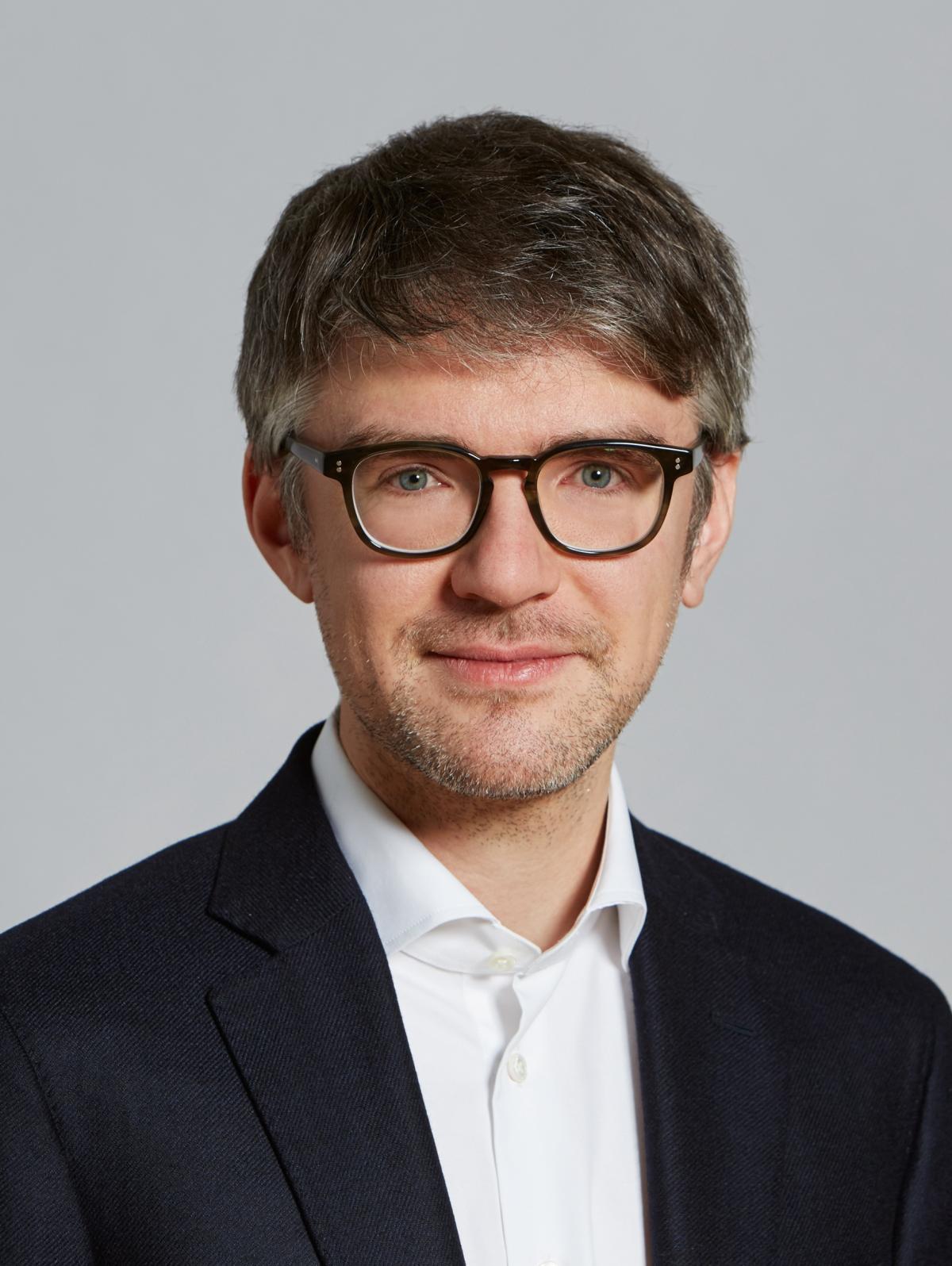
Prof. Dr. Bernd Skiera is a leading Marketing Professor at Goethe University Frankfurt since 1999 and a member of the managing board of the efl - The Data Science Institute. His work bridges information systems and marketing, with a focus on data-driven decision making and digital transformation.
Kjell Jorner is an Assistant Professor of Digital Chemistry in the Institute for Chemical and Bioengineering at ETH Zurich's Department of Chemistry and Applied Biosciences. His research group focuses on integrating computational methods and machine learning to address challenges in chemical synthesis, materials design, and reaction prediction. Education: PhD from Uppsala University (Photochemistry of aromatic compounds) Postdoctoral studies at AstraZeneca UK (Reaction prediction using computational chemistry and ML) Postdoctoral studies at University of Toronto (Molecular design of catalysts and organic electronic materials) Research Interests: Professor Jorner's work bridges computational chemistry, machine learning, and experimental design. Key areas include: Development of quantum mechanics-machine learning hybrid approaches for reaction feasibility prediction Inverse molecular design of functional materials (e.g., singlet-fission systems) Computational catalyst optimization and high-throughput screening methods Digital tools for chemical education and cheminformatics Publication Trends (2023-2025): Recent articles demonstrate a strong focus on machine learning applications in chemistry, including reaction prediction algorithms, catalyst design frameworks, and automated molecular generation. A recurring theme is the development of computational tools to accelerate materials discovery and optimize chemical processes. Laboratory & Team: Leads the Digital Chemistry research group at ETH Zurich (HCI E 137) exploring computational approaches to chemical challenges.
Thomas Pasquier is an Assistant Professor in the Department of Computer Science at the University of British Columbia, affiliated with the Systopia Lab and UBC Security & Privacy Group. His research focuses on digital provenance, system auditing, intrusion detection, and performance optimization. He investigates systems security through provenance graph analysis, developing practical frameworks for intrusion detection (including PROVNET and Kairos) and provenance summarization tools. His work combines machine learning with systems research to enhance cybersecurity transparency. Recent Publications (2022-2025) Provenance-based intrusion detection systems analysis Whole-system provenance for practical security eBPF kernel extension security enhancements LLM-driven provenance summarization Research code quality assessment Scientific Awards Incredible Instructor Awards Amazon Science Research Award He supervises graduate students in systems security research and teaches courses on security & privacy and operating systems. His lab welcomes diverse students for thesis-based research opportunities.
Rachel Pottinger is a Professor in the Department of Computer Science at the University of British Columbia within the Faculty of Science. She has been at UBC since 2004, progressing from Assistant Professor to Associate Professor in 2012 and to full Professor in 2021. She is affiliated with research centers including CAIDA (Centre for Artificial Intelligence Decision-making and Action) and DFP (Designing for People), and is part of ICICS (Institute for Computing, Information and Cognitive Systems). Her research focuses on data management, particularly semantic data integration, metadata management, and making data more accessible and understandable to users. She leads the Data Management and Mining Lab and has supervised numerous doctoral and master's students. Her work addresses three main areas: helping people understand and explore their data, managing data not well supported by databases, and coordinating data across multiple databases. Her recent publications demonstrate strong trends in database usability, data provenance visualization, query recommendation systems, and building information modeling integration. Her work bridges theoretical database concepts with practical human-centered applications, particularly in making complex data systems more accessible to non-expert users. UBC Computer Science Department Faculty Teaching Award 2013 Computer Science Department Teaching Award 2010 CS Department Teaching Award Denice Denton Emerging Leader Award 2007 Pottinger has supervised numerous PhD and Master's students, with research focusing on data provenance, database usability, and data coordination. She has been involved in significant research projects related to data lakes, open data navigation, and query recommendation systems. Her current research explores table annotation and discovery in data lakes, query refinement for aggregation queries, and query prediction based on past user behavior. She is actively involved in the academic community, serving as Secretary-Treasurer for SIGMOD, on the VLDB Journal editorial board, and as a member of the Computing Research Association's Board of Directors. She previously served as General Co-Chair of SIGMOD 2020 and as Associate Head for the Undergraduate Program of the Department of Computer Science from 2018-2020.
Duncan Wilson is a Professor of Connected Environments at the Bartlett Centre for Advanced Spatial Analysis (CASA) at University College London. His work bridges academia and industry, focusing on IoT, AI, and spatial analysis to enhance understanding of built and natural environments. Current role: Professor of Connected Environments at UCL Education: PhD in Artificial Intelligence and Machine Vision (UCL, 1997), BEng (Hons) in Electrical Engineering (Loughborough University, 1993) Research interests include: Cognitive computing at the network edge Extraordinary sensory systems for data capture Spatial reasoning and digital twins IoT for healthcare and biodiversity Edge AI and TinyML Recent articles span digital twin development , IoT for biodiversity monitoring , and smart healthcare infrastructure . He has received recognition for collaborative R&D approaches during his directorship at Intel's Sustainable Connected Cities institute. Teaching: Leads MSc Connected Environments and modules on IoT ethics, AI on microcontrollers, and sensor network deployment Projects: IoT Living Lab at UCL, Project Hercules for eye clinic analytics, and Shazam for Bats environmental monitoring Professional activities: Former Director of Intel Collaborative Research Institute (2012-2018), ex-member of Smart London Board (2017-2022)
Geke Dina Simone Ludden serves as Full Professor of Interaction Design at the University of Twente's TechMed Centre within the Faculty of Electrical Engineering, Mathematics and Computer Science. Her interdisciplinary work bridges human-computer interaction, health technology, and behavioral design. Her research focuses on behavior change through digital interventions , particularly in health contexts. Key areas include cognitive health for aging populations , wearable stress management technologies , and human-building-technology interactions in healthcare environments. She employs co-design methodologies and user-centered approaches to develop tools supporting wellbeing and aging-in-place solutions. Recent publications reveal strong trends in applied health informatics (62% of 2023-2025 output), with significant emphasis on Dutch aging populations and cross-cultural healthcare comparisons . Her work consistently integrates mediation theory and socio-technical frameworks to analyze technology adoption barriers. Ludden actively supervises academic work, having examined 6 doctoral theses since 2020 on topics ranging from hand rehabilitation devices to biodiversity UX implementations. She directs the TechMed Centre's research initiatives focused on translating interaction design principles into clinical applications, particularly through the MattPod sensory dining project and cognitive health toolkits.
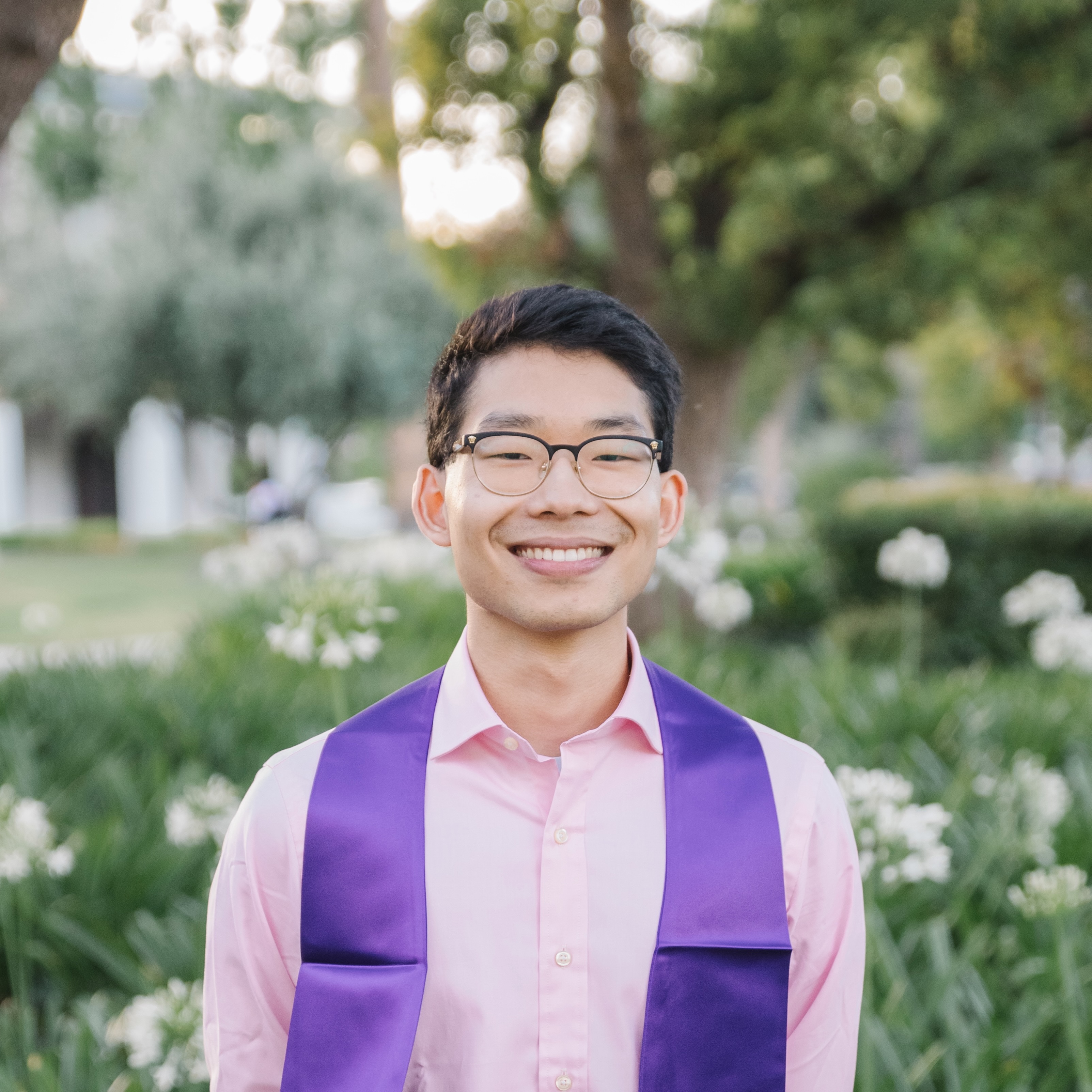
Alexander Pan is a third-year Computer Science PhD student at the University of California, Berkeley, advised by Jacob Steinhardt . His research focuses on developing safe machine learning systems, particularly sequential decision-making agents. He holds a dual bachelor's degree in Mathematics and Computer Science from Caltech, where he worked with Anima Anandkumar and Yuanyuan Shi . His recent work explores AI safety through topics like unlearning , LLM transparency , and reward hacking , with publications at premier conferences including ICML and ICLR. He has received recognition such as the FLI PhD fellowship and hackathon awards for projects like SimSquare and homES ReInvented . Scientific Awards: FLI PhD fellowship Best Social Network Hack - Stanford Hackathon 2021 Best Use of ESRI Technology - Caltech Hackathon 2020 ICML 2023 Oral Presentation
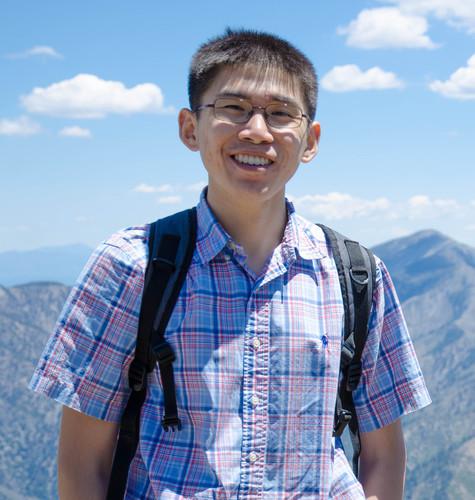
Chen Sun is an Assistant Professor of Computer Science at Brown University and a part-time Staff Research Scientist at Google DeepMind . His research bridges computer vision, machine learning, and artificial intelligence , focusing on multimodal representation learning, visual commonsense, and controllable video generation . He directs the PALM🌴 research lab , which explores scalable models for robotic planning, video understanding, and human activity recognition . Chen Sun earned a Ph.D. in Computer Science from the University of Southern California (2016) , advised by Professor Ram Nevatia , and a Bachelor of Science in Computer Science from Tsinghua University (2011) . His lab's work has been supported by Adobe, Honda, Meta, NASA, and Samsung , and he is affiliated with the NSF AI Research Institute on Interaction for AI Assistants . His research spans multimodal transformers, embodied agents, and physics-informed video generation . Key trends include Learning from unlabeled videos for human activity recognition Developing controllable generation techniques using motion trajectories and physics-based signals Advancing scalable frameworks for video-language tasks Scientific awards include the Brown University Richard B. Salomon Faculty Research Award and Samsung Global Research Outreach Award . He has served as Workshop Chair (CVPR 2025) , Action Editor (TMLR) , and Area Chair for top conferences like ICLR, CVPR, and NeurIPS . Chen Sun mentors a dynamic team including Ph.D. students Apoorv Khandelwal (Presidential Fellow) Calvin Luo (Research Mobility Fellow) Nate Gillman (Math Department) Shijie Wang Tian Yun (co-advised with Ellie Pavlick) Yuan Zang Zilai Zeng Zitian Tang and alumni now pursuing Ph.D. programs at Princeton, Cornell, UBC, and UNC . His teaching portfolio includes graduate-level courses on Deep Learning (CSCI 2470) , Advanced Topics in Deep Learning (CSCI 2952N) , and a short course on Multimodal Transformers at ICASSP 2022 and AAAI 2023 .
Dongwook Yoon is an Associate Professor at the Department of Computer Science , University of British Columbia , and serves as Director of the SOCIUS Lab . He actively contributes to research in Human-Computer Interaction, Human-AI Interaction, and Virtual/Augmented Reality as a member of the Designing for People (DFP) and CAIDA research clusters. Education : PhD in Computer Science from Cornell University (2017), MS (2009) and BS (2007) in Computer Science from Seoul National University Research Focus : Designing socio-technical systems that bridge the gap between technology and human social processes, with innovations in AR/VR, multimodal interaction, and inclusive design Article Trends show his work spans: Temporal and bichronous learning environments AI self-clones and ethical implications Income inequality in virtual platforms Enhanced multimodal collaboration in VR Eyes-reduced interfaces for situational impairments Speculative participatory design for gig economy challenges Scientific Awards include: Google Academic Research Award (2024) Best Paper Award at CHI 2024 High Impact Award in Educational Technology (2024) CHCCS/SCDHM Graphics Interface Early Career Award (2023) Multiple Honorable Mentions at CHI, DIS, and CSCW Students & Collaborators range from active PhD candidates (Anika Sayara, Yuri Kim) to notable alumni (Thitaree Tanprasert, Ashish Chopra) across his SOCIUS Lab projects. His research receives funding from NSERC , KIST , Adobe , Microsoft , and Google grants.
Cecilia R. Aragon is a Professor in the Department of Human Centered Design & Engineering at the University of Washington, where she also serves as an Adjunct Professor in Computer Science & Engineering, Electrical and Computer Engineering, and the Information School. She is additionally a Senior Data Science Fellow at the eScience Institute. Aragon directs the Human-Centered Data Science Lab and has made significant contributions at the intersection of human-computer interaction and data science. Her research interests focus on human-centered data science, human-centered artificial intelligence, human-centered machine learning, human-computer interaction (HCI), computer-supported cooperative work (CSCW), visual analytics, aviation and astronautics sociotechnical systems, and emotion in informal text communication. Aragon's work bridges technical and social aspects of data science, particularly examining how humans interact with and gain insight from large datasets through both quantitative and qualitative methods. Aragon's recent publications demonstrate a strong focus on understanding online communities, sentiment analysis, distributed mentoring systems, and the ethical implications of AI. Her work spans multiple disciplines including social computing, data visualization, and astrophysics data analysis, showing her interdisciplinary approach to human-centered data science. Presidential Early Career Award for Scientists and Engineers (PECASE) 2008 Fulbright Fellowship 2017-18 HCDE Faculty Innovator in Research Award, University of Washington, 2015 Distinguished Alumni Award, Computer Science, University of California, Berkeley, 2013 Top 25 Women of the Year, Hispanic Business Magazine, 2009 Aragon has secured over $28 million in research funding from organizations including the National Science Foundation, National Institute of Standards and Technology, Department of Energy, Gordon and Betty Moore Foundation, Alfred P. Sloan Foundation, Washington Research Foundation, and industry partners like Microsoft and Intel. Her educational background includes a Ph.D. in Computer Science from UC Berkeley (2004), an M.S. in Computer Science from UC Berkeley, and a B.S. with Honors in Mathematics from Caltech. She leads the Human-Centered Data Science Lab and is affiliated with the eScience Institute, the Nearby Supernova Factory, and various research groups focused on data-intensive scientific collaborations. Her work on collaborative visual analytics systems like Sunfall has had significant impact in both academic and applied settings.
Professor Kaat Alaerts is a leading researcher at KU Leuven's Faculty of Movement and Rehabilitation Sciences, where she serves as Head of the Neurorehabilitation Research Group and Professor in the Department of Rehabilitation Sciences. Her work bridges neuroscience, psychology, and rehabilitation science to develop innovative interventions for stress regulation and social-cognitive functioning, with a particular focus on autism spectrum disorder and related conditions. Her primary research interests span neurorehabilitation , oxytocin research , autism spectrum disorder , stress regulation , mindfulness and meditation , neurostimulation , and social cognition . Dr. Alaerts employs a multidisciplinary approach that combines neuroscientific, physiological, and behavioral methods to study both clinical effectiveness and underlying brain mechanisms of neuromodulatory interventions. The research output demonstrates a strong focus on exploring the therapeutic potential of oxytocin, particularly for autism spectrum disorder. Her work examines both the standalone effects of oxytocin and its synergistic effects when combined with mindfulness training or other interventions. A growing body of research also investigates the gut-brain axis in autism and the role of microbiome composition in social and stress-related difficulties. Dr. Alaerts has received notable recognition including the KAGB Clinical Medicine Award in September 2024 for her work on oxytocin administration in children with autism. Her research group has also been honored with multiple "Belgium's got talent" prizes from the Belgian College of Neuropsychopharmacology and Biological Psychiatry. As a dedicated mentor, Dr. Alaerts supervises numerous PhD students and postdoctoral researchers, including Margaux Evenepoel, Jellina Prinsen, Elise Tuerlinckx, and others who have made significant contributions to the field. Her research is supported by multiple substantial grants, including several ongoing projects running through 2028-2029 that investigate oxytocin's role in stress regulation for breast cancer survivors, autism, and other conditions. The Neuromodulation Laboratory, which Dr. Alaerts leads, focuses on three core domains: oxytocin neuropsychopharmacology, contemplative science and combinatory approaches, and neuroregulation techniques. The lab operates within a multidisciplinary network that includes the LBI - KU Leuven Brain Institute and maintains strong collaborative relationships across various research institutions.
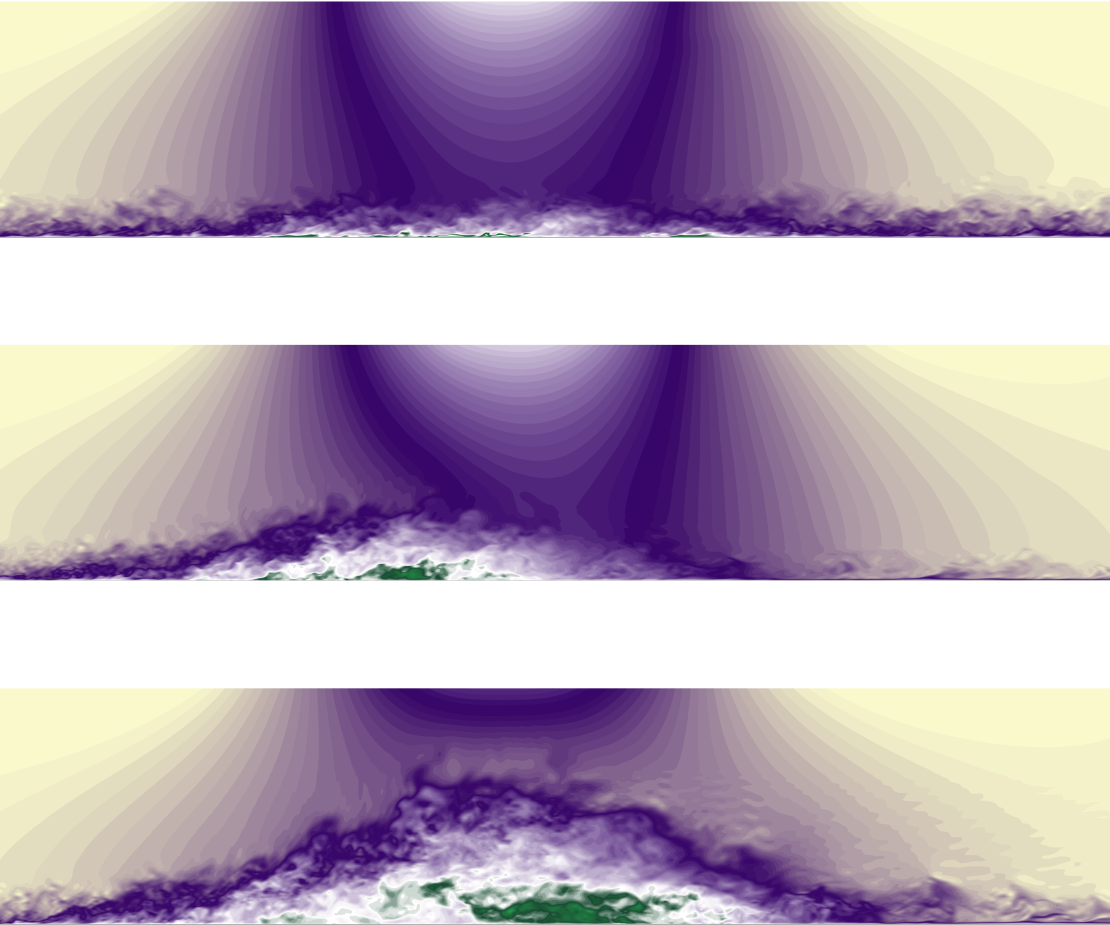
Francesco Ambrogi is an Assistant Professor in the Department of Mechanical and Materials Engineering at Queen's University, where he leads the Fluids, Energy, and Bio-inspired Unsteady Simulations (FEBUS) lab. His research focuses on computational and theoretical studies of turbulent boundary layers under pressure gradients, with applications in unsteady aerodynamics (turbine blades, rotor blades) and biomimicry (swimming/flying animals) for flow control. Dr. Ambrogi received his PhD in Mechanical Engineering from Queen's University in 2024, following a MASc in Energy and Nuclear Engineering from the University of Bologna, Italy (2019), and a BAsc in Mechanical Engineering from the University of Modena and Reggio Emilia, Italy (2015). He previously served as an Adjunct Assistant Professor at Queen's University in 2024 and completed a Postdoctoral Research Fellowship at the University of Waterloo in Mechanical and Mechatronics Engineering. His research program centers on advancing the understanding of turbulent boundary layer physics under unsteady pressure gradients. Dr. Ambrogi's team leverages modern computational tools, particularly large-eddy simulations, to investigate separated turbulent boundary layers and large-scale coherent structures. These structures are pivotal for the transport of mass, momentum, energy, and contaminants in turbulent flows. His work has significant implications for engineering applications such as turbulent mixing, heat diffusion, and contaminant transport in the atmosphere, with direct relevance to turbine blades, rotor blades, and biomimetic systems for flow control. Dr. Ambrogi's recent publications demonstrate a consistent research trajectory focused on unsteady boundary layer separation phenomena, showing increasing sophistication in handling complex unsteady flow physics. His work combines rigorous computational methods with practical applications in aerodynamics and flow control, particularly examining how time-varying freestream conditions affect boundary layer separation and how turbulent kinetic energy is advected in these complex flows. Dr. Ambrogi has secured funding through the Natural Sciences and Engineering Research Council of Canada (NSERC-CRNSG) under the Discovery Grant Program, with computational support provided by the Digital Research Alliance of Canada. His educational initiatives include ARC4CFD, an open-source course designed to bridge the gap between small-scale CFD simulations and large-scale computations on high-performance computing systems. As director of the FEBUS lab at Queen's University, Dr. Ambrogi leads research that combines fundamental fluid dynamics with practical engineering applications. The lab's work spans from theoretical investigations of flow separation mechanisms to the development of computational tools for practical engineering problems in aerospace and bio-inspired systems.
Andrea Tapia is an Associate Professor of Information Sciences and Technology at Pennsylvania State University. She holds a Ph.D. in Sociology from the University of New Mexico (2000). Her research focuses on the intersection of social theory, ICT, and crisis response, with a particular emphasis on leveraging social media for disaster resilience and humanitarian action. She has secured over $3.7 million in external funding, supervised 16 graduate committees (including 10 PhDs and 6 master’s theses), and authored over 40 journal articles, 60 conference papers, and 12 book chapters. Tapia is an elected leader in the American Sociological Association and the International Association for Information Systems for Crisis Response and Management. Her work directly influences UN policy, international relief organizations, and U.S. governmental initiatives. She has pioneered platforms like Aurorasaurus and contributed to frameworks for social media integration in emergency dispatch systems. Her research spans crisis informatics, crowdsourced early warning systems, and inter-organizational collaboration in humanitarian contexts. Notable achievements include developing methodologies for trust detection in social media data and analyzing disaster response coordination networks. Tapia has presented at 73 conferences, including 31 invited talks, and her scholarship emphasizes actionable insights for policymakers and practitioners. Tapia teaches 12 courses across undergraduate, Honors, and graduate levels, reflecting her commitment to education. Her current focus includes refining frameworks for social media data adoption in public safety answering points and advancing resilience analytics for cyber-physical-social systems. She leads interdisciplinary teams addressing challenges in disaster response, digital volunteering, and technology-mediated collaboration.
Michael Wiklund is a current Professor of the Practice in the Department of Mechanical Engineering at Tufts University School of Engineering . He has been in this role since 2014, previously serving as a Lecturer from 1987 to 2013. His work focuses on Human Factors Engineering , Medical Device Design , and Usability Testing in healthcare contexts. His research spans decades, emphasizing ergonomics , software user interfaces , and safety in medical systems . He has authored key publications including books and articles on usability engineering , root cause analysis , and design principles for medical technology. Wiklund teaches courses such as Medical Technology Development and Human Factors in Medical Technology , with a focus on Biomedical Engineering and Mechanical Engineering . His recent publications highlight trends in medical device innovation , user-centered design , and health IT integration. He also serves as General Manager - Human Factors Research & Design at UL since 2012.
Dr. Karthika Mohan is an Assistant Professor of Computer Science in the College of Engineering at Oregon State University, affiliated with the School of Electrical Engineering and Computer Science. Her research bridges artificial intelligence and causal inference, focusing on graphical models, missing data, and non-IID data challenges. Her work has been recognized with the Google Outstanding Graduate Research Award. She serves as an associate editor for the Journal of Causal Inference and has secured NSF funding for research on incomplete data. Dr. Mohan mentors students in causal inference methods and maintains collaborations with institutions like UC Berkeley and UCLA. Her laboratory develops innovative approaches for causal reasoning in AI systems.