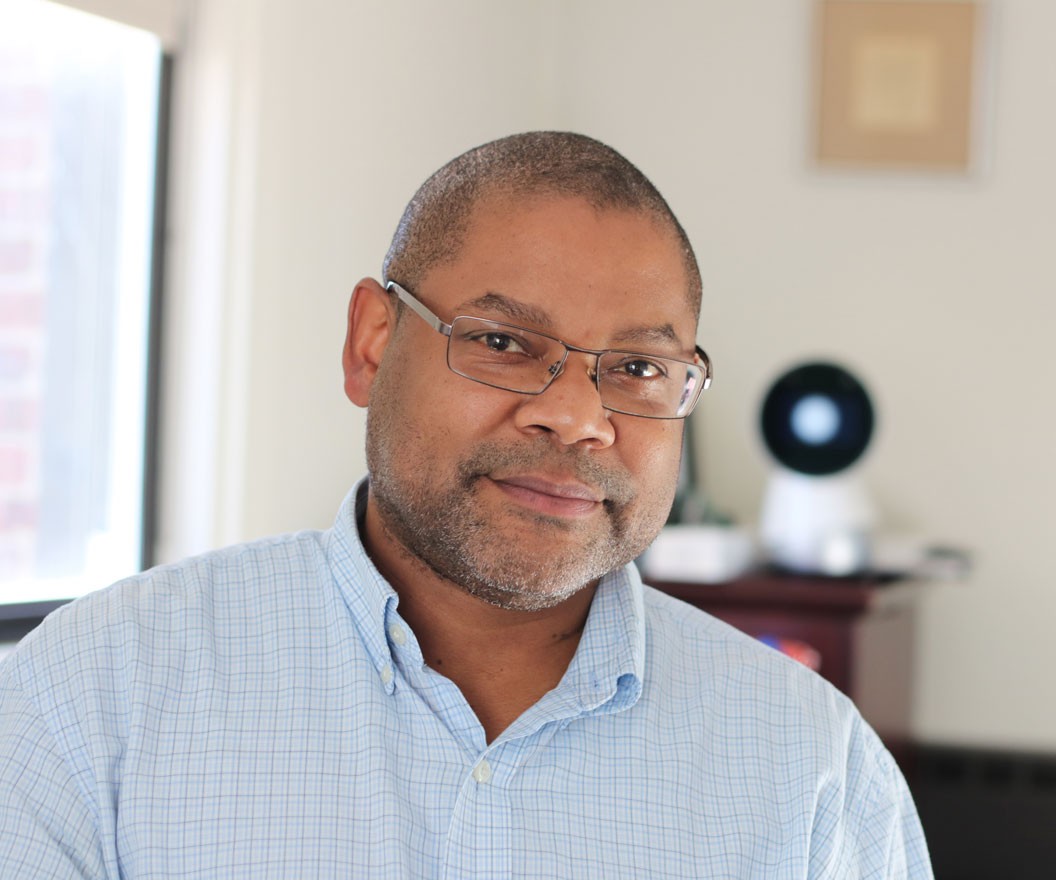
Brian K. Smith is a Professor at the Lynch School of Education and Human Development at Boston College , holding the Honorable David S. Nelson Chair and serving as Associate Dean for Research . His career spans roles at Drexel University, MIT, the National Science Foundation, and Rhode Island School of Design. Education: Ph.D., Learning Sciences, Northwestern University B.A., Computer Science and Engineering, University of California at Los Angeles (1991) Research Interests focus on the design of computer-based learning environments, human-computer interaction, and computational thinking. He leads the Lynch School’s new M.A. program in Learning Engineering , blending learning science with practical design for curricula, museum exhibits, and corporate training. Recent publications highlight trends in AI integration for education , game-based learning platforms , and sociomateriality theory for learning sciences. His work emphasizes equity, particularly for underrepresented groups in STEM. Scientific Awards include the NSF CAREER Award , Apple Distinguished Educator , and TRW Chairman's Award for Innovation . Grants & Collaborations: Technical advisor to the Center for Inclusive Computing at Northeastern University Co-investigator in RISD’s “STEM to STEAM” initiative Labs & Teams: Co-director of Boston College’s M.A. in Learning Engineering program Vice chair of the World Usability Day Design Challenge
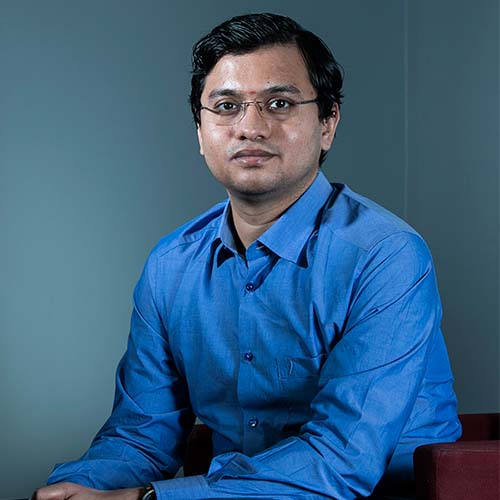
Sai Manoj Pudukotai Dinakarrao is an Assistant Professor in the Department of Electrical and Computer Engineering at George Mason University's College of Engineering and Computing. He leads the HArt (Hardware and AI Research) Group, focusing on cutting-edge research at the intersection of hardware security and artificial intelligence. His educational journey includes a BTech in Electronics and Communication Engineering from Jawaharlal Nehru Technological University (2010), an MTech in Information Technology from International Institute of Information Technology Bangalore (2012), and a PhD in Electrical Engineering from Nanyang Technological University, Singapore (2015). Following his doctoral studies, he completed post-doctoral research at TU Wien, Vienna (2015-2017) and George Mason University (2017-2018). Dr. Dinakarrao's research spans hardware security, adversarial machine learning, IoT networks, and deep learning in resource-constrained environments. His work integrates hardware design with AI techniques to address security challenges in computing systems, with particular focus on side-channel attack detection, malware detection in IoT networks, on-chip security, and hardware accelerator design for machine learning applications. His research has resulted in numerous publications in top-tier conferences and journals including IEEE Transactions, ACM conferences, and Design Automation Conference. Analysis of his recent publications reveals a strong trend toward hardware security solutions using machine learning techniques. His work increasingly focuses on Processing-in-Memory architectures, energy-efficient security solutions for IoT devices, and innovative approaches to hardware Trojan detection. Many publications demonstrate interdisciplinary collaboration across electrical engineering, computer science, and cybersecurity domains. Young Research Fellow Award at Design Automation Conference (DAC) 2013 Best paper award at International Conference on Data Mining (ICDM) 2019 Best paper award at International Conference on Consumer Electronics (ICCE) 2020 Best paper nomination at International Conference on Computer-Aided Design (ICCAD) 2019 Best paper nomination at Design Automation and Test in Europe (DATE) 2018 Dr. Dinakarrao has successfully mentored numerous PhD and MS students, with alumni securing positions at AMD-Xilinx, US Government agencies, and academic institutions. His research has been supported by significant grants from NSF, DARPA, and Virginia Commonwealth Cyber Initiative. Current projects include securing supply chains with UVA, developing novel architectures for machine learning acceleration, and creating energy-preserving cryptography protocols. The HArt Group maintains active collaborations with industry partners including AMD-Xilinx and government agencies. The lab focuses on practical implementations of theoretical security concepts, with particular emphasis on creating deployable security solutions for real-world hardware systems. Current research directions include intermittent computing with energy harvesting, hardware fuzzing techniques, and robust machine learning models resistant to adversarial attacks.
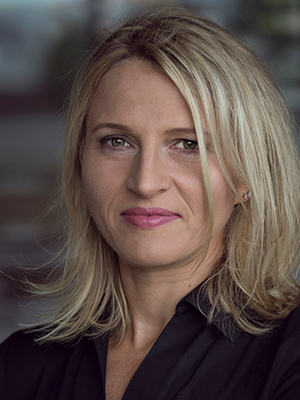
Regina Kaplan-Rakowski is an Assistant Professor in the Department of Learning Technologies at the University of North Texas. Her research focuses on immersive technologies like virtual reality (VR), artificial intelligence (AI), and computer-assisted language learning. She holds a PhD in Curriculum and Instruction from Southern Illinois University (2016), an MA in Foreign Languages (2006), and an MEd in European Studies (2001) from Pedagogical University, Cracow. Her research interests include VR applications in education, emotional responses to technology, and second language acquisition. Notable projects explore VR for social isolation mitigation, AI-mediated language learning, and accessibility for visually impaired learners. She has co-edited multiple books on educational technology, including pandemic-era teaching strategies and AI-driven innovations. Recent publications highlight VR’s impact on language anxiety reduction, AI integration in teacher training, and the effectiveness of immersive technologies in vocabulary and listening comprehension. Her work bridges theoretical insights with practical applications, influencing both classroom practices and technology design.
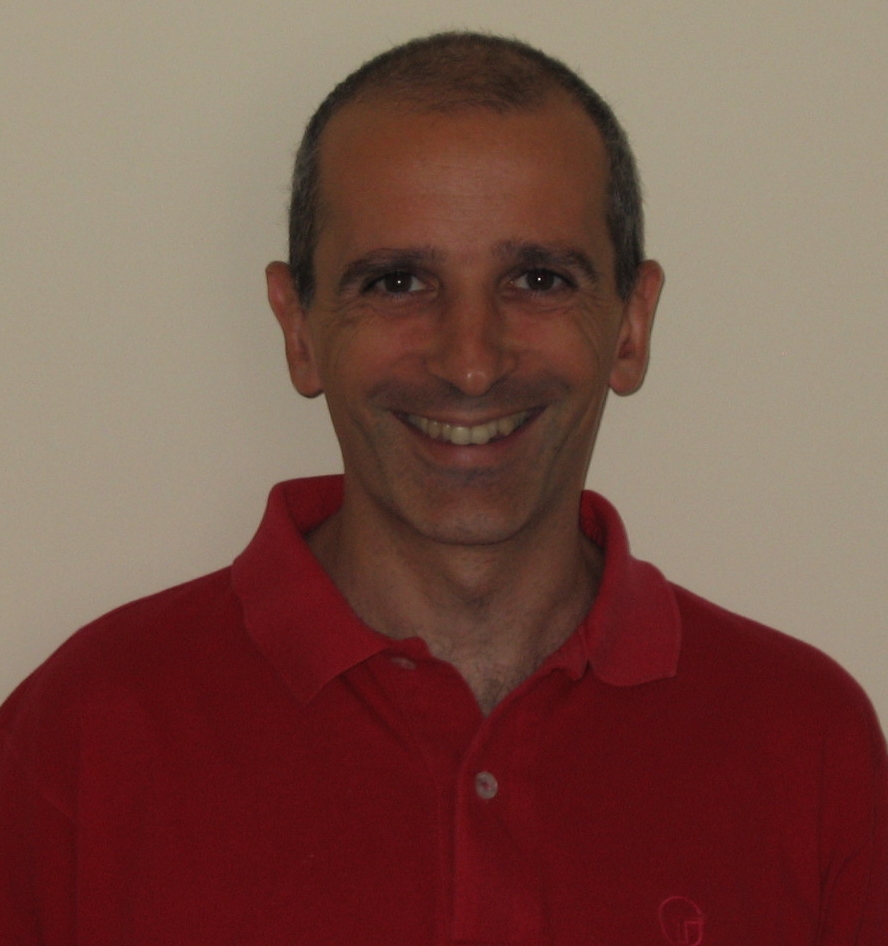
Beppe Liotta is a Full Professor at the Department of Engineering, University of Perugia. He serves as Rector Delegate for ICT and Digital Agenda. His research spans network discovery, graph drawing, algorithm engineering, and computational geometry . Laurea in Electrical Engineering (1990), Ph.D. in Computer Engineering (1995), both from University of Rome 'La Sapienza' Post-doc at Brown University (1995-1996) Current teaching: Information Visualization and Database Management Systems Liotta has authored over 170 papers and led projects like VisFAN (financial crime detection), VHyXY (large graph visualization), COWA (web traffic analysis), and WhatsOnWeb (web clustering). His work focuses on hybrid visualizations and network robustness . Recent articles highlight his expertise in biological networks , financial activity networks , and one-to-many matched graph visualizations . He has contributed to journals like IEEE Transactions on Visualization and Computer Graphics and conferences including PacificVis and Graph Drawing . Liotta actively participates in scientific service, including editorial roles for the Journal of Graph Algorithms and Applications and program committees for IEEE PVIS 2019.
Dr. Andrew Hoegh is an Associate Professor of Statistics at Montana State University (MSU), affiliated with the Department of Mathematical Sciences within the College of Letters & Science. He leads the Bozeman Environmental and Ecological Statistics (BEES) research group, focusing on Bayesian computation, spatiotemporal modeling, and ecological applications. His work bridges statistical theory and practical problems in environmental science, epidemiology, and sports analytics. Education: Ph.D. (2016) Virginia Tech; M.S. (2008) Colorado School of Mines; B.A. (2006) Luther College. Research Interests: Bayesian statistics, statistical ecology, computational methods for complex data, and pathogen dynamics in wildlife. His group addresses challenges like bat ecology, zoonotic spillover, and aquatic invasive species using advanced statistical techniques. Awards: Kopriva Faculty Lectureship (2021), multiple nominations for research and advising awards, and grants from institutions like Cornell University and the USGS. Teaching: Courses include Bayesian Statistics, Spatial Data Analysis, and Statistical Computing. Current projects involve bat monitoring, virus spillover modeling, and agent-based movement simulations. Labs/Groups: BEES group meets biweekly, collaborating with USGS scientists. Active projects include bat acoustic data analysis, zebra mussel detection, and radar-based animal movement tracking.
Ryan T. White is an Associate Professor at Florida Institute of Technology in the Department of Mathematics and Systems Engineering within the College of Engineering and Science. He serves as Director of the NEural TransmissionS (NETS) Lab, focusing on deep learning, computer vision, and data science. He is also an Affiliate Faculty member in Electrical Engineering and Computer Science. Ph.D. in Applied Mathematics (2015) from Florida Tech His research bridges deep learning and computer vision with applications in autonomous satellite operations , physics-informed neural networks for biomedical and geoscience problems, and NLP in aerospace domains. Projects include real-time edge computing , stochastic process analysis , and generative AI for synthetic data. The NETS Lab he directs has produced 15+ recent publications in conferences like IEEE Aerospace, AIAA SCITECH, and AAS/AIAA, with funding from the U.S. Space Force, Air Force Research Lab, and NSF. His teaching spans graduate/undergraduate courses in deep learning , machine learning , probability , and honors calculus . Current advisees include Ph.D. candidates and M.S. students working on topics like 3D object detection , information-theoretic neural analysis , and geophysical signal processing . The lab’s scientific contributions include real-time satellite feature detection , physics-guided neural networks for blood flow modeling, and entropy-based visual explanations for AI interpretability. Collaborations span Georgia Tech , Mulitscale Cardiovascular Fluids Laboratory , and Engage-AI for global development projects analyzing UNDP Sustainable Development Goals.
Christos Diou is an Associate Professor of Artificial Intelligence and Machine Learning at the Department of Informatics and Telematics, Harokopio University of Athens, Greece. His academic career spans over 15 years of participation in national and international research projects, with a focus on machine learning algorithms, domain generalization, causal inference, and bias mitigation. He earned a BSc and Ph.D. in Electrical and Computer Engineering from Aristotle University of Thessaloniki. His research emphasizes the application of machine learning to healthcare, addressing challenges such as visual bias mitigation, causal effect estimation from observational data, and fairness-aware representation learning. Notable projects include REBECCA and RELEVIUM , both EU-funded, and MELIORA , targeting lifestyle interventions for breast cancer risk reduction. He has published extensively in top-tier venues like IEEE TPAMI, CVPR, and ICCV. Christos is a leading voice in AI ethics and healthcare innovation, with over 150 publications and best paper awards at IEEE Big Data Service 2023 and AIAI 2022. His work includes developing platforms like Effector for feature effects and Beam for behavior studies. He collaborates with institutions such as Karolinska Institutet and CERTH/ITI, and his students include PhD candidates Ioannis Sarridis and Aristotelis Ballas.
Sheng Li is an Adjunct Assistant Professor in the School of Computing at the University of Georgia (UGA). He holds roles such as Graduate Program Faculty and Courtesy Faculty in the Institute of Bioinformatics. Previously, he served as an Assistant Professor at UGA from August 2018 to July 2022. His research focuses on Machine Learning, Computer Vision, Data Mining, Natural Language Processing, Causal Inference, and User Modeling. Li earned his Ph.D. in Computer Engineering from Northeastern University in 2017, following degrees from Nanjing Institute of Post and Telecommunications in China. His work bridges theoretical advancements and practical applications, including AI solutions for healthcare (e.g., medication adherence monitoring), computer vision for wildlife tracking (fish re-identification), and causal inference methodologies. He has received notable awards like the Fred C. Davison Early Career Scholar Award (2022) and the Aharon Katzir Young Investigator Award (2020). His research is funded by grants from agencies such as the US Department of Defense and NIH, supporting projects like Knowledge-Guided Scene Graph Generation and Reasoning for Visual Understanding. Li’s publications span top venues in AI and computer science, addressing challenges in domain adaptation, trustworthy AI, and multimodal learning. He has collaborated on interdisciplinary projects, including bioinformatics and agricultural NLP. His contributions emphasize both technical innovation and societal impact.
Paul A. Shackel is an Affiliate Professor of American Studies at the University of Maryland, College Park, with a primary affiliation in the Department of Anthropology (ANTH). His research focuses on historical archaeology, labor history, and heritage studies, with a particular emphasis on marginalized communities and industrial landscapes. Shackel’s work bridges academic scholarship with public engagement, addressing themes like structural violence, memory politics, and community representation. He holds a Ph.D. in Anthropology and has conducted extensive fieldwork in Pennsylvania’s anthracite coal regions, examining labor conflicts, mining trauma, and ethnic divides. His research methodologies include oral history digitization, text mining, and archaeological surveys of industrial sites like Eckley Miners’ Village and the Lattimer Massacre site. Shackel has also explored cultural heritage in contexts such as Cuba, Greenland, and Harper’s Ferry National Historical Park. Shackel’s articles critically address topics like unchecked capitalism in industrial regions, the transgenerational impacts of structural violence, and the role of museums in negotiating contested histories. He advocates for heritage practices that center marginalized voices and foster social justice. Recent projects include studies on New Philadelphia, an early multiracial townsite in Illinois, and the Rosewood Massacre, emphasizing intersectional violence and collective memory. His work has contributed to public benefits through heritage preservation initiatives, civic engagement programs, and archaeological tourism frameworks that promote peacebuilding and cultural understanding.
Andreas Manfred Pointner is an Assistant Professor at FH Hagenberg , specializing in interdisciplinary research at the intersection of computer science, healthcare informatics, and software engineering. He leads research in graph databases, process mining, and attribute grammars with applications in healthcare IT and automated data systems. His affiliations include the Web Intelligence and Innovation Laboratory , AIST Center of Excellence , and Medical Engineering/TIMed Center . He has contributed to projects such as RiskAI (risk management in enterprises), PASS (plan analysis automation), and REPO (radiology e-health platforms). Research Interests: Graph database optimization, interoperability in healthcare systems (HL7 standards), fuzzing techniques for software testing, and process mining for audit event analysis. His work bridges theoretical formal methods with practical applications in clinical workflows and automated data cleansing. Notable Contribution: Developed a graph transformation framework for complex data structures Recipient of the Best Paper Award 2022 for contributions to intelligent systems Collaborative Projects: Focus on AI-driven solutions for enterprise risk management and healthcare interoperability He actively participates in international conferences and has supervised projects involving 3D model analysis, contour extraction, and global disease monitoring systems.
Andrea Mocci is a Lecturer at the Faculty of Informatics of the Università della Svizzera italiana (USI). His work focuses on software engineering methodologies, developer productivity, and IDE interaction analysis. He is affiliated with the Software Institute and actively contributes to academic events such as the IEEE International Workshop on Mining and Analyzing Interaction Histories (MAINT). His research explores empirical software engineering techniques, including developer behavior analysis, code documentation improvement, and the application of natural language processing to software artifacts. Key areas of investigation include: IDE interaction and navigation efficiency Code redundancy and quality metrics Video tutorial analysis for educational content Runtime systems and annotation APIs Defect prediction and software maintenance Publications from 2016-2020 highlight trends in developer-centric tools, holistic recommender systems, and visualization techniques for software evolution. His work often bridges theoretical formal methods with practical developer workflows, aiming to improve both software quality and developer productivity through empirical studies and tool development.
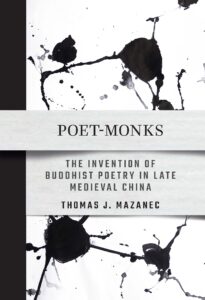
Thomas Mazanec is an Associate Professor of Premodern Chinese and Comparative Literature at the University of California, Santa Barbara. He specializes in Medieval Chinese poetry, Buddhism, Comparative Literature, Digital Humanities, and Translation Studies. His office is located in HSSB 2255, and he holds office hours on Mondays from 1-3pm for Spring 2025. His research focuses on premodern Chinese literature and religion, as well as their encounters with other cultures. He is particularly interested in world literature, poetics, digital humanities, and translation studies. His publications cover a broad range of topics, from the evolution of Sanskrit literary terms in medieval China to systems of monetary, religious, and literary debts, to the potential contributions of network analysis to literary history. Professor Mazanec's first book, "Poet-Monks: The Invention of Buddhist Poetry in Medieval China," was published by Cornell University Press in 2024. This work explores the formation of a tradition of "poet-monks" during the ninth and tenth centuries and how these monks brought together poetic and religious practice in their verses. His current research includes studies of religious and literary infrastructure, Buddhist poetry written by architects of Buddhist persecutions, and the limits of "lyricism" as a lens for understanding classical Chinese poetry. He is the East Asia section editor for the Journal of the American Oriental Society and the Acting Director of Translation Studies at UCSB's Comparative Literature Program. His teaching portfolio includes courses such as East Asian Cultural Studies 4A, Chinese 80: Masterpieces of Chinese Literature, Chinese 101A/B: Introduction to Classical Chinese, and various specialized courses on Tang literature and Buddhist poetry. Medieval Chinese Poetry Buddhism and Literature Digital Humanities Applications in Literary Studies Translation Theory and Practice Comparative Poetics Religious and Literary Infrastructure in Premodern China Professor Mazanec maintains a collection of unusual translations of classical Chinese poetry into English and co-edits an online bibliography of Chinese poetry in translation. His scholarly work demonstrates a consistent interest in the intersection of religious practice and literary creation in premodern China, with particular attention to Buddhist influences on poetic forms and practices. Contact information: Email: mazanec@eastasian.ucsb.edu Office: HSSB 2255 Office Hours: Mondays 1-3pm (Spring 2025) Social Media: Mastodon and Bluesky
Abdulkadir Celikkanat is an Assistant Professor in the Department of Computer Science at Aalborg University, Denmark. He is affiliated with The Technical Faculty of IT and Design and the Data, Knowledge and Web Engineering research group. His research focuses on graph representation learning, network analysis, bioinformatics, and machine learning applications in dynamic systems. Key projects include the Villum Foundation-funded 'DarkScience: Illuminating microbial dark matter through data science,' which explores metagenomic binning and microbial ecology using advanced data science techniques. He has been recognized with the Best Paper Award (2023) for contributions to temporal graph analysis and modeling. His work spans continuous-time dynamic node representations, scalable genome profiling, and polarization detection in social networks. Celikkanat collaborates widely, contributing to interdisciplinary research at the intersection of computer science, biology, and environmental science. Recent publications highlight innovations in graph embeddings, citation network modeling, and hybrid membership latent distance models. His research addresses challenges in low-dimensional graph representations, efficient kernel methods, and integrating biological networks for protein analysis.
Dieter Schmalstieg is the Alexander von Humboldt Professor of Visual Computing at the University of Stuttgart and an adjunct professor at Graz University of Technology. He leads research in augmented reality (AR), virtual reality (VR), and visualization, with contributions to tracking, rendering, and medical applications. His work spans academia and industry, with over 400 publications and numerous awards, including the IEEE ISMAR Career Impact Award and Fellow of the IEEE. Education: PhD (1997), Habilitation (2001) from Vienna University of Technology. Research: Focuses on AR/VR systems, medical visualization, and real-time graphics. Key projects include the Christian Doppler Laboratory for Handheld AR and collaborations with Qualcomm and VRVis. Awards: START Prize (2002), IEEE Technical Achievement Award (2012), Humboldt Professorship (2023). His teaching includes courses on computer graphics, VR, and real-time rendering. He has advised over 30 PhD students, many of whom hold academic or industry leadership roles. Current research explores situated analytics, mixed reality telepresence (MRUnion), and AR applications in mining and medicine (MiReBooks).
Nguyen Thanh Son is a Research Scientist at the Artificial Intelligence Initiative under the Institute of High Performance Computing (IHPC), Agency for Science, Technology and Research (A*STAR), Singapore. He holds a PhD in Information Systems from the School of Information Systems, Singapore Management University (SMU), where he was advised by Associate Professor Hady Lauw. His research focuses on natural language processing, opinionated text mining, and multimodal deep learning. Previously, he completed a visiting PhD program at Carnegie Mellon University (CMU) and an internship at IBM Research Lab in Dublin, Ireland. He also earned a Bachelor of Information Systems from the University of Engineering and Technology (UET), Vietnam National University, Hanoi, with academic distinctions in research. Research Interests: His work spans natural language processing, emotion recognition, knowledge base systems, and agentic AI. He has contributed to advancements in large language models, multimodal encoding, and retrieval-augmented systems. Grants & Awards: He secured a Singapore Aerospace Programme grant (SGD 360,000) as PI and co-led an A*STAR grant (SGD 6 million). His accolades include the SMU Presidential Doctoral Fellowship and top research prizes during his undergraduate studies. Labs & Teams: Active in IHPC's AI initiatives and collaborated with CMU and IBM on projects like sentiment analysis and ontology building. His work bridges academic research and industrial applications in AI.