

D. Max Moerman is a Professor and Chair of the Department of Asian and Middle Eastern Cultures at Barnard College, Columbia University. He holds an A.B. from Columbia College (1986) and a Ph.D. from Stanford University (1999). His research focuses on East Asian Buddhism, particularly the visual and material culture of Japanese religions. His current book project, Geographies of the Imagination: Buddhism and the Japanese World Map , explores intersections between religious thought and cartographic representation. He serves as Co-Chair of Columbia’s Buddhist Studies Seminar and Associate Director of the Columbia Center for Buddhism and Asian Religions. Key research interests include sacred texts like the Lotus Sutra , medieval religious practices, and pilgrimage traditions. His work integrates textual analysis with material culture studies, addressing themes of defilement, sacred geography, and iconography. Teaching responsibilities include courses such as Colloquium on Major Texts: East Asia and The Lotus Sutra . He actively contributes to interdisciplinary dialogues on Japanese religious history through his academic leadership roles and publications in journals like the Japanese Journal of Religious Studies .
جستجوی استاد راهنمای دانشگاهی
برای مسیر پژوهشیتان، استاد راهنما، استاد دانشگاه و پژوهشگر مناسب را پیدا کنید و با آنها ارتباط بگیرید.
نمایش ۱-۱۵ از ۹۴ استاد راهنما
اطلاعات پروفایلها از صفحات عمومی دانشگاهها گرفته شده و ممکن است بهروز نباشد.

Lucia Dolce serves as the Numata Professor of Japanese Buddhism within the Department of Religions and Philosophies at SOAS University of London, part of the School of History, Religions and Philosophies. Her academic base is room 342 in the Russell Square: College Buildings campus. Her educational background includes: Laurea MA (University of Venice) PhD (Leiden University) Professor Dolce's research centers on two interconnected projects: first, the discourse on the body in medieval Japanese Buddhist rituals and its connections to continental Tantric practices, emphasizing ritual fluidity and performative theory applications; second, contemporary Buddhism-Shinto syncretism with focus on revival of premodern practices in Kyoto shrines. She also examines Tokyo's urban pilgrimage routes like the Seven Gods of Fortune, analyzing institutional negotiations and religious marketing dynamics. Her journal articles (1992-2023) consistently explore ritual knowledge transfer in Japanese Buddhism, with recent works on scriptural repurposing and tantric exegesis highlighting material culture and practice-centered approaches. Earlier publications establish foundational studies on Nichiren Buddhism's esoteric dimensions, astrological cults, and celestial body worship, revealing enduring thematic threads across three decades of scholarship. Scientific awards: No awards listed in provided text Advising and grants: She currently supervises four PhD candidates: Rachel Williams (Japanese Secularity), Haruka Saito (Repentance Rituals), Sooyeun Yang (Korean Astrological Buddhism), and Yeonju Lee (Korean Nationalism). Previous supervisees include twelve PhD graduates such as Emanuela Sala (2022, Sannō Shintō), Ronit Wang (2022, Thai Hell Parks), and multiple 2011 completions. Dolce led the Newton Fellowship-associated project 'The Lucky Gods of Tokyo' (2014-2016), investigating spatial politics in Buddhist-Shinto pilgrimage networks.
Sohl Leeمشاهده پروفایل
دانشیار
Sohl Lee serves as Associate Professor in the Department of Art History and Criticism at Stony Brook University, specializing in Contemporary East Asian Art and Visual Culture, Critical Theory and Globalization, and Curatorial Studies. Holding a Ph.D. from the University of Rochester since 2014, she contributes significantly to the academic community through teaching and research. Her educational background features: Ph.D. in Visual and Cultural Studies from the University of Rochester (2014) Professor Lee's research explores modern and contemporary East Asian art through interdisciplinary lenses including aesthetics of politics, activist art, vernacular modernism, postcolonial theory, and historiography. Her scholarship appears in prominent journals such as Yishu: Journal for Contemporary Chinese Art , Art Journal , and InVisible Culture , establishing her as a leading voice in global art discourse. Her publication trajectory reveals consistent engagement with democracy, ecological consciousness, and Cold War legacies across East Asian contexts. Key thematic threads include the intersection of art and political movements, ecological thinking in Korean contemporary art, and visual representations of national division—demonstrating how artistic practices navigate complex socio-political landscapes. Dr. Lee's scholarly contributions have been recognized through competitive fellowships: Social Sciences Research Council Fellowship Korea Foundation Fellowship Susan B. Anthony Institute of Gender and Women Studies Fellowship She actively shapes student learning through undergraduate courses including 'Art and the City,' 'Modern and Contemporary Korean Art,' and 'Social Engagement and Publicness in East Asia.' Her curatorial practice extends academic work into public spheres through exhibitions mounted in both the United States and South Korea, bridging theoretical frameworks with tangible cultural production.
Takashi Miuraمشاهده پروفایل
دانشیار
Takashi Miura is an Associate Professor at the University of Arizona specializing in Japanese religions from the early modern to modern periods. His work explores millenarian movements, Shinto practices, and Buddhist visual culture. He holds degrees from the University of Hawai'i at Mānoa (B.A./M.A.) and Princeton University (Ph.D.). Dr. Miura's research examines religious innovations like the rise of 'yonaoshi' renewal gods and deified peasants. His 2019 monograph Agents of World Renewal analyzes apocalyptic concepts in Japanese history. Current projects include a study on early modern peasant deification and its societal impacts. He teaches courses on Buddhism and Japanese religious practices, including EAS 160A1 and JPN 220. His publications span academic journals and edited volumes, addressing topics from Meiji-era polemics to post-war new religions. His work frequently bridges textual analysis with visual and material culture studies.

Ryuichi Abe is the Reischauer Institute Professor of Japanese Religions at Harvard University, currently on leave during 2025-26. He holds a Ph.D. in Religious Studies from Columbia University and teaches graduate and undergraduate courses on East Asian religions, premodern Japanese religions, and Buddhism. Education B.A. in Economics from Keio University M.A. from School of Advanced International Affairs, Johns Hopkins University M.Phil. and Ph.D. in Religious Studies from Columbia University Professor Abe's research focuses on Japanese Buddhism and its intersections with visual culture, literature, and gender studies. He explores historical developments of esoteric Buddhist traditions and interactions between Shinto and Buddhist practices. His work spans critical analyses of Buddhist textual theory, medieval origin narratives, and the cultural impact of figures like Zen Master Ryōkan. Publications include studies on Kūkai's esoteric discourse, the Lotus Sutra's medieval interpretations, and Xuanzang's Heart Sutra in Japanese kami worship contexts. Key themes in his research include ritual consecration, medieval Buddhist environments, and the symbolic integration of Shinto elements into Buddhist frameworks. He has contributed to journals such as Japanese Journal of Religious Studies and Impressions .
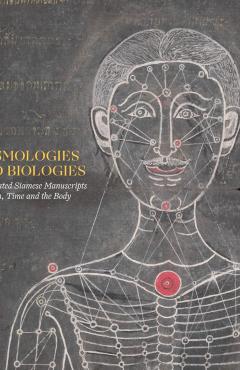
Justin McDaniel is the Edmund J. and Louise W. Kahn Endowed Professor of the Humanities at the University of Pennsylvania's Department of Religious Studies. His research focuses on Lao, Thai, Pali, and Sanskrit literature, Buddhist rituals, manuscript studies, and Southeast Asian history. He has authored multiple award-winning books and published over 100 articles and reviews. Education includes a BA from Boston College (1993), MTS from Harvard Divinity School (1998), MA and PhD in Sanskrit and Indian Studies from Harvard University (2001, 2003). His research explores intersections between Buddhism, material culture, and social history. Recent work includes studies on Siamese manuscripts and Thai Buddhist art. He has held grants from NEH, Mellon, Rockefeller, and others. Awarded teaching excellence at multiple institutions, McDaniel’s innovative courses like Existential Despair and Living Deliberately have been featured in national media. He serves as co-editor for Buddhism Compass and Journal of Lao Studies . Publications include Cosmologies and Biologies (2024), Wayward Distractions (2023), and Architects of Buddhist Leisure (2015), supported by NEH and Kyoto University. Forthcoming projects address Thai manuscripts and Buddhist biographies.

Dr. Rebecca Rainof is a Lecturer in the Department of English at the University of California, Berkeley, and an Associate Researcher. Her research focuses on Victorian and Modernist literature, interdisciplinary studies of literature and visual arts, and gender studies. She has held positions at Princeton University and the Catholic University of America. Her work explores topics such as midlife narratives in Victorian novels, Van Gogh’s engagement with Victorian literature, and Japanese American incarceration through familial memory. Her book The Victorian Novel of Adulthood (2015) examines alternative novelistic traditions. Her recent research includes contributions to the Santa Barbara Museum of Art’s 2022 exhibition Through Vincent’s Eyes: Van Gogh and his Sources . She has published on George Eliot, Woolf, and the intersections of art and literature. Her writings on her mother’s experience during WWII Japanese American incarceration appear in Hyphen: Asian America Unabridged and Literary Imagination . Rainof’s grants and fellowships include the Princeton Mellon Fellowship (2018) and the Curran Fellowship (2015). Her teaching and writing emphasize creative nonfiction, feminist literary theory, and pedagogical innovation. Her current projects include a book manuscript on Van Gogh’s literary adaptations and a family memoir rooted in Heart Mountain’s history.

Mimi Yiengpruksawan is a Professor of History of Art at Yale University, affiliated with the Department of East Asian Languages and Literatures, the Council on East Asian Studies, the Council on Southeast Asian Studies, and the Program in Medieval Studies. She holds a Ph.D. from UCLA (1988) and joined Yale in 1990, achieving tenure in 1998. Her research focuses on Buddhist art in nonmodern Japan and Eurasian cultural exchanges, emphasizing cross-regional and interdisciplinary approaches to study contact-driven cultural formation. Her academic work includes two major manuscripts: Michinaga’s Peacocks: A Heian World in Transition (examining exogenous influences on Kyoto’s art) and Kyoto in the Twilight of the Dharma (focusing on eschatological patronage). She also explores early modern Japanese global interactions, analyzing visual production during the 'Nanban' period. Recent research bridges environmental history with art, linking the 1006 supernova and Buddhist prophecies to artistic developments. Key publications include analyses of Buddhist iconography, transnational art networks, and transcultural architecture. She is a leading figure in rethinking Heian Japan’s cultural interconnectedness, challenging isolationist narratives through material evidence and primary sources.
Ana Paulina Leeمشاهده پروفایل
استادیار
Ana Paulina Lee is an Assistant Professor of Writing and Digital Humanities in the Comparative Literature, English, and Creative Writing Department at the American University of Paris. She joined AUP in 2025 after teaching Latin American literature and culture at Columbia University for eight years and serving as a Mellon Postdoctoral Fellow at Tulane University. Her interdisciplinary scholarship bridges literature, history, law, and urban studies with particular focus on marginalized narratives in the Americas. Ph.D. from University of Southern California M.A. from New York University B.A. from Binghamton University Professor Lee's research examines how stories—archival, fictional, oral—shape legal imagination, social life, and urban experience in the Americas. She specializes in the intersections of magic, law, and literature in Latin America, with particular focus on Asian and African diasporas in Brazil. Her work traces how narrative functions as both historical record and catalyst for social transformation, exploring themes of slavery, emancipation, colonial legacies, and urban memory. She approaches these topics through interdisciplinary lenses combining literary analysis with histories of labor, migration, and performance. Lee's recent publications reveal a consistent focus on marginalized narratives and their impact on social structures. Her scholarship connects legal history with cultural production, showing how magical thinking and narrative practices shape urban spaces and social relations. Works like 'Urban Sorcery, Segregation, and Spectacle in Twentieth-Century Rio de Janeiro' and 'Black Magic City' demonstrate her innovative approach to understanding the relationship between occult logics and legal frameworks in Brazilian contexts. Her research on diasporic communities, particularly Chinese and Japanese experiences in Latin America, contributes significantly to transnational and comparative race studies. David B. Larson Fellowship in Health and Spirituality, Kluge Center, United States Library of Congress (2025-2026) National Endowment for the Humanities Fellowship (2025) Social Sciences Research Council, Inaugural Recipient of Interdisciplinary Projects in the Social Sciences (2020-2023) Institute for Ideas and Imagination Fellowship, Columbia University in Paris, France (2021-2022) Provost's Tsunoda Senior Fellowship, Visiting Scholar, Waseda University, Tokyo, Japan (2019) Heyman Center Fellow, The Heyman Center for the Humanities, Columbia University (2017-2018) Fulbright, Lisbon, Portugal (2013-2014) Professor Lee's scholarly activities have been generously supported by major research grants from the National Endowment for the Humanities, the Social Sciences Research Council, and the Library of Congress. Her work demonstrates a commitment to interdisciplinary approaches that bridge humanities and social sciences, particularly through projects examining intersections of race, migration, and cultural production in the Americas. Her publication 'Socially Engaged Oral History Pedagogy Amid the COVID-19 Pandemic' indicates a strong commitment to innovative teaching methods and community-based research. While specific details about current advisees aren't provided, her research program suggests engagement with graduate students interested in diaspora studies, urban history, and literary-cultural analysis. Though not explicitly mentioned in the available information, Professor Lee's research on urban spaces, magic, and law in Brazil likely involves collaborative work with scholars across disciplines. Her participation in centers like the Institute for Ideas and Imagination at Columbia University suggests engagement with interdisciplinary research communities focused on global cultural production and social transformation. Her work contributes to ongoing conversations about how narrative practices shape legal frameworks and social structures in the Americas, particularly regarding racial formation and diasporic experiences.
Robert L. Chard is a Professor of Chinese Classics and Tutorial Fellow in Chinese at St Anne's College, University of Oxford. He is affiliated with the China Centre, a leading institution for East Asian studies. His research focuses on the cultural history of Confucianism, Confucian ritual studies (禮學), and the intersection of religion, politics, and military history in early China and premodern East Asia. He teaches courses on classical Chinese texts, historical methodologies, and Chinese religious traditions. His recent scholarship explores Confucian ritual authority in early China, the role of Confucian temples in Japanese domain (han) education systems during the Tokugawa period, and transnational intellectual exchanges between China and Japan. He has published extensively on topics such as ritual practices, temple symbolism, and the socio-political dimensions of Confucian learning. While no specific grants or awards are listed, his work demonstrates deep engagement with primary sources and cross-cultural analysis. He advises students in classical Chinese studies and oversees tutorial programs at St Anne's College.
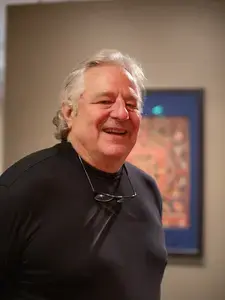
Academic Overview: Todd Lewis is a Distinguished Professor of Arts and Humanities at the College of the Holy Cross, holding the Monsignor Edward G. Murray Professorship. He specializes in Newar Buddhism, Himalayan religions, and the intersections of ecology and religion. Lewis earned his Ph.D. in Religion from Columbia University and has conducted extensive fieldwork in Nepal. Education: Ph.D. in Religion, Columbia University Research Interests: Lewis focuses on Buddhist narratives, ritual practices, and the role of merchants in religious history. His work explores Newar Buddhism, Himalayan cultural history, and the application of religious frameworks to contemporary issues like ecology. Grants & Leadership: Lewis directed six NEH summer institutes for educators, emphasizing Himalayan studies and Buddhist traditions. He has received fellowships from the Guggenheim Foundation, National Endowment for the Humanities, and others. Labs/Teams: Active in Holy Cross' Asian Studies and Environmental Studies programs. Co-founded the Journal of the North American Japanese Garden Association and serves on editorial boards for Journal of Buddhist Ethics and Religions .
- Buddhism
- Hinduism
- East Asian Religions
- +۳ مورد دیگر
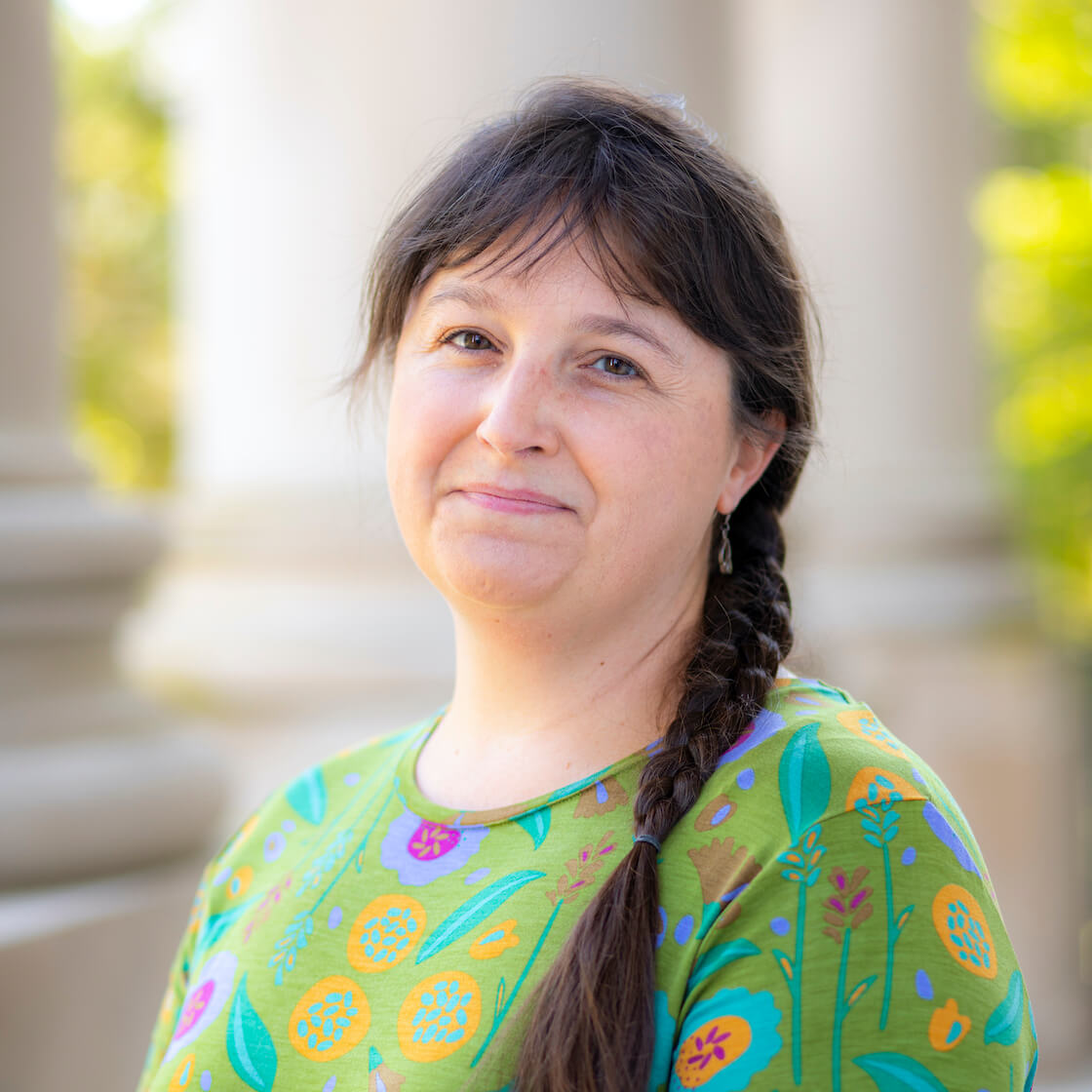
Maryanne A. Rhett serves as Professor and Chair of the Department of History and Anthropology at Monmouth University, where her scholarship bridges modern Middle Eastern and Islamic history with popular culture, nationalism, and world history through the lens of comics and graphic narratives. She actively shapes historical pedagogy as Director of the Graduate Program in History and through leadership roles in the World History Association. Her educational foundation includes: Ph.D. from Washington State University Dr. Rhett's research examines how sequential art mediates cultural discourse, particularly in representations of Islam, nationalist movements, and global historical events. She investigates the pedagogical power of comics in world history education while analyzing Orientalist tropes and migration narratives across visual media. Her work consistently connects academic historiography with public engagement through accessible formats. Her publication trajectory reveals evolving scholarly focus: early work established foundational analysis of Islamic representation in comics (2012-2014), followed by pedagogical applications in world history classrooms (2007, 2013), and recent expansion into migration narratives and contemporary superhero discourse (2021). This progression demonstrates increasing interdisciplinary reach while maintaining core commitments to postcolonial theory and visual cultural analysis. Dr. Rhett mentors graduate students as Director of the History Master's Program, supervising theses and comprehensive exams annually. Her administrative leadership extends to departmental chair duties and active participation in the Monmouth University Biennial Conference on Race, though specific grant funding details remain unmentioned in available records. Professional engagement includes ongoing service as Secretary (2013–present) and Program Chair (2009–present) for the World History Association, reflecting sustained commitment to global historical scholarship and pedagogy.
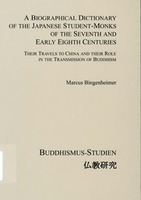
Marcus Bingenheimer is an Associate Professor in the Department of Religion at Temple University, Philadelphia. His academic journey includes an MA in Sinology and a Dr.phil in History of Religions from Würzburg University, Germany, along with an MA in Communication Studies from Nagoya University, Japan. He has held teaching and research positions at institutions across Asia and Europe, including Dharma Drum in Taiwan (2005–2011) and visiting roles at universities in Korea, Japan, Thailand, France, and Singapore. His research focuses on Buddhist Studies and Digital Humanities, with specializations in the history of East Asian Buddhism, early Buddhist sutra literature (Āgama/Nikāya), and computational methods in religious studies. Key projects include the digitization of Buddhist temple gazetteers, historical social network analysis of Chinese Buddhism, and the digital edition of the Song Gaoseng Zhuan. He has also pioneered the application of GIS and stylometric analysis to religious texts. Dr. Bingenheimer has authored or edited over 20 books and numerous articles, including Island of Guanyin (2016) and Studies in Āgama Literature (2011). He directs major research initiatives like the Database of Medieval Chinese Syntax and co-leads the FROGBEAR research cluster on Religion and Technology. His work bridges traditional scholarship with cutting-edge digital tools, emphasizing open access and collaborative projects in Buddhist cultural heritage preservation. Grants and fellowships include a Temple University Presidential Grant for the Sutra2DNA project and an ACLS Translation Grant for his work on Wang Rixiu’s Pure Land essays. His lab activities involve projects like the Nanyang GIS data pool for Southeast Asian Chinese sites and the Digital Archive of Buddhist Temple Gazetteers.
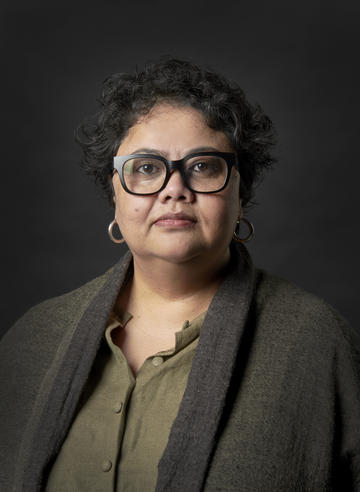
Mallica Kumbera Landrus serves as Associate Professor of Indian Art at the University of Oxford while holding dual leadership roles as Keeper of Eastern Art and Senior Curator of Indian, Himalayan and Southeast Asian Art at the Ashmolean Museum of Art and Archaeology. Her career uniquely integrates academic scholarship with museum curation, focusing on South Asian visual and material culture across five millennia of Asian artistic development. Her research centers on intersections of Indian art, architecture, religion, politics, and socio-economics, with particular expertise in cultural translation phenomena. She examines colonial-era built environments created by Portuguese powers in Goa and hybrid transnational cultures emerging from diasporic communities, frequently utilizing the Ashmolean's extensive collections for empirical analysis. Publication trends reveal consistent thematic focus on Goan architectural history under Portuguese rule, modern Indian art movements (especially Bengal School modernism), and gender representation in visual culture. Her scholarly output bridges art historical methodology with postcolonial theory, emphasizing religious conversion dynamics, diasporic identity formation, and imperial material legacies across 12 peer-reviewed works from 2003-2015. Landrus teaches specialized courses including 'Trade and Exchange in Modern South Asia' (MPhil/MSc) and 'Encountering South Asian Sculpture' (BA), supervising graduate research that leverages Oxford's collections. Professional engagements include Fellowship at St Cross College, Trustee position with the Charles Wallace India Trust, and editorial board membership for Universität Bonn's Studies in Asian Art and Culture Series.
Professor Joshua S. Mostow is a scholar of pre-modern Japanese literature and art, specializing in text-image relationships, Heian-period studies, and gendered cultural constructions. He holds a professorship at the University of British Columbia’s Department of Asian Studies (Faculty of Arts), where he also serves as Acting Director of Language Programs. Mostow earned his doctorate in Comparative Literature and Literary Theory from the University of Pennsylvania, with additional studies at International Christian University (Tokyo), Université de Paris, and Gakushuin University. His career includes visiting roles at institutions like Heidelberg University and the University of California, Berkeley. His research focuses on intersections of literature and visual arts, particularly in Japanese pre-modern contexts. Key interests include the ideological construction of the Heian period, women’s writing traditions, and the role of sexuality in cultural identity. Major works include *Courtly Visions: The Ise Stories and the Politics of Cultural Appropriation* (2014) and *Pictures of the Heart: The Hyakunin Isshu in Word and Image* (1996). He has received prestigious awards such as the Japan Foreign Minister’s Commendation (2017) and induction into the Royal Society of Canada (2015). Mostow has authored/co-authored over 20 books, edited volumes, and numerous articles across Japanese literature, art history, and cultural studies. His work spans medieval commentaries, Edo-period print culture, and modern reception histories. He frequently lectures internationally on topics like gender representation in classical texts and the visual legacy of *The Tale of Genji*. Grants and fellowships include support from the Sainsbury Institute, Japan Foundation, and SSHRC (Canada). His contributions to Japanese studies include co-editing *The Columbia Companion to Modern East Asian Literature* (2003) and curating exhibitions on Rinpa aesthetics and Edo-period shunga. Scholarly activities further include invited lectures at institutions worldwide and participation in major international conferences.