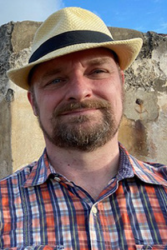
Simo Vanni is an Adjunct Professor at the University of Helsinki's Department of Physiology, specializing in neuroscience and computational modeling. He serves as a supervisor for the Doctoral Programme Brain & Mind and Doctoral Programme in Clinical Research, affiliated with HUS Neurocenter. His work bridges neuroimaging (fMRI, MEG) with spiking network simulations to study visual cortex dynamics. University: University of Helsinki Department: Physiology Supervisor Roles: Doctoral Programmes Brain & Mind and Clinical Research Collaboration: HUS Neurocenter Vanni's research focuses on: Computational neuroscience and cortical modeling Visual perception and neural processing Functional connectivity in post-stroke recovery Biophysical mechanisms of neural signal transfer Integration of neuroimaging and neural simulations Neuroplasticity in visual field rehabilitation Recent publications emphasize digital brain research trends, spiking network models, and neuroimaging applications. His work appears in journals like Imaging Neuroscience , Frontiers in Computational Neuroscience , and Cerebral Cortex . Key collaborations include researchers from multiple institutions across Europe and North America. Vanni contributes to organizing neuroscience events such as the 10th EBRAINS Baltic-Nordic Summer School. He leads the 'Computational modeling of primate visual cortex' project (2024-2028) and participates in a cerebral small vessel disease study (2016-2025). Labs/teams include: Neurocenter Finland Doctoral Programme Brain & Mind Computational Neuroscience Research Group EBRAINS Baltic-Nordic Summer School Organizing Committee
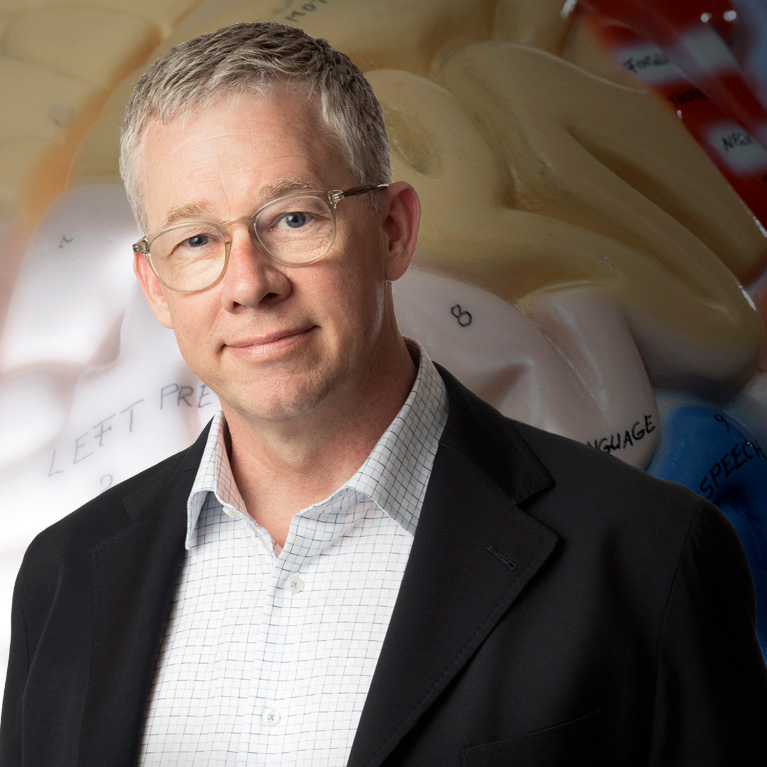
Mary Beth Nebel, PhD is a Research Scientist in the Center for Neurodevelopmental and Imaging Research at Kennedy Krieger Institute and holds an appointment as Assistant Professor in the Department of Neurology at The Johns Hopkins University School of Medicine. Dr. Nebel earned her B.S.E. in Biomedical Engineering from Duke University's Pratt School of Engineering and completed her doctoral degree through the Joint Department of Biomedical Engineering at the University of North Carolina at Chapel Hill and North Carolina State University. Following a post-doctoral fellowship at Kennedy Krieger Institute from 2010-2015, she joined the faculty as a research scientist. Her research program focuses on examining how the brain dynamically interprets sensory information to produce appropriate actions, with particular emphasis on how this process is altered in children with Autism Spectrum Disorder (ASD). She has developed innovative methods for using functional MRI data to characterize brain organization, specifically investigating functional connectivity between visual and motor brain regions. Dr. Nebel's publication record demonstrates consistent productivity in high-impact neuroscience journals, with her most recent work published in 2018. Her research shows a progression from methodological development in fMRI analysis to application of these methods in understanding autism neurobiology. NIMH Career Development Award (K01 MH109766-01) for studying longitudinal development of visual-motor connectivity in infants at high risk for ASD Dr. Nebel collaborates extensively with researchers at Kennedy Krieger Institute on developing movement-based intervention methods for enhancing functional connectivity. Her advising likely focuses on students interested in neuroimaging, autism research, and biomedical engineering applications in neuroscience. The Center for Neurodevelopmental and Imaging Research provides state-of-the-art facilities for conducting neuroimaging research with both children and adults.
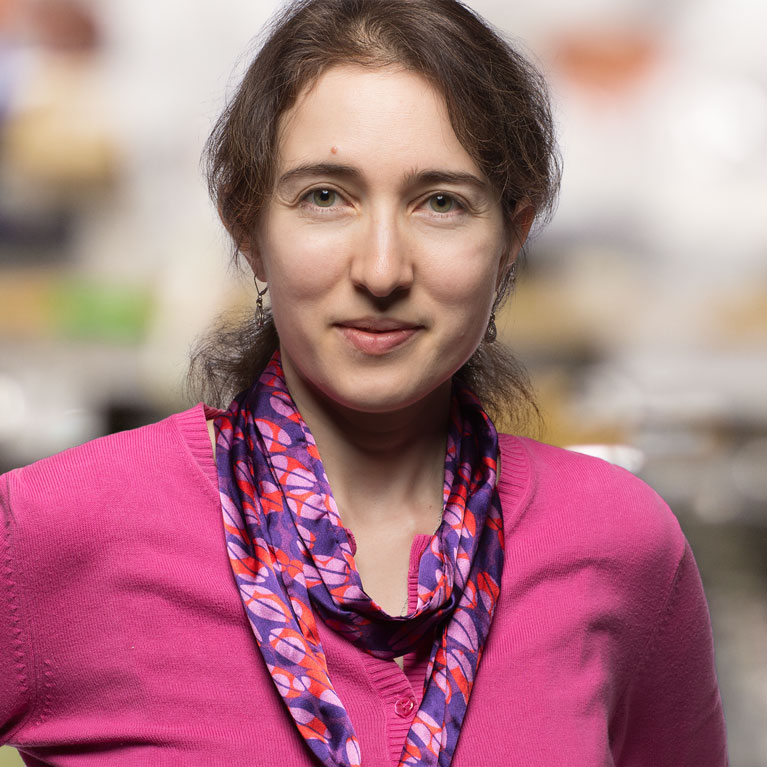
Dr. Yi Gu serves as an Investigator leading the Spatial Navigation and Memory Unit within the Division of Intramural Research at the National Institute of Neurological Disorders and Stroke (NINDS), part of the National Institutes of Health. She received her B.S. and M.S. degrees from Tsinghua University and completed her Ph.D. at Johns Hopkins University under Dr. Richard Huganir, focusing on neurotransmitter receptor trafficking. Dr. Gu conducted postdoctoral research with Dr. David Tank at Princeton University, investigating medial entorhinal cortex function during spatial navigation using in vivo imaging and virtual reality paradigms. Her research program centers on understanding the neural basis of spatial navigation and memory, with particular emphasis on the medial entorhinal cortex (MEC). The lab employs advanced in vivo optical approaches combined with virtual reality behavioral paradigms in mouse models to investigate how spatial information is represented, computed, and stored in neural circuits. Key research areas include: MEC circuit mechanisms for spatial representation Encoding of spatial memory in the MEC MEC interactions with other brain regions MEC dysfunction in Alzheimer's Disease Recent publications demonstrate the lab's leadership in uncovering how the entorhinal spatial map integrates visual landmarks, how multisensory information is processed in the MEC, and how consistent spatial maps support memory formation. The lab's work bridges molecular, cellular, and systems neuroscience to address fundamental questions about spatial cognition and its impairment in neurological disorders. Dr. Gu maintains active collaborations with researchers at MIT, Washington University School of Medicine, and Academia Sinica in Taiwan. Her lab currently includes multiple postdoctoral fellows, postbaccalaureate researchers, and international collaborators working at the intersection of neuroscience, engineering, and computational modeling.
Dr. Ilona Kotlewska is an assistant professor at the Institute of Experimental Psychology, Jagiellonian University, Kraków. A neurobiologist and neuropsychologist with a PhD in biological sciences, she specializes in brain imaging techniques and the neurobiological basis of attention and self-awareness. Education: Graduate of the College of Interfaculty Individual Studies in Mathematics and Natural Sciences, University of Warsaw. Research: Focuses on visual, auditory, and tactile attention mechanisms, ownership neural correlates, and brain oscillations. Her recent work includes studies on theta oscillations, attentional selectivity, and self-face processing, published in journals like Scientific Reports and Journal of Cognitive Neuroscience . She has received prestigious awards including the Fulbright Junior Research Award, START Scholarship, and multiple Rector's Awards for scientific and organizational achievements. Scientific Awards: Rector's Award for Outstanding Scientific Achievements (2023), Fulbright Junior Research Award (2017–2018), START Scholarship (2018), ETIUDA Scholarship (2018). Community Work: Organized the Neuronus Neuroscience Forum and supported Ukrainian refugees, earning the Rector's Award for Organizational Achievements (2023).
Timothy Rogers is a Professor in the Department of Psychology at the University of Wisconsin. His research focuses on the intersection of semantic cognition , cognitive neuroscience , and artificial intelligence . Based in Madison, Wisconsin, he operates the Rogers Lab at the Discovery Building (330 N. Orchard Street), utilizing advanced neuroimaging techniques like 7T-fMRI to decode semantic representations in the brain. Education: BA in Psychology and English Literature (University of Waterloo), PhD in Psychology (Carnegie Mellon University) His work explores semantic control mechanisms , neural coding of concepts, and human-machine collaboration in creative tasks. Recent projects investigate LLM alignment with human judgment, context inference , and representational motifs in perception. Research trends show integration of multivariate decoding , sparse modeling , and collective intelligence to analyze semantic organization in cognition and neural systems. His lab applies these methods to problems in health AI , educational technology , and neurodegenerative disorders . Contact: 1.608.316.4339 , Discovery Building, Madison, WI 53715.
Mauro Adamo is a Professor in the Department of Chemistry at the Royal College of Surgeons in Ireland (RCSI), with expertise in synthetic organic and medicinal chemistry. He has held progressive academic positions at RCSI since 2002, including Lecturer (2002–2007), Senior Lecturer (2007–2010), and Professor (2010–present). He obtained his PhD from the University of Sheffield (2001) and a Doctoral Degree from the University of Florence (1997). His research focuses on developing synthetic methodologies for drug discovery and production, with emphasis on enantioselective fluorination (including 18 F labeling), phase transfer catalysis, and hypervalent sulfur chemistry. He leads the MFAA research group, which has published over 60 papers and secured 5 patents. Key research areas include: Design of novel organocatalysts for asymmetric synthesis Continuous flow processes for pharmaceutical manufacturing Radiolabeled compounds for medical imaging Sustainable synthesis of HIV therapeutics Adamo's recent publications show interdisciplinary collaboration, with chemical research ( e.g. , desulfurative reactions, nucleoside synthesis) complemented by clinical co-authored works in neurosurgery. Chemistry articles emphasize green synthesis and catalytic innovation, while neurosurgery contributions focus on pediatric conditions and trauma management. He has led 51 funded projects, including major grants from Science Foundation Ireland, Enterprise Ireland, and Horizon 2020. Notable projects: Novel Therapeutics Targeting FcgRIIa receptor (2024–2026) Preparation of 18 F-labeled RNAs (2022–2023) Enantioselective fluorination for agrochemical/drug labeling (2018–2021) Flow chemistry processes for Paricalcitol synthesis (2018–2021) Professional memberships include the American Chemical Society and Royal Society of Chemistry. He has supervised multiple PhD/MSc students in organic synthesis and medicinal chemistry.
Ralf Wessel serves as Professor of Physics in the Department of Physics at Washington University in St. Louis within the College of Arts and Sciences. His interdisciplinary research bridges physics, neuroscience, and artificial intelligence to investigate fundamental principles of neural computation across biological and artificial systems. His educational background includes a PhD from the University of Cambridge and an MS from the Technical University Munich. These foundations support his innovative approach to complex neural systems. Wessel's research program centers on three interconnected pillars: First, Structure and Principles in Neural Population Activity, where his group applies advanced mathematical tools to uncover hidden structure in high-dimensional neural recordings. Second, Synergy between AI and Brains, leveraging deep neural networks to model emergent coding principles in biological systems. Third, Computational Aesthetics of Mosaics, applying neuroscience and AI to decode aesthetic appreciation through color, texture, and pattern analysis. This work spans computational neuroscience, machine learning, and the intersection of art with quantitative science. Analysis of his recent publications reveals a dominant focus on neural criticality, population coding dynamics, and AI-brain convergence. His work consistently demonstrates how self-organized criticality governs neural information processing, with increasing integration of deep learning frameworks to model biological intelligence. The research trajectory shows progression from fundamental neural dynamics to applied AI-brain interfaces. His scientific recognition includes: Outstanding Faculty Mentor Award (2007) from the Graduate Student Senate for exceptional guidance of graduate students in Arts and Sciences Wessel actively secures competitive research funding, including a 2024 NIH grant with Dr. Franken investigating video processing mechanisms in artificial and biological brains. His mentoring excellence is evidenced by the 2007 award, and he continues to shape graduate education through courses like Mechanics (Physics 411). The NIH grant exemplifies his success in translating theoretical neuroscience into funded interdisciplinary research. He leads a collaborative research group that combines advanced neurotechnology with computational modeling, working across physics, neuroscience, and computer science to address fundamental questions about intelligence. Current projects integrate large-scale neural recordings with deep learning frameworks to decode information processing in biological systems.
Professor Caspar M. Schwiedrzik is a Research Professor in the Department of Cognitive Neurobiology at the Faculty of Biology and Biotechnology, Ruhr University Bochum. He serves as a Principal Investigator at the Research Department of Neuroscience, where he leads a research group investigating the neural basis of learning and cognitive flexibility. His research focuses on understanding how organisms adapt to changing environments through perceptual learning mechanisms, with particular emphasis on the visual system. Professor Schwiedrzik employs a comparative approach across species using multimodal techniques including electrophysiology, neuroimaging, and computational modeling to identify fundamental principles of neural adaptation. His work bridges cognitive neuroscience, vision science, and computational approaches to unravel how the brain detects environmental changes and adjusts behavior accordingly. Analysis of recent publications (2015-2024) reveals a consistent research trajectory focused on visual perception, face processing, and learning mechanisms. The work demonstrates increasing methodological sophistication with a shift toward more complex questions about predictive coding, neural plasticity, and cross-species comparisons. Key trends include growing emphasis on top-down processing mechanisms, the role of statistical learning in visual adaptation, and the neural basis of perceptual generalization. Professor Schwiedrzik has established productive collaborations with leading neuroscience institutions, as evidenced by co-authorships with researchers from institutions including New York University. His research program appears well-funded, supporting multiple high-impact publications annually in top neuroscience journals. The lab maintains strong international connections while being firmly rooted in the neuroscience research ecosystem at Ruhr University Bochum. The lab focuses on understanding the brain's capacity for adaptation to environmental changes, particularly through visual learning mechanisms. Current projects investigate how predictions shape visual processing, how perceptual learning generalizes across different effectors, and how neural representations support flexible decision-making. This research provides fundamental insights into both normal cognitive function and potential pathways to maladaptive states when learning mechanisms fail.
Matthias Kaschube is a Professor in the Faculty of Computer Science and Mathematics at Goethe University Frankfurt and a Senior Fellow at the Frankfurt Institute for Advanced Studies (FIAS). His research group focuses on understanding how the brain forms efficient representations of sensory environments and internal states through dynamic neural processes. He maintains active collaborations with leading neuroscience institutions including the University of Minnesota, Max Planck Florida Institute for Neuroscience, and Technion. Dr. Kaschube completed his physics studies at Goethe University Frankfurt and Georg-August-University Göttingen, graduating in 2000 and earning his doctoral degree in physics in 2005. His doctoral work was conducted at the Max Planck Institute for Dynamics and Self-Organization under Fred Wolf and Theo Geisel. He then held a Bernstein Fellowship before becoming a Theory Fellow at Princeton University's Lewis Sigler Institute from 2006-2011. In 2011, he joined Goethe University as Professor for Computational Neuroscience. His research spans four primary areas: the developmental emergence of cortical representations, flexible representations underlying learning and creativity, cognitive maps and representational spaces, and analysis methods for neural data. His group combines dynamic models of neural circuit function with neural data modeling techniques in close collaboration with experimental groups, creating an interdisciplinary interface between computer science, physics, biology, and AI. Notably, his work has revealed highly structured cortical networks prior to sensory experience that share similar architectural principles across sensory and association cortices. Analysis of his recent publications shows a consistent focus on understanding how endogenous neural activity patterns develop into reliable cortical representations through experience. His work spans multiple scales from molecular and cellular mechanisms to whole-brain functional organization, with particular emphasis on developmental processes in visual and auditory cortices. His methodological contributions include advanced techniques for analyzing chronic imaging data, tracking chromatophores in cuttlefish, and characterizing latent spaces in deep neural networks. Lewis Sigler Theory Fellowship (2006-2011) Bernstein Fellowship (2005) Professor Kaschube actively mentors a large group of PhD students including Lorenzo Butti, Jonas Elpelt, Santiago Galella, Deyue Kong, Maurycy Miekus, Ana Pamela Osuna Vargas, and Sigrid Trägenap. His research has been supported by multiple grants including NIH grants EY011488 and EY026273, Bernstein Focus Neurotechnology grant 01GQ0840, and BMBF project D-USA-Verbund: SpontVision. His group currently pursues three major research directions: the origin of distributed modular activity in neocortex, quantitative growth models for cuttlefish based on physical models, and the role of self-organization in linking endogenous cortical networks to sensory input.
Michael C. Crair is the William Ziegler III Professor of Neuroscience and Professor of Ophthalmology & Visual Science at Yale University, where he also serves as Vice Provost for Research. He holds primary appointments in the Department of Neuroscience and secondary appointments in Ophthalmology & Visual Science, with additional affiliations across multiple neuroscience programs including the Interdepartmental Neuroscience Program, Kavli Institute for Neuroscience, Swartz Program in Theoretical Neurobiology, Wu Tsai Institute, and Yale Combined Program in the Biological and Biomedical Sciences (BBS). Dr. Crair's educational background includes: PhD in Physics from University of California, Berkeley (1991) MA in Physics from University of California, Berkeley (1987) AB in Physics from University of California, Berkeley (1985) Postdoctoral training in physics and neuroscience at Kyoto University and Kyoto Prefectural Medical School (1993) Postdoctoral training in neuroscience at University of California, San Francisco (1997) His research focuses on neural activity in the developing brain, with particular emphasis on how spontaneous neuronal activity contributes to normal brain development. Dr. Crair has made fundamental contributions to understanding brain circuit development through the development and application of advanced imaging techniques. His laboratory investigates the mechanisms by which spontaneous activity is generated and how it shapes brain circuit development, with specific interests in visual system development and neural plasticity. Analysis of his recent publications reveals a strong focus on neural connectivity, spontaneous activity patterns, and imaging methodologies. His work spans multiple model systems and employs cutting-edge techniques including fMRI, calcium imaging, and dual-modal imaging approaches to study brain development and function at various scales. Dr. Crair has received numerous honors including: Esther A. and Joseph Klingenstein Foundation Fellowship Award in the Neurosciences Marc Dresden Excellence in Graduate Education Award NARSAD-Sidney R. Baer Jr. Foundation Young Investigator Award Alfred P. Sloan Foundation Research Fellow John Merck Fund Scholar March of Dimes Foundation's Basil O'Connor Fellow Administratively, Dr. Crair has directed Yale's Vision Core Program and the Graduate Program in Neuroscience. He served as Deputy Chair of the Department of Neuroscience from 2015-2017, then as Deputy Dean for Scientific Affairs (Basic Science Departments) at the School of Medicine from 2017-2020 before becoming Vice Provost for Research at Yale University. His laboratory continues to maintain an active research program examining fundamental mechanisms of brain circuit development.
John Reynolds, PhD is a Professor at the Salk Institute for Biological Studies, holding the Fiona and Sanjay Jha Chair in Neuroscience. He leads the Systems Neurobiology Laboratory where he investigates the neural mechanisms underlying vision, perception, and conscious awareness. Reynolds earned his BS in Economics from the University of Pennsylvania and his PhD in Cognitive and Neural Systems from Boston University. He completed his Intramural Research Fellowship at the Laboratory of Neuropsychology, National Institute of Mental Health. Dr. Reynolds' research focuses on understanding how the brain constructs our perception of the external world. His laboratory develops computational models to explain neural mechanisms of vision and tests these using neurophysiology, optogenetics, and visual psychophysics. Key discoveries include developing an influential computational model of attention, demonstrating how brain activity fluctuations affect perception, and revealing that neural activity in the visual system is organized as traveling waves that regulate perceptual sensitivity. Analysis of his recent publications shows a strong focus on visual perception mechanisms, with particular emphasis on cortical layer-specific processing, traveling brain waves, and the relationship between neural activity patterns and perceptual outcomes. His work increasingly incorporates aging research, examining how cognitive decline relates to neural changes in the prefrontal cortex and visual system. 2022 AAAS Fellow - Recognized for distinguished efforts to advance science Reynolds has mentored numerous students and postdoctoral researchers who have gone on to establish independent careers, including Dr. Zachary Davis (now at University of Utah), Dr. Tom Franken (Washington University), and Dr. Anirvan Nandy (Yale University). His research is supported by significant funding, including a $1.2 million award from the Larry L. Hillblom Foundation to study age-related cognitive decline and its relationship to mitochondrial function and neuron metabolism. The Reynolds Lab maintains a collaborative environment with multiple research scientists, postdoctoral fellows, and students working together using advanced techniques including neurophysiology, computational modeling, visual psychophysics, two-photon microscopy, and optogenetics to decipher the neural mechanisms enabling perception and awareness.
Tatyana Sharpee is a Professor at the Salk Institute for Biological Studies, where she leads the Computational Neurobiology Laboratory. She holds the Edwin K. Hunter Chair and is affiliated with the Crick-Jacobs Center for Theoretical and Computational Biology and the Center for Theoretical Biological Physics at UCSD. Her research focuses on understanding how the brain processes information despite constant changes in its components and environment. Dr. Sharpee's research interests center on computational principles of sensory processing, particularly how the brain creates robust representations of the external world. Her work integrates methods from statistical physics, mathematics, and information theory to study neural coding in vision, audition, and olfaction. She has made significant contributions to understanding how neural feature selectivity is shaped by natural stimuli statistics and how invariant representations are achieved despite neural variability. Her recent publications reveal groundbreaking discoveries in odor perception (structured by a hyperbolic metric similar to Pringles potato chips), visual processing (how neurons combine selectivity for shape and texture), and theoretical frameworks for understanding neural coding. Her lab's work on Maximally Informative Dimensions has revolutionized how scientists analyze neural responses to complex stimuli. 2024 Prebys Research Hero 2022 Delano Prize in Computational Biology from ASBMB American Physical Society Fellow, 2018 National Science Foundation Career Award, 2013 WM Keck Foundation Research Excellence Award, 2009 2009 McKnight Scholar Award Ray Thomas Edwards Foundation Career Award, 2008 Alfred P. Sloan Research Fellow, 2008 Dr. Sharpee mentors numerous graduate students and postdoctoral fellows, and her lab develops open-source computational tools widely used in neuroscience. Her research has significant implications for understanding neurological disorders including autism, Alzheimer's disease, schizophrenia, depression, and anxiety, with potential applications in brain-machine interfaces and novel treatments for sensory disorders.
Dr Daniel Roberts is a Senior Lecturer in the Department of Psychology within the Faculty of Health and Life Sciences at the University of Liverpool. His research focuses on the neurocognitive bases of visual and language processing, their interconnectedness, and how these processes become disrupted in conditions such as dyslexia, visual neglect, object agnosias, face recognition disorders, and semantic impairments. Dr Roberts completed his PhD in Cognitive Neuropsychology at the University of Manchester in 2010 under the supervision of Prof Matt Lambon-Ralph, following an MRes in Research Methods (2006) and BSc in Psychological Sciences (2005), also from the University of Manchester. PhD (2010): Cognitive Neuropsychology, University of Manchester MRes (2006): Research Methods, University of Manchester BSc (2005): Psychological Sciences, University of Manchester His research employs a multimethod approach including cross-population behavioral studies (individuals with brain damage, developmental disorders, and neurotypical individuals), neuroimaging, awake craniotomy, and visual psychophysics. Key areas of investigation include disorders of reading (developmental and acquired dyslexias), vision (e.g., neglect), object processing (agnosias), face recognition (prosopagnosia), semantics (e.g., dementias, HSVE), and bilingualism effects on visual and phonological processing in dyslexic readers. Dr Roberts' recent publications demonstrate a strong focus on dyslexia research, particularly examining visual and phonological processing impairments across different languages and orthographic depths. His work combines theoretical cognitive neuropsychology with practical clinical applications, aiming to develop better diagnostic tools and interventions. He has published in leading journals including Cognitive Neuropsychology, Annals of Dyslexia, Frontiers in Psychology, and Cerebral Cortex. As a supervisor, Dr Roberts works with several PhD students including Emma Austin (researching imagery in aphantasia), Rachel Dudley-Jones (studying substance use and neurocognitive processing in collaboration with Liverpool John Moores University), and Qi Zhou (investigating the role of language in arithmetic and algebraic operations in children). He serves as Module Coordinator for RESEARCH DISSERTATION IN PSYCHOLOGY (PSYC646) and RESEARCH METHODS AND STATISTICS (PSYC640), and teaches the RESEARCH PROJECT module (PSYC340). Emma Austin: Imagery in aphantasia (Co-supervisor: Dr Reshanne Reeder) Rachel Dudley-Jones: Substance use and neurocognitive processing (Co-supervisors: Dr Samantha Brooks, Prof Cathy Montgomery, Dr Kanayo Umeh, Prof Kate Cockcroft) Qi Zhou: Role of language in arithmetic and algebraic operation in children (Co-supervisors: Dr Jike Qin, Prof Jeong Jin Yu) Dr Roberts maintains active clinical collaborations through honorary research fellowships with The Walton Centre NHS Foundation Trust (since 2018), Central and North West London NHS Foundation Trust (since 2020), and The Hillingdon Hospitals NHS Foundation Trust (since 2020), focusing on stroke health informatics and improving neurosurgical interventions for brain tumor patients. He is a member of several professional organizations including the British Neuroscience Association, British Psychological Society, and Society for the Scientific Study of Reading.