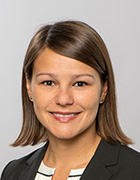
Pouya Bashivan is an Assistant Professor in the Department of Physiology at McGill University's Faculty of Medicine. His research focuses on developing computational models to explain and regulate neural responses during visual tasks requiring memory, combining machine learning, neuroscience, and cognitive science. Education : Ph.D. in Computer Engineering (2016), Postdocs in Machine Learning (2020) and Computational Neuroscience (2016-2020) His lab investigates: Topographical neural networks for visual cortex simulation Massively-multitask models for prefrontal cortex Saccade-driven visual exploration models Predictive hippocampus models for episodic memory Recent publications explore adversarial robustness, memory-augmented networks, and brain-state decoding. Current projects emphasize causal models, brain-AI alignment, and translating computational neuroscience into therapeutic applications. The lab is located in the McIntyre Medical Sciences Building, Room 1117, Montreal, Quebec.
Prof. Dr. Axel Mecklinger is a leading cognitive neuroscientist at Saarland University , specializing in the neurocognition of memory and language through spatiotemporal brain imaging (EEG/MEG/fMRI). His career spans over three decades, with significant contributions to understanding visual working memory , associative recognition , and memory development . Key research areas: Memory binding, ERP subsequent memory effects, novelty detection, and cognitive aging Major grants: DFG Research Groups, Collaborative Research Centers, and international collaborations with the Chinese Academy of Sciences Scientific leadership: Organized conferences, edited journals, and served as speaker for research training groups His recent work explores unitization in memory formation , cross-cultural differences in memory processing , and theta neurofeedback interventions . Awards include the Early Career Award of the German Psychophysiology Society (1992) and the European Federation of Psychophysiology Societies' Federation Prize (1994). Current projects investigate the neural mechanisms of semantic surprisal and memory plasticity in aging populations.
Jozien Goense is an Associate Professor at the University of Illinois at Urbana-Champaign (UIUC), holding joint appointments in the Department of Psychology and Department of Bioengineering. She is also affiliated with the Beckman Institute for Advanced Science and Technology and the Neuroscience Program. Her primary research focuses on biomedical imaging, particularly functional MRI (fMRI) and its applications in understanding neurovascular coupling and cortical layer-specific activity. She is recognized for contributions to high-resolution fMRI methodology and laminar imaging techniques. Her work integrates advanced MRI techniques with neurophysiological studies, often using non-human primate models to validate findings in human studies. She has pioneered layer-specific fMRI approaches to map activity across cortical layers, particularly in the motor and visual cortices. Her expertise includes ultra-high field MRI (7T+), BOLD signal modeling, and software development for neuroimaging analysis (e.g., LayNII). Key research themes include the physiological basis of BOLD responses, neurovascular coupling mechanisms, and the application of laminar fMRI to study brain function in health and disease. She has collaborated extensively with neuroscientists, engineers, and clinicians to advance imaging technologies and their translational potential. Publications highlight her contributions to understanding dopamine and acetylcholine effects on neurovascular responses, resting-state gamma-band abnormalities in schizophrenia, and the development of high-resolution imaging protocols. Her work bridges basic science and clinical applications, including studies on vascular contributions to dementia and neuropharmacology. She has received the Beckman Seed Grant as part of a Bioengineering Faculty team, supporting innovative research initiatives. Her lab employs cutting-edge imaging tools and multidisciplinary approaches to unravel brain function at cellular and systems levels.
Serge O. Dumoulin is a Professor of Perception, Cognition, and Neuroscience at Utrecht University and Vrije Universiteit Amsterdam. He leads the Computational Cognitive Neuroscience and Neuroimaging group at the Netherlands Institute for Neuroscience and serves as Director of the Spinoza Centre for Neuroimaging , a collaborative facility involving KNAW, AMC, VUMC, and VU Amsterdam. Education: M.Sc. in Biology (Utrecht University), Ph.D. in Neurology and Neurosurgery (McGill University) Research focuses on the intersection of perception, cognition, and neuroimaging, particularly the human visual system. He employs ultra-high field (7T) fMRI, computational modeling, and behavioral studies to explore neural mechanisms of visual perception, attention, and numerical cognition. His work has applications in clinical disorders and methodological advancements like the pRF method, used globally in 100+ institutions. Publications span neuroscience, neuroimaging, and cognitive processes, with a 2023 Advances in MRI Technology paper emphasizing gray-matter optimized fMRI. His 2018 Neuroimage article discusses systematic pRF variations, while a 2021 PNAS study links divisive normalization to visual hierarchy. Awards: Ammodo KNAW Award (2015), NWO Vidi/Vici grants, Neuroimage Editors' Choice Award (2013) Teaching includes courses at Vrije Universiteit Amsterdam on perception, neuroscience, and fMRI data analysis. He emphasizes coding (Matlab/Python) in student internships.
Peter J. Thomas is a Professor in the Department of Mathematics, Applied Mathematics, and Statistics at Case Western Reserve University's College of Arts and Sciences, with secondary appointments in Electrical Engineering and Computer Science, Cognitive Science, and Biology. He serves as Co-Editor-in-Chief of Biological Cybernetics and leads the Computational Biomathematics Laboratory. Primary Affiliation: Department of Mathematics, Applied Mathematics, and Statistics Secondary Affiliations: Department of Electrical Engineering and Computer Science, Department of Cognitive Science, Department of Biology Leadership: Co-Editor-in-Chief of Biological Cybernetics Thomas earned his B.A. in Physics and Philosophy from Yale University (1990), M.S. in Mathematics from the University of Chicago (1994), and both M.A. in Conceptual Foundations of Science and Ph.D. in Mathematics from the University of Chicago (2000). His research spans mathematical neuroscience, theoretical biophysics, and information theory applications to biological systems. Thomas specializes in understanding how noise and stochasticity affect neural coding, developing mathematical frameworks for gradient sensing in cells, and applying graph theory to biological networks. His work on stochastic shielding has provided novel approaches to simplifying complex stochastic models while preserving essential dynamics. His research bridges theoretical mathematics with experimental neuroscience through collaborations with the Chiel laboratory and others. Thomas's recent publications demonstrate a strong focus on stochastic oscillators, sensory feedback mechanisms, and information theory applications to biological systems. His work consistently develops novel mathematical frameworks to address specific biological questions, with significant contributions to understanding phase dynamics in neural oscillators and information processing in biochemical signaling. Core Fulbright Scholar Program (2013) Simons Fellow in Mathematics Program (2014) Multiple NSF grants as Principal Investigator Co-Editor-in-Chief of Biological Cybernetics Thomas has mentored numerous students at all levels, from undergraduates to postdoctoral researchers. His laboratory has produced successful scholars who have gone on to faculty positions at institutions like New Jersey Institute of Technology and the University of Nevada, Reno. He has actively organized workshops at the Banff International Research Station and served on editorial boards for leading journals in computational neuroscience. The Computational Biomathematics Laboratory focuses on developing mathematical frameworks to understand neural dynamics, cellular signaling, and pattern formation. The lab maintains strong collaborations with experimental neuroscience groups and has made significant contributions to understanding rhythmic neural systems, respiratory control mechanisms, and information processing in biological systems.
Jeffrey D. Schall is the E. Bronson Ingram Professor of Neuroscience at Vanderbilt University School of Medicine, where he has been a faculty member since 1989. His research focuses on the neural mechanisms underlying executive control, visual attention, and decision-making processes, particularly in relation to eye movements and cortical processing. Research Interests: Dr. Schall's work centers on cognitive neuroscience, with emphasis on how the brain controls attention, resolves conflict, and regulates speed versus accuracy in decision-making. He investigates neural correlates of error detection, distractor inhibition, and oculomotor control using electrophysiological and behavioral methods in primates and humans. His studies often involve the supplementary eye field and medial frontal cortical areas. Recent Research Trends: Analysis of his recent publications shows a strong focus on cortical mechanisms of cognitive control, including theta-band error signals, distractor positivity, and neural dynamics of speed-accuracy trade-offs. His work bridges experimental neuroscience with theoretical models of attention and executive function. Scientific Awards: E. Bronson Ingram Professor of Neuroscience Advising and Grants: While specific students and grants are not listed in the provided text, Dr. Schall leads an active research program with extensive publication output and editorial engagement. His long tenure and named professorship suggest a history of successful mentoring and external funding. Labs and Teams: Though no lab name is provided, Dr. Schall directs a neuroscience research group at Vanderbilt focused on cognitive control and visual processing. He collaborates widely with experts in attention, perception, and cognitive neuroscience across institutions.
Dr. Ben Harvey is an Associate Professor (with Ius Promovendi) in the Perception Group of the Department of Experimental Psychology at Utrecht University, Netherlands, within the Faculty of Social and Behavioural Sciences. He is based at the Helmholtz Institute and can be contacted at b.m.harvey@uu.nl. Harvey completed his DPhil at Oxford University with Professor Oliver Braddick in 2009, followed by postdoctoral work with Professor Serge Dumoulin at Utrecht. In 2015, he moved to Coimbra on a starter grant from the Portuguese Foundation for Science and Technology before returning to Utrecht in 2016 as an Assistant Professor. He was promoted to Associate Professor in 2019 and has led his own research group since 2015. Harvey's research focuses on characterizing sensory and cognitive systems in the human brain, particularly neural responses and computations within these systems. His work combines cutting-edge neuroimaging approaches with computational modeling and behavioral experiments. Initially studying the early visual system as a model of neural processing, he extended invasive animal neurophysiological approaches to non-invasive human neuroimaging. His recent work investigates neural responses underlying cognition in the human association cortex, examining how visual space and number processing differs between cultures and in clinical disorders. His fingerprint reveals expertise in Functional Magnetic Resonance Imaging, Numerosity, Receptive Field, Visual Cortex, Population Receptive Field, Nerve Potential, Early Visual Cortex, and Topographic Maps. His publication record demonstrates significant impact, with works like 'Topographic representation of numerosity in the human parietal cortex' (2013) receiving over 360 citations. His research spans visual neuroscience, with emphasis on how the brain processes visual information, attention mechanisms, and numerical cognition, revealing generalized quantity processing systems in the human brain. Award for highest-rated abstract (2013) Brain Centre Rudolph Magnus Research Award (Best Paper of the Year) (2014) Causal link between cortical organization and conscious perception: human fMRI and electrophysiology (2009, 2010) Harvey has been actively engaged in knowledge dissemination, with multiple invited talks at institutions including INSERM in Paris (2016) and the University of Parma (2015). His research has received significant media attention, with interviews on National Public Radio (NPR) USA, Livescience.com, and Science Magazine in 2013. Beyond academic publications, he writes popular science articles exploring the relationship between visual neuroscience and visual arts. As part of the Helmholtz Institute Experimental Psychology research program, Harvey collaborates widely to investigate visual space and number processing across different populations, contributing to our understanding of how these cognitive functions vary between cultures and in clinical disorders.
Gabriel Koch Ocker is an Assistant Professor in the Department of Mathematics & Statistics at Boston University, specializing in theoretical and computational neuroscience. His research investigates how neural activity encodes sensory information, shapes behavior, and evolves through learning mechanisms. Research Focus: Structure-function relationships in neuronal networks Methodology: Dynamical systems, stochastic processes, statistical physics Collaborations: Experimental validation of computational models Recent publications analyze integrate-and-fire networks, dendritic calcium spiking, inhibition-stabilized circuits, and metastability in stochastic neuronal systems. His group combines mathematical rigor with biological relevance to explore neural coding, plasticity, and functional hierarchy in cortical structures. Key contributions include tensor decomposition approaches to correlation analysis, reconciling recording technique discrepancies, and developing field-theoretic frameworks for compartmental modeling. Work spans from molecular-level channel dynamics (Kv7 channels) to brain-area-level functional organization.
Dr. Benjamin de Haas is a vision scientist and faculty member at Justus Liebig University Giessen , Germany, within the Department of Psychology and Sports Science . He currently leads the ERC-funded Indivisual project and co-leads project C9 Factors influencing categorical face processing within the Collaborative Research Centre CRC/TRR 135. He is also a principal investigator in the NeurOscientific Workflow Assistance (NOWA) infrastructure project, dedicated to open, reproducible neuroscience. Research Focus Dr. de Haas pursues two intertwined questions: How do early and late stages of visual processing interact—from the initial registration of slanted edges to the recognition of faces? How and why do our perceptions differ from one person to the next? To answer these questions his group combines psychophysics, high-resolution eye-tracking, functional and quantitative MRI, and computational modelling, with a strong emphasis on face perception, individual differences, and naturalistic viewing conditions. Publications Overview Across more than 20 publications since 2016, Dr. de Haas has advanced understanding of individual differences in face processing, gaze control, and visual salience. His work repeatedly appears in Journal of Vision , Nature Communications , PNAS , and NeuroImage , highlighting a sustained focus on eye-movement behaviour, cortical representations of faces and scenes, and methodological best practices in neuroimaging. Current Supervision & Team Dr. de Haas currently supervises two PhD students: Elaheh Akbarifathkouhi Hilal Nizamoglu Together with Dr. Katharina Dobs (co-project leader) and affiliated post-docs and research technicians, the group forms the Indivisual laboratory at Giessen. Contact & Resources Email: Benjamin.de-Haas@psychol.uni-giessen.de Department of Psychology and Sports Science Otto-Behaghel-Str. 10F, 35394 Gießen, Germany
Prof. Dr. Andreas Herz is a Chair in Computational Neuroscience at the Faculty of Biology, Ludwig-Maximilians-Universität München (LMU). His research focuses on understanding neural mechanisms underlying spatial navigation, temporal cognition, and sensory processing. He leads the Computational Neuroscience group and collaborates with the Bernstein Center for Computational Neuroscience Munich. Research Interests: Dr. Herz investigates how neural systems encode spatial and temporal information, including grid cells, head-direction systems, and neural coding strategies. His work bridges experimental neurophysiology with theoretical modeling, addressing topics like cognitive maps, neural variability, and synaptic plasticity. Teaching & Mentorship: He oversees advanced courses on computational neuroscience and neurophysiology, fostering interdisciplinary training for graduate students. His research group includes prominent collaborators like Dr. Martin Stemmler and PD Dr. Kay Thurley, focusing on projects involving neural network dynamics and behavioral neuroscience. Publications & Impact: Over 85 peer-reviewed articles highlight his contributions to understanding entorhinal-hippocampal circuits, dendritic processing, and neural representation of space/time. Key work includes studies on grid cell variability, zebrafish spatial memory, and cytoskeletal organization in dendritic spines.
Frank Tong is a Professor of Psychology at Vanderbilt University in the College of Arts and Science. He leads an active research laboratory investigating the neural mechanisms of human visual perception, cognition, attention, and working memory. His work integrates behavioral experiments, high-resolution fMRI, and computational modeling to decode how visual information is represented and maintained in the brain. Department: Department of Psychology Office: Wilson Hall, Room 531 Email: frank.tong@vanderbilt.edu Phone: 615-322-1780 Education: B.S. in Psychology, Queen's University, Kingston, Canada (Advisor: Barrie Frost) Ph.D. in Psychology, Harvard University (Advisors: Ken Nakayama, Nancy Kanwisher) Postdoctoral Fellow, UCLA (McDonnell-Pew Fellowship, Advisor: Steve Engel) Frank Tong's research centers on understanding how early visual representations interact with higher cognitive functions such as attention and working memory. He has developed pioneering fMRI decoding methods to reconstruct visual features like orientation and object categories from brain activity patterns in the human visual cortex. His lab has demonstrated how these techniques can reveal the neural bases of visual working memory and object-based attentional selection. Current work includes using deep convolutional neural networks as models of human visual processing. His recent publications show a consistent focus on decoding mental states, visual features, and memory contents from brain activity, particularly using fMRI pattern analysis. The research spans visual working memory, attentional modulation, scene perception, and the application of machine learning to neural data. These studies frequently appear in top journals such as Nature , Nature Neuroscience , and Annual Review of Psychology . Scientific Awards: McDonnell-Pew Training Fellowship (1999) Robert K. Root Preceptorship, Princeton (2003) Scientific American Top 50 Award (2004) Young Investigator Award, Cognitive Neuroscience Society (2006) Chancellor's Award for Research, Vanderbilt (2008) Young Investigator Award, Vision Sciences Society (2009) Troland Research Award, National Academy of Sciences Frank Tong has advised numerous graduate students and postdoctoral fellows, many of whom have gone on to successful academic and research careers. His lab has received significant research funding to support its work in cognitive neuroscience and brain imaging. He has also served on the editorial board of the Annual Review of Psychology and as a board member of the Vision Sciences Society, reflecting his leadership in the field. He teaches undergraduate courses including Psy 3760 (Mind and Brain), Psy 3765 (Social Cognition and Neuroscience), and Psy 3780 (The Visual System). His lab continues to explore the interplay between early visual processing and higher cognition using advanced neuroimaging and computational techniques.
Olivia Cheung is an Assistant Professor of Psychology and Global Network Assistant Professor at New York University Abu Dhabi (NYUAD), affiliated with the Division of Science and the Department of Psychology. She leads the Objects and Knowledge Laboratory (OAK Lab), which is also associated with the Center for Brain and Health at NYUAD. Education: BSSc, Chinese University of Hong Kong PhD, Vanderbilt University Postdoctoral Training: Harvard Medical School, CIMeC (Trento, Italy), Harvard University Her research focuses on cognitive neuroscience and visual cognition, particularly how experience and learning shape perception. She investigates how visual and conceptual knowledge interact to influence representations of objects, faces, words, musical notations, and scenes. Her lab employs behavioral experiments, functional magnetic resonance imaging (fMRI), and computational modeling to explore perceptual expertise and category selectivity in the brain. Her recent publications (2022–2024) reveal a consistent focus on high-level vision, with studies on holistic face and word processing, neural and computational models of category recognition, ensemble perception of animacy, and social judgments from faces (e.g., election prediction). These works, presented at Vision Sciences Society (VSS), demonstrate interdisciplinary methods and collaborations with students and international researchers. Olivia Cheung teaches courses such as Capstone Projects in Computer Science and Psychology, and Concepts and Categories: How We Structure the World , reflecting her interdisciplinary approach. She mentors undergraduate researchers, many of whom have co-authored conference posters. Her lab, the OAK Lab, fosters research on the intersection of perception, knowledge, and expertise.
Curtis Lee Baker is a Professor in the Department of Ophthalmology & Visual Sciences at McGill University's Faculty of Medicine, with an associate appointment in the Department of Biomedical Engineering. His research focuses on understanding human visual perception through neural mechanisms relevant to real-world visual processing. His laboratory investigates how early visual processing detects complex cues like contrast, texture, and motion to establish figure-ground relationships and depth perception. Key research areas include: Neural mechanisms of second-order vision Texture and motion processing Figure-ground segregation Depth perception from motion parallax Computational modeling of visual cortex Dr. Baker employs diverse methodologies including single-unit electrophysiology, optical imaging, human psychophysics, and machine learning. His recent publications (2022-2014) demonstrate consistent focus on neural processing of visual boundaries, texture perception, and motion-based depth cues, with increasing integration of computational approaches like convolutional neural networks. His work bridges neuroscience, engineering, and computational modeling to understand fundamental visual processing mechanisms. Current students include Ana Ramirez Hernandez, Jinani Sooriyaarachchi, and Ethan Pirso, with several alumni having completed graduate work in neuroscience, physiology, and biomedical engineering. The lab actively recruits students with quantitative backgrounds for projects involving signal processing, machine learning, and neurophysiological data analysis.
Gabriele Gratton is a Professor in the Department of Psychology and Neuroscience Program at the University of Illinois Urbana-Champaign, and serves as a Theme Lead at the Beckman Institute for Advanced Science and Technology. With over 178 research outputs, Gratton has established a distinguished career in cognitive neuroscience with a focus on brain function, aging, and neuroimaging techniques. Gratton's research interests center around brain function and activity , particularly using Event-related Optical Signal (EROS) and other neuroimaging methods. Key areas include optical imaging , aging effects on cognition , event-related brain potentials , and cerebrovascular health . Much of their work investigates how vascular health, fitness, and aging interact to affect brain structure and cognitive performance across the lifespan. The research portfolio shows a strong trend toward multimodal neuroimaging approaches, with recent work focusing on trimodal brain imaging techniques that simultaneously investigate human brain function. There's also significant emphasis on understanding how physical activity and fitness impact cognitive aging, white matter integrity, and cerebrovascular health. Association for Psychological Science Fellow (2006) Foundation of Augmented Cognition Award (2005) President of Society for Psychophysiological Research (2009) SPR Award for Distinguished Contributions to Psychophysiology (2019) SPR Early Career Award (1997) Gratton has received extensive recognition for their work, with publications being picked up by news outlets and shared across social media platforms. Their research has been referenced by numerous scholars, with several papers accumulating significant reader attention on academic platforms like Mendeley. Much of this work is conducted through the Beckman Institute, where Gratton leads research themes focused on advanced brain imaging and cognitive neuroscience.
Prof. Julijana Gjorgjieva is a tenured W3 Professor of Computational Neuroscience at the School of Life Sciences Weihenstephan, Technical University of Munich (TUM). She leads an independent research group at the Max Planck Institute for Brain Research and is affiliated with the Bernstein Center for Computational Neuroscience. Her research focuses on the principles governing neural circuit development, balancing learning plasticity with functional stability through computational and theoretical approaches. Key interests include synaptic organization, energy-efficient neural computation, and evolutionary optimality principles. Education & Career: B.Sc. Mathematics, Harvey Mudd College (2006) M.A.St. in Applied Mathematics, University of Cambridge (2007) Ph.D. Applied Mathematics, University of Cambridge (2011) Postdoctoral Fellowships: Harvard University (2011-2014), Brandeis University (2014-2016) Max Planck Research Group Leader (2016-2022) W2/W3 Professor at TUM since 2016 Research Interests: Computational neuroscience, theoretical modeling of neural circuits, synaptic plasticity mechanisms, homeostatic regulation, and the interplay of development and evolution in shaping brain architecture. She employs mathematical frameworks to study how circuits achieve robustness while enabling adaptive learning. Awards: Heinz Maier-Leibnitz Prize (2022) Eric Kandel Young Neuroscientist Prize (2021) ERC Starting Grant (2018) Multiple postdoctoral and early-career fellowships Grants & Funding: Includes DFG Collaborative Research Center on Neural Homeostasis, HFSP grants, and EU Horizon 2020 initiatives. Active in mentoring and promoting computational neuroscience through programs like Neuromatch Academy. Labs & Collaborations: Leads a multidisciplinary lab integrating experimental and theoretical approaches. Collaborates with institutions such as the Max Planck Society and international computational neuroscience networks.