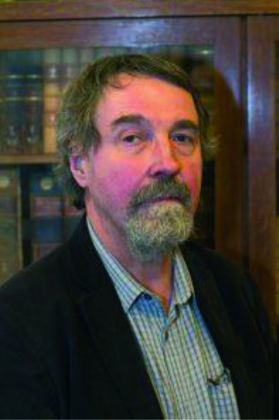
Martin Procházka is Professor of English, American, and Comparative Literature at the Faculty of Arts, Charles University, Prague. He holds visiting roles at the University of Porto and the University of Kent, including Honorary Visiting Professor since 2021. His research spans Intercultural communication Romanticism Comparative literature Scottish literature American colonial literature , with a focus on authorship, adaptation studies, and the intersections of European Romanticism with Czech cultural contexts. Procházka's recent publications include the 2024 edited book From Shakespeare to Autofiction , which critically engages with Roland Barthes and Michel Foucault's theories of authorship, and the 2022 theoretical work on autopoietic systems and intercultural communication. His scholarship often bridges historical and contemporary debates, such as in the 2021 Romanticism and Periodisation roundtable. He has received the Comenius Medal (1992) for educational research and led the H2020 MSCA ITN European Joint Doctorate Migration and Modernity (MOVES) from 2018 to 2023. Procházka also served as President of the Czech Association for the Study of English (2004-2014) and on the Advisory Board of the International Association of Byron Societies (1999-2024). As founding editor of the Scopus-indexed journal Litteraria Pragensia , he has shaped academic discourse on literary theory and comparative studies. His work on Scottish Enlightenment and Czech modernist reception of William Blake highlights his interdisciplinary approach.
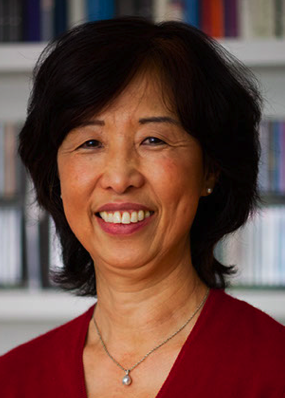
Dr. Soonja Choi is a Research Professor in the Comparative Psycholinguistics Group at the University of Vienna and Director of the Korean Studies Program at San Diego State University (SDSU), where she holds the title of Professor Emerita of Linguistics. She earned her Ph.D. in Linguistics from the University of Buffalo (1986) and holds advanced degrees from institutions in France and South Korea. Her research focuses on language and thought, semantics, spatial language, and Korean linguistics, with a particular emphasis on cross-linguistic studies of spatial categorization and its cognitive implications. Research Contributions: Her work has explored how language influences spatial perception and cognition, notably through long-term collaborations with the Max Planck Institute for Psycholinguistics and the National Science Foundation. Key contributions include studies on spatial term development in Korean/English children and cross-linguistic comparisons of spatial semantics between German, Korean, and English. Grants & Awards: Secured over $1.4M in grants including a EUR 600,000 Vienna Science Fund grant (2016-2020) and multiple NSF awards. Elected to the Academy of Europe (2019) as an Ordinary Member. Professional Roles: Served as Chair of SDSU's Department of Linguistics and Oriental Languages (1997-2000, 2001-2002), Graduate Advisor (multiple terms), and editorial board member for Language, Interaction, and Acquisition . Active in academic governance and international linguistic organizations.
Huamin Qu is a Chair Professor in the Department of Computer Science and Engineering at the Hong Kong University of Science and Technology (HKUST). He serves as the Founding Dean of the Academy of Interdisciplinary Studies (AIS), Founding Head of the Division of Emerging Interdisciplinary Areas (EMIA), and was the Founding Acting Head of Computational Media and Arts (CMA) at HKUST(GZ). Qu directs the VisLab and coordinates the Human-Computer Interaction (HCI) group. He obtained his BS in Mathematics from Xi'an Jiaotong University and MS/PhD in Computer Science from Stony Brook University. Qu's research integrates Data Visualization , Human-Computer Interaction , and Human-Centered AI , with applications in urban informatics, social networks, and explainable AI. His work focuses on developing interactive systems for big data analytics, visual storytelling, and AI-driven decision support. Research extends to multimodal communication, fintech, and augmented reality applications. His publications emphasize visual analytics for complex datasets (mobility, social media, financial), interaction techniques for immersive environments, and AI-enhanced visualization tools. Recent works explore explainable AI interfaces and large-scale data communication frameworks. IEEE Visualization Academy (2020) IEEE VGTC Technical Achievement Award AI 2000 Most Influential Scholar (2019, 2023, 2024) 21 Best Paper/Honorable Mention awards IBM Faculty Award (2009) APICTA Merit Award (2015) Yelp Dataset Grand Prize (2018) Qu has advised 48 PhD graduates (21 now faculty at institutions like UC Davis, University of Minnesota, Texas A&M) and 30 MPhil students. He secured major grants including RGC theme-based projects (digital citizenship, air pollution), UGC AoE (slope safety), and China's 973 Program. As VisLab director, he leads 20+ researchers in visualization/HCI projects adopted by Microsoft, IBM, Huawei, and Tencent.
Roger Luckhurst is Professor of Modern Literature and currently holds the prestigious Geoffrey Tillotson Chair of Nineteenth Century Studies at Birkbeck College, University of London. A leading scholar in Gothic literature, science fiction, and trauma studies, he has been affiliated with Birkbeck for over 25 years, contributing significantly to interdisciplinary literary and cultural studies. Education and Career Trajectory: 2020-present: Geoffrey Tillotson Chair of Nineteenth Century Studies, Birkbeck College 2008-2020: Professor of Modern and Contemporary Literature, Birkbeck College 2004-2008: Senior Lecturer, Birkbeck College 1994-2004: Lecturer, Birkbeck College 1992-1994: Lecturer, University of Hull Research Interests and Scholarly Contributions: Luckhurst's research spans multiple interconnected fields, establishing him as a preeminent voice in literary and cultural studies. His work on late 19th century English literature examines the intersections of Victorian culture with emerging scientific discourses. His expertise in science fiction studies encompasses both literary analysis and cultural theory, exploring how speculative fiction reflects and shapes contemporary anxieties. In Gothic studies , he investigates the persistence of Gothic aesthetics and themes across different media and historical periods. His groundbreaking work in trauma studies has contributed significantly to understanding how literature and culture process collective trauma. Publications and Scholarly Impact: His extensive publication record demonstrates a remarkable breadth of scholarly inquiry. From his early work on J.G. Ballard to his recent comprehensive study of Gothic culture, Luckhurst has consistently produced influential scholarship. His books have been translated into multiple languages including French, Japanese, Turkish, and German, indicating significant international impact. His forthcoming The Gothic: An Illustrated History (2021) promises to be a definitive work in the field. Honors and Awards: 2009: Visiting Research Fellow, University of Birmingham 2009: Visiting Research Fellow, Flemish Academic Centre for Science and the Arts (VLAC), Brussels January-June 2011: AHRC Fellowship, Birkbeck College Spring 2016: Mellon Distinguished Visiting Professor, Department of English, Columbia University, New York Public Engagement and Media Presence: Beyond academia, Luckhurst has demonstrated exceptional commitment to public scholarship. He has served as a broadcaster for BBC radio, bringing literary criticism to wider audiences. His journalism has appeared in leading British newspapers, bridging the gap between academic research and public discourse. This dual role as academic and public intellectual exemplifies Birkbeck's tradition of making scholarship accessible to broader communities. Interdisciplinary Approach and Institutional Contributions: At Birkbeck College, Luckhurst has been instrumental in fostering the institution's renowned culture of interdisciplinary studies. His work seamlessly integrates literary analysis with cultural theory, film studies, architectural history, and scientific discourse. This approach has influenced generations of students and scholars, establishing Birkbeck as a leading center for innovative literary and cultural research.
Helmut Leder is a Professor at the University of Vienna, specifically within the Faculty of Psychology's Department of Cognition, Emotion, and Methods in Psychology. He serves as Head of the Vienna Cognitive Science Hub, integrating interdisciplinary approaches to study aesthetic experiences and cognitive processes. His academic profile includes teaching courses in General Psychology, Cognitive Psychology, and Neurosciences, alongside supervising master's and doctoral thesis seminars focused on perception and neuroaesthetics. Key Research Areas : Empirical Aesthetics, Cognitive Psychology, Visual Perception, Cross-Cultural Psychology, Urban Art Impact, Mental Imagery Studies Methodological Focus : Eye-tracking, Machine Learning Analysis, Cross-Cultural Comparisons, Field Experiments, Neuroimaging Recent Contributions : Investigated urban art's role in stress reduction, developed network models of aesthetic experiences, explored non-visual color navigation for the blind, and applied machine learning to art evaluation. His work bridges psychology with cultural studies, examining how aesthetic experiences shape well-being and cognitive processes. Current projects emphasize the neural and behavioral distinctions between real and imagined art encounters, while challenging traditional gender-based perception models.
Oliver Grau is a Chair Professor for Image Science and a leading figure in Media Art research, affiliated with Hong Kong Baptist University (Academy of Visual Arts, Distinguished Fellow since 2023) and Danube University Krems (Chair Professor for Image Science from 2005–2022). He founded the Archive for Digital Art (ADA) and the international MediaArtHistories Conference Series , with key roles at institutions across Germany, Austria, and Australia. His work bridges art, science, and technology, focusing on immersive images, digital heritage, and emotion research. Key Positions: Director of ADA (since 2000), Founding Director of MediaArtHistories Conference Series (since 2005), PI for high-resolution digitization of the Goettweig Graphic Print Collection (2005–2017). Research Grants: Funded by DFG, Austrian Science Fund, Australian Research Council, VW Foundation (total 8.3 Mio EUR), and Erasmus+ Joint Master program (5.4 Mio EUR). Research Interests: Grau’s scholarship spans the history of media art, telepresence, artificial life, emotion research, and digital humanities. His work emphasizes the evolution of immersive visual experiences from historical art forms to digital media, integrating theoretical and practical approaches. Article Trends: His recent publications focus on digital art’s sociopolitical dimensions, archiving challenges in the digital era, and cross-disciplinary methodologies. Themes include media art conservation, web-based tools for digital humanities, and the intersection of artistic expression with contemporary global issues like climate change and surveillance. Scientific Awards: Distinguished Fellow at Hong Kong Baptist University (2023) Science Award of Lower Austria (2019) Honorary Doctorate from University of Oradea (2014) Invitations to G-20 summit, Olympic Games, and international symposia Labs & Teams: He leads the Archive for Digital Art, managing a global team of 28 staff, and co-founded the Erasmus+ Joint Master in Media Arts Cultures. His projects emphasize collaborative archiving tools (e.g., Web 2.0/3.0 archives) and large-scale digitization initiatives.
Edward Muir is the Clarence L. Ver Steeg Professor in the Arts and Sciences and Charles Deering McCormick Professor of Teaching Excellence at Northwestern University, with joint appointments in the Department of History and Italian Studies at Weinberg College of Arts and Sciences. His academic journey includes a B.A. from the University of Utah (1969), an M.A. (1970), and Ph.D. (1975) in Modern European History from Rutgers University, including a Semester in Italy Program at Syracuse University (1967). Muir's research explores the intersection of ritual, violence, and power in Renaissance Europe, with emphases on Italian history, microhistory, and cultural anthropology. His work examines civic ceremonies, gender exclusion, and the sociopolitical underpinnings of early opera. Key themes include the anthropology of Venice, religious processions, and community formation in pre-modern societies. His scholarly publications reveal a consistent focus on Renaissance cultural practices, Venetian society, and methodological innovations in microhistory. Recent works analyze opera's emergence in 17th-century Venice, anti-war movements, and gendered public spaces, blending archival rigor with interdisciplinary theory. Awards and Honors: Herbert Baxter Adams Prize (1982) Two-time Howard R. Marraro Prize winner (1982, 1993) Andrew W. Mellon Foundation Distinguished Achievement Award (2010, $1.5 million) Fellow, American Academy of Arts and Sciences (2014) Charles Deering McCormick Professorship for Teaching Excellence (2006) Muir has held major administrative roles including Department Chair at Northwestern and LSU, co-directed the Graduate Program in Italian Studies, and served on editorial boards for journals like the American Historical Review . He mentors through graduate programs but no specific student advisees are listed.
Prof. Rossella Ferrari holds a professorship in Chinese Studies at the Department of East Asian Studies, University of Vienna. Her research explores performance cultures across the Chinese-speaking world, with a focus on avant-garde theatre, transnational networks, and postsocialist transformations. Key contributions include the concept of 'pop avant-garde' and 'Xiqu 2.0,' examining how classical performance interacts with digital media. She co-edited Asian City Crossings (2021) and authored Transnational Chinese Theatres (2020). Current projects investigate 'performing postsocialism' and intercultural collaborations. Her work bridges disciplines like architecture, visual arts, and film, emphasizing methodologies rooted in Asian perspectives to challenge Eurocentric paradigms. Recent studies analyze pandemic impacts on transnational theatre networks and the role of cities as analytical frameworks. Collaborations with groups like Hong Kong's Zuni Icosahedron highlight her focus on boundary-crossing performance practices. Publications span monographs, edited volumes, and peer-reviewed articles addressing topics such as Brechtian influences in China, intertextuality in global performance, and avant-garde adaptations of classical works like Mudan Ting . Her research underscores the socio-political dimensions of artistic expression in East Asia, particularly in contested historical contexts.
Jussi Parikka is a Professor in Technological Culture and Aesthetics at the Winchester School of Art, University of Southampton (UK), and a Visiting Professor at FAMU, Academy of Performing Arts in Prague. He holds an adjunct professorship at the University of Turku, Finland. His research spans media archaeology, environmental humanities, and new materialism, focusing on intersections of technology, ecology, and culture. Education: PhD in Cultural History, University of Turku, 2007 Licentiate of Philosophy in Cultural History, University of Turku, 2004 Master of Arts in Cultural History, University of Turku, 2002 Research Interests: Parikka investigates media archaeology, environmental media studies, and digital culture. Key themes include the geology of media, operational images, and the ecological implications of technological systems. His work bridges art, science, and philosophy, addressing urgent issues like climate change and data infrastructures. Awards & Honors: 2021: Elected Member of Academia Europaea 2012: Anne Friedberg Award (SCMS) for Insect Media 2016: Choice Magazine Outstanding Academic Title ( A Geology of Media ) 2017: Moebius Fellowship (Kone Foundation) Grants & Projects: Parikka leads the Digital Aesthetics Research Centre (DARC) and collaborates on initiatives like the Critical Environmental Data project with the Helsinki Biennial. His work integrates art, science, and activism, addressing topics such as environmental sensing and climate justice. Labs/Teams: Director of the Digital Aesthetics Research Centre (DARC), Aarhus University, and co-curator of exhibitions like Weather Engines (Onassis Stegi, Athens).
Professor Moncef Gabbouj is a distinguished academic and researcher currently serving as Professor of Signal Processing at the Department of Computing Sciences, Faculty of Information Technology and Communication Sciences, Tampere University, Finland. Previously, he held the same position at Tampere University of Technology before the merger in 2019. He has also held visiting professorships at prestigious institutions including Hong Kong University of Technology and Science, University of Southern California, and Purdue University. Ph.D. and MSc. in Electrical Engineering from Purdue University, USA (1989 and 1986) B.Sc. in Electrical Engineering from Oklahoma State University, USA (1985) Prof. Gabbouj's research spans multiple domains within signal and image processing, with a strong focus on machine learning applications. His primary research interests include artificial intelligence, machine learning, Big Data analytics, multimedia content-based analysis, indexing and retrieval, nonlinear signal and image processing, voice conversion, and video processing and coding. His work bridges theoretical advancements with practical applications across various industries, particularly in multimedia communications and biomedical applications. His extensive publication record demonstrates a clear evolution from traditional signal processing techniques toward more sophisticated machine learning and deep learning approaches. Recent work shows increasing focus on convolutional neural networks for various applications including ECG classification, video processing, financial time-series analysis, and image recognition tasks, reflecting the broader trend in the field toward deep learning methodologies while maintaining strong foundations in signal processing theory. IEEE Fellow (2011) Member, Finnish Academy of Science and Letters (2014) Knight, First Class, of the Order of the White Rose of Finland (2006) Nokia Foundation Recognition Award (2005) Nokia Foundation Visiting Professor Award (2012) Finnish Cultural Foundation for Art and Science Award (2017) TUT Foundation Grand Award (2015) Prof. Gabbouj has supervised 64 doctoral and 72 Master's theses, demonstrating his significant contribution to academic mentoring. His research has been supported by substantial funding, including research grants totaling 8.5 million Euro (2001-2015). He has served as Academy of Finland Professor during 2011-2015 and has been involved in numerous EU research projects including Horizon, ESPRIT, HCM, IST, COST, Tempus and Erasmus programs. As Editor, Guest Editor or member of the Editorial Board of 6 international scientific journals, he has significantly influenced the academic discourse in his field. He leads the Signal Analysis and Machine Intelligence (SAMI) research group at Tampere University and serves as the Finland Site Director of the NSF IUCRC funded Center for Visual and Decision Informatics. His research unit focuses on applying advanced machine learning techniques to solve complex problems in signal processing, computer vision, and multimedia analytics, with applications ranging from healthcare to multimedia communications and financial analysis.
Sean Cubitt is a Professor of Screen Studies at the University of Melbourne's School of Culture and Communication, with prior roles including Professor of Film and Television at Goldsmiths, University of London, and Professor of Global Media and Communications at the University of Southampton. His academic career spans over three decades, focusing on Media Art History, Digital Aesthetics, and Ecocinema. He is a Fellow of the Australian Academy of the Humanities (2009) and has held prestigious roles such as series editor for Leonardo Books at MIT Press. Research Interests: Sean’s work explores digital light technologies, the environmental impacts of media, and political aesthetics. He has contributed to journals like Screen and Cultural Politics , and co-founded the Media Art History conference. His writing spans academic books and collaborations, including the thriller-writing pseudonym Lambert Nagle. Grants & Collaborations: Led major projects on Australian media art history, public screens, and digital light genealogies, securing ARC and AHRC funding. Advising: Supervised 21 PhD candidates and examined 39 theses, specializing in creative practice research. Editorial Roles: Board member for Screen , Cultural Politics , and others, emphasizing interdisciplinary media studies. Labs/Teams: Co-curator of exhibitions like ‘Arte y Optica’ and ‘The World is Everything That Is The Case’, blending art and technology.
Claudia Lehmann is a University Professor of Film Art & Visual Communication at the Institute for Open Arts, Department of Scenography at Mozarteum University Salzburg. She has been a professor at Mozarteum University since 2019 and previously served as a visiting professor at the Berlin Weissensee Art Academy. As a faculty member, she contributes to the Institute management, teaches as a Teacher, and serves on the Curricular Commission. Dr. Lehmann holds a doctorate in physics (Dr. rer. nat.) with her dissertation "GAUGE COVARIANT MULTISCALE ANALYSIS OF COMPLEX SYSTEMS" published through DESY-Publications in 2004. Her academic journey reflects a unique interdisciplinary trajectory from scientific research to artistic practice. Claudia Lehmann's research interests center around the intersection of art and science, with particular focus on perception, reality, and systemic phenomena. Her work spans documentaries, feature films, music videos, art videos, installations, and performances, constantly searching for new forms and formats. She develops visual concepts, video stage sets, and unique live video performances, often in collaboration with Nicolas Stemann. Through her work, she explores diverse possibilities for new structures, especially in the form of artistic collaboration. Her recent artistic output shows a consistent trend toward interdisciplinary work that blends theater, film, and digital media. Lehmann frequently collaborates with Nicolas Stemann and Konrad Hempel, creating innovative performances that integrate video technology with traditional stagecraft. Her work often addresses social and political themes while experimenting with form and presentation. The Institute for Experimental Affairs (IXA), which she co-founded with Konrad Hempel, serves as a platform for exploring the interfaces between science and art through various projects and research initiatives. Dr. Lehmann has received several prestigious awards for her work: Samsung Smartfilm Award 2013 Shocking Shorts Award 2007 Nomination for German Documentary Film Music Prize 2013 Nomination for Studio Hamburg Young Talent Prize for Best Screenplay As an educator and researcher, Lehmann has developed numerous collaborative projects and performances that have been featured at major international festivals including the Berlin International Film Festival, Leipzig Documentary Film Festival, and various theater festivals. Her work with IXA represents a significant research initiative at the intersection of science and art. Lehmann co-founded the Institute for Experimental Affairs (IXA) with visual artist and composer Konrad Hempel. Through IXA, she conducts research and realizes projects at the interfaces between science and art. Her collaborative work spans theater productions, film projects, and interactive installations that have been presented at venues including the Schauspielhaus Zürich, Münchner Kammerspiele, Opéra Comique Paris, and various international festivals.
Hui Pan is a distinguished academic holding dual positions as Nokia Chair in Data Science and Professor of Computer Science at the University of Helsinki, and Chair Professor of Computational Media and Arts at the Hong Kong University of Science and Technology (HKUST). His research spans networking, mobile computing, augmented reality, and computational social science. He earned his Ph.D. in Computer Science from the University of Cambridge in 2007. His work bridges social networks with mobile systems, pioneering fields like mobile social networks and opportunistic forwarding algorithms. Research interests include data science, complex networks, and innovative applications of augmented reality. His recent publications focus on low-latency AR frameworks, blockchain for computation offloading, and mobile web visualization. He has received prestigious awards, including IEEE Fellow (2018), ACM Distinguished Scientist (2016), and the Nokia Chair Endowment (2017). He has supervised over 15 PhD and 12 MPhil graduates, with 13 current Ph.D. students and 2 MPhil students. His editorial roles include Associate Editorships at IEEE Transactions journals and guest editorships at top venues like IEEE JSAC and ACM Transactions. He has organized conferences such as WWW Track Chair and ExtremeCom General Chair.
Gabriella Giannachi is Professor of Performance and New Media and Director of the Centre for Intermedia at the University of Exeter's Faculty of Humanities, Department of English. She leads interdisciplinary collaborations between artists, academics, and scientists to advance research in performance and digital arts. Her educational background includes: BA in Modern Languages and Literatures from Turin University's Faculty of Letters and Philosophy PhD in English from Cambridge University, researching silence in modern European Drama with Trinity Hall scholarship Giannachi's research pioneers performance documentation in mixed reality environments, examining how digital archives function as mobile interpretation hubs for cultural engagement. She investigates mobile user-generated documentation's role in knowledge production, museum visitor dynamics, memory formation, and identity construction within ecological and heritage contexts, with significant focus on copyright and accessibility implications. Her publication trends reveal consistent exploration of presence theory across physical-digital boundaries, with award-winning CHI conference papers (2009-2013) and books like 'Performing Mixed Reality' (2011) establishing frameworks for understanding mixed reality performance, environmental art, and digital heritage preservation. Her scientific recognition includes: Three consecutive CHI Best Paper Awards (2009, 2012, 2013) Theatre Library Association Book Award nomination for 'Performing Presence' (2012) Royal Society of Arts Fellowship nomination (2012) While specific advisees aren't documented, her research partnerships demonstrate extensive collaborative supervision across institutions including Tate, Imperial War Museum, British Library, and Stanford Libraries, securing projects that integrate artistic practice with scientific research. As Centre for Intermedia Director, she cultivates experimental teams investigating how digital archives transform cultural engagement through mobile platforms, particularly in environmental contexts via partnerships with Met Office Hadley Centre and Ludwig Boltzman Institute.
Tatjana Marković is an Austrian Academy of Sciences researcher and Adjunct Professor at the University of Music and Performing Arts Vienna, where she leads the FWF project on music historiography at the Habsburg Monarchy's southern borders (1750–1914). As editor of TheMA journal and chair of the IMS Study Group Music and Cultural Studies, she specializes in reconstructing pluricultural musical life along the Austro-Ottoman frontier. Adjunct Professor, University of Music and Performing Arts Vienna Head, FWF Discourses on Music project Editor, TheMA – Theatre, Music, Arts Chair, IMS Study Group Music and Cultural Studies Her research intertwines musicology with cultural studies, focusing on Southeast European musical traditions and their representation in Habsburg and Ottoman contexts. Key areas include diplomatic music exchanges, military border cultural dynamics, and gendered perspectives in regional music history. Recent publications address microregional musical networks, operatic diplomacy, and 19th-century battlefield commemorations through music. She contributes to international conferences on Balkan musicology and Austro-Ottoman cultural interactions, with editorial roles in multiple academic series.