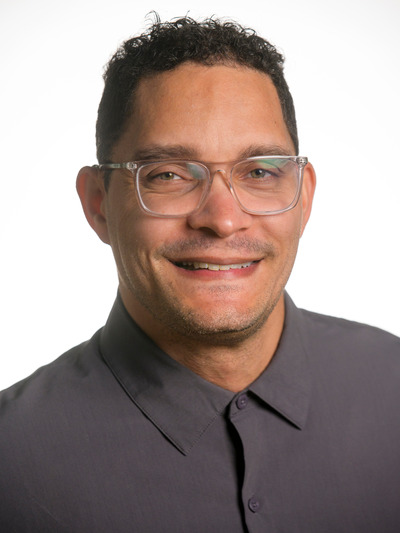
Kwame Porter Robinson serves as Assistant Professor of Technology, Information Systems and Analytics at Wayne State University, where he develops community-based economic systems through co-designed AI and automation. His work bridges academic research with practical applications in digital sustainability and generative justice, informed by prior experience as a Department of Defense data scientist and NGO consultant. His educational background spans technical and creative disciplines: Ph.D. in Information, University of Michigan (2024) M.S. in Computer Science, University of Maryland (2012) B.S. in Electrical Engineering (honors), New Mexico State University (2008) B.F.A. in Graphic Design (magna cum laude), Boston University (2002) Research focuses on decolonial computing and community economies , examining how human-AI collaboration can create unalienated labor systems in artisanal contexts. His methodology emphasizes bottom-up technology co-design with communities, particularly evident in Detroit-based artisan studies and blockchain implementations for economic empowerment. Publications since 2019 reveal accelerating focus on computational reparations and generative justice, with recent work exploring fractal scaling in AI governance and worker-owned AI ecosystems. Key themes include decolonial transitions, circular value flow, and environmental sustainability in crafting economies. Scientific recognition includes: Rackham Merit Fellowship (2019-2024) with multiple research grants AWS Cloud Credits for Research (2019) Best Student Talk award for ethical AI (2023) National Intelligence Meritorious Unit Citation (2012) Teaching includes Business Information Systems and Blockchain & CyberSecurity courses, reflecting his industry-academia synthesis. While specific grant details beyond Rackham awards aren't provided, his DoD background and AWS credits indicate strong industry partnerships. Collaborative work with scholars like Ron Eglash demonstrates interdisciplinary team engagement in justice-oriented computing initiatives.
Catherine Laporte is a Professor at the Department of Electrical Engineering, École de Technologie Supérieure (ÉTS), Montreal, Canada. She leads research at the LATIS – Health Information Processing Laboratory, focusing on integrating medical images and physiological signals for healthcare innovation. Department: Electrical Engineering Research Lab: LATIS – Health Information Processing Laboratory Her research spans Medical Imaging , Computer Vision , and Speech Sciences , specializing in ultrasound applications for health technologies and intelligent systems. Key areas include: Medical image analysis and segmentation Ultrasound probe navigation and deformation correction 3D anatomical modeling (spine, tongue) Biomechanical studies of bone growth and tissue response Computer vision for healthcare applications Recent publications emphasize robust AI-driven ultrasound analysis for spinal deformities, tongue movement in speech therapy, and biomechanical modeling of bone growth. Her work combines deep learning , real-time segmentation , and multi-modal imaging (MRI, CT, 3D ultrasound). Students under her supervision have completed theses on topics like smart ultrasound systems , 3D vocal tract analysis , and biofeedback for language learners , often co-directed with experts in biomedical engineering and speech sciences. Laporte’s lab, LATIS, collaborates with institutions like the Center for Advanced Studies in Sleep Medicine (Montreal) and McGill University’s interdisciplinary programs, advancing health technologies and intelligent systems for clinical applications.
Sandro Bartolini serves as Associate Professor in the Department of Information Engineering and Mathematical Sciences at the University of Siena, Italy, where he teaches advanced courses in computer architecture and parallel programming while leading cutting-edge research in high-performance computing systems. His academic journey began with a cum laude Laurea in Computer Engineering followed by a PhD in Computer Science and Engineering from Università di Pisa. Education: PhD in Computer Science and Engineering, Università di Pisa Laurea in Computer Engineering (cum laude), Università di Pisa Research Focus: His work centers on photonic interconnects for chip multiprocessors , energy-efficient software optimization for multi-core/GPU architectures, and performance-portable parallel programming models . Current investigations span cryptographic acceleration, blockchain algorithms, and hardware/software co-design for emerging computing paradigms, with strong emphasis on practical implementations bridging theoretical advances and real-world applications. Publication Trends: Recent publications (2019-2023) reveal three dominant threads: (1) Photonic network innovations addressing energy bottlenecks in chip multiprocessors, (2) The PHAST library ecosystem enabling seamless CPU/GPU programming across domains from autonomous vehicles to UAV navigation, and (3) Hardware accelerator designs for convolutional networks and cryptographic workloads. These works consistently target performance-portability challenges in heterogeneous computing environments. Grants and Collaborations: As principal investigator for the Italian Ministry-funded PHOTONICA project, he established international research partnerships with Murcia University, Columbia University, and Hong Kong University of Science and Technology, while securing industry collaborations with STMicroelectronics, Intel Munich, IBM, and IMEC. He has also managed complex IT system deployments for Siemens Italy, RAI (Italian public broadcasting), and SpaceDys. Academic Leadership: Bartolini serves as Associate Editor for the Eurasip Journal of Embedded Computing and actively contributes to the European HiPEAC network. His research group at Siena maintains strong industry ties for technology transfer, particularly in photonic interconnect validation and parallel programming frameworks for next-generation computing systems.
Jenny Bosten is an Associate Professor in Psychology at the School of Psychology, University of Sussex . Her research focuses on visual perception, particularly color vision and individual differences, using neuroimaging (fMRI, EEG) and psychophysics. ERC-funded project COLOURCODE (2020-2025) on cortical color representation Studied genetics of visual trait variation and anomalous trichromacy Collaborated with institutions including UC San Diego and University of Cambridge Her work explores how color perception is shaped by natural scene statistics and genetic factors. Publications address cortical encoding mechanisms, visual enhancement technologies, and ecological approaches to perception. Current teaching includes advanced neuroscience courses and supervision of MSc research projects. Professional roles include membership in the International Colour Vision Society and former Secretary of the Colour Group (Great Britain).
Dr. Sharmila Anandasabapathy is a Professor of Medicine in Gastroenterology and Vice President & Senior Associate Dean of Global Programs at Baylor College of Medicine in Houston, Texas. She also serves as Director of Baylor Global Initiatives and the Baylor Global Innovation Center, overseeing Baylor's global health programs and affiliations. Her work focuses on developing innovative technologies for cancer screening and diagnosis in low-resource settings worldwide. Dr. Anandasabapathy's educational background includes: BA in English Literature from Yale University MD with distinction in Research, Molecular Biology from Albert Einstein College of Medicine Internship & Residency at New York-Presbyterian Hospital/Cornell Medical Center Gastroenterology Fellowship at Mount Sinai Medical Center Dr. Anandasabapathy is an advanced gastrointestinal endoscopist whose research focuses on developing and validating novel technologies for early gastrointestinal cancer diagnosis. Her primary areas of interest include Barrett's Esophagus, Esophageal Cancer, Gastric Cancer, and advanced endoscopic techniques including Confocal Microendoscopy, Fluorescent Imaging, and Magnification Endoscopy. She specializes in creating low-cost, portable diagnostic solutions for resource-limited settings. Her work bridges clinical gastroenterology with biomedical engineering, focusing on practical applications of advanced imaging technologies for cancer screening in global contexts. She has particular expertise in developing battery-operated, portable endoscopic devices suitable for use in low-resource environments across Africa, Central America, and Asia. Dr. Anandasabapathy's publication record demonstrates a consistent focus on high-resolution microendoscopy for gastrointestinal cancer detection, particularly in resource-limited settings. Her research spans technological development, clinical validation, and cost-effectiveness analysis across multiple international contexts. A significant portion of her recent work examines implementation strategies for low-cost endoscopic screening in diverse global populations, with particular attention to esophageal and colorectal cancers. Her collaborative approach is evident in the multidisciplinary nature of her publications, which frequently involve partnerships with engineers, public health experts, and international research teams. The evolution of her work shows increasing emphasis on practical implementation of screening technologies in real-world settings across multiple continents. Dr. Anandasabapathy has received numerous honors throughout her career: Zelig A. Rosen Award for Excellence in Cardiology (1996) Medical Society of the State of NY Award for Outstanding Community Service (1997) AMSA/National Health Service Corps Award for Community Service Project (1998) Ciba-Geigy Award for Outstanding Community Service by a Medical Student (1999) Physicians for Social Responsibility National Broadstreet Pump Award in Public Health (1999) David E. Rogers Memorial Research Award Finalist (2001) Chief fellow in Gastroenterology, Mount Sinai Medical Center (2003-2004) FOCDD Database Development Award Recipient (2004) Gulf Coast Digestive Disease Center Pilot Project Award (2008) Global Directory of Who's Who "Top Doctors" (2013) Dr. Anandasabapathy serves as Principal Investigator on multiple NIH-funded grants focused on developing innovative technologies for gastrointestinal cancer screening. Her current portfolio includes three NIH/NCI grants: "High Resolution Microendoscopy for the Management of Esophageal Neoplasia" (CA181275), "Low Cost Tethered Capsule Endoscope for Barrett's Esophagus Screening" (CA252245), and "The Effectiveness of High Resolution Microendoscopy in High Grade Intraepithelial Lesions Diagnosis for People Living with HIV" (CA232890). She also leads eight clinical trials testing portable endoscopic technologies across the United States, Africa, China, Mexico, and Honduras. Her research program involves extensive collaborations with academic institutions including Mount Sinai School of Medicine, Rice University, and Harvard University, as well as partnerships with NGOs and foundations focused on global health innovation. Through these collaborations, she has developed tablet-based reporting platforms, training modules for sedation/anesthesia, and environmentally appropriate innovations for chronic disease management in low-resource settings. Dr. Anandasabapathy directs the Baylor Global Innovation Center, which focuses on developing novel, environmentally appropriate technologies for addressing global disease burden. Her team works on creating mobile and portable solutions for clinical care and cancer screening, point-of-care diagnostic technologies, and low-cost devices for managing chronic non-communicable diseases worldwide. The center maintains active collaborations with academic centers, NGOs, and foundations to implement these innovations in regions including West Africa (The Gambia), India, China, and Central America.
Professor Jenny Morton is a leading neurobiologist at the University of Cambridge , Department of Physiology, Development and Neuroscience. Her research focuses on Huntington's disease using sheep and mouse models , investigating neurodegeneration , circadian rhythm disruption , and cognitive impairments . She serves as Director of Studies in Medicine and Veterinary Medicine at Newnham College. Professor of Neurobiology (Cambridge, 2018) Director of Studies, Newnham College Her lab develops translational animal models to study disease progression through neurophysiological recordings , EEG analysis , and magnetic resonance imaging . Recent work includes executive function assessment in sheep and pharmacological interventions for neurodegenerative symptoms. Key publications reveal trends in sleep disorder research , neural oscillation abnormalities , and environmental enrichment effects on Huntington's disease progression. The lab maintains a Cambridge MRI database for animal models and explores biomarker development through metabolic profiling.
Jiajia Sun is an Associate Professor of Geophysics in the Department of Earth and Atmospheric Sciences at the University of Houston. Her research focuses on advancing subsurface imaging, uncertainty quantification, and mineral exploration through interdisciplinary approaches combining geophysics, machine learning, and computer vision. Education : PhD in Geophysics (2015, Colorado School of Mines); BS in Geophysics (2008, China University of Geosciences, Wuhan). Research Interests : Jiajia specializes in deep learning for geophysical inversion, multi-physics data integration, and probabilistic geological modeling. Her work leverages computational resources like GPUs and clusters to solve inverse problems and tackle magnetic remanence challenges. Recent Publications : Her research includes applying Bayesian frameworks, deep generative models, and joint inversion algorithms to airborne geophysics for critical mineral mapping and hydrogen reservoir detection. She emphasizes open-source tools like SimPEG for reproducibility. Awards : J. Clarence Karcher Award (SEG) Advising & Collaborations : She mentors PhD students in geophysics and collaborates with institutions like Amazon’s Generative AI Innovation Center, Stanford University, and University College Dublin. Her team also tests drones and magnetometers at the UH Coastal Center.
Paolo Castellini is an Associate Professor at the Department of Industrial Engineering and Mathematical Sciences, Università Politecnica delle Marche (UNIVPM). His research focuses on mechanical measurements, vibration analysis, and advanced imaging techniques. He teaches courses in the College of Engineering and has published extensively on applications of hyperspectral imaging, 3D scanning, and neural networks in industrial and biomedical contexts. Office hours: Monday-Friday, 08:30-13:00 Email: p.castellini@univpm.it Location: via Brecce Bianche, 12, Ancona Recent research trends include vibration decoupling metastructures, microplastic detection in biological samples, and UAV-based photogrammetric analysis of olive trees. His publications emphasize non-destructive testing, acoustic beamforming, and uncertainty evaluation in measurement systems. Notable projects involve mmWave radar displacement analysis, cardiac simulators for prosthetic valves, and light-controlled polymer films for mechanical motion.
Shen-Shyang Ho is a Full Professor in the Department of Computer Science at Rowan University's College of Science & Mathematics. His work spans machine learning, data mining, and edge computing with applications in urban mobility, precision agriculture, and data privacy. He leads NSF-funded research projects on dynamic graph analysis and spatiotemporal anomaly detection. Ph.D. in Computer Science, George Mason University Post-Doctoral Associate, Caltech & NASA JPL B.S. in Mathematics with Computational Science, National University of Singapore Research expertise includes graph-based machine learning, conformal prediction, cooperative inference, and privacy-preserving ML. Current work focuses on federated learning for edge devices and anomaly detection in evolving systems. He has developed tools like SplitTracer for cooperative inference evaluation and ParkGauge for urban mobility monitoring. Recent publications highlight his contributions to 2026 Pattern Recognition journal (martingale-based graph analysis), 2025 IEEE ICAIC conference (blockchain gas optimization), and 2024 ACM SAC symposium (shared mobility systems). His work integrates machine learning with real-world constraints across energy grids, transportation, and agricultural technology. NSF Grant (2022) for Dynamic Graph Anomaly Detection NSF Grant (2018) for Spatiotemporal Analysis Google Scholar Classic Paper Recognition (2017) for 2006 Radar Micro-Doppler Study Professional memberships include the Association for Computing Machinery (ACM). His teaching portfolio ranges from introductory programming to advanced ML courses. He previously held positions at Nanyang Technological University before joining Rowan in 2016.
Dr. Eran Halperin is a Professor at the University of California, Los Angeles, affiliated with the School of Engineering (Computer Science Department) and the School of Medicine (Human Genetics, Computational Medicine, Anesthesiology). His research bridges computational biology, genomics, and machine learning, with a focus on developing statistical methods to analyze big medical data for disease prediction and treatment. Developed open-source software tools like FEAST, ReFACTor, and Bisque Recipients of prestigious awards including Rothschild Fellowship and ISCB Fellow (2021) Research Interests: Computational Genomics: Applying machine learning to genomic data (methylation, RNA expression) for disease understanding. Machine Learning in Medicine: Creating deep learning architectures for ophthalmology, anesthesiology, and acute care applications. Medical Data Science: Integrating electronic health records with genomic datasets for predictive modeling. Scientific Recognition: Rothschild Fellowship Technion-Juludan Research Prize Krill Prize in Science Elected ISCB Fellow (2021) Dr. Halperin's lab collaborates across disciplines, utilizing software platforms such as GLINT (methylation analysis) and MTV-LMM (microbiome prediction). His work has received funding from NIH, NSF, and international foundations.
Dr. Almas Shintemirov is a Research Fellow at Aalto University's Department of Electrical Engineering and Automation, specializing in robotics, control systems, and human-robot interaction. His research focuses on intelligent robotics, with emphasis on Real-time motion prediction for collaborative robots Nonlinear control algorithms for safe human-robot interaction Open-source robotic hardware design Deep learning applications in autonomous systems
Gianmarco Vizzeri, MD, is a Professor and Vice Chair of Clinical Operations in the Department of Ophthalmology and Visual Sciences at the University of Texas Medical Branch (UTMB). He serves as Medical Director of the Ophthalmology Clinical Research Center, leading advanced glaucoma diagnostics and therapeutic innovation. His clinical practice focuses on glaucoma management at UTMB Eye Centers in Galveston and Friendswood. Dr. Vizzeri earned his Medical Degree in Medicine and Surgery from the University of Turin, Italy, completed his Ophthalmology Residency at the same institution, and undertook a Clinical and Research Fellowship at the Hamilton Glaucoma Center, University of California San Diego. His research integrates ocular imaging, microgravity effects, and surgical outcomes. Key interests include: Spaceflight-associated neuro-ocular syndrome (VIIP) pathophysiology Retinal vascular patterning using VESGEN analysis Glaucoma neurodegeneration mechanisms Innovations in trabeculectomy techniques Translational applications of terrestrial microgravity analogs His recent publications (2020-2025) demonstrate a dominant focus on: Ocular adaptations to microgravity in astronauts Neuroprotective strategies for glaucoma Advanced imaging modalities for anterior/posterior segment analysis Surgical refinements to minimize refractive complications This reflects sustained contributions to space ophthalmology and glaucoma therapeutics. Dr. Vizzeri collaborates with NASA and leads the UTMB Ophthalmology Clinical Research Center team, investigating novel diagnostic and therapeutic approaches for vision preservation in extreme environments.
René Vidal is the Rachleff & Penn Integrates Knowledge (PIK) University Professor at the University of Pennsylvania, with appointments in the Departments of Electrical and Systems Engineering, Radiology, Computer and Information Science, and Statistics and Data Science. He also serves as Director of the Center for Innovation in Data Engineering and Science (IDEAS) and the NSF-Simons Collaboration on the Mathematical Foundations of Deep Learning (THEORINET). A dual faculty member at Johns Hopkins University in Biomedical Engineering, Computer Science, and other departments, Vidal is an Amazon Scholar and Affiliated Chief Scientist at NORCE. PhD, Electrical Engineering and Computer Sciences, University of California, Berkeley (2003) M.S., Electrical Engineering, University of California, Berkeley (2000) B.S. (valedictorian), Electrical Engineering, Pontificia Universidad Catolica de Chile (1997) His research spans the mathematical foundations of deep learning, focusing on non-convex optimization , learning dynamics , and overparametrization . Key contributions include Sparse Subspace Clustering , Kernel GPCA , and Low-Rank Matrix Factorization , with applications in autism diagnosis , robotic surgery , and cardiac imaging . Recent work explores continual learning , adversarial robustness , and trustworthy AI in biomedical contexts. His 15 most recent publications highlight advances in medical imaging , language models , and robust computer vision , spanning topics from chest X-ray analysis to motor imitation tasks in autism . Articles like Geometric Analysis of Nonlinear Manifold Clustering underscore his theoretical contributions, while works on KDA: Knowledge-Distilled Attacker and Conformal Information Pursuit address practical AI safety and interpretability. Scientific accolades include: 2022 ACM Fellow 2021 IEEE McCluskey Technical Achievement Award 2017 Jean D’Alembert Fellowship 2012 J.K. Aggarwal Prize 2009 Sloan Research Fellow 2005 NSF CAREER Award His lab mentors 11 current PhD students across Johns Hopkins and University of Pennsylvania , with alumni contributing to institutions like Meta , Amazon , and GE Research . Vidal’s interdisciplinary work bridges mathematics , engineering , and healthcare , supported by grants from the DoD , NSF , and ONR .
Michal Kosinski is an Associate Professor of Organizational Behavior at Stanford University's Graduate School of Business, specializing in computational social science, artificial intelligence, and psychometrics. He holds a Ph.D. in psychology from the University of Cambridge, where he pioneered methods for predicting psychological traits from digital footprints. His research examines how digital behaviors reveal personality, political views, and cognitive traits, with applications in AI ethics and privacy protection. Current work focuses on theory of mind emergence in large language models, facial recognition biases, and psychographic profiling. Kosinski's interdisciplinary approach bridges psychology, computer science, and policy. Publications show consistent focus on AI's societal impacts: 38% examine ethical implications of predictive algorithms, 25% analyze personality computing techniques, and 20% investigate political/ideological bias in AI systems. Recent work demonstrates growing emphasis on LLM cognition and multimodal AI evaluation. Major Scientific Awards: ARP Early Career Award (2025) SPSP Distinguished Fellowship (2024) William Stern Honorary Award (2024) EAPP Early Achievement Award (2023) APS Rising Star Award (2015) Top 1% Highly Cited Researcher Kosinski advises government agencies (FTC, DoJ, EU Parliament) and technology companies on AI ethics and policy. His research directly informed privacy regulations including the $5 billion FTC fine against Facebook. He leads Stanford's Computational Psychology Lab, focusing on human-AI interaction and digital behavior modeling.
Eneko Agirre is a Full Professor at the Faculty of Computer Science of the University of the Basque Country UPV/EHU, where he serves as the director of the HiTZ Centre on Language Technology. He is an active member of the Ixa Research Group and has established himself as a leading figure in Natural Language Processing, particularly in multilingual and low-resource language settings. His work bridges theoretical advances with practical applications for language technology. Agirre received his PhD from the University of the Basque Country in 1999 with a thesis on conceptual relationships and ontologies, supervised by Dr. Kepa Sarasola Gabiola and Dr. Arantza Díaz de Ilarraza Sánchez. His academic journey has been marked by significant contributions to computational linguistics and language technology. His research primarily focuses on Natural Language Processing challenges, with special emphasis on Word Sense Disambiguation, cross-lingual transfer learning, dialogue systems, and Large Language Models for low-resource languages. He has pioneered work on Basque language technology and has consistently addressed the challenges of multilingual AI systems, particularly examining how language models perform across different linguistic contexts and cultural settings. Analysis of his recent publications reveals a strong trajectory toward advancing Large Language Models for low-resource languages, with particular attention to Basque. His work spans vision-language models, information extraction techniques, and rigorous evaluation methodologies for NLP systems. A recurring theme is the exploration of how language models handle low-resource languages compared to high-resource ones, with groundbreaking findings about cultural knowledge transfer between languages. Fellow of the ACL (2021), one of only 74 research leaders worldwide National Research Prize on Informatics (2021) Best resource paper award at ACL 2024 Honourable mention paper award (top 1%) at EMNLP (2020) Outstanding Paper award (top 2%) at COLING (2020) Recipient of three Google Faculty Research Awards (2017, 2018, 2019) Agirre has supervised over 25 PhD students, many of whom have received prestigious awards including the EurAI Artificial Intelligence PhD Dissertation Award. His research has been supported by numerous European projects including LIHLITH (2018-2020) on lifelong learning for dialogue systems, and he has served as principal investigator for multiple CHIST-ERA and FP7 projects. His work with Google includes collaborative projects on entity dictionaries and conversational question answering systems. As director of the HiTZ Centre on Language Technology and member of the Ixa Research Group, Agirre leads a vibrant team focused on advancing language technology for Basque and other under-resourced languages. The center has developed significant resources including Latxa, an open language model for Basque, and has established itself as a hub for multilingual NLP research. His group actively collaborates with international institutions including Stanford, NYU, and various European universities, fostering a global network for language technology research.