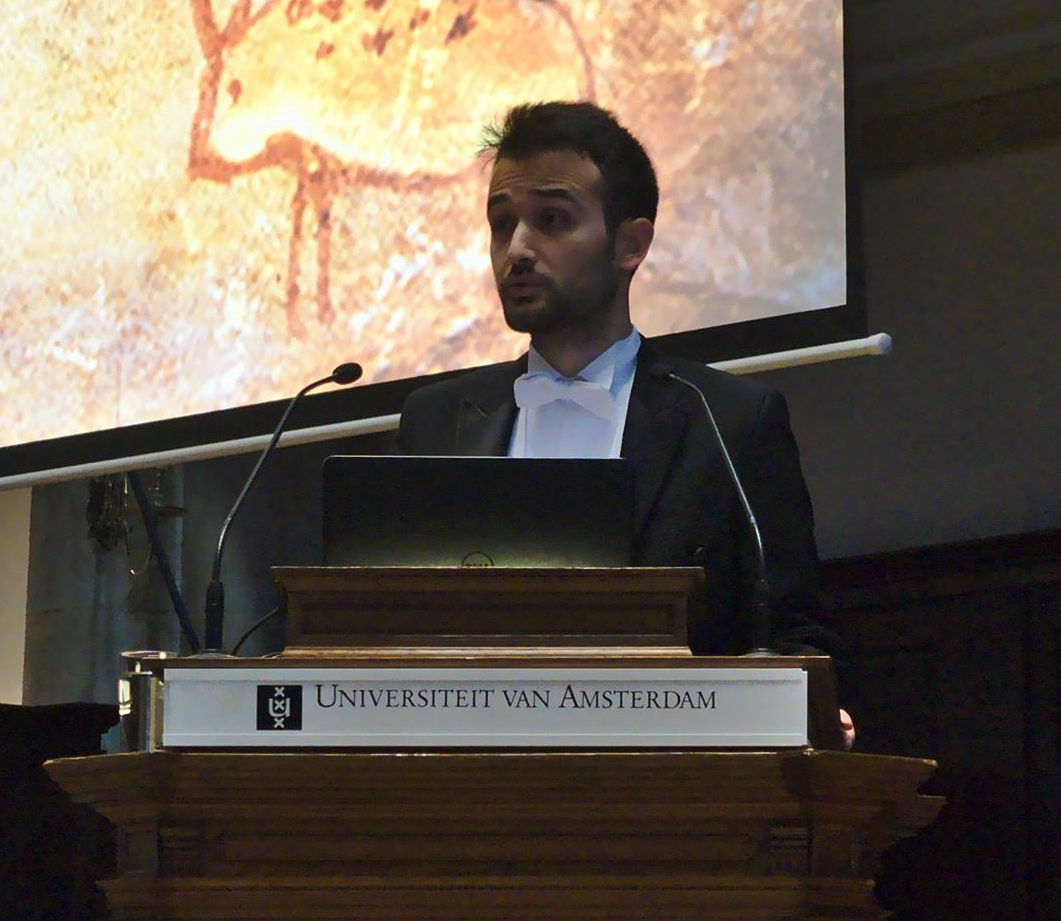
Dr. Stevan Rudinac is a Researcher at the University of Amsterdam's Faculty of Economics and Business , Section Business Analytics . His work focuses on interactive learning systems and multimodal data analysis, particularly in urban contexts and multimedia modeling. Education: PhD in Multimedia and Information Retrieval from Delft University of Technology (2013). Research Interests: Stevan specializes in multimedia modeling , hypergraph learning , and interactive video search . He develops frameworks for scalable analysis of social networks, urban imagery, and large multimodal datasets, bridging machine learning with practical applications in city planning and financial social media. Recent Trends: His 2024-2025 publications highlight large language model optimization , diffusion model evaluation , and dynamic graph embedding for meme stocks. Collaborative projects include the CASTLE 2024 dataset and Exquisitor , a system for 100 million image exploration. Labs & Teams: He contributes to the Business Analytics group at UvA, collaborating with Prof. Marcel Worring and Dr. Björn Þór Jónsson. He co-organized the UrbanMM'21 workshop and participates in ACM Multimedia and MMM conferences.
Sezer Karaoglu is a Lecturer and part-time postdoctoral researcher at the Computer Vision Group, Informatics Institute, University of Amsterdam. He is also the CTO and Co-Founder of 3DUniversum, a technology spin-off of the University of Amsterdam that provides state-of-the-art 2D/3D computer vision solutions. Additionally, he has co-founded other startups including Scanm and 3DHealthScan. Dr. Karaoglu received his PhD from the Computer Vision Group, Informatics Institute, University of Amsterdam, with research funded by the COMMIT project. His educational background includes a double master's degree: an optics, image and vision master's degree from University Jean Monnet in France and a media technology master's degree from Gjovik University College in Norway. He completed his undergraduate studies with honors at Istanbul Technical University in Telecommunication Engineering. His research focuses on Artificial Intelligence and 3D Computer Vision, with specific interests in SLAM, re-localization, 3D reconstruction, 3D object detection and segmentation, synthetic media, generative AI, deep fake creation and detection, and VR/AR technologies. His work has significant applications in healthcare, particularly in using deepfake technology for therapy for victims of sexual violence-related PTSD and moral injury, as documented in a Frontiers in Psychiatry article. Analyzing his recent publications reveals a strong trend toward neural scene reconstruction, intrinsic image decomposition, and the application of diffusion models to computer vision problems. His research increasingly integrates 3D scene understanding with language models, as evidenced by his work on language-to-3D scene generation. The applications span from healthcare (deeptherapy.ai) to media authenticity (deepfake detection) and industrial applications. ICT.OPEN Poster Award (3rd Position), Oct'13 Pascal VOC'12 Classification challenge, 2nd Position, Sep'12 Pascal VOC'12 Detection challenge, 3rd Position, Sep'12 Best project award at Nokia and CIMET project competition Outstanding reviewer at CVPR'21 PROVADA Future Startup Battle winner Best Dutch AI startup by Valuer Dr. Karaoglu has supervised numerous PhD, Master's, and Bachelor's students, demonstrating his commitment to academic mentorship. His research has attracted significant media attention, with features on Dutch national TV programs including NPO, VPRO, RTL, and international outlets like BBC News. He has received research funding through the COMMIT project during his PhD studies and has successfully translated his research into commercial applications through his startups. His work on deepfake technology has been applied in innovative therapeutic contexts through DeepTherapy.ai, showing the real-world impact of his research. Dr. Karaoglu leads research efforts at the Computer Vision Group Amsterdam and through his company 3DUniversum, which has developed applications like weScan, DeepTherapy, and FairFake.ai. His team collaborates with various institutions including the Netherlands Film Academy for grief therapy applications using deepfake technology. The DeepTherapy project represents a particularly impactful application of his work, using deepfake technology to help victims of sexual violence confront perpetrators in therapeutic settings.
Peter Desain is a Professor and Principal Investigator at the Donders Institute for Brain, Cognition and Behaviour, Radboud University. His work focuses on developing advanced brain-computer interfaces (BCI) leveraging evoked potentials, particularly through code-modulated visual and auditory stimuli. He pioneers methods like noise-tagging and Bayesian dynamic stopping to enhance BCI efficiency and accessibility. His research spans neurotechnology, electrophysiological modeling, and clinical applications such as objective EEG audiometry and ALS communication aids. Recent studies emphasize gaze-independent systems, semantic decoding, and minimizing BCI calibration requirements. Key contributions include optimizing c-VEP code-books, real-time fMRI neurofeedback for memory contexts, and literature reviews on BCI design trends. Experimental pilot studies explore auditory attention and high-frequency SSVEP dynamics. No scientific awards are explicitly mentioned. His work integrates multidisciplinary approaches, bridging neuroscience, machine learning, and engineering to advance human-computer interaction and clinical tools.
Maurice van Keulen is an Associate Professor affiliated with the University of Twente's research institutes including Datamanagement & Biometrics, Digital Society Institute, and TechMed Centre. His multidisciplinary work bridges computer science, healthcare, and social systems. Research Focus: Van Keulen specializes in artificial intelligence applications with emphasis on: Data management (quality, integration, probabilistic databases) Explainable AI and interpretable machine learning models Healthcare informatics (cancer prediction, medical imaging, outcome analysis) Natural language processing and social media analytics His recent work explores dynamic sparse training, meta-learning for data imputation, and ethical AI frameworks. Publication Trends: Recent articles (2023-2025) show strong focus on: Interpretable AI methods in healthcare diagnostics Robust machine learning under data corruption Meta-learning approaches for data preprocessing 3D medical imaging and reconstruction techniques Awards: Beste paper award (2018) for work on probabilistic data conditioning Supervision & Activities: Has supervised 14 research projects and serves on executive boards including EDBT (Extending DataBase Technology) and IFIP WG 2.6. Leads research on ethical dimensions of AI systems.
Dr. Michel Dumontier is a Distinguished Professor of Data Science at Maastricht University, where he serves as the founder and Director of the Institute of Data Science. He is internationally recognized as a co-founder of the FAIR (Findable, Accessible, Interoperable and Reusable) data principles, which have transformed scientific data management globally. His academic background includes: BSc in Biochemistry from the University of Manitoba (1999) PhD in Bioinformatics from the University of Toronto (2004) Assistant/Associate Professor at Carleton University (2005-2013) Associate Professor at Stanford University (2013-2016) Distinguished Professor at Maastricht University (2017-present) Dr. Dumontier's research focuses on unlocking data potential for scientific discovery, with expertise in knowledge graphs for drug discovery and personalized medicine. His work spans FAIR data principles, generative AI, machine learning, semantic technologies, ontology, and data integration. His recent publications reveal a strong trend toward applying generative AI to healthcare data, with increasing focus on synthetic health data generation, privacy-preserving techniques, and knowledge graph applications in drug repurposing. His work bridges computer science, biomedical informatics, and clinical applications across multiple medical domains. Dr. Dumontier has secured significant research funding as a principal investigator: NWO (Dutch Research Council) Horizon Europe MCSA NIH/NCATS ARPA-H He coordinates the AIDAVA and REALM projects, leads the NCATS Biomedical Data Translator, and directs the GENIUS AI lab. As editor-in-chief of the journal Data Science, he shapes discourse in the field. Dr. Dumontier maintains active industry connections through: Minderheidsaandeelhouder at Data2Discovery Inc Scientific advisor and minority shareholder at OntoForce NV Scientific advisor, board member, and minority shareholder at Comunicare Editor-in-chief of Data Science Journal at Sage Publishing
Melvin Wong is an Assistant Professor in the Department of Urban Planning and Transportation within the Built Environment school at Eindhoven University of Technology. His research focuses on transportation engineering, machine learning applications in urban mobility, reinforcement learning for traffic systems, and sustainable transportation solutions. He utilizes advanced computational methods including graph neural networks, generative AI, and physics-informed models to address challenges in traffic prediction, electric vehicle infrastructure, and urban design. His research interests encompass transportation optimization, spatiotemporal modeling, generative design methods, and behavioral analysis in urban systems. Recent publications demonstrate a strong focus on AI-driven solutions for traffic management, battery-swapping systems, and multimodal design optimization. Dr. Wong has received recognition including the Best Research Paper Award (2024) and Swiss Government Excellence Scholarship (2020). He contributes to academic activities through conference presentations, peer reviews, and course development in urban mobility and big data analytics.
Gwenn Englebienne is an Assistant Professor at the Digital Society Institute and Human Media Interaction group of Utrecht University. Their research focuses on Artificial Intelligence, Computer Vision, and Human-AI Interaction, with applications in robotics, health, and social computing. They have contributed to over 80 research outputs since 2007, emphasizing embodied AI, social robotics, and explainable machine learning. Research interests span activity recognition, teleoperation systems, and ethical AI design. Notable work includes developing GNN-based group detection algorithms and evaluating chatbot reliability through automated question-answering frameworks. Their studies often bridge technical innovation with human-centered design, such as measuring embodiment via pupil dilation or addressing asymmetry in video-conferencing interactions. Key collaborations include work on social robotics, telepresence systems, and health monitoring using ambient sensors. Publications span conferences like IDA, CogMI, and LREC-COLING, reflecting interdisciplinary impact. A dataset on robot social positioning behavior is publicly accessible via 4TU.Centre for Research Data. Current work explores semi-supervised domain adaptation, spiking neural networks, and the psychological dimensions of AI trustworthiness. They lead initiatives in the Digital Society Institute to align technological advancements with societal needs.
Bert de Vries is a Professor at the Signal Processing Systems Group at Eindhoven University of Technology (TU/e), where he has been employed since January 2012. He maintains a dual career, also working at GN Hearing in the hearing aids industry since April 1999, where he holds both research and managerial roles. His academic journey began at TU/e, where he earned his MSc in Electrical Engineering in 1986, followed by a PhD from the University of Florida in 1991. Between 1992 and 1999, he worked at Sarnoff Research Center in Princeton, NJ, contributing to diverse signal and image processing projects. Professor de Vries's research centers on Bayesian Machine Learning, with particular focus on the Free Energy Principle and its applications to engineering problems. His work bridges theoretical neuroscience with practical signal processing systems, especially in biomedical applications. He directs the BIASlab research team at TU/e, which develops probabilistic programming tools including RxInfer.jl, ForneyLab.jl, GraphPPL.jl, ReactiveMP.jl, and Rocket.jl. His research spans active inference, variational message passing, probabilistic programming, and Bayesian neural networks, with applications ranging from hearing aids to multi-agent systems. Analysis of his recent publications reveals a strong trend toward practical implementations of Bayesian inference frameworks, particularly through Julia-based probabilistic programming tools. His work shows increasing focus on active inference applications, message passing algorithms, and the intersection of Riemannian geometry with probabilistic modeling. The research demonstrates consistent progression from theoretical foundations toward real-world engineering applications, particularly in biomedical signal processing and autonomous systems. Professor de Vries teaches a graduate-level course on Bayesian Machine Learning at TU/e and actively contributes to open-source software development through his GitHub profile (bertdv), with recent activity as recent as August 2025. His research team has developed several influential probabilistic programming libraries that have gained significant attention in the machine learning community. The BIASlab research group continues to advance the state of the art in Bayesian inference methods with applications in hearing technology, robotics, and signal processing.
National Research Institute for Mathematics and Computer ScienceNetherlands
Karl Aberer is a full Professor for Distributed Information Systems at École polytechnique fédérale de Lausanne (EPFL) since 2000. From 2005 to 2012, he led the Swiss National Research Center for Mobile Information and Communication Systems (NCCR-MICS). Currently serving as Vice-President of EPFL responsible for information systems, he contributes to academic leadership while maintaining an active research profile. His research spans Distributed Systems Data Mining Machine Learning Social Computing Web Science Graph Neural Networks with recent work focusing on multimodal learning, federated unlearning, and social media analysis. He serves on the editorial boards of the VLDB Journal ACM Transactions on Autonomous and Adaptive Systems World Wide Web Journal and contributes to PeerJ Computer Science.
Dr. Matias Valdenegro Toro is an Assistant Professor of Machine Learning at the University of Groningen within the Faculty of Science and Engineering and the Artificial Intelligence department of the Bernoulli Institute. He holds a PhD from Heriot-Watt University (2019) and a Master's in Autonomous Systems from Bonn-Rhein-Sieg University of Applied Sciences (2014). His research focuses on trustworthy machine learning models , particularly in uncertainty quantification , medical AI , and robotics , with applications in computer vision and explainable AI. He teaches courses like Introduction to Machine Learning and Deep Learning at the Bachelor and Master levels. His work emphasizes robustness in AI systems, including uncertainty estimation for medical applications, super-resolution techniques, and neuromorphic robotics. He has published widely on topics like Bayesian neural networks, prompt tuning, and sanity checks for explanations. Notable awards include Best Reviewer at ICML (2024) and Highlighted Reviewer at ICLR (2022). He collaborates with institutions like the German Research Center for Artificial Intelligence and actively contributes to open-source datasets (e.g., the Japanese Uncertain Scenes Dataset ). Key grants and activities include organizing the ENLIGHT BIP Course on Deep Learning for Forestry and teaching at the European Summer School on AI . His research also addresses regulatory challenges like the EU AI Act's implications for uncertainty quantification in general-purpose AI.
Josien Pluim is a Full Professor of Medical Image Analysis at Eindhoven University of Technology (TU/e), where she leads the Medical Image Analysis group and serves as vice-dean of the Department of Biomedical Engineering. She also holds a part-time professorship at the University Medical Center Utrecht. Her research is centered at the intersection of artificial intelligence and clinical medicine, with strong affiliations to EAISI (Eindhoven Artificial Intelligence Systems Institute) and the EAISI Health initiative. Her academic background includes a Master's in Computer Science from the University of Groningen (1996), specializing in Scientific Computing and Imaging, followed by a PhD (2001) from the Image Sciences Institute at UMC Utrecht on multimodality image registration using mutual information. She advanced from assistant to associate professor at UMC Utrecht before joining TU/e as a Full Professor in 2014, with a concurrent part-time appointment at UMC Utrecht since 2015. Pluim’s research interests span medical image analysis, including image registration, segmentation, detection, and deep learning, with clinical applications in neurology and oncology. She investigates both methodological development and real-world clinical translation. Recent work emphasizes generative AI for synthetic data, robustness in deep learning models, and super-resolution techniques for brain MRI. Her publications reveal a strong trend toward addressing data scarcity, generalization, and evaluation in medical AI, particularly through simulation and diffusion models. She has co-authored over 250 peer-reviewed papers and is recognized with prestigious fellowships: Fellow of the MICCAI Society IEEE Fellow Pluim has served in leadership roles across the academic community, including Associate Editor for journals such as IEEE Transactions on Medical Imaging , IEEE TBME , and Medical Image Analysis . She has chaired major conferences like WBIR 2006 and MICCAI 2010, and served on the Executive Board of the MICCAI Society. She actively supervises research and educational projects, including team challenges and capstone courses in medical image analysis. Her group is involved in significant collaborative research, such as the EU-funded openGTN project, which supports PhD training in generative models for medical imaging. She also contributes to scientific advisory boards, including the Hanarth Fonds.
Dr. Denis Paperno is an Assistant Professor of Computational Linguistics at Utrecht University in the Department of Languages, Literature and Communication within the Humanities faculty. He maintains a dual affiliation, working at Utrecht University while on détachement from a researcher position at CNRS (the National Center of Scientific Research). His academic background includes a PhD in Linguistics from the University of California Los Angeles and prior work at the University of Trento in Marco Baroni's research group. Dr. Paperno's research expertise spans several critical domains in computational linguistics: Semantics and meaning representation Artificial Intelligence applications to language Distributional and neural semantic models Word embeddings and semantic compositionality Cross-modal and cross-lingual language understanding Language typology and lexical semantics His research program investigates fundamental questions about computational meaning representation, exploring how word meanings interact to form complex expressions and how to integrate diverse information sources like images, knowledge bases, and linguistic resources into unified frameworks. He has developed significant benchmarks for evaluating language models and made important contributions to semantic typology and quantification theory. Dr. Paperno's publication record demonstrates consistent contributions to top-tier computational linguistics venues, with recent work spanning theoretical linguistics to practical deep learning applications. His articles reveal expertise bridging formal semantic theory and cutting-edge neural network approaches to linguistic problems. He is actively involved in teaching courses including 'Formal and Natural Languages,' 'Machine Learning I,' 'Models for Language Processing,' and 'Semantics.' Current research projects include work with Pablo Mosteiro funded by an Applied Data Science research grant from Utrecht University, and he is scheduled to deliver a keynote at the 16th International Conference on Computational Semantics (IWCS) in Düsseldorf in September 2025.
Dr. Charlotte Gerritsen is an Associate Professor in Artificial Intelligence at the Faculty of Science, Vrije Universiteit Amsterdam (VU), and an affiliated member of the Network Institute. Her research focuses on agent-based modeling of social and emotional dynamics, emotion contagion in virtual environments, and applications of AI in crowd management, mental health, and criminology. She has published extensively on topics such as sentiment analysis, gamification, and the ethical implications of AI in public safety. Her work integrates computational methods with social science theories, addressing challenges like real-time violence detection, avatar-mediated emotion recognition, and serious gaming for resilience training. She has supervised 5 PhD theses and teaches courses on AI and Law, Artificial Intelligence, and Socially Aware Computing. Her research project, 'Integrating sentiment analysis in real-time crowd management,' highlights her commitment to bridging technology with societal needs. Education: PhD in Artificial Intelligence (implied by title 'dr.') Affiliations: Faculty of Science, Network Institute Key Research Areas: Emotion Contagion, Agent-Based Modeling, Crowd Behavior, Gamification Her articles analyze topics like emotion contagion in crowds, AI-driven crowd control, and virtual training systems. While no specific awards are listed, her prolific publication record underscores her academic impact. She advises students on criminological and computational social science projects and collaborates internationally in criminology, healthcare, and AI ethics.
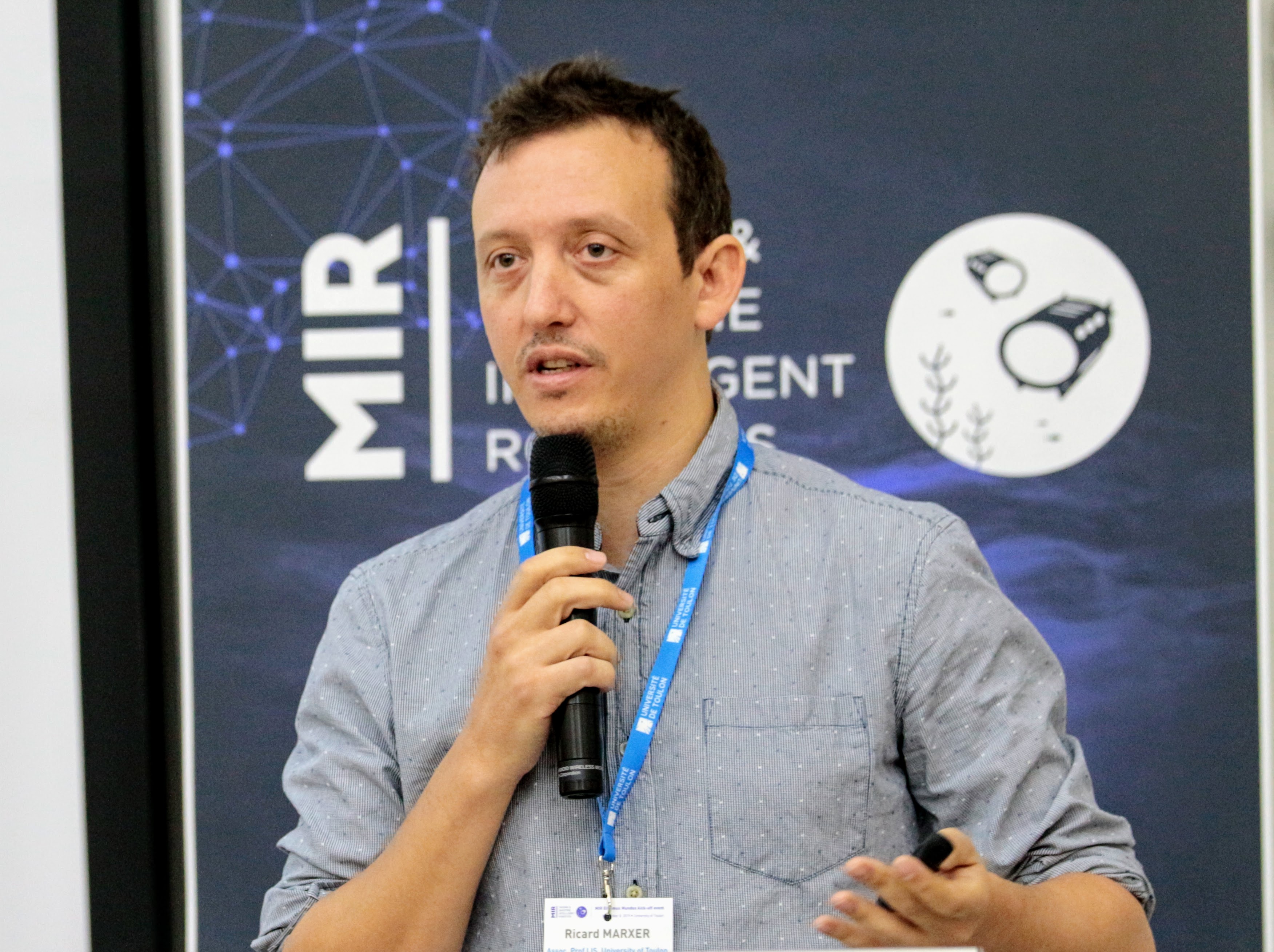
Ricard Marxer is a Full Professor at the Université de Toulon and a researcher at LIS UMR CNRS 7020. He serves as the founding director of the Erasmus Mundus Joint Master’s Degree in Marine and Maritime Intelligent Robotics (MIR) and leads the DYNamics of Information (DYNI) research team. His work bridges machine learning, artificial intelligence, and bioacoustics with applications in marine robotics, biodiversity analysis, and responsible AI. Key research interests include unsupervised learning, speech and language processing, music technology, and AI safety. Recent work focuses on bioacoustic signal analysis, deep-sea imaging, and scaling speech models. He co-organized the EUSIPCO’24 special session on signal analysis for biodiversity and published a landmark survey on machine learning in bioacoustics. No formal student advisees are listed in the provided texts. His current research infrastructure includes the DYNI team and the MIR program, emphasizing interdisciplinary collaboration between computer science and ecological applications.
Wouter van Toll is a Lecturer at the Academy for AI, Games & Media, specializing in crowd simulation and real-time systems. His research focuses on path planning, crowd behavior modeling, and fluid dynamics in agent-based simulations. He has contributed to advancing algorithms for microscopic crowd simulation and integrating techniques like Smoothed Particle Hydrodynamics (SPH) to handle extreme crowd densities. Key research interests include sketch-based interaction design for steering behaviors, navigation mesh optimization, and topological strategies for agent coordination. His work bridges computational methods with creative applications in game development and artificial intelligence. Received Best Paper Award Honorable Mention (2022) for his work on sketch-based steering behaviors in crowd simulation. Active collaborations in Europe and North America, particularly in crowd simulation software development. Publications span algorithmic advancements in crowd simulation, navigation systems, and interdisciplinary applications combining physics-based methods with agent-based models. Current research emphasizes real-time simulation efficiency and human-centered design tools for behavior specification.