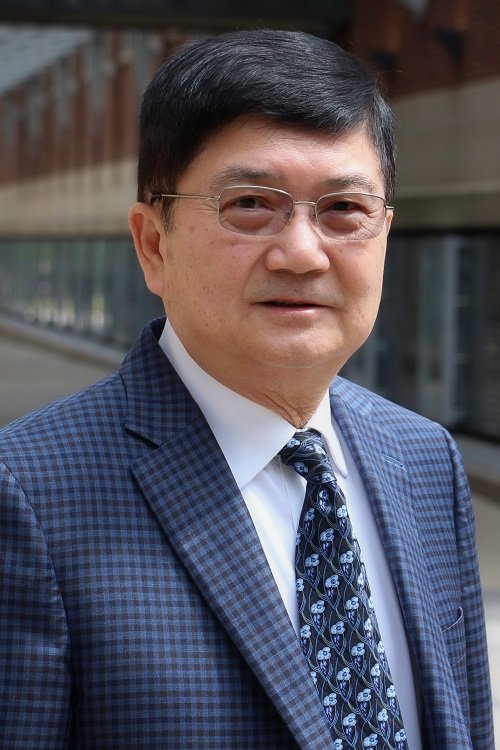
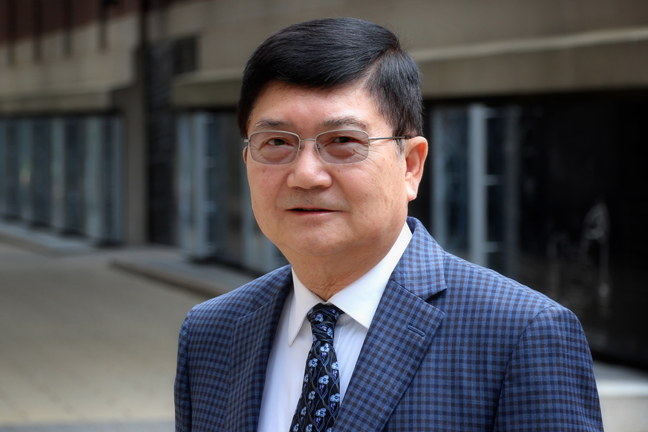
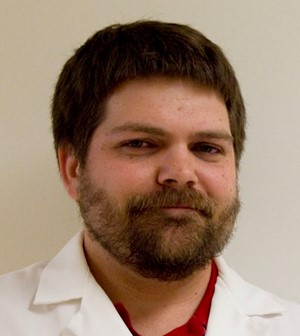
David Y.H. Pui is a Regents Professor in Mechanical Engineering at the University of Minnesota and a Member of the National Academy of Engineering (NAE) . He serves as Director of the Center for Filtration Research (CFR) and the Particle Technology Laboratory (PTL) . Aerosol and nanoparticle science and engineering Particle instrumentation development Filtration solutions for air pollution control Industrial applications of aerosol science and nanoparticle engineering Real-time detection of airborne biological particles Environmental sustainability (microplastics, microfibers) Key research initiatives include studies on the slip effect in nanofiber filter media , loading characteristics of ceramic wall-flow filters , and control of airborne viable virus-containing particles . His work bridges theoretical and applied engineering, focusing on both indoor and outdoor air quality challenges. Scientific Awards National Academy of Engineering (NAE) Member Labs & Collaborations As Director of the Center for Filtration Research (CFR) and Particle Technology Laboratory (PTL) , Pui leads interdisciplinary teams developing innovative filtration technologies for HVAC systems, ozone/VOC removal, and real-time airborne particle detection.
David Y.H. Pui is a Regents Professor in the Department of Mechanical Engineering at the University of Minnesota , affiliated with the College of Science and Engineering . He serves as Director of the Particle Technology Laboratory and the Center for Filtration Research . Research interests include: Aerosol and nanoparticle science/engineering Particle instrumentation development Filtration solutions for air pollution control Environmental sustainability (microplastics/microfibers) Real-time detection of airborne biological particles Slip effects in nanofiber filters Scientific honors : Regents Professor Member, National Academy of Engineering (NAE)
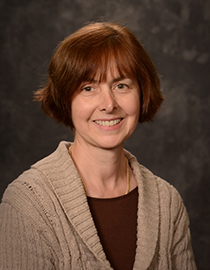
Michael Waring serves as Professor and Department Head of Civil, Architectural and Environmental Engineering at Drexel University, where he has advanced building science research since joining in 2009. His work bridges environmental engineering and architectural design to create healthier indoor environments through innovative air quality solutions. His academic credentials include: Ph.D. in Civil Engineering, University of Texas at Austin (2009) M.S.E. in Environmental Engineering, University of Texas at Austin (2006) B.S.E. in Architectural Engineering, University of Texas at Austin (2005) B.A. in English (Special Honors) and Economics, University of Texas at Austin (2000) Waring's research centers on indoor air quality dynamics, focusing on aerosol formation, chemical transport, and sustainable building systems. He investigates how indoor environments affect human exposure to pollutants and pathogens, with particular emphasis on modeling particulate matter behavior and developing evidence-based ventilation strategies. His work demonstrates that optimizing building operations can simultaneously enhance occupant health, productivity, and energy efficiency—addressing critical societal challenges through engineering innovation. Analysis of his recent publications (2022-2025) reveals three dominant research trajectories: airborne pathogen control (including far-UVC disinfection and aerosol containment devices), indoor chemical processes (particularly secondary organic aerosol formation), and advanced modeling of particle dynamics. These efforts integrate environmental engineering, public health, and computational science to solve real-world problems in residential, educational, and healthcare settings. His scientific recognition includes: National Science Foundation CAREER Award (2011) ASHRAE New Investigator Award (2012) ASHRAE Willis H. Carrier Award (2011) ASHRAE Transactions Paper Award (2011) University of Texas Harrington Dissertation Fellowship (2008-09) ASHRAE Graduate Student Grant-in-Aid (2008) National Science Foundation IGERT Trainee Fellowship (2006-08) As principal investigator of the NSF CAREER project on secondary organic aerosol formation, Waring directs substantial research funding while mentoring emerging scholars. His work informs building standards through collaborations with ASHRAE and government agencies, translating complex aerosol science into practical ventilation guidelines that balance energy use with occupant protection—especially critical during pandemic conditions. Current projects examine real-time indoor chemistry monitoring and advanced filtration systems for public transit. Waring leads Drexel's indoor environmental quality research through computational modeling and experimental facilities, contributing to national initiatives like the Modelling Consortium for Chemistry of Indoor Environments (MOCCIE). His team develops predictive tools that simulate indoor air chemistry from molecular to room scales, directly influencing building codes and public health policies worldwide.
Maria King is an Associate Professor at Texas A&M University with dual affiliation in the College of Agriculture & Life Sciences and College of Engineering. Her research focuses on bioaerosol science, pathogen detection technologies, and antimicrobial resistance mechanisms. King develops innovative methods for dynamic bioaerosol sampling and pathogen tracking, including wetted wall cyclones, airflow modeling, and autonomous biosamplers. Her expertise spans aerosol microbiology, antimicrobial resistance mechanisms, pathogen detection systems, and nanoparticle monitoring. Current projects include airborne pathogen surveillance, aerosolization stress responses, and microbial transmission in agricultural/industrial settings. Awards: Professor of the Year Teaching Excellence Award (2013-2014) Appreciation of Dedicated Service Award (2015)
Alain Kohl is an Affiliate Professor in the School of Infection & Immunity at the University of Glasgow, where he works at the Centre for Virus Research. His research focuses on arboviruses transmitted by arthropod vectors such as mosquitoes, midges, and ticks, with particular emphasis on Dengue virus, Zika virus, chikungunya virus, and Rift Valley fever virus. He leads a research group with access to state-of-the-art facilities including high-containment insectaries. Professor Kohl's research interests center on understanding arbovirus replication and dissemination in arthropod vectors, host immune responses to viral infection, and viral interference with these responses. His work spans multiple dimensions of vector-virus interactions, examining how RNA interference, immune signaling pathways, and endosymbiotic bacteria like Wolbachia affect viral transmission. His group has developed extensive virus and reporter systems to study both model and pathogenic arboviruses. Analysis of Professor Kohl's recent publications reveals a strong focus on molecular mechanisms of virus-vector interactions, particularly the RNA interference pathway in mosquitoes, viral determinants of transmission between hosts, and development of diagnostic and potential intervention strategies. His work bridges fundamental virology with applied public health concerns related to emerging arboviral diseases. Professor Kohl's laboratory investigates mosquito immune responses to arbovirus infection, with particular attention to how these responses control viral replication and transmission. His team is establishing genetic modification programs in live mosquitoes and studying the effects of Wolbachia bacteria on arbovirus transmission. The Centre for Virus Research provides an ideal environment for this modern virology work, with access to specialized containment facilities necessary for working with arthropod vectors and pathogenic viruses.
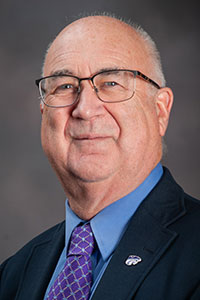
Stephen Higgs is a Professor at the College of Veterinary Medicine , Kansas State University . He holds the Peine Professor of Biosecurity and University Distinguished Professor titles, serving as Associate Vice President for Research and Director of the Biosecurity Research Institute (BRI) . His career spans vector biology, vaccine development, and biosecurity research. Education: B.Sc., Zoology (Hons), 1980, King’s College London Ph.D., Parasitology, 1985, University of Reading Research interests include mosquito-virus-vertebrate interactions , focusing on arboviruses like chikungunya , Zika , and Japanese encephalitis . Key contributions involve infectious clone development , vaccine evaluation , and immunomodulatory effects of mosquito saliva . Collaborations with NIH, Gates Foundation, and pharmaceutical companies have driven his work. Scientific trends in his publications highlight arbovirus transmission dynamics , biocontainment protocols , and vaccine platform innovations (e.g., virus-like particles, DNA vaccines). Scientific Honors: Fellow, Royal Entomological Society (1992) Fellow, American Society for Tropical Medicine and Hygiene (2012) Sanofi Pasteur Award for dengue vaccine R&D Bailey K. Ashford Memorial Lecturer (51st) As Editor-in-Chief of Vector-Borne & Zoonotic Diseases and past-president of ASTMH, he has shaped global research standards. The BRI under his leadership supports transitioning Plum Island research to NBAF and training the next generation in biosecurity.
Adam Hume is a Research Assistant Professor at the Chobanian & Avedisian School of Medicine , Boston University , specializing in Virology, Immunology & Microbiology . With a PhD from University of Wisconsin-Madison and BS from Bates College , he focuses on high-consequence pathogens requiring BSL4 containment , particularly filoviruses (Ebola, Marburg, Lloviu). His work addresses critical gaps in understanding pathogenic potential of newly discovered viruses host response mechanisms therapeutic targeting of host pathways reverse genetics for uncultivable viruses through human organoid systems and iPSC-derived models. His recent publications (2024-2025) span filovirus replication strategies antiviral drug synergy (DHODH inhibitors + 4'-fluorouridine) STAT3 signaling in RSV pathogenesis PARP14's dual antiviral role transcriptional regulation of Ebola mRNAs with key collaborations at Boston University's Center for Regenerative Medicine and institutions like Emory University and NIH NIAID . Recipient of NIH grants for intein-based filovirus research (1R21AI178560-01A1) antiviral countermeasures (1U19AI171403-01) in addition to his Evans Center for Interdisciplinary Biomedical Research affiliation. His methodological innovations include ViBE-Seq for 5' RNA sequencing recombinant Lloviu virus systems fluorescent viral labeling advancing studies on previously inaccessible pathogens.
Michael Prentice is a Professor of Medical Microbiology at University College Cork (UCC), where he conducts groundbreaking research in bacterial genomics and microcompartment biology. He is a principal investigator at the Alimentary Pharmabiotic Centre (APC) and previously served as a Senior Lecturer at Bart's and the London Medical School, Queen Mary University of London from 1993-2004. His educational background includes: MB ChB (Medical Degree) from Birmingham Medical School (UK) in 1980 PhD from Queen Mary, University of London in 1998 Professional qualifications: FRCP (2021), FRCPI (2020), FFPRCPI (2007), FRCPath (1999) Professor Prentice's research centers on bacterial genomics, particularly Yersinia pestis and Yersinia enterocolitica genomes, and the role of horizontally transmitted genes in bacterial pathogenicity. His discovery of a horizontally-transferred metabolosome-specifying operon in Y. enterocolitica led to significant work on bacterial microcompartments (metabolosomes), which are present in approximately 20% of bacterial genomes. His research has shown these structures are important in E. coli urinary tract infections and has applications in renal failure complications and environmental bioremediation. Analysis of his recent publications reveals a strong pivot toward practical applications of microbiological research, particularly in infection control during the pandemic. His 2020-2023 work addresses airborne transmission of SARS-CoV-2, hospital infection control measures, and aerosol dynamics in medical settings, demonstrating how his foundational expertise in bacterial metabolism and genomics informed critical pandemic response research. His research has been supported by: Science Foundation Ireland (multiple awards totaling over €500,000 since 2012) Health Research Board Healthcare Infection Society Higher Education Authority Department of Agriculture, Food and the Marine (DAFF) Professor Prentice has successfully supervised numerous graduate students including Karen McCarthy (PhD, 2016), Alan Barry (MSc, 2015), Tamara Ringwood (PhD, 2013), Kamila Knapik (PhD, 2013), and Olabisi Ojo (PhD, 2009). His laboratory has received continuous funding for innovative research bridging basic science and clinical applications. He maintains extensive collaborations with researchers at UCC (Dr. John MacSharry, Professor Barry Plant), University of Kent (Professor Martin Warren), Queen Mary University of London (Professor Richard Pickersgill), and international institutions including University of Versailles. His work with the APC positions him at the forefront of microbiome research in Ireland, with particular emphasis on the intersection of bacterial metabolism and human health.
José Luis Pérez Díaz is a Full Professor at Universidad de Alcalá (UAH) in the Department of Theory of Signals and Communications, part of the Mechanical, Thermal and Electrical Engineering & Technologies School. He holds dual doctorates: from Universidad Complutense de Madrid (1995) and Centro de Investigación en Materiales Avanzados (2008). His research focuses on superconductivity applications, fog dynamics, magnetic gear systems, environmental decontamination technologies, and cryogenic engineering. He has pioneered advancements in non-contact mechanical systems using magnetic and superconducting principles. Key areas of investigation include: Superconducting magnetic bearings and gears Fog/aerosol decontamination systems (COUNTERFOG®) Radiation effects on advanced materials Biomechanical fluid dynamics in plants Cryogenic electronic component characterization His work combines theoretical modeling with experimental validation, evidenced by over 140 peer-reviewed publications since 1995. He has developed patented technologies for air purification systems and magnetic torque limiters. Current research emphasizes high-performance magnetic gearboxes for aerospace applications and bioaerosol detection methodologies. Awards and recognitions include: Spanish National Research Council (CSIC) innovation grants European Space Agency collaboration projects Multiple patents in decontamination and magnetic systems Pérez Díaz leads UAH's TM Research Group, collaborating with institutions like CERN and NASA on cryogenic systems. He advises graduate students in mechanical engineering and materials science domains.
Marco Radukic, PhD , is a researcher at Bielefeld University affiliated with the Faculty of Engineering 's Cellular and Molecular Biotechnology Group . His work focuses on adeno-associated virus (AAV) engineering, plasmid design, and synthetic biology applications for gene therapy. Research Interests Optimization of AAV production systems ITR (inverted terminal repeat) stability in bacterial hosts Cell-free viral assembly Lipid nanoparticle-mediated gene delivery High-throughput bioprocessing techniques Publication Trends Dr. Radukic's recent publications (2019-2025) focus on AAV vector engineering, bacterial expression systems for viral components, and nanopore sequencing applications for quality control. His work bridges molecular biology with biotechnology to improve recombinant AAV production methodologies. Labs and Collaborations He operates within Bielefeld University's Cellular and Molecular Biotechnology Group , which is part of Germany's broader biotechnology research ecosystem. His research involves collaborations with bioinformatics and biophysics groups as indicated by his methodological approaches.
Professor Yu Chen is a Principal Investigator and Professor at Wuhan University's College of Life Sciences, leading research at the State Key Laboratory of Virology since December 2016. With a PhD in Microbiology from Wuhan University (2003-2009), Dr. Chen has established a prominent research program focused on RNA virus molecular mechanisms, particularly coronaviruses. Research interests center on viral RNA methylation processes, coronavirus replication strategies, and host-pathogen interactions. The lab investigates SARS-CoV-2 variants, viral entry mechanisms through ACE2 receptors, and development of broad-spectrum antivirals targeting RNA modification enzymes. Recent work examines interferon signaling pathways and adenovirus-related pediatric hepatitis. Publication analysis reveals consistent high-impact output with 34 documented works, including 15 publications since 2020 in journals such as Nature, PNAS, and Cell Insight. Research demonstrates strong translational impact in SARS-CoV-2 diagnostics, antiviral development, and viral transmission mechanisms. Dr. Chen serves as peer reviewer for prestigious journals including Nature Biotechnology and Nature Communications. The lab maintains active collaborations across virology research groups, with consistent co-authorship patterns indicating productive international partnerships. As Principal Investigator at the State Key Laboratory of Virology, Dr. Chen oversees research utilizing advanced BSL-3 facilities for working with live viruses, genomics platforms, and structural biology resources. The lab trains approximately 8-12 graduate students working on interconnected projects in RNA virology.