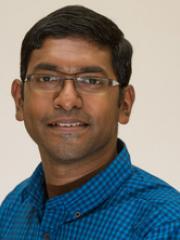
Justin Y. Shi is an Associate Professor at Temple University's Computer and Information Science Department. His research focuses on scalable computing, blockchain protocols, software safety, and infinitely scalable systems. He holds a PhD from the University of Pennsylvania and has held roles including Interim Director of the Center for Advanced Computing and Communications (1992-1998) and CIS Department Chair (2007-2009). B.S. Computer Engineering, Shanghai Jiao-tong University (1977) M.S. Software Engineering, University of Pennsylvania (1983) PhD in Concurrent Programming, University of Pennsylvania (1984) His research explores decoupling programs and data from physical devices to achieve fault tolerance and scalability. Key contributions include the Statistic Multiplexed Computing (SMC) paradigm and foundational work on parallel algorithms and distributed systems. He has authored patents on scalable parallel computing and high-performance blockchain systems. Teaching highlights include courses on quantum computing, cybersecurity, and fullstack programming. He has advised over 15 students, many now in industry and academia. Founder & CEO of Parallel Computers Technology Inc. (2000-2017) Co-founder of SMC Labs (2022-present) Active in editorial roles for IEEE Blockchain Technology Briefs and contributor to NSF workshops on cloud computing. His work has been exhibited at Supercomputing Conferences (1991-2018).
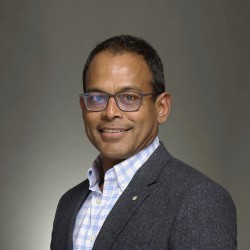
Dr. Chamith Wijenayake is a Senior Lecturer - Teaching Focused at the School of Electrical Engineering and Computer Science, University of Queensland. He holds a PhD in Electrical and Computer Engineering from the University of Akron (2014) and a BSc (Hons) in Electronic and Telecommunications Engineering from the University of Moratuwa, Sri Lanka (2007). His research focuses on multidimensional signal processing, digital hardware architectures, FPGA-based systems, machine learning accelerators, and engineering education. He has received notable awards, including the 2011 Outstanding Student Research Award and the 2014 IEEE Circuits and Systems Pre-Doctoral Award. Education: BSc (First Class Honours) from University of Moratuwa (2007), PhD from University of Akron (2014). His doctoral work contributed to advancements in signal processing and hardware architectures. Research interests span multidimensional signal processing, FPGA-based system design, and engineering education innovations. He develops low-complexity algorithms for light field processing and multidimensional filters for imaging, sensing, and biomedical applications. His work emphasizes practical implementations in hardware accelerators and educational technologies. Outstanding Student Research Award, University of Akron, 2011 IEEE Circuits and Systems Pre-Doctoral Award, 2014 Teaching and Advising: Focuses on blended learning approaches and project-based instruction in electrical engineering. Prior roles include Lecturer at UNSW Sydney (2015–2019). No explicit student advisee records listed. Grants and collaborations are not detailed in provided texts. Labs/Teams: Involved in multidisciplinary projects integrating signal processing with hardware design, though specific lab affiliations are not specified.
Professor Chanaka Jayawardhena is a Professor of Marketing and Head of the Department of Marketing at the University of Surrey's Surrey Business School. He previously held academic roles at the University of Hull, Loughborough University, De Montfort University, and the University of Moratuwa in Sri Lanka. His research focuses on virtual marketplaces, digital technology's impact on consumer behavior, and organizational strategies for enhancing customer experiences through AI, AR, and digital platforms. He actively supervises PhD students and teaches across various levels, emphasizing practical insights and real-world applications. His work bridges academic rigor and industry relevance, with recent publications exploring eWOM 2.0, sharing economy externalities, and consumer-brand relationships via avatars. Research interests include digital media engagement, service robots' societal impacts, and strategies for leveraging technology in marketing. His publications reflect a strong focus on consumer interaction dynamics, with notable contributions to understanding electronic word-of-mouth evolution, regulatory challenges in sharing economies, and avatar-based brand strategies. Teaching philosophy emphasizes adaptability to student needs and integration of research into pedagogy. Roles: Chair in Marketing, Member of Senior Management Team Research Themes: Virtual Marketplaces, Digital Consumption, Technology-Driven Strategies Key Publications: Over 50 peer-reviewed articles since 2001, with recent emphasis on digital marketing and consumer behavior. Supervision involves mentoring PhD candidates on topics aligned with his research areas, fostering academic innovation and industry collaboration.
Professor Yasmin Ibrahim is a faculty member at Queen Mary University of London, holding dual roles as Professor of Digital Economy and Culture and Deputy Dean of the School of Business and Management. She specializes in interdisciplinary research at the intersection of digital technologies, culture, and society, with a focus on migration, media ethics, and posthumanism. Her contributions include over 100 peer-reviewed articles and multiple authored/edited books on topics like digital economies, migration, and media activism. She is the convenor of the Borderlines research cluster, exploring creative and cultural economies, and actively contributes to equality and inclusion initiatives. Her teaching includes undergraduate modules on social media and postgraduate courses on brand management, emphasizing digital technologies' societal impacts. She has reviewed for EU funding bodies and the Qatar National Research Fund, while serving on editorial boards such as Sociology . Her research explores critical perspectives on Islam, race, and visual culture, with recent work addressing pandemic ethics, posthuman capitalism, and digital iconography. Advising and grants: Supervises multiple doctoral students exploring topics like skin-lightening advertisements and migrant narratives. Her work bridges academia and public engagement through research clusters and editorial roles. Notably, she co-authored Posthuman Capitalism (2021) and Digital Icons (2020), advancing critiques of digital economy ethics and visual culture. Labs/Teams: Leads the Borderlines interdisciplinary research group, fostering collaborations on creative and cultural economies. She also chairs UNPRME initiatives and participates in the School’s Senior Management Team.
Dr. Martin Hoffmann is a former research staff member at the Department of Computer Science 4 (Distributed Systems and Operating Systems) at Friedrich-Alexander-University Erlangen-Nuremberg (FAU). He now works at Brose Fahrzeugteile in Bamberg. His research focuses on dependability, fault tolerance, and real-time systems, with emphasis on embedded systems and safety-critical applications. He taught courses such as Echtzeitsysteme (Real-Time Systems) and Verlässliche Echtzeitsysteme (Reliable Real-Time Systems) across multiple semesters. His work includes projects like dOSEK (a dependability-oriented RTOS), DanceOS (fault-tolerant OS design), and CoRed (software-based redundancy for mixed-criticality systems). He also contributed to the I4Copter interdisciplinary quadrocopter project. His research interests span fault-injection frameworks, static kernel analysis, and soft-error mitigation. Notable contributions include Fail* (a versatile fault-injection tool) and dOSEK (RTOS for automotive safety). He has advised multiple students on topics like fault-tolerant garbage collectors and modular OS service frameworks. No scientific awards are explicitly mentioned in the provided text. His work emphasizes interdisciplinary collaboration, with projects bridging embedded systems, robotics, and safety-critical applications.
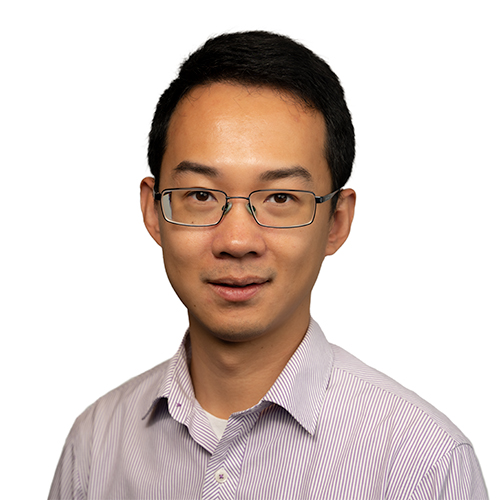
Hantao Cui is an Associate Professor in the Department of Electrical and Computer Engineering at NC State University. He previously served as an Assistant Professor at Oklahoma State University (2021–2024) and earned his Ph.D. in Electrical Engineering from the University of Tennessee, Knoxville (2018). His research focuses on applying mathematical and computational methods to model, simulate, and analyze modern power systems, particularly those dominated by renewable energy sources and inverter-based technologies. He is the author of the ANDES simulation tool and a recipient of the NSF CAREER Award (2024) and the 2020 R&D 100 Award for his work on the CURENT Large-Scale Testbed. His expertise spans power electronics, grid stability, and cyber-physical system integration. Education: Ph.D. in Electrical Engineering, University of Tennessee, Knoxville (2018) M.S. in Electrical Engineering, Southeast University, China (2013) B.S. in Electrical Engineering, Southeast University, China (2011) Research Interests: Large-scale power system simulation and modeling Inverter-based resource control and grid stability Renewable energy integration and optimization Cyber-physical system testbed development Open-source software tools for power systems analysis Key Contributions: Developed ANDES, an open-source framework for power systems modeling Advanced virtual inertia scheduling (VIS) techniques for microgrids Pioneered data-driven adaptive control strategies for grid-forming inverters Awards & Honors: NSF CAREER Award (2024) R&D 100 Award (2020) Best Paper Award at IEEE PES General Meeting (2022) Senior Member of IEEE (2020) Grants & Labs: Principal Investigator for NSF-funded research on inverter-based grid stability Core contributor to the CURENT Large-Scale Testbed project
Pablo Serrano Yáñez-Mingot is an Associate Professor at the Telematics Department of Universidad Carlos III de Madrid (UC3M), where he has been since 2002. He holds a Telecommunication Engineering degree and PhD from UC3M (2002 and 2006, respectively). Currently, he serves as Deputy Director of Infrastructure, Sustainability, and Digitalization at the Higher Polytechnic School (EPS). His research focuses on wireless networks, network protocols, and experimental performance evaluation, with over 100 peer-reviewed publications in top journals/conferences like IEEE/ACM Transactions on Networking and IEEE INFOCOM. He has led major projects such as the Hexa-X 6G flagship and Flex5Gware. He is an IEEE Senior Member and has received awards like the UC3M Excellence Award (2021) and Distinguished Member of the INFOCOM TPC (2022). Education: Telecommunication Engineering (UC3M, 2002), PhD in Telematics (UC3M, 2006). Research Interests: Wireless networks, 5G/6G systems, network protocols, energy efficiency, and experimental evaluation of communication systems. Recent Articles Trends : Focus on 5G/6G architectures, network automation, serverless computing, and energy-efficient solutions. Publications highlight advancements in NFV scaling, network slicing, and AI-driven orchestration. Awards : UC3M Excellence Award 2021 (Young Research Excellence) ACM WiNTECH 2016 Best Paper Award Elevated to IEEE Senior Member (2015) Advising & Grants : Supervised over 30 PhD/MSc students. Principal Investigator of projects like AMAZING-6G and iTrust6G. Actively involved in editorial and organizational roles in IEEE conferences (e.g., INFOCOM, WCNC). Labs & Teams : Leads research groups in network protocols, 5G/6G systems, and experimental evaluation. Collaborates with institutions like the University of Rome Tor Vergata and Trinity College Dublin through visiting positions.
Albert Hernansanz Prats is a Post-Doctoral Researcher and Lecturer at Universitat Pompeu Fabra (UPF), Barcelona, within the SIMBIOsys research group. He co-founded Surgitrainer, a spin-off company focused on hybrid minimally invasive surgical training and assessment platforms, which has secured multiple EU grants. His academic background includes a computer engineering degree from Universitat Autònoma de Barcelona (2003) and a Ph.D. from Universitat Politècnica de Catalunya (2016). His research focuses on advanced teleoperation systems, cognitive and cooperative control architectures for robotic systems, and multimodal user interfaces integrating virtual fixtures and augmented reality. He has contributed to numerous national and European research projects in medical robotics and intelligent systems (RMIS). As co-author of international patents and active in industry-academia collaboration, he bridges research innovation with practical applications in surgical training and robotics. His work emphasizes human-robot interaction and next-generation surgical technologies. Current affiliations include leading roles at Surgitrainer as CTO and academic contributions at UPF through teaching and research.
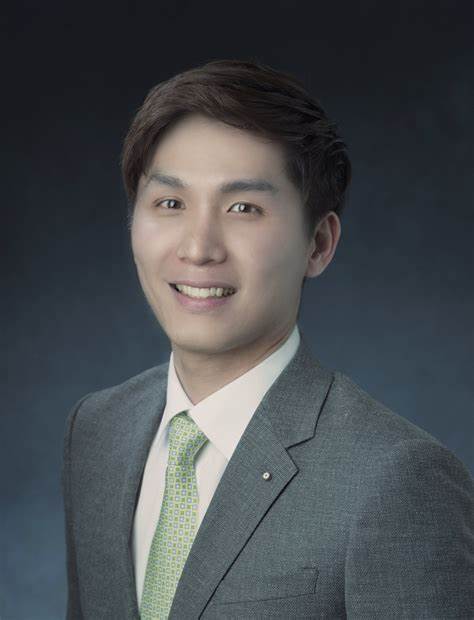
Doyoung Park is an Assistant Professor in the Department of Agricultural Economics at Texas A&M University's College of Agriculture & Life Sciences. His research focuses on environmental economics, international trade, and public policy, particularly exploring intersections between market structures, globalization, and sustainability. He holds a Ph.D. in Economics from the University of Colorado Boulder, following a B.A. and M.A. in Economics from Sogang University and the University of Colorado Boulder respectively. Education: B.A. Economics, Sogang University M.A. Economics, University of Colorado Boulder Ph.D. Economics, University of Colorado Boulder Research interests emphasize how economic policies and market dynamics influence environmental outcomes, including studies on electricity sector regulation, exchange rate impacts on pollution, virtual water trade dynamics, and central bank roles in climate policy. His recent work highlights regional disparities in environmental quality linked to trade and production networks. Publications span themes like regulatory policy design, monetary policy's environmental implications, and globalization's resource allocation effects. While no awards are explicitly listed, his work aligns with Texas A&M AgriLife's mission in agricultural and environmental research. Labs/Teams: Affiliated with Texas A&M AgriLife Research and the Department of Agricultural Economics, focusing on interdisciplinary sustainability studies.
Antonio Corradi is a Full Professor of Computer Networks and Infrastructures supporting Cloud and Big Data at the University of Bologna's School of Engineering, within the Department of Computer Science - Science and Engineering. His roles include President of the regional CLUSTER RER for service innovation, President of the Alma Mater FAM Foundation, and Director of the UNIBO High Studies Center in Buenos Aires. He previously served as Director of the DISI department (2018–2021) and International Delegate for Latin America (2014–2018). His research focuses on distributed systems, middleware for pervasive computing, cloud solutions, mobile systems, smart cities, Industry 4.0/5.0, and 5G communication standards. Education: Laurea cum laude in Electrical Engineering (University of Bologna, 1979) and a Master's in Computer Engineering from Cornell University (1981, supported by a Fulbright-Hayes grant). He joined the University of Bologna as a Researcher in 1983 and became Full Professor in 2000. Research interests span distributed/parallel systems, middleware for mobile agent systems, cloud computing, smart city monitoring, and Industry 4.0 protocols. He emphasizes QoS-aware solutions, edge computing, and IoT integration. His work includes designing frameworks for big geospatial data and novel architectures for serverless and fog computing environments. Selected scientific awards include the 1980 'Cavalieri del Lavoro' prize for his thesis. He actively contributes to institutional duties, including the CCIB (Computer Services Centre of the Engineering School) and CINI Bologna University Section (Italian Interuniversity Consortium). In advising and grants: He coordinates PhD programs and has led projects funded by MIUR, CNR, and European initiatives. Notable collaborations include industry grants with Jakala, OTConsulting, ENAV-Sicta, and the Zefiro Consortium. His projects address challenges in energy efficiency, smart manufacturing, and healthcare management during crises. Labs/Teams: Developed platforms like SOMA and REDMAN middleware. Involved in initiatives such as ParticipAct (mobile crowdsensing), COLOMBO (vehicular traffic monitoring), and the Audit4Cloud platform for cloud performance auditing.
David Ryan Koes is an Associate Professor in the Department of Computational and Systems Biology at the University of Pittsburgh, affiliated with the Joint CMU-Pitt PhD Program in Computational Biology. His research focuses on computational drug discovery, deep learning, and discrete algorithms, aiming to develop novel methods for rapid drug development and open-source software tools. He holds an office at 3064 Biomedical Science Tower 3 and 748 Murdoch Building. Key roles include Associate Director of the CPCB program and leadership in initiatives like CompBio Academy. His software contributions include libmolgrid, gnina, and 3Dmol.js, which advance molecular modeling and visualization. Research interests emphasize AI-driven drug discovery, including molecular docking, pharmacophore modeling, and generative models for molecule design. Recent work involves deep learning for protein structure prediction and pharmacophore elucidation. He has secured NIH grants (e.g., R35GM140753) and collaborations with institutions like CMU and industry partners. Advising over 25 students in computational biology, biotech, and data science programs, Koes bridges academia and industry through projects like Pharmit and the Teach-Discover-Treat initiative. His lab's work spans from foundational ML research to applied drug discovery, with a focus on open science and reproducibility.
Simone Ferlin is an Adjunct Senior Lecturer at Karlstad University working with 5G and Internet evolution. She completed her PhD in computer science in 2017 at the Simula Research Lab and Universitetet i Oslo under the supervision of Dr. Ozgu Alay and Prof. Michael Welzl. Her PhD dissertation focused on increasing robustness in multipath transport with MPTCP. Dr. Ferlin's educational background includes a PhD in Computer Science from the Simula Research Lab and Universitetet i Oslo (2017). Her doctoral research centered on enhancing robustness in multipath transport protocols, specifically focusing on MPTCP (Multipath TCP). She also completed undergraduate work that contributed to a book project with Prof. Friedrich Oehme on electronics and circuit technology. Dr. Ferlin's research spans multiple domains at the intersection of networking, systems, and performance engineering. Her primary interests include network and system measurements, performance analysis, security, and congestion control. She investigates how networks like the Internet evolve, examining technology development, adoption patterns, and their impacts on various entities. Additionally, she explores ways to harmonize security and privacy while making them more usable and assessable. Her work particularly focuses on transport layer and multipath transport protocols, examining their performance and security aspects. She also investigates application and transport layer performance, automation, and monitoring. Her research extends to network programming in both Linux kernel and user space, mobile broadband networks from 2G to 5G, and their intersection with the Internet. She is deeply engaged in observability, distributed and system performance monitoring, and automation. Analysis of Dr. Ferlin's recent publications reveals a strong focus on next-generation networking technologies. Her work spans multiple domains including 5G/6G networks, transport protocols (particularly QUIC and MPTCP), network virtualization, container orchestration, and the application of machine learning to networking problems. She has increasingly incorporated large language models into network configuration and automation research. Her publications demonstrate a consistent emphasis on performance measurement, optimization, and security across diverse networking environments from the edge to the cloud. Dr. Ferlin has received notable recognition for her research contributions: Best paper award at IEEE ICIN'21 for 'Learning-based Incast Performance Inference in Software-Defined Data Centers' Applied Networking Research Prize (ANRP)'25 winner for 'NetConfEval: Can LLMs Facilitate Network Configuration?' Dr. Ferlin is actively involved in mentoring the next generation of networking researchers. She has co-supervised numerous Master's and PhD students across multiple institutions including Karlstad University, KTH, TU Berlin, University of Oslo, and universities in Brazil. Her students have worked on diverse topics including NAT64 performance comparison, system tracing visualization, network observability, ML applications to multipath transport, FEC integration with QUIC, high-performance networking for 5G, congestion control, shared bottleneck detection, multipath IoT applications, and container runtime performance. She is also involved in several significant research projects including Vinnova's SEMLA (Securing Enterprises via Machine-Learning-based Automation), Horizon Europe's CODECO (Cognitive Decentralised Edge Cloud Orchestration), and the Knowledge Foundation of Sweden's DRIVE (Data-driven Latency-Sensitive Mobile Services for a Digitized Society). Dr. Ferlin serves as Workshop Chair for ACM SIGCOMM '25, is a member of the ACM/IRTF Applied Networking Research Workshop (ANRW) steering committee, and co-chairs the Internet Congestion Control Research Group (ICCRG) at the IRTF. She previously served as Associate Technical Editor for IEEE Communications Magazine and has been active on numerous program committees for major networking conferences including SIGCOMM, CoNEXT, IMC, and PAM.
Alessandro Orso is the Dean and Professor of the University of Georgia College of Engineering. Previously, he served as a professor at Georgia Institute of Technology, where he directed the Scientific Software Engineering Center and held leadership roles, including interim dean of the College of Computing (2023–2024). He earned his Ph.D. and master’s in computer science and electrical engineering from Politecnico di Milano, Italy. Orso’s research focuses on software testing, program analysis, and debugging, with applications in improving software reliability and security. His work includes developing automated testing tools (e.g., AutoRestTest), methodologies for scientific software engineering, and techniques for program debloating. His research has secured funding from agencies and industry partners like Google, IBM, and Microsoft, including a $11M grant from Schmidt Futures. His scientific awards include being a Distinguished Member of the ACM and IEEE Fellow. He advocates for innovative education, such as Georgia Tech’s Online Master of Science in Computer Science and his virtual software engineering course. His publications span automated testing, API analysis, and security, reflecting his commitment to advancing both academic research and practical software solutions. Orso’s leadership includes directing the Scientific Software Engineering Center, which pioneers methodologies for scientific software improvement and trains a new generation of engineers. His career blends academic excellence with impactful industry collaborations, driving advancements in software engineering practices.
Haijian Sun is an Assistant Professor at the University of Georgia's School of Electrical & Computer Engineering. His research focuses on advanced wireless communication systems, including 5G/6G networks, federated learning, mobile edge computing, and physical layer security. He explores cutting-edge topics like reconfigurable intelligent surfaces (RIS), hybrid active-passive symbiotic radio systems, and UAV-enabled communication. His work integrates machine learning and optimization techniques to address challenges in channel modeling, energy efficiency, and network security. Recent projects include autonomous agricultural monitoring via drones and energy-harvesting sensors, as well as secure IRS-VLC communication strategies. Publications highlight innovations in dynamic wireless charging for electric vehicles, graph-based phishing detection, and radio radiance field modeling. While no specific awards are listed, his contributions reflect significant engagement with industry-relevant 6G research. Research collaborations involve digital twin networks, IoT systems, and smart grid applications. His team develops practical solutions for real-world communication challenges, emphasizing both theoretical rigor and deployable technologies.
Andrea Araldo is an Associate Professor at Telecom SudParis within the SAMOVAR research lab, specializing in NeSS (Networks, Systems, and Services). His work focuses on optimizing transportation systems, edge computing, and network resource allocation using advanced techniques like reinforcement learning and game theory. He has published extensively on topics including demand-responsive transit, vehicular cloud computing, and multi-tenant edge resource management. His research addresses challenges in urban mobility equity, infrastructure resilience, and energy-efficient network design. Research Interests: Transportation systems optimization Edge computing architectures Reinforcement learning applications Network resource allocation Urban accessibility equity Autonomous mobility systems Recent Trends in Publications: Recent work emphasizes adaptive transport network design during disruptions, equity-driven public transit planning, and vehicular cloud alternatives to traditional edge computing. He explores hybrid optimization methods combining reinforcement learning with classical algorithms for virtual network embedding and resource scheduling. Grants & Collaborations: Engages in multi-institutional projects involving institutions like Université Paris-Saclay and industry partnerships. Active in conferences such as TRB, IEEE ICC, and ACM SIGCOMM. Labs/Teams: Leads projects within SAMOVAR lab focusing on smart transportation and edge computing systems.