Dr. John A. Copland III is a Professor of Cancer Biology and Biochemistry & Molecular Biology at Mayo Clinic in Jacksonville, Florida. He leads the Cancer Biology and Translational Research Laboratory, focusing on molecular mechanisms of carcinogenesis, tumor progression, and development of targeted cancer therapies. Education: PhD in Physiology & Endocrinology (Medical College of Georgia), MS in Endocrinology (Medical College of Georgia), BS in Chemistry (Columbus College), with postdoctoral training at University of Texas Medical Branch. Research interests center on: Identifying tumor suppressor genes (e.g., RhoB, TBR3, GATA3) and oncogenes (e.g., FOXO3a, SCD1, NPTX2). Developing patient-derived xenografts and live cell models for personalized medicine. Designing SCD1 inhibitors via in silico modeling for clinical trials. Recent publications highlight his work on SCD1 inhibition in leukemia and thyroid cancer ImmunoPET imaging of thyroid tumors CRISPR-identified drug synergies in cholangiocarcinoma Patient-specific combination therapies using xenograft models
Professor Klavs F. Jensen is the Warren K. Lewis Professor of Chemical Engineering and Professor of Materials Science and Engineering at MIT. His research focuses on integrating automation, machine learning, and robotics to accelerate materials discovery and pharmaceutical synthesis. He leads the Jensen Research Group, pioneering automated reaction systems with online analytics and optimization algorithms. Education: MS in Chemical Engineering (Technical University of Denmark, 1976); PhD in Chemical Engineering (University of Wisconsin, 1980). Research Interests: Thermochemistry, electrochemistry, photochemistry, Bayesian optimization, high-throughput experimentation, and AI-driven synthesis planning. He collaborates with MIT’s Machine Learning for Pharmaceutical Discovery Consortium to develop algorithms for drug development and process chemistry. Awards: Member of National Academy of Sciences (2017), Member of National Academy of Engineering (2002), Fellow of the American Association for the Advancement of Science (2007), and Fellow of the National Academy of Inventors (2022). Grants & Labs: Editor-in-Chief of Reaction Chemistry and Engineering ; holds 63 US patents and over 490 journal articles. His lab’s innovations include ASKCOS (open-source synthesis planning software) and automated platforms for closed-loop molecular discovery.
Dominik Schörkhuber is a PreDoc Researcher at the Vienna University of Technology (TU Wien) in the Computer Vision department. With a background in Informatics (BSc, Dipl.-Ing.), he focuses on computer vision applications for autonomous driving, robotics, and human-machine interaction. His work spans driver action recognition, pedestrian prediction, and adaptive lighting systems. Current projects: Empathic Vehicle (2024–2026), SyntheticCabin (2021–2025), SmartProtect (2020–2025) Research themes: Video transformers, synthetic data transfer learning, multi-task learning, and sensor-lighting integration Specializes in 3D sensing, nighttime driving analysis, and mobile video creation tools
Lesley Gourlay is a Professor of Education at the IOE - Culture, Communication & Media , part of University College London . She has held leadership roles including Director of the Academic Writing Centre (2010-2020) and Head of the Department of Culture, Communication and Media (2014-2018). Research Focus: Science and Technology Studies in Education, Posthuman Theory, Sociomaterialism, Digital Engagement Awards: Leverhulme Major Research Fellowship (2021-2025) for 'The Datafied University' Her publications explore postdigital education, algorithmic governance, and digital performativity. Recent work includes the open-access monograph The University and the Algorithmic Gaze (2025) and co-editing the Palgrave Handbook of Science and Technology Studies in Education . She is currently working on two forthcoming monographs: The University and the Writing Machine and Weave: The Making of Meaning . Lesley's scientific contributions analyze digital education through postphenomenological, sociomaterial, and posthumanist lenses. Key themes include learning analytics, AI's role in education, and the materiality of digital practices. Her work challenges binary distinctions between online/campus education and human/nonhuman agency. Collaboration Network: Extensive co-authorships with scholars like Petar Jandrić, Clara O’Shea, and Martin Oliver. She co-organizes the UK-wide Digital University Network and contributes to journals such as Postdigital Science and Education and Educational Philosophy and Theory .
Jay Henderson is an Assistant Professor in the Department of Computer Science at Memorial University of Newfoundland, leading the Human-Computer Interaction (HCI) Lab. His research focuses on quantitative HCI, measuring human performance with emerging technologies such as mixed reality and generative AI. He holds a PhD from the University of Waterloo and has held roles including Postdoctoral Fellow at Carleton University and Senior Research Scientist at Huawei Technologies Canada. Education: PhD in Computer Science, University of Waterloo (2021) BSc Hons in Computer Science (minors in Mathematics and Psychology), Mount Allison University (2016) Research Interests: Henderson’s work bridges computer science with psychology and mathematics, emphasizing objective measurement of user interactions. Key areas include mixed reality productivity, generative AI interfaces, gesture-based input, and multimodal feedback systems. His quantitative approach ensures practical insights for technology design. Key Grants & Awards: NSERC Discovery Grant ($155,000 over 5 years) NSERC Discovery Launch Supplement ($12,500) David R. Cheriton Graduate Scholarship ($20,000 over 2 years) Teaching & Supervision: Teaches courses like COMP 4303 (AI for Games) and supervises multiple graduate and undergraduate researchers. Notable supervisees include Daniel Jo (MSc) and Arunav Saha (BSc Honours). Service Contributions: Served on ACM committees including Graphics Interface and CHI Late Breaking Work. Acted as Virtual Chair for ACM ASSETS 2024 and contributed to ACM’s name change policy as a transgender advocate.
Dr. Reba Wissner is an Associate Professor of Musicology at the Schwob School of Music, Columbus State University, where she also serves as Interim Associate Dean in the Honors College. She specializes in film, television, and video game music, with a strong commitment to pedagogy and accessibility in higher education. Education: PhD, Musicology, Brandeis University, 2012 MFA, Musicology, Brandeis University, 2008 BA, Music and Italian, Hunter College, CUNY, 2005 Graduate Certificate, Higher Education Administration, Northeastern University, 2019 Graduate Certificate, Instructional Design, University of Wisconsin - Stout, 2020 Levels 1, 2, and 3 UDL Credentials, UDL-IRN Quality Matters Certified Peer Reviewer and Master Reviewer Dr. Wissner’s research centers on music in screen media, particularly Cold War-era television, and the intersection of music with cultural narratives. She is a leading voice in public musicology and Universal Design for Learning (UDL), advocating for inclusive and accessible music education. Her work spans historical analysis, pedagogical innovation, and interdisciplinary media studies. Her recent publications reflect a consistent focus on sonic storytelling, with books on The Twilight Zone , The Outer Limits , David Lynch, and Twin Peaks . She explores themes of nuclear anxiety, identity, and adaptation across media. Her editorial projects include the Oxford Handbook of Public Musicology and a guide on UDL in music history classrooms. Scientific Awards and Recognitions: Scholarship of Teaching and Learning Award, Columbus State University, 2022 Governor’s Teaching Fellow, Louise McBee Institute of Higher Education, 2022 Quality Matters Certified Peer Reviewer and Master Reviewer UDL Levels 1–3 Credentials Dr. Wissner has secured editorial contracts with Routledge and Oxford University Press, reflecting her leadership in the field. She mentors emerging scholars through collaborative editing and public scholarship initiatives. Her work in online learning and accessibility has shaped curriculum development and peer review standards. She leads the Public Musicology Certificate program and contributes to interdisciplinary studies and honors education. She is actively involved in research teams focused on media music and pedagogical innovation, integrating digital tools and inclusive design into music history education.
Dr. Shirley Coyle is an Assistant Professor in the School of Electronic Engineering at Dublin City University (DCU) and Programme Chair for the BSc Global Challenges. She holds a BEng in Electronic Engineering from DCU (2000) and a PhD in Biomedical Engineering from NUI Maynooth (2005). Her career includes roles as a Telecoms Engineer at Siemens, Research Fellow at the National Centre for Sensor Research, and Team Leader of Wearable Sensors in the INSIGHT Centre for Data Analytics. She also studied part-time at the Grafton Academy for Fashion Design and later founded a consultancy in wearable technologies. Her research focuses on smart garments, wearable sensors, and sustainable textiles, with applications in healthcare, sports performance, and S.T.E.A.M. integration. Key interests include developing wearable chemical sensors, energy-autonomous sensing systems, and IoT-enabled rehabilitation devices. She has pioneered work on wearable sensors for monitoring chronic diseases, athlete training, and home rehabilitation using VR. Dr. Coyle’s work spans interdisciplinary collaboration, combining biomedical engineering with textile design. Her contributions include innovations in electrospun textiles, self-powered sensors, and sensor integration with microfluidics. She has held leadership roles in DCU’s Governing Authority and promotes STEM education through design-focused initiatives.
Prof. Dr. ir. BJ (Jeroen) de Kloet is a Professor of Globalisation Studies and Director of the Amsterdam Centre for Globalisation Studies (ACGS) at the University of Amsterdam 's Faculty of Humanities, Department of Media Studies. He has held visiting positions at institutions including Hong Kong Baptist University and has been actively involved in international academic collaborations across Asia and Europe. Key Research Areas: Globalization, Chinese cinema, urban studies, postcolonial theory, cultural politics Awards: Member of the Royal Netherlands Academy of Arts and Sciences (KNAW) in Social Sciences and Humanities (2023) Teaching: Engages in critical reflection on academic labor through seminars like 'How to survive the university?' His recent publications explore topics such as platformization, digital intimacies, and the politics of heritage-making. He has presented at major conferences in Venice, Hong Kong, Singapore, and Taipei, focusing on the intersection of creativity, control, and urban transformation.
Sapha Barkati, MD, MSc is an Assistant Professor at the Department of Medicine, Faculty of Medicine and Health Sciences, McGill University , and an Investigator at the RI-MUHC Glen site . Her work bridges clinical practice and research in tropical medicine, focusing on parasitic diseases affecting vulnerable populations. Affiliations: Assistant Professor, McGill University Investigator, Research Institute of the McGill University Health Centre (RI-MUHC) McGill International Tuberculosis Centre Research Focus: Specializes in neglected tropical diseases like strongyloidiasis and tegumentary leishmaniasis, particularly among migrants and immunocompromised individuals. Studies include: Physician awareness of Strongyloides screening Prevalence patterns in non-endemic countries HTLV-1 co-infection treatment response Cost-effective screening strategies Scientific Contributions: Key publications address tropical disease management in non-endemic settings, mpox outbreak dynamics, and SARS-CoV-2 immunity patterns. Her work emphasizes evidence-based guidelines for: Parasite screening in transplant recipients Leishmaniasis treatment protocols Traveler disease prevention Collaborative Networks: Partners with institutions like Universidad Peruana Cayetano Heredia and participates in GeoSentinel surveillance. Leads studies on: Covid-19 health disparities Vaccine effectiveness against variants Remote patient monitoring systems
Raphael Franzini serves as Associate Professor of Medicinal Chemistry at the University of Utah, actively contributing to the Biological Chemistry PhD Program. His research pioneers innovative chemical approaches for therapeutic development, with dual focus on DNA-encoded library technologies and bioorthogonal drug delivery systems. His educational foundation includes an M.S. from the Swiss Federal Institute of Technology (Lausanne) and a Ph.D. from Stanford University. This training underpins his group's multidisciplinary methodology combining organic synthesis, bioconjugation, computational modeling, and advanced imaging techniques. Dr. Franzini's research program centers on two transformative areas: First, advancing DNA-encoded library screening through computational integration to identify leads for challenging targets like Tankyrase and Sirtuin 6, with recent work addressing false negatives in machine learning prediction. Second, developing novel bioorthogonal release chemistry using isonitrile-tetrazine reactions for spatiotemporally controlled drug activation, validated in zebrafish models. His group emphasizes both technological innovation and therapeutic translation, with chemistry designed to minimize off-target effects in solid tumors. Analysis of his 15 most recent publications reveals escalating integration of computational methods with experimental library screening, alongside refinement of bioorthogonal release kinetics. The work spans chemical biology, medicinal chemistry, and pharmaceutical sciences, with growing emphasis on machine learning for library data interpretation and in vivo validation of drug-release systems. Dr. Franzini maintains an active research laboratory that provides comprehensive training in cutting-edge drug discovery methodologies. His group culture prioritizes both scientific innovation and researcher development, with projects spanning from fundamental reaction kinetics to therapeutic applications. The lab's infrastructure supports organic synthesis, molecular imaging, and computational analysis for advancing precision therapeutics.
Pourang Irani is a Professor and Principal’s Research Chair in Ubiquitous Analytics at the University of British Columbia (Okanagan campus), within the Irving K. Barber Faculty of Science’s Department of Computer Science, Mathematics, Physics and Statistics. Previously, he served at the University of Manitoba for 19 years as a faculty member and Acting Associate Dean of Science. His research focuses on Human-Computer Interaction (HCI), Wearable Computing, and Information Visualization, with an emphasis on designing interactive systems for 'anytime, anywhere' sensemaking using emerging technologies like mixed reality and smart devices. He leads interdisciplinary projects such as the NSERC CREATE grant on Visual and Automated Disease Analytics, training data scientists in health analytics. Education: PhD in Computer Science (University of New Brunswick, 2002), supervised by Dr. Colin Ware. Research Interests: Wearable interfaces (smartwatches, smartrings, and AR/VR) Data visualization for health and pervasive systems Persuasive health technologies and data storytelling Mid-air and hands-free interaction techniques Embodied interaction through social robots Recent Work Trends: Articles emphasize innovations in smartwatch interaction (e.g., bezel-to-bezel gestures), tactile visualizations via skin-dragging, and voice assistant-driven health data queries. Projects like Databiting explore transient personal data exploration, while Data Videos focus on narrative-driven health communication. Grants & Leadership: Principal Investigator of NSERC CREATE Visual and Automated Disease Analytics program. Co-leads UBCO’s Digital Transparency cluster. Active in interdisciplinary teams addressing health informatics and HCI challenges. Labs & Teams: Leads a lab developing prototypes in wearable computing, spatial analytics, and immersive technologies. Collaborates with researchers in medicine, engineering, and data science to translate HCI innovations into practical solutions.
Professor Dhiraj Murthy holds appointments in the Moody College of Communication , Sociology , and School of Information at the University of Texas at Austin. He earned a Ph.D. in Sociology from the University of Cambridge. His research focuses on social media, digital methods, health communication, and disaster response. He directs the Computational Media Lab , a leading research group with over 20 students, and co-edits the journal Big Data & Society . Notably, he authored the seminal book Twitter: Social Communication in the Twitter Age (2013/2018), which won the ALA CHOICE Prize. Dr. Murthy's work has been funded by NIH, NSF, and other major grants, including studies on e-cigarette marketing, disaster informatics, and AI-driven disinformation detection. He also serves on advisory boards for MediaWell and chairs international social media conferences. Education : Ph.D. in Sociology, University of Cambridge. Grants : Over $5M from NIH, NSF, and UT Austin’s Good Systems initiative for projects like 'AI Technologies to Curb Disinformation' and 'E-cigarette Use Among Mexican American Students.' Labs/Teams : Computational Media Lab (UT Austin), focusing on AI, social media analytics, and health research. Awards : Stanford University’s 2023 Top 2% Global Scientists in Communication & Media Studies and Sociology, ALA CHOICE Prize (2018), and multiple NIH/NSF grants. His work bridges sociology, media studies, and computational methods to address societal challenges like health disparities and misinformation.
Karen Panetta is a Professor at Tufts University School of Engineering with appointments in Electrical and Computer Engineering, Computer Science, Mechanical Engineering, and Academic Services. She currently serves as Dean of Graduate Education for the School of Engineering and holds the title of Distinguished Professor. Ph.D. in Electrical Engineering, Northeastern University M.S. in Electrical Engineering, Northeastern University B.S. in Computer Engineering, Boston University Dr. Panetta's research focuses on developing efficient algorithms for simulation, modeling, and signal and image processing for security and biomedical applications. Her work brings together artificial intelligence, machine learning, and visual sensing systems to create solutions for robot vision and biomedical imaging. She develops algorithms inspired by the human visual system to enable machines to 'see' like humans, with applications in homeland security, biomedicine, facial recognition, and search and rescue operations. Her research has significant humanitarian applications, addressing global challenges facing women and children. Dr. Panetta has received numerous prestigious awards including induction into the National Academy of Engineering (2023), the Presidential Award for Science and Engineering Education and Mentoring (2011), and the IEEE Award for Distinguished Ethical Practices (2013). She is a fellow of multiple prestigious academies including the National Academy of Inventors, European Academy of Sciences and the Arts, and IEEE. Member, National Academy of Engineering (2023) Presidential Award for Science and Engineering Education and Mentoring (2011) IEEE Award for Distinguished Ethical Practices (2013) Fellow, National Academy of Inventors Fellow, European Academy of Sciences and the Arts Fellow, Asia-Pacific Artificial Intelligence Association As an educator and mentor, Dr. Panetta founded the nationally acclaimed Nerd Girls program to promote engineering to young students, particularly women. She previously served as worldwide director for IEEE Women in Engineering and editor-in-chief of the IEEE Women in Engineering magazine. Her approach to graduate education emphasizes the importance of building strong collaborative relationships between faculty and students, with a focus on proactive communication and documentation of research progress. Dr. Panetta's humanitarian research applies engineering solutions to global challenges, including developing technology to help doctors find cancerous tumors, security screeners find concealed weapons, and law enforcement agencies find criminals and missing children. Her work demonstrates a commitment to 'Doing The Right Thing' by addressing issues affecting populations with limited resources or 'voice' in society.
Kiran Pedada is an Associate Professor of Marketing at the Asper School of Business, University of Manitoba, and holds the F. Ross Johnson Fellow and The Associates Fellow in Marketing and Inclusive Business. Previously, he was an Assistant Professor at the Indian School of Business (ISB) and a Visiting Scholar at the University of North Carolina. He has been recognized as ISB’s Teacher of the Year (2020 and 2021) and named a top MBA professor by BusinessBecause. His research focuses on marketing strategy, digital transformation, emerging markets, and inclusive business practices. Dr. Pedada earned his Ph.D. in Marketing from Texas Tech University, where he won the Helen Devitt Jones Excellence in Graduate Teaching Award. His doctoral work on international marketing alliances in emerging markets won the prestigious AMS Mary Kay Inc. Doctoral Dissertation Award. Before academia, he worked in management consulting and corporate strategy. Research Interests : Marketing strategy in digital environments Social and financial impact of marketing Global marketing expansion via digital ecosystems Emerging markets dynamics Brand competitiveness through digital orientation Key Contributions : His research has been published in top journals like Journal of Marketing Research and Journal of the Academy of Marketing Science. He co-authored cases on digital transformation for Harvard Business Publishing and serves on editorial boards of key marketing journals. His work has been featured in Forbes, Fortune, and CNN. Awards : AMS Mary Kay Inc. Doctoral Dissertation Award (2019) F. Ross Johnson Fellowship Teacher of the Year (ISB, 2020 & 2021) He actively advises on digital readiness of SMEs and ESG integration in alliances. His current projects explore metaverse applications and rural microentrepreneurship in India.
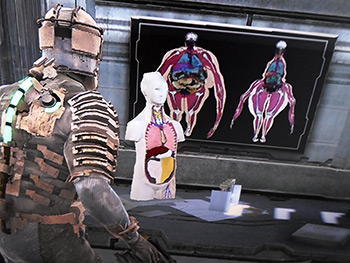
Diane Carr is a Professor of Media and Cultural Studies at the Institute of Education, University College London (UCL), where she serves as Director of the Digital Media MA Programme. Based in the Culture, Communication & Media department, Carr is an established scholar in game studies, media studies, and critical disability studies. Her work bridges academic research with practical applications in digital media education. Carr's research focuses on media studies and cultural studies perspectives on digital games and players, with particular emphasis on critical analysis, methodology, representation, and screen studies. During 2024-25, her research follows two key themes: developing ludic autoethnography to articulate real-world experiences of discrimination, and examining complicity with big tech, datafication, and AI in games and education. Her work consistently explores the intersection of disability studies with game studies, challenging normative representations of ability in digital spaces. Carr's publications reveal a sustained engagement with disability representation in games, particularly through analyses of titles like Dead Space and Deus Ex. Her research demonstrates how games function as cultural texts that both reflect and shape societal attitudes toward disability, ability, and bodily difference. She employs textual analysis and autoethnographic approaches to examine how games construct notions of normalcy and deviance. UCL Widening Participation community of practice awards (2022) ONE UCL Award for collegiality, 'Ways of Working/Working Together' (2021) UKLA Postgraduate Research Prize (2015) Carr has supervised numerous PhD students including Danielle Kleinerman (in progress), Angeliki Symeonidi (2020), Bruno de Paula (2019), and Angela Colvert (2015). Her research funding includes significant projects like 'Disability and Community: Dis/engagement, Dis/enfranchisement, Dis/parity and Dissent' (2016-2021) funded by the AHRC, 'Alternative Futures: Disability and Community' (2014-2015), and 'Digital Games: Representations of disability' (2013-2014). She has also led projects on AI education using science fiction and virtual worlds in higher education. As Director of the Digital Media MA Programme, Carr leads initiatives that connect game studies with critical media education. Her teaching includes research design and game studies on the MA Digital Media Critical Studies program. Notably, Carr is deaf, bringing lived experience to her critical disability studies work while actively contributing to academic discourse on accessibility and representation in digital spaces.