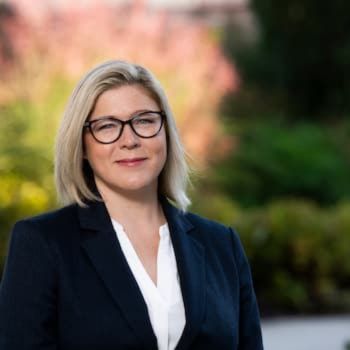
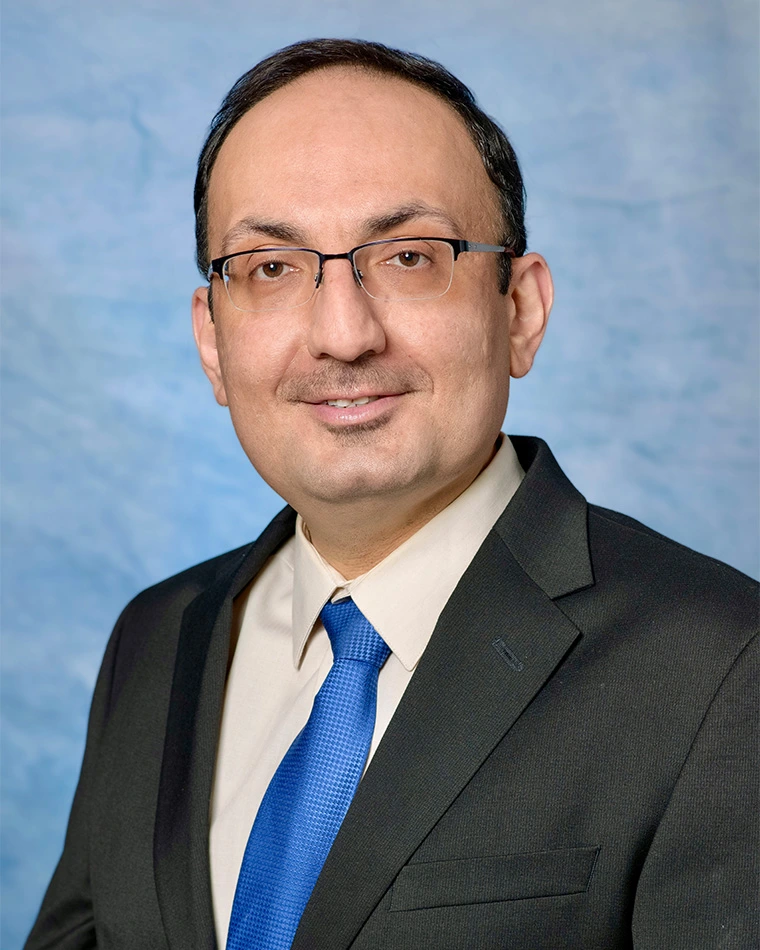
Professor Emily S. Cross is a cognitive and social neuroscientist holding dual appointments at the University of Glasgow's School of Psychology & Neuroscience (UK) and Western Sydney University's MARCS Institute (Australia). She directs the Social Brain in Action Laboratory (SoBA), specializing in how embodied experiences shape social perception. Cross earned a BA in psychology and dance from Pomona College, MSc from University of Otago as a Fulbright Fellow, and PhD in cognitive neuroscience from Dartmouth College, followed by postdoctoral training at University of Nottingham and Max Planck Institute. Her research explores experience-dependent plasticity through dance, robotics, and neuroimaging techniques (fMRI, TMS), focusing on four key areas: neural signatures of embodied expertise, neuroaesthetics, visual learning across lifespan, and social engagement with robots. This interdisciplinary work bridges neuroscience, performing arts, and robotics. Cross's research shows strong focus on human-robot interaction dynamics, cultural perceptions of robotics, and the neural correlates of aesthetic experiences. Recent work investigates how social experience shapes human-robot interaction, cross-cultural differences in robot acceptance, and computational approaches to movement analysis. Publications consistently demonstrate methodological innovation through VR, economic games, and large-scale motion capture libraries. Honors & Awards: Jacob Brownowski Award (British Science Association, 2017) Philip Leverhulme Prize in Psychology (2018) World's 50 Most Renowned Women in Robotics (2020) Elected member: Young Academy of Europe Elected member: Royal Society of Edinburgh's Young Academy of Scotland Her ERC Starting Grant funds groundbreaking work on human-robot interaction. Cross leads the Social Brain in Action Lab with focus on mentoring next-generation scientists and research ethics training. The lab employs neuroimaging, training paradigms, and diverse methodologies to study action observation across dance, music, and robotics domains.
Dr Luke Hespanhol is a Senior Lecturer in Design and Computation at the University of Sydney's School of Architecture, Design and Planning. He is affiliated with the Sydney Southeast Asia Centre and Sydney Nano Institute, and previously served as a guest researcher at Aarhus University's Department of Aesthetics and Communication. His work focuses on interactive media installations that foster reflection on human-environment relationships, blending urban design, technology, and social engagement. He holds a PhD in interactive media architecture from the University of Sydney's Design Lab, with research exploring user-centred hybrid urban environments. His doctoral work laid the foundation for his current interests in digital placemaking, urban informatics, and smart cities. Research Interests: - Designing technology-infused public spaces - Media architecture as a tool for inclusive urban development - Ethical implications of AI and blockchain in cultural contexts - Temporal and spatial dimensions of urban interaction design - HCI methodologies for multiperspectival cultural heritage interpretation - Antifragile city frameworks integrating citizen participation His recent publications highlight trends in reimagining urban futures through speculative design, ethical AI systems, and autonomous vehicle interaction paradigms. While no specific scientific awards are listed, his work often addresses critical societal issues like decolonization in technology and climate-resilient infrastructure. Grants and Collaborations: - 2025: 'Waste to Resilience: Sanitation Against Stunting and Climate Vulnerability in Informal Coastal Areas' (Sydney Southeast Asia Centre) - 2022: 'The Metaverse as Vehicle for Aboriginal Digital Inclusion, Wellness and Self-Determination' (Facebook Research) Dr Hespanhol is actively involved in the Media Architecture Institute and contributes to cross-disciplinary initiatives uniting technology, art, and urban planning. His research emphasizes co-creation processes with communities to ensure equitable technological integration in urban systems.
Prof. Tilo Hartmann is a Full Professor at the Department of Communication Science, Vrije Universiteit Amsterdam (VU), affiliated with the Network Institute and Communication Choices, Content and Consequences (CCCC). He holds a PhD from Hanover University of Music, Drama and Media (2005) and has held positions at institutions including the University of Southern California, University of Erfurt, and University of Zurich. His research focuses on immersive technologies like Virtual Reality (VR), examining presence, media awareness, and their psychological impacts. He explores how immersive experiences affect beliefs, wellbeing, and social behaviors, with applications in education (e.g., reducing plastic waste via VR interventions). Key research areas include: presence theory, media psychology, effects of XR technologies, and entertainment’s role in wellbeing. He co-founded the Immersive High Tech Group at VU's Network Institute and contributes to UN Sustainable Development Goals related to sustainable behavior and education. Prof. Hartmann has served on editorial boards of top journals (e.g., Journal of Communication) and professional roles such as secretary of ICA's Game Studies Interest Group. His teaching spans over 12 courses across universities globally, emphasizing curriculum development and student supervision. He holds advanced teaching qualifications (SKO).
Gaetano Valenza is an Associate Professor of Bioengineering at the University of Pisa, Italy, where he leads the Neuro-Cardiovascular Intelligence Lab at the Enrico Piaggio Research Centre. He holds affiliations with the Neuroscience Statistics Research Laboratory at MIT and has served as a Research Fellow at Harvard Medical School and Massachusetts General Hospital. His academic work spans bioengineering, computational physiology, and affective computing. His research focuses on statistical and nonlinear biomedical signal and image processing , cardiovascular and neural modeling , and physiologically interpretable artificial intelligence . He develops wearable systems for physiological monitoring, with applications in autonomic nervous system assessment, brain-heart interactions, and mental health. His work has led to novel metrics such as the Sympathetic and Parasympathetic activity indices derived from ECG. The 15 most recent publications reflect a consistent trend in brain-heart interplay , complexity analysis of physiological signals , explainable AI in healthcare , and virtual reality applications in mental health . His work integrates advanced signal processing, nonlinear dynamics, and machine learning to decode emotional and cognitive states from physiological data. Dr. Valenza is a Senior Member of IEEE and serves on several technical committees. He is an active editorial leader, currently serving as Associate Editor for IEEE-EMBC , Plos One , Complexity , and Scientific Reports , and has guest-edited special issues in Philosophical Transactions of the Royal Society A and IEEE Journal of Biomedical and Health Informatics . He has led or participated in numerous international research projects, including FP7 and H2020 initiatives such as NEVERMIND and EXPERIENCE. He teaches courses in Biostatistics, Probability & Biostatistics, and Advanced Image Processing at the University of Pisa. As lab head and project coordinator, he leads a multidisciplinary team working on neuro-cardiovascular intelligence, wearable systems, and AI-driven mental health interventions.
Dr. Zara Ersozlu is a Senior Lecturer in Mathematics Education within the School of Education at the University of Newcastle, Australia. With a distinguished international career spanning multiple continents, she has held academic positions at prestigious institutions including North Carolina State University (USA), Gazi and Gaziosmanpasa Universities (Turkey), National Taiwan Normal University (Taiwan), The University of Western Australia, Murdoch University, and Deakin University. Her academic journey includes tenured positions as an Associate Professor and leadership roles as Department Head and Chair in teacher education disciplines. Currently, she teaches undergraduate and postgraduate courses in mathematics education, including Effective Pedagogies in Primary Mathematics, K-6 Mathematics, K-6 Numeracy, and Digitally Supported Learning. Dr. Ersozlu earned her Doctor of Philosophy from Firat University in Turkey and her Master of Art from Sakarya University. Her extensive academic preparation is complemented by five years of practical teaching experience in public schools prior to entering academia. This blend of theoretical knowledge and practical classroom experience informs her approach to teacher education and educational research. At the broadest level, Dr. Ersozlu's research investigates solutions to real-life problems impacting people's well-being, success, and capacity to achieve. Her scholarly work spans primary and secondary mathematics education, the psychology of mathematics (including metacognition, self-regulation, and anxiety), cross-cultural educational studies, teacher education, virtual simulated learning environments, and educational assessment. She has increasingly focused on the transformative potential of AI and machine learning in education, exploring how these technologies alter teaching, learning, and research processes. Her methodological expertise encompasses both quantitative and qualitative approaches, allowing her to effectively analyze both small and large educational datasets. Analysis of Dr. Ersozlu's recent publications reveals a strong emphasis on mathematics anxiety, teacher education, and the integration of technology in learning environments. Her work demonstrates a consistent focus on practical applications of educational research to address real-world challenges in mathematics education. The interdisciplinary nature of her research connects educational psychology, technology integration, and cross-cultural perspectives, with particular attention to how these elements intersect in teacher preparation and student learning outcomes. 2023 ATEA Research Recognition Award from the Australian Teacher Education Association 2021 Fellow of the Higher Education Academy (Advance HE, UK) 2010 Fellowship Program for Postdoctoral Researchers from the Council of Higher Education of Turkey Dr. Ersozlu is deeply committed to mentoring the next generation of scholars, currently supervising four PhD students and having successfully guided ten students to completion. Her grant portfolio includes significant funding for projects such as Best Practice Guidelines for RPL in Initial Teacher Education Programs ($60,000), Exploring the Reciprocal Relationship Between Mathematics Anxiety and Mathematical Resilience ($2,599), and multiple conference travel awards. She serves as an Associate Editor for several prominent journals including the International Electronic Journal of Mathematics Education and as Editor for Interdisciplinary STEM Education. Her editorial work reflects her standing as a respected voice in mathematics education research. Dr. Ersozlu's academic leadership extends to her role in developing innovative teaching approaches that integrate virtual simulation technology and learning analytics. Her work with TeachLivE™, a mixed-reality classroom simulation platform, demonstrates her commitment to creating authentic learning experiences for teacher education students. Through these initiatives, she bridges the gap between educational theory and classroom practice, preparing future educators to effectively implement evidence-based teaching strategies in diverse learning environments.
Professor Judy Kay is a leading academic in Computer Science at the University of Sydney, holding a Chair in Human-Centred Technology Research within the Faculty of Engineering and IT. Her work focuses on designing personalized systems that empower users to control their data, particularly in lifelong learning and health contexts. She leads the Human Centred Technology Research Cluster and is Editor-in-Chief of the International Journal of Artificial Intelligence in Education (IJAIED). Education: Studied at the University of Sydney, inspired to pursue academia due to its multidisciplinary environment and student collaboration opportunities. Research interests include user modeling, scrutable AI systems, and interfaces for personal informatics. Current projects span virtual reality learning environments, health data dashboards, and ethical AI transparency. Her work has led to commercialized technologies like the Personis system. Publications include over 200 peer-reviewed works in top venues like CHI, UbiComp, and AIED conferences. Awards highlight her contributions to computing education and AIED, including the 2023 Lifetime Achievement Award. Advises 4 current PhD/Master’s students focusing on topics like Open Learner Models in VR and health decision-making tools. Collaborates with multidisciplinary teams across computer science, health sciences, and education. Labs/Teams: Leads research groups in the School of Computer Science and collaborates with the Charles Perkins Centre on health-related projects.
Emily S. Cross is Professor at the University of Glasgow's School of Psychology & Neuroscience, where she co-directs the Social Brain in Action Lab (SoBA) and leads the ERC Starting Grant 'Social Robots' project. She completed her PhD at Dartmouth College and held positions at Bangor University, Radboud University, and the University of Western Australia before joining Glasgow. Her research explores: Experience-dependent plasticity through dance and motor learning Social cognition in human-robot interaction Emotional processing during action observation Aesthetic perception of movement Cross-cultural differences in technology acceptance Professor Cross uses neuroimaging (fMRI), neurostimulation (TMS, tDCS), and behavioral methods to study how we perceive and learn from human and artificial agents. Her work has been published in Trends in Cognitive Sciences, Journal of Neuroscience, and Philosophical Transactions of the Royal Society. She currently supervises projects on robot-assisted health interventions and develops VR paradigms to study social cognition.
Assoc. Prof. Dr. Sema Alaçam Doğan has been affiliated with Istanbul Technical University since 2014, serving as an Associate Professor in the Department of Architecture . She has held administrative roles including Deputy Head of Department and Erasmus Coordinator. Education : PhD in Informatics in Architectural Design (2008-2014), MS in Informatics in Architectural Design (2005-2008), and BS in Architecture (1999-2005) from Istanbul Technical University. Her research explores Computational Design , Artificial Intelligence in Architecture , and Sustainable Material Innovation . She investigates digital tools for heritage preservation, daylight optimization in BIM, and cognitive development in architecture students. Recent publications analyze AI-assisted design literacy , machine learning for Sinan mosques , and environmental comfort in Harran houses . Her work integrates algorithmic frameworks with sustainable practices. Scientific awards include multiple ITU Publication and Performance Awards (2021-2024), FABFEST Prizes , and the 2024 Artemis Educator Award from NASA. Active projects like "Physical Computation in Architectural Drawing" and "Robotic Fabrication with Recycled Wind Turbine Blades" demonstrate her leadership in computational and sustainable research.
Stephen Marshall is Professor of Urban Morphology and Urban Design at The Bartlett School of Planning, University College London. He also served as Visiting Professor at the Department of Architecture and Urban Studies, Politecnico di Milano, Italy from 2019 to 2021. With over twenty-five years of experience in the built environment fields, initially in consultancy and subsequently in academia, Professor Marshall has established himself as a leading expert in urban morphology and design. His educational background includes a Doctor of Philosophy from University College London (2001), a Postgraduate Diploma from Edinburgh College of Art (1995), a Master of Science from the University of Leeds (1989), and a Bachelor of Engineering from the University of Glasgow (1988). Professor Marshall's principal research focuses on urban morphology and street layout, examining their relationships with urban formative processes including urban design, coding and planning. His work bridges urban design theory with practical applications, exploring how cities evolve through complex interactions of physical form, social processes, and planning interventions. He has written or edited several influential books including 'Streets and Patterns' (2005), 'Cities, Design and Evolution' (2009), and 'Urban Coding and Planning' (2011). His recent publications reveal a growing interest in applying complexity science to urban morphology, with particular attention to biological analogies for understanding self-organizing cities. He has pioneered research on digital participation methods in urban planning, exploring how online platforms can enhance public engagement in urban space design. His work consistently bridges theoretical urban morphology with practical applications for contemporary urban challenges like pandemic adaptation and sustainable transport. Professor Marshall has served as Chair of the Editorial Board of Urban Design and Planning from its launch to 2012, and is now co-editor of Built Environment journal. His editorial work has significantly shaped scholarly discourse in urban planning and design. He leads several significant research initiatives including the Incubators of Public Spaces project, which explores digital platforms for co-creating urban spaces, and the Self-Organising Built Environment project, which investigates biological analogies in urbanism. These projects reflect his interdisciplinary approach to understanding and shaping urban environments, connecting with Sustainable Development Goal 11 (Sustainable Cities and Communities).
Jennifer Lavoie is an Associate Professor at Wilfrid Laurier University's Faculty of Human and Social Sciences, affiliated with the Department of Psychology and Criminology. She specializes in mental health crisis response, policing strategies, de-escalation techniques, and scenario-based training. Wilfrid Laurier University: Faculty of Human and Social Sciences, Psychology and Criminology Departments Research Interests : Her work focuses on integrating virtual reality and scenario-based training to improve police de-escalation skills. She examines violence risk assessment , correctional systems , and housing first programs for homeless individuals with mental illness. Recent studies address big data governance , cyberstalking victimization , and community-driven policing approaches . Publication Trends : Her research spans mental health policy , police training efficacy , and technological integration in crisis management . She explores virtual reality applications and community co-designed interventions , alongside longitudinal studies on stress and coping mechanisms in correctional and psychiatric settings. Scientific Awards : No scientific awards listed in available data. Advising : Actively supervises students in psychology and criminology, with unlisted advisees. Her work bridges academic research and practical policing applications .
Ehsan Azimi is an Assistant Professor in the Department of Electrical and Computer Engineering and the Department of Computer Science at the University of Arizona, where he is also a member of the Graduate Faculty. His research bridges human-AI interactive systems, extended reality, robotics, and human-centered design, with a strong focus on medical applications. His research interests lie in creating synergistic human-AI systems that enhance medical procedures through advanced technologies. Key areas include extended reality for surgical navigation , robotics in minimally invasive surgery , and intelligent user interfaces . His work has led to innovations in smart glasses calibration, intraocular robotic snakes, needle steering, and digital twins for surgical training, all aimed at improving precision, safety, and learning in medicine. The recent articles highlight a consistent trend in medical robotics , augmented reality in surgery , and human-robot collaboration . These works span from hardware development to AI-driven interfaces, emphasizing real-time interaction, user experience, and clinical applicability across disciplines like ophthalmology, otology, and surgical education. Scientific Awards: Siebel Scholar Provost Postdoctoral Fellowship Link Fellowship Ehsan actively mentors students and scholars in research projects, indicating a strong commitment to academic advising. While specific grant details are not listed, his patented technologies and publication record suggest successful funding and translational research outcomes. His work has been featured in Engineering Magazine and other media, reflecting its impact and innovation. His research is conducted within an interdisciplinary lab environment focused on human-centered AI and medical robotics, integrating expertise from computer science, engineering, and clinical medicine to develop next-generation surgical and training systems.
Tom McDonough is a Professor of Art History at Binghamton University, specializing in modern and contemporary art with a focus on avant-garde movements, particularly the Situationist International. His research explores intersections between art, politics, and social movements in postwar Europe. He holds degrees from Rutgers University (BA), New York University’s Institute of Fine Arts (MA, PhD), and has taught at Harvard University and UC Berkeley. Education: Bachelor’s Degree: Rutgers University MA and PhD: Institute of Fine Arts, New York University His research interests include postwar European avant-gardes, postwar French architectural history, and contemporary Black American art. Key publications include "The Beautiful Language of My Century" and edited volumes on the Situationist International and urban theory. McDonough received the SUNY Chancellor’s Award for Excellence in Scholarship (2024) and has held fellowships at institutions such as the Institute for Advanced Studies in the Humanities and the Académie de France à Rome/Villa Medici. Teaching focuses include 19th-century Parisian art, Black Monument sculptors, and film theory. His work bridges art criticism with broader socio-political analysis, emphasizing radical artistic movements’ societal impacts.
Theo Arentze is a Full Professor at Eindhoven University of Technology (TU/e) in the Department of the Built Environment, leading the Real Estate Management and Development group. He is affiliated with EAISI Health and EAISI Mobility research institutes. Education: MSc in Psychology (Cognitive Psychology & AI) from Groningen University, PhD from TU/e Urban Planning Research: Spatial choice behavior, decision support systems, activity-based modeling, agent-based simulation His research integrates bounded rationality into spatial choice models to enhance behavioral realism, with applications in real-estate management , neighborhood development , healthy cities , and hybrid work environments . Recent work includes child-friendly urban planning and energy-efficient housing impacts . Prominent article themes include: Hybrid work location decisions Urban public space affective experiences Child friendliness in residential choices Sustainable energy preferences Spatial decision support systems Social network modeling Scientific recognition includes: Best Poster Award (2025) - Computational Urban Planning Conference Long Paper of Distinction (2021) - Healthy Buildings Europe EuroFM Best Paper Award (2017) Pyke Johnson Award (2016) As an educator, he teaches courses in Urban Planning , Housing Economics , and Quantitative Research Methods . His multidisciplinary team combines expertise from psychology, sociology, and urban economics to create high-quality built environments through behavioral research.
Maria T. Schultheis is a Professor in Drexel University's Department of Psychological and Brain Sciences and holds a joint appointment in the School of Biomedical Engineering, Science and Health Systems. As Interim Director of Clinical Training, she oversees clinical psychology education. She earned her PhD in Clinical Psychology from Drexel University in 1998. Her research focuses on neurorehabilitation, particularly applying virtual reality (VR) technology to assess and improve driving capacity and everyday functioning in individuals with neurological disorders like traumatic brain injury, stroke, and multiple sclerosis. She has pioneered VR-based driving simulators for clinical evaluation and rehabilitation. Her work integrates clinical psychology, engineering, and transportation science, addressing cognitive, physical, and behavioral demands of driving post-neurological injury. Key projects include developing driving assessment protocols for disabled populations and investigating fatigue management in MS patients. Her interdisciplinary approach has been funded by NIH, NIDRR, and the NMSS. Notable awards include the 2007 APA Early Career Award (Division 40) and recognition from the National Academy of Neuropsychology. Schultheis leads the Applied Neuro-Technologies Lab, emphasizing ecologically valid methodologies. Over 35 peer-reviewed publications and presentations at international forums highlight her contributions. She serves on the National Research Council’s Transportation Research Board, influencing policy on neurological disorders and mobility. Grants have supported projects like VR-based financial competency assessments and understanding dual-task demands in post-concussion driving. Her research also explores decision-making competency in young adults and the neurocognitive correlates of risky driving behaviors. Collaborations with biomedical engineers and transportation specialists reflect her commitment to bridging clinical practice and technological innovation for functional recovery.
Denise Head is Professor of Psychological & Brain Sciences and Associate Chair at Washington University in St. Louis, with an additional appointment as Associate Professor in Radiology. Her research integrates cognitive neuroscience and neuroimaging to study cognitive aging and Alzheimer's disease. PhD, University of Memphis MS, University of Memphis BS, University of New Orleans Her research focuses on age-related cognitive changes and their neural underpinnings. Key areas include spatial navigation deficits in aging, the role of lifestyle factors (exercise, sleep, stress) in brain aging, and interventions to support cognitive function in older adults. She uses virtual reality, mobile eye-tracking, and neuroimaging techniques such as fMRI and DTI. The recent publications highlight a consistent trajectory in cognitive neuroscience and aging research, with emphasis on neuroimaging biomarkers, structural brain changes, and cognitive performance in normal and pathological aging. Her work bridges psychology, neurology, and radiology, contributing to early detection and understanding of Alzheimer's disease. Scientific Awards: No awards listed in the provided text. Dr. Head advises graduate students and leads a research lab focused on cognitive aging, though specific student names are not listed. Her lab investigates mediators of brain aging and develops methods to support spatial navigation in older adults. While specific grants are not mentioned, her ongoing research and recent publications suggest active external funding. She leads a research team in the Department of Psychological & Brain Sciences, utilizing advanced neuroimaging and behavioral methods to study aging and dementia. The lab integrates real-world and virtual experimental designs to understand spatial cognition and brain health in older populations.