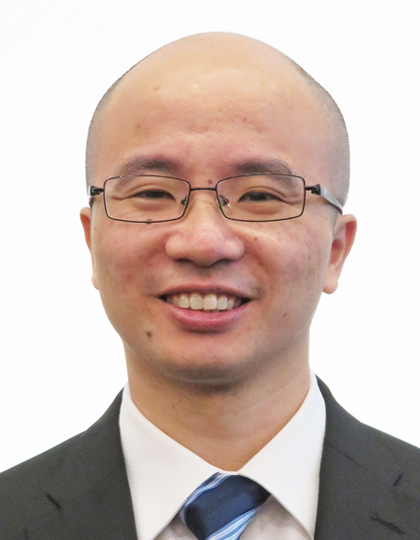
Raghavendra Ramachandra is a Professor at the Department of Information Security and Communication Technology (IIK) , within the Faculty of Information Technology and Electrical Engineering at the Norwegian University of Science and Technology (NTNU) in Gjøvik. His research focuses on biometric systems, particularly in face, fingerprint, and finger vein recognition, with emphasis on presentation attack detection, morphing attack detection, and deep learning applications. Current research projects include: SALT (2022-2026) : Developing privacy-preserving facial biometric authentication systems. OffPAD (2022-2025) : Creating cryptographic tools and presentation attack detection for fingerprint biometrics. SWAN (2015-2020) : Developing biometric countermeasures against presentation attacks. His recent publications demonstrate technical expertise in: Face morphing attack detection using vision transformers and point cloud networks Image fusion techniques for multispectral biometrics GAN-based synthetic data generation for security evaluation Explainable AI approaches for biometric verification Professor Ramachandra also supervises PhD and Master’s students, and has extensive experience in leading national and EU research initiatives.
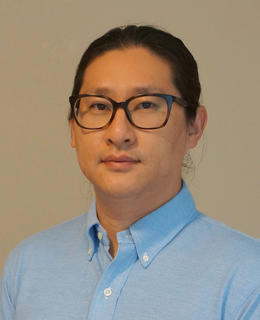
Professor David Xu is a distinguished faculty member in the Department of Information Systems at City University of Hong Kong, where he has served as Professor since 2023 after progressing from Associate Professor (2017-2023). Prior to joining CityU, he held academic positions at Wichita State University from 2011-2017, culminating in the Bomhoff Endowed Professor of Business title in 2017. His educational background includes a PhD in Management Information Systems from the University of British Columbia (2011), an MPhil in Information Systems from City University of Hong Kong, and a First-class honors BBA in Business Administration from Lingnan University. As Programme Leader for both BBA Information Management and Bachelor's Degree in Information Systems programs since 2018, he plays a significant administrative role in curriculum development. Professor Xu's research spans human-computer interaction, artificial intelligence applications, and technology adoption across diverse domains. With over 90 publications including 40+ journal papers in top-tier venues like MIS Quarterly and Information Systems Research, his work demonstrates exceptional scholarly impact. His Google Scholar metrics (3,300+ citations, h-index of 22) reflect substantial influence in the field. His recent publications reveal a strategic focus on AI ethics, information cocoon mitigation in social media, healthcare applications of AI, and digital transformation effects on business. The work spans theoretical contributions and practical implementations, with increasing emphasis on societal impacts of technology. AIS Early Career Award (2018) AIS Distinguished Member – Cum Laude (2020) Multiple teaching excellence awards (2021, 2024, 2025) ICIS and ISR Best Associate Editor Awards (2020-2021) Numerous paper award nominations across major conferences Professor Xu has secured significant research funding including NSFC, RGC GRF, and CityU Strategic Research Grants totaling millions in funding. His current projects address critical issues like AI beauty filters, depression treatment systems, and information cocoon mitigation. As Senior Editor for Information Systems Journal and Associate Editor for Information Systems Research, he shapes the field's scholarly discourse while supervising DBA and PhD students across multiple programs.
Kangsoo Kim is an Assistant Professor in the Department of Electrical and Software Engineering at the Schulich School of Engineering, University of Calgary, where he leads the Human-X Interaction (HXI) Lab. He holds a Ph.D. in Computer Science from the University of Central Florida and previously served as a postdoctoral researcher at the University of Delaware and the Synthetic Reality Lab at UCF, with an additional appointment in the College of Nursing. Education: Ph.D. in Computer Science, University of Central Florida, 2018 M.S. in Electronics and Computer Engineering, Hanyang University, 2011 B.S. in Electronics and Computer Engineering (Cum Laude), Hanyang University, 2009 Dr. Kim's research focuses on Human-Computer Interaction, particularly in immersive eXtended Reality (XR), including Virtual, Augmented, and Mixed Reality. His work explores virtual avatars, social interaction in XR, perception and cognition, and the integration of XR with IoT and digital twins. He investigates how embodied virtual humans influence social presence, trust, and user behavior in educational, healthcare, and industrial settings. His recent publications span top-tier venues such as IEEE TVCG, ISMAR, and IEEE VR, with themes centered on virtual agents, empathy in XR, avatar embodiment, and industrial applications of XR and digital twins. Trends include the use of AI-powered avatars, physiological feedback integration, and XR for public education and infrastructure safety. Scientific Awards: AKCSE Early Achievement Award (2023) Innovation Award at TechConnect World (2021) ACM SUI Best Paper Award (2019) ICAT-EGVE Best Demo Audience Choice Award (2020) ACM VRST Best Student Paper Award (2017) Dr. Kim actively mentors students and has advised numerous graduate researchers in areas including virtual pets, avatar behavior, XR for health, and industrial applications. He has secured research funding through competitive fellowships and grants, including UCF Graduate Fellowships and IEEE VR Doctoral Consortium support. He has also contributed to patents in AR magnification and serves as an Associate Editor for Presence: Virtual and Augmented Reality. He leads the HXI Lab, which conducts interdisciplinary research bridging computer science, psychology, and engineering to advance XR technologies for real-world impact in education, healthcare, and industry.
Steve Oney is an Associate Professor at the University of Michigan School of Information and Computer Science and Engineering (by courtesy). His research focuses on enabling and encouraging more people to write and customize computer programs by creating new programming tools and exploring usability issues in programming environments. With a strong background in Human-Computer Interaction, he bridges the gap between theoretical research and practical applications in programming education, accessibility, and developer tool design. Dr. Oney completed his Ph.D in Human-Computer Interaction at Carnegie Mellon University's Human-Computer Interaction Institute under Professor Brad Myers and Dr. Joel Brandt. He also earned an M.Eng in Computer Science and SB degrees in Computer Science and Mathematics from MIT. His research spans multiple interconnected areas with a unifying theme of making programming more accessible and understandable. Key focus areas include programming education tools that help instructors understand student code at scale, web automation systems that simplify repetitive tasks, accessibility research addressing challenges faced by visually impaired programmers, and innovative VR programming environments. His work consistently emphasizes the human aspects of programming, exploring how tools can better support diverse programming needs and contexts. Dr. Oney's research output shows a strong trajectory toward increasingly sophisticated tools that integrate AI capabilities while maintaining a focus on human-centered design principles. Recent publications demonstrate growing emphasis on inclusive design, educational applications, and the integration of generative AI in programming environments. L@S 2024 Best Paper Award for CFlow CHI 2023 Honorable Mention for VizProg UIST 2024 Best Short Paper (EdCode) VL/HCC 2019 Best Short Paper Recognition for Contribution to Diversity and Inclusion (CSCW 2021) UMSI Excellence in Instruction Award (2021) University of Michigan President's Postdoctoral Fellowship (2015) As a mentor, Oney advises multiple Ph.D. students and postdoctoral researchers, with several successful graduates including Dr. Lei Zhang (June 2024). His research has secured over $1 million in funding from the National Science Foundation, Google, and Adobe, supporting projects that address critical challenges in programming education, accessibility, and developer tool design. He leads the Programming Tools Lab at the University of Michigan, where his team develops innovative tools that help programmers work more effectively. Current projects focus on AI-enhanced programming education, web automation, accessibility for diverse user groups, and next-generation programming environments for virtual and augmented reality.
Professor Scott Palmer is a distinguished academic at the University of Leeds, serving as Professor of Light and Performance within the School of Performance and Cultural Industries (Faculty of Arts, Humanities and Cultures). With over 30 years of teaching and management experience in Higher Education, he was a founder member of the School in 2001 and has held numerous senior management roles including Interim Head of School, Director of Student Education (2019-2022), Director of Enterprise and Knowledge Transfer, and Programme Manager for BA (Hons) Performance Design for over a decade. In 2017-18, he was appointed to an Excellence and Innovation Fellowship at the Leeds Institute for Teaching Excellence & Innovation. PhD (Leeds) - Light, Scenography and the Choreography of Space Cert. Education (Manchester) BA Hons. Drama (Wales) Professor Palmer is a leading international advocate for scenography as an intellectual discipline. His research focuses on light, darkness and atmosphere in performance, designing for audience experience, and since 2017, the field of XR (Extended Reality). His influential monograph Light: Readings in Theatre Practice (Palgrave Macmillan, 2013) significantly contributed to establishing scenography as a scholarly field, exploring how light has influenced staging practices throughout history. He has co-edited major works including Scenography Expanded (Bloomsbury 2017) and the groundbreaking Contemporary Performance Lighting (2023), the first critical anthology focused specifically on performance lighting. His recent publications reveal evolving research trends from historical analyses of light in theatre to contemporary explorations of XR, immersive environments, and audience experience. Keywords across his work consistently emphasize scenography, audience experience, light design, and the integration of digital technologies in performance. His sub-field specializations span historical lighting techniques, immersive theatre practices, site-specific performance, 360-degree environments, and the theoretical frameworks connecting technological innovation with theatrical expression. Excellence and Innovation Fellowship at the Leeds Institute for Teaching Excellence & Innovation (2017-18) Research impact highlighted by AHRC as an exemplar case study Contributions to BBC Radio 3's Illuminating the Stage (broadcast December 25, 2017) Professor Palmer has supervised numerous PhD candidates and led collaborative student projects resulting in public performances including Pandora's Box (2009), Dream/Play (2010), Just Before Dawn (2011), Into the Dark (2012), Blood Wedding (2013), The Dreaming (2015), The Waiting Room (2017), and Within This House (2018). His research has been supported by significant grants including the AHRC-funded Projecting Performance (2006-08), UKRI-funded Surround Stories (XR Stories), and AHRC-funded Bridging the Gaps exploring Mixed Reality Performance of Chinese Opera. He plays an active role in international scholarly communities as co-convenor of the IFTR Scenography Working Group (2013-16), inaugural member of the TaPRA Scenography Working Group, and contributor to OISTAT Education and History and Theory Commissions. Professor Palmer is a member of the PLACE, Practice as Research, and Participation Research Groups at Leeds, and was co-instigator of the Leeds-based Performing Light Network. His SignalSpace web resource, developed with colleague Maria Kapsali, explores digital creativity and mobile phone applications in performance contexts. He regularly presents research outcomes at international conferences including IFTR, TaPRA, ICIDS, and ZipScene, demonstrating his commitment to advancing both theoretical understanding and practical applications of performance design.
Dr. Fariba Mostajeran is a Researcher at the Human-Computer Interaction research group within the Department of Informatics at the University of Hamburg. Her interdisciplinary work bridges computer science, psychology, and environmental science to investigate the psycho- and physiological effects of immersive media on users across different age groups, with particular focus on therapeutic applications of virtual and augmented realities. Her educational background includes: B.Sc. in Computer Engineering-Software from the University of Isfahan (Iran) M.Sc. in Digital Media from the Universität Bremen Ph.D. in Human-Computer Interaction at the Universität Hamburg Dr. Mostajeran's research centers on Medical Mixed Reality , Digital Health , and Human-Computer Interaction , with emphasis on how virtual environments can enhance cognitive performance, psychological well-being, and therapeutic outcomes. She systematically investigates the impact of virtual nature exposure on memory, attention, and mood, developing applications for mental health treatment, rehabilitation, and workplace design. Her methodological approach combines controlled experiments with user-centered design to create effective immersive interventions. Analysis of her recent publications reveals three major research thrusts: (1) the therapeutic applications of virtual nature for mental health and cognitive enhancement, (2) the development and evaluation of intelligent virtual agents for healthcare applications, and (3) understanding the cognitive and physiological mechanisms underlying user responses to immersive environments. Her work increasingly focuses on multimodal interaction with virtual agents and their implementation in clinical settings. Her scholarly contributions have been recognized through: Ideas and Venture Fund (IVF), Universität Hamburg, 2024-2025 EXIST-Gründerstipendium (EXIST Founder Scholarship), 2014-2015 Deutschlandstipendium (German Scholarship), 2012-2013 Dr. Mostajeran has supervised over 30 master's and bachelor's theses focusing on virtual reality applications across diverse domains including mental health interventions, cognitive training, and therapeutic environments. Her research has received support from university innovation funds and national scholarship programs. She serves on multiple academic committees including professorship selection committees and examination boards, contributing significantly to institutional governance. Her active participation in major conferences as program committee member and reviewer demonstrates her standing in the HCI and VR research communities. She works within the Human-Computer Interaction research group at the University of Hamburg led by Prof. Dr. Steinicke, which maintains strong connections with clinical partners and industry collaborators to translate research findings into practical healthcare applications. The group's facilities include state-of-the-art VR laboratories equipped for comprehensive user studies measuring both behavioral and physiological responses.
Peter Kazanzides is a Research Professor in the Department of Computer Science at the Whiting School of Engineering, Johns Hopkins University, where he joined the faculty in 2002. His research focuses on robotics, medical robotics, augmented reality, and computer-assisted interventions with primary applications in computer-integrated surgery. His educational background includes multiple degrees from Brown University: ScB (1983) in Electrical Engineering AB (1983) in Computer Science ScM (1985) in Electrical Engineering ScM (1987) in Applied Mathematics PhD (1988) in Electrical Engineering Kazanzides is a member of the Robotics, Vision, and Graphics research group and directs the Sensing, Manipulation, and Real-Time Systems (SMARTS) laboratory. His work spans surgical robotics, mixed reality, and systems engineering, with emphasis on computer-assisted surgery in extreme environments including minimally invasive surgery, microsurgery, and space teleoperation. The SMARTS lab develops real-time sensing systems, augmented/mixed reality interfaces using head-mounted displays, high-performance motor control, and sensor fusion technologies, with strong focus on system integration and open-source platforms like the da Vinci Research Kit (dVRK). Analysis of his recent publications (2024-2025) reveals dominant trends in surgical robotics autonomy, augmented reality navigation, force estimation, and digital twin technologies. Key themes include AI-driven task automation, haptic feedback enhancement, real-time instrument segmentation, and simulation environments for surgical training, primarily leveraging the da Vinci Research Kit framework. As director of the SMARTS lab within the Laboratory for Computational Sensing and Robotics (LCSR), Kazanzides leads a collaborative ecosystem including the Computer Integrated Interventional Systems (CIIS) Lab, Advanced Medical Instrumentation and Robotics (AMIRO) Lab, Dynamical Systems and Controls Lab (DSCL), Computer Aided Medical Procedures (CAMP) Lab, Medical UltraSound Imaging & Intervention Collaboration (MUSiiC) Lab, and Photoacoustic & ULtrasonic Systems Engineering (PULSE) Lab. His lab maintains responsibility for the development and support of the open-source da Vinci Research Kit, a critical resource for surgical robotics research worldwide.
Matthias Bertsch is a faculty member with expertise spanning musical acoustics, medical acoustics, and ethnomusicology. His work bridges musicology, biomedical engineering, and clinical applications. Academic leadership in structured doctoral programs Research on brass instrument mechanics and NICU sound environments Interdisciplinary focus on music-physiology and psychoacoustics Research Interests: Specializing in the acoustic properties of musical instruments, therapeutic sound applications for premature infants, and physiological analysis of brass players. His work combines empirical measurement with clinical and cultural implications. Article Trends: Publications emphasize brass instrument biomechanics , incubator sound optimization , and music's physiological effects , with recurring themes in virtual acoustics and interdisciplinary methodologies.
Jin Yunshui is an Associate Professor at the Media Experiment and Practice Teaching Center within Tongji University's School of Art and Media. He holds a PhD in Digital Design and Technology from the University of the Arts London (2022) and has extensive experience in digital animation, interactive media, and immersive technologies. Education PhD in Digital Design and Technology (2017-2022), University of the Arts London, UK MFA in Media Art and Design (2011-2012), Bauhaus University Weimar, Germany Master of Arts (2010-2013) and Bachelor of Animation (2006-2010), Tongji University Research Interests Jin's work spans virtual reality (VR) , augmented reality (AR) , serious games , cultural heritage digitization , 3D visualization , and natural user interfaces . He focuses on applying immersive technologies to education, mental health, and historical preservation. Research Trends His recent publications highlight comparative studies of VR/AR systems, immersive education applications, and ethical design of interactive media. Key themes include digital storytelling , user engagement metrics , and technological frameworks for generative art . Scientific Awards 金曦奖-创新印象艺术奖 (2022) The Rookies奖沉浸式媒体组冠军 (2019) 全国计算机设计大赛一等奖 (2009) 同济大学优秀教师 (2018) Grants & Projects Jin leads major initiatives like the Shanghai Educational Research Project on Mental Health Intervention (2024), Ministry of Education's National Golden Course in Shadow Puppetry (2023), and international collaborations with Brunel University on creative industries (2023). Labs & Teams He heads the Non-planar Imaging Laboratory at Tongji and contributes to the Forever Project with Holocaust survivor holography (2017).
Ma Xufeng is an Assistant Professor in the Animation Department at the School of Art and Media, Tongji University , Shanghai. She earned her PhD in Image Arts from Chung-Ang University, South Korea , and completed a postdoctoral fellowship at the School of Journalism and Communication, Tsinghua University . Her research bridges intelligent imaging, animation games, AIGC, new media art, and the metaverse , focusing on intelligent image production and dissemination, AI-driven art therapy, and serious games . Education: PhD in Image Arts, Chung-Ang University, South Korea (2018.09–2021.02) Master of Image Arts, Chung-Ang University, South Korea (2016.09–2018.06) Bachelor of Art Design (Animation), Zhongnan University of Economics and Law, China (2011.09–2015.07) Research Interests: Dr. Ma’s scholarship sits at the intersection of artificial intelligence, digital media, and therapeutic applications . She explores how AI-generated content (AIGC) can revolutionize animation, game design, and immersive storytelling . A second strand investigates serious games and VR systems for autism rehabilitation and emotional therapy , leveraging game psychology to craft interventions that blend aesthetics, technology, and mental health . Publications & Research Trends: Her most recent work (2021-2024) charts a trajectory from VR-based rehabilitation games to AI painting for art therapy , demonstrating a shift from interactive technology prototypes toward critical and aesthetic theories of AI art . Collectively, her publications map the evolution of intelligent media ecosystems and their societal impact. Scientific Awards & Grants: Principal Investigator, Korean BK21+ CFT Convergence Research Project – VR immersive game for autistic children (2020) Principal Investigator, Korean BK21+ CFT Convergence Research Project – Fitness-bicycle functional game (2019) Special Selection Award, Seoul International Animation & Cartoon Festival (2020) Nomination, Golden Kuker–Sofia International Animation Festival (2020) Teaching & Labs: At Tongji University, Dr. Ma contributes to undergraduate and postgraduate curricula in animation, new media art, and game design . She is affiliated with the Omnimedia Research Institute and the Media Experiment and Practice Teaching Center , where she guides students in AI-driven content creation and VR/AR prototyping .
Ariel Chan is an Associate Professor in the Department of Chemical Engineering and Applied Chemistry at the University of Toronto, Faculty of Applied Science and Engineering. She is cross-appointed to the Institute for Studies in Transdisciplinary Engineering Education & Practice (ISTEP) and serves as the Principle Investigator of the Re-Engineering Education (Re3) Research group. Ph.D. in Chemical Engineering from Queen’s University Postdoctoral Fellowship at Agriculture Canada Registered Professional Engineer (P.Eng.) in Ontario Her research focuses on three domains: Assisted-Learning Technology (VR/AR and virtual labs), Data Analytics for Student Success (machine learning and language complexity analysis), and Sustainable Laboratory Practices (Life Cycle Analysis in biodiesel production and nutritional initiatives). She has developed over 40 inquiry-based lab projects and a virtual lab tour with immersive safety training. Recent trends in her publications include integrating VR/AR for remote experimentation , data science for equity in education , and sustainable chemical processes . Her work often combines chemical engineering principles with pedagogical innovation. Scientific Awards Northrop Frye Award (2023) Bill Burgess Teacher of the Year Award (2023) Wighton Fellowship (2022) Diran Basmadjian Teacher of the Year Award (2019) Dean’s Emerging Innovation in Teaching Professorship (2018-2021) Technology Enhanced Active Learning (TEAL) Fellowship (2018-2021) NSERC Postdoctoral Fellowship (2009-2011) Chan accepts graduate students and leads the Unit Operations Laboratory modernization project, emphasizing accessible, inclusive, and sustainable education through immersive technology and data-driven curriculum design.
Dr. INAGAKI Tsutomu is a Visiting Professor at the Faculty of Tourism Studies, University of Social Sciences and Humanities (USSH), Vietnam National University-Hanoi, since 2016. Previously, he served as Professor (1998-2016), Dean (2003-2007), and Associate Professor (1987-1998) at Rikkyo University's College of Tourism. His career includes visiting professorships at Thammasat University (Thailand), University of Hawaii, and Virginia Polytechnic and State University. He is the first graduate student in tourism studies in Japan (1976). Education: 1976: MA in Social Relations, Rikkyo University 1973: BA in Tourism, College of Social Relations Dr. Inagaki's research focuses on sociological analysis of tourism's cultural dimensions, particularly the historical evolution of hill stations and formation/transformation of tourist enclaves in Southeast and South Asia. Recent works examine post-colonial reclamation of hill stations, cultural continuity in tourism spaces, and socioeconomic impacts of enclave tourism. Collaboration activities at USSH include leading Southeast Asian domestic tourism research with JSPS KAKENHI grants (until 2019) and ongoing successor projects. He provides thesis guidance for international graduate students and has developed cross-border educational programs through the Asia Jinzai Program (2006-2007). His work emphasizes international student exchange and virtual reality applications in cultural dissemination.
Craig Shultz is an Assistant Professor in the Department of Electrical and Computer Engineering at the University of Illinois Urbana-Champaign and co-founder of Fluid Reality . His research focuses on interactive embedded systems and haptic actuation , particularly tactile interfaces for VR/AR, IoT, and wearable devices. He employs an interdisciplinary approach blending psychophysics, electrical and mechanical engineering, and human-computer interaction (HCI) to advance haptic rendering. Specializes in surface haptics , non-contact haptics , and electroosmotic pump arrays . Develops technologies for scalable shape displays , mid-air haptic interactions , and haptic-augmented spatial computing . Teaches Interactive Haptic Systems (since 2025). His research has led to 6 best paper awards and nominations at ACM and IEEE venues, including the IEEE Transactions on Haptics Best Application Paper of the Year (2018). He received the Sony Faculty Innovation Award (2025) and the IEEE Technical Committee on Haptics Early Career Award (2025) . His publications emphasize haptic rendering , low-latency touchscreens , and non-contact tactile actuation . He actively collaborates with institutions like Northwestern University and KAIST HCI . Key research areas: tactile interfaces, scientific engineering, VR/AR haptics, and haptic design practices. Technologies developed: Fluid Reality haptic gloves, DynaButtons, LRAir synthetic jets, and TriboTouch micro-patterned surfaces.
Dr. Olivia Petit is a Lecturer and researcher in Marketing at KEDGE Business School specializing in consumer neuroscience, sensory marketing, and digital marketing. Her research employs advanced methodologies including functional magnetic resonance imaging (fMRI) studies to investigate mental imagery and multisensory interactions in consumer experiences. Her research interests focus on consumer neuroscience , sensory marketing , digital marketing , AR/VR applications , and food marketing . Dr. Petit examines how sensory cues influence consumer behavior, particularly in digital environments, with emphasis on visual, auditory, and tactile elements that shape consumer experiences and decision-making processes. Analysis of her recent publications (2021-2024) reveals a strong trajectory toward multisensory digital experiences , ethical considerations in customer experience , and advanced applications of extended reality in marketing contexts. Her work bridges neuroscience, psychology, and business applications with particular focus on food and beverage marketing. Scientific recognition includes: Nestlé Foundation award (2012) EMAC McKinsey Marketing Dissertation Award (2015) Dr. Petit has established significant collaborations with researchers across Europe and has published in top-tier journals spanning marketing, neuroscience, psychology, and food science domains. Her work demonstrates a consistent focus on understanding the cognitive and sensory mechanisms underlying consumer behavior in both traditional and digital contexts. Her laboratory work incorporates advanced technologies including virtual reality systems and neuroimaging techniques to explore how multisensory cues influence consumer perception, decision-making, and behavior in retail and online environments.
Fiona Zisch serves as Associate Professor at The Bartlett School of Architecture, University College London (UCL), holding key roles including Programme Director for the MArch Design for Performance and Interaction and Co-Chair of the UK chapter of the Academy of Neuroscience for Architecture (ANFA). She directs the International Centre for NeuroArchitecture and NeuroDesign and leads research at UCL's BodyLab. Her academic trajectory spans positions at the University of Innsbruck, University of Greenwich, University of Westminster, and University of Plymouth. Her educational foundation includes a Dipl. Ing. in Architecture (BSc/MSc equivalent) from the University of Innsbruck and Lunds Tekniska Hogskola, followed by a PhD from UCL's Bartlett School of Architecture and Institute of Behavioural Neuroscience. Zisch's transdisciplinary research explores cognitive ecologies through the integration of architecture, cognitive neuroscience, experimental psychology, philosophy of mind, critical theory, and cyberfeminism. Central to her work is the concept of wickedness and wicked thresholds —dynamic spaces of transformation where discovery emerges through reciprocity between neural spatial construction, architectural design concepts, and experiential qualities. Her investigations into embodied cognition examine how movement and bodily presence shape architectural experience, informed by her background in dance and collaborations with choreographers across spatial and temporal scales. Analysis of her 15 most recent publications reveals a dominant interdisciplinary trajectory merging architectural design with neuroscience. Key trends include neural mechanisms of spatial aesthetics, comparative studies of real/virtual environments, and the application of neuroarchitecture to equitable design. Her work consistently addresses spatial memory distortions , embodied navigation , and affective responses to built environments, while expanding into exhibition-based explorations of care ethics, disruption, and societal transformation through art-technology collaborations. Zisch supervises PhD candidates in UCL's Architectural Design MPhil/PhD programme and cross-departmental students in Neurology and Behavioural Neuroscience. Her teaching emphasizes 5EA cognition (extending 4EA models to incorporate Entanglement) and atmospheric design within performance-oriented architectural education. She actively contributes to international academic discourse through lectures, workshops, and external examination roles. She leads the BodyLab at UCL Here East, a transdisciplinary research space investigating the intersection of architectural design, neuroscience, and movement studies. The lab fosters collaborations with neuroscientists, choreographers, and technologists to develop experimental frameworks for understanding embodied spatial cognition through both physical and virtual environments.