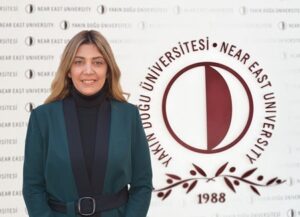
Professor Fezile ÖZDAMLI serves as the Head of the Management Information System Department at Near East University. Her research focuses on educational technology, gamification, artificial intelligence, and mobile learning. She has extensively published systematic reviews and empirical studies analyzing technology integration in education, including topics such as virtual reality, DeFi risk mitigation, and techno-skepticism in m-government. Current research areas include gamification, AI in education, and smart learning environments. Active in systematic literature reviews and bibliometric analyses of emerging technologies. Email: fezile.ozdamli@neu.edu.tr
Pavlína Mazáčová, Ph.D., serves as Assistant Professor at the Department of Information Studies and Library Science within the Faculty of Arts at Masaryk University. Her academic work centers on advancing information literacy education, innovating library science curricula, and developing digital competences for future information professionals. She actively collaborates with Czech national library initiatives and university teaching development programs. Her research spans several key areas: Information Literacy and Education Library and Information Science Pedagogy Educational Technology and E-Learning Design Digital Competence Development Information Behavior in Virtual Environments Design Thinking Applications in Information Services Dr. Mazáčová has secured and managed multiple research grants including Ministry of Culture projects on public library information services (VISK) and internal Masaryk University innovation grants. She leads initiatives such as the National Seminar on Information Education and course innovations for children's literature and critical thinking. As part of the Design Thinking Action Lab, she contributes to interdisciplinary projects exploring virtual reality and social innovation in cultural heritage institutions.
Alžběta Šašinková serves as Assistant Professor in the Department of Information Studies and Library Science at Masaryk University's Faculty of Arts, Brno. Her research bridges virtual reality applications with educational psychology and cross-cultural studies, focusing on immersive technologies for social cohesion and learning enhancement. Current projects include EU Horizon Europe's Augmented Social Play (2023-2027) and Technology Agency of the Czech Republic grants on VR in distance education (2023-2026). Her research interests prominently feature Virtual Reality and Social Interaction , with specialized work in collaborative VR environments, eye-tracking methodologies for spatial cognition, and cross-cultural perception differences. She investigates how immersive technologies transform educational practices, particularly through virtual theater for cultural learning and VR-based social innovation initiatives targeting adolescent mental health. Recent publications (2024-2025) reveal strong interdisciplinary trends spanning cartographic visualization, cognitive psychology, and educational technology. Key themes include cultural influences on visual processing, collaborative VR learning systems, and spatial navigation in virtual environments. Her work consistently integrates computer science, psychology, and geography through multinational collaborations across eleven countries. As thesis supervisor for Bachelor's and Diploma programs, she guides students in virtual reality applications and social innovation. Major funding sources include: Augmented Social Play (ASP): EU Horizon Europe project (2023-2027) Social-motivational effect of VR in distance education: Technology Agency of Czech Republic (2023-2026) Virtual theater for cultural learning: Technology Agency of Czech Republic (2023-2026) She actively collaborates with international research teams in the ASP consortium and SIGMA program, developing VR platforms for educational and therapeutic applications while serving on the Program Board for Information Services Design bachelor's degree.
Edoardo Battegazzore is a Research Fellow at the Department of Control and Computer Engineering (DAUIN) at Politecnico di Torino , where he also serves as an external lecturer and teaching assistant. His work spans virtual and augmented reality applications in medical training, cognitive psychology, and public safety, supported by funded projects such as Holo-BLSD (2024-2025). Education: Completed his PhD (XXXV Cycle) with a thesis titled "Virtual and Augmented Reality Applications for Public Health and Safety" (2024), advised by Andrea Bottino and Fabrizio Lamberti Research interests focus on: Virtual Reality (VR) and Augmented Reality (AR) for medical training and cognitive testing Human-Computer Interaction in collaborative AR environments Simulation Modeling for seismic and pedestrian evacuation dynamics Gamification in education and behavioral studies Recent publications highlight trends in VR/AR applications for prosthetics, airway management, and public health, alongside behavioral studies on cooperation and competition. His work also covers usability evaluations of AR/VR devices for industrial and emergency training. Current affiliations include: CGVG - Computer Graphics and Vision Group (DAUIN) Collaborator on funded projects like Holo-BLSD (2024-2025)
Shenghui Wang is an Assistant Professor in Human Media Interaction with a focus on hybrid human-AI systems. Affiliated with OCLC Research Europe since 2012, his work bridges artificial intelligence, virtual reality, and cultural heritage digitization. Research Interests: Ontology modeling, eye-tracking integration, multimodal conversational agents, and FAIR metadata principles for cultural data Key Activities: Organized HHAI 2025 and ISWC 2025 conferences; presented at ICT Open 2024 and Hybrid Intelligence Consortium meetings Current Work: Developing social VR frameworks for collaborative art exploration and evaluating RAG-based chatbots in healthcare contexts His recent publications emphasize Human-Computer Interaction in educational and cultural settings, with specific attention to: Personalized learning systems Virtual heritage applications Ontology-driven VR environments Author disambiguation algorithms Wang's research contributes to UN Sustainable Development Goals through innovative applications in education, cultural preservation, and accessible AI systems.
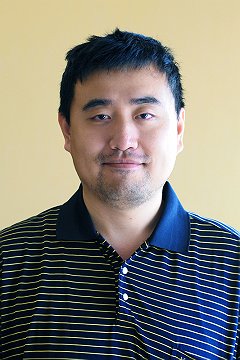
Takeo Kanade is the U.A. and Helen Whitaker University Professor of Robotics and Computer Science at Carnegie Mellon University (CMU). He serves as director of the Quality of Life Technology Engineering Research Center and previously led the Robotics Institute (1992-2001). His work spans computer vision, robotics, and multimedia technology, emphasizing mathematical modeling of vision processes and system development. Education: Doctoral degree in Electrical Engineering from Kyoto University (1974) Kanade's research focuses on foundational computer vision (factorization methods, multi-baseline stereo, facial recognition), virtualized reality systems for immersive media applications, and robotics innovations in medical surgery (HipNav) and autonomous helicopters. He pioneered computational sensors integrating VLSI technology. Recent publications emphasize 3D vision, pose estimation, and real-time facial alignment, reflecting his work in social motion capture and scene-specific object recognition. His projects include Informedia (NSF/ARPA/NASA-funded digital video libraries) and EyeVision for immersive sports broadcasting. Scientific Awards: Kyoto Prize (2016), Benjamin Franklin Medal, Bower Prize, IEEE Pioneer Award, ACM/AAAI Allen Newell Award, Joseph Engelberger Award He advises past PhD and Master's students like Omead Amidi, Vladimir Brajovic, and Richard LaBarca. He founded the Digital Human Research Center and leads the Human Sensing Lab at CMU.
Mariela Petrova Dimitrova is a Senior Lecturer at the Department of Tourism within the Faculty of Economics at University of Veliko Tarnovo. With a PhD and extensive research output, she specializes in tourism management, intellectual property law, and business law, contributing significantly to both academic and practical applications in these fields. Her educational background and professional development have positioned her as a key figure in tourism research, particularly focusing on digital transformation in the sector. She has contributed to numerous publications addressing contemporary challenges in tourism development and intellectual property management. Dimitrova's research interests center around the intersection of tourism innovation and legal frameworks. Her work explores how digital technologies transform traditional tourism models, with particular emphasis on wellness tourism, destination marketing, and knowledge management in regional tourism development. She investigates the legal aspects of intellectual property in business contexts, examining trademark strategies, copyright challenges in digital environments, and the relationship between business names and trademarks in judicial practice. Analysis of her recent publications reveals a strong focus on practical applications of tourism theory, with increasing attention to digital innovations. Her research shows a clear trajectory toward integrating traditional tourism concepts with modern technological solutions, particularly in the areas of 3D digital products and knowledge transfer for regional tourism development. The publications demonstrate consistent engagement with both Bulgarian legal frameworks and international best practices. Dimitrova actively participates in research projects addressing contemporary tourism challenges. Her current involvement includes projects on stimulating technological innovation in tourist destinations, university television initiatives, and knowledge transfer for developing tourist potential in Balkan regions. These projects reflect her commitment to bridging academic research with practical tourism development.
Xiaoyin Wang is an Associate Professor in the Department of Computer Science at the University of Texas at San Antonio, specializing in software testing, privacy, and program analysis. Her research focuses on enhancing software quality through innovative approaches to build systems, virtual reality testing, and privacy policy enforcement. She earned her PhD from Peking University in 2012 and completed postdoctoral work at UC Berkeley. Her research interests span Software Testing and Analysis , Software Privacy , Build Systems , and Virtual Reality Testing . She develops techniques for detecting privacy leaks in mobile apps, optimizing build scripts, and testing immersive applications. Her work bridges program analysis with practical software engineering challenges, particularly in security-critical contexts. Recent publications reveal strong trends in Virtual Reality testing frameworks (e.g., VRGuide, VRTest), automated build diagnostics (PExReport, HireBuild), and privacy policy verification (GUILeak, DAISY). Her research increasingly integrates machine learning for bug prediction and test oracle generation, with significant contributions to augmented reality testing and cross-project compatibility analysis. President's Research Achievement Award (UTSA, 2019) NSF CAREER Award (2019) for build script analysis Distinguished PhD Dissertation Awards from CCF (2013) and Peking University (2012) MSRA Fellowship (2009) Wang actively advises PhD students including Rodney Rodriguez (defended 2022, now at Accenture) and Xueling Zhang (defended 2021, now Assistant Professor at RIT). She leads NSF-funded projects including CAREER: Analysis and Repair of Build Scripts for DevOps and EAGER: Tracing Privacy-Policy Statements into Code . Her service includes chairing ICSE 2019 proceedings and serving on ASE/ICSE/ISSTA program committees. Current work focuses on security analysis for AR applications and automated privacy compliance verification.
Eliza Petrova Stefanova is a Professor at Sofia University St. Kliment Ohridski's Faculty of Mathematics and Informatics, serving as Vice-rector of Information Activities and Academic Staff since 2015 and Head of the MSc e-Learning program. Her leadership drives the university's digital transformation strategy and human resource development in science and innovation. Her academic credentials include: MSc in Computer Science (1986-1991), Faculty of Mathematics and Informatics, Sofia University St. Kliment Ohridski PhD in Computer Science, Adaptive systems (2009-2012), Faculty of Mathematics and Informatics, Sofia University St. Kliment Ohridski Professor Stefanova's research spans Educational Technologies, Technology Enhanced Learning, and Open Science, with emphasis on competence-based learning, virtual reality applications, and inclusive STEM education. Her work bridges pedagogical innovation with digital infrastructure development for 21st-century skill acquisition. Analysis of her 15 most recent publications reveals dominant trends in pandemic-accelerated digital education transformation, Balkan Open Science initiatives, and competence-based curriculum design. Key thematic clusters include learning analytics for teacher support, VR-enhanced inclusive classrooms, and policy frameworks for STEM educator development. Scientific Awards: No specific awards documented in source materials. As principal investigator, she leads the MODERN-A project (2021-2023) involving 9 Bulgarian universities and 24 European partners. Her grant portfolio includes 15+ EU RTD projects (CATCH21, weSPOT, Share.TEC) as coordinator/WP leader and 30+ national initiatives focused on educational technology infrastructure. She co-develops platforms like SHARE.TEC for educational resource repositories and the weSPOT inquiry-based learning environment, collaborating with international consortia across 24 European institutions to advance teacher training frameworks and digital competency standards.
Dr. Sridhar Chimalakonda serves as Associate Professor and Head of the Department of Computer Science & Engineering at the Indian Institute of Technology Tirupati, with an adjunct appointment as Associate Professor at the University of Waterloo. His academic leadership spans software engineering research and educational innovation. His educational qualifications include: Ph.D. from International Institute of Information Technology Hyderabad, India MS by Research from International Institute of Information Technology Hyderabad, India Research expertise encompasses: Software Engineering : Empirical studies, quality assurance, reuse methodologies, product lines, architecture, ontologies, and gamification Educational Technologies : Instructional design optimization, personalized learning systems, and VR/AR applications for educational storytelling and laboratories Human Computer Interaction : User-centered design in educational and software development contexts Publication analysis (2021-2024) reveals a strategic evolution from foundational software engineering research toward integrated educational applications, particularly in gamified machine learning education for K-12 audiences and sustainable software practices. His work demonstrates consistent methodological rigor in empirical studies while expanding into cross-disciplinary educational technology innovation.
Yuksel Goktas is a Professor of Instructional Technology at Ataturk University in Turkey, specializing in the integration of technology in educational settings. With a strong research portfolio spanning over a decade, he has made significant contributions to the field of educational technology, particularly in flipped classroom methodology, augmented reality applications, and educational technology policy in Turkey. His research expertise encompasses: Web 2.0 technologies in education Technology integration strategies Instructional design models (ADDIE, ARCS, Gagne) Flipped classroom methodology and its impact on student motivation Augmented reality applications for language and history education Gamification in learning environments Virtual worlds as educational platforms Professor Goktas' scholarly work demonstrates consistent focus on practical applications of educational technology across various educational levels. His research on flipped classrooms has shown significant improvements in student motivation, achievement, and cognitive load reduction. His analyses of educational technology trends in Turkey provide valuable insights into national educational technology development and policy implementation. His publications reveal a strong emphasis on methodological rigor, with studies employing both quantitative and qualitative approaches to examine technology integration challenges and opportunities in Turkish educational contexts. Professor Goktas has contributed significantly to educational policy discussions through critical evaluations of technology integration projects in the Turkish education system, highlighting the need for better analysis of previous initiatives and more strategic planning for future technology implementation.
Oskars Java serves as Lead Researcher and Gust Lecturer at Vidzeme University of Applied Sciences' Faculty of Engineering, concurrently directing the Socio-technical Systems Engineering Institute. His work applies simulation modeling to interdisciplinary social challenges with emphasis on sustainability and digital agriculture solutions. Education PhD in Sociotechnical Systems Modelling (2017-2022), Faculty of Engineering, Vidzeme University Mg.sc.comp. Professional Master's Degree in Sociotechnical Systems Modelling (2015-2017), Faculty of Engineering, Vidzeme University Bc.oec. Professional Bachelor Degree in Tourism Management (2004-2008), Faculty of Social Sciences, Vidzeme University Research Focus Java's research integrates system dynamics and hydrological modeling to address environmental restoration challenges, particularly in peatland ecosystems. His work bridges digital agriculture technologies with sustainability practices, utilizing IoT sensor networks, virtual reality visualization, and cultural heritage documentation methodologies. Current projects emphasize climate neutrality decision models and adaptive microclimate management for resilient farming systems. Publication Trends His 14 publications (2017-2022) demonstrate consistent focus on bog hydrological modeling (80% of works), with emerging applications in digital agriculture (15%) and cultural heritage technology (5%). Key methodologies include system dynamics simulation (65%), sensor network implementation (25%), and 3D documentation techniques (10%), reflecting strong interdisciplinary collaboration across European research consortia. Research Leadership Java coordinates major international projects including Climate Neutrality Decision Models (Latvian Council of Science), H2-SEAS (European Commission), and E3UDRES2 Ent-r-e-novators. His grant portfolio spans 11 projects totaling €4.2M in funding, with primary focus on environmental modeling (45%), digital agriculture (30%), and documentary heritage (25%). He serves on editorial boards for Baltic Journal of Modern Computing and Journal of Teacher Education for Sustainability. Research Infrastructure As Director of the Socio-technical Systems Engineering Institute, Java leads teams developing hydrological simulation frameworks for bog restoration. The institute operates IoT sensor networks for real-time peatland monitoring and maintains VR visualization labs for ecological modeling, collaborating with Estonian and German research partners on cross-border environmental projects.
Athanasios G. Malamos is Professor and Head of the Department of Electrical and Computer Engineering at the Hellenic Mediterranean University (since 2019). Previously, he served at the Technological Educational Institute of Crete (2002-2019) and the National Technical University of Athens (1997-2002). He holds a BSc in Physics from the University of Crete (1992), and MSc (1995) and PhD (2000) degrees from the Technical University of Crete. His research focuses on e-learning technologies , multimedia services , Web3D , and Virtual Reality . He leads the Spatial Sound interest group in the Web3D Consortium, contributes to W3C standards, and has developed libraries for the X3DOM platform. His work emphasizes immersive technologies and networked media systems. Awards: ACM Recognition of Service Award WEB3D Consortium recognition for leadership and contributions He coordinates EU and Hellenic national research grants and heads the Media Networks and Communications Lab , driving innovation in networked multimedia applications.
Associate Professor Tham Piumsomboon is a prominent researcher at the University of Canterbury's School of Product Design within the Faculty of Engineering. With a PhD in Computer Science from the same institution, their work bridges gaming, human-computer interaction, and immersive VR/MR/AR technologies to enhance user experiences and redefine lifestyle interactions. As founder of the QUADRIC Research Group, they lead initiatives addressing Aotearoa's agricultural, mental health, and sustainability challenges through intuitive intelligent user interfaces. Research focuses on the intersection of human qualia and technological design, emphasizing experiential learning, cognitive modeling, and ethical AI alignment. Key research thrusts include 'Agents' (AI autonomy levels), 'Humans' (IUIs for XR collaboration), 'Augment' (enhancing human perception), and 'Aotearoa' (local solution development). Their publications reveal strong trends in spatial interaction techniques, remote collaboration frameworks, and mental health applications of XR technologies. ACM CHI 2018 Best Paper Award for 'Pinpointing' research New and Emerging Researcher Award 2022 Extensive editorial service for IEEE TVCG, ACM SIGGRAPH, and UIST conferences As principal investigator for three major grants including 'Tōku Hoa: A Personalized Agent for Mental Health' (MBIE, 2022-2025) and 'Navigating Well-being' (Child Well-being Research Institute, 2024), they direct significant research funding toward mental health and agricultural technology. They supervise over 15 graduate students across diverse XR projects from locomotion techniques to therapeutic applications. The QUADRIC Research Group serves as their primary laboratory environment, fostering interdisciplinary collaboration between computer science, design, and clinical domains.