
Vittorio Solina is a Researcher at the Department of Mechanical, Energy and Management Engineering (DIMEG) of the University of Calabria, specializing in industrial systems simulation and digital twin technologies. His work spans Industry 4.0/5.0 applications, supply chain optimization, and human-robot collaboration. Affiliation: University of Calabria Academic Role: Researcher (Legge 240/10) Research Focus: Digital twins, simulation modeling, sustainable manufacturing His research emphasizes advanced simulation tools for decision support, including applications in Industry 4.0 , Smart Manufacturing , and Agri-Food Supply Chains . Recent work explores adaptive simulation optimization for Industry 5.0 and 5G-enabled robotics. Key publication trends include: (1) Digital twin integration for supply chain resilience (2024-2025), (2) Simulation automation methodologies (2025), and (3) Human-robot collaboration frameworks (2024).
جستجوی استاد راهنمای دانشگاهی
برای مسیر پژوهشیتان، استاد راهنما، استاد دانشگاه و پژوهشگر مناسب را پیدا کنید و با آنها ارتباط بگیرید.
نمایش ۱-۱۵ از ۸۱ استاد راهنما
اطلاعات پروفایلها از صفحات عمومی دانشگاهها گرفته شده و ممکن است بهروز نباشد.
- Robotics
- Control Systems
- Biomedical Engineering
- +۷ مورد دیگر
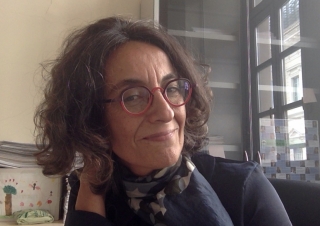
Marilena Vendittelli is a Professor at Sapienza University of Rome, affiliated with the Robotics group. Her research spans control systems, biomedical robotics, motion planning, and autonomous systems. Research Areas: Control systems for robotics and nonholonomic systems Biomedical applications (hyperthermia therapy, needle insertion) UAV navigation and obstacle avoidance Haptics and human-robot interaction Adaptive estimation algorithms Recent Publications focus on adaptive control of bio-heat equations, safe UAV motion planning, soft robotics actuation, and haptic feedback in medical procedures.
Sara Vincoمشاهده پروفایل
دانشیار
Sara Vinco is an Associate Professor at the Department of Control and Computer Engineering (DAUIN), Politecnico di Torino, Italy. She specializes in battery simulation, digital twins, and energy-efficient design automation for heterogeneous embedded systems, aligning with Industrial and Information Engineering (Area 0009) and ERC sectors including Computer Architecture and Machine Learning . Her research focuses on advancing cyber-physical systems through simulation frameworks like SystemC-AMS, enabling holistic modeling of analog, digital, and thermal domains. Key projects include data-driven digital twins for EV batteries and low-area digital circuits in industrial/medical applications, supported by commercial contracts such as C-based virtual prototyping. Her recent publications (2022-2023) emphasize machine learning for battery SOH/SOC estimation , energy monitoring in production lines , and multi-domain fault modeling . These works span journals like IEEE Transactions and conferences including DATE and ISLPED. Awarded the FFABR 2017 grant and IEEE FDL Best Paper Award 2011 , she also chairs editorial boards for IEEE Transactions on CAD and DATE Conference. She supervises PhD students Giovanni Pollo (Digital Circuits) and Khaled Alamin (EV Battery Twins), reflecting her leadership in smart systems design.
Massimo Canaleمشاهده پروفایل
دانشیار
Massimo Canale is a Tenured Associate Professor at the Department of Electronics and Telecommunications (DET) of Politecnico di Torino , and a member of the CARS@PoliTO Interdepartmental Center for Automotive Research and Sustainable Mobility. His academic career spans over two decades, focusing on control systems engineering with applications in automotive technology. Scientific Branch: Systems and Control Engineering (IINF-04/A) ERC Sectors: Automotive Engineering, Control Engineering, Control Theory Dr. Canale's research bridges theoretical advancements in Model Predictive Control (MPC) with practical applications in autonomous vehicles , hybrid/electric propulsion , and active suspension systems . His work integrates reinforcement learning and dynamic programming for optimizing vehicle performance and energy efficiency. Recent publications demonstrate trends in autonomous driving architectures (2024), sliding mode control for highway scenarios (2024), and energy management for sustainable mobility (2023-2024). He has developed patented solutions for semi-active suspension control and autonomous vehicle guidance. Award: IEEE Transactions on Control Systems Technology Outstanding Paper Award (2011) Editorial Roles: Associate Editor, IEEE Open Journal of Control Systems (2022–present) Dr. Canale supervises PhD students like Francesco Cerrito and teaches courses on digital control technologies , automatic control , and reinforcement learning at Politecnico di Torino. His research is funded through competitive grants (e.g., MPC4AVP 2021-2022) and commercial contracts (AD Shuttle 2024).

- Industrial Engineering Design
- Augmented Reality (AR) Applications
- Product Development Methodologies
- +۵ مورد دیگر
Maurizio MUZZUPAPPA is a Full Professor at the Department of Mechanical, Energy and Management Engineering (University of Calabria) since 2018. His roles include Rector's Delegate for Technology Transfer, Academic Delegate for Education at DIMEG, and Head of the Physical Prototyping Laboratory at the MaTeRiA Center (UNICAL-CNISM collaboration). He supervises the Unical Racing Team in Formula SAE competitions and co-founded three university spin-offs: 3DResearch, Tech4Sea, and Q-BOT. As Scientific Director of projects like TECH4YOU (climate change adaptation technologies) and GROWN IN THE BLUE (Mediterranean reef conservation), he integrates research in industrial design, augmented reality, and underwater cultural heritage. He has authored over 200 publications (h-index 27) and holds 10 patents. His teaching includes Tools and Methods for Industrial Design and Formula SAE LAB . His research focuses on: Industrial design methodologies with parametric and sustainable approaches 3D prototyping and additive manufacturing User-Centered Design for product ergonomics Virtual/Augmented Reality applications in engineering and cultural heritage Underwater robotics and artifact restoration Recent publications highlight trends in AR for industrial maintenance, generative design tools, and mechatronic solutions for underwater heritage. He has supervised over 300 theses and 10 Ph.D. students while leading technology transfer initiatives.
Michele Gattulloمشاهده پروفایل
استادیار
- Augmented Reality
- Virtual Reality
- Biophilic Design
- +۳ مورد دیگر
Michele Gattullo serves as an Assistant Professor within the Department of Mechanics, Mathematics & Management at the Polytechnic University of Bari, Italy, specializing in design methods for industrial engineering (ING-IND/15). His research bridges cutting-edge extended reality technologies with practical industrial applications, focusing on human-centered solutions for manufacturing, maintenance, and workplace design. Dr. Gattullo's research portfolio centers on Augmented Reality, Virtual Reality, and Biophilic Design, with significant contributions to Human-Computer Interaction in industrial contexts. He investigates how nature-inspired elements in virtual workspaces enhance employee well-being and productivity, while simultaneously developing practical AR tools for assembly guidance, technical documentation, and maintenance support. His work uniquely integrates ergonomics, cognitive psychology, and industrial engineering to optimize human-technology interaction in complex production environments. Analysis of his 15 most recent publications reveals two dominant research trajectories: biophilic design frameworks for virtual/metaverse workspaces (2023-2025) and industrial AR authoring methodologies. The biophilic stream establishes evidence-based guidelines for digital nature integration, while the AR stream delivers validated tools like ADAM and minimal AR approaches that streamline technical documentation creation. Both trajectories emphasize user experience validation through rigorous industrial studies, demonstrating strong interdisciplinary impact across computer science, industrial engineering, and environmental psychology. Scientific Awards: No awards or honors were documented in the available sources. Advising and Grants: The provided materials contain no information regarding graduate student supervision, research grants, or funding sources. His academic profile emphasizes publication output over mentoring activities or project financing details. Laboratories and Teams: While Dr. Gattullo's research involves advanced XR technologies, the source text does not specify laboratory facilities, research groups, or collaborative teams associated with his work at Politecnico di Bari.
Angelo Coralloمشاهده پروفایل
دانشیار
Angelo Corallo is an Associate Professor at the Department of Experimental Medicine, University of Salento, specializing in technologies and methodologies for collaborative processes in industrial systems. His research spans Digital Business Ecosystems , Cybersecurity , and Collaborative Product Design , focusing on the interplay between technology and organizational dynamics. He leads interdisciplinary research divisions in Open Networked Business Management , Learning and Innovation , and Collaborative Product Design . Research Interests : Corallo's work integrates Information and Communication Technologies (ICT) with Business Management, particularly in Digital Twins for healthcare and manufacturing Knowledge Modeling and Ontology Engineering Industry 4.0 and Smart Manufacturing Agri-Food Sustainability through digitalization Scientific Contributions : His recent articles explore trends in Cybersecurity for Industrial IoT Metaverse Applications in business models Traceability Systems in food supply chains Collagen-Based Biomaterials from aquaponics
Massimo Poncino is a Full Professor at the Department of Control and Computer Science (DAUIN) within the Faculty of Engineering at Politecnico di Torino. He serves as Scientific Advisor for the STMicroelectronics partnership and coordinates basic engineering subjects. A Senior Member of IEEE since 2012 and Fellow since 2012, he has served on editorial boards for IEEE Transactions on Computer-Aided Design, IEEE Design & Test of Computers, and ACM Transactions on Design Automation. Education: Laurea in Electronic Engineering (1989) and PhD in Computer and Systems Engineering (1993) from Politecnico di Torino Academic Career: Visiting Scientist University of Colorado (1993-1994), Researcher at Politecnico di Torino (1995-2001), Associate Professor at University of Verona (2001-2004), Full Professor at Politecnico di Torino (2006-present) His research focuses on energy-efficient digital systems , including design automation of SoCs, hardware-aware AI, battery management, cyber-physical systems, and embedded systems. Recent publications highlight advancements in digital twins for batteries , low-power neural network deployment , and IoT privacy . Scientific Awards: Recognition of Service Award - ACM (2013) Certificate of Appreciation - IEEE Circuits and Systems Society (2006, 2008, 2009) IEEE Fellow (2012-) Research Involvement: EU H2020, VI/VII Framework Programs evaluator Scientific Director for projects: Approxim@ction, EMBAI, DISLO-MAN, DAMASCO Member of EDA research group Teaching: Course director for Energy Management for IoT (2019-2025) Lecturer for Computer Science courses (2003-2025)
Luigi De Napoliمشاهده پروفایل
استادیار
Luigi De Napoli is an Assistant Professor in the Department of Mechanical, Energy and Management Engineering at the University of Calabria's Engineering Faculty. He has been serving in this position since March 1, 2006, and achieved National Scientific qualification as associate in the Italian higher education system for the disciplinary field of 09/A3 - Industrial design, machine construction, and metallurgy, starting from December 20, 2019. His educational background includes a Bachelor Degree in Mechanical Engineering from the University of Calabria in 1993, followed by qualification as an Engineer in 1994. He completed his Ph.D. degree in Design and Methods in Industrial Engineering at the University of Bologna in 2003, with a thesis focused on the reconstruction of archaeological artifacts using CAD systems. High school: Liceo Scientifico Statale E. Fermi di Cosenza (1986) Bachelor Degree: Mechanical Engineering, University of Calabria (1993) Engineer Qualification (1994) Scholarship: ITIA-CNR in Milan on advanced FEM and BEM systems (1995/96) Ph.D.: Design and Methods in Industrial Engineering, University of Bologna (2003) Dr. De Napoli's research primarily focuses on Reverse Engineering applications in Mechanical Engineering, Product Design and Development, and Virtual Prototyping. His work spans various applications including the reconstruction of archaeological artifacts, geometry inspection, hull and prosthesis reconstruction, and sustainable product design methodologies. His recent publications demonstrate a strong emphasis on biomedical applications, particularly in cranial prosthetics, tissue engineering, and ovarian tissue culture systems. His teaching portfolio is extensive, covering courses such as Computer-Aided Design, Sustainable Product Design, Engineering Drawing/CAD, and Modeling and Prototyping for Bioengineering across both Mechanical and Management Engineering programs. He has been teaching CAD courses since 2010 and Sustainable Product Design since 2011 at the University of Calabria. Dr. De Napoli is actively involved in the Research Group for Industrial Engineering Design and Methods (ING-IND/15), which focuses on methodologies and tools for product development processes, industrial product design and development (with particular attention to parametric and sustainable aspects), prototyping (virtual and mixed), and manufacturing using 3D printers. His work also encompasses Reverse Engineering techniques, User Centered Design methodologies for ergonomic analysis, and Virtual and Augmented Reality applications for industrial product design.
- Virtual Reality
- Augmented Reality
- Mixed Reality
- +۵ مورد دیگر
Alessandro Evangelista is an Assistant Professor at the Polytechnic University of Bari, Italy, within the Department of Mechanics, Mathematics & Management. His scientific-disciplinary sector is ING-IND/15, focusing on Design methods for industrial engineering. His research integrates Virtual, Augmented and Mixed Reality technologies into industrial and training contexts, with strong attention to ergonomics, safety, and human factors. Research Interests Virtual Reality (VR) and immersive simulation for industrial training and safety Augmented Reality (AR) interface design and ergonomic assessment Mixed Reality (MR) applications in product lifecycle and medical prosthesis design Human-computer interaction, cognitive workload, and age-related performance in XR systems Industry 4.0 smart maintenance and real-time data visualization Recent works repeatedly explore how immersive technologies can enhance learning outcomes, safety behaviors, and user experience across manufacturing, retail, maritime navigation and healthcare domains. Studies often adopt comparative user evaluations, ergonomic assessment protocols (e.g., RULA), and multidimensional performance metrics. Publications Trend From 2020 to 2025 Evangelista authored numerous peer-reviewed articles concentrated on immersive technologies. Major themes include: (1) VR training effectiveness for confined spaces and industrial tasks, (2) AR visualization for maintenance and navigation, (3) ergonomic and age-related factors in XR, and (4) application of cinematic VR for safety attitude change and mental-health rehabilitation. His output evidences systematic review work, empirical user studies, and tool prototyping, positioning him at the intersection of design engineering and interactive technologies. Scientific Awards & Grants No specific awards or funded projects are mentioned in the supplied material. Advising & Labs No explicit list of students or research group descriptions are provided; therefore advising activity and laboratory affiliations cannot be detailed at present.
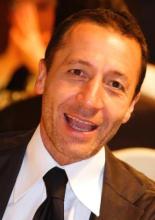
Massimo Robiony is a Full Professor at the University of Udine, affiliated with the DAME Department of Medical Area. As Director of the Maxillofacial Surgery Clinic, School of Specialization in Maxillofacial Surgery, and Level II Master's Degree in Health and Humanization, he leads multidisciplinary initiatives in surgical innovation. His research spans 3D printing, virtual surgical planning, robotic surgery, and AI applications in craniofacial medicine. Academic Leadership: Director roles in clinical, specialization, and master's programs. Research Focus: 3D printing, AI diagnostics, and robotic surgery for maxillofacial pathologies. Email: massimo.robiony@uniud.it Recent publications emphasize AI-driven image processing, bioprinting, and augmented reality in surgical oncology. His work highlights the integration of virtual planning and 3D printing for trauma management, alongside advancements in robotic and transoral techniques for orbital and craniofacial disorders.
Eugenio Brusa is Full Professor of Mechanical and Aerospace Engineering at the Polytechnic University of Turin (Politecnico di Torino), where he also serves as Director of the Doctoral School (2018-2024) and Scientific Advisor for the strategic partnership with Danieli & C. Officine Meccaniche. Since obtaining his PhD in 1997, he has held academic roles in both Turin and the University of Udine, progressing from researcher to Associate Professor (2002) and then Full Professor (2013). Education PhD, Polytechnic University of Turin (1997) Degree in Aeronautical Engineering (Laurea), Polytechnic University of Turin (year not specified) Research Interests Professor Brusa’s expertise lies at the intersection of mechanical design , mechatronics , and systems engineering . His work encompasses: Structural mechatronics and smart materials, including MEMS-scale systems Rotor dynamics and bearing systems for aerospace, steel, and automotive applications Life-cycle assessment (LCA) and circular design methodologies Model-Based Systems Engineering (MBSE) for sustainable industrial products Digital-twin-driven design and predictive maintenance Recent Publications at a Glance Over the past five years Professor Brusa has co-authored more than 20 peer-reviewed articles and conference papers. The research trajectory shows a clear emphasis on sustainable aviation (fuel-cell aircraft thermal management), energy harvesting (piezoelectric and vibration-based systems), digital twins for ice-prediction and rotor monitoring, and circular-economy-oriented design through LCA integration. These works collectively advance greener industrial products and smarter mechatronic systems. Scientific Awards & Distinctions Premio Nazionale “A. Capocaccia” (1999) – awarded by AIAS (Italian Association for Stress Analysis) Member/Associate Editor, journals Energies (2020-2024) and Proceedings of the IMechE Part C (2020-2022) Scientific-committee roles in INCOSE Italy, ASME Italy Section (President 2014-2015), UNITE! European Alliance, ESCP Business School, and several IEEE/ECCOMAS conferences Doctoral Advising & Research Funding Currently supervising seven PhD candidates in Mechanical Engineering and Materials for Sustainability. Since 2018, as Director of the Doctoral School, he oversaw more than 200 doctoral students across disciplines. Active research contracts include: EU and regional projects on predictive maintenance (PRIME 2021-2022) Industrial contracts with Danieli & C. (2025-2028) on scrap-metal crushing & shearing machinery Ongoing partnerships on oil-film bearings for rolling mills, fatigue-life assessment of hydraulic-turbine shafts, and additive-manufacturing quality control Laboratories & Teams Founder or co-founder of four research laboratories: Mechatronics Laboratory (1993) Testing and Characterization of Rotating Systems Laboratory (1997) Industrial Systems Engineering & Design (ISED) Laboratory (2020) – current leader Ubiquitous and Pervasive Technologies Laboratory, University of Udine (2005)
FEDERICA NENNAمشاهده پروفایل
استادیار
Federica Nenna is an Assistant Professor at the University of Padua, specializing in human-centered technologies within industrial settings. Her research focuses on human-robot collaboration, virtual/augmented reality applications in Industry 5.0, and neurophysiological aspects of human-machine interactions. She investigates how age, cognitive load, and psychological factors influence workers' performance in advanced manufacturing environments. Her work emphasizes ergonomics and safety in digital innovation, particularly through the use of eye-tracking, cardiac monitoring, and entropy analysis to assess user performance and workload. Key themes include trust dynamics in collaborative robotics, teleoperation systems, and the design of inclusive workstations for senior workers. Nenna’s research bridges neurophysiology, engineering, and occupational health to create safer, more efficient industrial environments. Publications highlight trends in VR/XR-based digital twins, human-centric risk management in digital transformation, and the physiological correlates of learning in robotic task environments. She advocates for a human-centered approach to Industry 5.0, addressing both technological and psychological barriers to adoption. Current projects explore cross-age usability of teleoperation interfaces and the integration of biometric feedback for real-time safety monitoring. Notably, she developed the SAFE GYMS IoT system for workplace safety and contributed to the SAFE TALK mobile application for mental health support during isolation. These innovations reflect her commitment to applying cutting-edge technologies to improve both productivity and well-being in rapidly evolving workspaces.
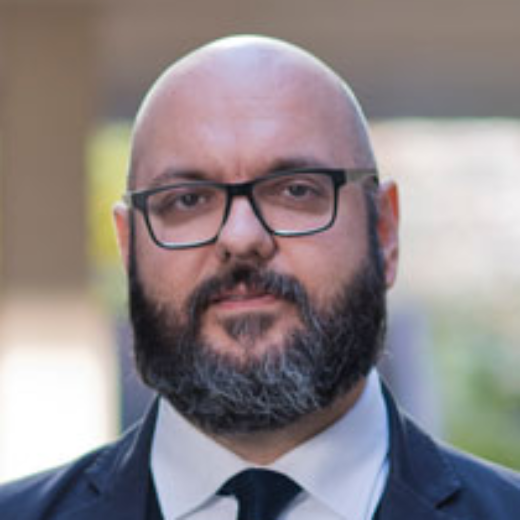
Alessandro Luigini is an Associate Professor at the Department of Educational Sciences, Faculty of Educational Sciences, Free University of Bozen-Bolzano. His academic roles include serving as Principal Investigator for projects such as VAR.HEE (2018-21) and TTC (2023-2025), and chairing international conferences like IMG2017 and EARTH2018. He founded EARTH_LAB, focusing on digital environments for education, art, and heritage. His research interests span graphic and visual sciences, digital heritage, and immersive serious games for education. He has authored over 130 publications and serves on editorial boards and committees, including the ICCD Administrative Committee and UID board. Education: PhD in Representation and Surveying of Architecture and the Environment from University 'G. d'Annunzio.' Grants: Principal Investigator for projects funded by competitive calls (VAR.HEE, B_DIGITAL, Digital_FEED, TTC). Labs/Teams: EARTH_LAB, leading interdisciplinary research in digital heritage education.
- Robotics
- Rehabilitation Engineering
- Biomechanics
- +۴ مورد دیگر
Francesca Alvaro is a researcher in the Department of Mechanical, Energy and Management Engineering at the University of Calabria, Italy. Her work is situated within the College of Engineering, where she contributes to advanced research in robotics and biomechanical systems for medical applications. Her research focuses on robotics for upper limb neuromotor rehabilitation , leveraging multibody dynamics and digital twin technologies to model and optimize human-robot interaction in therapeutic settings. This includes developing and analyzing robotic devices that assist in patient recovery through precise biomechanical modeling and control strategies. The recent publications highlight a strong trend in rehabilitation engineering and human-centered robotics , particularly in the development of digital twins for personalized therapy and accurate parameter estimation of robotic rehabilitation systems. These efforts bridge mechanical engineering with clinical applications, emphasizing simulation, modeling, and system integration. Scientific Awards: No scientific awards listed in the provided text. Francesca Alvaro is involved with PhD researchers, indicating potential advisory or mentoring roles within her department. While no specific grants are mentioned, her research output suggests participation in projects related to assistive robotics and smart rehabilitation systems. She collaborates with researchers such as Rocco Adduci, Michele Perrelli, Francesco Tedesco, and Domenico Mundo, indicating active engagement in interdisciplinary teams. She is associated with research labs focused on mechanical systems and robotics within the Department of Mechanical, Energy and Management Engineering. These labs likely support the design, simulation, and testing of robotic rehabilitation platforms using multibody dynamics and real-time control frameworks.