Mahmoud Karimi is a Senior Lecturer at the School of Mechanical and Mechatronic Engineering , University of Technology Sydney (UTS), leading the Vibroacoustics Research Group within the Centre for Audio, Acoustics and Vibration. He holds a PhD in Mechanical Engineering from UNSW with specialization in vibration and acoustics, and has conducted visiting research at University of Cambridge, Technical University of Munich, and INSA Lyon. His research focuses on computational hydroacoustics, vibroacoustics, and uncertainty quantification in noise/vibration problems. Academic Leadership : Editor-in-Chief of Acoustics Australia since 2025 Research Income : Attracted $6M in competitive grants ($2M as Chief Investigator) since 2017 Technical Expertise : Specializes in acoustic black hole structures, flow-induced vibration modeling, and leak detection in buried pipelines Scientific Awards : Recipient of ARC DECRA Fellowship (DE190101412) 2019-2022 Research Trends : His 91+ publications demonstrate expertise in hybrid acoustic modeling techniques, sustainable hempcrete development, and vibration energy harvesting solutions with applications in mining, rail systems, and water infrastructure. International Collaborations: University of Cambridge (UK), Technical University of Munich (Germany), INSA Lyon (France) Teaching Portfolio: Advanced numerical methods, dynamics & control, and computational modeling at UTS
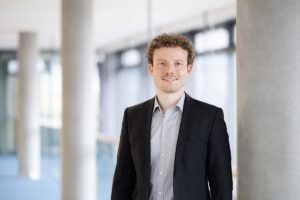
Julian Müller holds the Professorship for Digital Industries at Friedrich-Alexander University Erlangen-Nuremberg (FAU), funded by Bosch Rexroth AG through the Stifterverband. He is part of the School of Business, Economics, and Social Sciences, specializing in digital transformation research within industrial contexts. His work bridges academic rigor with practical industry applications, particularly through his collaboration with Bosch Rexroth. Müller's research interests focus on three interconnected pillars: digital transformation in industry (Industry 4.0), sustainability and circular economy integration, and technology and innovation management. He examines how digital technologies reshape production, logistics, and industrial ecosystems while addressing ecological and social requirements. His work particularly emphasizes the integration of AI and digital platforms into business models across different company sizes. Analysis of Müller's recent publications reveals a strong focus on the intersection of digital technologies with sustainability and supply chain management. His work consistently addresses Industry 4.0 implementation challenges, particularly for SMEs, and explores how digital transformation can enhance resilience, sustainability, and business model innovation across global value chains. Scientific Recognition: 8th place in the 2024 Wirtschaftswoche ranking of most research-intensive business economists under 40 17th place in the overall ranking of most research-intensive business administration professors in DA-CH countries Board member of the European Operations Management Association (EurOMA) Müller's academic trajectory shows strong industry-academia connections, with his current professorship funded by Bosch Rexroth. His research demonstrates significant grant acquisition capabilities, particularly in the domain of digital industrial transformation. While specific students aren't listed in the provided materials, his position suggests active mentorship of junior researchers in digital business transformation. As part of FAU's 'Digitalization and Innovation' research focus, Müller collaborates with the Fraunhofer Institute for Information Systems and various German industrial companies. His work contributes to FAU's strong research profile in business administration, which ranks among Germany's top 20 faculties in business administration according to the Handelsblatt ranking.
Karin Peters is a Full Professor of Romance Literature and Cultural Studies with a Focus on Ibero-Romania at the University of Bonn since 2023. Her academic journey includes a habilitation at Johannes Gutenberg University Mainz (2021-2022), a doctorate from LMU Munich (2010), and a Magister Artium from the same institution (2006). Her research spans transnational literary history, affect theory, pastoral poetry, and intersections of gender and politics in Spanish and Argentinian literatures. Key projects include co-editing The Face as Scene. Virtuality and Embodiment of Affect and leading the network 'Comic Literacies. Cultural Techniques of the Comic' at KWI Essen. She has supervised doctoral work on Iberoamerican Baroque theater and published extensively on Roland Barthes, Georges Bataille, and contemporary Latin American narratives. Her recent publications analyze the European myth of the emotional subject, pastoral masks in Cervantes, and affective economies in 18th-century literature. She has received scholarships from DAAD, Studienstiftung des deutschen Volkes, and e-fellows.net, and actively contributes to academic organizations including the Romanistenverband and the Bonn Center for Dependency Studies.
Heather Miller is a tenure-track Assistant Professor in the Software and Societal Systems Department within Carnegie Mellon University's School of Computer Science. Her academic journey includes prior roles as an Assistant Clinical Professor at Northeastern University's College of Computer and Information Science and as Executive Director of the Scala Center at EPFL. Miller's research centers on distributed and concurrent computation through the lens of programming languages, with particular emphasis on data-centric systems, big data processing, and edge computing. A defining theme throughout her work is composability - enabling construction of complex distributed systems through composition of components that are correct by construction. Her projects span distributable closures, flexible serialization techniques, futures and promises for asynchronous programming, and deterministic concurrent dataflow models. Her recent publications demonstrate strong trends in applying programming language theory to practical distributed systems challenges, with increasing focus on WebAssembly instrumentation, microservice resilience, and language model pipelines. This evolution reflects her commitment to bridging theoretical foundations with real-world system requirements. Dahl-Nygaard Junior Prize (2023) Mentorship forms a significant component of Miller's academic work. She actively supervises multiple PhD, MS, and undergraduate researchers at CMU, including Christopher Meiklejohn, Matthew Weidner, Huairui Qui, Ria Pradeep, and Luke Dramko. Her service contributions span numerous top-tier conferences including PLDI, SPLASH, ECOOP, and ICSE where she has served as committee member, chair, and keynote speaker. Miller co-founded the Curry On conference to foster industry-academia dialogue, hosting successful editions in Prague, Rome, Barcelona, Amsterdam, and London. She leads research groups focused on distributed programming models and maintains strong industry connections through Two Sigma, where she holds an affiliation. Her work consistently emphasizes practical open-source implementations, primarily within the Scala ecosystem where she's been a core contributor since 2011.
Daniel F. Keefe is a Professor in the Department of Computer Science & Engineering at the University of Minnesota, Twin Cities, where he directs the Interactive Visualization Lab (IV/LAB). He is also recognized as a Distinguished University Teaching Professor, reflecting his excellence in both research and education. His work bridges computer science, art, and design, with a focus on ethical and creative approaches to data interaction in extended realities. Education: Ph.D. in Computer Science from Brown University (2007) Bachelor of Science in Computer Engineering summa cum laude from Tufts University (1999) Additional training at the Rhode Island School of Design and School of the Museum of Fine Arts at Tufts University Professor Keefe's research centers on ethical, just, and creative human-data interaction in computer-mediated extended realities (AR/MR/VR). His work addresses high-stakes societal needs including human-in-the-loop data-driven medical decision making, Indigenous cultural revitalization, climate discourse, natural resource management, and computer-mediated creative work. His technological approaches span interactive 3D computer graphics, digital 3D drawing, multimodal sensing, spatial displays, digital fabrication with sustainable materials, and traditional craftsmanship. His research group, the Interactive Visualization Lab, is known for pioneering work at the intersection of art, science, and technology, producing over 80 research papers with numerous best paper awards at top ACM and IEEE venues. Scientific Awards: National Science Foundation CAREER Award (2010) Best Paper Award at IEEE VIS 2024 Best Paper Award at IEEE VIS 2015 Best Paper Honorable Mention at IEEE VIS 2013 ACM I3D 2011 Best Paper (Honorable Mention) IEEE VisWeek 2010 Best Panel Award 3M Nontenured Faculty Award McKnight Land-Grant Professor (2012-2014) Horace T. Morse-University of Minnesota Alumni Association Award for Outstanding Contributions to Undergraduate Education (2019) Bowers Faculty Teaching Award (2021) Professor Keefe has mentored eight Computer Science Ph.D. students and one Cognitive Science Ph.D. student to graduation, with his former students now holding positions as professors at institutions like Gonzaga, Macalester, Carleton, and UMN, as well as roles at companies including Google, 3M, and Abbott. He has also mentored more than 50 undergraduate students and advised over 20 undergraduate and master's theses. His research program is primarily funded by the National Science Foundation, with additional support from the National Institutes of Health, National Academies Keck Futures Initiative, Mayo Clinic, US Department of Agriculture Forest Service, cities of Minneapolis and Saint Paul, and corporate partners in the medical and computer industries. The Interactive Visualization Lab (IV/LAB) serves as the hub for Professor Keefe's transdisciplinary research. The lab is known for its inclusive culture and collaborative approach, working closely with Indigenous scholars and communities, artists, designers, and scientists across disciplines. Recent projects include Sculpting Vis (an NSF-sponsored project on artistic design for scientific visualization), Back to Indigenous Futures, and various initiatives exploring the intersection of data, art, and social justice. The lab has also been involved in creating public art installations like Orbacles in downtown Minneapolis and the Augmented Paafu Mat exhibited at the Queensland Art Gallery. Professor Keefe is deeply committed to diversity, equity, and inclusion, having founded and chaired the CS-IDEA committee and co-designed the department's Broadening Participation in Computing Plan.
Ali Dorri is an Associate Professor in the School of Computer Science at Queensland University of Technology's Faculty of Engineering. His research focuses on the intersection of blockchain technology, Internet of Things (IoT), and cybersecurity, with significant contributions to privacy-preserving systems and energy trading applications. He maintains an active research profile with consistent publications in top-tier venues including IEEE Transactions, ACM Computing Surveys, and various IEEE conferences. Dr. Dorri's research interests center on blockchain technology and its applications to real-world problems. His work addresses critical challenges in IoT security, privacy-preserving systems, energy trading mechanisms, and supply chain management. He has developed innovative solutions including Tree-Chain (a lightweight consensus algorithm for IoT-based blockchains), LSB (a lightweight scalable blockchain for IoT security), and various blockchain storage optimization techniques. His research bridges theoretical concepts with practical implementations, often targeting specific industry challenges in manufacturing, energy, and supply chain sectors. Analysis of his recent publications reveals a strong focus on optimizing blockchain for resource-constrained environments like IoT networks, developing privacy-preserving mechanisms for sensitive applications, and creating practical implementations for energy trading systems. His work shows increasing sophistication in addressing scalability challenges while maintaining security and privacy guarantees. The interdisciplinary nature of his research connects computer science fundamentals with applications in energy systems, manufacturing, and supply chain management. Dr. Dorri has established productive research collaborations with colleagues at QUT including Raja Jurdak, Salil Kanhere, and Gowri Ramachandran, as well as international collaborators. His publications demonstrate consistent productivity with multiple high-impact papers each year, including several that have received significant citations within the blockchain and IoT research communities.
Dr. Stuart Marshall serves as Associate Dean of Academic Development in the Faculty of Science and Engineering at Victoria University of Wellington - Te Herenga Waka, where he also holds the academic rank of Senior Lecturer. Previously, he served as Head of School for the School of Engineering and Computer Science from 2015-2021 after joining the institution as a Lecturer in 2003. His academic journey includes completing his BSc, MSc, and PhD in Computer Science at Victoria University of Wellington, with his doctoral research focusing on software reuse. Marshall's research interests center on information and data visualization, particularly exploring how visualization can function as collaborative tools in team environments rather than single-user applications. He also investigates explainable AI and mobile user interface design with emphasis on promoting healthy device usage patterns. His work bridges theoretical computer science with practical applications in education and environmental analysis. Analysis of his publication record reveals a consistent focus on visualization techniques, with recent work shifting toward immersive analytics and virtual reality applications for complex data analysis, particularly in ecosystem services. Earlier publications concentrated on mobile learning applications grounded in transactional distance theory, software visualization for large codebases, and graph layout algorithms. Marshall has supervised six PhD students and eight Masters students to completion, with current doctoral supervision spanning immersive environments for reading assistance, medical diagnosis interfaces, and cardiac procedure simulation. His grant portfolio includes multiple ACM ISS 2022 projects with industry partners including Sensor Holdings Limited, Niantic, Autodesk, and Northeastern University, along with an Australian Research Council grant for digital games preservation. Teaching responsibilities encompass foundational programming, safety-critical systems, human-computer interaction, and data visualization across undergraduate and graduate courses. He teaches subjects including SWEN326 (Safety-Critical Systems), CGRA151 (Introduction to Computer Graphics and Games), and DATA301 (Data Science in Practice), with teaching assignments scheduled through 2026.
Fani Lauermann is a Professor of Empirical Educational Research and Educational Psychology at the University of Bonn, where she is affiliated with the Bonn Center for Teacher Education (BZL). She also serves as a Co-opted Member of the Department of Psychology at the University of Bonn and maintains a research affiliation with the Institute for Research on Education and School Development (IFS) at TU Dortmund University. Her work bridges educational psychology and teacher education through empirical research on motivation and learning processes. Dr. Lauermann earned her Ph.D. from the Combined Program in Education and Psychology at the University of Michigan (2008-2013) following her Diplom-Psychologist degree at the University of Bonn, Germany (2001-2006). Her academic journey includes postdoctoral research in the Gender and Achievement Research Program (GARP) at the Institute for Social Research at Michigan. Her research program centers on three interconnected domains: academic motivation and achievement, educational trajectories and occupational choices, and teacher motivation and teaching quality. She frequently applies expectancy-value theory to understand motivational processes across educational contexts, with particular attention to gender differences in academic choices. Recent methodological approaches include longitudinal designs, multilevel analyses, and cross-cultural comparisons, often examining how students' and teachers' beliefs influence academic trajectories and outcomes in math-intensive study programs. Analysis of her recent publications (2022-2025) reveals a strong focus on gender disparities in educational choices, particularly in STEM fields, as well as the role of comparative processes in forming academic self-concepts. Her work increasingly examines teacher self-efficacy, responsibility beliefs, and their impact on classroom processes, with growing attention to online learning environments and their implications for student motivation and belonging. Dr. Lauermann has held significant editorial positions including Associate Editor for Learning and Instruction (2018-2021) and editorial board membership for Journal of Educational Psychology, Journal of Learning and Instruction, Contemporary Educational Psychology, and Educational Psychologist. She served as elected coordinator for EARLI SIG-08 "Motivation and Emotion" from 2017-2021, representing members from over 30 countries. Dr. Lauermann advises several graduate students who have received recognition for their work, including Daria Benden (Paul R. Pintrich Award winner) and Sirui Wan (Graduate Student Research Excellence Award recipient from Division C at AERA 2022). Her research group collaborates with international scholars, notably Eccles, Wigfield, and Bailey on expectancy-value theory research, and with German colleagues at TU Dortmund on the FAIR research profile area. Dr. Lauermann's research contributes to understanding how motivational processes operate across different educational contexts, with implications for teacher education and classroom practice. Her work continues to advance theoretical models of motivation while providing practical insights for educators seeking to support students' academic development across domains.
Bopaya Bidanda serves as the Ernest E. Roth Professor and Chairman of the Department of Industrial Engineering at the University of Pittsburgh, where he has led since joining the faculty in 1987 after completing his PhD at Penn State. His institutional impact includes founding the Manufacturing Assistance Center, Automated Data Collection Laboratory, and Swanson Center for New Product Innovation. His research expertise spans manufacturing systems with concentrated focus on Group Technology, Reverse Engineering, Cellular Manufacturing, Lean Manufacturing, and Human Issues in Manufacturing. This work bridges advanced computational methods with industrial applications to solve real-world production challenges. Publication trends from 2000-2002 reveal strong emphasis on human capital integration in cellular systems, reverse engineering applications in biomedical contexts, and virtual laboratory development for manufacturing education. Key thematic threads connect workforce skills assessment with lean transformation and advanced computing techniques for production optimization. Scientific recognition includes: Fellow of the Institute of Industrial Engineers His grant portfolio demonstrates exceptional funding diversity, securing support from NSF, Department of Commerce, W.M. Keck Foundation, and industry partners like FedEx Ground for initiatives in manufacturing modernization and workforce development. He actively mentors doctoral candidates through flexible international programs and industry-university collaborations. Leadership extends to operational hubs including the Manufacturing Assistance Center which provides direct technical support to regional manufacturers, and the Swanson Center driving product innovation through interdisciplinary industry partnerships.
Simone Kühn serves as Director of the Research Center for Environmental Neuroscience at the Max Planck Institute for Human Development in Berlin and holds the position of Heisenberg Professor at the University Medical Center Hamburg-Eppendorf since 2016. Previously, she led the Lise Meitner Group for Environmental Neuroscience at the Max Planck Institute (2019-2024) and currently directs the Psychiatric Environmental Neuroscience (PEN) working group, a collaboration between the MPIB and Charité-Universitätsmedizin Berlin since 2025. Her academic credentials include a Dipl.-psych from the University of Potsdam (2006), Dr. rer. nat. from the University of Leipzig (2009), and Habilitation in Psychology from Humboldt-Universität zu Berlin (2012). These qualifications established her expertise in the neural mechanisms underlying human-environment interactions. Dr. Kühn's pioneering research examines how natural versus built environments impact mental health, cognitive processes, and neural structures across the lifespan. Her work integrates environmental psychology, neuroscience, and clinical psychiatry to investigate how exposure to different environments shapes brain function and psychological well-being. She employs advanced methodologies including structural and functional MRI, virtual reality environments, and longitudinal study designs to uncover the neural pathways connecting physical environments to mental health outcomes. Her research has demonstrated that natural environments can reduce stress, enhance cognitive restoration, and positively influence brain structure, particularly in regions associated with emotion regulation and memory. Analysis of her extensive publication record reveals a consistent trajectory toward increasingly sophisticated investigations of environmental influences on the brain. Her recent work has expanded into virtual reality applications for mental health treatment, the neural mechanisms of architectural design preferences, and the impact of air pollution on brain health. She has pioneered experimental approaches to study environmental effects through controlled exposure studies, including the development of virtual nature environments that can be precisely manipulated to isolate specific environmental features. Her scientific contributions have been recognized through prestigious appointments: Election to the German National Academy of Sciences Leopoldina Membership in the DFG-Network WAS (Wirkungsforschung in Architektur und Städtebau) Service on the Psychology Review Board of the German Research Foundation (DFG) Fellowship at the German Institute for Economic Research (DIW) Early recognition through admittance to Studienstiftung des deutschen Volkes (2005) Dr. Kühn has mentored numerous doctoral and master's students whose theses explore diverse aspects of environmental neuroscience, from the impact of natural environments on stress physiology to the neural correlates of architectural preferences. Her research has been supported by substantial funding that has enabled large-scale investigations of environmental influences on brain health across different age groups and populations, including vulnerable individuals with mental health conditions. As leader of the Center for Environmental Neuroscience, she directs a multidisciplinary team of researchers who employ cutting-edge methodologies to investigate how environmental factors shape brain development, function, and mental health. The center's work has significant implications for evidence-based urban planning, therapeutic interventions using nature exposure, and understanding the neural basis of human-environment interactions in an increasingly urbanized world.
Ronan Gruenbaum serves as Dean of International Affairs & Program Development at Hult International Business School, leading global partnerships and academic innovation. Previously, he directed the award-winning Bachelor of Business Administration program as Global Director of Undergraduate Learning and Development, and served as Dean of Hult's London undergraduate campus (2016-2022) after joining the institution in 2011 as a full-time professor of marketing technology. His expertise centers on digital transformation in business education, with core research areas including: E-commerce strategy and implementation Social technologies for organizational innovation Hybrid and online learning methodologies Future of work competencies development Business school evolution in digital age Digital marketing ecosystems Analysis of his publications reveals consistent focus on technology's disruptive impact across educational and business landscapes, particularly examining how social media, AI, and Web 2.0 tools necessitate fundamental shifts in teaching methodologies and organizational structures. His work emphasizes practical frameworks for implementing digital solutions while addressing associated risks and measurement challenges. No scientific awards were documented in the source materials. Professional engagement includes extensive conference speaking on educational innovation topics, though specific student advisement records and research grants remain undisclosed. His leadership in developing Hult's undergraduate programs demonstrates applied focus on preparing students for technological disruption in global business environments. Current initiatives indicate strong emphasis on AI integration challenges for business education and strategies for maintaining institutional relevance amid rapid technological change.
Brian L. Cutler is a Professor and Media Psychology Program Director at Fielding Graduate University, with additional appointment as Professor of Forensic Psychology at the University of Ontario Institute of Technology. With over 30 years of faculty experience spanning two U.S. and one Canadian university, he has established himself as a leading authority in forensic psychology and legal psychology. Dr. Cutler earned his Ph.D. in Psychology from the University of Wisconsin at Madison in 1987. His academic journey includes tenured faculty positions at multiple institutions and 19 years of academic administration experience. He has continuously conducted psychological research on legal issues since 1983, establishing a robust scholarly career. Dr. Cutler's research program focuses on the critical intersection of psychology and law, with particular expertise in eyewitness identification, false confessions, and recorded criminal interrogations. His work spans Applied Social Psychology, Law and Public Policy, Judgment and Decision Making, and Person Perception. His research has significant implications for legal procedures, criminal justice reform, and the prevention of wrongful convictions. His scholarly contributions have helped shape best practices in eyewitness identification procedures and interrogation techniques. Analysis of Dr. Cutler's publication record reveals a consistent focus on improving the reliability of eyewitness evidence and understanding the psychological dynamics of interrogations. His research demonstrates how memory contamination can occur in lineup identifications, how coercive interrogation tactics can produce false confessions, and how technological advancements impact legal proceedings. Recent work has examined the effects of the pandemic on courtroom procedures and the development of standardized assessment instruments for interrogations. Throughout his career, Dr. Cutler has supervised numerous master's theses and doctoral dissertations. He has authored or co-authored significant research grants and has served as a consultant and expert witness in high-profile legal cases involving eyewitness identification and coercive interrogation. His expertise is regularly sought by legal professionals seeking to understand the psychological factors that impact legal evidence. As the founder and president of Coral Coast Group, Dr. Cutler extends his scholarly work into practical applications, providing behavioral research services to diverse clients. He has taught continuing legal education courses to attorneys across the United States and has held leadership positions including editor-in-chief of Law and Human Behavior (2005-2011) and president of the American Psychology-Law Society (2011-2013).
Dr. Alison Clune Berg is an Associate Professor and Extension Nutrition and Health Specialist at the University of Georgia's College of Family and Consumer Sciences. She holds a PhD, MS, and BS in Foods and Nutrition from UGA, graduating in 2015, 2009, and 2007 respectively. Her research evaluates community nutrition education programs to prevent chronic diseases like obesity, cardiovascular disease, diabetes, and cancer, with a focus on implementing evidence-based interventions through the Cooperative Extension model. Education: PhD, MS, BS in Foods and Nutrition from University of Georgia Current Role: Associate Professor and Extension Nutrition and Health Specialist Dr. Berg specializes in chronic disease prevention through community nutrition education, implementation science, and translational research. Her work includes the National Diabetes Prevention Program (DPP) and Cancer Prevention initiatives. She bridges academic research with real-world health promotion, particularly in rural Georgia. Recent projects analyze dietary behavior change, program feasibility, and health equity in underserved populations. Her recent publications (2023-2025) span implementation science, diabetes prevention, rural community health, and adolescent nutrition education. Awards include the 2024 Chris Todd Outstanding Outreach Award, multiple 2024 Georgia Extension Association first-place awards for curriculum development, and the 2023 D.W. Brooks Excellence in Extension. She has authored or co-authored 20+ peer-reviewed articles and extension publications, including peer-reviewed guides on nutrition labels, diabetes management, and cancer prevention. Scientific honors include: 2024 Chris Todd Outstanding Outreach Award 2024 Georgia Extension Association Team Awards 2023 D.W. Brooks Excellence in Extension 2022 NEAFCS National Educational Awards 2019 Educational Curriculum Package Awards Dr. Berg collaborates with county extension agents, leads state-wide nutrition programs like Cooking for a Lifetime of Cancer Prevention, and mentors graduate students. She supervises research through courses like NUTR 7000/9000 and guest lectures on nutrition-disease relationships.
Geert Vandermeersche is an Assistant Professor at the Department of Educational Sciences , Faculty of Psychology and Educational Sciences , Vrije Universiteit Brussel (Belgium). He holds a PhD in Educational Sciences (UGent, 2013) and a Master’s in Languages and Literature (UGent, 2006). Education: Master in Languages and Literature (UGent, 2006); PhD in Educational Sciences (UGent, 2013) His research focuses on: (1) Culture and Arts Education , including the impact of arts on educational practices in film, music, and performing arts; and (2) Digitalization in Youth Culture , exploring how technology reshapes cultural engagement. He also investigates co-creative research methodologies and their societal implications. Recent publications address digital museum education , urban learning spaces , and musicking in prisons . These works highlight intersections between arts, technology, and social justice, often through empirical and theoretical lenses. As a member of the Brussels Research Centre on Innovation in Learning and Diversity , he leads projects like: FWOTM1216: Critiquing participation paradigms in arts education EUPOM153 (SEEDLING): Climate justice and arts-based youth work OZR3758: Digital transformations in cultural education Vandermeersche has served on PhD committees, presented at international conferences (e.g., on sound-art, crip theory in museums), and contributed to datasets on classroom learning environments and museum education. His work emphasizes experiential knowledge and collaborative practices.
Prof. Hermann Hellwagner is a Full Professor at the Department of Information Technology, University of Klagenfurt. He has held roles such as Vice President (Natural and Technical Sciences) at the Austrian Science Fund (FWF) and Vice Dean of the Faculty of Technical Sciences. His research focuses on multimedia communication, network engineering, and future internet architectures. Notable projects include work on adaptive streaming, edge computing, and drone networks. He holds a Ph.D. in Systolic Architectures from the University of Linz (1988). Research interests span distributed multimedia systems, information-centric networking (ICN), and optimizing video streaming quality-of-experience (QoE). Recent work emphasizes edge computing solutions for low-latency streaming and dynamic codec adaptation. His contributions include frameworks like ALPHAS and MEDUSA for bitrate optimization, and studies on point cloud streaming in augmented reality. Publications (2021–2025) highlight advancements in edge-assisted streaming, hybrid P2P-CDN architectures, and transcoding techniques. His work often bridges theoretical models with real-world implementations, addressing challenges in latency, cost, and device adaptability. Current projects involve 6DoF video streaming and multi-robot system optimization. Labs/Teams: Part of the Institute of Information Technology (ITEC), Klagenfurt. Collaborates on EU-funded projects and industry partnerships in 5G edge computing and drone networks. Active in standards groups for HTTP adaptive streaming protocols.