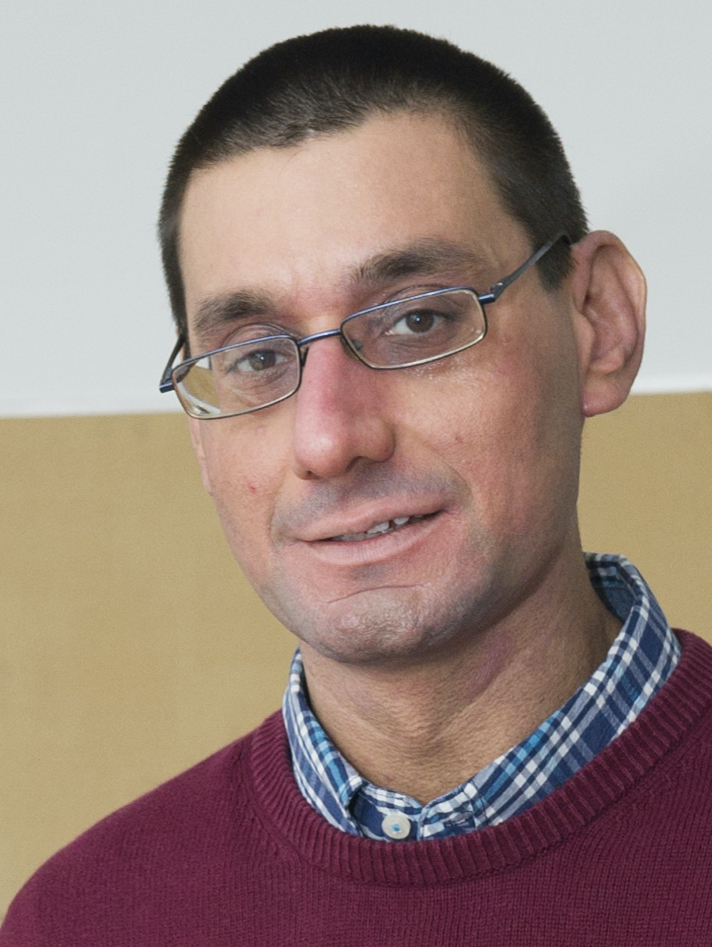
Pedro Henriques is Professor of Computer Science at University of Minho, where he coordinates the Language Processing group at Algoritmi Research Center. With a PhD in Formal Languages and Attribute Grammars, he teaches compiler design and programming language engineering. His research develops: Formal methods for software analysis Educational tools for programming pedagogy Ontology-driven computational thinking frameworks AI applications in agriculture and healthcare Recent work includes neuroeducation-informed frameworks (OntoCnE) and Programming Cocktails methodology for optimizing cognitive load in code instruction. He has supervised 14 PhD dissertations and authored the foundational text "XML & XSL: da teoria a prática". Current EU projects explore VR cognitive rehabilitation and olive cultivar identification using deep learning.
So Young Sohn is a distinguished Professor at Korea University's College of Business, Department of Management Engineering, with over two decades of impactful research in technology management and operations research. Her scholarly contributions have established her as a leading expert in technology credit scoring, data mining applications, and technology convergence analysis. Dr. Sohn's research interests span technology credit scoring for SMEs, operational research methodologies, data mining techniques, machine learning applications in business contexts, technology convergence patterns, patent analysis, and SME financing mechanisms. Her work bridges theoretical rigor with practical business applications, particularly focusing on Korean case studies that have broader international relevance. She has pioneered innovative approaches using knowledge graphs, multiplex networks, and deep learning techniques to solve complex business problems. Her publication portfolio reveals consistent research trends toward increasingly sophisticated analytical methods, evolving from traditional statistical models to advanced machine learning and network science approaches. Recent work demonstrates particular focus on technology convergence, digital therapeutics, and AI applications in business decision-making. The interdisciplinary nature of her research spans business analytics, engineering, healthcare, and environmental science. Dr. Sohn has received recognition through numerous high-impact publications in premier journals including Expert Systems with Applications, European Journal of Operational Research, Scientometrics, and IEEE Transactions. Her research has been consistently funded through competitive grants focusing on technology management and innovation. As an academic mentor, Dr. Sohn has advised numerous doctoral students who have gone on to productive research careers, with many continuing to collaborate with her on ongoing projects. Her research team has secured substantial funding for projects related to technology credit scoring, technology convergence analysis, and predictive analytics applications. Dr. Sohn leads a dynamic research laboratory focused on technology analytics and decision support systems, collaborating with industry partners and government agencies to translate research findings into practical business solutions. Her current work emphasizes sustainable technology development and AI-driven decision support systems for complex business environments.
Hyuk-Jae Lee is a prominent researcher in computer architecture and hardware acceleration for deep learning systems, with an extensive publication record spanning over two decades. His work primarily focuses on hardware implementations for video processing, memory systems, and neural network acceleration. Through numerous collaborations with researchers at Korean institutions (particularly with Hyun Kim, Chae-Eun Rhee, and Xuan Truong Nguyen), Lee has established himself as a leading figure in circuit design for AI applications. Lee's research interests center around computer architecture, hardware acceleration, deep learning systems, video coding and compression, memory systems, and image processing. His work demonstrates a consistent focus on bridging the gap between theoretical algorithms and practical hardware implementations, with particular emphasis on optimizing performance and efficiency for real-world applications. His recent work shows a strong shift toward accelerating large language models and transformer-based architectures, reflecting current trends in AI hardware. Analysis of Lee's recent publications (2023-2025) reveals a clear research trajectory toward solving memory bandwidth and computational efficiency challenges in modern AI systems. His work spans the spectrum from low-level circuit design to high-level system architecture, with particular strength in memory systems optimization and hardware acceleration for neural networks. The consistent publication record in top-tier IEEE journals demonstrates sustained research productivity and impact in the field. Throughout his career, Lee has collaborated extensively with a core group of researchers, suggesting stable research teams and laboratories focused on hardware acceleration. His publications in IEEE Transactions on Circuits and Systems, IEEE Transactions on Computers, and IEEE Transactions on Video Technology indicate recognition by multiple relevant academic communities.
Živko Bojović is affiliated with Singidunum University, holding a doctoral degree in Telecommunications and Signal Processing from the University of Novi Sad. His career includes roles as an engineer and manager in telecommunications companies like Telekom Srbija and PTT Serbia. He has extensive experience in academic publishing, with monographs on network technologies and textbooks on software-defined networking (SDN) and IoT applications. His research focuses on cybersecurity, machine learning applications in healthcare, smart government systems, and network virtualization. Education: PhD in Telecommunications (2011), Postgraduate studies in Telecommunications (2000-2001), Bachelor’s in Electronics with Telecommunications (1986-1992). He also completed high school in Peć with a mathematical focus. Research Interests: He explores advanced networking technologies including SDN, 5G/6G networks, IoT security, and educational technology innovations. His work bridges theoretical advancements with practical implementations in healthcare diagnostics and public sector digitization. Recent studies include applying machine learning to predict thrombosis and thyroid cancer metastasis, reflecting his interdisciplinary approach. His articles collectively highlight trends in smart systems (e.g., government services, energy grids) and network security, with frequent contributions to journals like Computer Applications in Engineering Education and Journal of Network and Systems Management . The Wiley Top Cited Article award (2020-2021) recognizes his impactful work on rapid transition to distance learning during crises. Prof. Bojović holds IEEE membership and sits on editorial boards for journals like Inventi Impact: Software Engineering . He actively participates in EU Horizon projects focusing on 6G privacy and smart city analytics.
Günter Alce is a Senior Lecturer at Lund University's Department of Ergonomics and Aerosol Technology, part of the Lund Institute of Technology (LTH). His research focuses on human-technology interaction in smart environments, including IoT systems, augmented/virtual reality (AR/VR), and user interface design. Key projects include the 6G-FOX initiative (6G network research) and MAGICIAN (immersive learning via VR). He contributes to UN Sustainable Development Goals through work on embedded systems and health technology. Alce leads the LTH Profile Area: Engineering Health, emphasizing cross-disciplinary collaboration. His recent studies explore VR applications in workplace safety, telepresence systems for regulatory oversight, and user interface optimization for fitness tracking. He actively supervises master’s theses in AR/VR domains and participates in the Centre for Healthy Indoor Environment (CHIE). Research outputs span 24 peer-reviewed works, including conference proceedings on IoT interaction models, drone detection systems, and VR-based phobia treatment. His work bridges technical innovation with ergonomic and social factors, addressing both system design and user experience challenges.
Elisa Cavatorta is a Professor of Economics and Vice Dean (International) at King's College London's Faculty of Social Science and Public Policy. She leads international academic partnerships, oversees global initiatives, and teaches in the Department of Political Economy. Previously, she held postdoctoral roles at SOAS and the Institute for Fiscal Studies after earning her PhD in Economics from Birkbeck, University of London. Her research focuses on conflict dynamics, preference formation under violence, and policy evaluation. Methodologically, she employs experimental economics, RCTs, and machine learning. Key areas include Middle Eastern conflict resolution, healthcare access barriers, and behavioral responses to violence. She has secured funding from the Qatar National Research Foundation, Emirates Foundation, and AXA Research Fund. As Vice Dean, she manages international collaborations, oversees student mobility programs, and administers global partnership agreements. Notable initiatives include dual-degree programs and cross-university research competitions. Key Research Themes: Conflict Economics, Behavioral Public Policy, Development Interventions Regional Expertise: Middle East, South Asia Her recent work explores peace agreement preferences among Israelis/Palestinians and the cognitive impacts of digital anxiety treatments. She co-leads King's Virtual Reality Lab for mental health innovation and chairs the Political Economy of Peace research group.
Hong Guo is a Professor of Information Systems at the W. P. Carey School of Business, Arizona State University. Her research focuses on emerging IT phenomena, including digital platforms, business data visualization, algorithmic interpretability, and net neutrality. She examines IT policy impacts and firm strategies in these domains. Education: Ph.D. in Business Administration from the University of Florida (2009). She consistently teaches CIS 541: Business Data Visualization across multiple graduate programs at ASU. Research Interests: Hong explores digital platforms' design features, strategies for firms leveraging these platforms, and policy implications. Key areas include social media influence on electoral competition, algorithmic transparency frameworks, and disaster management system interoperability. Her work bridges technical IT systems with socioeconomic impacts. Recent Research Trends: Recent articles address marketplace analytics economics, coalition formation in critical IT infrastructure, and social media's role in political dynamics. Ongoing focus areas include data neutrality frameworks, virtual currency in gaming, and retail clusters in developing economies. Teaching and Advising: While no specific advisees or grants are listed, she has taught Business Data Visualization courses consistently since at least 2013. Her pedagogical focus aligns with her research on visualization and digital systems. Labs/Teams: No specific labs mentioned, but her research collaborations likely involve cross-disciplinary teams addressing IT policy, digital platform governance, and crisis management systems.
Dr. Marta Vallejo is an Assistant Professor in the Department of Computer Science at the School of Mathematical & Computer Sciences, Heriot-Watt University. She also serves as Programme Director for the Graduate Apprenticeship in Data Science. Previously, she held a tenure-track Research Fellow position in biomedical signal/image processing and was Head of AI at ClearSky Medical Diagnostics Ltd. She is a Fellow of the Higher Education Academy and has contributed to EU-funded projects in Spain. Education: PhD in Computational Intelligence and Predictive Modelling MSc in Artificial Intelligence Her research focuses on machine learning and evolutionary algorithms applied to healthcare, specifically neurodegenerative diseases (Parkinson’s, Huntington’s, ALS) and cancer. Key projects include developing AI-driven clinical assessments, biomarker detection platforms, and image co-registration systems using deep learning. She leads the ML-Healthcare group and collaborates with ClearSky MD and the Proteus project. Her work emphasizes translating academic research into clinical tools, such as virtual staining techniques and wearable tremor monitoring devices. In public engagement, she organizes initiatives like Rubbish Robots (recycled materials for robotics) and contributes to events like the UK-RAS Robot Lab Live. She has received awards for research culture and outward-looking collaborations, including the Spirit of Heriot-Watt Awards 2017 and the 2024 Research Culture Recognition Award. Grants & Leadership: Principal Investigator: Neuro BioMark (EPSRC IAA) Co-Investigator: Lung Cancer Registration (Cancer Research UK) Successfully secured 96,432 GPU hours via EPSRC for high-performance computing Organized EvoStar workshops and led the SPECIES society for evolutionary computation She hosts educational programs at the Robotic Assisted Living Testbed, introducing students to robots like Pepper and Tiago. Her research also aligns with UN Sustainable Development Goals, particularly in advancing healthcare technologies and promoting STEM education.
Dr. Pantea Alambeigi is a Senior Lecturer in Architecture at Swinburne University of Technology's School of Design and Architecture. She specializes in sustainability, multisensory design, and performance-based architecture, focusing on the interplay between human perception and the built environment through acoustics and daylighting. Her research integrates computational tools and data-driven methodologies to enhance architectural design strategies. Her interdisciplinary work explores 'Seamless Architecture' by combining emerging technologies with environmental factors and human behavior. She teaches undergraduate and graduate courses in design studios, construction, and sustainability, and supervises PhD candidates on topics like multisensory stimuli in indoor spaces and digital tools for BIM workflows. Alambeigi has secured grants including the ARC Training Centre for Next-Gen Architectural Manufacturing (2024–2029) and a National Association of Steel-framed Housing contract on sustainable design. Her work has been recognized with the Best Paper Award at the 2016 CAADRIA conference. Key research outputs include studies on acoustic shadows, wind-induced noise in drywall systems, and virtual soundscapes of the Sagrada Família Basilica. Her contributions span architectural acoustics, data visualization, and biomimicry in engineering, reflecting her commitment to human-centric design innovation.
Leonardo Bonati is an Associate Research Scientist in the Department of Electrical and Computer Engineering at Northeastern University. He specializes in cutting-edge wireless communication systems, particularly focusing on Open RAN, 5G/6G networks, and AI-driven network intelligence. His work emphasizes automated testing, network slicing, and security in software-defined cellular systems. He leads and contributes to high-profile projects such as AutoRAN and DigiRAN, funded under the CHIPS and Science Act, which aim to enhance open and disaggregated cellular network testing and digital twin frameworks. His research also involves experimental platforms like Colosseum and OpenAirInterface for large-scale wireless emulation and real-world testing. Key research interests include: AI-based network control (via dApps/xApps), digital twins for network validation, zero-touch deployment, and security in O-RAN interfaces. He holds multiple patents on topics ranging from network slicing to private 5G connectivity through steganography. Notably, Bonati was recognized among the top 2% most-cited scientists globally in 2024 by Stanford University. He collaborates actively with industry and academia on next-generation cellular technologies, contributing to both theoretical advancements and practical implementations. His advising and grant activities include co-PI roles on major initiatives like AutoRAN (testing automation) and DigiRAN (high-fidelity digital twins), totaling over $4M in funding. Bonati’s work bridges academic research and industry-ready solutions through platforms like Colosseum and the Open RAN Gym.
Salvatore D'Oro is an Associate Research Professor in the Department of Electrical and Computer Engineering at Northeastern University, affiliated with the Institute for the Wireless Internet of Things (WIoT). He holds a PhD from the University of Catania (2015), with postdoctoral and visiting research stints at Ohio State University and Université Paris-Sud 11. His research focuses on Open RAN, network slicing, AI-driven networking, and 5G/6G security. He is a co-PI on CHIPS Act-funded projects like AutoRAN and DigiRAN, emphasizing automated testing and digital twins for O-RAN systems. He has authored numerous patents, including frameworks for drone network control and O-RAN efficiency. Recognized in the 2024 Stanford top 2% cited scientists and recipient of a 2019 Best Paper Award for HIRO-NET, his work spans theoretical advancements and practical implementations in wireless systems. Education: B.S./M.S. in Computer/Telecommunications Engineering, University of Catania (2011–2012) PhD in Telecommunications, University of Catania (2015) Postdoctoral Researcher at University of Catania (2016) Research Interests: Open RAN and O-RAN Network Slicing AI/ML for Network Intelligence 5G/6G Security and Private Connectivity Automated Testing and Digital Twins in Cellular Networks Key Projects: AutoRAN: Automated End-to-End Testing for Open Cellular Systems DigiRAN: Digital Twins for O-RAN Security and Performance Colosseum: Large-Scale Wireless Experimentation Platform Awards: 2024 Stanford Top 2% Cited Scientists 2019 IEEE WoWMoM Best Paper Award 2015 Francesco Carassa Award Labs/Teams: Wireless Networks and Embedded Systems Lab (Northeastern) Collaborations with industry partners on O-RAN and 5G/6G systems
Patrick Thomas Eugster is a Full Professor of Computer Science at the Università della Svizzera italiana (USI), leading the Software Systems (SWYSTEMS) group within the Computer Systems Institute, which he co-founded. Previously, he held faculty positions at Purdue University (2005-2016) and TU Darmstadt (2014-2017), with a visiting role at MIT (2012/2013). His research focuses on distributed systems, networking, security, and programming languages, with over 160 publications and significant industry collaborations with companies like Amazon, Google, and Facebook. Education: He holds an M.S. (1998) and Ph.D. (2001) in Computer Science from École Polytechnique Fédérale de Lausanne (EPFL). Research Interests: His work addresses distributed systems challenges such as fault-tolerance, security, and efficient resource management. Recent topics include datacenter reliability, quantum network verification, and confidential computing. His team explores intersections between systems, languages, and networks to build robust and secure distributed applications. Publications: Recent work spans topics like failure detection in datacenters, formal verification of systems, and network congestion control. Key venues include USENIX ATC, ACM SIGMETRICS, IEEE Network, and TACAS. His 2025 work on failure detection and TCAM encoding exemplifies contributions to system resilience and hardware optimization. Awards: Jean-Claude Laprie Award (2025), TACAS Best Paper (2025), ERC Consolidator Grant (2014), NSF CAREER Award (2007). Advising & Grants: Supervised over 20 PhD and postdoctoral researchers. Active grants include EU Horizon Europe CloudStars, Swiss National Science Foundation, and industry partnerships with Cisco and SAP. Labs & Teams: Directs the SWYSTEMS group, collaborating on projects like secure cloud analytics, quantum network verification, and datacenter monitoring. Former students hold roles at universities, tech firms, and startups.
Prof. Stefan Tai is a full professor and Chair of Information Systems Engineering at Technische Universität Berlin (Germany) since 2014. Previously, he held a full professorship at Karlsruhe Institute of Technology (KIT) and worked as a Research Staff Member at IBM's Thomas J. Watson Research Center. His research focuses on distributed systems, decentralized architectures, cloud service engineering, and privacy-preserving blockchain systems, emphasizing off-chain solutions and scalable technologies. Tai's work bridges academic research with industry applications, particularly in serverless computing, energy-efficient cloud-native systems, and blockchain-based solutions for supply chains and energy grids. He has authored numerous peer-reviewed publications in top-tier conferences and journals, including IEEE ICSA, Future Generation Computer Systems, and IEEE Blockchain. His contributions address challenges in software systems engineering, federated learning, and sustainable computing. Research Interests: Next-generation distributed software systems Decentralized architectures and blockchain systems Cloud and serverless computing Energy-efficient design Data management and privacy-preserving technologies Smart energy grids and IoT integration Key Publications Trends: Tai's recent work explores the intersection of blockchain and federated learning, serverless architectures for big data, and energy-efficient cloud-native applications. His 2025 paper introduced a framework for optimizing cloud-native energy efficiency, while 2024 contributions advanced verifiable decentralized systems and serverless data processing. Earlier research (2020–2021) focused on privacy in local energy grids and serverless computing scalability. Grants & Labs: While specific grants are not detailed, his leadership in TU Berlin's Information Systems Engineering group indicates involvement in EU-funded or industrial projects. Collaborations with institutions like TU Wien and KIT suggest multi-institutional efforts in distributed systems and blockchain. Labs/Teams: Leads the Information Systems Engineering research group at TU Berlin, focusing on software systems engineering, cloud architectures, and blockchain applications.
Dr. Qiang Fu is a Senior Lecturer at RMIT University's School of Computing Technologies, specializing in Cloud, Networked Systems, and Security. He holds a PhD from The University of Queensland and is actively involved in industry collaborations. His research focuses on Internet and Cloud-based systems, including Content Delivery Networks (CDNs), data centre design, Cyber-Physical Systems (CPS)/IoT, virtualization, and SDN/NFV. Recent work emphasizes network telemetry, fault detection, and IoT workflow optimization. He has published extensively in top-tier journals and conferences like IEEE Transactions and IFIP NOMS. Dr. Fu supervises PhD/Master students in areas such as network security, cloud computing, and IoT. His projects are often industry-funded and address real-world challenges like network scalability and blockchain integration. He is open to supervising students in these domains through RMIT's scholarship programs.
Jeremy Singer is a Reader in Programming Language Implementation at the School of Computing Science, University of Glasgow. He specializes in systems software, compilers, garbage collection, and secure runtime environments. His research focuses on advancing memory management techniques, many-core parallelism, and edge computing. Singer holds a PhD from the University of Cambridge (2006) in Static Program Analysis based on Virtual Register Renaming. He is a Senior Member of the ACM and a Fellow of the BCS. His academic roles include supervising PhD students in areas such as quantum memory management, federated graph neural networks, and secure memory systems. He has led multiple EPSRC-funded projects, including M4Secure (2023-2026), Capable VMs (2020-2024), and FRuIT (2017-2019). He teaches courses like COMPSCI1016 (Computational Thinking) and COMPSCI4021 (Functional Programming in Haskell). Singer’s research spans compiler design, runtime systems, and security. Notable contributions include work on SSA-based compiler techniques, Raspberry Pi cluster systems, and secure microPython implementations. He has authored over 80 publications and co-developed MOOCs on functional programming and data science. His awards include Fellow of the BCS and Senior ACM Membership. Current research interests include secure memory management, compiler optimizations for heterogeneous architectures, and edge computing security.