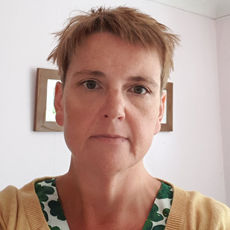
Carol Smith is an Associate Professor in the Department of Soil & Physical Sciences at Lincoln University, New Zealand, where she serves as Head of Department since 2017. She has been an elected academic staff member of the Lincoln University Council from 2018-2022. Dr. Smith holds a PhD from the University of Aberdeen, an MSc from the University of Reading, and a BSc(Hons) from the University of Portsmouth, forming the foundation of her expertise in soil science and physical geography. Her research spans both fundamental and applied aspects of pedology. On the fundamental side, she investigates Quaternary pedology and paleoenvironmental reconstruction using loess stratigraphy, geomorphology, and micromorphology, which provides critical data for verifying future climate change predictive models. Applied research focuses on sustainable use of recycled organic matter and rehabilitation of degraded soils. She collaborates internationally on multidisciplinary projects involving paleoclimate reconstruction, paleoliquefaction, Antarctic soils, and viticulture. Dr. Smith is passionate about teaching and science communication, employing experiential learning methods to develop practical field skills in soil science through 'soil judging competitions' in New Zealand and Australia. Her research addresses UN Sustainable Development Goals including Life on Land (15), Climate Action (13), and Quality Education (4). Among her notable recognitions are the Norman H Taylor Memorial award 2020 from the New Zealand Society of Soil Science for outstanding contributions to soil science in New Zealand and Fellowship in the Royal Geographical Society, London. She serves as Associate Editor of Natural Sciences Education and was previously editor of Quaternary Australasia. Dr. Smith has supervised numerous graduate students through research-based supervision, with completed projects covering diverse topics from soil patterns in Southland to Antarctic soil ecology. She teaches advanced courses in field research, soil science, and physical landscapes, and has developed innovative approaches to teaching during the pandemic, including virtual field trips.
Brett Gilley is an Associate Professor of Teaching in the Department of Earth, Ocean and Atmospheric Sciences at The University of British Columbia (UBC), Vancouver Campus. His primary affiliation is within the Faculty of Science. He specializes in geoscience education with a focus on inclusive fieldwork practices, collaborative learning strategies, and accessibility in STEM education. He is currently not accepting students for advising. His research interests span geology and geoscience education, with a strong emphasis on making field experiences accessible for students with disabilities, developing innovative teaching methodologies, and fostering inclusive learning environments. Gilley has contributed to projects like the Earth Science Experiential and Indigenous Learning (EASEIL) initiative, which integrates Indigenous knowledge and community partnerships into curriculum design. Notable trends in his publications include advancing universal design in geoscience field courses, evaluating collaborative testing strategies, and exploring the impact of technology (e.g., ChatGPT) on student research practices. His work often bridges pedagogical innovation with practical implementation in large undergraduate science programs. While no formal awards are listed, his contributions to inclusive education and curriculum development reflect a commitment to equitable STEM education. His professional activities include mentoring faculty through UBC’s evidence-based pedagogy graduate course and participating in interdisciplinary curriculum development teams.
Dr. Lesley Batty is a Reader in Ecological Education at the School of Geography, Earth and Environmental Sciences, University of Birmingham. She plays key leadership roles as Head of Wellbeing and Head of Employability and Placements within the School, reflecting her strong commitment to student development and inclusive education. Her educational background includes a PhD from the University of Sheffield, an MRes and BSc from the University of Reading, and a Postgraduate Certificate in Learning and Teaching from the University of Birmingham. She is a Senior Fellow of the Higher Education Academy and a HEFi Scholar, underscoring her excellence in teaching. Dr. Batty's research centers on the ecology of industrial pollution, particularly in post-mining landscapes. She investigates phytoremediation techniques for contaminated soils, focusing on heavy metals and polycyclic aromatic hydrocarbons (PAHs). Her work extends to ecological education, where she explores inclusive teaching practices, barriers in STEM laboratories, and the integration of employability skills into the curriculum. She is actively involved in national educational policy through her role as Lead Secretary of the British Ecological Society Special Interest Group in Teaching and Learning and as an Associate Editor for the Journal of Geochemical Exploration. Her recent publications reveal a dual focus: one stream on environmental contamination and remediation (e.g., metal and PAH pollution in brownfield sites, phytoremediation with bacteria and chelates), and another on innovative pedagogy in geography and ecology (e.g., virtual field trips, inclusive lab practices, and the future of fieldwork education). This reflects her unique position at the intersection of environmental science and educational leadership. Senior Fellow of the Higher Education Academy (HEA) HEFi Scholar Lead Secretary, British Ecological Society Special Interest Group in Teaching and Learning Dr. Batty is a dedicated educator and researcher who bridges the gap between environmental science and pedagogical innovation. She has made significant contributions to both her field of research and the national discourse on ecological education. Her leadership in student wellbeing and employability, combined with her research on pollution and inclusive learning, demonstrates a holistic approach to academic life. She actively supervises research, as evidenced by her co-authorship with doctoral researchers, and welcomes PhD applications in her areas of expertise. She is a key member of several research groups, including those focused on Physical Geography, Global Biogeochemistry, and Environmental Health Sciences at the University of Birmingham. Her collaborative work, especially in large consortia on conservation education, highlights her strong network and impact in the academic community.
Rimjhim Aggarwal is a Professor at the School of Sustainability, Arizona State University (ASU). Her research focuses on sustainability governance, climate risks, and the food-energy-water nexus, with emphasis on urban systems, social-ecological dynamics, and policy design. She explores how institutions and governance structures adapt to environmental challenges, particularly in rapidly urbanizing regions. Her work integrates interdisciplinary approaches, combining policy analysis, systems modeling, and participatory methods. Notable contributions include frameworks for nexus governance in Phoenix and Cape Town, studies on circular economy solutions for waste management, and analyses of climate adaptation strategies in agriculture. She also emphasizes education innovation through virtual field experiences to democratize geoscience learning. Key research themes include institutional fit in governance systems, climate risk integration in development goals, and equitable resource management in urbanizing contexts. Her publications span over three decades, reflecting deep engagement with global sustainability challenges such as biodiversity loss, water scarcity, and socio-environmental justice.
Jill M Castek is Professor of Literacy, Technology & Bi/multilingual Learners & STEM Education in the Department of Teaching, Learning, and Sociocultural Studies at the University of Arizona's College of Education. As Graduate Advisor for the Second Language Acquisition and Teaching (SLAT) program and Co-Director of the Digital Innovation and Learning Lab (DIALL), she bridges research and practice in digital literacy development. Dr. Castek earned her PhD in Education Psychology (Cognition and Instruction) from the University of Connecticut as a Neag fellow in the New Literacies Research Lab, followed by postdoctoral work at UC Berkeley's Lawrence Hall of Science. Her research examines how digital, visual, and audio storytelling fosters literate capacities across print and digital forms in classrooms and community spaces. Her work centers on digital problem solving , critical media literacy , and equity-centered making practices in STEM education. She investigates intersections of disciplinary literacy, new media, and learning for bi/multilingual students, with strong emphasis on community-based applications through libraries and non-profits like Literacy Connects where she serves on the board. Recent publications (2022-2025) reveal growing focus on AI-era teacher education , digital health literacy , and misinformation challenges , while maintaining core commitments to collaborative problem solving and expansive literacies frameworks. Her scholarship consistently addresses K-12 and adult learning contexts through interdisciplinary lenses. Scientific recognition includes: Neag fellowship during doctoral studies As Principal Investigator on NSF and IMLS grants, Dr. Castek advances digital equity through projects like the Making Equity Network (broadening STEM participation for underrepresented groups) and library-focused digital problem-solving initiatives serving economically vulnerable adults. Her leadership in the Technology Enhanced Language Learning (TELL) cluster hire demonstrates institutional impact. Through DIALL, she cultivates innovations connecting digital storytelling with self-expression at individual and community levels, promoting workforce readiness via creative problem-solving approaches. Her board membership with Literacy Connects extends this community-engaged scholarship to Tucson-based literacy initiatives.
Bruce Saxman is a Senior Lecturer in Adventure Education at Fort Lewis College, where he coordinates the interdisciplinary Fort Lewis on the Water (FLOW) program. With over two decades of experience in outdoor education, he has held administrative and teaching roles at multiple institutions, developing competency-based training systems and adventure curriculum. Education: M.A. in Recreation Administration, University of Nebraska-Omaha B.S. in Parks, Recreation, and Tourism Management (Resource Management Emphasis) with Anthropology Minor, Clemson University Research Interests focus on outdoor education methodology , adventure program administration , and experiential learning systems . His work explores digital education platforms, risk management protocols, and leadership development frameworks in outdoor settings. Professional Affiliations include the American Institute for Avalanche Research and Education (AIARE), American Canoe Association (ACA), and American Mountain Guides Association (AMGA). His publications address technical training systems, program development, and safety innovations in adventure education.
Lynne McNeill is an Associate Professor in the English Department at Utah State University's College of Arts & Sciences, specializing in folklore studies with a focus on digital culture and contemporary legends. Research Interests: Her work spans folklore theory, digital folklore, contemporary legends, foodways, and internet culture. She has made significant contributions to understanding how folklore manifests in digital spaces, particularly through her extensive research on Slender Man, creepypasta, and Utah food traditions. Publications: McNeill's research demonstrates a consistent focus on the intersection of traditional folklore with modern digital contexts. Her work on Slender Man and creepypasta has been particularly influential in establishing digital folklore as a legitimate field of study. Her recent publications on Utah foodways showcase her commitment to regional cultural documentation. Notable Works: She has authored/co-authored several influential books including "Folklore Rules," "Legend-Tripping Online," and "This Is the Plate: Utah Food Traditions." Her Google Scholar profile shows extensive publication activity from 2002-2021, with particularly active years in 2018, 2020, and 2021.
Wei-Chen Hung is a Professor and Department Chair in the Department of Educational Technology, Research and Assessment at Northern Illinois University’s College of Education. He holds a Ph.D. in Instructional Systems Technology from Indiana University-Bloomington and is actively engaged in teaching, research, and leadership in educational technology. Ph.D., Instructional Systems Technology, Indiana University-Bloomington (with Minor in Information Science) His research focuses on problem solving, human-computer interaction (HCI), and performance support systems in educational contexts. He explores how technology can scaffold learning, enhance problem-solving skills, and support teachers in instructional design and classroom management. His work spans K–12, higher education, and professional training environments. The recent publications highlight a strong trend in developing and evaluating technology-enhanced learning environments, including intelligent tutoring systems, 3D virtual worlds, educational simulations, and performance support tools. These works span disciplines such as STEM education, nursing, and social sciences, reflecting an interdisciplinary approach to solving instructional challenges through technology. Wei-Chen Hung has secured significant research funding from agencies including the National Science Foundation, NASA, and the Illinois Department of Education. He has served as Principal Investigator and Co-Principal Investigator on multiple grants focused on educational simulations, research methods training, and assistive technologies. National Science Foundation: Web-based Interactive Landform Simulation Model (WILSIM), $236,041, 2013–2016 (Senior Faculty Expert) Elgin Community College: Information security awareness, $10,000, 2011–2012 (Principal Investigator) National Science Foundation: Intelligent tutoring system for research methods, $150,000, 2008–2012 (Co-Principal Investigator) NASA: MARS Valley Networks Project, $20,000, 2005–2007 (Faculty Expert) Illinois Department of Education: Assistive technology for blind and visually impaired children, $75,000, 2005–2007 (Faculty Expert) He has contributed to the development of software tools and systems such as the Cause and Consequence behavior management system and performance support systems for educators. His lab and research initiatives emphasize applied design, usability testing, and evaluation of educational technologies in real-world settings.
Steven Semken is a President's Professor of Geology and Education in the School of Earth and Space Exploration at Arizona State University. He holds additional affiliations as an Affiliated Faculty member with the Humanities for the Environment Global Network, the Global Drylands Center, the Osher Lifelong Learning Institute, the Global Futures Scientists and Scholars program, and the Division of Teacher Preparation at the Mary Lou Fulton College for Teaching and Learning Innovation. Dr. Semken earned his educational credentials from prestigious institutions: Certificate in Diné (Navajo) Educational Philosophy, Diné College, 1991 Ph.D., Materials Science (Ceramics), Massachusetts Institute of Technology, 1989 M.S., Geochemistry, University of California, Los Angeles, 1984 S.B., Earth and Planetary Science, Massachusetts Institute of Technology, 1980 As an ethnogeologist and geoscience-education researcher , Dr. Semken's work spans multiple interconnected domains that bridge scientific inquiry with cultural understanding. His primary research focuses on place-based and culturally responsive geoscience teaching methods, which he has developed through extensive fieldwork in geologically and culturally diverse regions of southwestern North America and Latin America. His research specifically investigates how sense of place influences geoscience learning, particularly among Indigenous and Latina/o communities, and how teaching approaches can be modified to honor cultural connections to land. This work extends to studying geological heritage and developing virtual field geology education experiences that maintain the pedagogical value of traditional fieldwork while increasing accessibility. His scholarship also encompasses the geological evolution of southwestern North America , which informs both his research and teaching practices. Analysis of Dr. Semken's recent publications reveals several key trends in his scholarly work. His research increasingly focuses on the integration of virtual and immersive technologies in geoscience education, particularly examining how virtual field experiences compare with traditional in-person fieldwork. There is also a strong emphasis on culturally responsive pedagogy , with numerous studies exploring how Indigenous knowledge systems can inform and enhance geoscience teaching. His work consistently bridges cognitive and affective domains of learning, recognizing that emotional connections to place are as important as intellectual understanding in geoscience education. Additionally, his scholarship demonstrates growing attention to issues of accessibility and inclusion in geoscience field education, developing methods to make geological field experiences available to students with diverse abilities. Dr. Semken's scientific achievements have been recognized with numerous prestigious awards: Fellow of the Geological Society of America Past-President and former Distinguished Speaker of the National Association of Geoscience Teachers ASU President's Professor (2025) 2014-2015 Zebulon Pearce Distinguished Teaching Award in Natural Sciences Highest awards for science teaching at Diné College in 1990, 1991, 1992, and 1995 Goodwin Medal (highest award for graduate teaching assistants at MIT) in 1985 Winner of the 2020 JGE Outstanding Paper Award from the National Association of Geoscience Teachers Winner of the 2015 Best Geologic Guidebook Award from the Geoscience Information Society Dr. Semken has been deeply involved in mentoring graduate students and early-career educators through numerous professional development workshops and research collaborations. He has co-organized and led over 20 educator professional-development workshops since 2009, focusing on place-based teaching, cultural context in geoscience education, and virtual field experiences. His grant-funded work includes collaborations with NASA, the American Geosciences Institute, and the EarthScope National Office, particularly supporting teacher leadership academies and workshops for Native American science educators. As a Principal Investigator and Co-PI on multiple NSF-funded projects, he has secured significant resources to advance research on the affective domain in geoscience education, place-based learning methodologies, and culturally responsive teaching approaches. Dr. Semken's research activities are supported by multiple collaborative teams and initiatives. He is associated with the Julie Ann Wrigley Global Futures Laboratory and is a Community Member of the Science Education Resource Center (SERC). His work on the "Trail of Time" at Grand Canyon National Park represents a significant public-facing educational initiative that combines geological time education with place-based interpretation. He has also developed the "Regional Geology of the Southwest" course as a living laboratory for place-based education research. His current research group includes graduate students working on projects related to virtual field experiences, ethnogeological knowledge systems, and cross-cultural science education. Through his leadership in the Earth Educators' Rendezvous and other professional networks, he has helped establish communities of practice focused on innovative geoscience teaching methods.
Professor Nick Schofield is a leading academic in Igneous and Petroleum Geology at the University of Aberdeen's School of Geosciences . His research focuses on seismic and field interpretation of volcanic terranes, with particular emphasis on igneous-hydrocarbon system interactions. He serves on the UK-IODP program advisory group and is currently on 80% secondment to Pulsar Helium as Chief Geologist. Research Themes : Igneous Systems in Sedimentary Basins, Volcanic-Hydrocarbon Interaction, Sub-Basalt Exploration, Seismic Stratigraphy, Sill Complex Analysis Geographic Scope : North Atlantic Margin, Australian North West Shelf, East African Rift, Norwegian Atlantic Margin Recent publications demonstrate his expertise in: Quantifying volcanic-sedimentary interactions through 3D seismic analysis Advancing sub-basalt imaging techniques for hydrocarbon exploration Characterizing alkaline sill emplacement in sedimentary basins Understanding magma plumbing systems' impact on petroleum geology His work bridges academic research with industry applications, particularly in volcanic terrane characterization for energy resource exploration.
Line Kolås is a researcher at Nord University , specializing in E-learning , ICT in Education , and Digital Pedagogy . Her work focuses on integrating infographics , gamification , and collaborative tools into teaching. Key research areas: E-learning, Educational Technology, ICT, Gamification, Infographics 2024: Contributed to Innovation in Teaching of Research Methodology Excellence Awards Publications highlight trends in student-driven research , interactive learning , and digital tools for education. Her 2023 work explores artificial intelligence and conflict management games in teaching. Scientific awards include the Innovation in Teaching of Research Methodology Excellence Award 2024
Josef Strobl is an Associate Professor at the Department of Geoinformatics , Paris Lodron University of Salzburg. With over 40 years of research activity (since 1982), he has produced 168 publications and participated in 51 projects. His work focuses on GIScience, spatial data infrastructure, remote sensing, and environmental engineering applications. Education : Not explicitly detailed in the text Research Interests : Geospatial technologies, data sharing frameworks, climate action support, hydrological modeling, and interdisciplinary applications in Central Asia Recent Publications (2021-2025) demonstrate expertise in geospatial ecosystems, water resource analysis, disease monitoring, and educational frameworks using GIS technologies across multiple domains including climate science, health geography, and regional development. Scientific Awards Christian-Doppler Preis (1989) Ehrenzeichen des Landes Salzburg (2018) Erasmus+ Botschafter (2022) Kulturfonds Salzburg Kinder- und Jugendprojektpreis (2020) Lifetime Achievement Award (2023) Leadership Roles include membership in the European Academy of Sciences and Arts (since 2021), full membership in the Austrian Academy of Sciences (since 2010), and organizing major conferences like GISCA 2024-2025. He contributes to editorial activities and peer review processes.
Stephen Field is an Associate Professor and Undergraduate Program Coordinator in the School of Industrial Design at Carleton University. With over 25 years of experience in industrial design, he teaches design processes and emphasizes holistic approaches integrating business thinking for innovation. His educational focus includes developing students' sketching skills as foundational tools for product development. Field's research employs co-creation methodologies to develop sustainable solutions for remote Indigenous communities in Canada. His interdisciplinary framework combines industrial design, business, and environmental engineering through participatory field research. Projects include collaborations with Maasai communities in Tanzania and Northern Canadian First Nations communities, utilizing digital tools like Virtual Reality for remote engagement. Research aims to foster community entrepreneurship and self-sufficiency. No scientific awards are documented. Field advises graduate students on community-driven design entrepreneurship. Research involves field trips and distributed studio models to maintain continuous community collaboration across geographical barriers.
Desamparados Hurtado Soler is a Senior Lecturer at the Faculty of Teacher Training, University of Valencia, where she is affiliated with the Department of Experimental A in the area of Didactics of Experimental Sciences. She is actively involved in educational research, particularly in teacher training, interdisciplinary learning, and the integration of soundscapes and school gardens as pedagogical tools. She is a member of two research groups: iMUSED (Investigating Music Education) and 'didacies' (Research group in science education and science teacher training). Her research interests focus on innovative educational practices, including the use of virtual and augmented reality, digital competencies, environmental education, and emotional and social development in teaching. She explores how soundscapes, music, and multisensory experiences can enhance learning across disciplines, especially in science and arts education. Her work emphasizes sustainability, gender equality, and interdisciplinary approaches in teacher training. Her recent publications (2023–2025) demonstrate a strong trend in using sound and visual landscapes, school gardens, and digital tools to foster competence development in pre-service teachers. Themes include auditory analysis, emotional identification, environmental awareness, and digital innovation in education. Her research bridges science, music, and technology, promoting holistic and experiential learning. She has contributed to numerous educational innovation projects, such as the 'Paiso' and 'L’Hort-Ieducarts' initiatives, which integrate real-world contexts into teacher education. These projects focus on sustainability, community involvement, and interdisciplinary curriculum design.
Jason C. Woodworth is a researcher affiliated with the University of Louisiana at Lafayette, LA, USA. His work primarily focuses on Virtual Reality (VR) and Secure Data Search technologies. Through extensive collaborations, he has explored innovative applications of VR in education, emotion tracking, and cross-reality interfaces, while contributing to methods for secure semantic search over encrypted cloud data. Research Interests: VR for attention guidance, emotion recognition in immersive environments, collaborative VR tools, and secure search architectures. Publication Trends: His recent studies emphasize Visual Cues in VR for attention management, Transformer-based Emotion Recognition , and Time-Continuous Emotion Rating systems. Collaborations: Frequent co-authorship with Christoph W. Borst and Mohsen Amini Salehi, indicating strong partnerships in VR and cybersecurity domains. Contributions: Pioneering work in Teacher-Guided Educational VR , Avatar Redirection for cross-reality communication, and privacy-preserving Secure Semantic Search frameworks.