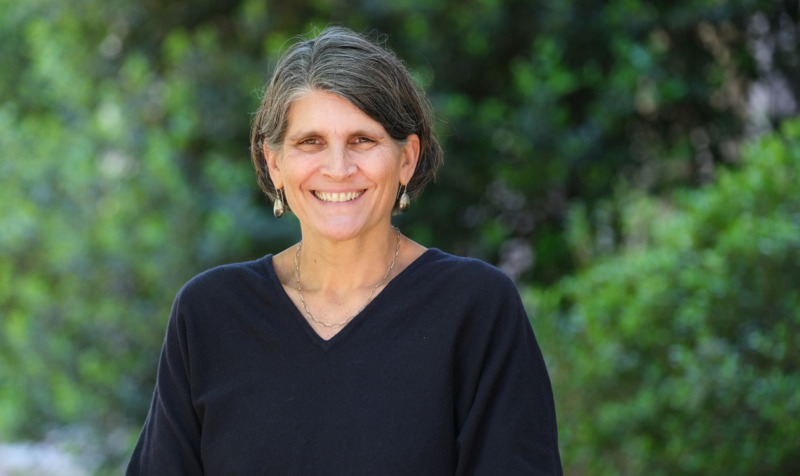
Professor Vali Lalioti directs programmes at UAL's Creative Computing Institute, pioneering XR/robotics research with applications in performing arts, healthcare, and education. Her innovations include BBC's first AR production (RTS Award winner) and VR platforms for musicians during COVID-19. Robotics research examines culturally-informed movement design and human-robot interaction. She leads UKRI projects bridging creative practice and technology, and develops new robotics/AI courses at UAL. Supervises PhD projects on robotic garments, VR painting, and plant-human symbiosis. Founder of The Innovation Consultancy advising FTSE-100 companies globally.
Nathan Mitchell is the Vilas Distinguished Achievement Professor of Learning Sciences at the University of Wisconsin-Madison's School of Education. He serves as the Area Chair for Learning Sciences and Director of the MAGIC Lab. His research focuses on embodied cognition, mathematics education, and engineering learning, emphasizing how physical actions and environmental interactions influence intellectual processes. Mitchell holds a PhD in Cognitive Psychology from the University of Colorado and multiple degrees from Carnegie Mellon University, including BSE in Electrical Engineering, BS in Mathematics, and BA in History. His work spans over 200 peer-reviewed publications and grants from NSF, IES, and the James S. McDonnell Foundation. He is a Fellow of the International Society of the Learning Sciences and a Founding Officer of AERA's Engineering and Computer Science Education division. Mitchell has led initiatives such as the Teachers as Learners (TaL) grant program and co-founded EMIC, an embodied mathematics education consortium. He has also served on National Academies committees and is an inductee of UW-Madison's Teaching Academy. Mitchell's research emphasizes grounded and embodied learning principles, advocating for educational designs that integrate physical movement, gesture, and environmental interaction to enhance STEM learning. His recent work explores augmented reality, collaborative learning environments, and the role of gesture in mathematical proof construction. He has authored foundational texts like Foundations of Embodied Learning: A Paradigm for Education (2021), synthesizing theories and applications of embodied cognition. Awards: Facilitators’ Choice Award (2020), Vilas Distinguished Achievement Professorship (2018), Inductee into Teaching Academy (2014) Leadership Roles: Chair of TaL Grant Program (since 2017), Co-Chair of CSCL10 Conference (2013) Labs: Director of MAGIC Lab, exploring embodied education technologies
Dr. Alistair Henry is a Senior Lecturer in Criminology at the University of Edinburgh's School of Law, holding LLB, MSc, and PhD qualifications. He maintains office hours on Tuesdays from 11:00-13:00 and serves as a key academic bridge between university research and policing practice in Scotland. His academic career includes eight years (2010-2018) as Associate Director of the Scottish Institute for Policing Research (SIPR), where he chaired the Police Community Relations Network. Currently, he coordinates the Edinburgh/SIPR Brokering Group, connecting university researchers with policing practitioners across Scotland. Dr. Henry's research focuses on: Sociology of policing and community engagement Interaction ritual theory applied to police-public encounters Governance and accountability mechanisms in policing Academic-practitioner collaborations Digital dimensions of contemporary policing Police reform implementation in Scotland His publication record demonstrates a consistent trajectory from traditional criminological studies toward increasingly digital-focused analyses of police-public interactions. Recent work examines how social media, digital rituals, and online platforms are reshaping traditional policing paradigms while maintaining core community engagement functions. As an educator, Dr. Henry actively supervises PhD students, with particular interest in local crime governance, police accountability mechanisms, democratic governance of police, police reform effects, austerity-era policing challenges, and effective partnership working strategies. His research methodology often combines theoretical sophistication with practical field insights gained through extensive knowledge exchange activities with policing practitioners.
Arne Geschke is an Associate Professor in the Faculty of Science at The University of Sydney. His work focuses on understanding the environmental and social impacts of global trade through advanced multi-regional input-output (MRIO) analysis. Before academia, he worked in Germany’s car industry developing mathematical models for engine behavior, blending practical engineering expertise with academic research. Dr. Geschke holds an Industrial Mathematics degree from institutions in Hamburg, Germany, and Bath, UK. His research interests include industrial ecology, climate change mitigation, sustainability assessment, and the application of MRIO frameworks to evaluate embodied emissions and resource use across economies. He has contributed to major projects like the EORA global MRIO database and the PIOLab virtual laboratory initiative, advancing transparent and collaborative environmental accounting. Key grants include a 3TB RAM, 32-core server funded by the University of Sydney’s DVC Research (2014), and projects on harmonizing MRIO data and linking MRIO to computable general equilibrium (CGE) models. His recent work highlights consumption-based environmental footprints, such as healthcare’s biodiversity impact and food supply chain vulnerabilities under climate change. Recipient of research support from CSIRO and the Norwegian University of Science and Technology. Recognized in Clarivate’s 2023 Highly Cited Researchers list for impactful contributions. Dr. Geschke’s work bridges technical modeling and global sustainability challenges, emphasizing policy-relevant insights through innovative data integration. His labs and tools aim to democratize access to complex environmental-economic analyses, fostering international collaboration.
Dr Heather Bray is a Senior Lecturer in the School of Biological Sciences at The University of Western Australia. She specializes in Science Communication, focusing on community attitudes toward science in food production and farm animal welfare. She coordinates the Master of Science Communication program and teaches at undergraduate levels. Her research emphasizes improving stakeholder trust in the agri-food system. Education: PhD (Veterinary Science, University of Sydney), Graduate Diploma (Science Communication, Central Queensland University), Bachelor (Science in Agriculture, University of Sydney) Her research explores genetically-modified crops, food ethics, and public engagement strategies. She has secured grants including the CRC NZE Ag project and Mine Pit Lake Assessment initiatives. Awards include UWA and Faculty of Science Citations for student learning contributions. Media engagements include ABC radio interviews and podcast features on topics like gene technology and meat consumption. She actively participates in interdisciplinary projects, such as coastal ecology studies and transdisciplinary sustainability research.
Yuhao Zhu is an Associate Professor at the University of Rochester, holding joint appointments in the Department of Computer Science and the Department of Brain and Cognitive Sciences. He is affiliated with the Center for Visual Science and the Goergen Institute for Data Science. His research focuses on visual computing, spanning imaging (optics, image sensors), human perception/cognition, and computer systems (architecture, programming models). He earned his Ph.D. from The University of Texas at Austin and has held visiting positions at Harvard University and Arm Research. Education: Ph.D. in Electrical and Computer Engineering, The University of Texas at Austin, 2017 M.S.E. in Electrical and Computer Engineering, The University of Texas at Austin, 2015 B.S. in Computer Science and Engineering, Beihang University, 2010 Research Interests: Dr. Zhu explores interdisciplinary areas such as computational imaging, human visual perception modeling, and energy-efficient computing systems. His work bridges optics, cognition, and computer architecture, with applications in AR/VR, autonomous systems, and neural rendering. Key themes include optimizing systems using biological principles and developing tools for efficient visual computing. Awards: NSF CAREER Award (2020) University Research Award (2023, 2019) ISCA Hall of Fame (2023) ACM SIGARCH Dissertation Award (2018, Honorable Mention) Teaching and Service: He teaches courses on computer imaging, graphics, and systems architecture. He serves on program committees for top conferences (ISCA, ASPLOS, MICRO) and chairs university-wide committees on AI ethics and international collaborations. His lab, Horizon Lab, actively mentors students and fosters interdisciplinary research. Labs/Teams: The Horizon Lab at URCS focuses on visual computing, with projects in computational art, AR/VR optimization, and robotic computing systems. Collaborations span academia and industry (e.g., Meta, Arm).
Jill Hamm is the Dean and William C. Friday Distinguished Professor of Education at the University of North Carolina at Chapel Hill (UNC-Chapel Hill) within the UNC School of Education. Her academic roles include affiliations with the Applied Developmental Science and Special Education (ADSSE) and Learning Sciences and Psychological Studies (LSPS) departments. She holds a Ph.D. in Educational Psychology from the University of Wisconsin-Madison and has held faculty positions since 1999, progressing to full Professor in 2014. Her research focuses on peer relationships in adolescent development, school-based interventions, and informal learning environments. Current projects include NSF-funded CASCADE, investigating collaborative skills in STEM careers, and Hidden No More, studying museum exhibits featuring underrepresented scientists. She leads or co-leads over $3 million in grants, emphasizing rural education and teacher professional development. Hamm has authored over 50 peer-reviewed articles and book chapters, with recent work on classroom social dynamics, teacher attunement, and bullying prevention. She advises numerous graduate students and serves on editorial boards for journals like Journal of Applied Developmental Psychology . Her professional service includes roles at the UNC School of Education and national organizations. Her teaching spans doctoral seminars in adolescent development and courses on educational psychology. She mentors students in research areas such as peer networks and school transitions. Her lab focuses on creating supportive classroom environments and evidence-based strategies for educators.
Pier Luca Lanzi is a Full Professor at Politecnico di Milano, affiliated with the Department of Electronics, Information, and Bioengineering (DEIB). He leads the Artificial Intelligence and Robotics Lab (AIRLab), focusing on interdisciplinary research at the intersection of AI, robotics, and human-centric technologies. His work emphasizes applications in gaming, healthcare, and education, leveraging machine learning, evolutionary algorithms, and virtual reality. Education: Not explicitly stated in the provided texts. Affiliations: Director of the AIRLab; core member of DEIB. His research interests span artificial intelligence, multiagent systems, procedural content generation for games, serious games for rehabilitation, and AI-driven medical imaging. He explores how AI can enhance learning experiences (e.g., VR classrooms for physics and history) and improve therapeutic outcomes through interactive frameworks like the IGER system for stroke rehabilitation. Notable contributions include frameworks for automated level design in games (e.g., DOOM level generation via GANs), AI-assisted diagnostic imaging systems, and exergaming solutions for juvenile arthritis patients. His work often bridges computational intelligence with real-world applications, emphasizing human-centered design. Advising & Grants: While no specific grant details are provided, his prolific publication record suggests sustained research activity. Students and collaborators include prominent names in AI and robotics, though formal advisee名单 are not listed here. Labs/Teams: Directs the AIRLab, which develops cutting-edge technologies in AI, robotics, and human-technology interaction. Collaborates with industry and academic partners on projects ranging from VR educational tools to medical exergames.
Renan Guarese is a Postdoctoral Researcher in Human-Computer Interaction at KTH Royal Institute of Technology, Sweden. His work focuses on AR/VR applications, particularly assistive technologies for visually impaired individuals and data visualization in pharmaceutical manufacturing through the SMART Industry project. He holds a PhD from RMIT (Australia) and MSc from UFRGS (Brazil), with extensive experience in teaching HCI, AI, and game development at KTH, RMIT, and UFRGS. Education: PhD in Computer Science (2020-2024), RMIT University, Melbourne MSc in Computer Science (2019-2020), UFRGS, Brazil BSc in Computer Science (2013-2018), UFRGS, Brazil Technician Diploma in IT (2013-2014), IFRS, Brazil Research Interests: Assistive AR/VR technologies for accessibility Sonification and spatial audio interfaces Situated visualization for decision-making Empathy embodiment through immersive systems AR applications in education and industrial contexts Article Trends: Recent work emphasizes AR-driven solutions for industrial scenarios (pharmaceutical manufacturing, predictive maintenance) and accessibility-focused interfaces. Key areas include sonification-based navigation systems, cognitive load measurement in games, and embodied empathy experiences. Awards: Best Doctoral Thesis (SVR 2024) ATN PhD Scholarship (2020-2024) 3DUI Contest Winner (IEEE VR 2020) Supervision & Grants: Supervised 4 MSc/Honours students. Active in Digital Futures (AstraZeneca partnership) and SMART Industry projects. Holds grants from ATN, Linnaeus-Palme, and CAPES programs. Labs/Teams: Collaborates with KTH's Division of Computational Science and Technology, RMIT's Centre of Digital Ecosystems, and AstraZeneca's industrial teams. Involved in IEEE, ACM, and SBC conference committees.
Therèsa M. Winge is an Associate Professor in Apparel and Textile Design at Michigan State University's Art, Art History, and Design department. She holds affiliate faculty status in Asian Studies and actively contributes to STEM/STEAM-driven design research. Her work integrates sustainable design practices with innovative materials and technologies, including laser cutting and conductive fibers. Winge explores subcultural dress, cosplay, and body modification practices through a multidisciplinary lens combining dress studies with quantum physics and spatial geometry. Education: BSc Fashion Design (University of Minnesota), MLS with Quantum Physics/Dress Studies focus (University of Minnesota), PhD Dress Studies (University of Minnesota) Research focuses on subcultural identity construction through material culture, with emphasis on streetwear, cosplaying communities, and the intersection of technology with design. She emphasizes slow-design methodologies prioritizing sustainability from concept to execution. Winge's designs have been exhibited globally in museums and fashion shows, blending artistic expression with functional innovation. Teaching involves upper-division courses on design methodologies, sustainable practices, and cultural studies of dress. She serves as Co-Director for the Dress and Body Association and contributes to Clothing Cultures journal. Current creative work explores spatial geometry applications in body-enhancing garment design.
Rob Oxoby is a Professor in the Department of Economics at the University of Calgary's Faculty of Arts. He holds a PhD in Economics from the University of California (2000), an M.A. in Economics from San Jose State University (1992), and a B.S. in Business Administration from the University of Santa Clara (1989). His research focuses on Behavioral Economics, Experimental Economics, and Applied Microeconomic Theory, with recent emphasis on pandemic-related behavioral responses, public health policy effectiveness, and decision-making under uncertainty. Education: Ph.D. Economics, University of California, 2000 M.A. Economics, San Jose State University, 1992 B.S. Business Administration, University of Santa Clara, 1989 His research explores how cognitive biases, social preferences, and contextual factors influence economic decisions. Recent work includes analyzing public compliance with pandemic measures, vaccine hesitancy, and experimental methods to study risk-taking and intertemporal choice. He has conducted cross-sectional surveys on non-pharmaceutical intervention adoption and virtual focus groups on health messaging strategies. His experimental research extends to topics like asset integration, sentencing decisions, and performance systems' cognitive impacts. Publications Trends: Over 60% of his recent work (2020–2023) addresses pandemic-related behavioral economics challenges. His experimental methodologies investigate policy compliance, vaccine adoption barriers, and health communication efficacy. Scientific Awards: No awards explicitly listed. Advising & Grants: No specific advising/grant details provided in the profile. His research is supported through institutional and experimental platforms. Research Infrastructure: Leverages laboratory experiments, cross-sectional surveys, and digital trace data analysis for health and behavioral studies.
Nathan Phillips is an Associate Professor in the Department of Curriculum & Instruction at the University of Illinois Chicago (UIC) College of Education. He serves as Co-Coordinator of the MEd in Language, Literacies, and Learning program. Prior to academia, he taught high school English, journalism, creative writing, and film. Phillips holds a PhD from Vanderbilt University (Learning, Teaching, and Diversity), an MA from Brigham Young University (English), and a BA in English Teaching. His research focuses on spatial literacies, media literacies, and multimodal learning environments. He investigates how young people engage with virtual/physical landscapes and media to develop civic agency. Current projects include designing map-based performances for argumentation and studying youth-produced public media. His work emphasizes connections between geography, literacy, and qualitative research methods. Phillips has published extensively on topics like digital literacies equity, embodied science learning through performance, and justice-centered pedagogies. His recent work explores intersections of spatial justice and literacy practices, including community-based projects like Chicago Global Water Dances. Co-authored works address transliteracies frameworks and hybrid learning communities. Teaching focuses include disciplinary literacy preparation for secondary teachers. He maintains active collaborations with local schools through design studios and maker spaces, emphasizing equitable technology integration. Phillips' work is informed by principles of critical pedagogy and participatory action research.
Simon Biggs is an Adjunct Research Professor at UniSA Creative, University of South Australia, focusing on interdisciplinary art and technology. Previously, he served as Professor of Art and Director of the South Australian School of Art (2014–2023). His work spans interactive environments, electronic literature, and machine-learning augmented performances. Collaborations include projects with dance, music, and software engineering experts. Key roles include Honorary Professor at the University of Edinburgh (2014–2019) and Visiting Professor at Arizona State University (2013–2014). Education: Expertise in new media art and critical theory. Research Interests: Art and technology intersections, electronic literature, and posthumanist themes. Recent works explore big data’s cultural implications and generative ontologies. His installations like Dark Matter and Autography blend technology with human interaction. Awards and recognitions are not explicitly listed, but his contributions to electronic literature and digital art are internationally acknowledged through exhibitions and peer-reviewed outputs. Teaching and supervision emphasize site-specific intermedia, interaction design, and socially engaged practices. He leads research in cross-disciplinary initiatives such as the Australian Research Centre for Interactive and Virtual Environments.
Associate Professor Drew Pettifer holds dual roles as International Lead in RMIT University's School of Art and Convenor of RMIT's LGBTIQA+ Research Impact Network. His work bridges contemporary art, queer theory, and archival studies, focusing on marginalized histories. With exhibitions featured globally—including National Gallery of Victoria and Hong Kong Arts Centre—his creative practice spans photography, video, performance, and installation. Recent accolades include a 2024 Visiting Scholar appointment at the State Library of NSW and a DSC Academic Development Fellowship. Academic leadership includes Program Lead for the Bachelor of Arts (Fine Art) Hong Kong program (2020–2024) and non-academic roles such as Board Director at Shepparton Art Museum. Peer review experience includes Creative Australia and City of Melbourne Arts. Education: PhD research at Monash University (2017 VC Commendation) Research Focus: Queer archives, biopower, gender representation Exhibitions: Closer Together (2024), Melbourne Now (2023), Queer (NGV 2022) Key collaborations include interdisciplinary symposiums across Asia-Pacific, emphasizing cultural inclusion and queer pedagogy. His 2020 project A Sorrowful Act re-examined colonial queer histories through installation and archival work. Current research explores creative practice as a tool to recover minoritarian narratives.
Dr. Scott Mayson is a Senior Lecturer in the School of Design at RMIT University, Australia. He holds leadership roles including former Interim Dean, Associate Dean of Research & Innovation, and Deputy Chair of CHEAN (Ethics Committee). His research focuses on virtual reality development, computational design, sustainable/inclusive apparel, footwear, and additive manufacturing. He is a Fellow of the Design Institute of Australia and has exhibited work internationally. Students under his supervision have won prestigious awards like Red Dot, IF, Dyson, and Good Design Australia. Research Interests: Industrial design innovation across product/apparel sectors Virtual Reality integration in creative practice Computational methods for sustainable design Inclusive fashion systems addressing body diversity Additive manufacturing for customizable solutions Teaching & Supervision: Maintains studios in Industrial Design, VR/XR tools, and additive manufacturing for over 20 years. Open to supervising PhD/Masters students in digital fashion, sustainable design systems, and wearable technology innovation. Professional Contributions: Program Management experience across academic programs Ethics committee leadership (CHEAN) Advocacy for design excellence through industry collaborations