Patrick Jermann is a Lecturer at EPFL’s School of Computer and Communication Sciences, affiliated with the Centre for Digital Education (CEDE) , SIN-ENS , and SSC-ENS departments. As Executive Director of CEDE since 2013, he leads Swiss MOOC Service (SMS), NOTO, and Campus Analytics initiatives. His research focuses on Computer Supported Collaborative Learning (CSCL) , Learning Analytics , and MOOCs , analyzing student interactions, gaze patterns, and attrition behaviors through clickstream data. Recent work explores pedagogical design, statistical methods, and software development for educational tools. His publications (2001–2015) reveal trends in eye-tracking for MOOCs, interaction analysis, and collaborative learning technologies. Notable contributions include frameworks for gaze-based feedback and metrics for perceived video difficulty. He has mentored PhD students such as Sharma Kshitij and Nüssli Marc-Antoine , and secured grants via the DRIL fund . As a CDS Member, he contributes to institutional digital education strategies.
Francesco Strada is a Fixed-term Assistant Professor at the Department of Control and Computer Engineering (DAUIN) at Politecnico di Torino. He serves as a Course Lecturer for Virtual Reality and Technical Art for Cinema and Video Games, and as a Course Collaborator for multiple courses across Computer Engineering, Film and Media Engineering, and Architecture programs. He is an active member of the College of Computer, Film and Mechatronics Engineering and the College of Architecture and Design teaching committees. Dr. Strada's research focuses on Computer Graphics, Virtual Reality, Augmented Reality, and Human-Computer Interaction with particular emphasis on Embodied Conversational Agents, emotion recognition, and serious games applications. His work bridges technical computer science with psychological and human factors considerations to create more believable and effective virtual experiences. His research spans applications in education, healthcare, automotive interfaces, cultural heritage, and emergency response training. His recent publications demonstrate a strong trend toward emotionally intelligent virtual agents, VR/AR applications in specialized domains, and technical innovations in latency management and digital human representation. His work often combines psychological principles with technical implementations to enhance user experience and system effectiveness. Dr. Strada actively supervises PhD students including Alessandro Emmanuel Pecora, Stefano Calzolari, and Leonardo Vezzani, whose research focuses on Emotionally Aware Embodied Conversational Agents (E2CA) and Car AR-HUD design. He leads significant research projects including Holo-BLSD (2024-2025), a Mixed Reality tool for first aid emergency response training, and '50 shadows of AI' (2025), focusing on personalized education in corporate settings. He is a member of the CGVG - Computer Graphics and Vision Group at DAUIN, where his team develops cutting-edge applications in AR/VR, Human-Computer Interaction, User Experience, Computer Vision, Machine Learning, and Artificial Intelligence. His research has practical applications in education, training, healthcare, automotive interfaces, and cultural heritage preservation.
Maj Stenmark serves as Associate Professor at Lund University's Faculty of Engineering, Department of Computer Science, with cross-appointments in Children Cardiology and Robotics and Semantic Systems. They are actively involved in multiple research initiatives including the LTH Engineering Health profile area and LU's Natural and Artificial Cognition profile. Stenmark's research focuses on human-robot interaction, specifically simplifying robot task programming for intelligent systems. Their work bridges computer science and medical applications, with emphasis on surgical robotics and vision-based tracking systems. Current projects include CAISA (Collaborative Artificial Intelligent Surgical Assistant) in partnership with Skåne University Hospital's Children's Heart Center and robotics companies Cognibotics and Cobotic. Analysis of recent publications reveals strong trends in medical robotics applications, particularly vision-based surgical assistance systems. Their work combines computer vision, language models, and behavior trees to create robotic surgical assistants, with growing emphasis on dual-arm robot programming using deep learning models with language and vision instructions. Stenmark actively supervises researchers including H. Ismail and E. Ertürk, and participates in major funding initiatives including WASP and Vinnova competence centers. Their research receives support from Swedish Government Agency for Innovation Systems (Vinnova) and the ELLIIT initiative. They lead the development of robotic scrub nurse technology through vision tracking of surgical hand and instrument motions, and manage infrastructure related to The Tissue Bank in Lund. Stenmark also engages in knowledge transfer through NEXTG2COM workshops and media appearances discussing AI applications in pediatric heart surgery.
Rune Johan Krumsvik is a Professor of Education at the University of Bergen (UiB) and Professor II at Volda University College. He founded the Digital Learning Communities (DLC) research group (2007) and the Western Norway Graduate School of Educational Research II (WNGER II). His affiliations include editorial roles at the Nordic Journal of Digital Literacy (Editor-in-Chief) and Frontiers in Pediatrics (Associate Editor). Professor, Department of Education, UiB (2010–) Professor II, Volda University College (2003–) Honorary Research Fellow, University of Bristol His research spans artificial intelligence , doctoral education , ICT in schools , formative assessment , and classroom management in technology-dense environments. He explores connections between AI, social media, mental health, and digital competence, with recent work focusing on large language models (LLMs) in education and healthcare. Scientific publications show a focus on AI applications ( 76 peer-reviewed articles , h-index 31). Key trends include: EdTech implementation in Norwegian primary/secondary schools AI in formative/summative assessment Digital competence frameworks Classroom technology management Teacher education digital skills Mental health impacts of screen time Scientific awards: Teaching Award , UiB Faculty of Psychology (2012) Excellent Teaching Practitioner accreditation (2020) Supervision includes: Main supervisor for 12 PhD candidates (11 completed) Co-supervisor for 6 PhD candidates Supervisor for 14 master’s and 12 bachelor’s students He leads the Digital Learning Communities Artificial Intelligence Centre (DLCAIC), focusing on AI research in education/healthcare, societal impacts of AI, and digital competence development.
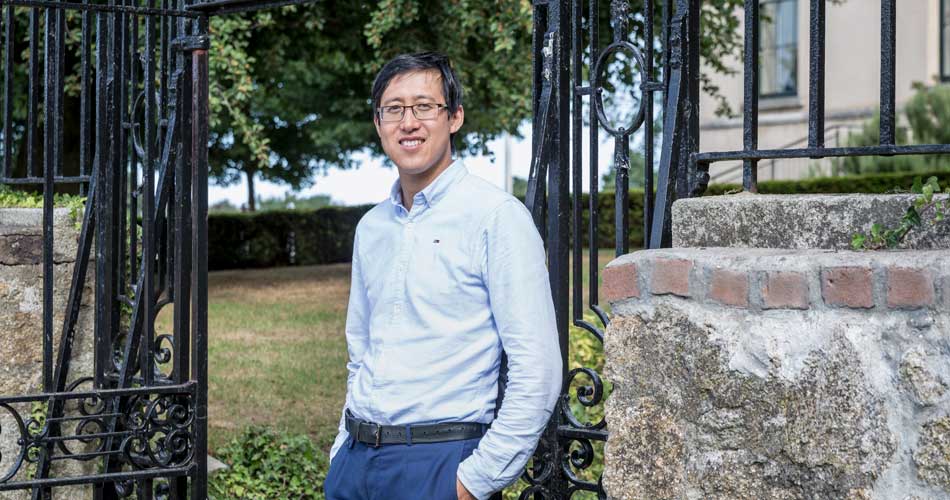
Dr. Nan Zhang is a research leader at the UCD School of Mechanical and Materials Engineering , focusing on precision manufacturing technologies for micro/nano-scale devices. His work bridges lab-scale prototyping and industrial mass production, with applications in medical devices, microfluidics, and functional surfaces. Research Keywords : Precision Manufacturing, Microfluidics, Nanotechnology, Materials Science, Medical Devices, Advanced Manufacturing Research Trends : Recent publications highlight advancements in digital light processing (DLP) 3D printing, machine learning-optimized microfabrication, liquid metal antenna technologies, and scalable nanocomposite mold development. His work emphasizes industrial feasibility, biocompatibility, and surface engineering. Scientific Awards : Smurfit Kappa Newman Fellowship Award ERC Grants (contextual institutional affiliation) Labs & Collaborations : Based at the UCD Engineering and Materials Science Centre, Dr. Zhang’s research involves partnerships with industry and academic networks, focusing on precision tooling, microfluidic scale-up, and novel material applications (e.g., bulk metallic glasses, bio-plastics).
Robb W Lindgren is a Professor at the University of Illinois at Urbana-Champaign with appointments in Curriculum and Instruction and Educational Psychology . He serves as Associate Dean for Research in the College of Education and holds affiliations with the National Center for Supercomputing Applications (NCSA) , Beckman Institute for Advanced Science and Technology , and Center for Social & Behavioral Science . His research focuses on Embodied learning through gesture and physical interaction Design of mixed/augmented reality educational systems Collaborative STEM education with immersive technologies Recent publications highlight his work in: Biochemistry simulations using haptic feedback (2024) VR-based spatial reasoning for astronomy education (2023) Metaverse learning environments with theory-driven design (2023) Climate change simulations with full-body tracking (2022) His research group explores how physical movement and gestural interfaces shape scientific understanding and conceptual change. Key collaborations include work with Jee Hyang Park , Jun Kang , and Thomas Kim , focusing on Gesture-mediated collaboration XR learning analytics Agency in embodied design
Dimitris Maroulis is a Professor at the Department of Informatics and Telecommunications, University of Athens, leading the Real-Time Systems and Image Analysis Lab (RTS-image). With over 20 years of experience in data acquisition and real-time systems, and 15 years in image/signal analysis, he collaborates extensively with Greek and European hospitals in biomedical informatics. He has led 5 R&D projects and authored 150+ papers with 1400+ citations. University of Athens: Professor (2000–present) Meudon Observatory: Research Fellow (3 years) & Long-term Collaborator (10+ years) Research Interests focus on real-time systems , image/signal processing , and biomedical applications . Key areas include automated segmentation of proteomic images, noise removal methods, and stereo image coding. His 15 most recent publications (2003–2012) span 3D imaging , medical image analysis , and biomedical informatics , with sub-fields like autostereoscopic displays, wavelet-based coding, and computer-aided diagnosis. Awards : Best Paper Award (2012: Integral Image Analysis) Projects include European and national R&D initiatives in image analysis and real-time systems. Labs : RTS-image Lab develops methodologies for biomedical and proteomic applications.
Dr. Natasa Lackovic is a Senior Lecturer in the Department of Educational Research at Lancaster University's School of Social Sciences . As a philosopher of media, communication, and technology in education, she specializes in visual and multimodal approaches to higher education. Co-Director, Social Futures Centre Senior Fellow of Higher Education Academy (SFHEA) Co-Editor, Video Journal of Educational Pedagogy Member, International Association of Semiotic Studies Research Associate, University of Belgrade Her research bridges dualisms like 'image-concept' and 'mind-body' through inquiry graphics , relational HE , and postdigital semiotics . She examines embodiment, materiality, and digital representation in education, emphasizing social justice and interdisciplinarity. Key article themes include: Postdigital literacies and digital culture Relational pedagogy and sociomaterial approaches Visual semiotics in critical thinking Decolonial and emancipatory educational frameworks Algorithmic ethics in pedagogy Environmental sustainability through multimodal methods Scientific contributions: Authored two seminal monographs Developed inquiry graphics as pedagogical/research method Coordinated Graphic Novels and Comics Research Network Over 20 PhD theses supervised
Ashwin Ram is a postdoctoral researcher at Saarland University's Human-Computer Interaction & Interactive Technologies Lab, under Prof. Jürgen Steimle. He holds a PhD in Computer Science from the National University of Singapore (NUS), advised by Prof. Shengdong Zhao, and a Bachelor's in Electronics Engineering from NIT Trichy. His research focuses on wearable augmented reality, smart glasses, and accessibility, leveraging cognitive and behavioral theories to design intelligent interfaces. Notable contributions include Mindful Moments (DIS '23, Honorable Mention), a mindfulness tool for smart glasses, and a quadruped robot guidance system for visually impaired individuals (CHI '24, Honorable Mention). He has served as an Associate Chair (AC) for UIST 2025 and CHI 2025. His work bridges HCI with wearable computing, exploring topics like video learning optimization (LSVP, IMWUT '21), sound source localization via neural networks (NCC '18), and accelerating Hawkes processes for event modeling (ICML '17 workshop). He collaborates internationally, including a research visit at UCL's Multi-Sensory Devices Group. Key achievements include 17 peer-reviewed publications (Google Scholar, ORCID: 0000-0003-1430-8770) and interdisciplinary projects like semantic floor map-based robot navigation. Beyond academia, he practices Carnatic music, plays guitar, and is fluent in Malayalam, Tamil, and English, with proficiency in French, German, and Hindi.
Marco Buzzelli is an Assistant Professor at the Department of Informatics, Systems and Communication (DISCo) at the University of Milan-Bicocca, where he also obtained his PhD in Computer Science in 2019. His academic career is centered around cutting-edge research in signal, image, and video processing with a specialized focus on color imaging and machine learning applications. Dr. Buzzelli's research interests span multiple interconnected domains within computer vision and image processing. He has established himself as a leading researcher in color constancy, with numerous publications exploring illuminant estimation, white balance algorithms, and perceptual aspects of color imaging. His work extends to video restoration, particularly addressing challenges in low-light conditions and HEVC-compressed video processing. Additional research areas include hyperspectral imaging applications for historical document analysis, food authentication technologies, and neural architecture search for various computer vision tasks. His publication record demonstrates a clear evolution from foundational work in logo recognition and saliency detection toward increasingly sophisticated approaches to color science and video processing. Recent work shows strong emphasis on uncertainty estimation in color constancy, Bayesian optimization for night photography, and multimodal approaches combining spectral information with traditional RGB imaging. His research often bridges theoretical advances with practical applications across diverse domains including cultural heritage preservation, food safety, and computational photography. As an active ELLIS member, Dr. Buzzelli maintains significant European collaborations with institutions including Universitat Autònoma de Barcelona, Universidade Nova de Lisboa, Université Jean Monnet, and Universidad de Granada. His research group participates in major challenges such as the NTIRE series on night photography rendering and spectral recovery, contributing both methodological innovations and comprehensive surveys of the field. His laboratory work focuses on developing practical imaging solutions with real-world applications, particularly evident in projects addressing food authentication, historical document analysis, and vision-based monitoring systems. The integration of traditional image processing techniques with modern deep learning approaches characterizes his methodological approach across multiple research domains.
Prof. Dr. Lisa Stinken-Rösner is a prominent physicist and educator at the Faculty of Physics, Bielefeld University . With extensive experience across Germany and international institutions like California Science Center and Leuphana University, she specializes in physics education and inclusive science teaching . Her work bridges digital media with experimental physics to enhance both student and teacher competencies. Current Professor for Physics and its Didactics at Bielefeld University (since 2023) Former Research Associate at Leuphana University (2018–2022) Key projects: LFB-Labs-digital (teacher training in digital labs), VidEX (video-based experiments) Lisa's research focuses on: Inclusive science education strategies for diverse learners Digital learning tools including interactive videos and virtual labs Experimental skill development through innovative pedagogies Physics identity formation in educational contexts Her 15 most recent publications (2023–2025) span topics from: Digital gamification in science classrooms Inclusive pedagogy frameworks Experimental video methodologies Physics identity development Teacher training in digital environments Contextual physics instruction She coordinates multiple modules including: 28-FD Subject Didactics 80-SU-MA Master's thesis 80-SU-BA Bachelor's thesis
Hugo G. Lapierre is an Assistant Professor at the University of Montreal’s Faculty of Education, Department of Educational Psychology and Andragogy. He holds a PhD in Education (2024) and an MA in Didactics (2017) from UQAM, alongside a BSc in Secondary Science and Technology Teaching (2024). His research focuses on programming pedagogy, educational technology integration, artificial intelligence literacy, and psychophysiological data applications in education. Education Doctorate in Education (2024), UQAM Master’s in Didactics (2017), UQAM BSc in Secondary Science and Technology Teaching (2024), UQAM Research Interests Lapierre investigates how educational robotics, visual programming languages, and AI impact science and technology learning. His work explores emotional and cognitive differences between novice and beginner programmers, psychophysiological data in educational research, and equitable AI integration in schools. He advocates for programming education to address cybersecurity risks and prepare students for future job markets. Grants and Projects He leads projects funded by the Fonds de recherche du Québec - Société et culture (FRQSC) and the University of Montreal, including studies on educational robotics’ effects on chemistry learning, AI literacy for disadvantaged schools, and virtual vs. in-person programming instruction. His grants (e.g., FRQSC PV113813) support early-career research in educational technology. Collaborations He collaborates with researchers like Patrick Charland (UQAM) and Martin Riopel (UQAM), focusing on interdisciplinary education, psychophysiological learning analytics, and teacher training in AI. His work spans scientific and professional domains, bridging empirical research with practical educational tool development.
Lin Lin is an Associate Professor of Biostatistics & Bioinformatics at Duke University's Division of Integrative Genomics and an Associate Research Professor of Statistical Science in Trinity College of Arts & Sciences. With appointments dating from 2022 to present, Dr. Lin has established herself as a prominent researcher at the intersection of statistics, bioinformatics, and biomedical applications. Her work spans multiple departments and research centers at Duke, reflecting her interdisciplinary approach to solving complex biological problems. Ph.D. from Duke University (2012) Dr. Lin's research focuses on developing advanced statistical and machine learning methods for analyzing complex biological data, particularly in immunology and transplantation research. Her expertise in single-cell data analysis, cytometry data interpretation, and biomarker discovery has led to significant contributions in vaccine studies, HIV/AIDS research, and organ transplantation. She has pioneered methods for handling small cohort studies, longitudinal data, and multi-modal datasets, addressing critical challenges in modern biomedical research where traditional statistical approaches fall short. Analysis of Dr. Lin's publication record reveals a strong emphasis on developing interpretable computational methods that bridge the gap between complex data and biological insights. Her recent work shows increasing sophistication in handling high-dimensional single-cell data, with a particular focus on creating models that maintain interpretability while achieving high predictive accuracy. The trajectory of her research demonstrates a consistent pattern of addressing methodological challenges in biomedical data analysis, with applications spanning immunology, transplantation medicine, and infectious disease research. Dr. Lin has secured substantial research funding from multiple prestigious sources including the National Institutes of Health, National Institute of Allergy and Infectious Diseases, National Heart, Lung, and Blood Institute, and National Institute of Environmental Health Sciences. Her grants portfolio demonstrates expertise across diverse biomedical domains, from HIV/AIDS research to transplantation immunology and environmental health effects. These projects typically involve developing novel statistical methodologies while addressing pressing clinical questions, showcasing her ability to bridge theoretical statistics with practical biomedical applications. As an educator, Dr. Lin teaches advanced courses in Bayesian statistical modeling and analysis, contributing to the training of the next generation of biostatisticians and data scientists. Her research group likely focuses on developing computational tools that address real-world challenges in biomedical data analysis, with particular emphasis on making complex models interpretable and applicable to clinical settings.
Eugene Yang is a Research Scientist at the Human Language Technology Center of Excellence (HLTCOE) at Johns Hopkins University, where he focuses on cross language and multilingual information retrieval, multilingual multimodal report generation, and retrieval-augmented generation systems. He received his Ph.D. in Computer Science from Georgetown University in 2021 under the supervision of Ophir Frieder, David D. Lewis, and Jeremy Fineman. His research spans multiple domains within information retrieval, with particular emphasis on high recall retrieval systems, technology-assisted review frameworks, and multilingual processing. He is the developer of TARexp, an open-source Python framework for Technology-Assisted Review experiments, which demonstrates his commitment to creating practical tools for the research community. Yang's publication record shows a clear trend toward increasingly sophisticated multimodal and multilingual retrieval systems, with his recent work focusing on retrieval-augmented generation evaluation, cross-language model distillation, and modular fusion approaches for complex information needs. His research bridges theoretical advances with practical applications in legal technology, healthcare informatics, and multilingual information access. As an active contributor to the information retrieval community, Yang has presented at numerous conferences including SIGIR, ECIR, and TREC, and has collaborated extensively with researchers across institutions. His work demonstrates a strong commitment to reproducibility and practical evaluation methodologies in information retrieval research.
Prof. Dr. Kathleen Stürmer is a faculty member at the University of Tübingen, affiliated with the Tübingen School of Education (TüSE) and the Hector Institute for Empirical Educational Research . As Deputy Director of TüSE for Internationalization since 2021, she leads initiatives to enhance global collaboration in teacher education. Research Focus: Teacher professional vision, simulation-based learning environments, diagnostic competence development, and technology integration in classrooms. Methodologies: Eye-tracking studies, meta-analytic reviews, and longitudinal analyses of teacher training efficacy. Key Projects: Observer (video-based diagnostic tool), Di-MaL (simulation framework for pedagogical diagnostics), and quality initiatives in digital distance teaching during the pandemic. Her recent publications highlight trends in educational technology (AI, tablets), teacher cognition (professional vision, attention processes), and structural innovations in teacher education programs. She actively develops standardized instruments for measuring pedagogical expertise and explores the impact of individual and contextual factors on instructional quality. Labs & Teams: She collaborates with the Hector Institute for Empirical Educational Research and leads internationalization efforts at TüSE, focusing on interdisciplinary frameworks for diagnostic competence across professions like teaching and medicine.