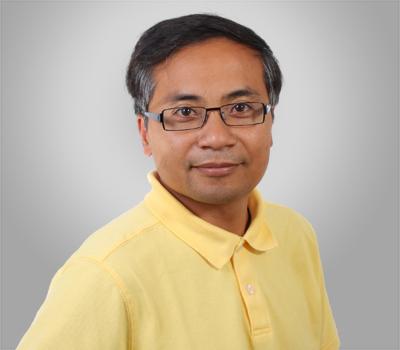
Thinh Nguyen is a Professor in the School of Electrical Engineering and Computer Science at Oregon State University . His research spans theories and applications of stochastic processes, with focus areas in signal processing, video coding, networking, communication systems, and quantum information theory. He co-authored multiple award-winning papers and received the NSF CAREER Award (2009) and Engelbrecht Young Faculty Award (2007) . Education : Ph.D. in Electrical Engineering and Computer Science from UC Berkeley (2003), B.S. in Computer Engineering from University of Washington (1995) Research Focus : Information representation, processing, and transmission with applications in multimedia streaming optimization Key Contributions : Network coding theories for efficient multimedia transmission His recent publications address topics in machine learning optimization, fluid dynamics in medical systems, and microfabrication techniques. Outside academia, he maintains strong musical interests as a classical violinist and emphasizes family values. Scientific Awards NSF CAREER Award (2009) Engelbrecht Young Faculty Award (2007) Currently advises graduate students in information theory and signal processing while leading research at the intersection of electrical engineering and computer science.
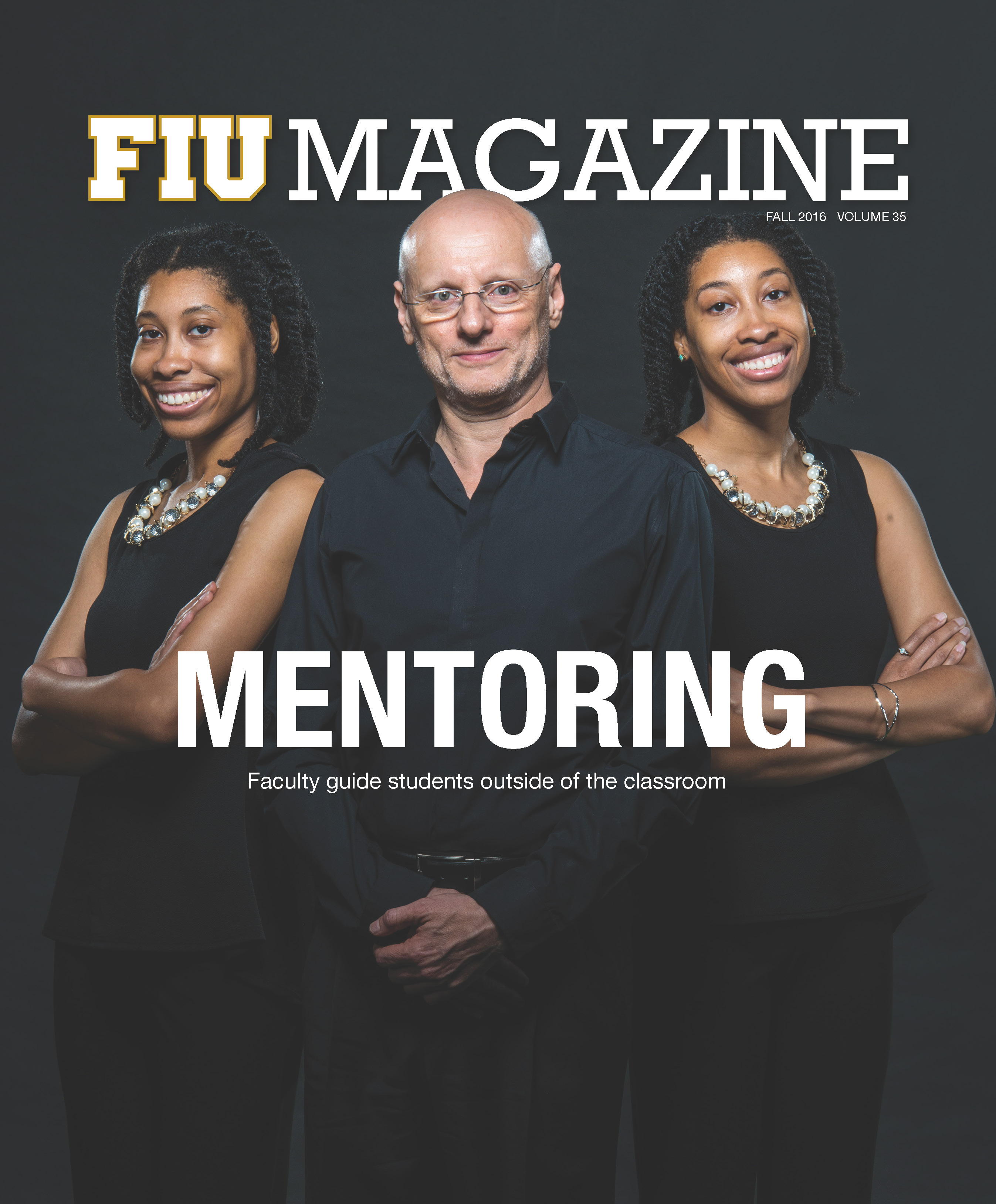
Naphtali David Rishe is a Full Professor in the Knight Foundation School of Computing and Information Sciences at Florida International University (FIU), where he holds the inaugural title of Outstanding University Professor. He is the Founding Director of the NSF Industry/University Cooperative Research Center for Advanced Knowledge Enablement and leads the FIU High Performance Database Research Center and the Geospatial Laboratory. His work spans database systems, geospatial technologies, AI, and health informatics. Dr. Rishe earned his Ph.D. in Computer Science from Tel Aviv University (1981–1984), an M.Sc. from the Israel Institute of Technology (Technion) (1979–1981), and a B.Sc. Summa Cum Laude from the same institution (1975–1979). He has held academic positions at the University of California, Santa Barbara (Visiting Assistant Professor, 1984–1987) and Tel Aviv University (Instructor, 1981–1984). His research focuses on high-performance databases, semantic data systems, geospatial analytics, wearable sensors, and AI applications in health and transportation. He is the architect of the TerraFly project, widely recognized by media such as the New York Times and Nature. His work integrates advanced machine learning with real-world systems for environmental monitoring, urban planning, and threat detection. His recent publications reflect a strong trend in geospatial AI, including terrain mapping using LIDAR, anomaly detection in video, real estate trend modeling, and generative models for map synthesis. These works demonstrate a fusion of deep learning, spatial reasoning, and practical system design. Fellow, National Academy of Inventors (2021) Outstanding University Professor, FIU (2000) IBM Global University Program Academic Award (2021) First Prize, Miami Herald Business Plan Competition (2002) Cover Feature, NSF Breakthroughs Compendium (2014, 2016) Cover Feature, FIU Magazine (Fall 2016) Dr. Rishe has secured over $60 million in research funding as Principal Investigator from agencies including NSF, NASA, IBM, DoI, USGS, and DOT. He is currently leading a $2.6M NSF grant for a Geospatial System for Multimodal Environmental Observations (2020–2025) and co-PI on a $3.3M NSF grant for Alzheimer’s Disease research (2019–2025). He mentors numerous students and has graduated top performers recognized by FIU. He leads multiple research centers and serves on editorial boards and NSF panels. His labs include the High Performance Database Research Center and the Geospatial Laboratory, driving innovation in data systems and spatial intelligence.
Yu Lu is an Assistant Professor in the Department of Biological & Ecological Engineering at Oregon State University. Their research focuses on video coding, image processing, and algorithm optimization with applications in multimedia systems and computer vision. Current interests include fast video compression algorithms, salient object detection, and error resilience in 3D video coding. Yu Lu has published extensively on topics such as HEVC/SHVC intra/inter coding optimizations, sparse regularization techniques for image restoration, and Bayesian decision models for scalable video coding. Research highlights include developing multi-stage motion estimation algorithms for versatile video coding (VVC), fast intra-coding methods using online learning, and depth map error concealment strategies for 3D video. Their work bridges algorithmic efficiency and practical multimedia applications, with publications spanning both traditional video coding standards (HEVC) and emerging formats like screen content coding. Publications trends show a strong emphasis on optimizing video encoding processes through hierarchical classification, adaptive switching mechanisms, and edge-assisted mode decisions. Earlier work (2013) explored piezoelectric material analysis, indicating interdisciplinary research interests. No awards or grants are explicitly listed in the provided materials.
Vinod Nigade is a Visiting Professor in the Department of Computer Science at Vrije Universiteit Amsterdam (VU). His research focuses on edge computing, deep learning systems, and network security. He holds a PhD in Computer Science from VU, defended in 2023 with his thesis Latency-Critical Inference Serving for Deep Learning . Key research areas include: Dynamic edge networks and latency-optimized inference systems IoT communication protocols and battery-free device synchronization Neural intrusion detection in programmable networks Distributed deep learning architectures Collaborations span academia-industry projects involving real-time systems, network programmability, and cybersecurity. His work addresses challenges in timely video analytics, service-level objectives in edge computing, and scalable exploit detection in distributed environments. Publications emphasize practical solutions for latency-critical applications, with contributions to ACM, IEEE, and other top venues. Current research trends include accelerating IoT discovery protocols and enhancing network security through AI-driven systems.
State University of New York at BuffaloUnited States
Prof. Tevfik Kosar is a Professor in the Department of Computer Science and Engineering at the University at Buffalo (UB), part of the School of Engineering and Applied Sciences. His research focuses on data-intensive computing, distributed systems, petascale storage, and energy-efficient data transfer optimization. He has taught numerous courses on operating systems, distributed systems, and green computing, including CSE 421/521 (Operating Systems), CSE 709 (Green Computing), and CSE 710 (Distributed File Systems). His achievements include the UB Exceptional Scholar Award (2020), SEAS Researcher of the Year (2018), and an NSF CAREER Award (2011). He leads the DIDCLAB , which develops innovative solutions for data-intensive distributed computing. Prof. Kosar holds a PhD from the University of Wisconsin-Madison (2005), MS from Rensselaer Polytechnic Institute (1999), and BS from Bogazici University (1997). His work spans academic contributions, industry collaboration, and sustainability-focused research. Teaching Highlights: Courses: Operating Systems (repeated annually since 2011), Green Computing (since 2013), and specialized seminars on distributed file systems. Grants & Projects: Collaborative NSF grants for GreenSW (2024), CloudScent (2023), and energy-aware data transfer optimization (2018–present). His research emphasizes minimizing energy consumption in cloud and HPC systems while maximizing data transfer efficiency. Recent projects include GreenABR+ for energy-aware video streaming and Greendataflow for zero-carbon data movement. He has also pioneered tools like FlowTracer for AI training cluster analysis and PhoneLab , a smartphone testbed for real-world network studies.
Jan Markendahl is an Associate Professor (Docent) at KTH Royal Institute of Technology's Communication Systems Department within the EECS School. With over 20 years in industry before joining KTH in 2003, he transitioned to academia focusing on techno-economic research in telecommunications. He holds a Licentiate degree (1986) and a PhD (2011) in Communication Systems, completed after restarting his doctoral studies in 2008. His work bridges technical innovation with business strategy, particularly in 5G, IoT ecosystems, smart cities, and sharing economy models. **Education & Professional Background:** Licentiate in Telecommunications Theory (1986) PhD in Techno-Economic Study of Infrastructure Sharing and Mobile Payment Services (2011) Docent degree in Communication Systems (2014) **Research Interests:** 5G infrastructure economics and industrial applications IoT platform business models and cross-vertical collaboration Smart city services integration and data reuse strategies Spectrum management and shared network deployment Sharing economy frameworks and platform design His work emphasizes practical implementations of theoretical models through EU-funded projects like City as a Platform (CaaP) and Vinnova initiatives. **Teaching & Mentoring:** Main advisor to 7 PhD students (2015–present) Course developer/teacher in techno-economic disciplines across bachelor, master, and doctoral levels Course modules include Mobile Networks, IoT Systems, and Research Methodology **Grants & Projects:** Lead Vinnova projects on industrial 5G networks (2024) EU FP7 projects on wireless networks and M2M communications (2008–2013) City-as-a-Platform framework development (2021) **Research Team:** Currently building a specialized group analyzing techno-economic aspects of telecom networks and services, focusing on emerging technologies like localized 5G and IoT service platforms.
Håkon Kvale Stensland is an Associate Professor in the Department of Networks and Distributed Systems at the University of Oslo (UiO), affiliated with Simula Research Laboratory. His work focuses on multimedia systems, machine learning applications in medical imaging and sports analytics, distributed computing, and GPU optimization. He has contributed to projects like HyperKvasir (a gastrointestinal dataset) and SmartIO (PCIe networking for device sharing). Key research areas include real-time video processing, 3D convolutional neural networks for event detection in soccer, and energy-efficient multimedia workloads. He has co-authored over 50 publications in venues like ACM Multimedia, IEEE Transactions, and Nature Communications. His tools and datasets, such as Saga and Bagadus, emphasize collaborative machine learning and real-time sports analytics. Recent work (2024-2025) explores prompt generation for medical segmentation and multi-host device sharing in high-performance clusters. His research bridges theoretical computer science with practical applications in healthcare, sports, and distributed systems.
Elena-Simona Lohan is a Professor in the Department of Telecommunication Engineering at Tampere University . She holds a Doctor of Science (Technology) in Information Technology (2003) and a Master of Science (Technology) from the Politechnica University of Bucharest (1997). From 2012 to 2017, she served as a Visiting Fellow at the Universitat Autònoma de Barcelona, Spain. Her research focuses on wireless positioning systems , GNSS technologies , navigational security , and applications in healthcare and extended reality . Key areas include fingerprinting techniques, low-cost positioning solutions, and anti-spoofing algorithms. Recent work emphasizes integration of positioning, sensing, and communication systems, with contributions to secure navigation in interference-prone environments. She has published over 399 research outputs, including foundational studies on LEO satellite networks and medical AR applications. She was awarded the Exemplary Reviewer distinction in 2013 and actively contributes to academic leadership, such as the Convergence Doctoral Program at Tampere University (2023–2027).
Alvin Cheung is an Associate Professor at the University of California at Berkeley, affiliated with the Department of Electrical Engineering and Computer Sciences (EECS). He leads the Data Systems and Foundations group, Programming Systems group, Sky Lab, and SLICE Lab, while also serving as a faculty affiliate at the Berkeley Institute for Data Science. His research focuses on integrating data management, programming languages, and software systems to develop tools for scalable data processing pipelines and improved data programming experiences. PhD students advised: Sahil Bhatia, Mick Kittivorawong, Jongseok Park Research keywords include Data Management , Programming Languages , Program Synthesis , Formal Verification , and Machine Learning . His recent work explores Verified Lifting techniques for database applications, stencil computations, and cloud systems, alongside novel programming paradigms for geospatial video analytics and speculative decoding. His publications from 2023-2025 demonstrate trends in LLM-driven code optimization , automated SQL equivalence , and neural code generation across domains like tensor operations and geospatial video systems. Notable scientific achievements include the Dahl-Nygaard Prize (2024) , VLDB Early Career Award (2023) , and CHI Best Paper Award (2021) .
Wrocław University of Science and TechnologyPoland
Janusz Klink, PhD, is a researcher at the Faculty of Information and Communication Technology, Department of Telecommunications and Teleinformatics, Wrocław University of Science and Technology. His work focuses on telecommunications, with a emphasis on Quality of Service (QoS), Quality of Experience (QoE), and network dimensioning. Research interests include video streaming optimization, mobile network performance, and Internet access service management. His publications highlight applications of machine learning in QoE modeling, bitrate adaptation for adaptive streaming, and comparative studies of video codecs (H.264/AVC vs. H.265/HEVC) in IP environments. Selected trends in publications reveal a shift from SMS and VoIP quality analysis (2014-2017) to advanced video quality modeling using machine learning techniques (2020-2024). Key areas include network capacity planning, user-centric metrics, and bandwidth-limited video transmission. Contact: janusz.klink@pwr.edu.pl | Office hours: Monday & Tuesday 9.00-11.00 (room C-4, 237, Wrocław University of Science and Technology).
Lin Geng Foo is a postdoctoral researcher at the Max-Planck Institute for Informatics under the Visual Computing and Artificial Intelligence (VCAI) Department, supervised by Prof. Christian Theobalt. He earned his PhD and Bachelor's from the Singapore University of Technology and Design (SUTD) with the President's Graduate Fellowship and top honors. His research focuses on video analysis , activity understanding , diffusion models , and dynamic neural networks , particularly for 3D human generation/editing . His work includes groundbreaking papers on adversarial attacks, human mesh recovery, and pose estimation. Key trends in his recent publications include applications of diffusion models dynamic networks 3D human modeling video analysis action recognition neural rendering for tasks like mesh recovery, controllable video editing, and sign language translation. Scientific awards include PREMIA Best Student Paper 2023 Commendation Prize Keppel Awards of Excellence (2018, 2019) EY Business Analytics Award He serves as a reviewer for major conferences (CVPR, ICCV, NeurIPS, ICML) and has presented talks at ICME 2024 Metaverse Workshop and SDSC Industry & Demo Day 2024.
Dr. Shakeel Ahmad is an Associate Professor in the Department of Science and Engineering at Solent University since 2015. He leads the BSc (Hons) Cyber Security Management, BSc (Hons) Computer Systems and Networks Engineering, and MSc Applied AI and Data Science programs. His research focuses on optimizing multimedia communications and computer networks to maximize user quality of experience, particularly addressing challenges in video streaming over mobile and wireless networks. He holds a PhD (Dr.-Ing) from the University of Konstanz (2008), an MSc from TUHH, and a BSc from UET Lahore. Research Interests: Multimedia Communications Network Optimization for Video Streaming 4K/8K Video Transmission Virtual Reality Network Challenges Error Resilience Techniques His recent work explores digital content strategy in higher education, including website design, student recruitment tactics, and simplification of educational content ecosystems. He has secured significant funding, including £500k from the Office for Students (OfS) in 2020 for an AI/Data Science conversion course and £50k in 2021 for a National Data Skills Pilot project. Awards/Fellowships: Fellow of the Higher Education Academy PG Certificate in Higher Education Teaching & Advising: He teaches multimedia communications, AI, data science, and cybersecurity. Supervised multiple PhD completions and contributed to successful research projects like the EU-funded 'Community Network Game' (2010-2012). Active member of IEEE and IET.
Renjie Liao is an Assistant Professor (tenure-track) in the Department of Electrical and Computer Engineering (ECE) at the University of British Columbia (UBC), with an associated appointment in the Department of Computer Science. He is also a Faculty Member at the Vector Institute and a Canada CIFAR AI Chair. Prior to UBC, Dr. Liao was a Visiting Faculty Researcher at Google Brain and held a Senior Research Scientist position at Uber Advanced Technologies Group during his PhD. He earned his B.Eng. (Automation) from Beihang University, M.Phil. (CS) from the Chinese University of Hong Kong, and PhD (CS) from the University of Toronto. His research focuses on probabilistic and geometric deep learning , with key contributions in deep generative models, geometric deep learning, neural algorithmic reasoning, and generalization bounds. Notable areas include 3D point cloud analysis, self-driving systems, and healthcare applications using graph neural networks. His work bridges theoretical foundations (e.g., PAC-Bayes bounds) with practical applications like motion forecasting and medical imaging. Education: B.Eng. in Automation, Beihang University (2011) M.Phil. in Computer Science, CUHK (2015) PhD in Computer Science, UofT (2021) Dr. Liao has received awards such as the RBC Graduate Fellowship and Connaught International Scholarship. His lab (Deep Structured Learning Lab) emphasizes principled mathematical approaches to solving complex problems. He advises students in machine learning, computer vision, and robotics, encouraging applications from those with strong coding/mathematical backgrounds. Labs/Teams: Deep Structured Learning Lab (UBC) Vector Institute Collaboration
Irene Liotou is an Assistant Professor at the Department of Informatics and Telematics of Harokopio University of Athens. She holds a PhD from the National and Kapodistrian University of Athens (2017), with prior MSc degrees from Imperial College London (2012) and the National and Kapodistrian University of Athens (2011), and a Diploma in Electrical and Computer Engineering from the National Technical University of Athens (2006). Her research focuses on Software-Defined Networking (SDN), Network Functions Virtualization (NFV), Quality of Experience (QoE), and Cooperative, Connected and Automated Mobility (CCAM). She has extensive industry experience as a Senior Software Engineer at Siemens AG and Siemens Enterprise Communications (2007–2011), followed by postdoctoral research (2017–2021) and roles as Project Manager/Senior Researcher at RICCS (2021–2023), including Deputy EU Project Coordinator duties. Education: PhD: National and Kapodistrian University of Athens (2017) MSc: Imperial College London (Communications and Signal Processing, 2012) MSc: National and Kapodistrian University of Athens (Informatics and Telecommunications, 2011) Diploma: National Technical University of Athens (Electrical and Computer Engineering, 2006) Research interests span cutting-edge networking technologies with a focus on QoE, SDN/NFV implementations, and vehicular communications. Recent publications analyze cache-enabled video streaming, AI-native vehicular systems, and 5G edge-computing applications for automotive systems. She has participated in over 20 European/national projects and COST actions, demonstrating expertise in collaborative EU research coordination. Grants and Projects: Extensive involvement in EU-funded initiatives, including roles as Deputy Coordinator and Senior Researcher in multi-institutional collaborations. Specific projects include the 5G-IANA platform integrating ML and edge resources for automotive applications. Labs/Teams: Affiliated with Harokopio University's research groups focused on advanced networking technologies. Previously part of the Communication Networks Laboratory at NKUA and RICCS teams.
Prof. Dr. Hasan Demirel is a Professor at the Department of Electrical and Electronic Engineering, Eastern Mediterranean University (EMU). He holds a PhD from Imperial College London (1998) and joined EMU in 2000 as Assistant Professor, advancing to full Professor by 2014. He served as Department Chairman (2014–2020) and Acting Rector/Provost (2020–2023). His research focuses on AI and biomedical image processing, with over 75 SCI publications, 100 conference papers, and 8,700 citations. He has supervised 14 PhD and 29 MSc students. Education: PhD in Electrical and Electronic Engineering, Imperial College London (1998) MSc in Electrical Engineering, King's College London (1993) BSc in Electrical and Electronic Engineering, Eastern Mediterranean University (1992) Research Interests: Prof. Demirel specializes in AI-driven biomedical image processing, including applications in cancer diagnosis, Alzheimer’s disease classification, and facial emotion recognition. His work integrates deep learning, image fusion techniques, and signal processing for healthcare solutions. Professional Contributions: He has served as an associate editor for 15+ journals, reviewed conferences, and chaired sessions. Active in IEEE Signal Processing Society and Cyprus Turkish Chamber of Electrical Engineers. Administrative Roles: Acting Rector/Provost, EMU (2020–2023) Chairman, Department of Electrical and Electronic Engineering (2014–2020) Deputy Director, Advanced Technologies Research and Development Institute Member, EMU Technopark Executive Council