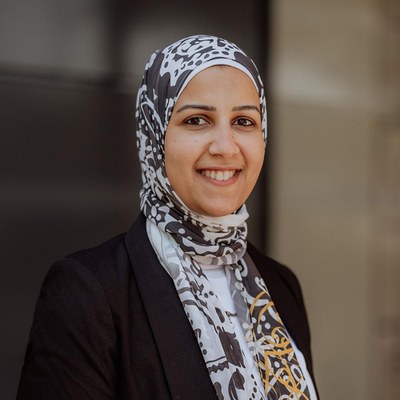
Claudia Rinaldi is a Post Doctoral Researcher at the Faculty of Engineering , University of L'Aquila , with a focus on telecommunications and signal processing. She contributes to projects involving Wireless Sensor Networks (WSN) , Software Defined Radio , and Cognitive Radio applications in both engineering and artistic domains. Doctorate in Wireless Communications (2009, University of L'Aquila) Master's in Electronic Engineering (cum laude) with thesis work at KTH Stockholm Trumpet graduate from Conservatory of Music "A. Casella", L'Aquila (2006) Her research spans physical layer protocol design , WSN applications in electronic music , and MAC layer optimization for WiMax. Key projects include: RFSounding : Interactive installation converting radio frequencies to audible sound Homeland Security : Wireless perimeter monitoring systems SMILING : Home automation sensor technologies VISION : 3D video sensing with UWB radios She has taught Signal Analysis , Wireless Communications , and Electrical Communications , and contributed to book chapters in Technological Innovation and Springer Verlag publications.
Simon Butler is a Senior Lecturer in the Department of Information Technology at the University of Skövde's School of Informatics. He is an active member of the Distributed Real-Time Systems research group and contributes significantly to undergraduate computer science education. His academic work bridges theoretical research with practical industry applications in software development. Butler's research interests center on the challenges software developers face in creating and maintaining software systems, with particular focus on program comprehension, software maintenance, and the socio-technical and educational aspects of software development in hybrid environments where open source and proprietary solutions coexist. His work addresses critical issues in Internet of Things (IoT) systems and the practical implementation of open source software solutions in industrial contexts. His publication record from 2018-2023 reveals a strong research trajectory focused on open source software adoption, interoperability challenges, and standardization processes. His work spans diverse venues including Software Quality Journal, Journal of Systems and Software, IEEE Transactions on Software Engineering, and OpenSym proceedings, demonstrating both academic rigor and practical relevance to industry challenges. Butler is actively involved in several significant research projects including SUDO (2020-2024) addressing lock-in effects in IT systems, OSSD (2021-2023) developing educational programs for sustainable digitalization, and LIM-IT (2016-2020) investigating interoperability and long-term maintenance challenges. His teaching portfolio includes core computer science subjects such as Operating Systems, Object Oriented Programming, Algorithms and Data Structures, and Distributed Systems. As a member of the Distributed Real-Time Systems research group, Butler collaborates with industry partners to address real-world challenges in software development practices, particularly focusing on how organizations can effectively integrate open source solutions while avoiding problematic lock-in effects that compromise long-term system sustainability.
Dr David Jackson is a Senior Lecturer in Digital Visualisation at Manchester Metropolitan University's School of Digital Arts (SODA). As SODA Doctoral Student Lead and Research Degrees Coordinator, he explores the creative application of AI in narrative contexts, focusing on audience engagement, prosody in conversational agents, and parasocial dynamics. His work includes the Audience with a Hero project (Innovate UK-funded) and co-founding Algorithms for Marginalised People (AMP) , addressing AI biases through projects like Mood/Music . Research interests: His practice-led work bridges AI, digital storytelling, and immersive technologies. Key areas include conversational agent design, reparative approaches to algorithmic bias, transdisciplinary methodologies, and the psychological impact of voice-based interactions in VR environments. He investigates how prosodic features (tone, pitch, pace) affect audience perception of synthetic voices and the role of parasocial relationships in shaping interactions with digital personas. Scientific contributions: Notable works include the Storybox conversational agent framework and the D-PAF conversational storytelling methodology. His AHRC post-doctoral fellowship (2018) advanced techniques for integrating audience psychology into AI-driven narrative systems. Selected publications: Recent articles examine generative AI's cultural biases in creative education ( Brazilian Creative Industries Journal , 2023), speech-led VR documentaries ( XR-Metaverse Cases , 2023), and chatbot development for Shakespearean narratives ( Expert Systems with Applications , 2021). His 2026 book Listening In: How Audio Surveillance became Artificial Intelligence will explore surveillance technology's evolution.
Jose Maria Cuenca Lopez serves as a Professor in the Department of Integrated Didactics at the Faculty of Education, Psychology and Sports Sciences, University of Huelva, Spain. His academic work centers on heritage education within social sciences didactics, with emphasis on controversial heritage, citizenship development, and teacher training methodologies. He earned his doctorate from the University of Huelva in 2002 with the thesis "El patrimonio en la didáctica de las ciencias sociales análisis de concepciones, dificultades y obstáculos para su integración en la enseñanza obligatoria," supervised by Dr. Jesús Estepa Giménez and Dr. Consuelo Domínguez Domínguez. His educational background established the foundation for his specialized focus on integrating heritage concepts into compulsory education. Cuenca Lopez's research investigates how controversial heritage can foster eco-citizenship and critical thinking in educational settings. His work explores emotional connections to territory through heritage, particularly in early childhood and primary education. He emphasizes inclusive approaches that address diverse learner needs while connecting heritage education to socio-environmental challenges and sustainable development goals. His research often examines the intersection of technology (especially video games) with heritage pedagogy and analyzes school-museum collaborations as vital educational spaces. Recent publications (2023-2025) reveal a pronounced focus on controversial heritage in teacher training contexts, with significant attention to preschool and primary education applications. His work increasingly incorporates comparative international perspectives (notably Spain-Brazil collaborations), geotourism integration, and emotional dimensions of heritage learning. The EPITEC project (Patrimonio, territorio y emociones) represents a cornerstone of his current research, examining how heritage education can cultivate territorial and emotional intelligence for citizenship development. He actively collaborates with the HUM168 research group (Formación Inicial y Desarrollo Profesional de Profesores) and the Research Center for Contemporary Thought and Innovation for Social Development at the University of Huelva. His work demonstrates consistent engagement with practical educational applications, developing frameworks for heritage integration across various educational levels and contexts while addressing contemporary challenges in social sciences education.
Giuseppa Compagno , Associate Professor at the University of Palermo (UNIPA), specializes in Psychological, Pedagogical, Physical Exercise and Training Sciences . Her teaching includes Special Education , Intercultural Didactics , and Game Teaching . Research Focus: Neuroeducation, inclusive methodologies, teacher training, and docimological tools. Key Projects: #UNOPERUNO (inclusion/jobs), SOSAC (accessibility), Mind in Mind Lab (assessment). Recent Publications highlight neurodidactic approaches to evaluation, intercultural teaching, and game-based learning for inclusivity. She emphasizes integrating Brain Gym and Habits of Mind into teacher competence frameworks.
Christopher Gad is an Associate Professor and Section Manager in Technologies in Practice at the IT University of Copenhagen, specializing in Science and Technology Studies (STS). His research examines the complex interplay between human beings and digital technologies through ethnographic and ontological lenses. His research focuses on digitalization, surveillance, bureaucracy, and organizational theory , with particular attention to Changing human-technology relations Ontological approaches in STS Lateral thinking in technological contexts Practice-based understandings of computational systems Democracy and electoral processes in digital societies His work bridges theoretical STS with practical applications in security, welfare systems, and democratic infrastructure. Gad's recent publications reveal strong trends in affective engagement with technology (e.g., extended reality for medical diagnostics), prototyping methodologies in education, and security dimensions of digitalization . His research consistently explores the messy, situated realities of technology implementation across welfare systems, democratic processes, and medical contexts. As Principal Investigator and Co-Investigator on major projects including DaR (Data as Relation), DemTech, and WaD (Welfare after Digitalization), Gad has secured significant funding from Velux Fonden, Innovation Fund Denmark, and Danmarks Frie Forskningsfond. His collaborative work spans Denmark, Europe, and international networks. He actively contributes to the STS community through conference leadership (6th Nordic STS Conference 2023), editorial work, and public engagement. His Technologies in Practice section serves as a hub for research on how digital technologies transform organizational practices and societal infrastructures.
Robert Talbert is a mathematician and educator affiliated with the mathematics department at Grand Valley State University. His professional work focuses on innovative teaching methodologies, educational technology integration, and assessment systems in higher education. His primary research interests include cryptology, computer science, STEM education, flipped learning, specifications grading, inquiry-based learning, and educational technology . Talbert has been particularly active in exploring how technology can enhance teaching practices, with significant contributions to the understanding of flipped classroom models and alternative grading systems. An analysis of his recent publications reveals a strong emphasis on practical applications of educational theory. His work consistently addresses challenges in mathematics education while developing transferable strategies for broader STEM disciplines. Talbert's research shows particular innovation in specifications grading systems and the adaptation of flipped learning models for online environments. Talbert has been actively involved in academic discussions around the Legacy of R. L. Moore and Inquiry Based Learning Conference, connecting flipped classroom methodologies with traditional inquiry-based approaches. His work bridges theoretical educational frameworks with practical classroom implementation. As an academic, Talbert has explored productivity systems for faculty, notably applying the Getting Things Done (GTD) methodology to academic work. His writings demonstrate a commitment to both scholarly rigor and practical applicability, often sharing insights from his own classroom experiences.
Theodora Skipitares is a Visiting Professor in the Department of Art and Design Education at the School of Art, Pratt Institute. A visual artist and theater director with over 25 years of experience, she creates interdisciplinary works that blend puppetry, performance, visual arts, and social commentary. Her research interests span multiple domains: Puppetry as a medium for social and political commentary Exploration of historical themes through performance Greek tragedy and its contemporary relevance Site-specific installations addressing social issues Interdisciplinary collaborations combining visual arts, music, film, and theater Eugenics and medical history narrative exploration Professor Skipitares' artistic output reveals consistent engagement with social justice issues, historical narratives, and innovative theatrical forms. Her recent works focus on Greek themes and adaptations of classical texts, while maintaining her signature use of puppetry as a central theatrical element. She has developed a distinctive approach where puppet figures' "innocence and purity" make them "especially effective in illuminating social and political issues." Her artistic achievements have been recognized with numerous prestigious awards: Guggenheim Fellowship Fulbright Fellowship (including work in India 1999-2000) Rockefeller Fellowship UNIMA Citation for Excellence in Puppetry American Theater Wing Design Award New York Innovative Theater Awards for "Iphigenia" Named among the 10 best plays of the year by The New York Times (twice) Multiple grants from NEA, NYFA, and UNIMA Professor Skipitares has established herself as a significant figure in contemporary performance art through international collaborations and site-specific projects that address pressing social issues. Her work with diverse populations, including projects at Rikers Island prison and with homeless communities at Gibb Mansion, demonstrates her commitment to art as a tool for social change. She has collaborated with prominent composers including Virgil Moorefield, Bobby Previte, Scott Johnson, and Sxip Shirey, creating works that integrate live music, film, video, and documentary texts into her distinctive performance style.
Myrna Macleod is a Senior Lecturer in Design and Programme Leader for the BDes(Hons) Graphic Design program at the School of Arts and Creative Industries, Edinburgh Napier University. She is an active researcher and educator with a focus on design pedagogy and intercultural communication within the global design context. Her research interests center on how design education can foster intercultural competencies among students through critical engagement with global consumerism and post-colonial perspectives. Dr. Macleod investigates how design students develop global citizenship through international experiences, particularly examining cultural learning in African contexts such as Mozambique. Her work challenges assumptions about cultural immersion and emphasizes the need for students to reflect on their own cultural positioning before engaging with other cultures. Her publication record demonstrates a consistent commitment to advancing design education scholarship, with multiple contributions to the Journal of Design Practice and Research. Her research often explores the intersection of design practice with social responsibility, examining how designers can challenge corporate homogenization and exploitation in developing countries. Dr. Macleod has participated in Teaching Fellows funded projects examining intercultural competencies in design students, including field research in Mozambique where she documented student learning through blogs and video interviews. Her collaborative work extends across the Art and Design Research Centre at Edinburgh Napier University, where she works with colleagues on advancing design scholarship and practice.
Dr. Yomna Abdelrahman is a Professor of Usable Security and Privacy at the Bundeswehr University Munich . Her research focuses on thermal imaging for security and privacy , virtual reality usability, eye tracking , and biometric authentication . She collaborates with researchers like Florian Alt and Albrecht Schmidt on projects exploring how thermal sensing can enhance user identification and privacy awareness . Key Research Areas : Thermal Imaging, Human-Computer Interaction, Virtual Reality, Password Security, Biometric Authentication, Eye Tracking, Privacy Her recent publications address VR emotion detection , password usability , and privacy implications of thermal imaging . She has contributed to conferences like CHI, MUM, and INTERACT, often examining security-privacy trade-offs and non-invasive biometric systems . Notably, her work on thermal attacks reveals vulnerabilities in mobile authentication through thermal residue. She holds a PhD in Computer Science from the University of Stuttgart (2018), where her thesis, "Thermal Imaging for Amplifying Human Perception," laid the foundation for her later work on thermal-based interaction and cognitive load estimation . Her collaborations span diverse domains, from smart home notifications to industrial worker assistance , reflecting her interdisciplinary approach to usable security and interactive systems .
Srinivasa G. Narasimhan is the U.A. and Helen Whitaker Professor of Robotics at Carnegie Mellon University's Robotics Institute within the School of Computer Science. He directs the Illumination and Imaging Laboratory (ILIM) and leads the Computational Imaging group, focusing on the physics of computer vision and graphics. His research develops novel imaging technologies for applications in robotics, transportation, medical imaging, and environmental sensing. Research interests span computational imaging, light transport modeling, and active perception systems. Key areas include: Physics-based vision for atmospheric and material interactions Novel camera designs and programmable lighting systems Robust perception for autonomous vehicles and medical diagnostics Non-line-of-sight imaging and computational scatterography Publications demonstrate strong emphasis on 3D reconstruction, computational optics, and vision systems for intelligent transportation. Recent works leverage self-supervised learning for dynamic scene understanding and develop novel sensors for medical and automotive applications. Awards and honors include: Best Paper awards at CVPR (2019, 2022), IV (2021), and ICCP (2020) Marr Prize Honorable Mention (ICCV 2013) Multiple demo awards at CVPR/ICCP Current advising includes 5 PhD students and 1 master's student. Major grants include NSF EXPEDITIONS (Computational Photo-Scatterography), DARPA REVEAL, and industry support from Ford, GM, Adobe, and Zillow. Manages multiple labs developing technologies like adaptive headlights, thermal imaging systems, and MHz-rate light steering devices.
David Van Horn is an Associate Professor in the Department of Computer Science and UMIACS at the University of Maryland, College Park. His research focuses on programming languages, formal methods, and security, with an emphasis on making software components reusable and trustworthy. He holds academic appointments in both Computer Science and UMIACS and is a co-author of Realm of Racket , an educational book on programming video games co-written with undergraduates. Education: PhD in Computer Science, Brandeis University, 2009 MA and BS in Computer Science, University of Vermont, 2004-2006 Research Interests: His work centers on program analysis, verification, static analysis, and security. He develops techniques to bridge scripting languages and formal verification, aiming to improve software reliability. Recent projects include gradual typing, contract verification, and program synthesis tools like RbSyn and Absynthe. Awards: He has received prestigious recognitions, including the NSF CAREER Award (2019), ICFP Most Influential Paper Award (2020), and OOPSLA Distinguished Paper Award (2018). His work on Abstracting Abstract Machines (2010) influenced static analyses for languages like JavaScript and Erlang. Service and Mentoring: Van Horn serves on the SIGPLAN Programming Languages Mentoring Workshop steering committee and advises Technica, the world’s largest hackathon for underrepresented genders. He mentors PhD students in areas like gradual verification and security. Labs and Teams: He directs the Programming Languages at UMD (PLUM) Lab with Prof. Mike Hicks, focusing on foundational and applied research in programming languages and verification.
Professor Pauline Jones is a leading academic in educational linguistics and literacy education at the University of Wollongong's School of Education, part of the Faculty of the Arts, Social Sciences and Humanities. She holds a Ph.D. in Educational Linguistics from the University of New South Wales (2005). Her research focuses on language in education, disciplinary literacy development, multimodal digital authoring, and climate change education. Jones has secured over $3.5M in competitive grants and has co-led projects like the Transforming Literacy Outcomes (TRANSLIT) study. She currently serves as co-convenor of the Interdisciplinary Discourse analysis in Education, the Arts and Social Sciences (IDEAS) research group and chairs the Climate Change in Education Special Interest Group. Jones has held national roles including Immediate Past President of the Primary English Teaching Association Australia (PETAA) and executive membership in the International Systemic Functional Linguistics Association (ISFLA). Her teaching expertise spans English curriculum pedagogy, TESOL, and dialogic pedagogy, with co-authored best-selling texts like Teaching Language in Context . She supervises doctoral students researching topics like multimodality, online learning, and sustainability education. Education: Ph.D. in Educational Linguistics, University of New South Wales (2005) Research Interests: Educational linguistics/semiotics, disciplinary literacy development across STEM/English/history, multimodal digital texts, climate change education, and teacher professional development. Current projects investigate literacy transitions (TRANSLIT), digital explanations in science classrooms, and online discussion forums. Grants & Funding: Over $3.5M in ARC, NSW DoE, and OLT grants. Recent projects include Developing transferable skills: Improving writing outcomes (NSW DoE, 2020–2023) and Building capacity to scaffold online discussion (OLT, 2015). Teaching & Supervision: Oversees PhD topics such as sustainability pedagogies, AI in EFL literacy, and curriculum equity. Co-authored influential texts and leads teacher training initiatives through PETAA partnerships. Labs/Teams: IDEAS research group, Climate Change in Education SIG, and Sustainable Futures Project Working Group.
Yu Huang is a Researcher in the Department of Mathematical and Statistical Sciences at Clemson University's College of Science. His work focuses on advancing computational methods in medical imaging, computer vision, and deep learning applications. His research includes developing multimodal models for ophthalmology, enhancing 3D graphics rendering, and improving biomedical image analysis through active learning frameworks. Notable projects involve generative models for retinal imaging and shadow removal techniques in computer vision. His research interests span computational ophthalmology, neural rendering, and AI-driven biomedical solutions. Recent efforts emphasize scalable diffusion models for high-resolution synthesis and robust medical image segmentation using test-time augmentation. Yu Huang's publications reflect a strong emphasis on interdisciplinary research at the intersection of computer science and healthcare. His work addresses challenges in both foundational AI methodologies and their practical applications in clinical settings.
Dr. Tom McGorrian is an Associate Professor at Buckinghamshire New University , specializing in Film and Television Production . He leads the MA Filmmaking program and teaches in BA Film Production and Film & Television Production courses. Previously, he was a Senior Lecturer at Middlesex University and held roles in broadcast production at BBC and corporate sectors like Unisys and Halifax. Research Focus : His work centers on documentary practices in sensitive contexts , including hospice care, refugee narratives, and music therapy. Key projects include: Video ethnography in UK hospices ( Developing Documentary Practices for Sensitive Contexts PhD, 2019) Music Therapy for Displaced Families ( Music4Displaced Dyads project series) RAF Halton Apprentice Story documenting military training history Awards : Royal Television Society Award (Close-up North), US Telly Award (Project Raja). Collaborations with Saracens TV, All3 Media, and European Human Rights Advocacy Centre. Teaching & Industry : Designs short courses like Research for Factual Media Production . Connects students with industry partners to enhance employability. Publications : Over 15 works from 2015–2025, focusing on documentary ethics, healthcare narratives, and music therapy applications. Recent outputs include 2025 conference papers on displaced dyads and a forthcoming RAF documentary.