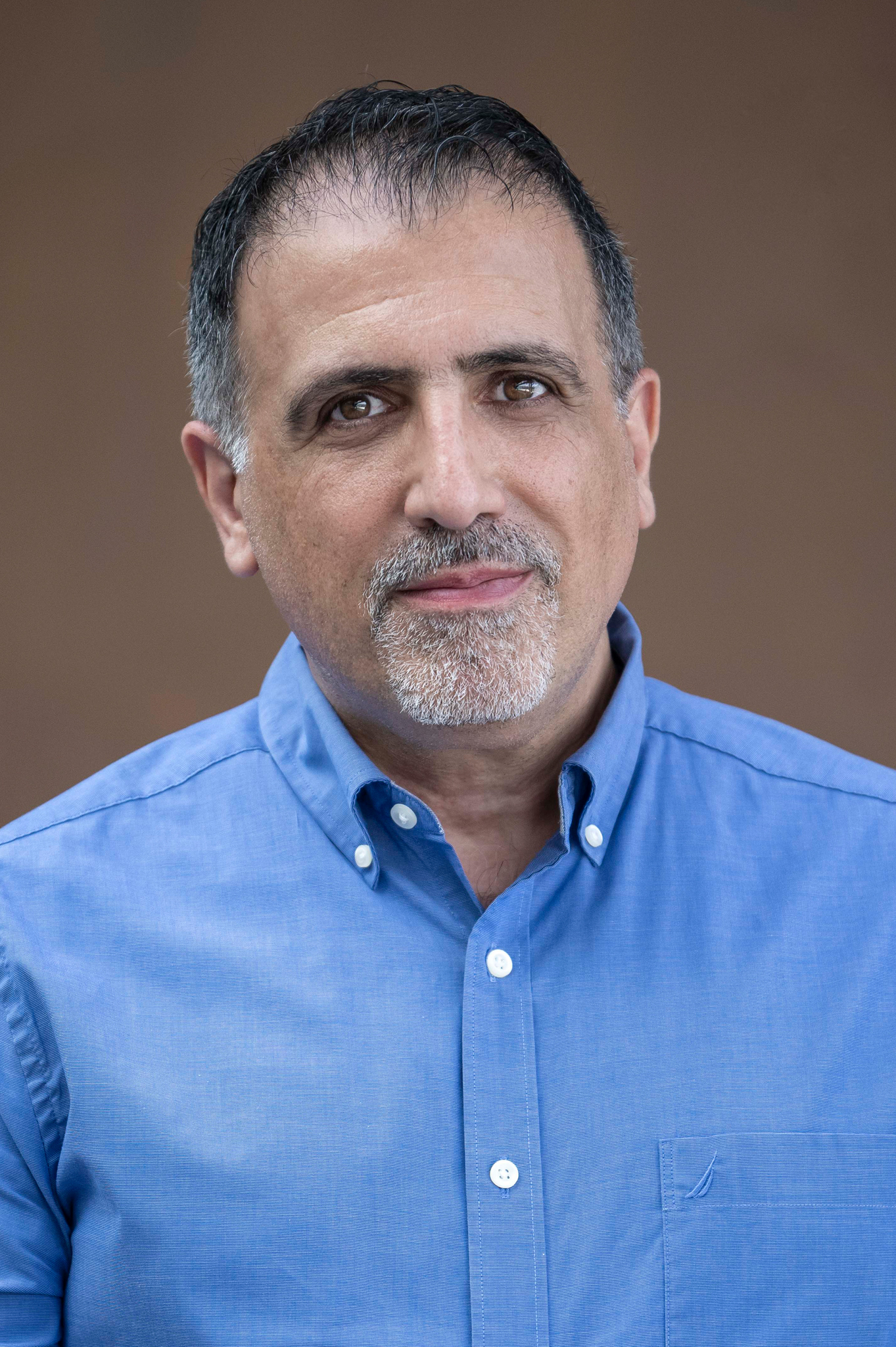
Jordan Boyd-Graber is a Full Professor at the University of Maryland, affiliated with the Department of Computer Science and the University of Maryland Institute for Advanced Computer Studies (UMIACS). His research focuses on machine learning, natural language processing, computational linguistics, topic models, and question answering. He has made significant contributions to the development of interactive topic modeling systems and evaluations of large language models. His work often bridges theoretical advancements with practical applications, such as improving human-AI collaboration and enhancing the interpretability of machine learning models. Boyd-Graber’s research also addresses challenges in adversarial examples, calibration of models, and the ethical implications of AI systems. His recent publications span cutting-edge topics like evaluating topic models through ProxAnn, mitigating hallucinations in vision-language models, and exploring human-AI complementarity in question answering. He collaborates extensively with researchers in computer science, linguistics, and social sciences to advance interdisciplinary applications of NLP and ML.
Joe F. Khalil is a Professor in Residence at Northwestern University in Qatar's Communication Program. His research focuses on digital media industries, Arab television, youth culture, and alternative media in the Middle East. He co-authored influential works like *The Digital Double Bind* (Oxford UP, 2024) and co-edited *The Handbook of Media and Culture in the Middle East* (2023). His interdisciplinary work bridges media industries, digital cultures, and sociopolitical dynamics. **Education**: PhD in Mass Communication from Southern Illinois University (Carbondale), MA in Telecommunications from Ohio University. **Research Interests**: Digital media transformation, Arab TV industries, youth-generated media, rap culture, and global media power structures. **Grants & Awards**: Recipient of Qatar National Research Fund grants (2015-2016), Smith Richardson Foundation grant (2008), and fellowships at institutions including LSE and SOAS. Active in IAMCR and ICA. **Teaching**: Designs courses on global media, Arab TV industries, production research, and webseries development. Mentors students in both academic and professional pathways. **Professional Experience**: Former TV executive and radio DJ, with media expertise spanning Qatar, Lebanon, Saudi Arabia, and the U.S. Regular commentator on Al Jazeera and BBC, addressing Arab media and youth issues.
Dr. Janet Walkoe is an Associate Professor in the Department of Teaching and Learning, Policy and Leadership at the University of Maryland. Her work focuses on mathematics education, particularly algebra teaching and learning, and the role of teacher noticing in responsive instruction. She holds a Ph.D. in Learning Sciences from Northwestern University (2013), an MS in Mathematics from the University of Illinois at Chicago, and a BA in Mathematics from the University of Chicago. Before academia, she taught high school mathematics for a decade, earning National Board Certification. Her research emphasizes how teachers attend to student algebraic thinking during instruction and how pre-service teachers can develop noticing skills through video analysis. Key areas include teacher responsiveness, multimodal algebraic thinking, and computational thinking integration in mathematics education. She has led the NSF-funded CAREER grant (2020) exploring teacher noticing of student thinking, and co-authored influential works like Lenses for examining students’ mathematical thinking (2014), which earned an NCTM award. Notable Grants: NSF CAREER DRL 17-537 ($736,914), INFACT Subaward ($250k), Spencer Foundation Grant ($44k) Teaching: Courses include Interdisciplinary Teaching in Middle Grades (TLPL 423/424), Elementary Mathematics Education (EDCI 652), and Foundations of Mathematics Education (EDCI 751) Professional Development: Develops video-based tools for teacher reflection and computational thinking integration Walkoe advocates for culturally sustaining pedagogy and equity in teacher education. Her recent work bridges computational thinking with mathematics instruction, emphasizing interdisciplinary approaches to foster student engagement.
David Churchill is an Associate Professor in the Department of Computer Science at Memorial University of Newfoundland (MUN), specializing in Artificial Intelligence and Real-Time Strategy (RTS) Game AI. He holds a PhD from the University of Alberta and has been actively involved in AI research since 2009. His work focuses on AI for RTS games like StarCraft, emphasizing heuristic search, combat simulation, and build order optimization. He organizes the annual AIIDE StarCraft AI Competition and maintains open-source projects like UAlbertaBot and SparCraft. Education: BSc in Pure Mathematics and Computer Science (MUN) MSc in Computer Science (MUN, 2009) PhD in Computing Science (University of Alberta, 2016) Research Interests: AI in video games, heuristic search algorithms, RTS game strategies, multi-agent systems, and robotics. His work bridges theoretical AI with practical applications in competitive gaming and robotics. Publications & Awards: Notable contributions include Search Ordering for StarCraft Build Order Optimization (2024) and Hierarchical Portfolio Search in Prismata (2017, Best Student Paper Award). His research has advanced combat simulation (SparCraft) and build-order planning (BOSS) in RTS games. Awards: Best Student Paper Award (2017) Best Paper Award (2013, 2022) Advising & Labs: Supervised over 20 graduate and undergraduate theses at MUN. Leads the StarCraft AI Competition and contributes to open-source projects like UAlbertaBot and STARTcraft. Currently not accepting new graduate students due to funding constraints.
David Darts is a Global Network Associate Professor of the Arts at New York University's Steinhardt School of Culture, Education, and Human Development. He directs the Laboratory of the Future Present, an artistic research studio exploring speculative design and societal issues through interactive media. His work spans installations, curatorial projects, and public interventions addressing themes like personal space, environmental interaction, and decentralized digital collaboration. Education details are not explicitly provided, but his professional roles and projects indicate extensive involvement in academic and creative spheres. Research interests include interactive technology, public art, and speculative design. His notable projects include the Personal Space Suit (2024), PirateBox (2011–2019), and the Nomad Lab exhibition (2020). His exhibitions and projects have been featured in venues like Alserkal Avenue (Dubai), NYU Abu Dhabi, and the Conflux Festival (New York). Awards or grants are not mentioned, but his work has received international media coverage in outlets like New Scientist and Wired Italia . Advising and grants: While no formal advisees are listed, Darts has curated exhibitions and collaborative projects involving artists and researchers. His work often involves interdisciplinary teams, such as the Playable Sculpture project with multiple artists. Labs/Teams: Directs the Laboratory of the Future Present and collaborates with institutions like Baltan Laboratories and NYU Abu Dhabi.
James D. Ivory is a Professor of Media Studies in the Department of English at Virginia Tech's College of Liberal Arts and Human Sciences. He has been a faculty member at Virginia Tech since 2005, initially in the Communication department before transitioning to the English department. His work bridges the humanities and digital media studies, focusing on the social and psychological impacts of interactive technologies. Ivory directs research in the VT G.A.M.E.R. Lab, part of the university's Digital Media Research Facility, and has established himself as a leading scholar in game studies and digital media effects research. Dr. Ivory's educational background includes: Ph.D. in Mass Communication from the University of North Carolina at Chapel Hill (2005) M.A. in Communication from the University of Wyoming (2002) B.S. in Communication from the University of Wyoming (2000) Dr. Ivory's primary research focuses on the social, behavioral, and cultural dimensions of interactive digital media, particularly video games, simulations, and virtual environments. His work examines how technological features of new entertainment media affect users' experiences and behaviors. He also investigates research practices and how scientific findings are communicated to both scholarly communities and the public. His interdisciplinary approach spans communication, psychology, human-computer interaction, and media studies, addressing critical questions about digital media's role in society, including issues of representation, ethics, and mental health impacts. His recent publications demonstrate a growing emphasis on methodological rigor in digital media research, with increasing attention to open science practices and research reproducibility. While maintaining his focus on video games and virtual environments, his work has expanded to address broader questions about scientific communication, research ethics, and the translation of findings to policy contexts. His scholarship shows a trajectory from examining specific media effects toward more meta-scientific concerns about how research in this field is conducted and communicated. Dr. Ivory has received recognition through media coverage of his expertise in major outlets including USA Today and The Washington Post, particularly regarding video games and digital communication. His work has been cited extensively across multiple disciplines. As an educator, Dr. Ivory has mentored numerous students through course instruction and curriculum development. He has been instrumental in developing innovative programs including the Digital Game Design/Analysis curriculum and Communicating Science initiatives. His teaching spans research methods, communication technology, media effects, and digital media production. Dr. Ivory leads the VT G.A.M.E.R. Lab (Games, Applied Media, and Experimental Research), which serves as a hub for interdisciplinary research on interactive media. The lab supports both faculty and student research projects examining various aspects of digital gaming and virtual environments. Through this facility, he fosters collaboration between humanities scholars and technologists to advance understanding of digital media's societal impacts.
Prof. Dr. Sven Heidenreich is a full Professor of Business Administration, specializing in Technology and Innovation Management at the University of Saarland. He leads an active research group and holds a prominent position in the German-speaking academic community, with consistent recognition in national and international rankings. University: University of Saarland Department: Business Administration Research Focus: Technology and Innovation Management Email: sven.heidenreich@uni-saarland.de His research centers on innovation processes, particularly consumer integration, co-creation, resistance to innovation, and sustainable business models. He employs a quantitative-empirical approach to study individual and organizational aspects of innovation, with applications in digital services, video games, and green innovation. The recent publications reflect a strong trend in understanding consumer behavior in innovation contexts, including greenwashing, leapfrogging, co-creation, and the role of personality in entrepreneurial success. His work frequently appears in high-impact journals such as Journal of Product Innovation Management , R&D Management , and Technological Forecasting and Social Change . Top 0.5% researcher worldwide in Innovation Management (ScholarGPS 2024) JPIM Outstanding Reviewer Award 2023 Multiple appearances in WirtschaftsWoche Economist Rankings (2018–2024) Finalist, Best Paper Award, IRCSM 2024 Prof. Heidenreich supervises doctoral researchers and has led significant research projects, including the DFG-funded TRIP project on integrating different consumer types into new product development. His team includes postdocs, junior professors, and scientific staff, indicating active mentorship and collaborative research. He also collaborates with researchers across Europe and beyond. He leads the DFG project TRIP and has secured funding from major German research bodies. His lab focuses on empirical studies involving consumer panels, student experiments, and idea competitions to validate innovation theories in realistic settings.
J.P. Eggers is the Interim Dean and Professor of Management and Organizations at New York University’s Leonard N. Stern School of Business, where he also holds the Catherine & Peter Kellner Professorship of Entrepreneurship. He has been a faculty member since 2008 and served as Vice Dean for MBA and Graduate Programs from 2018 to 2024, leading major innovations in MBA education including the Andre Koo Technology and Entrepreneurship MBA program and the Online-Modular Option for the Langone Part-time MBA. His educational background includes a Ph.D. in Management from the Wharton School at the University of Pennsylvania, an M.B.A. from Goizueta Business School at Emory University, and a B.A. in History from Amherst College. Eggers’ research centers on technological change, decision-making under uncertainty, and new product development. He investigates how firms and executives navigate innovation, make strategic choices amid ambiguity, and respond to technological disruptions. His work spans industries such as video games, mutual funds, flat panel displays, and platform markets, focusing on topics like organizational learning, radical invention, and portfolio expansion strategies. The trends in his recent publications reveal a strong focus on strategic adaptation in evolving industries, emphasizing firm experience, resource constraints, and behavioral factors in innovation. His work frequently appears in top-tier journals such as Strategic Management Journal , Organization Science , and Academy of Management Journal . Poets & Quants Top 40 Professors Under 40 (2011) NYU Stern MBA Program Professor of the Year (2010) Emerald Management Review Citation of Excellence (2010) Business Policy Division of Academy of Management Finalist for Outstanding Dissertation Award (2009) Technology Division of Academy of Management Finalist for Outstanding Dissertation Award (2009) Eggers has a strong record of advising Ph.D. students and securing research support. His leadership roles in academic programs reflect his commitment to experiential learning, innovation in curriculum design, and expanding access to MBA education for working professionals. He has also launched initiatives like SternWorks and the Executive in Residence program to broaden career pathways for MBA students. He is actively involved in research centers and initiatives at Stern, particularly those related to technology, entrepreneurship, and behavioral strategy, though specific lab affiliations are not detailed in the provided text.
Shane Denson serves as Professor of Film and Media Studies in the Department of Art & Art History at Stanford University's School of Humanities and Sciences. He also holds courtesy appointments in the Departments of German Studies and Communication. His academic profile spans multiple disciplines with a particular focus on the evolving relationship between media technologies and cultural forms across historical periods. Denson's research interests encompass a wide spectrum of media studies topics, with particular emphasis on phenomenological and media-philosophical approaches to film, digital media, comics, games, and serialized popular forms. His scholarly work investigates how media technologies shape human perception, embodiment, and cultural production, especially in the transition from cinematic to post-cinematic media environments. He has developed significant theoretical frameworks around concepts like discorrelation, post-cinema, and digital seriality that have influenced contemporary media studies discourse. An analysis of Denson's recent publications reveals consistent engagement with the philosophical implications of emerging media technologies, particularly artificial intelligence and digital platforms. His work demonstrates a distinctive trajectory from early research on Frankenstein adaptations and serial narratives toward contemporary examinations of AI aesthetics, desktop cinema, and the phenomenology of digital interfaces. Denson's scholarship bridges traditional academic writing with innovative digital and videographic forms, reflecting his commitment to multimodal scholarly expression. Denson has established himself as a leading voice in the study of digital seriality, with numerous publications exploring how serial forms evolve across media platforms. His research demonstrates how contemporary digital media environments transform traditional narrative structures while creating new forms of community and meaning-making through serialized content. This work intersects with his broader interests in media philosophy and the embodied experience of digital interfaces. Professor Denson maintains an active scholarly practice through his personal website (shanedenson.com) and ORCID profile, where he shares his publications, videographic essays, and experimental digital projects. His work with ROMhacking.net demonstrates his commitment to digital humanities methodologies that combine code analysis with cultural critique, particularly in examining how fan communities engage with and transform established media properties through modification and reinterpretation.
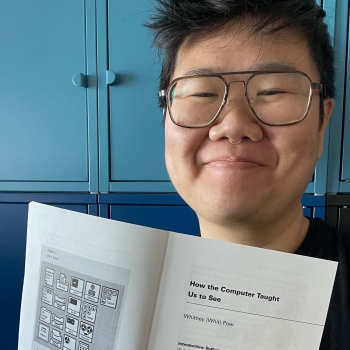
Whitney (Whit) Pow is an Assistant Professor of Media, Culture, and Communication at the Steinhardt School of Culture, Education, and Human Development, New York University. Their research focuses on transgender media studies, trans of color critique, queer theory, and the intersection of these fields with electronic art, video game history, and computer history. Pow’s current book project examines how trans programmers and game designers contested computational limitations to critique institutional systems. Their work analyzes how state surveillance and biopolitical processes—mediated through documents like birth certificates and diagnostic manuals—intersect with computational systems like AI and software. Research interests include: Reparative video game history Queer orientations in software interfaces Glitch studies as trans historiography Racialized surveillance in digital systems Recent articles highlight themes like computational metaphors’ entanglement with medical surveillance (Camera Obscura, 2024) and the necessity of software studies for critical game studies (Just Tech, 2024). Earlier work (Feminist Media Histories, 2021) explores glitches as trans resistance in digital art. A 2019 essay in ROMchip advocates for archival recovery of trans game designers like Dani Bunten Berry. No scientific awards listed. Research grants or advising roles are not detailed in available texts. Pow’s lab/team work centers reparative digital historiography and antiracist methodologies in media studies.
Dr. David Wright is a Professor in the Department of English and Technical Communication at Missouri University of Science and Technology (Missouri S&T). He joined the faculty in 2007 after prior roles at NASA’s Education Project, Oklahoma state government, and the software industry. He holds a Ph.D. in Technical Communication (Oklahoma State University, 2007), an M.S. in Higher Education Administration (1996), and a B.S. in Organizational Psychology (1993), all from Oklahoma State University. His research focuses on smart home technology and artificial intelligence, particularly examining human-AI interaction through usability and user experience (UX) testing. He also explores technology diffusion, technical communication practices in emerging technologies, and educational methodologies for technical fields. His work integrates interdisciplinary approaches, blending engineering, sociology, and computer science. Recent publications highlight his contributions to IoT usability, smart home adoption challenges, and the intersection of AI ethics with virtual assistants. He has also authored studies on knowledge graph design, technical documentation in software development, and educational initiatives in computer science and healthcare. Dr. Wright teaches courses in technical writing, usability studies, and web-based communication. His academic service includes curriculum development and advising on technical communication pedagogy. While no specific awards are listed, his extensive publication record reflects sustained scholarly impact in his fields.
Dr. Bill Hamilton is an Assistant Professor in the Department of Computer Science at New Mexico State University. His research focuses on live media design, online communities, and digital game culture. He holds a Ph.D. in Human Computer Interaction from Texas A&M University (2018), and has collaborated with industry partners like Microsoft Research and Motorola Mobility. Education: Ph.D. in Human Computer Interaction, Texas A&M University (2018) Bachelor’s degree in Computer Science, Texas A&M University Research Interests: Bill explores how live media supports societal participation in education, politics, work, and play. His work employs qualitative methods like ethnographic inquiry to study collaborative digital environments. Recent projects include designing wearable interfaces for human-drone teams and analyzing YouTube’s content policies' impact on free speech. Awards: 2018 Texas A&M Distinguished Graduate Research Award 2016 Best Paper at ACM Interactive Experiences for TV/Online Video Advising & Grants: Mentors students like Preeti De Maurya and Cassandra Palmer, with a focus on inclusive education technologies and collaborative tools for emergency response. Active in conference organization including ACM CHI’s Games and Play Subcommittee (2019). Labs: His research is conducted through the PlexLab, exploring playful interactions and live media systems.
Dr. Kate Cook is a Lecturer in Greek Culture at King’s College London's Department of Classics within the Faculty of Arts & Humanities. Her academic journey includes positions at the Universities of Manchester, Leeds, Durham, and St Andrews. She actively contributes to the Classics Gaming Collaborative, AIMS steering group, and the #WCCWiki Women's Classical Committee Wikipedia editing initiative. Her research intersects Gender Studies, Greek Tragedy, and Classical Reception in video games, with current projects on women's language in ancient texts and gender representation in historical games. She employs interdisciplinary approaches bridging literary analysis and digital media studies. Cook's publications demonstrate a consistent focus on gender dynamics in classical contexts through both traditional literary analysis and emerging digital mediums. She teaches courses on Greek literature, culture, and classical reception methodologies. For public engagement, she regularly contributes to podcasts and events on historical game studies, particularly exploring ancient world representations in interactive media.
Suren Jayasuriya is an Associate Professor at Arizona State University's The GAME School, with joint appointments in the School of Electrical, Computer and Energy Engineering (ECEE) and the Department of Arts, Media and Engineering (AME). He is also an Affiliate Faculty Member at the Mary Lou Fulton College for Teaching and Learning Innovation. His lab, the Imaging Lyceum, focuses on transdisciplinary research bridging computational imaging, computer vision, sensors, and STEAM education. Education Ph.D. Electrical and Computer Engineering, Cornell University (2017) M.S. Electrical and Computer Engineering, Cornell University (2015) B.S. Mathematics, University of Pittsburgh (2012) B.A. Philosophy, University of Pittsburgh (2012) Research Focus Dr. Jayasuriya's work integrates optics, computational photography, and machine learning to develop novel imaging systems. His research spans: Computational cameras and light transport analysis Atmospheric turbulence modeling and video restoration Neural volumetric reconstruction for sonar/radar STEAM education frameworks for K-12 teachers Philosophical aspects of imaging and representation His lab emphasizes interdisciplinary collaboration across engineering, arts, and humanities. Publication Trends Recent publications demonstrate strong focus on computational imaging (45%), AI/ML applications (30%), and educational technology (25%). Dominant themes include turbulence mitigation in videos, neural rendering for sonar/radar, sensor fusion, and AI curriculum development for middle schools. Work frequently appears in top venues like CVPR, SIGGRAPH, and IEEE Transactions. Awards Image Electronics Technology Excellence Award (IIEEJ, 2021) Best Demo Awards: IEEE ICCP 2019, MIRU 2018 Best Paper Award: IEEE ICCP 2014 ASEE Diversity Paper Finalist (2020) Teaching Honors: Fulton Top 5% Award (2019, 2021), ASU Game Changing Faculty (2021) Teaching & Advising Teaches graduate/undergraduate courses including Machine Vision (EEE 515), Minds and Machines (AME 400), and thesis supervision. Leads NSF-funded projects on computational imaging education and AI teacher training. Mentors students through the Imaging Lyceum lab with projects spanning optics, philosophy, and educational technology. Lab & Collaborations Directs the Imaging Lyceum, emphasizing Aristotle-inspired collaborative research. The lab works on: computational cameras, STEAM education, sensor development, and philosophical inquiries into imaging. Collaborates with Carnegie Mellon Robotics Institute and international partners. Funded by NSF, NEH, and industrial partners for projects in sonar imaging, heat resiliency sensing, and educational AI.
Serge Belongie is a Professor at the Department of Computer Science (DIKU) at the University of Copenhagen, where he holds dual affiliations with the Pioneer AI research section and the Image Analysis, Computational Modelling, and Geometry section. His academic position places him at the forefront of interdisciplinary research connecting computer vision with language models, geospatial analysis, and cultural understanding. Professor Belongie's research program encompasses several critical domains in modern artificial intelligence: Advanced computer vision and image analysis techniques Vision-language model integration and multimodal systems 3D point cloud processing and semantic segmentation Geospatial representation learning for environmental applications Fine-grained object recognition and detection Cultural context understanding in AI systems His recent publication record reveals a sophisticated trajectory toward developing precise control mechanisms for vision-language models, with applications spanning forensic analysis, cultural heritage preservation, and social media understanding. The research demonstrates increasing sophistication in handling cultural context and enabling fine-grained manipulation of visual content through natural language interfaces. Professor Belongie maintains an active research group producing significant scholarly output, with over 280 research publications documented in his academic profile. His work is supported by research funding that enables cutting-edge exploration in multimodal AI systems with practical societal impact. He plays a key role in the Pioneer AI center at the University of Copenhagen, which focuses on advancing artificial intelligence through interdisciplinary collaboration and innovative research approaches that bridge theoretical computer science with real-world applications.