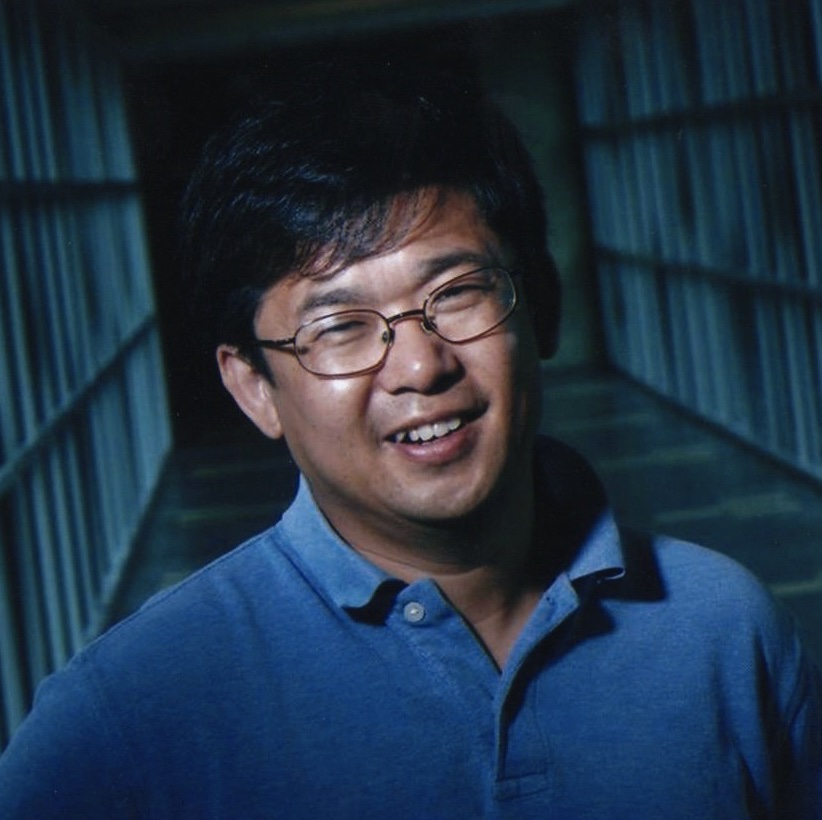
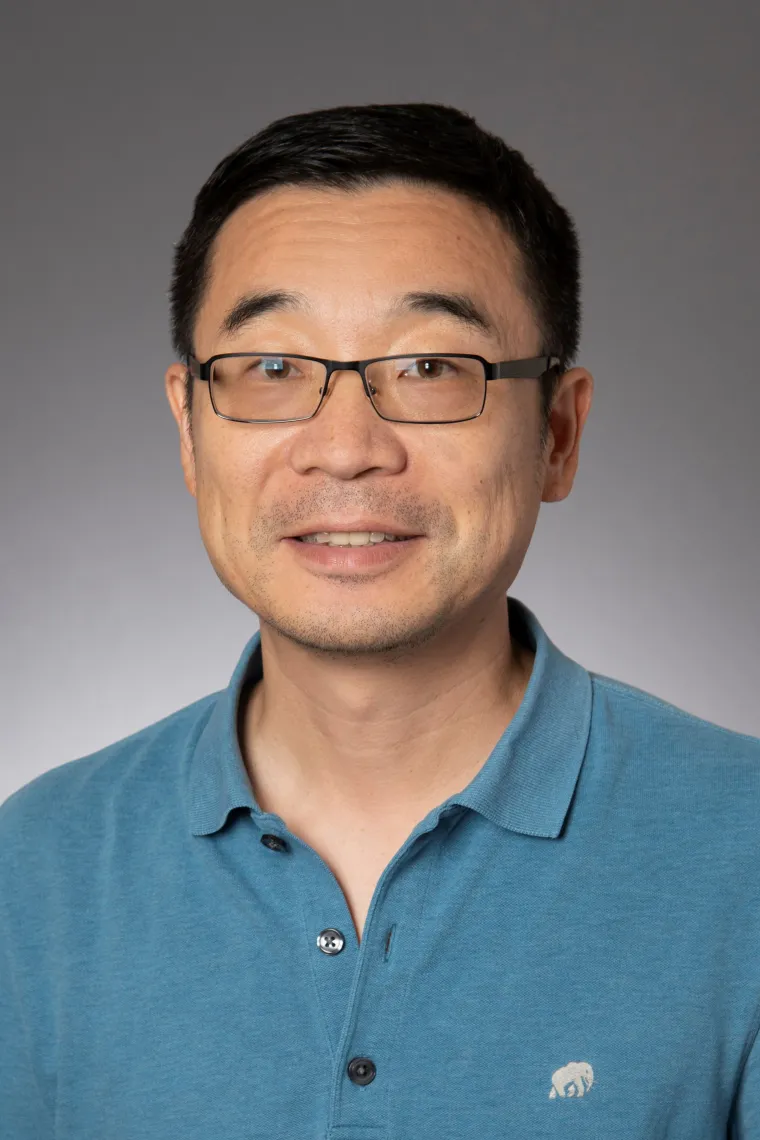
Bo Chen is a postdoctoral researcher at the Siebel School of Computing and Data Science and the Coordinated Science Laboratory at the University of Illinois at Urbana-Champaign. His work focuses on AI-system co-design for immersive computing, particularly in extended reality (XR) and multi-modal content delivery over wireless networks. Ph.D. in Computer Science (2022), advised by Klara Nahrstedt B.S. in Computer Science from Shanghai Jiao Tong University (2016) His research integrates AI techniques with system-level optimizations to address challenges in XR infrastructure , including multi-view video streaming , NeRF-based content delivery , and uncertainty management in video transmission . He has pioneered methods like Loose Frame Referencing for learned codecs and Context-Aware NeRF Serving for mobile XR applications. Bo Chen's recent publications span top venues like ACM MobiSys, ACM SenSys, and USENIX NSDI. Key themes include AI-driven compression , dynamic 3D rendering , and reliable streaming over mobile networks . He has received recognition including the Rising Star Best Presentation Award (ACM MobiSys 2025) and Best Student Paper Award (ACM MMSys 2022). Bayesian optimization for XR systems Multi-view video aggregation at edge networks 3D Gaussian Splatting for immersive media
Jukka Manner is a Full Professor (tenured) of Networking Technology at Aalto University's Department of Communications and Networking (Comnet), School of Electrical Engineering. With a career spanning over two decades in internet technologies, he leads research in networking, wireless systems, and energy-efficient ICT solutions. Dr. Manner received his MSc (1999) and PhD (2004) degrees in computer science from the University of Helsinki. His academic journey has been marked by significant contributions to internet standardization through the IETF since 1999, where he served as co-chair of the NSIS working group. Professor Manner's research focuses on networking, software and distributed systems, with particular emphasis on wireless and mobile networks, transport protocols, energy efficient ICT and cyber security. His work bridges theoretical advancements with practical applications, addressing critical challenges in modern communication systems, sustainable networking practices, and security frameworks. His research group has made significant contributions to 5G technologies, UAV communications, and energy-efficient network design. His extensive publication record shows a clear evolution toward sustainability in networking technologies, with recent work focusing on energy efficiency in 5G systems, sustainable web technologies, and the environmental impact of digital infrastructure. The research demonstrates strong interdisciplinary connections between telecommunications engineering, computer science, and environmental science, with particular emphasis on reducing the carbon footprint of digital systems while maintaining performance. Cross of Merit, Signals (2014) Medal for Military Merits for contributions in national defence and C4 (2015) Professor Manner has supervised over 200 MSc theses and more than 20 doctoral dissertations, establishing himself as a dedicated mentor in the field. He has been principal investigator and project manager for over 15 national and international research projects, including serving as Academic Coordinator for the Finnish Future Internet research programme (2008-2012). His leadership extends to conference organization, having served as local co-chair of Sigcomm 2012 in Helsinki, and active participation as a peer reviewer and member of various Technical Program Committees. As an active contributor to internet standardization through the IETF, Professor Manner's work has practical impact on global networking technologies. His research group maintains strong connections with industry partners and participates in shaping future networking standards and practices, particularly in the areas of sustainable networking, 5G evolution, and security frameworks for emerging technologies.
Professor David Taubman is a distinguished academic serving as Professor and Deputy Head of School (Research) at the School of Electrical Engineering and Telecommunications (EE&T) at the University of New South Wales (UNSW) in Sydney, Australia. He is also co-director of Kakadu Software Pty. Ltd. and its affiliates Kakadu R&D and Kakadu GPU. With a career spanning over three decades, Professor Taubman has made significant contributions to the field of image and video compression, most notably as the author of the EBCOT coding algorithm adopted in the JPEG2000 international standard. Professor Taubman earned his B.Sc. in Mathematics and Computer Science (1986) and B.E. (Medal) in Electrical Engineering (1988) from the University of Sydney, followed by an M.Sc. (1992) and Ph.D. (1994) in Electrical Engineering from the University of California at Berkeley. His professional journey includes engineering work at the Electricity Commission of N.S.W. (1988-1990), research positions at Hewlett-Packard Laboratories in Palo Alto (1994-1998), and an academic career at UNSW where he progressed from Senior Lecturer (1998-2003) to Associate Professor (2004-2009) and finally to Professor (2009-present). He has held various leadership roles including Head of the EE&T Telecommunications Research Group (2003-2014), Head of the EE&T Signal Processing Research Group (2014-present), Director of Research for the School of EE&T (2011-2016), and Deputy Head of School (Research) since 2017. Professor Taubman's research interests center on image and video compression, with particular expertise in JPEG2000 standards and implementations. His work spans signal processing, wavelet transforms, scalable video coding, motion modeling, and multimedia systems. He has pioneered numerous compression algorithms and frameworks, including the EBCOT coding algorithm that became central to the JPEG2000 standard. His recent research focuses on efficient motion modeling with cuboidal partitioning, learned lifting-based transform structures, and high-throughput implementations of JPEG2000 for video applications. His work bridges theoretical foundations with practical implementations, as evidenced by the commercially successful Kakadu Software tools that have garnered around 500 commercial licensees. Analysis of Professor Taubman's recent publications reveals a consistent focus on advancing compression technologies with particular emphasis on scalability, efficiency, and adaptability. His work spans traditional image compression (JPEG2000 extensions), video coding (cuboid-based partitioning for UHD/360-degree video), and emerging applications (nanopore sequencing data compression). A notable trend is the integration of machine learning techniques with traditional compression frameworks, as seen in his work on learned lifting-based transform structures. His research maintains strong connections to real-world applications across diverse domains including medical imaging, astronomical data processing, and genomic sequencing. IEEE Fellow Engineers Australia Fellow (by invitation) Professor Taubman has served as Associate Editor for the IEEE Transactions on Image Processing for two four-year appointments (2003-2005 and 2010-2013). He has been actively involved in numerous research grants focused on image and video compression technologies, particularly those related to the JPEG2000 standard and its extensions. His work has received significant industry support, reflected in his consultancy with various U.S., Japanese, and Australian corporations. He has also contributed to international standards development as a member of Standards Australia Technical Committee MS-065 (mirroring ISO TC42 on Digital Photography) and as a constitutional member of Standards Australia Technical Committee IT-029 (Coded Representation of Picture, Audio and Multimedia/Hypermedia Information). Professor Taubman co-directs Kakadu Software Pty. Ltd. and its research affiliates Kakadu R&D and Kakadu GPU, which have developed the commercially successful Kakadu Software tools for JPEG2000. His research group at UNSW focuses on advanced image and video compression techniques, with particular expertise in wavelet-based methods, scalable coding, and motion modeling. The group maintains strong industry connections and has contributed significantly to the development and standardization of image compression technologies worldwide.
Joseph Johnson is an Associate Professor in the Marketing department at the Miami Herbert Business School, University of Miami. His research spans multiple domains of marketing with a particular focus on the intersection of artificial intelligence and marketing strategy, demonstrating significant scholarly productivity with publications from 2017 through 2023. Professor Johnson's research interests include: Marketing Strategy and Business Turnaround Artificial Intelligence Applications in Marketing Healthcare Service Quality and Patient Satisfaction International Business Expansion Strategies Mutual Fund Advertising and Consumer Perception Organizational Process Optimization Social Media and Multimedia Content Analysis His publication record reveals a consistent trajectory toward integrating advanced analytical methods with traditional marketing challenges. Johnson has published extensively on applying predictive analytics to email marketing effectiveness, healthcare service quality improvement, and organizational process efficiency. His work bridges theoretical marketing concepts with practical business applications across diverse industries including finance, healthcare, and international business, with several publications appearing in top-tier journals such as Journal of the Academy of Marketing Science and Marketing Science. Johnson's research has garnered attention across academic and professional platforms, with his publications being referenced in patents and discussed on social media and news outlets. His collaborative approach is evident through co-authorship with researchers from healthcare, computer science, and neuroscience fields.
George Kesidis is a Professor in Computer Science and Engineering and Electrical Engineering at Penn State University. His research spans deep learning security, virtual reality optimization, and cloud computing. College of Engineering (Penn State University) Research Focus: Backdoor Attacks, DNN Robustness, Edge Caching Active in NSF and U.S. Navy-funded projects (2022-2026) His work addresses backdoor data poisoning , test-time evasion attacks , and DNN overfitting mitigation . He develops techniques like activation clipping, perturbation analysis, and statistical defense models. Recent projects include edge caching systems for VR and security-driven AI frameworks. Key article trends reveal expertise in adversarial deep learning, immersive media delivery, and cloud resource optimization. Current grants focus on multi-user VR, GPU scheduling, and serverless-cloud hybrid architectures. He collaborates extensively with researchers like David J. Miller and Xinyu Li, particularly on cloud-based adversarial defense mechanisms and VR streaming benchmarks.
Mohamed Hefeeda is a Professor in the School of Computing Science at Simon Fraser University (SFU), Canada. He leads the Network and Multimedia Systems Lab (NMSL) and previously served as Director of the School from 2018 to 2023. His research focuses on multimedia networking, mobile computing, cloud systems, and hyperspectral imaging. He holds an ACM Distinguished Member designation and has received prestigious awards including the NSERC Discovery Accelerator Supplements (2011) and multiple best paper awards at top conferences like ACM MM and IEEE Infocom. Education: Ph.D., Purdue University, 2004 M.Sc., University of Connecticut, 2001 B.Sc., Mansoura University, Egypt, 1994 Research Interests: Design of efficient multimedia systems and protocols for wired/wireless networks Cloud gaming optimization and video encoding techniques Hyperspectral imaging for healthcare and mobile applications AI-driven multimedia systems and mobile computing innovations Grants & Industry Collaborations: Funded by NSERC, CFI, and companies like AMD, Huawei, and CBC Co-founded Video Semantics (acquired by tech firm) Partnered with CBC on peer-assisted content distribution systems Awards Highlights: 2025: ACM Distinguished Member 2019: Best Student Paper Award at ACM MMSys 2015: NSERC Discovery Accelerator Supplements Labs & Leadership: Network and Multimedia Systems Lab (NMSL) at SFU Contributed to creation of Qatar Computing Research Institute (QCRI)
Hui Zhang is a Professor in the Computer Science Department at Carnegie Mellon University. His research focuses on data-driven networking systems, video streaming optimization, and network control frameworks. He has contributed to innovations in adaptive resource allocation, real-time analytics, and sustainable strategies for resource utilization. Key research themes include time-state analytics, network anomaly detection, and integrating machine learning for enhanced performance. His work addresses challenges in content delivery networks (CDNs), peer-to-peer systems, and environmental applications like waste management. Recent publications (2021–2024) highlight advancements in neural network-based prediction, timeline frameworks, and sustainable material science innovations. No scientific awards are mentioned in the provided text. His research emphasizes practical solutions for improving video quality of experience (QoE), network efficiency, and cross-disciplinary applications.
Beichuan Zhang serves as Associate Department Head and Professor in the Department of Computer Science at the University of Arizona, maintaining office GS 723 with contact details 520-621-4817 and bzhang@cs.arizona.edu. His academic leadership spans network architecture research and departmental administration within the university's computing ecosystem. Zhang holds a Ph.D. from the University of California at Los Angeles (2003), establishing his foundation in advanced networking systems. His doctoral work catalyzed a career focused on internet infrastructure evolution. Research centers on computer networks with specific expertise in Internet routing architecture, protocols, topology, and multicast systems. Zhang is a principal investigator in Named Data Networking (NDN), driving innovations in stateful forwarding planes, in-network caching (e.g., Nb-cache, BLEnD), and congestion control mechanisms. His work bridges theoretical networking models with practical implementations for wireless, satellite, and live-streaming environments. Analysis of 2021-2025 publications reveals strategic expansion into Low Earth Orbit satellite networks, where Zhang pioneers NDN adaptations for handover resilience and outage detection. Concurrently, his group optimizes video streaming protocols and wireless performance through interest bundling techniques. This dual trajectory demonstrates systematic progression from terrestrial networking to space-ground integrated architectures.
Lisa Yan serves as a Teaching Professor in the Department of Electrical Engineering and Computer Sciences at the University of California, Berkeley, appointed in Spring 2022. She teaches core computer science education courses including CS 195 (Social Implications of Computer Technology), CS H195 (Honors variant), CS 294-189 (Teaching Process Design), and CS 375 (Teaching Techniques), holding regular office hours in Soda Hall for student engagement. Her academic credentials include: PhD in Electrical Engineering from Stanford University (2019) MS in Electrical Engineering from Stanford University (2015) BS in Electrical Engineering and Computer Science from UC Berkeley (2013) Dr. Yan's research centers on data-driven analysis of student learning in large-scale computer science courses, with significant contributions to computing ethics pedagogy and teaching assistant development programs. Her work develops innovative methodologies for assessing student earnestness in interactive lectures, creating flexible learning extensions, and designing integrity-focused assessments. Earlier research focused on software-defined networking and network switch performance optimization, demonstrating technical depth before her pivot to educational innovation. Current projects emphasize scalable teaching techniques and mastery learning frameworks that address challenges in modern CS education. Analysis of her 14 publications (2013-2024) reveals a strategic shift from computer networking (pre-2018) to computer science education research (2018-present). Recent work (2020-2024) dominates in venues like SIGCSE, featuring tools such as Otter-Grader for Jupyter notebook grading and the Earnest Insight Toolkit for lecture participation analysis. This evolution highlights her commitment to solving practical educational challenges through data analysis and tool development, particularly for large undergraduate courses. She received recognition through: The Faculty Award for Outstanding Mentorship of GSIs (2024) Lisa actively mentors Graduate Student Instructors and collaborates with educational technology initiatives. Her research team includes dedicated support staff like Taylor Kaserman (taylor.kase@berkeley.edu), reflecting structured collaboration in developing teaching innovations. She contributes to curriculum design committees within EECS, focusing on assessment integrity and scalable pedagogical methods for growing student populations. Her work operates through the EECS department's educational infrastructure, utilizing Soda Hall resources for both teaching coordination and research development, with strong connections to Berkeley's broader computing education ecosystem.
Rebecca Nugent is the Stephen E. and Joyce Fienberg Professor of Statistics & Data Science and Department Head at Carnegie Mellon University. She holds a PhD in Statistics from the University of Washington (2006), an MS in Statistics from Stanford (2006), and a BA in Mathematics, Statistics, and Spanish from Rice University (2002). Her research spans clustering methodology , record linkage , educational data mining , public health , and semantic organization , with a focus on high-dimensional data and adaptive learning environments. She leads the Integrated Statistics Learning Environment (ISLE) and Corporate Capstone programs, emphasizing low-barrier data platforms for education and industry collaboration. Academic Roles : Department Head, Carnegie Mellon; Affiliated Faculty, Block Center for Technology and Society Research Grants : NSF (2017-2019), NIH (2018), Carnegie Mellon ProSEED/Simon Initiative (2020, 2018), Berkman Fund (2014) Her 15 most recent publications focus on data science pedagogy, clustering algorithms, record linkage applications in historical and medical data, educational data mining, and semantic organization studies. Awards include the ASA Waller Education Award (2015) and the William H. and Frances S. Ryan Award (2015) . She mentors a diverse group of PhD, Master's, and undergraduate students, with alumni pursuing careers in academia, industry, and sports analytics.
Jennifer Ludrosky is an Assistant Professor in the Department of Behavioral Medicine & Psychiatry at the West Virginia University School of Medicine, specializing in Child and Adolescent Psychiatry through the HRSA-funded Graduate Psychology Education (GPE) program. Her educational credentials include: PhD from Miami University (2005) Child and Adolescent Psychology Internship at University of Rochester School of Medicine (2005) HRSA-funded GPE Fellowship at University of Rochester School of Medicine (2006) Dr. Ludrosky's research centers on critical gaps in behavioral healthcare delivery, with emphasis on rural mental health access for children, palliative care integration in pediatric oncology, and telehealth service optimization. Her work addresses systemic barriers like insurance authorization processes, geographic isolation, and pandemic-related service disruptions, while developing interventions for caregiver education and provider wellness. This portfolio reflects a commitment to equity-focused solutions in underserved communities. Her 2022-2023 publications reveal consistent methodological rigor across diverse settings—from rural Appalachia to school systems—using mixed-methods approaches to evaluate distance metrics, telehealth adoption, and mindfulness interventions. Key trends include intersectional analysis of socioeconomic barriers, real-world implementation challenges, and patient-family centered care models. No scientific awards were documented in source materials. Regarding academic mentorship and funding, the provided texts contained no information about supervisees, grant awards, or research teams.
Dr. Theophilus A. Benson is a Professor of Electrical and Computer Engineering at Carnegie Mellon University (CMU) and CMU-Africa. His research focuses on improving network performance and availability in data centers, clouds, and edge networks. He leads projects addressing the digital divide in Africa through initiatives like the African Internet Observatory (AIO), which analyzes connectivity challenges and infrastructure resilience. His work spans programmable networks (eBPF/P4), CDN optimizations, and network management frameworks. Education: B.S. from Tufts University, Ph.D. from University of Wisconsin-Madison, Postdoc at Princeton University. Research Interests: Network state management, programmable substrates, digital equity, measurement systems, and network security. His group develops tools like NetEdit (eBPF management), JSBench (mobile web performance), and the African Internet Observatory's probe network. Recent Trends: Publications emphasize eBPF management frameworks, African network analysis, and data-driven CDN improvements. Key projects include subsea cable impact studies, QUIC protocol analysis, and deploying measurement probes across Africa. Awards: NSF CAREER Award, Google/FA Faculty Awards, SIGCOMM Test of Time Award, and DARPA ISAT membership. Advising & Grants: Active in mentoring MS/PhD students and postdocs. Current grants include NSF funding for data-driven web performance and IoT security. Collaborations with Meta and industry partners enhance real-world system deployments. Labs & Teams: Leads the AIO initiative with local African stakeholders. Research group includes collaborators from National Taiwan University and partnerships with institutions like TU Delft (keynote on eBPF).
Tasos Dagiuklas is a Professor in the Department of Computer Science and Technology within the School of Engineering and Technology at the University of Bedfordshire. With over 168 publications spanning from 1995 to 2025, he has established himself as a leading researcher in telecommunications and network systems. His extensive publication record demonstrates continuous scholarly contribution across multiple decades in the field. Professor Dagiuklas' research focuses on wireless communications, edge computing, 5G/6G networks, quality of experience (QoE), and federated learning . His work bridges theoretical networking concepts with practical applications, particularly in multimedia delivery and security. He has developed significant expertise in video streaming optimization, network security mechanisms, and resource management in emerging network architectures. His research consistently addresses the evolving challenges of modern communication systems, with recent work increasingly focusing on AI integration in networking. Analysis of his recent publications (2023-2025) reveals a strong trend toward edge computing, federated learning, and security applications in next-generation networks. His work demonstrates a strategic shift from traditional networking concerns to more complex systems involving AI integration, energy efficiency, and heterogeneous environments. The publications show consistent collaboration with researchers across multiple institutions, with particularly strong partnerships with Muddesar Iqbal, Ilias Politis, and Stavros Kotsopoulos. Professor Dagiuklas has made substantial contributions to the academic community through his extensive publication record in high-impact venues including IEEE journals and conferences. His work has evolved from foundational networking research to cutting-edge investigations of AI-enhanced communication systems, reflecting the broader trajectory of the field itself. His research demonstrates both technical depth in specific networking challenges and breadth across multiple application domains.
Dr. Dimitrios Koutsonikolas is an Associate Professor in the Electrical and Computer Engineering Department at Northeastern University, leading the WiNS Lab. Previously, he held a tenured position at the University at Buffalo. His research focuses on experimental wireless networking and mobile computing, particularly millimeter-wave systems, 5G/6G networks, energy-efficient protocols, and high-bandwidth applications like VR/AR. He has published over 80 papers in top venues (e.g., MobiCom, INFOCOM), received NSF CAREER and IEEE awards, and led major grants including an NSF-funded $3M project for an open 5G/6G testbed. His lab explores cutting-edge technologies like O-RAN, beam management, and edge computing for latency-critical applications. Education: PhD in Electrical and Computer Engineering from Purdue University (2010). Research Interests: Experimental validation of wireless protocols, mmWave networking, latency-optimized edge computing, and cross-layer design. Current projects include TARGET (5G/6G latency solutions) and the X5G testbed for open spectrum utilization. Recent Trends in Articles: Focus on 5G deployment maturity, mmWave beam management, and 6G-ready technologies like autonomous space networks. Work bridges theoretical contributions with practical implementations, leveraging testbeds for real-world validation. Awards: Notable honors include IEEE Region 1 Innovation (2019), NSF CAREER (2016), and multiple best paper awards at MobiCom, WCNC, and Globecom. Recognized for both research and teaching excellence. Grants & Labs: Principal investigator on NSF grants ($3M+), leading collaborations with IMDEA Networks and industry partners. WiNS Lab develops open-source tools for 5G testing and explores sub-THz channels. Advises over 15 students, many advancing to top tech firms (e.g., Apple, HP Labs).
Loretta Hsueh, PhD, is an Assistant Professor at the University of Illinois at Chicago (UIC), specializing in clinical health psychology and health services research. Her work integrates behavioral, psychosocial, structural, political, and biomedical science to address health disparities, particularly focusing on type 2 diabetes among immigrants and people of color. She currently holds a position in the Department of Psychology and is associated with UIC's clinical research initiatives. Education: BA in Psychology and Communication, University of California, Santa Barbara MA in Psychology, San Diego State University Predoctoral Clinical Internship, UIC School of Medicine PhD in Clinical Psychology, Indiana University–Purdue University Indianapolis (IUPUI) T32 Diabetes Translational Research Postdoctoral Fellowship, Kaiser Permanente Northern California Division of Research Research Focus: Dr. Hsueh's research explores two key areas: (1) identifying root causes of diabetes disparities among marginalized groups and developing prevention strategies, and (2) investigating healthcare experiences and their impact on disease progression. Her work emphasizes telemedicine access, patient-provider communication (especially language concordance), and interventions targeting mental health and chronic disease management in diverse populations. Recent Trends in Publications: Her recent work highlights telemedicine's role in pandemic-era healthcare, disparities in video visit access for limited English proficiency patients, and sociocultural factors influencing mental health outcomes among immigrants. She frequently collaborates with interdisciplinary teams to address systemic barriers in healthcare delivery. Awards & Recognition: No formal awards listed, though her research contributes significantly to policy-relevant evidence for improving healthcare equity. Advising & Grants: Dr. Hsueh is actively reviewing applications for doctoral students starting Fall 2026, focusing on candidates interested in health disparities and clinical research. Her grants likely support projects aligned with her NIH-funded diabetes and telemedicine research, though specific grant details are not provided here. Labs & Teams: She leads a research lab focused on multicultural health equity, collaborating with institutions like Kaiser Permanente and UIC to conduct population-level studies and clinical trials.