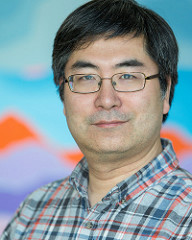
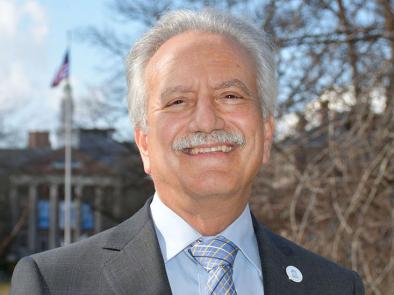
Junling Ma is a Professor in the Department of Mathematics and Statistics at the University of Victoria, part of the Faculty of Science. His research focuses on mathematical modeling of infectious diseases, optimal control strategies, and viral evolution. He also explores disease spread on random networks and studies specific diseases such as influenza, HIV, Ebola, and cholera. Dr. Ma holds a PhD in Mathematics from Princeton University. His research interests include: Infectious disease models Random networks analysis Studies of influenza, HIV, Ebola, and cholera transmission dynamics Current projects include modeling disease spread on random contact networks and investigating influenza pandemic replacement mechanisms. He currently teaches courses such as MATH 377 (Mathematical Modelling), MATH 475/575 (Topics in Mathematical Biology), and MATH 348 (Numerical Methods). Dr. Ma advises graduate students in mathematical biology and epidemiological modeling. Specific grant details are not provided in the text. He features in the Faces of UVic Research video, discussing his work as a statistical mathematician and his contributions to understanding disease spread and control.
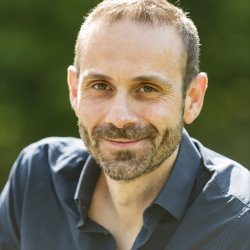
Dr. Muhammad Intizar Ali is an Assistant Professor in the School of Electronic Engineering at Dublin City University (DCU). He holds a PhD (with distinction) from Vienna University of Technology, Austria (2011) and has held roles including Adjunct Lecturer and Research Fellow at the Insight Centre for Data Analytics, NUI Galway. His primary research focuses on IoT, Data Analytics, Machine Learning, and Knowledge Graphs with applications in Smart Cities, Manufacturing, Farming, and Healthcare. Education: PhD in Computer Science, Vienna University of Technology (2007-2011) Research Interests: IoT and Edge Analytics Federated and Distributed Machine Learning Semantic Web and Knowledge Graphs Smart Manufacturing and Industry 4.0 Stream Processing and Real-Time Systems Recent Work Trends: His publications emphasize federated learning frameworks, IoT-enabled adaptive intelligence, and knowledge graph applications in industrial contexts. Recent projects include digital twin systems for predictive maintenance and ontology-driven manufacturing solutions. Grants & Projects: Lead Investigator in SFI-funded projects like MultiRoof (2025-2029) and Neuro-Symbolic AI for Building Management EU/Industry collaborations including Terrain-AI and Bentley-funded initiatives Labs & Teams: Active in DCU's Data Analysis and Machine Learning research groups, leading projects like Smart DCU Digital Twin for campus optimization.
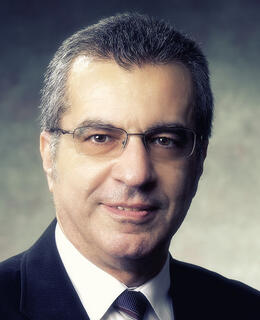
Kevin A. Haas is a Professor of Civil Engineering and Associate Chair for Undergraduate Programs at the Georgia Institute of Technology's School of Civil and Environmental Engineering, part of the team developing Coastal Engineering programs in Savannah. He holds a B.S. (Ohio State University, 1994), M.S. (Ohio State University), and Ph.D. (University of Delaware, 2001) in Civil/Coastal Engineering, followed by a postdoctoral fellowship at the University of Delaware. Education: B.S. in Civil Engineering (Distinction), The Ohio State University, 1994 M.S. in Civil Engineering, The Ohio State University, 1997 Ph.D. in Coastal Engineering, University of Delaware, 2001 Research Interests: Focuses on coastal dynamics, numerical modeling of nearshore circulation, sediment transport, and hydrodynamics of rip currents. Explores wave energy extraction, tidal marsh sediment transport, and applications of video-based field observations. His work bridges environmental engineering and renewable energy, emphasizing sustainable coastal systems. Key Achievements: Recipient of the Delaware Sea Grant Award for outstanding Ph.D. research on rip currents Lead in securing a $1M educational grant for undergraduate programs at Georgia Tech Active in developing tidal and wave energy assessment methodologies Grants & Labs: Principal investigator on projects funded by federal agencies and industry partnerships Conducts fieldwork and modeling at Georgia Tech's Savannah campus and coastal sites Collaborates with USGS, NOAA, and international teams on marine energy initiatives
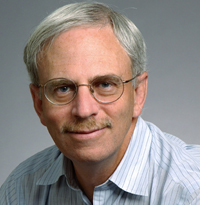
John Guttag is the Dugald C. Jackson Professor in Electrical Engineering and Computer Science at MIT. His work focuses on AI-driven healthcare solutions, biomedical systems, and advanced computer vision applications. He leads research in medical image analysis, machine learning reliability, and healthcare equity. Guttag's contributions include innovative frameworks like MultiMorph and Scale-Space Hypernetworks, addressing challenges in medical imaging and clinical decision-making. Affiliations: MIT Electrical Engineering & Computer Science Department (EECS) Research emphasizes AI for healthcare, particularly in segmentation, predictive analytics, and ethical algorithm design. Notable projects include real-time fraud detection systems and studies on racial disparities in clinical risk scores. His work bridges computer science with clinical practice through tools like Voxelmorph for medical image registration and ScribblePrompt for interactive biomedical segmentation. Recent publications highlight advancements in uncertainty-aware AI, contrastive learning, and scalable medical data processing. Guttag’s methodologies prioritize practical clinical applications, aiming to improve diagnostics and healthcare workflows. His lab develops open-source tools and frameworks that enhance accessibility to advanced medical imaging technologies.
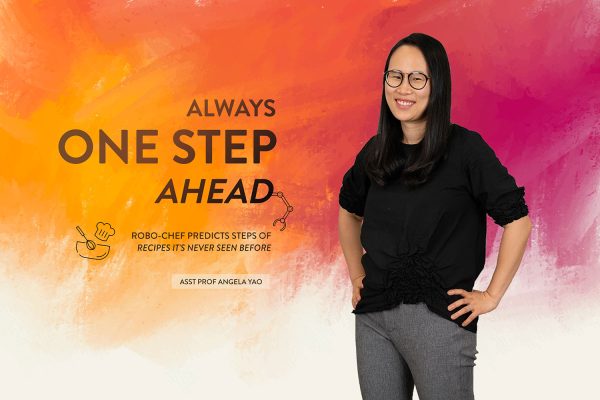
Angela Yao is a Dean's Chair Associate Professor and Assistant Dean of Research at the National University of Singapore's School of Computing, Department of Computer Science. She leads the Computer Vision and Machine Learning Group and specializes in visual perception of people, focusing on both high-level semantics of human actions and lower-level physical modeling. Her research interests span Computer Vision , Machine Learning , and Artificial Intelligence , with specific expertise in human action recognition, 3D human modeling, video understanding, and small data AI. Dr. Yao's work bridges theoretical advances with practical applications, particularly in activity anticipation and human-computer interaction. Dr. Yao's publication trends reveal a strong focus on zero-shot learning for activity anticipation, 3D human modeling, and techniques for working with limited training data. Her research has evolved from foundational work in 3D pose estimation to more recent innovations in diffusion models and cross-modal learning, demonstrating consistent contributions to advancing computer vision capabilities. NRF Fellowship for Artificial Intelligence (2019) German Pattern Recognition (DAGM) Award (2018) Dr. Yao has successfully mentored PhD students including Fadime Sener and secured significant research funding including the NRF Fellowship. Her research group focuses on developing AI systems capable of understanding and anticipating human activities with applications in robotics and human-computer interaction. She teaches CS4243 Computer Vision and Pattern Recognition and leads the Computer Vision and Machine Learning Group at NUS Computing.
Auguste Genovesio is a Research Director (DR INSERM) leading the Computational Bioimaging and Bioinformatics team at the Centre for Computational Biology within the École Normale Supérieure (ENS) in Paris. His work focuses on large-scale cellular morphology analysis, integrating machine learning, microscopy, and computational modeling to study cellular responses to perturbations. His team develops algorithms for analyzing high-dimensional biological data, with applications in drug discovery, functional genomics, and neuroscience. Education and Affiliations: Genovesio’s research is anchored at ENS and collaborates with institutions like Institut Curie, Collège de France, and ESPCI. His lab develops open-source tools such as PySpacell and ALFA , advancing spatial analysis and genomic data processing. Research Interests: His group combines deep learning, bioinformatics, and experimental biology to tackle challenges in cellular dynamics, morphological heterogeneity, and predictive modeling. Recent work includes applying diffusion models to reveal subtle phenotypes and optimizing microscopy image analysis pipelines. Key Projects: Cross-modal knowledge distillation for transcriptomics, latent diffusion models for small datasets, and super-resolution microscopy via StyleGAN regularization. Applications: Collaborations in drug screening, neurobiology (e.g., Drosophila memory studies), and cancer cell analysis. Publications: Over 50 peer-reviewed articles since 2007, including work in Nature Communications , Developmental Cell , and NeurIPS . Recent focus on generative AI for biological image analysis and self-supervised learning biases. Grants & Awards: While specific grants aren’t listed, his lab’s cutting-edge research suggests significant institutional and collaborative support. No explicit awards mentioned in texts. Labs/Teams: Director of the Computational Bioimaging group, part of the Functional Genomics section at ENS. Supervises PhD students and postdocs in AI-driven biology and computational microscopy.
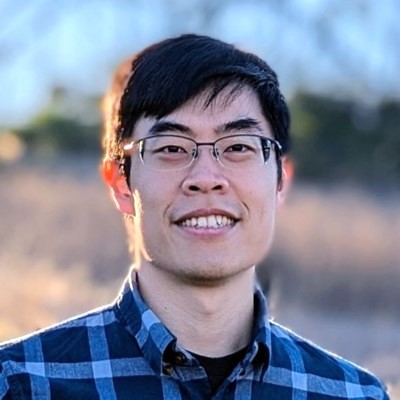
Hao-Wen Dong is an Assistant Professor in the Department of Performing Arts Technology at the University of Michigan, with an affiliation to the Computer Science and Engineering Department. His research focuses on Human-Centered Generative AI for content creation, emphasizing music, audio, and video domains. He holds a Ph.D. in Computer Science from UCSD, advised by Julian McAuley and Taylor Berg-Kirkpatrick. Affiliations: University of Michigan (Primary), UCSD (Ph.D.), National Taiwan University (B.S.) Research Pillars: Generative AI models for new domains, AI-assisted creative tools, and multimodal content creation His work spans music generation (e.g., MuseGAN), audio synthesis (e.g., ViolinDiff), and multimodal systems (e.g., TeaserGen). He has led over 25+ publications in top venues like ISMIR, ICASSP, and ICLR. He advises students in interdisciplinary projects and teaches courses on AI Music and Generative AI for Music/Audio Creation. Notable awards include the Doctoral Award for Excellence in Research (2024) and Rising Stars in AI (2024).
Miroslaw Bober is Professor of Video Processing at the University of Surrey, where he joined in 2011. He leads the Visual Media Analysis team within the Centre for Vision, Speech and Signal Processing (CVSSP) in the School of Computer Science and Electronic Engineering. His extensive industry experience includes 15 years as General Manager of the Mitsubishi Electric R&D Centre Europe and Head of Research for its Visual & Sensing Division. BSc and MSc in Electrical Engineering from AGH University of Science and Technology, Krakow, Poland (1990) MSc in Machine Intelligence with distinction from Surrey University (1991) PhD in Computer Vision from Surrey University (1995) Professor Bober's research focuses on novel techniques in signal processing, computer vision and machine learning with applications in industry, healthcare, big-data and security. His expertise particularly lies in image and video analysis and retrieval, including visual search, object recognition, and analysis of motion, shape and texture. His algorithms for shape analysis, image/video fingerprinting, and visual search are considered world-leading and have been selected for ISO International standards within MPEG, with applications used by organizations like the Metropolitan Police. His recent publication trends show a strong focus on hybrid network architectures, scene graph generation, medical imaging applications, and augmented reality publishing systems. His work spans both theoretical advancements in computer vision and practical implementations addressing real-world challenges in media, healthcare, and security domains. The research demonstrates a consistent pattern of bridging academic innovation with industrial applications, particularly in visual search technology and media analysis. Presidential Award for strengthening the TV business in Japan via innovative 'Visual Navigation' content access technology (2010) Mitsubishi Best Invention Award for Image Signature Technology (2008) Professor Bober serves as Programme Director for the MSc in Multimedia Signal Processing and Communications and holds various teaching and mentoring roles. He has secured over 30 research and industrial grants totaling more than £16M, including the BRIDGET FP-7 project (5.28 M€) as coordinator and PI, and the CODAM project (£1.05 M) as PI. His work with the BBC, Huawei, and other industry partners demonstrates strong industry-academia collaboration. As chair of MPEG technical work on Compact Descriptors for Visual Search (CDVS) and Compact Descriptors for Video Analysis (CDVA), Professor Bober leads international standardization efforts. His Visual Media Analysis team develops cutting-edge visual search and media analysis algorithms with applications across broadcast, security, and healthcare domains.
Dr. Gary Marchionini is the Cary C. Boshamer Distinguished Professor and Dean of the School of Information and Library Science (SILS) at the University of North Carolina at Chapel Hill. He previously served as a professor at the University of Maryland's College of Library and Information Services and as a member of the Human-Computer Interaction Laboratory. His expertise spans information interaction, human-computer interaction, digital libraries, and information policy. Marchionini holds a PhD in mathematics education from Wayne State University, emphasizing educational computing. His research focuses on interfaces for information seeking, digital video retrieval, and the impact of data science. Notable projects include the Information in Life Video Series (2007), one of the first academic YouTube channels, and leadership in the Open Video Project . He has secured grants from NSF, NASA, Microsoft, and Google, among others. Marchionini's awards include the ASIS&T Award of Merit (2011) and the LITA Kilgour Award (2000). He has served as editor-in-chief of ACM Transactions on Information Systems (2002–2008) and as president of ASIS&T (2010). Current interests include the societal impact of information, personal health records usability, and digital curation strategies. His leadership roles include serving on the iSchools Board of Directors and directing the Center for Information Impact. He has advised numerous grants, including Mellon Foundation-funded initiatives and EPA research library operations. Marchionini's work bridges academic research with real-world applications, emphasizing human-centered design and interdisciplinary collaboration.
Dr. Judith Verstegen is an Assistant Professor in the Department of Human Geography and Spatial Planning at Utrecht University's Faculty of Geosciences. Her research focuses on geosimulation modeling and spatial optimization, with applications in urban planning, environmental vulnerability assessment, and policy analysis. She leads projects such as HEADS 4 Health (2023-2024), which integrates agent-based models into urban digital twins, and coordinates the GeoSIM research group. Her work emphasizes interdisciplinary collaboration, including projects analyzing linguistic diversity in South America and environmental threats to Amazonian indigenous lands. She is the Program Chair of the MSc Geographical Information Management and Applications (GIMA) program and serves as Editor-in-Chief of the Journal of Spatial Information Science. Notable contributions include methodologies for spatial optimization under uncertainty and agent-based modeling of pedestrian behavior in urban environments. Key research areas include applied data science, complex systems analysis, and the PtS - Transforming Cities initiative. She has advised PhD students on topics ranging from fire prevention optimization to indigenous land vulnerability. Her lab at the University of Münster previously focused on spatial modeling frameworks, and she collaborates internationally with institutions like Leiden University and the PBL Netherlands Environmental Assessment Agency. Recent projects highlight innovation in computational methods, such as Python-based open-source tools for land-use modeling (IMAGE-land) and immersive video experiments for behavioral studies. Her work bridges theoretical modeling with practical policy applications, addressing challenges in sustainable urban development and environmental conservation.
Mike Carbonaro is a Professor in the Department of Educational Psychology at the University of Alberta's Faculty of Education. He holds multiple advanced degrees including a Ph.D. (Educational Psychology), M.Sc. (Computing Science), and interdisciplinary credentials in Education. His research focuses on educational technology integration, robotics in K-12 education, computational thinking, and interprofessional health sciences education. He pioneered Canada's first university-level course on LEGO robotics for K-12 and contributed to a major simulation-based healthcare training grant. He co-developed the ScriptEase project and collaborated on GRAND initiatives like BELIEVE and HLTHSIM. Education: Ph.D. Educational Psychology, University of Alberta (1997) M.Sc. Computing Science (AI focus), University of Alberta (1993) B.A. Computer Science, York University (1991) M.Ed. Educational Psychology, University of Alberta (1988) B.Ed. Secondary Biological Sciences, University of Alberta (1984) Research Highlights: Dr. Carbonaro's work bridges technology and education across multiple domains. Key areas include: Blended learning models Health sciences interprofessional training Indigenous education technology integration Computational thinking curriculum development He has led projects integrating robotics and digital games into school curricula, and co-developed the Aboriginal Teacher Education Program (ATEP) with Blue Quills First Nations College. Teaching & Leadership: Coordinator for the Graduate Certificate in Educational Technology Teaches courses like EDCT 400 (Lego Robotics) and EDU 210 (Technology in Education) Developed new blended delivery models university-wide Grants & Collaboration: Over $1M in funded projects, including simulation-based healthcare training and interprofessional education initiatives. Collaborations span computing science, health sciences, and Indigenous education sectors. Future Work: Focus on K-12 computational thinking integration, health sciences simulation development, and technology equity in Indigenous education contexts.
Dr Steve Maddock is a Senior Lecturer in Computer Graphics and Acting Head of the Visual Computing research group at the University of Sheffield's School of Computer Science. He holds a Class I Degree in Computer Science (University of Sheffield), a PGCE in Mathematics (11-18), and a PhD in computer graphics modeling and animation, all from the University of Sheffield. With over 30 years of experience in computer graphics software development, he has contributed to the computer games industry through a six-month secondment at Gremlin/Infogrames. His research focuses on facial modeling and animation, augmented/virtual/mixed reality applications, and sketch-based interfaces. Key areas include 3D computer graphics, real-time rendering, and human-robot collaboration systems. Maddock has led and co-led several grants, including projects on game software engineering, rail network surveillance, and heritage visualization using immersive technologies. He is a member of INSIGNEO, Sheffield Robotics, and the Cultural Industries Research Network. Publications highlight contributions to facial analysis for medical diagnostics, style transfer techniques for games, and safety zone visualization in robotics. His work integrates interdisciplinary approaches, combining computer science with fields like biology and robotics. Maddock's Visual Computing research group explores cutting-edge solutions in graphics, virtual environments, and computational tools for real-world applications.
Dr. S M A Moin is a Reader (Associate Professor) in Storytelling and Brand Communications at Queen Mary University of London's School of Business and Management, where he also serves as Director of Teaching Associates and Co-Director of the BSc Marketing & Management program. His interdisciplinary research focuses on brand storytelling, creativity, consumer trust, and leadership, with a strong emphasis on digital age strategies and imagination-driven innovation. Moin holds an MBA from the University of Strathclyde and a PhD from the University of Nottingham, complemented by executive education from Oxford, Cambridge, and Harvard. Education: PhD in Marketing, University of Nottingham MBA, University of Strathclyde Executive Education in Leadership, University of Oxford Executive Education in Creativity, University of Cambridge Executive Education in Entrepreneurship, Harvard University Professional Experience: Former Associate Head of Research at Coventry University London Management consultant for multinational corporations and a $4B subsea project LEA Governor of London Borough of Hounslow Teaching experience in further education and armed forces institutions His research interests span brand storytelling frameworks, creativity in the Imagination Age, and trust dynamics in financial services. He has published extensively, including books like Creativity in the Imagination Age (2022) and Brand Storytelling in the Digital Age (2020). Moin’s pedagogical innovations integrate storytelling, experiential learning, and problem-based methodologies. He currently supervises doctoral student Abdullah Abdulrahman A Alfares. Moin’s awards include Senior Fellow of Advance HE and Fellow of the Chartered Management Institute. His work bridges academic rigor with practical applications, addressing contemporary challenges in brand strategy, leadership, and digital communication.
Professor Ferrante Neri is a faculty member at the University of Surrey, holding the positions of Professor of Machine Learning and Artificial Intelligence and Associate Dean (International) for the Faculty of Engineering and Physical Sciences (FEPS). He is affiliated with the Nature Inspired Computing and Engineering Research Group, Surrey Institute for People-Centred AI (PAI), and the Computer Science Research Centre within the School of Computer Science and Electronic Engineering. His research focuses on optimization, explainable AI, and machine learning, with contributions to memetic computing and differential evolution. Since 2010, he has chaired the IEEE Task Force on Memetic Computing. He advises PhD students in topics like dynamic multi-objective optimization and AI-driven applications. His teaching expertise includes mathematical foundations for computer science. He has supervised students such as Aisha E S E Saeid and Pengjin Wu. Notable research areas include evolutionary algorithms, neural architecture search, and applications in robotics and environmental monitoring. Labs and teams include the Nature Inspired Computing group, which explores AI-driven solutions for complex problems. His work bridges theoretical advancements and practical applications in fields like autonomous systems and deep learning.
Behrouz Far is a Professor at the University of Calgary’s Schulich School of Engineering, Department of Electrical and Software Engineering. He holds a PhD in Artificial Intelligence from Chiba University, Japan (1990) and degrees from the University of Teheran including a B.S. in Electrical Engineering (1983) and M.S. in Electrical Engineering (1986). His research focuses on AI applications in medical imaging, software engineering, transportation systems, and data mining. He has contributed to advancements in fundus image analysis, deep learning models for disease detection, and intelligent traffic management systems. Dr. Far has received notable awards such as the 2017 SSE Achievement Award and the AITF-AMA Tier-2 Chair in Smart Multimodal Transportation Systems (2013). His work bridges theoretical AI with practical healthcare solutions, including tools like LETTA for traffic management systems and methodologies for detecting ocular lesions using CNNs. He teaches courses on software testing, reliability engineering, and agent-based systems. His publications highlight contributions to medical diagnostics (e.g., choroidal nevi classification), transportation optimization (e.g., real-time traffic signal control), and machine learning explainability. Collaborative research includes projects on biopotentiostat biosensors for SARS-CoV-2 detection and data mining for cancer patient stratification.