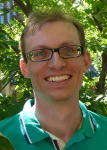
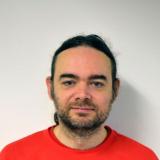
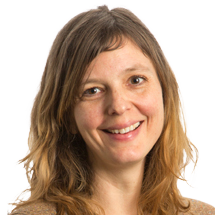
Pavol Jancura is an Assistant Professor in Electrical Engineering at Eindhoven University of Technology, affiliated with the Mobile Perception Systems Lab. His research spans reinforcement learning, video coding architectures, and edge AI systems. Current projects include 5G-MOBIX for connected automated mobility and NXP Smart Mobility. Recent publications focus on multi-agent reinforcement learning coordination, efficient object detection using sensor fusion, and quantization-aware neural networks for edge devices. His work integrates computer vision, multi-agent systems, and optimization for autonomous systems.
Pantelis M. Papadopoulos is an Associate Professor in Instructional Technology with a research focus on educational technologies, learning analytics, and artificial intelligence in education. His work spans collaborative learning, conversational agents, gamification, and peer feedback mechanisms. He has contributed to projects such as the development of conversational agents for MOOCs and the design of tangible learning tools like the CUBE. His research addresses ethical considerations in AI integration, motivation dynamics in e-learning, and teacher professional development through digital competencies. Key research interests include the design of AI-driven educational tools, enhancing dialogue productivity in inquiry-based learning, and evaluating the impact of gamification on student engagement. He collaborates internationally on initiatives such as climate change literacy enhancement through agent-mediated learning and cross-cultural educational comparisons. His invited talks highlight contributions to technology-enhanced peer review, audience response systems, and the role of tangible artifacts in collaborative learning environments. Notable outputs include studies on conversational agents' adverse effects, summative assessment with AI, and the efficacy of free-selection peer feedback protocols. His work bridges theoretical frameworks with practical applications, aiming to improve educational outcomes through innovative technological integration.
Sander Stuijk is an associate professor at the Department of Electrical Engineering of Eindhoven University of Technology, chairing the Electronic Systems (ES) group. His research focuses on design methodologies for embedded signal processing applications in high-tech systems like industrial manufacturing, automotive, and healthcare. He develops high-level compilation strategies for heterogeneous multi-core platforms, with interests in efficient code generation and resource allocation. Prof. Stuijk holds leadership roles including chairing the ES group, serving on the board of 4TU.NIRICT (a Dutch ICT research consortium), and coordinating the Embedded Systems master program. He contributes to national ICT initiatives through ICT Next Generation, a network for mid-career academics. He also chaired the Department Council (2016-2018) and participates in TPC activities. His research spans streaming applications, real-time systems, and multi-processor architectures. Notable projects include the PROMES initiative (programming embedded multi-media systems) and the MNEMEE project (automated MPSoC design). His work emphasizes predictable and energy-efficient computing, with applications in healthcare monitoring (e.g., remote PPG, thermal imaging) and reconfigurable systems. Prof. Stuijk has advised numerous PhD/Master students and led projects like FORSEE, VSM, and SenSafety. His publications include over 70 journal/conference papers, covering topics like neuromorphic computing, GPU optimization, and medical signal processing. He actively engages in academic service, including organizing SCOPES workshops and serving on editorial boards.
Dr. Boris Čule is an Assistant Professor at Tilburg University's Department of Cognitive Science and Artificial Intelligence within the Tilburg School of Humanities and Digital Sciences. He holds a Ph.D. in Computer Science from the University of Antwerp, followed by post-doctoral research there. His work focuses on data mining, machine learning, and AI, particularly sequential/temporal data, including pattern mining, anomaly detection, and recommender systems. Education: Ph.D. in Computer Science, University of Antwerp Research Interests: Sequential pattern mining, session-based recommendations, time series analysis, subspace clustering, spatial pattern discovery, and applications in environmental and economic forecasting. His contributions include novel algorithms for evaluating sequential patterns, sequence classification, and anomaly detection in dynamic systems. Publications Trends: Recent work emphasizes real-world applications like UAV path planning optimization (2024), news recommendation systems (2023-2024), and employment market forecasting (2023). He explores interdisciplinary challenges such as facial action analysis in gaming (2022) and wind farm response to storms (2021). Advising/Grants: While specific grant details are not listed, his prolific publication record suggests active research projects. Courses taught include Big Data analysis and cognitive science modules.
Lauren Alexander is a co-head and tutor in the Bachelor Graphic Design program at the Royal Academy of Art, The Hague (KABK), where she has worked since 2012. She collaborates with Ghalia Elsrakbi as Foundland Collective, focusing on artistic research and design-driven storytelling. Sandberg Institute, Amsterdam - Master in Design Dutch Art Institute, Arnhem - MFA Her research explores archival material , migration narratives , and counter-archiving , using video, publications, and installations. She integrates methods like interviewing and video analysis into her teaching, emphasizing foundational research skills in typography, coding, and collaborative projects. The two projects highlighted in her portfolio— 'Memory Archive' and 'Groundplan Drawings' —examine displacement through design, with themes spanning media art , storytelling , and archival records . These works were exhibited internationally and incorporate participatory interventions in historical narratives. Scientific Awards: Prix de Rome prize nomination (2015) Dutch Design Awards nomination (2016) Smithsonian Artist Research programme fellowship (2015-2016) As a member of the Design Lectorate Research Group 2019 , she applied research insights to secure grants. Her teaching spans both BA and MA programs, including the MA Non Linear Narrative , where she developed methods for using interview material as a design tool. She advocates for cross-departmental synergy at KABK to enhance research transparency and collaboration.
Dr. Ronald Poppe is an Associate Professor at Utrecht University's Faculty of Science within the Department of Social and Affective Computing. His research focuses on behavioral analysis, computer vision, human-computer interaction, and non-verbal behavior. Key themes include applied data science, dynamics of youth, game research, and human-centered AI. Recent work emphasizes automated analysis of parent-child interactions, gaze dynamics, and multimodal interaction modeling. He has received a 2023 fellowship for studying early life stress and parent-child interaction. His research also explores deception detection, egocentric vision, and gesture recognition, leveraging deep learning and transformer architectures. Poppe collaborates on projects like the 'Interactive Tag Playground' and contributes to datasets such as the Corpus of Social Touch (CoST). His work bridges computational methods with psychological and social science applications. Research Themes: Applied Data Science, Dynamics of Youth, Game Research, Human-Centered AI Expertise: Behavioral Analysis, Computer Vision, Pattern Recognition Publications span action understanding, multimodal interaction analysis, and social robotics. His work emphasizes translating computational insights into real-world applications for child development, human-robot interaction, and forensic analysis.
Marie R. Lindegaard is a Senior Researcher at the Netherlands Institute for the Study of Crime and Law Enforcement (NSCR) and holds the position of Associate Professor in Dynamics of Crime and Violence at the University of Amsterdam’s Faculty of Social and Behavioural Sciences, Department of Sociology. She is also a University Lecturer in Sociology at the University of Copenhagen, reflecting her significant academic presence in both institutions. Her work is central to the Video Violence Group, where she pioneers the use of video analysis in studying real-life social interactions. Her research focuses on violence, aggression, interpersonal conflicts, and situational dynamics, employing ethnographic methods, CCTV analysis, and ethological observation. She investigates topics such as bystander intervention, police-citizen encounters, de-escalation strategies, youth violence, gang behavior, and behavioral crime interventions, with fieldwork extending to South Africa and the Global South. Her methodological innovations emphasize real-life observation over experimental setups. The trends in her recent publications reveal a strong emphasis on video-based empirical research to understand human behavior in conflict and policing contexts. Her work spans criminology, sociology, and urban safety, often addressing pressing societal issues like ethnic profiling, public compliance during crises (e.g., the pandemic), and employee safety in retail. She frequently collaborates with researchers across disciplines and institutions, contributing to both Dutch and international academic discourse. Editorial board member, Criminology Open (observational methods) Editorial board member, International Criminal Justice Review Lindegaard has been continuously employed in academic research since 2008, with prior roles at NSCR and VU University. She earned her PhD in Anthropology from the University of Amsterdam in 2009, focusing on gangs, violence, and racism in Cape Town. Her research is supported by ongoing projects related to crime dynamics, social distancing, and police practices. She leads and contributes to studies that inform policy and practice in law enforcement and public safety. She is affiliated with the Video Violence Group and conducts research using covert and systematic social observations, contributing to methodological advancements in detecting biases such as ethnic profiling. Her work bridges theoretical sociology with practical applications in crime prevention and social intervention.
Eliya Buyukkaya is a researcher active in the fields of Computer Science , Big Data , and Distributed Computing . Their work focuses on scalable systems, environmental informatics, and data compression techniques. 2025: Crop growth simulations using big data 2021: Bit Plane Slicing for clustering 2018: Video streaming optimization for games 2017: Clustering anomaly detection 2015: Cloud resource selection for HPC Research spans Big Data Analytics , Collaborative Algorithms , and Latency Optimization , emphasizing scalability and efficiency. Their work impacts Environmental Informatics , Game Networking , and High-Performance Computing . Collaborations include experts in Earth Observation and Computer Science , with publications in top-tier venues like Computers and Electronics in Agriculture and PLoS ONE .
Peter Vangorp is an Assistant Professor in the Visualization and Graphics group of the Department of Information and Computing Sciences at Utrecht University in the Netherlands. He leads research in computer graphics, visual perception, and virtual reality, with a particular focus on material perception and realistic rendering techniques. Dr. Vangorp obtained his Ph.D. in Computer Science at the University of Leuven (Belgium) in 2009. His doctoral research focused on "Human Visual Perception of Materials in Realistic Computer Graphics." Prior to his current position, he held postdoctoral positions at REVES/Inria Sophia-Antipolis (France), Giessen University (Germany), Max Planck Institute for Informatics (Germany), and Bangor University (UK). He also served as a Senior Lecturer at Edge Hill University (UK) from 2016 to 2022. Dr. Vangorp's research interests span several interconnected domains within computer graphics and visual perception. His primary focus is on understanding how humans perceive materials and gloss in computer-generated imagery, which has direct applications in realistic rendering. He has made significant contributions to the study of hazy gloss perception, BRDF modeling, and material editing techniques. His work bridges the gap between computer graphics and human visual perception, using rigorous experimental methods to inform rendering techniques. More recently, his research has expanded into virtual reality applications, particularly in medical visualization and rehabilitation. Analysis of Dr. Vangorp's recent publications reveals a consistent focus on material perception and realistic rendering, with increasing attention to virtual reality applications. His work often combines computer graphics techniques with psychophysical experiments to understand human visual perception. Recent publications show expansion into medical applications of VR, 3D point cloud processing, and gamification in educational contexts. The interdisciplinary nature of his research is evident in collaborations with researchers from computer science, psychology, medicine, and education fields. Dr. Vangorp has received research funding through an NWO grant for the VR4eVR project (Virtual Reality for enhanced Visual Rehabilitation), which runs from 2024 to 2030. This project involves collaboration with multiple institutions including UMCG, Royal Visio, RUG, and UT. Dr. Vangorp has supervised numerous graduate students, including PhD candidate Vanderfeesten (2025) and multiple Master's students in Game & Media Technology and Artificial Intelligence programs. His students have worked on diverse topics including real-time rendering techniques, neural denoising, 3D Gaussian splatting, and volumetric sampling methods. He serves as a PhD supervisor and researcher in the VR4eVR project, mentoring students working at the intersection of computer graphics and medical applications. Dr. Vangorp is actively involved in the Visualization and Graphics research group at Utrecht University, where he contributes to research on advanced rendering techniques, material perception, and virtual reality applications. His work on the VR4eVR project demonstrates his commitment to applying computer graphics research to real-world medical challenges, particularly in visual rehabilitation.
Wim van Houtum is a part-time Research Fellow at the Eindhoven University of Technology (TU/e) and a Wireless Communication Systems Fellow at NXP Semiconductors . His career spans over four decades, with key roles at Philips Research Laboratories and NXP/Catena Radio Design, focusing on wireless communication systems and signal processing. Academic Background: MSc (1995) and PhD (2012) from TU/e Current Roles: Digital Wireless Communication Systems Fellow (TU/e, 2018–present); Wireless Communication Systems Fellow (NXP, 2020–present) Research Focus: Specializing in wireless communication systems, his work includes: OFDM and COFDM technologies for digital broadcasting (DVB-T, DAB+, DRM+) Advanced signal processing for WLAN/WPAN standards (IEEE 802.11, 802.15) Deep learning applications in channel estimation and noise modeling Hardware-constrained speech enhancement algorithms Radar sensing integration in communication frameworks Publication Trends: Recent work bridges classical signal processing (Baum-Welch algorithm, OFDM radar) with deep learning (BCJRNet, spectral masking). His studies address practical challenges in: Impulsive interference in electric vehicles (2025) Robust symbol detection under imperfect channel knowledge (2024) Joint blind channel estimation and turbo equalization (2025) Time-context windowing for speech enhancement (2024) Optimized radar sensing in communication systems (2024) Collaborations: Dr. van Houtum works closely with academic and industry partners, particularly with Prof. Frans Willems at TU/e and within the RAISE collaboration framework (TU/e-NXP). His patented innovations in communication systems have shaped standards like DRM+ and IEEE 802.11g.
Dennis Koelma is a researcher at the Informatics Institute within the Faculty of Science at the University of Amsterdam (UvA), actively contributing to the ISIS (Image Sciences, Systems and Imaging) research group. His work focuses on developing software architectures for multimedia research, particularly through the Horus project which enables cross-platform image and video analysis. His research spans Computer Vision, Image Processing, and Multimedia Systems, with emphasis on efficient C++-based libraries leveraging template mechanisms for performance. The Horus architecture integrates CORBA for multi-language access, Oracle database storage of analysis results, and hardware resource management (e.g., image acquisition boards), forming a unified platform for multimedia research and application development. Koelma operates within the ISIS group's framework at Science Park 900 (Room L4.50), where the Horus project serves as a foundational tool for image science research. The system's design prioritizes broad functionality with minimal code footprint while enabling collaborative research through standardized interfaces and resource sharing.
Dr. Evelien Hoeben is a criminology researcher affiliated with the Netherlands Institute for the Study of Crime and Law Enforcement (NSCR), with prior academic positions at Utrecht University, State University of New York (SUNY), and University of Amsterdam. Her research focuses on adolescent delinquency and substance use, peer influence dynamics, group processes, time use patterns, and situational behavior explanations. Key research areas include: Peer influence on adolescent behavior Social media and youth crime Unstructured socializing effects Parenting and friendship dynamics Time-use analysis in criminology Recent publications analyze: Temporal peer effect boundaries Bystander behavior in public conflicts Compliance-gaining tactics among peers Computer vision applications for social distancing Parental incarceration narratives She collaborates with multidisciplinary teams on projects related to criminal events, life-course criminology, and pandemic behavioral compliance. Her work employs mixed methods (quantitative and qualitative) with a focus on situational crime prevention.
Patrick Le Callet is a full professor at Polytech Nantes (University of Nantes), leading the Image & Video Communication (IVC) group at the CNRS IRCCyN lab. His academic journey includes roles as an assistant professor (1997–1999) and lecturer (1999–2003) at the University of Nantes. He earned credentials in electronics from École Normale Supérieure de Cachan. His research focuses on human vision modeling applied to image/video processing, including 3D quality assessment, visual attention modeling, watermarking, and medical imaging. He coordinates major projects (e.g., EU Marie Curie ITN PROVISION, UHD4U) totaling over $5M in grants. He co-chairs VQEG’s HDR and 3DTV initiatives and serves on editorial boards for IEEE Transactions and EURASIP journals. Key contributions include databases like IRCCyN/IVC-Toyama and Eyetracker SD 2009, advancing standards in 3DTV and QoE. Over 20 students have been advised, with notable alumni working on topics like medical imaging and 3DTV discomfort metrics. Projects involve collaborations with Orange Labs, Thomson, and cultural heritage institutions. Labs/teams: IVC group at IRCCyN, managing a 3D visualization platform and eyetracking facilities. Research emphasizes interdisciplinary applications in consumer electronics, healthcare, and cultural preservation.
Yue Sun serves as a University Researcher in the Department of Electrical Engineering at Eindhoven University of Technology (TU/e), affiliated with both the Center for Care & Cure Technology Eindhoven and the Eindhoven MedTech Innovation Center (EMTE). Holding an MSc degree, Sun specializes in computer vision and AI applications spanning medical imaging and agricultural technology. Research interests focus on video-based monitoring systems for clinical and agricultural environments, including premature infant discomfort detection and smart livestock management. Key methodologies involve deep learning, multi-object tracking, and sensor fusion techniques applied to real-world healthcare and farming challenges. Recent work demonstrates strong translational impact through partnerships with clinical and agricultural stakeholders. Publications reveal evolving expertise from foundational work in convex optimization and GPU computing (2011-2015) toward applied computer vision solutions in medical diagnostics and precision farming (2017-2025). Current research emphasizes practical implementations like pig pose estimation systems and breast MRI segmentation tools with direct clinical applications. Professional activities include multiple conference presentations on neonatal monitoring systems and press coverage of agricultural technology implementations. The researcher actively contributes to TU/e's Sustainable Development Goals initiatives, particularly in healthcare technology advancement. Supervision activities and grant details are not explicitly documented in available materials, though collaborative project involvement is evident through multi-institutional publications and the completed EU-funded project 'Advancing Smart Optical Imaging and Sensing for Health' (2016-2019).
Jos H.V. den Ouden serves as a Researcher and Project Manager within the Electrical Engineering department at Eindhoven University of Technology (TU/e), affiliated with the Mobile Perception Systems Lab and Video Coding & Architectures group. His work bridges mobile networking, IoT infrastructure, and autonomous vehicle systems to advance connected mobility solutions. Education: Master of Science (MSc) in Engineering (Dutch "ir." designation) from TU/e, 2007 Thesis: "Study on the misalignment properties of a pushbelt variator" Research Interests: Den Ouden specializes in applying Internet of Things frameworks to autonomous driving challenges, with emphasis on remote operation systems, pedestrian behavior prediction, and 5G network integration. His work addresses critical safety requirements in automated mobility through local breakout architectures and user interface innovations, particularly focusing on road engineering applications for cooperative vehicle systems. Publication Trends: His 2018-2026 publications demonstrate evolving expertise from experimental cooperative driving validation toward AI-driven mobility solutions. Recent work explores trustworthy AI frameworks for CCAM development, while earlier research established foundations in IoT-enabled pedestrian detection and 5G remote driving architectures, consistently addressing mobile network service optimization. Project Leadership: Den Ouden has secured funding for six major initiatives: TOWR CST (2021-2027): Project communication officer Buurauto-Noom VCA (2021-2022): Project manager 5G-MOBIX (2018-2022): Project member for cross-border CAM corridors AUTOmated driving via IoT (2017-2020): Invoice contact Vision-based Driver Assistance (2016-2019): Project member Research Environment: As core personnel in TU/e's Mobile Perception Systems Lab, he contributes to Video Coding & Architectures research while teaching Automotive Sensing and Smart Vehicles courses. His work connects with industry through press features on autonomous vehicle testing and 5G remote driving demonstrations, positioning him at the intersection of academic research and real-world mobility innovation.