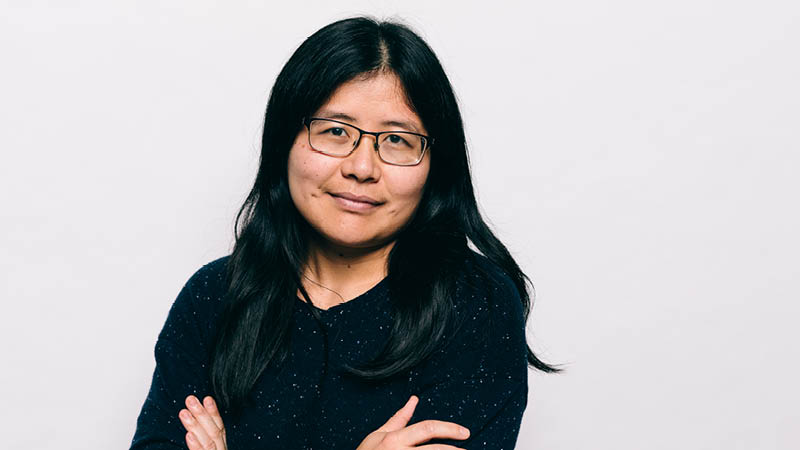
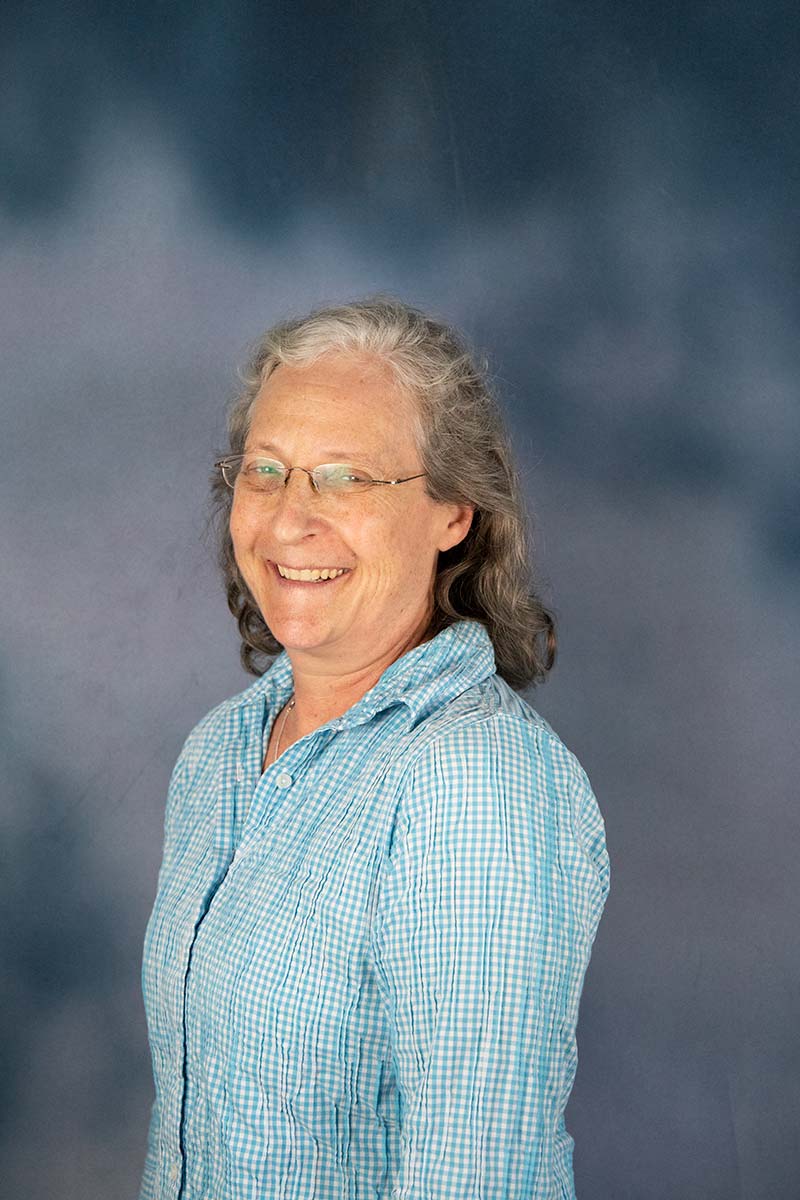
Professor Kwon Oh-jin is affiliated with Sejong University , where he serves in the Department of Electronic Engineering . His academic career spans over three decades, including a PhD in Electrical and Computer Engineering from University of Maryland (1994) and MS in Signal/Image Processing from University of Southern California (1991). His research focuses on image/video analysis , compression algorithms , watermarking systems , and steganography . Recent work explores machine learning-driven compression , 360-degree imaging , and JPEG standards implementation . His 15 most recent articles address topics like cybersecurity using CNNs , dynamic gesture recognition , and novel multimedia platforms for emerging standards. Professor Kwon leads the Visual Communication Research Lab (Chung923), supervising numerous PhD and MS students working on point cloud coding , JPEG privacy , and AI-based image coding . He has received multiple government and industry grants from organizations including the Agency for Defense Development and Ministry of National Defense .
Chunyi Peng is an Associate Professor in the Department of Computer Science at Purdue University's College of Science, where she leads the Mobile System, Security and Networking (MSSN) lab. She joined Purdue in Fall 2017 after serving as an Assistant Professor at the Ohio State University. Dr. Peng earned her Ph.D. in Computer Science from UCLA in 2013, with additional M.Eng and B.Eng degrees in Automation from Tsinghua University, both with highest honors. Prior to her academic career, she worked as an Associate/Assistant Researcher at Microsoft Research Asia. Her research focuses on mobile networking, systems, and security, with recent emphasis on innovating 5G/6G mobile network architecture, mobile network analytics, network verification, and security. She also explores efficient visual sensing and computing for IoTs, particularly through computer vision techniques for autonomous drones, vehicles, and robots. Her work bridges theoretical networking concepts with practical implementations, often developing tools like MobileInsight for cellular network analysis. Her recent publications reveal a clear research trajectory toward securing and optimizing next-generation mobile networks, particularly focusing on 5G/6G security vulnerabilities, emergency service reliability, drone-based network applications, and performance optimization. The work shows increasing integration of AI techniques with networking protocols and a growing emphasis on practical, real-world network measurement and validation. ACM Distinguished Member (2024) Best Community Paper Award at MobiCom'16 Best Demo Award at MobiCom'18 Best Community Paper Runner-up at MobiCom'22 Dr. Peng actively mentors numerous graduate students through the MSSN lab, with current research projects including AI for Networks, Mobile Network Security, AirLab for autonomous drones, and MI-LAB for network data analysis. She has secured significant research funding including NSF AI Institute for Future Edge Networks and Distributed Intelligence (AI-EDGE, CNS-2112471), Evolving Mobile Network Security (Cellular-911 Security: CNS-2246051), and Diagnostic Testing of Next-Generation Radio Access Network (CNS-2403048). The MSSN lab maintains an active research agenda with multiple ongoing projects that bridge academic research with practical applications, evidenced by numerous student successes including PhD defenses, conference awards, and industry placements at companies like Bytedance, Meta, and Amazon.
Tyler Manolovitz is a researcher at Sam Houston State University's Newton Gresham Library, specializing in academic libraries, scholarly communication, and educational technology. He teaches courses such as EDLD 7337: Academic Writing and Research and HEDL 7372: Diversity & Culture in Higher Education . University: Sam Houston State University Department: Educational Leadership Academic Rank: Researcher Research Interests: Tyler focuses on digital resources, student research behavior, and the impact of technology on library services. His work includes analyzing ebook adoption trends and the role of patron-driven acquisition models. Teaching: He contributes to doctoral and graduate programs through guides for courses on education research, academic advising, and student development. Contact: Email: tyler@shsu.edu | Phone: 936-202-5052
Dr Zheyuan Liu is a Research Fellow at the Australian Institute for Machine Learning within the Faculty of Sciences, Engineering and Technology at The University of Adelaide. His research focuses on machine learning, computer vision, and multimodal learning, particularly in areas like federated learning, semantic segmentation, and vision-language models. His research interests include: Federated fine-tuning of large language models Text-to-video generation with diffusion models Weakly supervised semantic segmentation techniques Multimodal image retrieval systems Audio-visual source localization Recent publications demonstrate expertise in cross-domain adaptation, contrastive learning, and re-ranking methods. He is eligible to supervise Masters and PhD students.
Professor Mathew H Horrocks is a Personal Chair of Biophysics at the School of Chemistry, University of Edinburgh, where he leads the Edinburgh Single-Molecule Biophysics (ESMB) Group within the Centre for Inflammation Research. His research focuses on applying single-molecule and super-resolution microscopy techniques to address fundamental biological questions, with particular emphasis on neuroscience and neurodegenerative diseases. Horrocks' research interests span multiple cutting-edge areas: Development and application of single-molecule microscopy techniques to study individual protein molecules Super-resolution imaging of protein aggregates in neurodegenerative disorders like Alzheimer's and Parkinson's disease Characterization of amyloid oligomers, which are recognized as the main pathogenic species in protein misfolding diseases Visualization of protein dynamics below the diffraction limit of light in test-tubes, cells, and tissue samples Application of advanced microscopy to cardiovascular disease research His recent publications demonstrate a strong methodological focus on advancing microscopy techniques to study protein behavior at unprecedented resolution, particularly in the context of neurodegeneration. His work bridges chemistry, physics, and biology to develop novel approaches for visualizing cellular processes previously inaccessible with conventional microscopy methods. Horrocks has received significant recognition for his contributions to analytical chemistry: Royal Society of Chemistry Joseph Black Award for Analytical Chemistry (2022) He currently supervises eight PhD students and multiple postdoctoral researchers, and his laboratory is supported by substantial funding from Target ALS, UCB Biopharma, BHF, ARUK, MRC, NIH, and Medical Research Scotland. His group maintains extensive collaborations across disciplines, working with neuroscience, chemistry, and clinical medicine researchers to address fundamental questions in protein biology and disease mechanisms. The Edinburgh Single-Molecule Biophysics Group operates state-of-the-art microscopy facilities that enable groundbreaking research on protein dynamics at the single-molecule level, contributing significantly to our understanding of molecular processes in health and disease.
Wendi Weimar is a Professor and Director of the Sport Biomechanics Laboratory at the School of Kinesiology, College of Education, Auburn University . With over two decades of research experience, she specializes in lower extremity mechanics, gait analysis, and footwear effects on human and animal locomotion. Her work spans athletic performance optimization, injury risk assessment, and surface interaction studies. PhD in Kinesiology/Biomechanics from Auburn University Director of Sports Biomechanics Laboratory Her research focuses on gait kinematics across footwear types (flip-flops, sneakers, non-slip socks), surface effects on performance and injury rates, and coordination variability in athletes and individuals with chronic ankle instability. Recent studies analyze NFL turf transitions, inter-segmental coordination, and emotional influences on movement dynamics. Notable collaborations include consulting with professional teams like the Texas Rangers and Baltimore Orioles. While her recent publications emphasize biomechanical analysis of sports surfaces and footwear, her broader work includes outreach programs introducing children to kinesiology concepts through sports science.
Dr. Andreas Vlachidis is an Associate Professor in the Department of Information Studies at University College London (UCL), Faculty of Arts and Humanities. He serves as Co-Investigator and Technical Lead of the Sloane Lab, Principal Investigator of the 'Text Analytics for inclusive AI education platforms' project, and convenor of the Alan Turing Research Interest Group – Humanities and Data Science. Previously, he held academic positions at the University of the West of England and University of South Wales. His educational background includes a PhD in Semantic Indexing of Archaeological Grey Literature, MSc, and dual BSc degrees from the University of Glamorgan. He is a Fellow of the Higher Education Academy (FHEA) and a member of the British Computing Society (BCS). Dr. Vlachidis's research focuses on interdisciplinary work at the intersection of Information Science, Humanities, and Computer Science. His primary interests include Information Extraction, Semantic Data Modeling, Metadata, Natural Language Processing, and Text Mining, with applications in cultural heritage, digital humanities, and social sciences. His work emphasizes data integration, FAIR data principles, and semantic interoperability for cultural heritage collections. His recent publications demonstrate expertise in cultural heritage data modeling, semantic technologies for historical collections, NLP applications, and inclusive AI education. His work with the Sloane Lab project has been particularly influential in advancing knowledge base development for historical catalogues and museum collections. Outstanding Paper award from the Emerald Literati Network Fellow of the Higher Education Academy (FHEA) Member of the British Computing Society (BCS) Dr. Vlachidis supervises multiple doctoral students including Liu Lu (principal supervisor) and secondary supervises Binxia Xu, Charlotte Heng Men, and George Cooper. He has previously supervised to completion Helena Holis, Diego Ramírez Echavarría, and Olga Loboda. He serves as Departmental Tutor for pastoral care of students and chairs important committees including the Departmental Staff Student Consultative Committee. He leads significant research projects including the Sloane Lab (data unification, aggregation, and knowledge base development) and 'Text Analytics for inclusive AI education platforms' (promoting literacy development and writing skills). He also collaborates with the EU Horizon 2020 Ariadne Plus project on multilingual processing of archaeological literature.
Tobias Hallmen is a Researcher at the University of Augsburg 's Chair of Human-Centered Artificial Intelligence within the Faculty of Applied Computer Science . His work focuses on multimodal conversation analysis using machine learning and artificial intelligence in psychotherapy and medical/educational training contexts. Research interests include: Automated evaluation of conversational quality through multimodal data (audio, video, text) AI-based assessment systems for therapy sessions and parent-teacher interviews Development of real-time feedback mechanisms for skill improvement Integration of behavioral signal processing and empathy modeling Recent publications demonstrate expertise in vocal burst analysis , emotional mimicry prediction , and multimodal foundation models for behavioral annotation. Key technical domains: deep learning architectures , cross-modal data correlation , and computer vision applications . The Chair team under Prof. Dr. Elisabeth André currently includes 23 members with 10 projects active, including TherapAI (psychotherapy analysis) and KodiLL (medical training systems). Tobias Hallmen's work particularly addresses speaker classification , reception signal analysis , and remote physiological measurement techniques like video-based heart rate detection .
Fahmida Rahman, Ph.D., is an Assistant Teaching Professor in the Department of Civil and Environmental Engineering at Rowan University's Henry M. Rowan College of Engineering. Her expertise lies in transportation engineering with focuses on safety, traffic operations, and data-driven solutions. She holds a Ph.D. from the University of Kentucky (2022), where she developed speed-based Safety Performance Functions (SPFs) for rural highways and applied machine learning for safety assessment. Education: Ph.D., Civil Engineering, University of Kentucky (2022) M.S., Civil Engineering, University of Kentucky (2019) B.S., Civil Engineering, Bangladesh University of Engineering and Technology (2016) Research Interests: Transportation safety engineering, traffic operation optimization, congestion management, big data analysis, and Intelligent Transportation Systems (ITS). She has contributed to tools like the Kentucky Road User Cost and Travel Time Savings models for the Kentucky Transportation Cabinet (KYTC). Professional Contributions: Developed SPF models using speed data, applied machine learning for crash prediction, and pioneered third-party data integration for congestion performance metrics. Her work bridges theoretical models with real-world transportation challenges. Affiliations: Member of ASCE, SWE, and ITE professional organizations.
Dr. Seán Lacey is a Lecturer in the Department of Mathematics at Munster Technological University (MTU), previously at Cork Institute of Technology (CIT). He holds a BSc in Mathematical Sciences & Computing (2003) and a PhD in Applied Mathematics (2008) from the University of Limerick. His roles include serving as Chair of the Research & Innovation Committee (2016–2020) and Chair of the Department of Mathematics Research Committee at MTU/CI. He has collaborated extensively with APC Microbiome Ireland, UCC, and other institutions, focusing on statistical analysis in clinical trials, real-world data studies, and sports science. Dr. Lacey has designed and delivered over 70 Continuing Professional Development (CPD) workshops and contributed to the development of Data Science and Analytics programs at MTU. He currently supervises two postgraduate students and has authored/co-authored over 30 peer-reviewed publications. His research interests span statistical methodologies, educational technology, and interdisciplinary applications in medicine, agriculture, and sports. His academic service includes membership in MTU Academic Council (2013–2020), National Forum Research Ethics Committee (2019–2021), and leadership in projects like QUARTILES and SUCCEED. Key collaborations include work on fundamental motor skills in children, pandemic impacts on healthcare, and agricultural pest management.
Mathias Ciliberto is a Research Fellow in the Department of Computer Science and Technology at the University of Cambridge. His work focuses on wearable sensor technology, human activity recognition, and multimodal data analysis. He has contributed to major datasets such as the Sussex-Huawei Locomotion and Transportation Dataset, advancing transportation mode recognition and sensor-based analytics. His research includes innovations in earable technologies for gait monitoring, holistic motion analysis, and sensor fusion across audio, inertial, and GPS systems. Key contributions involve developing robust algorithms for activity recognition in challenging data scenarios, including missing data and poor annotations. He has organized international challenges (e.g., SHL Challenge series) and workshops (HASCA), fostering collaboration in sensor-based research. His projects emphasize practical applications in healthcare, sports biomechanics, and human-computer interaction, with a focus on real-world deployment of wearable systems.
Aaron Elmore is an Associate Professor in the Department of Computer Science at the University of Chicago, affiliated with The College. His research focuses on elastic databases, cloud computing, and distributed systems, with an emphasis on database-as-a-service, resource-efficient systems, and collaborative analytic platforms. Education : PhD in Computer Science, University of California, Santa Barbara (2015) MS in Computer Science, University of Chicago (pre-PhD) Industry experience prior to academia Research Interests : Cloud computing, distributed systems, database systems, IoT analytics, edge computing, and data management. He develops systems like CrocodileDB (resource-efficient query execution), VergeDB (IoT analytics), and CodecDB (data-driven encoding). His work also explores compression techniques ( DenseStore , EdgeTSD ) and collaborative tools ( DataHub , Decible ). Labs & Groups : ChiDATA: Research on large-scale video analysis and data economics Systems Group: Focus on systems, programming languages, and software engineering CERES Center: Unstoppable computing and system resilience Awards include the NSF CAREER Award (2021), multiple Google DANI Awards (2024–2023), and ACM SIGMOD recognitions. Grants & Advising : Active in securing industry grants (e.g., J.P. Morgan, Google) and has advised numerous PhD students and postdocs, including Dixin Tang (now Assistant Professor at UT Austin) and Chunwei Liu (MIT postdoc). Labs/Teams : ChiDATA, Systems Group, and the CERES Center for collaborative and resilient computing initiatives.
Sidney S. Fels is a Professor at the University of British Columbia, affiliated with the Human Communication Technologies Lab in Vancouver. His research spans Human-Computer Interaction (HCI), Virtual Reality, Biomechanical Engineering, Speech Synthesis, and Medical Imaging. He focuses on innovative interfaces, surgical simulation, and AI-driven educational tools. Recent work includes advancements in touch interaction systems (e.g., HaloTouch), chatbot-assisted learning, and biomechanical modeling for medical applications. His research interests emphasize bridging computational models with real-world applications, particularly in healthcare and education. Notable contributions include contributions to CHI conferences, SIGGRAPH, and INTERSPEECH, showcasing work on AI ethics in learning environments, vocal tract modeling, and pervasive computing systems. Fels collaborates extensively with researchers in engineering, medicine, and computer science, reflecting his interdisciplinary approach to solving complex human-centric challenges. Labs/Teams: Human Communication Technologies Lab at UBC.
Ada Maria Perez Pico is a Lecturer at the Department of Financial Economy and Accounting within the Faculty of Administration and Business Management at the University of Santiago de Compostela. She holds a Doctorate from the same university with a thesis focusing on investor sentiment and financial markets through social networks (2019). Her research interests center on behavioral finance, social media's impact on market dynamics, sustainability in finance, and cryptocurrency markets. She is affiliated with the CVSO research group (Creation of Sustainable Value in Organizations). Key contributions include analyzing investor sentiment's role in stock returns, cryptocurrency volatility, and sustainability practices in post-COVID industries. Her publications span 15 articles between 2016-2025, emphasizing interdisciplinary approaches linking social media analytics with traditional finance theories. Notable themes include digital platforms' influence on stock markets, pandemic-driven economic shifts, and innovative financing models for startups. She has collaborated with advisors like Dra. Angeles López Cabarcos and Dr. Juan Piñeiro Chousa. While no specific awards are listed, her work reflects sustained engagement with cutting-edge topics in financial economics and sustainable value creation.
Professor Mathias Broth at Linköping University's Department of Culture and Society (IKOS) specializes in multimodal interaction analysis, examining how humans coordinate communication through speech, gestures, and environmental cues. His research spans interaction in traffic environments, preschool mobility practices, and language-culture dynamics. Develops multimodal interaction analysis methodologies Studies traffic interaction between autonomous vehicles and human drivers Investigates preschool children's participation in traffic safety practices Explores communication in driver training contexts Research trends focus on embodied communication, showing how people coordinate gaze, gesture, and verbal cues in real-time interactions across different environments including: Traffic situations with autonomous vehicles Preschool group movements Driver training instruction Human-robot interaction Media production scenarios Second language classrooms Broth contributes to the Language and Culture research environment while supervising PhD students in interaction studies.