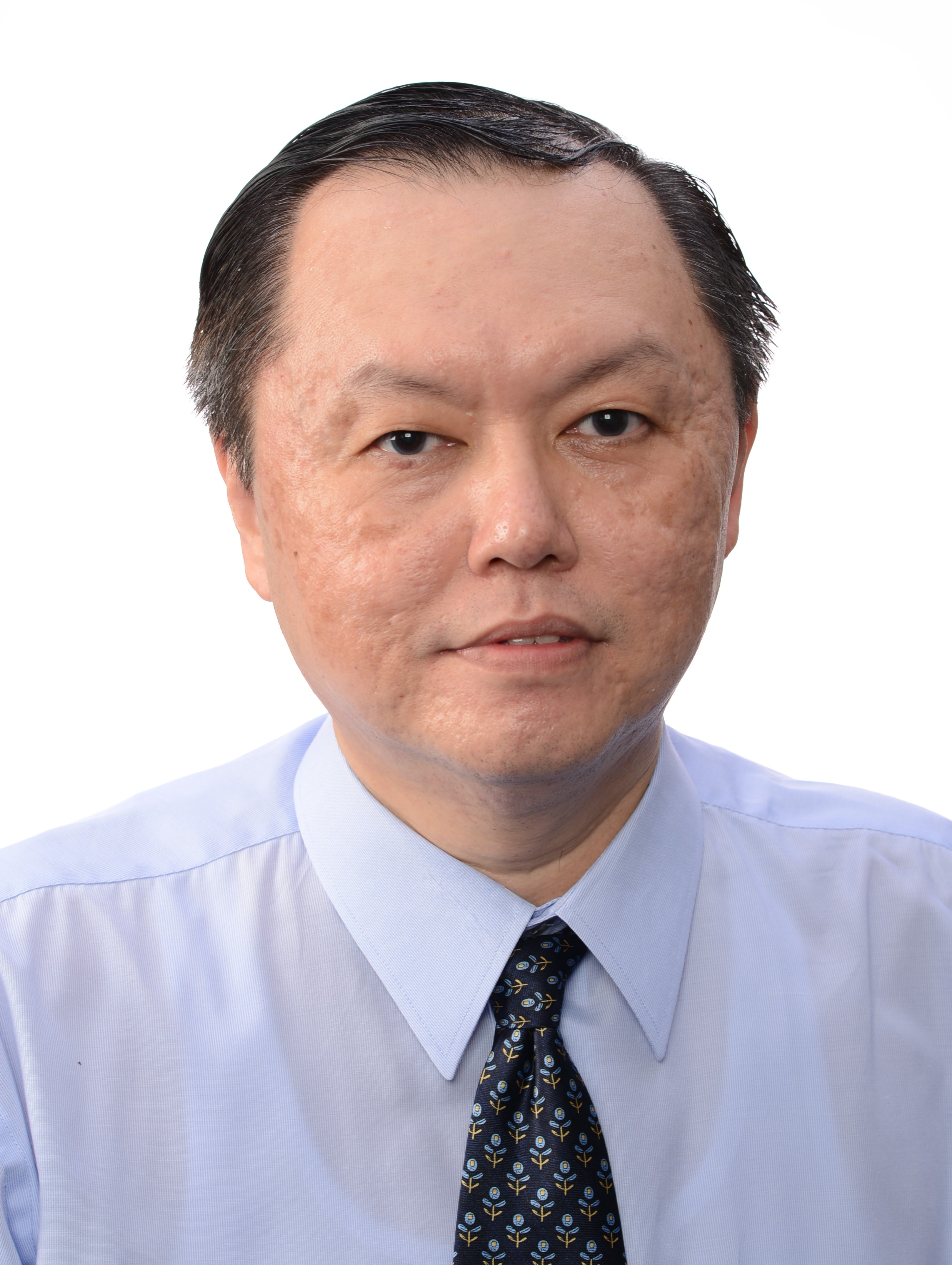
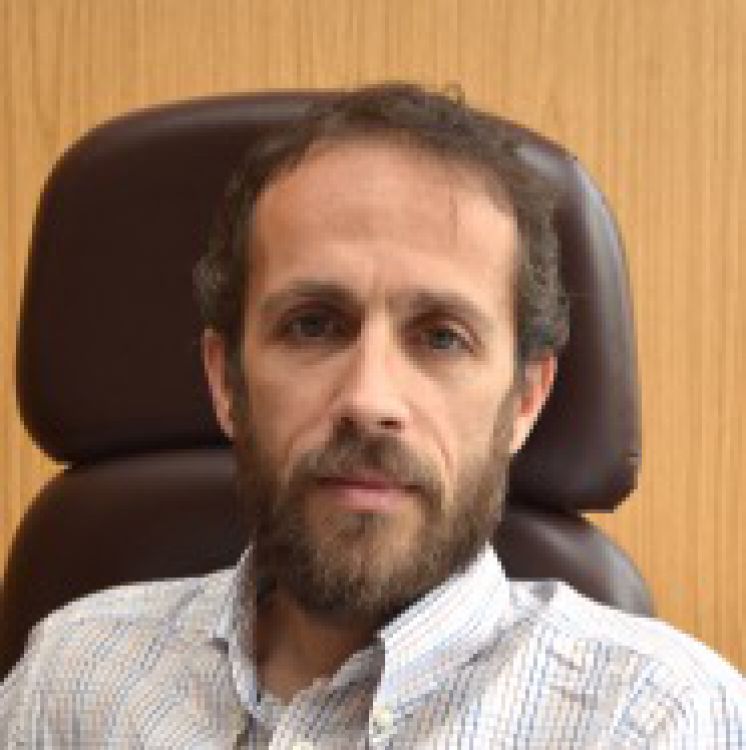
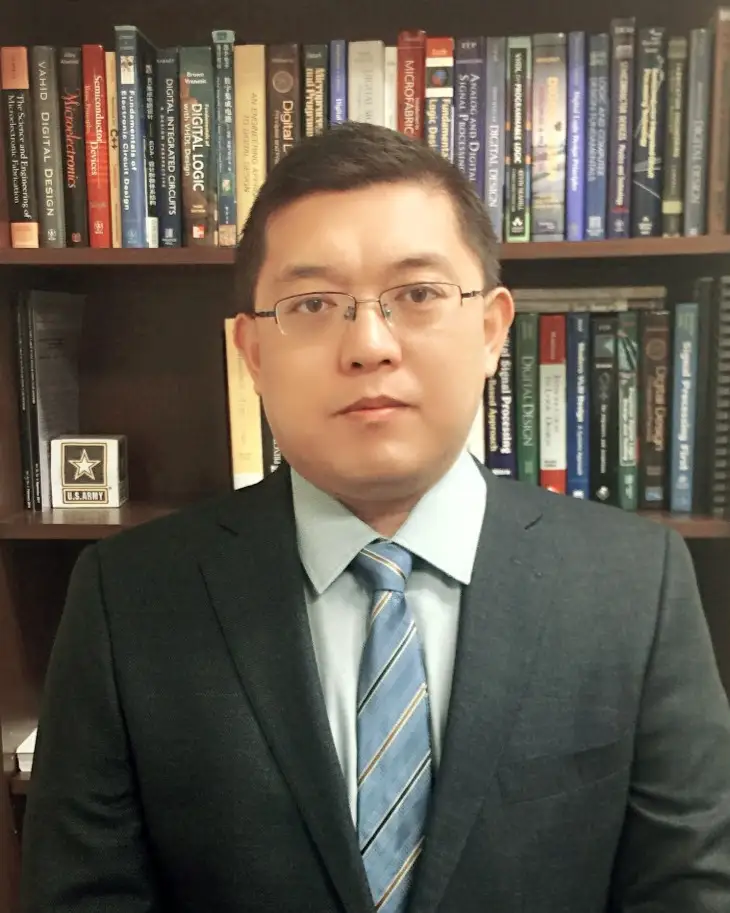
Carver Mead is the Gordon and Betty Moore Professor of Engineering and Applied Science, Emeritus at Caltech. A pioneer in VLSI design and neuromorphic engineering, his work laid foundations for modern computing and inspired generations of engineers and physicists. Key research areas: Neuromorphic engineering and biological computation models Very-large-scale integration (VLSI) design principles Quantum mechanics applications in engineering Gravitation physics and fundamental symmetries Major honors include: National Medal of Technology and Innovation Kyoto Prize IEEE John von Neumann Medal BBVA Foundation Frontiers of Knowledge Award
Dr. Goh Siang Huat is an Associate Professor in the Department of Civil Engineering at the National University of Singapore. He holds a B.Eng. (First Class Honours) and M.Eng. from NUS (1991, 1995) and a Ph.D. from Cornell University (2001). His research focuses on geotechnical centrifuge modeling, seismic soil-pile interaction, and large deformation numerical analysis. He has contributed to the recovery efforts of the World Trade Centre post-9/11 and led roles in the Centre for Protective Technology and Underground Singapore Conference. Education: B.Eng. (First Class Honours), National University of Singapore (1991) M.Eng. (Civil), National University of Singapore (1995) Ph.D., Cornell University (2001) Research Interests: Geotechnical Centrifuge Modeling of Dynamic Events Numerical Analysis of Seismic Soil-Pile Interaction Large-Scale Parallel Computations Offshore Foundation Design (Spudcans, Lattice Legs) Recent Trends in Publications: His recent work emphasizes computational methods for seismic response analysis, geotechnical reliability under spatial variability, and machine learning applications in subsurface modeling. Key themes include spudcan foundations, slope stability, and gas reservoir dynamics. Awards: Silver Award, Singapore Accreditation Council Assessor (2012) Bronze Award, Singapore Accreditation Council Assessor (2009) Teaching & Service: He teaches Geotechnical Finite Element Methods and has served as Associate Editor for Journal of Earthquake and Tsunami . His roles include Operations Manager at the Centre for Protective Technology and organizer of APSSRA2012 and Underground Singapore Conference. Labs/Teams: Active in the Centre for Protective Technology within the Faculty of Engineering, focusing on geotechnical innovation and disaster resilience.
Traian TULBURE is a Lecturer at the Department of Electronics and Computers within the Faculty of Electrical Engineering and Computer Science at the Technical University of Brașov. His research focuses on Very Large Scale Integrated Circuits, Digital Electronics, and reconfigurable architectures for structured ASIC technology. He has contributed to significant projects including the ATLAS experiment at CERN, particularly in developing readout controllers for muon spectrometers. Key research interests include optimizing testability in dynamic reconfigurable CPLD architectures and advancing structured ASIC applications. His work bridges microelectronics innovation with high-energy physics instrumentation, demonstrated through collaborations on particle detector systems. Publications emphasize both theoretical advancements (e.g., dynamic reconfiguration methodologies) and applied contributions to large-scale physics experiments. No scientific awards are explicitly mentioned, though his involvement in international collaborations like ATLAS highlights his professional standing. Advising activities and grant details are not detailed in the provided text. He has contributed to detector hardware development for the ATLAS New Small Wheel upgrade, reflecting his role in experimental physics instrumentation.
Odysseas Koufopavlou is a Visiting Professor in Computer Science with the School of Engineering at the University of Patras, where he previously served as Dean of the School of Engineering (2014-2018) and Head of the Electrical and Computer Engineering Department (2020-2022). His research focuses on VLSI design, hardware security, and cryptographic implementations for embedded systems. Current projects explore side-channel resistant architectures and microarchitectural attacks in hardware systems. Professor Koufopavlou has led multiple European research initiatives including 5G-VICTORI, 5G-SOLUTIONS, and CONCORDIA cybersecurity projects. He has chaired prominent international conferences including the IFIP/IEEE International Conference on Very Large Scale Integration.
Leonardo Badurina is a Sherman Fairchild Postdoctoral Scholar Research Fellow in Theoretical Physics at the California Institute of Technology (Caltech). His primary affiliation is with the Particle Theory Group, focusing on experimental and theoretical aspects of quantum gravity, dark matter detection, and atom interferometry. He is based in MC 452-48 and can be reached at badurina@caltech.edu . His research centers on advancing atom interferometry techniques for detecting gravitational signatures of dark matter and gravitational waves. Key projects include the AION ultra-cold strontium laboratories and conceptual studies for long-baseline atom interferometers at CERN. He collaborates on initiatives like the Terrestrial Very-Long-Baseline Atom Interferometry roadmap and the STE-QUEST space mission proposal. Badurina's work bridges theoretical frameworks with experimental precision, addressing challenges in decoherence, detector design, and signal processing. His recent articles emphasize computational models for gravitational signatures and ultralight dark matter phenomenology. While no formal awards are listed, his contributions to collaborative workshops and feasibility studies highlight his role in shaping future experimental physics directions. His research infrastructure includes leadership in ultra-high vacuum systems and laser stabilization, critical for precision measurements. He is actively involved in both terrestrial and space-based cold atom initiatives, contributing to the global roadmap for gravitational wave and dark matter detection technologies.
Dr. Suchitra Nelson is a Professor and Associate Dean for Clinical and Translational Research at the School of Dental Medicine, and a Professor in the Department of Population & Quantitative Health Sciences at the School of Medicine, Case Western Reserve University. She holds a PhD in Epidemiology and has been at the Case School of Dental Medicine since 1991. Her research focuses on reducing oral health disparities in underserved populations, including low-income children, minorities, and special needs groups. She directs the DMD-Masters in Clinical Research dual-degree program, one of the few such programs nationally. Education: PhD in Epidemiology (1992), MS in Epidemiology and Nutrition (Case Western Reserve University), BS from the University of Madras (1979). Research Interests: Oral Health Disparities: Focused on preventive interventions for vulnerable populations, including family-level behavioral strategies and community-based clinical trials. Early Childhood Caries: Longitudinal studies on very-low-birth-weight infants, enamel defects, and caries mechanisms. Oral Health Beliefs: Developing illness perception measures for older adults using the Common-Sense Model of Self-Regulation. Key Projects: Community-based trials testing xylitol efficacy in dental caries prevention, leading to family-level interventions. NIDCR-funded study on oral health outcomes in VLBW infants, tracking enamel defects and caries progression. Design of cost-effective interventions targeting Medicaid-enrolled children and older adults. Awards: Presidential Early Career Award for Scientists and Engineers (2007) Mather Spotlight Prize & Woman of Achievement Award (2009) Grants & Advising: Her research is funded by NIH, NIDCR, and HRSA. She advises on dual-degree training programs and has led large-scale clinical trials involving multi-state collaborations. Her work integrates dental and medical care, advocating for oral health screening in primary care settings. Labs/Teams: Leads interdisciplinary teams at the School of Dental Medicine and collaborates with pediatric and public health researchers on community-based interventions.
Ramón Martínez Rodríguez-Osorio is a Full Professor at the Polytechnic University of Madrid's School of Telecommunications Engineering, Department of Signals, Systems and Radiocommunications. Born in Madrid (1975), he holds a Telecommunications Engineering degree (1999) and completed doctoral studies at UPM. He has been actively involved in research since 1999, focusing on satellite communications, antenna array systems, and machine learning applications in communication networks. Education: Telecommunications Engineering Degree, Polytechnic University of Madrid (1999) PhD in Signals, Systems, and Radiocommunications (UPM) Research Interests: His work centers on satellite communication systems, including adaptive beamforming, antenna array calibration, and interference mitigation. He also explores machine learning for resource management in 5G/6G networks and hybrid beamforming algorithms for VHTS systems. Recent projects include constellation design for non-terrestrial networks and rain attenuation prediction using LSTM networks. Key Projects: European COST project and national/international grants (CICYT, FEDER, INDRA) FUTURE-RADIO, PROMETEO, STAR, and FAST initiatives Development of the HispaSim satellite link optimization tool Awards: Fundación Telefónica Award (2000) for best final degree project Teaching & Innovation: Contributed to hands-on educational projects like antenna design for CubeSats and MIMO-Testbed systems. Co-authored books on modeling/simulation for communication systems and 3G UMTS technologies. Supervised multiple academic activities including thesis and MOOC development. Labs & Teams: Leads research in the LEHA (Laboratorio de Enlace Hiperfrecuencia y Antenas) lab, focusing on satellite link analysis, antenna measurement systems, and 5G terminal testing. Collaborates with industry partners like INDRA on applied research.
Ivy Wong serves as an Adjunct Senior Lecturer at the International Centre for Radio Astronomy Research (ICRAR) at The University of Western Australia. Her research focuses on radio astronomy and galaxy evolution, with significant contributions to understanding star formation processes, active galactic nuclei, and large-scale cosmic structures. Affiliation: International Centre for Radio Astronomy Research (ICRAR), The University of Western Australia Research Profile: h-index of 34 with 4050 citations according to Scopus metrics Expertise: Radio astronomy, galaxy evolution, and large-scale structure analysis Dr. Wong's research interests center on Star Formation, Radio Galaxy physics, Stellar Mass distribution, and Active Galactic Nuclei. Her work integrates observational data with advanced computational techniques, including machine learning applications for astronomical image processing and classification. She specializes in analyzing galaxy clusters and large-scale structures, with particular focus on the Virgo Cluster region and low surface brightness galaxies. Her recent publications (2025) demonstrate a strong emphasis on radio astronomy surveys, galaxy evolution studies, and innovative data analysis techniques. Dr. Wong actively contributes to major international projects including the Radio Galaxy Zoo citizen science initiative, ASKAP surveys, and studies of supermassive black holes. Her work frequently involves multi-wavelength approaches combining radio, X-ray, and infrared observations. Dr. Wong has supervised multiple research students as indicated by the 'Supervised Work (3)' listing in her profile. She was also an investigator on the project 'The feeding habits of supermassive black holes and the impact on galaxy evolution' at The University of Western Australia from January 2016 to June 2017. She maintains active collaborations across international astronomical communities and contributes to significant datasets including ASKAP data products for various survey projects. Her research has been disseminated through multiple platforms including X (formerly Twitter), Bluesky, and academic repositories.
Jason K. Eshraghian is an Assistant Professor in the Department of Electrical and Computer Engineering at the University of California, Santa Cruz, within the Baskin School of Engineering. He holds a Ph.D. in Electrical and Electronic Engineering from The University of Western Australia and completed his postdoctoral training at the University of Michigan from 2019 to 2022. His research centers on neuromorphic computing , spiking neural networks , and memory circuits , with a strong emphasis on hardware-software co-design for energy-efficient AI. He is the creator of snnTorch , a popular open-source Python library for training and simulating spiking neural networks, widely used in both academia and industry. His recent work reflects a deep integration of circuit design, machine learning, and neuroscience. The research trends indicate a focus on low-power, event-driven computing paradigms, particularly through VLSI and neuromorphic hardware implementations. His publications span top-tier conferences and journals in circuits, AI hardware, and electronic systems. Scientific Awards: 2023 IEEE Transactions on Circuits and Systems Darlington Best Paper Award 2019 IEEE Very Large Scale Integration Systems Best Paper Award Best Paper Award at the 2019 IEEE Artificial Intelligence Circuits and Systems Conference Best Live Demonstration Award at the 2020 IEEE International Conference on Electronics Circuits and Systems Fulbright Fellowship (Australian-American Fulbright Commission) Forrest Research Fellowship (Forrest Research Foundation) Endeavour Research Fellowship (Australian Government) He has been recognized with multiple competitive fellowships and best paper/demonstration awards, reflecting both the quality and impact of his research. While specific grants are not listed, his fellowship support indicates substantial research funding. He has advised students in the areas of neuromorphic systems and AI circuits, though no names are publicly listed in the provided text. He serves professionally as the Secretary of the Neural Systems and Applications Technical Committee and as an Associate Editor for APL Machine Learning , contributing to the advancement of interdisciplinary research in machine learning and physical systems.
Patrick Yates-Jones is a Research Fellow in Physics (Astronomy) at the School of Natural Sciences, University of Tasmania, where he has been employed since 2021, first as a Research Associate (2021-2024) and currently as a Research Fellow (2025-present). His work focuses on astronomy, satellite tracking, and data acquisition and processing within the Physics department at the Sandy Bay Campus. Dr. Yates-Jones holds a PhD in Physics and Astronomy (2017-2021), a Bachelor of Science with Honours in Astrophysics (2016), and a Bachelor of Science in Mathematics and Physics (2013-2015), all from the University of Tasmania. He also completed a Diploma of Modern Languages in French from the University of New England (2012-2015). His primary research interests span multiple areas of astronomy and astrophysics: Cosmology and extragalactic astronomy - studying the large-scale structure of the universe and distant galaxies High energy astrophysics and galactic cosmic rays - investigating energetic phenomena in our galaxy and beyond Astronomical instrumentation - developing new techniques for radio telescopes Astrodynamics and space situational awareness - tracking satellites and space debris His research particularly focuses on numerical modelling of plasma jets launched from Active Galactic Nuclei at the centers of distant galaxies and developing innovative radio astronomy instrumentation techniques for Australia's nationwide network of radio telescopes. Analysis of Dr. Yates-Jones' publication record reveals a strong focus on radio astronomy and AGN jet simulations . His work consistently explores the dynamics and observable signatures of radio jets in various environments, with increasing sophistication in modeling techniques over time. The research spans theoretical simulations, observational analysis, and instrumentation development, showing an integrated approach to understanding active galactic nuclei and their impact on galaxy evolution. Recent work has expanded into space situational awareness and satellite tracking applications. Dr. Yates-Jones has secured significant research funding, including: Co-I on an ALCG computing grant titled 'Towards More Realistic Modeling Of Supermassive Black Hole Jets In Galaxy Formation' for 45 MSU of computing time on the NCI Gadi supercomputer Participation in the Long Baseline Array (LBA) Observation project with CSIRO Astronomy and Space Science ($300,000) Space Seed Funding for 'next generation of space craft tracking software' from the Department of State Growth (Tas) ($44,330) As an educator, Dr. Yates-Jones has lecturing experience in Computational Physics (KYA320) and Games Physics (KIT212) at the University of Tasmania. He has supervised multiple doctoral students with current projects including 'Hybrid tracking of space junk,' 'Simulations of black hole jets,' and 'Radio Rainbows: Modelling the birth and rebirth of black hole jets.' His completed doctoral supervision includes Larissa Adele Jerrim's work on 'Magnetic Fields and Polarisation Properties of Radio Galaxies in Numerical Simulations.' He also has experience running labs, tutorials, and marking undergraduate Maths and Physics units.
Corneliu Zaharia is a Lecturer at the Department of Electronics and Computers , within the Faculty of Electrical Engineering and Computer Science at Transilvania University of Brașov, Romania . His research spans hardware-software co-design, embedded systems, and computer vision. Research Areas Very Large Scale Integrated Circuits Microprocessor Architectures Artificial Intelligence Mobile Platforms Patents : Zaharia has contributed to multiple invention patents, including technologies for real-time video processing, peripheral processing, and vehicle camera systems. His publications focus on optimizing hardware-software integration for edge computing and object detection.
Jinhui Wang is a Professor in the Department of Electrical and Computer Engineering at the University of South Alabama's College of Engineering. His research focuses on cutting-edge technologies in Artificial Intelligence , VLSI Circuits , and Neuromorphic Computing . Education: Postdoctoral work in VLSI Design at University of Rochester, NY, USA; Ph.D. and B.S. in Electrical Engineering from Beijing University of Technology and Hebei University, China. His work addresses 3D IC Design , Emerging Memory Systems , and Cooling Techniques for Electronic Devices , with recent publications emphasizing privacy-preserving AI hardware and intelligent memory architectures for mobile and embedded systems. Collaborative projects span applications in Wireless Sensor Networks , IoT , and UAV Electronic Subsystems .
Felipe Gohring de Magalhaes is an Assistant Professor in the Department of Computer Engineering and Software Engineering at Polytechnique Montréal, where he has been working since July 2018 and assumed his current position in October 2024. He holds a dual doctorate from PUC-RS (Brazil) and Polytechnique Montréal (2016), with degrees in both computer science and computer engineering. His research spans embedded system architectures, real-time systems, avionics, and cybersecurity for emerging technologies. He is affiliated with the Microelectronics and Microsystems Research Group and the Multidisciplinary Institute for Cybersecurity and Cyber Resilience, reflecting his focus on integrated circuits, microelectronics, and system security. Professor Gohring de Magalhaes has published over 40 articles in international journals and conferences, with recent work focusing on photonic integrated circuits security, optical neural networks, and post-quantum cryptography for avionic systems. His publication trend shows consistent output with increasing focus on security aspects of emerging computing technologies. He has supervised at least one PhD student to completion and teaches courses including Introduction to Programming and Operating System Kernel. His research interests align with NSERC topics in integrated circuits, microelectronics, computer systems organization, and VLSI systems.
Johan Henriksson is Associate Professor at Umeå University, Sweden, where he leads the Johan Henriksson Group within the Department of Molecular Biology and the Laboratory for Molecular Infection Medicine Sweden (MIMS), a node of the Nordic EMBL Partnership for Molecular Medicine. He is also affiliated with UCMR (Umeå Centre for Microbial Research) and IceLab (Integrated Science Lab), emphasising cross-disciplinary collaboration. Research in a nutshell. Henriksson’s team explores how T cells function in health and disease, with a special emphasis on cancer and CAR T-cell immunotherapy. By integrating single-cell multi-omics, pooled CRISPR screens, synthetic biology, and machine learning, the group maps gene-regulatory networks that control T-cell identity and anti-tumour activity. They develop wet-lab protocols (e.g., molecular inversion probes for unbiased quantification) and open-source computational tools—including the Nando framework for gene-expression prediction and high-performance pipelines written in Rust—to extract robust biological knowledge from very large datasets. Major research directions. Discovery of a novel JUNB + CD4 T-cell state linked to memory formation, circadian rhythm, and CAR T-cell exhaustion. Single-cell telomere measurements for early cancer detection, particularly pancreatic cancer. Pooled CRISPR screening in primary human T cells and in Plasmodium falciparum to uncover essential regulators. Extension of single-cell technologies to microbial systems in collaboration with Laura Carroll, Kemal Avican, and Linas Mažutis. Development of the Bascet/Zorn pipeline for reference-free comparative genomics across mixed microbial communities. Advocacy and engineering of the Rust programming language for safe, high-performance bioinformatics. Collaborative network. Henriksson actively collaborates with experts who contribute complementary biological insight: Isabelle Magalhães (CAR T-cell therapy), Nicole Boucheron (T cells in allergic asthma), Mattias Forsell (B-cell responses), Anna Överby (tick-borne encephalitis), Annasara Lenman (SARS-CoV-2), Tommy Löfstedt (machine-learning latent-space models), Ellen Bushell ( Plasmodium gene essentiality), and many others. Training & mentorship. The group currently hosts PhD students (e.g., Ionut Sebastian Mihai) and welcomes additional students and postdocs interested in combining wet-lab immunology with computational innovation, especially those eager to adopt Rust for large-scale data analysis.