Dr. Dominika Ignasiak is a Researcher affiliated with the Institute of Biomechanics at ETH Zürich. Her work focuses on spinal biomechanics, musculoskeletal modeling, and computational analysis of spinal pathologies. She contributes to understanding the biomechanical implications of surgical interventions, spinal deformities, and age-related changes in spinal alignment and loading. Her research integrates clinical data with advanced musculoskeletal modeling techniques, particularly in predicting postoperative outcomes and assessing spinal load distributions under dynamic conditions. Key areas include spinal stenosis, idiopathic scoliosis, and the biomechanics of spinal fusion surgery. Dr. Ignasiak collaborates on translational studies bridging computational simulations with clinical applications. Her publications emphasize the role of personalized models in optimizing surgical strategies and understanding degenerative spinal conditions. While no formal awards are listed, her contributions to spinal biomechanics research are evident through her active publication record in high-impact journals. Dr. Ignasiak is based at ETH Zürich’s Institute of Biomechanics, where she engages in cutting-edge research and contributes to both academic and clinical advancements in orthopedic biomechanics.
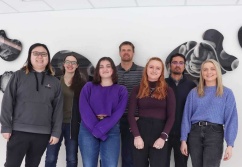
David N. Langelaan is an Associate Professor in the Department of Biochemistry and Molecular Biology at Dalhousie University, within the Faculty of Medicine. He holds a PhD from Dalhousie University and has been a department member since 2016. His research focuses on structural biology, protein-protein interactions, cellular signaling, and protein engineering. Key projects include hydrophobin characterization and engineering, studying MITF's role in melanoma and development, and analyzing rhodoquinone biosynthesis in anaerobic environments. Education: PhD, Dalhousie University. Research Themes: Structural biology, protein assemblies, microbial biochemistry, cancer biology. His lab employs techniques like NMR spectroscopy, X-ray crystallography, and isothermal titration calorimetry. Current lab members include graduate students (Raymond He, Trilok Neupane) and honours students (Alex Bouchard, Janani Venkat). Funding is provided by agencies such as NSERC, CFI, and the Dalhousie Medical Research Foundation. Publications highlight contributions to antimicrobial mechanisms, transcription factor signaling, and hydrophobin self-assembly. Recent work examines MITF coactivator interactions and rhodoquinone biosynthesis pathways in bacteria.
David B. Bensimon is a world-leading biophysicist and Professor in the Department of Chemistry and Biochemistry at the University of California, Los Angeles, holding the prestigious Regent's Professor title since 2007. He maintains a dual academic position, serving as Directeur de Recherche at the French National Center for Scientific Research (CNRS) at the Ecole Normale Supérieure (ENS) in Paris while teaching and conducting research at UCLA for one quarter each year. His academic journey began with a Ph.D. from the University of Chicago in 1986 under Leo Kadanoff, followed by postdoctoral research at Bell Laboratories and ENS Paris. Professor Bensimon's research spans multiple frontiers in biophysics and molecular biology, with particular expertise in single-molecule studies of nucleic acids and their proteins. His laboratory pioneered the Magnetic Trap technique for manipulating individual DNA molecules, enabling groundbreaking investigations into DNA mechanics, topoisomerase interactions, and molecular combing. His recent work has expanded into optogenetics, developmental biology using zebrafish models, and cancer research, with significant contributions to understanding how single-cell oncogene activation leads to tumorigenesis. His research output shows remarkable breadth across disciplines, with recent publications spanning biophysics, developmental biology, cancer research, and genomic technology development. Bensimon's work on opto-chemical tools has particularly transformed how researchers can control biological processes with unprecedented spatiotemporal precision, especially in zebrafish models. His laboratory has developed photoactivatable versions of key molecular tools including Cas9 (OptoCas9) and cyclofen systems that allow precise control of protein activity at the single-cell level. 2007 Regent's Professor at UCLA 1997 Vinci of Excellence Award for phospholipid vesicle research 1994 Jacques Monod Prize for Molecular Combing discovery Special Prize of the French Physical Society for DNA mechanics work ICAM Fellow KITP-UCSB Representative Bensimon has made significant contributions to both basic science and translational applications, co-founding Depixus for nucleic acid sequencing and epigenetic analysis. His laboratory continues to push boundaries in single-molecule biophysics while expanding into developmental biology and cancer research, with recent work demonstrating that activation of kRas in dedifferentiated cells increases tumorigenesis probability by two orders of magnitude. His mentorship has produced notable researchers including X. Michalet, and his theoretical work extends to the philosophical unification of scientific disciplines as evidenced by his book "The Unity of Science".
Christopher Ames is a Clinical Professor in the Departments of Neurological Surgery and Orthopaedic Surgery at the University of California San Francisco (UCSF). He serves as Director of Spinal Deformity & Spine Tumor Surgery, Co-Director of the UCSF Spine Center, Director of the California Deformity Institute, and Director of the Spinal Biomechanics Laboratory. With over 200 annual spinal deformity cases, he specializes in complex procedures for scoliosis, kyphosis, and spinal tumors, pioneering innovative techniques including the transpedicular approach and AI decision support tools. Developed first cervical spine deformity classification Created Adult Deformity Frailty Index and Invasiveness Index Recipient of multiple Scoliosis Research Society awards His research, funded through studies like the ROSE Study and Telomere Study, focuses on spinal biomechanics, surgical outcomes, and AI integration in spine surgery. He has published over 600 peer-reviewed articles and serves as Spine Section Lead Editor for Operative Neurosurgery . Scientific Awards: Hibbs Award (3×) Goldstein Award Whitecloud Award Top Doctors (Neurosurgery & Cancer) US News Top 1% Neurosurgeons
Sangwoo Kim is a Tenure Track Assistant Professor at the Swiss Federal Institute of Technology Lausanne (EPFL) in the Institute of Mechanical Engineering. He leads the Mechanics of Soft and Biological Matter Laboratory (MESOBIO), focusing on the interplay between mechanics, physics, and biology in living systems. His research spans soft matter physics, developmental biology, and mechanical engineering. 2023–Present: Tenure Track Assistant Professor, EPFL School of Engineering Postdoctoral Fellow, UC Santa Barbara Mechanical Engineering Ph.D. in Theoretical and Applied Mechanics, University of Illinois at Urbana-Champaign Kim’s research investigates fundamental properties of biological and soft materials, including: Tissue morphogenesis and embryonic development Mechanical behavior of amorphous and active matter Non-equilibrium dynamics in cellular systems Phase transitions in biological tissues Stress and osmotic pressure quantification His recent publications reveal a focus on: Biological jamming and fluidization Zebrafish axis elongation mechanics Energy landscapes of cellular matter Active matter modeling Statistical mechanics of soft materials Developmental force transmission Kim supervises PhD students and teaches courses in structural mechanics at EPFL, emphasizing problem-solving in engineering design.
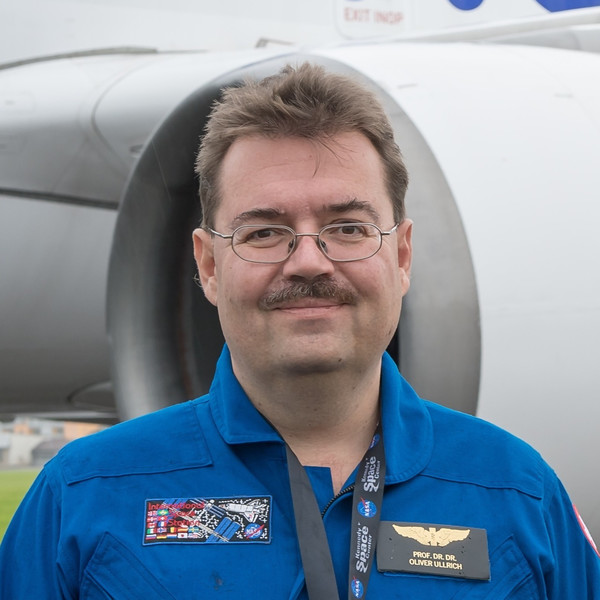
Oliver Ullrich is a Professor and Chair of Anatomy / Gravitational Biology and Cell Biomechanics at the University of Zurich. He also holds professorships in Space Biotechnology at Otto-von-Guericke-University Magdeburg, Space Medicine at EAH Jena, and an Adjunct Professor position at Beijing Institute of Technology. As an Academician of the International Academy of Astronautics , he leads the Swiss Parabolic Flight Program and directs the UZH Innovation Cluster “Space and Aviation” (UZH Space Hub). His research spans gravitational biology , space medicine , and cell biomechanics , focusing on cellular responses to altered gravity environments. His work explores Molecular changes in immune cells under microgravity/hypergravity Epigenetic adaptations to gravitational forces Medical challenges in space exploration Sustainable planetary resource utilization Innovations in spaceflight experiment platforms Recent publications highlight trends in space immunology , organoid analysis under gravity stress , and non-governmental parabolic flight infrastructure . Awards include the Albrecht-Ludwig-Berblinger Award of Aerospace Medicine . He serves on advisory boards for aerospace agencies and companies, and as a member of the executive board of the German Society for Aerospace Medicine : Albrecht-Ludwig-Berblinger Award of Aerospace Medicine As an active investigator in European, German, and U.S. space life sciences programs , he has led 19+ parabolic flight missions and contributed to ISS experiments.
Prof. Dr. Thomas Martin serves as Chair of Paleontology at the University of Bonn's Institute of Geosciences, where he has led the Vertebrate Paleontology department since October 1, 2006. He is also Vice President of the Paleontological Society since 2009 and holds a guest professorship at Shenyang Normal University in China since 2013. His research group focuses on mammalian evolution, with particular emphasis on jaw and dentition evolution, masticatory biomechanics, and the evolution of the ear region throughout mammalian history. Dr. Martin's educational background includes: Diploma in Geology-Paleontology from Eberhard Karls Universität Tübingen (1987) PhD from Rheinische Friedrich-Wilhelms-Universität, Bonn (1991) Habilitation from Freie Universität Berlin (1997) His research interests center on the origin and diversification of mammals, with particular focus on Mesozoic mammals. He employs cutting-edge 3D methods including µCT scanning, surface segmentation, DiceCT, Occlusal Fingerprint Analyzer (OFA), virtual animation, and simulation to investigate how changes in the masticatory apparatus and feeding habits have shaped mammalian evolution. His work has significantly advanced our understanding of dietary adaptations and associated hearing enhancements during crucial moments in mammalian evolutionary history. Analysis of his recent publications reveals a strong focus on Mesozoic mammal dentition, particularly the functional morphology of early mammalian teeth and jaws. His research spans multiple continents, with significant work on German, Russian, and Chinese fossil sites, and demonstrates consistent investigation into mammalian evolutionary patterns through detailed dental and skeletal analyses. His collaborations span internationally with researchers from Russia, China, and the United States. Scientific recognition includes: Fritz-Franck-Förderpreis der Deutschen Gesellschaft für Säugetierkunde (1993) Dr. Martin has secured substantial research funding through multiple DFG (German Research Foundation) projects, including ongoing work on polar vertebrates from the Lower Cretaceous of Yakutia, Russia, and functional studies of early mammalian dentition. He currently supervises several doctoral students including Marius Losco, Thomas Engler, and Sebastian Pommerening, and maintains an active research group with multiple postdoctoral researchers. His laboratory utilizes state-of-the-art imaging and analytical techniques, with particular expertise in virtual paleontology methods. The research group maintains strong international collaborations, particularly with institutions in Russia, China, and the United States, reflecting the global nature of his paleontological investigations.
Dr. John F. Eberth is an Associate Professor at Drexel University's School of Biomedical Engineering, Science and Health Systems. As a cardiovascular engineer with expertise in mechanical controls, continuum biomechanics, and hydrogel-based extracellular matrix mimetics, he leads the Applied Biomechanics and Mechanobiology Lab (ABML) to investigate vascular behavior under mechanical stimuli. PhD in Biomedical Engineering from Texas A&M University (2008) MS in Mechanical Engineering from Clemson University (2004) BS in Mechanical Engineering from Clarkson University (2001) His research focuses on vascular pathology and mechanobiology, including: Aortopathy and aneurysm mechanics Endothelial dysfunction and arterial stiffening Hydrogel-based vascular grafts Calcification chelation therapy Coronary artery disease Perfusion tissue culture Recent publications demonstrate expertise in vascular imaging techniques, mechanical modeling, and therapeutic interventions. Key themes include drug-coated balloon development, collagen fiber mechanics, and bioreactor systems for vascular conditioning.
Rebecca A. Wingert is the Elizabeth and Michael Gallagher Associate Professor in the Department of Biological Sciences at the University of Notre Dame, where she also serves as Director of Graduate Studies and Chair of the Institutional Animal Care and Use Committee. Her research focuses on the genetic and molecular mechanisms of renal stem cells in kidney development, regeneration, and disease. Research Interests: The Wingert Lab investigates how renal stem cells contribute to nephron formation, homeostasis, and regeneration after injury. Her work addresses fundamental questions in developmental biology, stem cell biology, and organogenesis, with implications for understanding birth defects and chronic kidney diseases. Using zebrafish models, her lab explores conserved genetic pathways in vertebrate kidney development. Developmental Biology Stem Cell and Regenerative Biology Genetics & Genomics Molecular Biology Nephrology and Kidney Disease Rare and Neglected Diseases (e.g., Non-Ketotic Hyperglycinemia) Recent Research Trends: Analysis of her recent publications reveals a strong focus on transcriptional regulation (e.g., Tfap2a, Irx2a, Emx1), prostaglandin signaling, ciliogenesis, and nephron segmentation. Her lab uses zebrafish to model human renal diseases and uncover conserved mechanisms of nephrogenesis and repair. There is a recurring emphasis on metabolic regulation (e.g., PGC-1α) and injury response pathways. Scientific Awards and Recognition: Gallagher Family Professorship in Stem Cell Biology Advising and Grants: As Director of Graduate Studies, Dr. Wingert plays a central role in mentoring graduate students in the Department of Biological Sciences. While specific grant funding is not listed, her sustained productivity and leadership roles suggest active external support for her research program. She advises graduate students and postdoctoral researchers in her lab, fostering training in developmental genetics and renal biology. Labs and Research Teams: The Wingert Lab at the University of Notre Dame utilizes zebrafish as a model system to study kidney development and regeneration. The lab integrates forward and reverse genetics, chemical screening, and molecular imaging to dissect nephrogenesis and disease mechanisms. Her team collaborates across disciplines to model rare diseases and explore regenerative pathways.
Berta Verd is the Peter Brunet Fellow in Biological Sciences at Jesus College, University of Oxford. She holds a BSc in Mathematics from the Polytechnic University of Catalonia, followed by an MSc in Medicine, Science and Society from King’s College London, an MRes in Systems and Synthetic Biology from Imperial College London, and a PhD in Biomedicine from Pompeu Fabra University. Her research focuses on evolutionary developmental biology, applying dynamical systems theory to biological problems such as embryonic axial elongation, segmentation, and cichlid fish evolution. She teaches Biology courses at Jesus College and actively contributes to interdisciplinary research in developmental dynamics. Her work explores the modularity of segmentation clocks, the role of cell movements in pattern formation, and evolutionary processes in African cichlids. Recent studies include analyses of skeletal diversity in Lake Malawi cichlids using micro-CT imaging and computational modeling of gene regulatory networks. She also investigates critical transitions in developmental systems and the interplay between morphogen gradients and positional information. Advising and grants: No student advisees or grant details are explicitly listed in the provided texts. Her research is supported through her fellowship and institutional affiliations. She is associated with labs focused on systems biology and evolutionary developmental biology at the University of Oxford and collaborating institutions. Labs/Teams: While specific lab names are not mentioned, her research aligns with interdisciplinary teams studying developmental dynamics, evolutionary biology, and systems approaches in the Biological Sciences department at Oxford.
Dr. Xinshan Li is a Senior Lecturer in the Department of Mechanical Engineering at the University of Sheffield , affiliated with the School of Mechanical, Aerospace and Civil Engineering . Her work bridges computational modeling and biomedical applications, focusing on musculoskeletal mechanics across pediatric and adult populations. PhD in Bioengineering (2011), Auckland Bioengineering Institute Research interests: continuum modeling of musculoskeletal systems, pediatric bone mechanics, fracture risk prediction using finite element analysis, pelvic floor biomechanics in childbirth, and medical image-based computational models. Key collaborations: University of Sheffield’s Digital Patient initiatives, Procter & Gamble, Hospital for Special Surgery, and international biomedical research teams. Her recent publications highlight applications of finite element analysis and musculoskeletal modeling in osteoporosis screening , childbirth mechanics , and infant bone development , with methodological innovations in deep learning-based image segmentation . Dr. Li’s work has no listed awards but emphasizes translational research, including pFIRE (parallel image registration framework) and agent-based modeling of skin stem cells. She collaborates extensively on CT/MRI data integration for clinical applications. Contact: Room 1312, Sir Frederick Mappin Building , Mappin Street, Sheffield S1 3JD, UK. Email: xinshan.li@sheffield.ac.uk .
Professor Craig Radford at the University of Auckland's Faculty of Science specializes in Marine Science with a focus on sensory systems and underwater soundscapes. Holding a PhD from Auckland , MSc from Canterbury , and BSc from Waikato , his research examines sensory physiology in fish and crustaceans, vocal communication mechanisms, and anthropogenic sound impacts. Current teaching includes Marine 702 Techniques in Marine Science and BioSci 334 - The Biology of Marine Organisms Postgraduate supervision topics span lateral line function, multisensory processing, ontogenetic hearing changes, and ecoacoustic indices His work on passive acoustic monitoring (149+ outputs) reveals trends in marine bioacoustics, particularly in shark hearing physiology , crustacean sound detection , and anthropogenic noise mitigation . Key collaborations exist with marine technologists and statisticians for developing machine learning boat classification systems and ecoacoustic biodiversity metrics. Research extends to auditory evoked potential thresholds across elasmobranchs, shark sleep electrophysiology , and global soundscape synthesis projects. Current projects include analyzing recreational boat noise impacts in Hauraki Gulf and investigating directional hearing mechanisms in sharks using advanced bioimaging techniques.
Rebecca Fisher is a Professor in the School of Life Sciences at Arizona State University (ASU) and Director of Anatomy for the School of Medicine and Advanced Medical Engineering. She holds affiliations at the Tempe Campus and leads initiatives in anatomical education and research. Her academic journey includes a BA from Stanford University, MPhil/PhD from Yale University, and a postdoctoral fellowship at Johns Hopkins University. Research Interests: Dr. Fisher’s work focuses on functional anatomy of vertebrates and cephalopods, bio-inspired robotics, and the integration of emerging technologies (e.g., extended reality, AI) into medical education. Collaborations with engineers bridge anatomy and robotics, while her studies on regenerative biology in reptiles and alligators explore tissue repair mechanisms. Teaching & Awards: A recipient of over 10 teaching awards, including the Basmajian Award and Gold Humanism Honors Society induction, Fisher emphasizes empathy and humanism in medical training. Her 2021 recognition as the first Latina Fellow of the American Association for Anatomy highlights her leadership in gender equity through roles in the GEMS Alliance and National Commission for Lymphatic Diseases. Professional Contributions: Fisher served as founding faculty at the University of Arizona College of Medicine-Phoenix, designing anatomy curricula and leading the Gross Anatomy Laboratory. Her research group, Organismal Biology, spans vertebrate morphology, cephalopod biomechanics, and educational technology innovations.
Kristina Mach is a researcher at the Chair of Computer Science Applications in Medicine at the Technische Universität München (TUM) . She focuses on interdisciplinary projects combining computer science and medical applications, particularly in imaging and robotic assistance. Research area: Medical imaging, machine learning, and surgical robotics Key technologies: Deep learning, image registration, and generative adversarial networks Applications: Ophthalmic surgery, radiology reporting, and intraoperative OCT Her recent work includes SpecstatOR for iOCT segmentation, Multitask Weakly Supervised Networks for MR-US registration, and Flexr for few-shot chest X-ray classification. These projects emphasize interoperability between imaging modalities and structured reporting in clinical workflows.
Arya Varthi, MD, is an Associate Professor in the Department of Orthopaedics & Rehabilitation at Yale School of Medicine, where he also serves as the Spine Surgery Fellowship Director. He is a board-certified orthopaedic surgeon specializing in minimally invasive and open spine surgeries of the cervical, thoracic, and lumbar spine, treating conditions including trauma, deformity, tumors, and degenerative disorders. Associate Professor of Orthopaedics & Rehabilitation, Yale School of Medicine Spine Surgery Fellowship Director Board Certified, American Board of Orthopaedic Surgery Member, North American Spine Society Education and Training: BA, Economics, University of Chicago (Phi Beta Kappa) MD, University of Connecticut School of Medicine Residency, Orthopaedic Surgery, Yale New Haven Hospital Fellowship, Spine Surgery, Rush University Medical Center Dr. Varthi's research is centered on spine surgery outcomes, with a focus on minimizing complications and improving patient recovery. His work spans epidemiological studies on spinal injuries, risk factor analysis for surgical complications, and evaluations of emerging treatments such as semaglutide in diabetic patients undergoing spine fusion. He investigates the impact of comorbidities like sickle cell disease, lupus, and obstructive sleep apnea on surgical outcomes, contributing to more personalized and safer care. His 15 most recent publications reflect a strong trend in clinical outcomes research, particularly in anterior cervical discectomy and fusion (ACDF), posterior lumbar fusion, and the management of complex spine pathologies. The articles emphasize patient safety, complication prevention, and the use of national databases and multicenter collaborations to drive evidence-based practice. Key themes include risk stratification, perioperative optimization, and the evaluation of new technologies and pharmacological interventions in spine care. Scientific Awards and Honors: Todd Albert Scholar Award, AANS Spine Summit (2025) Ogilvie Spine Research Award, Yale School of Medicine (2018) Golden Apple Fellow Award, Rush University Medical Center (2017) Yale Power Day Resident Award (2016) AOA Resident Leadership Forum, American Orthopaedic Association (2015) Dr. Varthi is actively involved in clinical education and mentorship as the fellowship director, shaping the next generation of spine surgeons. He collaborates extensively with colleagues such as Dr. Jonathan N. Grauer and Dr. Daniel R. Rubio, contributing to both research and national presentations. He has no reported grants listed in the text, but his research is supported through institutional affiliations and professional society recognition. Labs and Teams: Dr. Varthi is affiliated with the Yale Spine Center and the Spondyloarthritis Program, working within multidisciplinary teams that integrate orthopaedics, neurology, and physical medicine to provide comprehensive spine care. His research is conducted in collaboration with frequent co-authors at Yale, forming a robust clinical research group focused on advancing spinal surgery practices.