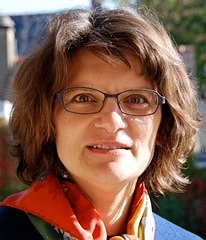
Sarah Fakhoury is a Senior Researcher in the Research in Software Engineering (RiSE) group at Microsoft Research, Redmond. Her work bridges formal methods, empirical software engineering, machine learning, and human-computer interaction to optimize developer cognitive effort in AI-assisted programming tools. Her research focuses on trustworthy AI for code generation , leveraging formal verification to ensure correctness in LLM-generated outputs. Key areas include program comprehension, source code readability, and empirical evaluation of developer-AI interaction. She develops tools like 3DGen for provably correct binary parsers and NL2Fix for natural language-based code repair. Her publications reveal strong trends in formal methods integration with AI (60% of recent work), empirical developer studies (30%), and readability/metrics innovation (10%). Keywords cluster around program verification, LLM evaluation, and cognitive load measurement. ACM/SIGSOFT Distinguished Paper Award (ICPC 2018) Fakhoury actively contributes to the academic community as PC member for ASE, ICSE, and ESEC/FSE. She co-organizes workshops like Muslims in ML at NeurIPS and mentors through SMeW. Her RiSE group collaboration with Shuvendu Lahiri and Madanlal Musuvathi drives Microsoft's trustworthy AI4Code initiatives, focusing on verifiable developer tools.
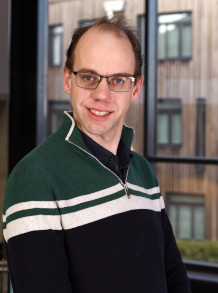
Patrick Lam is an Associate Professor in the Department of Electrical and Computer Engineering at the University of Waterloo, with a cross-appointment to the Cheriton School of Computer Science. His research focuses on applications of programming languages and static analysis to software engineering challenges, emphasizing verifiable software specifications and program understanding. Dr. Lam has held significant grants from NSERC and is recognized for his impactful work, including the First Decade High Impact Paper award for his Soot framework. Education: Doctorate in Computer Science, Massachusetts Institute of Technology, 2007 Master's in Computer Science, McGill University, 2000 Bachelor's in Joint Honours Mathematics and Computer Science, McGill University, 1999 Research Interests: His primary areas include static program analysis, verifiable software specifications, and compiler design, with a focus on linking high-level software designs to low-level implementations. He explores techniques like lightweight specifications and domain-specific languages to enhance software reliability and efficiency. Recent work also addresses empirical studies of programming practices and security through modularization. Publications: Dr. Lam's recent publications span advancements in static analysis tools (e.g., WasmWalker for WebAssembly), formal verification of code generated by AI tools like GitHub Copilot, and empirical studies on C++ immutability usage. His work bridges theoretical programming language research with practical software engineering applications, emphasizing tools for developer productivity and code reliability. Awards and Recognition: First Decade High Impact Paper recognition for "Soot – A Java Optimization Framework" (2010) Teaching and Grants: He has taught courses such as CS 447, ECE 453, and ECE 459 on software testing and performance programming. Active in grant-funded research, he secured NSERC Engage Grant (2013) and an ongoing NSERC Discovery Grant (2013–2018). Lam has also advised graduate students and contributed to the Software Engineering Program at Waterloo as its Director (2016–2019). Labs and Teams: His research group explores topics in program analysis and software engineering, with collaborations on projects like abstract debugging tools (GobPie) and static analysis frameworks (Soot). He maintains an open-source repository on GitHub, contributing to educational materials and research tools.
Ole Goethe is an Associate Professor at Kristiania University of Applied Sciences within the School of Arts, Design and Media's Westerdals Department of Film and Media. He holds concurrent roles at NTNU and Nord University. His work bridges academia and industry through research in human-technology interaction, gamification, and inclusive design. Education: Executive Program in Project Management, BI Norwegian Business School (2010-2011) Master's in Motion Picture, Academy of Art University (2004-2008) Bachelor of Arts in Computer Graphics & Minor in Computer Science, Academy of Art University (1997-2002) Research Interests: Focuses on synergized human-technology interactions, inclusive design principles, and gamification applications. Specializes in creating engaging systems that promote diversity, longevity of user engagement, and accessibility. Active in HCI, service design, and AI-driven systems. His work emphasizes ethical UX practices, adaptive game mechanics, and accessibility frameworks to address societal challenges through technology. Article Trends: Recent publications explore 'Attainable Game Experiences' - a framework ensuring inclusive gaming accessibility. Explores universal design principles in XR, exergames, and gamified civic systems. Earlier work covers e-learning gamification challenges and VR embodiment theories. Awards & Recognition: Not explicitly stated in provided texts, but recognized as a Toptal verified expert in design with industry collaborations at Harvard and LucasFilm. Grants & Advising: No specific grants listed. Advised over 15 years across academia and industry, mentoring teams in SaaS, edtech, and game development. Involved in design sprints, user research, and agile methodologies. Labs & Teams: Core contributor to Kristiania's Game Development program and Excited Centre for Excellence in IT Education. Collaborates with industry on projects like Correlate (productivity app) and Picturemarks (digital humanities platform).
Sandrine Blazy is a Professor in the Computer Science Department at the University of Rennes, France. She is a member of CELTIQUE (also referred to as Epicure), a joint project-team with Inria Rennes Bretagne Atlantique and the IRISA laboratory. Since 2021, she has served as deputy director of the IRISA CNRS UMR 6074 laboratory and will be the general chair for POPL 2026, which will be held in Rennes. She is also a member of the editorial board of the LMCS journal. Dr. Blazy completed her PhD at CNAM (Conservatoire National des Arts et Métiers) in 1993 with a thesis titled "La spécialisation de programmes pour l'aide à la maintenance du logiciel" (Program Specialization for Software Maintenance Assistance). She later completed her Habilitation à diriger des recherches (HDR) in 2008 at the University of Évry Val d'Essonne with a thesis titled "Sémantiques formelles" (Formal Semantics). Her research focuses on the formal verification of program transformations and semantic properties of programming languages, particularly in the context of the CompCert compiler and Verasco static analyzer. She develops mechanized semantics using the Coq (or Rocq) proof assistant to ensure software correctness and security. A prime application domain of her work is software security, including constant-time programming for cryptographic applications and software obfuscation techniques. Her teaching includes mechanized semantics (in Coq), functional programming (in OCaml), formal methods (using Why3), and software vulnerabilities. Dr. Blazy's publication record from 2019-2025 shows a sustained focus on verified compilation techniques, particularly in preserving security properties during compilation. Her work bridges theoretical formal methods with practical compiler implementation, resulting in tools that have real-world impact in safety-critical systems. She has made significant contributions to the CompCert formally verified compiler project, with particular attention to constant-time preservation for cryptographic applications and JIT compilation verification. Her scientific achievements have been recognized with several major awards: CNRS Silver Medal (2023) Lucas Award from Formal Methods Europe (2023) ACM SIGPLAN Programming Languages Software Award for CompCert (2022) ACM Software System Award for CompCert (2021) Dr. Blazy has been actively involved in the programming languages research community, serving on numerous program committees for major conferences including POPL, ICFP, PLDI, and CPP. She has mentored students and contributed to education through teaching mechanized semantics and formal methods. Her work with the CompCert compiler has led to practical applications in safety-critical systems, with industry collaborations documented in publications like "CompCert: Practical experience on integrating and qualifying a formally verified optimizing compiler" (ERTS 2018). She leads research within the CELTIQUE project team, which focuses on developing trustworthy software using deductive verification. Her team works on advancing the state of the art in formal verification of compilers and static analyzers, with applications in security-critical domains including cryptographic implementations and safety-critical embedded systems.
Lei Bu is a Professor and Vice Dean at the Software Institute , Nanjing University . He leads research in formal verification, cyber-physical systems, and software engineering, with a focus on bounded model checking and hybrid system analysis. B.Sc. and Ph.D. in Computer Science from Nanjing University (2004, 2010) Visiting student at Carnegie Mellon University and University of Texas at Dallas His research integrates formal methods and machine learning for verifying complex systems like IoT and software with real-time constraints. Key projects include BACH Toolset and BRICK for reachability analysis. Recent publications demonstrate expertise in hybrid system verification , cache side-channel detection , and parallel code analysis frameworks . His work bridges theoretical advancements with practical applications in safety-critical systems. Zhongchuang Software Talent Award (2023) CCF-IEEE CS Young Computer Scientist Award (2022) High-Tech Software Innovation Awards (2019-2023) As Principal Investigator, he leads major projects funded by National Science Foundation of China and Jiangsu Natural Science Foundation (2020-2027). Current tools include BACH for hybrid systems and MLB for Java symbolic execution.
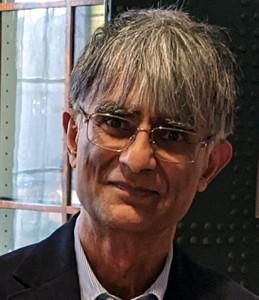
Sir Harshad Bhadeshia is Professor of Metallurgy at the School of Engineering and Materials Science, Queen Mary University of London. A distinguished academic holding Fellowships of the Royal Society (FRS), Royal Academy of Engineering (FREng), and Institute of Materials, Minerals and Mining (FIMMM), his career has been dedicated to advancing the fundamental understanding of metallurgical phenomena with practical industrial applications. His work bridges theoretical developments with real-world engineering challenges in steel technology and sustainable materials design. Professor Bhadeshia's research focuses on the theory of solid-state phase transformations, with particular emphasis on predicting and verifying structural development in complex metallic alloys, especially multicomponent steels. His interests span physical and chemical metallurgy, phase transformations, mathematical modeling, alloy design, and materials algorithms. He has made significant contributions to understanding hydrogen interaction with iron and its compounds, bainite formation, and the development of nanostructured steels with exceptional properties. His work on computational approaches to materials science has led to practical tools for steel design and manufacturing. Analysis of his recent publications reveals a sustained focus on fundamental metallurgical phenomena with practical applications across multiple domains. His research spans steel design for specific applications (rails, welds), phase transformations (bainite, pearlite), hydrogen-related phenomena, and computational materials science. A consistent theme is the integration of theoretical understanding with practical engineering solutions, particularly in addressing challenges related to sustainability, hydrogen embrittlement, and advanced manufacturing techniques like additive manufacturing. Fellow of the Royal Society (FRS) Fellow of the Royal Academy of Engineering (FREng) Fellow of the Institute of Materials, Minerals and Mining (FIMMM) Knighthood for services to metallurgy Extensive publication record spanning decades Development of freely available teaching resources through the Materials Algorithms Project (MAP) Professor Bhadeshia has mentored numerous researchers throughout his career, evident from his extensive collaborative publication record. His work has been supported by significant research grants, particularly in the areas of steel development, phase transformations, and sustainable engineering. He has led major research projects addressing critical challenges in materials science, including hydrogen embrittlement, high-temperature performance of steels, and computational design of advanced alloys. His research group has made substantial contributions to understanding the fundamental mechanisms governing steel behavior under various conditions. Based at Queen Mary University of London, Professor Bhadeshia leads research within the Centre for Sustainable Engineering. His team focuses on metallurgy, particularly steel research, phase transformations, and computational materials science. Current research directions include developing steels with enhanced resistance to hydrogen embrittlement, designing sustainable steel alloys with reduced carbon footprint, and advancing computational methods for predicting microstructure-property relationships. The group maintains strong industry collaborations, ensuring their research addresses real-world engineering challenges while advancing fundamental scientific understanding.
Simon Foster is a Senior Lecturer in the Department of Computer Science at the University of York. His research focuses on formal methods, theorem proving (using tools like Isabelle/HOL and Agda), and the verification of cyber-physical systems. He holds a PhD and MComp from the University of Sheffield. Research Interests: Foster specializes in formal semantics, unifying theories of programming, and functional programming. His work addresses challenges in verifying complex systems, including robotic control software and safety-critical applications. He has contributed to projects like CyPhyAssure and RoboCalc, emphasizing assurance case generation and probabilistic modeling. Recent Work Trends: His recent publications (2022–2025) emphasize scalable verification techniques for cyber-physical systems, probabilistic modeling, and formal verification of robotic systems using Isabelle/HOL. Key themes include hybrid systems theorem proving, assurance case automation, and the integration of formal methods with robotic state machines. Grants & Projects: He led the CyPhyAssure project (2018–2021) and contributed to the H2020 INTO-CPS initiative. His roles include Research Fellowships in safety-critical systems and model-driven architectures. Labs & Teams: Active in the High Integrity Systems group at York, focusing on formal methods for safety-critical systems and collaborative tool development for systems engineering.
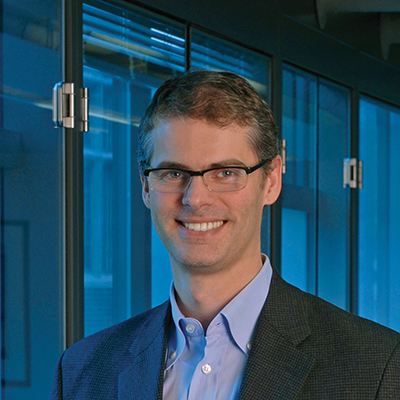
Nate Foster is a Professor of Computer Science at Cornell University and a Visiting Researcher at Jane Street . During the 2023-24 academic year, he served as a Visiting Professor at EPFL in the Data Center Systems Laboratory. His research bridges Programming Languages and Networking , focusing on formal verification, data plane programming, and language design for networked systems. His recent work includes developing symbolic automata for network verification (e.g., Active Learning of Symbolic NetKAT Automata , StacKAT ), creating efficient verifiers like KATch , and advancing type safety in data plane programming (e.g., SafeP4 ). These efforts span formal methods, algorithm optimization, and practical networked systems. Notable scientific awards include: NSF CAREER Award Sloan Research Fellowship ACM SIGCOMM Rising Star Award ACM SIGPLAN Robin Milner Award He actively contributes to PLDI, POPL, OOPSLA, and ICFP, serving as author, editor, and committee member. His GitHub repositories include tools for academic website templates and programming language research codebases.
Brae Webb is an Associate Lecturer in the Faculty of Engineering, Architecture and Information Technology at The University of Queensland. His email is b.webb@uq.edu.au . His research focuses on formal methods, compiler optimizations, and software verification, with contributions to verification frameworks for compiler optimizations and formal semantics of programming language implementations. He has co-authored multiple publications at conferences such as FormaliSE, CPP, and ICFEM, and contributed to editions of the textbook Software Architecture . His work spans theoretical and applied aspects of software engineering, including the use of proof assistants like Isabelle/HOL for verifying term graph optimizations. Recent projects include analyzing GraalVM's intermediate representation and differential testing methodologies for compiler verification frameworks. Brae Webb's publications reflect a commitment to advancing formal verification techniques in compiler design and software systems. His textbook series on software architecture emphasizes practical design principles for scalable software systems.
Paul Cosma is a Postdoctoral Researcher at the Department of Computer Science (DIKU), University of Copenhagen, specializing in the Software, Data, People & Society (SDPS) section. His work focuses on declarative process modeling, formal verification, and explainable AI systems, with strong connections to process mining and Petri net theory. He completed his PhD at the University of Copenhagen's Faculty of Science in 2024 with a thesis on declarative process models as verifiable AI. His research interests center on declarative process modeling and formal verification of complex systems. Cosma develops techniques for improving model simplicity through nested group discovery and creates frameworks like BERMUDA for participatory mapping of domain activities to event data. His work bridges theoretical computer science with practical applications in business process management and AI explainability, emphasizing human-centered design principles where software systems are developed with societal impact in mind. Cosma's publication record shows a clear trajectory in process modeling research, with recent work focusing on transforming Dynamic Condition Response Graphs to Safe Petri Nets (2023) and improving declarative model simplicity (2024). His research demonstrates strong interdisciplinary connections between formal methods, AI verification, and human-computer interaction, particularly in making complex process models accessible and verifiable. Cosma actively collaborates with researchers including Thomas Hildebrandt, Tijs Slaats, and Axel Christfort, primarily within the SDPS section at DIKU. His work receives consistent citations in process mining literature, with his 2023 PETRI NETS paper accumulating 1 citation and his CAiSE 2024 paper gaining 2 Scopus citations. He maintains an ORCID profile (0000-0001-8022-6402) and contributes to open-access research through the university's Pure repository. Based in Sigurdsgade 41, Copenhagen N, Cosma operates within DIKU's collaborative research environment that emphasizes industry partnerships and interdisciplinary work. His recent PhD defense (June 13, 2024) marks his transition from doctoral candidate to postdoctoral researcher, positioning him to expand his contributions to process-aware information systems and verifiable AI.
Benjamin C. Pierce is Henry Salvatori Professor of Computer and Information Science at the University of Pennsylvania, with appointments in the School of Engineering and Applied Science. A Fellow of the ACM, his research spans programming languages, formal verification, and security-privacy technologies. He directs the DeepSpec project on verified systems infrastructure and leads climate computing initiatives. Research interests focus on: Formal methods for reliable software via proof assistants like Coq Bidirectional programming and data synchronization Language-based security and differential privacy Publication trends show consistent contributions to type theory foundations, with recent emphasis on property-based testing methodologies and real-world verification. Articles frequently appear in top PL/SEC venues with practical applications in compilers and secure systems. Scientific Awards: ACM Fellow (systems verification) SIGPLAN Distinguished Educator Award (textbook innovations) Advises graduate students through the Penn PL Club. PI for NSF Expeditions in Sustainable Computing. Leads the VERSE project for verified C code and Unison file synchronizer. Directs the Penn Programming Languages Research Group collaborating with industry partners including Amazon and Microsoft Research.
Amel MAMMAR is a Professor at Telecom SudParis, specializing in formal methods and software verification. Her work focuses on applying the Event-B method to model and verify critical systems such as automotive systems, railway signaling, and cloud applications. She has contributed extensively to the development of formal approaches for ensuring correctness in embedded systems, smart contracts, and security protocols. Her research integrates formal modeling with tools like SAGEMATH for hybrid systems analysis and ProB for policy validation. MAMMAR collaborates on projects involving requirements engineering, safety-critical systems, and access control mechanisms. Her key contributions include Event-B models for automotive exterior lighting systems, railway standards (ERTMS/ETCS), and cloud resource allocation. She has published widely in venues like the International Journal on Software Tools for Technology Transfer and IEEE Transactions, emphasizing formal verification techniques for safety and security. Her work bridges theoretical formal methods with practical applications in industry sectors like transportation and aerospace.
Frans Kaashoek is the Charles Piper Professor in MIT's Department of Electrical Engineering and Computer Science (EECS) and a member of the Computer Science and Artificial Intelligence Laboratory (CSAIL). He leads the Parallel and Distributed Operating Systems (PDOS) group, focusing on secure systems, formal verification, and distributed computing. His work emphasizes crash-safe systems, concurrent programming, and cryptographic security. Education: PhD in Computer Science from Vrije Universiteit Amsterdam (1992), thesis on group communication in distributed systems under Andy Tanenbaum. Research interests include operating systems, networking, programming languages, and computer architecture. Notable projects: FSCQ (verified crash-safe file system), Perennial (framework for verifying concurrent systems), and Noria (high-performance web backend). Awards: ACM SIGOPS Mark Weiser Award (2001), ACM Prize in Computing (2010), National Academy of Engineering membership (2006), and American Academy of Arts and Sciences membership (2012). Publications: Over 150 papers on systems software, verification, and security. Authored textbooks like Principles of Computer System Design: An Introduction and xv6 commentary.
Matthew B. Dwyer is the Robert Thomson Distinguished Professor of Computer Science at the University of Virginia, leading research in software verification, program analysis, and autonomous systems. His work focuses on formal methods for ensuring dependable software, particularly in safety-critical domains like autonomous vehicles. He has advised numerous PhD and Master’s students, many of whom hold academic and industry positions globally. Education: Ph.D. in Computer Science from the University of Massachusetts Amherst, M.S. from UMass Boston, and BSEE from the University of Rochester. Research Interests: Software Verification & Validation, Program Analysis, Formal Methods, Neural Network Testing, Safety-Critical Systems. His lab, the Laboratory for Engineering Safe Software, develops tools like DNNV for verifying deep neural networks. Awards: ACM Fellow (2019), IEEE Fellow (2013), multiple test-of-time and impact paper awards from ISSTA, ICSE, and SIGSOFT conferences. Service: Program chair for ICSE (2022), FSE (2004), and other top venues; editorial roles at IEEE TSE, ACM TOPLAS, and Springer STTT. Co-developed property specification patterns for model checking, widely used in industry and academia.
Jim Buffenbarger is an Associate Professor in the Department of Computer Science at Boise State University. He has maintained a continuous teaching presence at the university since at least 1995, with course schedules documented through Spring 2025. His educational background includes: Ph.D. in Computer Science from the University of California, Davis (1990) M.S. in Computer Science from San Jose State University (1985) B.S. in Computer Science from California State University, Hayward (1982) Dr. Buffenbarger's research spans three decades with a clear progression from theoretical foundations to practical applications. His early work focused on formal methods for specifying and verifying concurrent systems, as evidenced by his 1990 dissertation 'Equational Specification and Verification of Concurrent Systems.' Over time, his research evolved toward practical software development tools, particularly in the area of build systems. His most significant contribution appears to be Amake, an enhanced build system that improves upon GNU Make with automatic dependency analysis and target caching capabilities. His recent publications continue this trajectory with work on LLVM and GCC translation systems. His publication record shows consistent productivity from 1990 through 2023, demonstrating a logical progression from theoretical computer science to practical software engineering tools. The recurring themes in his work include dependency management, build automation, and software configuration management. Dr. Buffenbarger regularly teaches CS 354 (Programming Languages), CS 452/552 (Operating Systems), and CS 472/572 (Object-Oriented Design Patterns). His teaching portfolio also includes Software Engineering, Programming Language Translation, and Ethical Issues in Computing, reflecting his broad expertise across computer science disciplines.