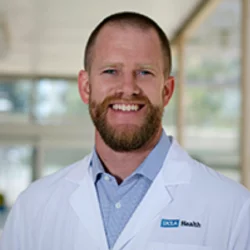
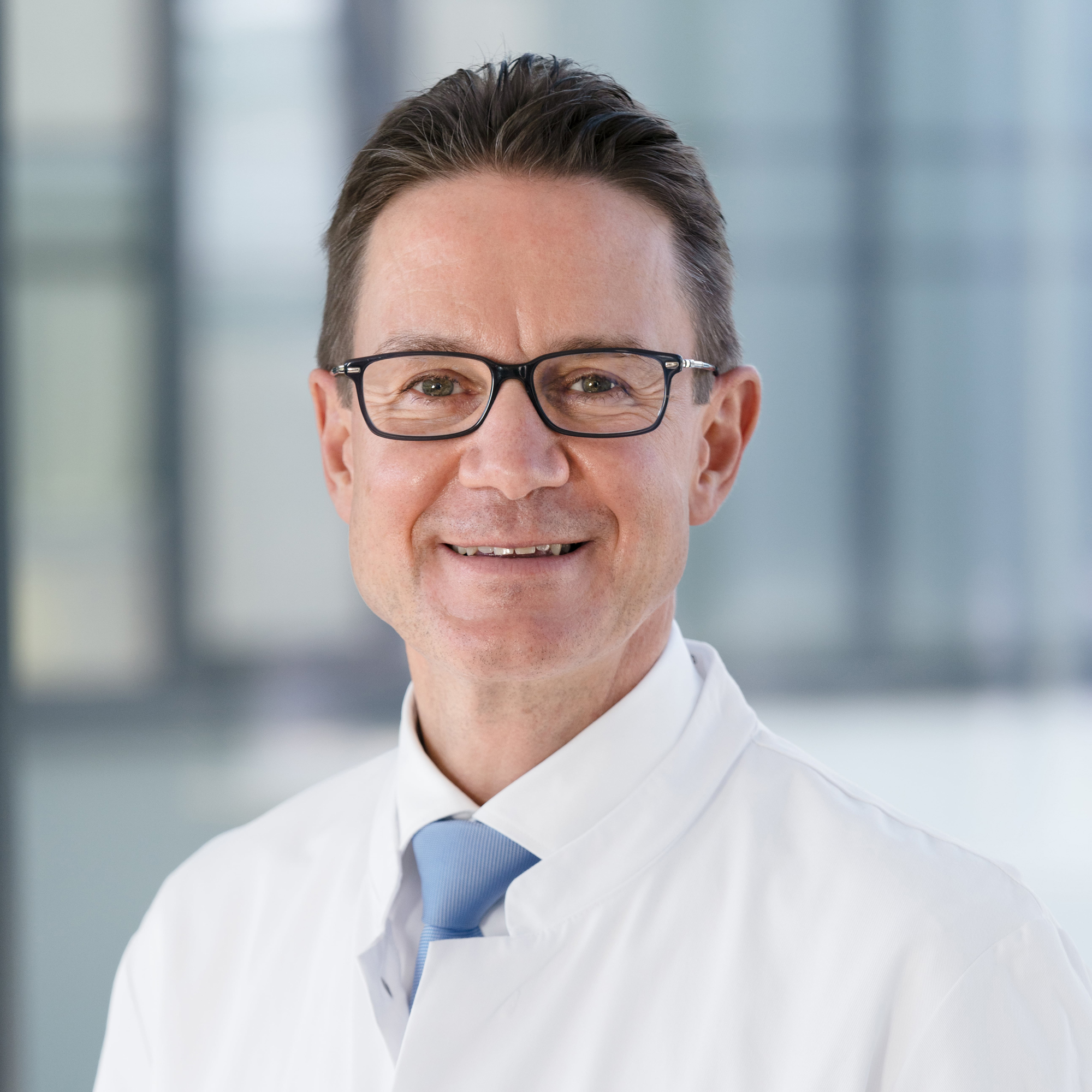
Thomas Vondriska is a Professor in the Departments of Anesthesiology & Perioperative Medicine and Physiology at the David Geffen School of Medicine, UCLA. His research focuses on epigenomic mechanisms driving cardiovascular disease and heart failure. He leads interdisciplinary teams investigating chromatin structure, gene expression dynamics, and environmental-genetic interactions in disease susceptibility. Research Interests: Epigenomic regulation of heart failure, chromatin architecture, cardiac hypertrophy, and translational epigenetic medicine. Active NIH grants include studies on small molecule therapies targeting chromatin, epigenomic resilience, and non-coding RNA mechanisms. Publications emphasize systems biology approaches to cardiac epigenomics, including single-cell transcriptomics and chromatin conformation analysis. Key topics include fibrotic remodeling, nuclear mechanics, and circadian histone turnover in heart development. Funding: Principal Investigator on multiple NIH grants (R01, R21) totaling over $10M since 2012 Labs: Epigenomic Cardiac Biology Lab at UCLA
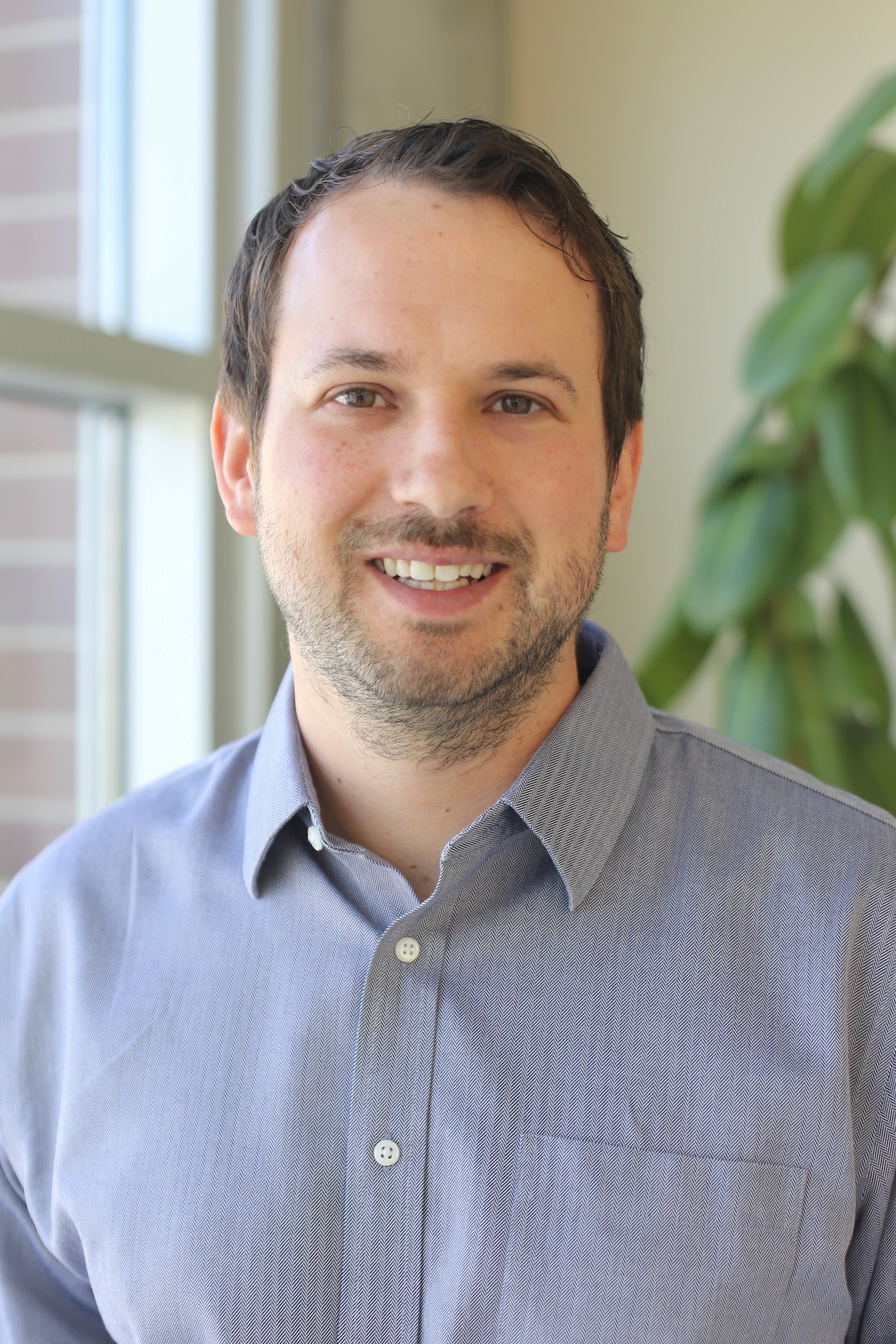
Dr Harrison Stubbs is a Clinical Lecturer in Respiratory Medicine at the University of Glasgow , affiliated with the Clinical Research Gartnavel. His research focuses on pulmonary hypertension (PH), lung cancer imaging, and cardiopulmonary physiology. Research Interests Development of digital health tools for PH patient inclusion Physiological mechanisms in precapillary PH Advanced imaging techniques for lung cancer diagnosis Risk stratification models in chronic thromboembolic PH NT-proBNP biomarker applications in PH diagnostics Publications Overview His recent publications (2021-2025) demonstrate expertise in PH pathophysiology, digital health implementation, and lung cancer imaging advancements. Key themes include hemodynamic interactions, remote diagnostic tools, and precision medicine applications. Contact Email: Harrison.Stubbs@glasgow.ac.uk ORCID: 0000-0003-1786-342X
Luigi Pannone is an External employee in the Clinical Sciences department at Brussels University Hospital, specializing in Heart Rhythm Research and Cardiovascular Diseases. He serves as a Physician in Heartrhythmmanagement, contributing significantly to the field of cardiac electrophysiology with a focus on arrhythmia management and ablation techniques. His primary research interests center around cardiac electrophysiology, with particular focus on Brugada Syndrome, Atrial Fibrillation, Catheter Ablation techniques, and Heart Rhythm Disorders. His work has significantly advanced understanding of arrhythmia mechanisms and treatment approaches, particularly in the areas of pulsed field ablation technology and diagnostic techniques for inherited arrhythmia syndromes. He has published extensively on topics ranging from genetic variants in Brugada Syndrome to novel ablation catheter technologies and their clinical applications. Dr. Pannone's recent research output shows a strong emphasis on innovative ablation technologies, particularly pulsed field ablation, with numerous publications examining its safety, efficacy, and applications across various arrhythmia substrates. His work spans from basic mapping studies to large multicenter registries evaluating real-world clinical outcomes. Paul Dudley White International Scholar Award-Belgium (2023) Dr. Pannone serves as an Editor for Frontiers in Cardiovascular Medicine and has contributed to 181 research outputs with 1057 citations and an h-index of 17. His research collaborations span multiple institutions, reflecting his standing in the international cardiac electrophysiology community. His work on the Affera Ventricular Arrhythmia Ablation (AVAAR) Registry and other multicenter studies demonstrates his leadership in clinical research. Dr. Pannone is actively involved in cutting-edge research on heart rhythm management, particularly focusing on novel ablation technologies and their clinical implementation. His work bridges the gap between technological innovation and clinical practice, with a particular emphasis on improving outcomes for patients with complex arrhythmias.
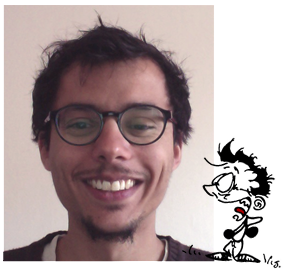
Nicolas Duchateau is an Associate Professor at Université Lyon 1 and researcher at the CREATIS lab in Lyon, France. He is also a Junior member of the prestigious Institut Universitaire de France (IUF) and serves as Associate Editor for the Neurocomputing journal. His academic career includes positions at Universitat Pompeu Fabra in Barcelona and INRIA Epione in Sophia-Antipolis, with his current role at Polytech Lyon's Biomedical Engineering department since 2016. His research focuses on characterizing diseases from medical imaging populations, with methodological development centered on statistical atlases and machine learning approaches to represent populations. On the applicative side, he concentrates on cardiac function and imaging modalities such as echocardiography and magnetic resonance. His work spans computational anatomy, pattern statistics, representation learning, manifold learning, auto-encoders, information fusion, cardiac imaging, shape and deformation analysis, risk stratification, and image synthesis. Duchateau's recent publications reveal strong trends in multimodal data fusion, particularly combining echocardiography with clinical records for patient stratification. He has made significant contributions to representation learning for cardiac population analysis, with increasing emphasis on diffusion models, uncertainty estimation, and domain adaptation techniques. His work bridges deep learning methodologies with clinical cardiology applications, focusing on interpretable AI solutions for cardiac function assessment. Junior Member of Institut Universitaire de France (2021) PhD prize for knowledge transfer from Universitat Pompeu Fabra (2014) Young Investigator Award at Euroecho conference (2010) Duchateau actively supervises numerous PhD and Master's students, including Anita Salvador, Thierry Judge, Pierre-Elliott Thiboud, and Romain Deleat-Besson. He has secured major research funding including a €75k grant from the Institut Universitaire de France (2021-2026), a €251k French ANR Young Researchers grant for the "MIC-MAC" project (2019-2024), and a €139k grant from the Fédération Française de Cardiologie for the "MI-MIX" project (2020-2023). He leads a vibrant research team at CREATIS lab focused on medical image analysis, where his group develops computational approaches to characterize cardiac diseases through population analysis. The team works at the intersection of machine learning, medical physics, and clinical cardiology, with ongoing projects spanning echocardiography analysis, MRI processing, synthetic data generation, and clinical decision support systems.
Ana Ubeda Tikkanen, MD, PhD is an Assistant Professor of Physical Medicine and Rehabilitation at Harvard Medical School and a Pediatric Rehabilitation Medicine Doctor in the Orthopedics and Sports Medicine Department at Boston Children's Hospital. She specializes in pediatric rehabilitation with a focus on cardiac rehabilitation for children with congenital heart disease, heart transplants, and VADs. Dr. Ubeda Tikkanen has clinical appointments at multiple Boston Children's Hospital locations including Boston, Lexington, and Charlestown. Dr. Ubeda Tikkanen received her medical degree from Universidad Autónoma de Madrid in 2004 and completed her residency at Hospital Gregorio Marañón in 2009. She earned her PhD from Universidad Complutense of Madrid in 2014. Her fellowship training includes Research Fellowships in Pediatric Cardiology & Rehabilitation at Hospital Gregorio Marañón (2010) and Boston Children's Hospital (2012), Clinical Fellow in Pediatric Cardiac Rehabilitation at Boston Children's Hospital (2013), and Clinical Fellow in Pediatric Rehabilitation at Spaulding Rehabilitation Hospital (2015). Her research interests focus on improving functional outcomes and quality of life for children with disabilities, particularly those with congenital heart disease, heart transplants and VADs. She has benefited from clinical training in both Europe and the US and created the first Pediatric Cardiac Rehabilitation Program in the world at the Hospital Gregorio Marañon of Madrid before joining Boston Children's Hospital. Her clinical practice emphasizes personalized, multidisciplinary cardiac rehabilitation programs for children with cerebral palsy and congenital heart disease. Analysis of Dr. Ubeda Tikkanen's publications reveals a strong focus on pediatric cardiac rehabilitation across multiple dimensions. Her work spans from systematic reviews establishing foundational knowledge to clinical trials evaluating interventions, and detailed physiological studies examining exercise parameters in specific cardiac conditions. A clear progression is evident from early work on basic exercise testing to more recent research on comprehensive rehabilitation program components. Her research consistently emphasizes functional outcomes and quality of life improvements for pediatric cardiac patients. Dr. Ubeda Tikkanen's professional activities include developing clinical pathways for pediatric cardiac rehabilitation across multiple institutions. She has created innovative rehabilitation protocols that have been adopted internationally, beginning with her work establishing the first Pediatric Cardiac Rehabilitation Program. Her clinical approach integrates rehabilitation medicine with pediatric cardiology to address the comprehensive needs of children with complex cardiac conditions throughout their developmental trajectory.
Dr. Brandon Peterson is an Associate Professor in the Department of Medicine, Division of Cardiology at Penn State Heart and Vascular Institute, College of Medicine, Penn State University. He currently serves as the College of Medicine Director of the Phase 3 UME-GME Transition, facilitating the transition from undergraduate to graduate medical education for medical students. Dr. Peterson's research focuses on cardiology with particular expertise in echocardiography, right ventricular strain assessment, pulmonary embolism risk stratification, tricuspid regurgitation management, and cardiac evaluation for bariatric surgery patients. His work contributes significantly to improving diagnostic accuracy and treatment approaches for various cardiovascular conditions, with research topics spanning myocardial infarction, stress testing, coronary computed tomography angiography, and right ventricular strain analysis. His recent publications demonstrate a strong focus on right ventricular function assessment in pulmonary embolism, patient-centered treatment approaches for tricuspid regurgitation, volume status evaluation in heart failure management, and appropriate cardiac testing protocols before bariatric surgery. These studies reflect his commitment to evidence-based cardiology practice and improving patient outcomes through precise diagnostic techniques and personalized treatment strategies. Dr. Peterson has received notable recognition for his teaching excellence: Dean's Award for Excellence in Teaching (2020) Junior Faculty Teaching Award (2023) As Director of the Phase 3 UME-GME Transition, Dr. Peterson plays a pivotal role in medical education, guiding students through the critical transition from undergraduate medical education to residency. His clinical expertise and research in cardiology complement his educational responsibilities, providing students with valuable insights into current cardiovascular research and clinical practice. With an h-index of 234, his scholarly impact in the field of cardiology is substantial, reflecting both the quality and influence of his research contributions.
Dr. Faraz Pathan is a Senior Lecturer at Sydney Medical School and a cardiologist specializing in cardiovascular imaging. Based at Nepean Hospital, he serves as Head of Cardiac Imaging and Cardiac Research within the Cardiology Department. University of New South Wales (2006), First Class Honours His research focuses on precision phenotyping of cardiovascular pathophysiology using Cardiac Magnetic Resonance (CMR), atrial strain as a cardiovascular outcome predictor, appropriate cardiac imaging use, heart failure readmission reduction, and health economics applications in cardiology. Key trends in his 2021-2025 publications include multimodality imaging techniques, atrial strain analysis, chemotherapy-related cardiotoxicity, and obesity-related cardiovascular imaging challenges. Collaborative projects span institutions like Goethe Institute Frankfurt and Menzies Institute for Medical Research. Scientific recognition includes the Ten of the Best research award from Menzies Institute for Medical Research. Grants highlight his work in microvascular restoration (REDUCE trial), obesity-cardiovascular interactions, and cardiac inflammation mapping. He leads a nine-researcher team in echocardiography quality improvement, atrial strain analysis, heart failure protocols, and health economics studies. International collaborations with Goethe Institute Frankfurt and Menzies Institute for Medical Research demonstrate his global research impact, particularly in experimental cardiovascular imaging and translational studies.
Matthias Friedrich, MD, is a Professor in the Department of Medicine, Faculty of Medicine and Health Sciences at McGill University, and serves as a Senior Scientist at the Research Institute of the McGill University Health Centre (RI-MUHC) at the Glen site. He leads the Cardiovascular Magnetic Resonance (CMR) Research Centre within the Cardiovascular Health Across the Lifespan Program at the Centre for Translational Biology. Dr. Friedrich's research focuses on novel techniques for optimizing and simplifying clinical cardiovascular magnetic resonance (CMR) protocols that require minimal interaction and reduce the need for contrast agents or stress protocols. His work includes the application of novel CMR image reconstruction techniques, machine learning, automated scanning, and the validation of novel imaging biomarkers in clinical studies. Several current projects explore new options for assessing coronary vascular function using breathing maneuvers instead of traditional pharmacological vasodilators or stress protocols as vasoactive triggers. Dr. Friedrich's recent publications demonstrate a strong emphasis on advancing oxygenation-sensitive CMR techniques and applying them to understand myocardial ischemia, myocarditis, and various cardiomyopathies. His work increasingly integrates artificial intelligence and machine learning approaches to enhance diagnostic capabilities, with recent studies focusing on automated detection of hypertrophic cardiomyopathy and other cardiac conditions using deep learning analysis of CMR images. Fellow of the European Society of Cardiology (FESC) Fellow of the American College of Cardiology (FACC) Dr. Friedrich's research program receives significant support from the Family Courtois Foundation through the McGill University Health Centre Foundation. He maintains close collaborations with invasive and non-invasive cardiology, cardiac surgery, and radiology teams at the MUHC, as well as active collaborations with other hospitals in Montreal and academic centers worldwide, including cohort research with the Canadian Alliance for Healthy Hearts and Minds. The CMR Research Centre at McGill University Health Centre, led by Dr. Friedrich, has access to two clinical MRI scanners (Siemens Skyra 3.0T, GE Artist 1.5T) and full-time access to a dedicated MRI system (GE Premier 3.0T) for CMR research. The team is actively developing and validating novel imaging techniques that aim to significantly change diagnostic cardiology practice through improved accessibility, safety, and diagnostic accuracy.
Gregory Ducker is an Assistant Professor of Biochemistry at the University of Utah , specializing in cancer metabolism, cardiovascular disease, and lipidomics. His research integrates mass spectrometry with genetic engineering to quantify metabolic fluxes in vivo. Education : B.A. from Carleton College, Ph.D. from University of California, Berkeley. Research interests include: Metabolic reprogramming in liver cancer and diabetes Role of mitochondrial pyruvate and serine metabolism in disease Chemical biology approaches to target metabolic vulnerabilities His recent publications focus on one-carbon metabolism , mitochondrial transporters (e.g., SLC7A5, MPC), and metabolic crosstalk between organs. While no explicit student lists or awards are mentioned, his lab emphasizes interdisciplinary science at the intersection of chemical biology and human disease.
Kanokwan Bunsawat (PhD) is a researcher affiliated with the Division of Geriatrics in Internal Medicine. Her work focuses on cardiovascular physiology, aging, and vascular dysfunction in chronic diseases. Education: PhD in Physiology from University of Utah School of Medicine, Fellowship in Geriatrics, and Professional Medical Fellowship at University of Illinois at Chicago. Research interests include arterial stiffness , endothelial function , sympathetic nervous system , renal function , and exercise hemodynamics , particularly in heart failure subtypes (HFpEF, HFrEF) and vulnerable populations like those with Down syndrome or spinal cord injury. She has published extensively on statin therapy, antioxidant interventions (BH4, L-citrulline), and racial/socioeconomic disparities in vascular health. Recent work explores evolutionary insights from marine mammals and sex differences in cardiovascular responses. Key article trends (2020-2025) highlight microvascular dysfunction in HFpEF , sympathetic dysregulation , oxidative stress as a therapeutic target, and health disparities in cardiometabolic disease. Collaborations span institutions including University of Utah, University of Illinois, and international teams.
Sara Hungerford is an Adjunct Senior Lecturer at Sydney University's Northern Clinical School, affiliated with the Faculty of Medicine and Health . Her research focuses on cardiovascular diseases, particularly heart failure , pulmonary hypertension , and vascular hemodynamics , with expertise in cardiac imaging and valvulo-arterial impedance . Research Interests : Advanced heart failure and cardiogenic shock Pulmonary hypertension pathophysiology Vascular afterload and cardiac efficiency Cardiac imaging modalities (MRI, echocardiography) Valvulo-arterial impedance in aortic stenosis Prognostic biomarkers in transplant patients Recent Articles : Her 2025-2024 publications analyze hemodynamic modeling in heart failure, vascular afterload dynamics, and right ventricular dysfunction prediction. Key trends include non-invasive load estimation and post-procedural outcomes in valvular heart disease. Scientific Awards : National Heart Foundation of Australia Postdoctoral Fellow Collaborations : Dr. Hungerford works with leading cardiovascular researchers (e.g., Kapur, Burkhoff, Adji) to advance understanding of transcatheter valve interventions and heart failure mechanisms .
Tino Ebbers is a Professor in Physiological Measurements at Linköping University, affiliated with the Department of Health, Medicine and Caring Sciences and the Division of Diagnostics and Specialist Medicine. He holds leadership roles, including Chair of the Strategic Area Circulation and Metabolism (LiU-CircM) and membership on the Faculty of Medicine and Health Sciences Board. His research focuses on cardiovascular imaging and modeling, emphasizing non-invasive assessment of blood flow dynamics and tissue characteristics using MRI and CT technologies. Key projects include HEART4FLOW and the Center for Medical Image Science and Visualization (CMIV). Education: PhD (Biomedical Engineering, 2001), MSc (Electrical Engineering, 1996). Previous roles include Visiting Professor at UCSF (2015) and Predevelopment Engineer at Philips Medical Systems (2002–2004). Research interests span 4D flow MRI, computational fluid dynamics, and translational imaging techniques for cardiovascular disease diagnostics. He received the 2024 Onkel Adam Prize for his contributions to medicine-technology integration in cardiovascular research. Teaching roles include examiner for courses in physiological pressures, biomedical engineering, and electrical engineering. His work bridges clinical needs with technological innovation, aiming to improve diagnostic accuracy and patient care through advanced imaging and modeling.
Professor Anil Bharath holds the role of Professor of Biologically-Inspired Computation & Inference in the Department of Bioengineering at Imperial College London. He serves as Academic Director of Imperial Global: Singapore and co-leads the IN-CYPHER research program on AI-driven healthcare security. His research focuses on machine learning, deep networks, and biomedical applications. He earned his BEng from UCL and PhD from Imperial College, followed by roles including President of the City and Guilds College Association (2022-2024). Research Interests: Machine learning, neural networks, medical imaging, and biologically-inspired computation. Notable contributions include 2D steerable filters for shape detection (1998), Bayesian marginalisation in early computer vision, and deep learning for cardiac MRI analysis. He co-founded Cortexica Vision Systems (acquired by Zebra Technologies in 2019), applying biological neuron models to visual search technology. Labs & Affiliations: Director of the BICI Lab, affiliated with the Data Science Institute, Centre for Neurotechnology, and multiple healthcare networks. His work spans interdisciplinary projects in AI for healthcare, cardiovascular engineering, and medical device innovation. Publications: Recent work emphasizes AI in cardiology (e.g., MRI analysis for mitral regurgitation, aortic stenosis detection) and synthetic data privacy. His research bridges computational models with clinical interpretability, addressing challenges in medical imaging efficiency and diagnostic accuracy.
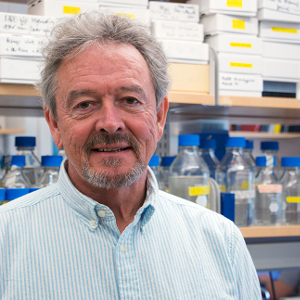
Malcolm Maden is a Professor in the Department of Biology, College of Liberal Arts and Sciences at the University of Florida. He is based in Bartram Hall and the Cancer & Genetics Research Complex in Gainesville, Florida. Research Interests Developmental and regenerative biology of limb, lung, skin, and nervous system Retinoic acid signaling in pattern formation and regeneration Comparative regeneration using axolotls and spiny mice (Acomys cahirinus) Scar-free wound healing and multi-tissue regeneration in mammals His overarching hypothesis is that regeneration recapitulates development and can be enhanced by re-activating embryonic signaling pathways, especially those mediated by retinoic acid. Publication Trends From 2020 to 2025 Maden has published extensively on the spiny mouse as a novel mammalian model for regeneration. His articles explore spinal cord recovery, cardiac repair, skin and appendage regeneration, neural stem cell abundance, and aging-related changes. A consistent theme is the comparison between scar-forming (mouse) and scar-free (spiny mouse) responses, illuminating molecular targets for therapeutic intervention. Laboratory & Affiliations Principal Investigator, Maden Laboratory, University of Florida Affiliate, Cancer & Genetics Research Complex Member, College of Liberal Arts and Sciences
Professor Johann Bauersachs serves as Full Professor and Director of the Department of Cardiology and Angiology at Hannover Medical School (MHH) since 2010, with a distinguished career in cardiovascular research and clinical cardiology. He is a Fellow of the American Heart Association, European Society of Cardiology, and Heart Failure Association, and holds leadership positions including Chair of the HFA Committee on Peripartum Cardiomyopathies and Spokesperson of the DFG-funded Clinical Research Group KFO 311. His primary research interests focus on acute and chronic heart failure , acute coronary syndromes , left ventricular healing and remodeling , and the pathophysiology and treatment of peripartum cardiomyopathy . His work particularly emphasizes aldosterone and mineralocorticoid receptor-mediated mechanisms and the role of non-coding RNAs in cardiovascular disease. With over 1,133 publications and impressive H-indices (107 in Web of Science, 135 in Google Scholar), his recent research has centered on microRNA-based therapies like the HF-REVERT trial with CDR132L and the DIGIT-HF study investigating digitoxin for advanced heart failure. His most recent publications (2023-2024) demonstrate a clear trajectory toward translational research bridging molecular mechanisms with clinical applications, particularly in heart failure management. Key themes include the synergistic effects of SGLT2 inhibitors with mineralocorticoid receptor antagonists, novel therapeutic approaches for peripartum cardiomyopathy, and innovative diagnostic and treatment strategies for heart failure with preserved ejection fraction. Highly cited researcher in Clinical Medicine (Clarivate, 2023) ScholarGPS Highly Ranked Scholar (2022) Silver Badge of Honour, German Cardiac Society (2021) Paul-Morawitz-Award, German Cardiac Society (2018) Bernard and Joan Marshall Distinguished Investigator Award (2012) Parmley-Award, American College of Cardiology (2006) As Principal Investigator of multiple clinical trials including HF-REVERT and DIGIT-HF, Professor Bauersachs has secured significant funding from organizations including the Deutsche Forschungsgemeinschaft (DFG) and the Federal Ministry of Education and Research. His laboratory at MHH (Building I3) focuses on cardiac wound healing and remodeling after ischemia, with particular emphasis on mineralocorticoid receptor function in myeloid cells. He also serves in editorial capacities including Deputy Editor of the European Heart Journal and Associate Editor of Cardiovascular Research, while maintaining active advisory roles with Cardior Pharmaceuticals and Heartbeat.bio.