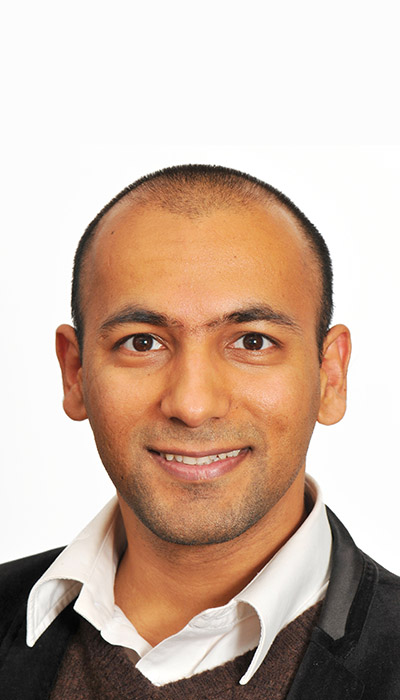
Amirhossein ADAVOUDI JOLFAEI is a Postdoctoral Researcher at the University of Luxembourg's Faculty of Science, Technology and Medicine (FSTM), Department of Computer Science. His work focuses on cybersecurity, intelligent transportation systems, and blockchain technology, with a particular emphasis on privacy-preserving mechanisms in IoT, vehicular networks, and electronic toll systems. His research explores interdisciplinary areas including federated learning for 6G-V2X networks, efficient cryptographic protocols (e.g., EO-PSI-CA), and scalability challenges in blockchain-based healthcare systems. Recent studies highlight critical gaps in existing privacy-preserving protocols through case analyses of real-world infrastructures like Brisbane's toll collection system. Amirhossein is affiliated with the Maison du Nombre research facility in Luxembourg and can be reached at amirhossein.adavoudi@uni.lu . His work bridges theoretical cryptography with practical applications in transportation, healthcare, and IoT, addressing both technical and systemic security challenges.
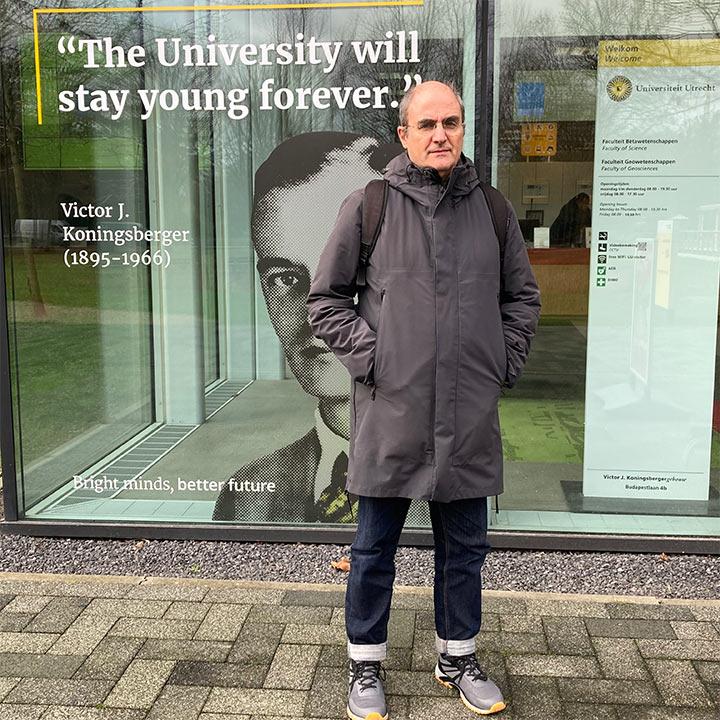
Giovanni Stea is an Associate Professor at the Department of Information Engineering within the College of Engineering at the University of Pisa. His research focuses on Quality of Service, resource allocation in wireline and wireless networks, performance evaluation through simulation and analytical techniques, and traffic engineering. Dr. Stea's research spans network calculus, wireless systems, and telecommunications infrastructure. His recent work demonstrates strong emphasis on 5G/6G networks, AI integration in telecommunications, and optimization of network performance. Key trends include: Advancements in network calculus methodologies Innovations in mobile edge computing applications Development of trustworthy AI systems for next-generation networks Cross-disciplinary approaches combining telecommunications and machine learning His publications consistently address computational efficiency in network analysis and practical implementations of theoretical models in real-world telecommunications environments.
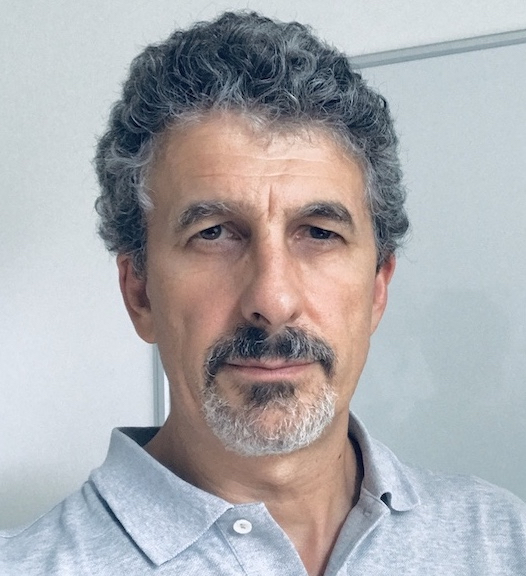
Dr. Nghi H. Tran is a Professor in the Department of Electrical and Computer Engineering at the University of Akron's College of Engineering. He joined the university in 2011 and serves as the ABET coordinator for the ECE department, with his office located in ASEC 352 and laboratory in ASEC 362. His educational background includes: Ph.D. in Electrical & Computer Engineering, University of Saskatchewan, Canada (2008) M.Sc. in Electrical & Computer Engineering, University of Saskatchewan, Canada (2004) B.Sc. in Electrical Engineering, Hanoi University of Technology, Vietnam (2002) Dr. Tran's research focuses on Communication and information theories , Wireless communications , Energy-efficient wireless networks , and Security . His work bridges theoretical frameworks with practical implementations in next-generation wireless systems, emphasizing resource optimization and robust security protocols. He has received the prestigious NSERC Postdoctoral Fellowship and holds IEEE Senior Member status. Professional service highlights: Editor, IEEE Transactions on Communications Senior Editor, IEEE Communications Letters Editor, IEEE Transactions on Vehicular Technology Editor, IEEE Communications Letters Editor, Elsevier Physical Communication Dr. Tran's research has been funded by the National Science Foundation, Office of Naval Research, Air Force Research Laboratory, and industry partners. With over 160 publications, he also consults for the satellite industry and teaches core courses including Computer Networks, Signals and Systems, Information Theory, and Error Control Coding.
Dr. Daniel Dai is an Assistant Professor in the Department of Mathematics, Physics and Electrical Engineering at Northumbria University. His research focuses on advanced control systems, industrial IoT, and synchronization technologies. He holds a PhD awarded in December 2008. He is actively supervising PhD students and leading innovative projects in smart EV charging, reinforcement learning applications, and mission-critical IoT systems. Education: PhD (Awarded 2008) His research interests include real-time synchronization protocols, fault-tolerant sensor networks, and AI-driven energy systems. Recent work emphasizes robust time synchronization for industrial IoT and dynamic scheduling algorithms for platoon systems. He has published extensively in top journals like IEEE Transactions on Industrial Informatics and IEEE Internet of Things Journal, with over 1700 citations. Key projects include EVOLVE (EU-funded optimization of EV charging infrastructure) and ROARS (CubeSat-based atmospheric research). He collaborates internationally on topics like delay distribution management and chirp modulation sensors. Awards: None explicitly stated Current grants include EU projects focusing on vehicular communications and space atmospheric studies. He advises on 4 core PhD topics: AI for EVs, reinforcement learning control, time synchronization, and platoon system co-design.
Professor Amit Mehta is a leading academic in Electronic and Electrical Engineering at Swansea University's School of Aerospace, Civil, Electrical and Mechanical Engineering. He specializes in antenna design, wireless communication systems, and space technologies. His research focuses on 6G/5G, AI-driven antennas, space communications, and IoT applications. He has collaborated with major organizations like Airbus, BAE Systems, and the European Space Agency. With over 200 publications and 7 patents, his work emphasizes practical applications, such as beam steering antennas and low SAR smartphone solutions. Prof. Mehta leads the Smart Antenna and Communications Laboratory, mentoring over 100 students. His contributions include reconfigurable antennas for high-throughput networks and interference suppression systems. He is a frequent keynote speaker and actively engages in industry-academia partnerships.
Dr Ahmad Taha is a Lecturer in Autonomous Systems and Connectivity at the James Watt School of Engineering, University of Glasgow. He holds roles as an academic advisor to the Commonwealth Scholarship Commission and sits on the Glasgow Retrofit Advisory Board, focusing on energy efficiency in Scottish housing. His research centers on cyber-physical systems for energy management and digital healthcare, with a focus on smart energy systems, IoT-enabled healthcare, and AI-driven solutions. Education: Not explicitly stated in the text, but expertise spans UK, Egypt, and China institutions. Affiliations: Royal Academy of Engineering (Global Talent scheme), UK Young Academy, International Science Council (ISC) Global Roster of Experts. Research interests include smart energy systems, energy-conscious networks, and healthcare technologies. His work integrates AI and IoT for applications like contactless health monitoring, radar-based activity detection, and sustainable urban systems. Recent projects explore virtual power plants, 6G-enabled healthcare, and blockchain-based vehicular security. Notable achievements include contributions to £19M+ research grants and publications in Energy Reports , IEEE Sensors Journal , and Frontiers in Communications and Networks . Awards include FHEA and Royal Academy recognition. Grants and advising span energy policy, autonomous systems, and smart housing. Collaborations include NHS hospital energy studies and precision agriculture 6G use-cases. Labs/Teams: Involved in Glasgow’s Cyber-Physical Systems and Digital Twins initiatives, along with multi-institutional projects on net-zero carbon and 6G applications.
Panos J. Antsaklis is the H. Clifford and Evelyn A. Brosey Professor of Electrical Engineering at the University of Notre Dame, with concurrent appointments in the Department of Computer Science and Engineering and the Department of Applied and Computational Mathematics and Statistics. He is a leading figure in systems and control theory, with a sustained focus on autonomy, cyber-physical systems, and networked control. His research interests center on Cyber-Physical Networked Embedded Systems, hybrid and discrete event dynamical systems, and the quest for autonomy in engineered systems. He investigates control strategies for complex, intelligent, and reconfigurable systems using mathematical models and data, with applications in transportation, manufacturing, power systems, and communication networks. His recent work emphasizes passivity, dissipativity, and passivity indices as foundational tools for robust and resilient design. The 15 most recent publications highlight a strong trend in decentralized and distributed control of networked systems, particularly vehicular platoons and supply chains, using dissipativity-based methods and topological co-design. There is a growing integration of machine learning (e.g., graph neural networks) and formal methods (e.g., signal temporal logic) with classical control theory, reflecting the interdisciplinary nature of modern cyber-physical systems. His scientific awards include: IEEE Fellow (1991) IFAC Fellow (2010) AAAS Fellow (2011) IEEE Third Millennium Medal (2000) Brown University Engineering Alumni Medal (2006) University of Lorraine Honorary Doctorate (2012) Notre Dame Faculty Award (2013) Notre Dame Research Achievement Award (2020) Antsaklis has played a pivotal role in the control systems community, serving as Editor-in-Chief of the IEEE Transactions on Automatic Control (2010–2017) and President of the IEEE Control Systems Society (1997). He has supervised numerous PhD students and authored over 600 publications, including foundational textbooks on linear and hybrid systems. He has also been involved in high-level advisory roles, such as on the NSF Cyber-Physical Systems PI Meeting and the President’s Council of Advisors for Science and Technology (PCAST). He leads the Antsaklis Group at Notre Dame, which focuses on autonomy, control, and resilience in networked systems. The group is active in both theoretical development and practical applications, contributing to national initiatives on control for societal-scale challenges.
Truls Nyberg is an Industrial Postdoc at TRATON Group, affiliated with the Division of Robotics, Perception and Learning (RPL) at KTH Royal Institute of Technology. His research focuses on foundation models and vision-language models for decision-making and motion planning in autonomous vehicles, addressing critical challenges in occlusion handling and risk assessment. His academic background includes: PhD in Computer Science (Robotics, Perception and Learning) from KTH Royal Institute of Technology (2025), with thesis "Mind the Unknown: Risk- and occlusion-aware motion planning for autonomous vehicles" supervised by Jana Tumova and co-supervised by Patric Jensfelt MSc in Control and Information Systems from Linköping University BSc in Applied Physics and Electrical Engineering from Linköping University Nyberg's research centers on autonomous driving systems where occlusions create safety risks. He develops risk-aware motion planning algorithms using sequential reasoning about hidden objects, vehicle-to-everything (V2X) communication, and foundation models to enhance decision-making in complex traffic. His work bridges theoretical robotics with industrial applications, emphasizing real-world safety specifications and uncertainty handling in urban and highway scenarios. Analysis of his publications reveals a clear trajectory from fundamental risk-aware planning (2021) to advanced occlusion reasoning using V2X (2024). His research consistently targets safety-critical gaps in autonomous driving, with growing emphasis on cooperative perception and language-integrated vision models. Key trends include formal safety guarantees, real-time contingency planning, and leveraging hidden object predictions for proactive vehicle control. Nyberg was funded by the Wallenberg AI, Autonomous Systems and Software Program (WASP) during his doctoral studies. While no current student advising is documented, his industry-academia role at TRATON Group demonstrates strong collaboration between KTH and automotive manufacturing. His research directly addresses industrial challenges in commercial vehicle automation. As part of KTH's Robotics, Perception and Learning division, Nyberg contributes to Sweden's leading autonomous systems research environment. His work leverages state-of-the-art robotics labs and industry partnerships to translate academic innovation into practical solutions for next-generation autonomous vehicles.
Miguel Mosteiro is a Professor and Chair of the Computer Science Department at Seidenberg School of Computer Science and Information Systems, Pace University. He earned his PhD and MS in Computer Science from Rutgers University and holds a Bachelor of Engineering in Electronics from Universidad Tecnologica Nacional, Argentina. Research Interests Theoretical and experimental algorithms Distributed computing in constrained environments Machine learning and game theory applications Crowd/cloud computing and radio networks His recent publications focus on distributed algorithms for anonymous networks (2024), vehicular networks (2024), and information dissemination in wireless systems (2022-2023). He co-authored the ICALP 2018 best paper and served as keynote speaker at Fun with Algorithms 2022. Scientific Awards 2016 Faculty Research Mentor of the Year (Kean University) 2018 ICALP Best Paper Award 2022 Fun with Algorithms Keynote Speaker Grants include NSF-funded projects on IoT algorithms, crowd computing security, and anonymous network computations. He advises undergraduate and graduate students, including 2016 Undergraduate Researcher of the Year Maitri Chakraborty.
Dr. Md Arafatur Rahman is a Senior Lecturer in Cyber Security at the School of Engineering, Computing & Mathematical Sciences, Faculty of Science and Engineering, University of Wolverhampton, UK. He previously served as an Associate Professor at Universiti Malaysia Pahang and holds a PhD from the University of Naples Federico II, Italy. He is a Senior Member of IEEE and a Fellow of the Higher Education Academy, with international recognition including the Royal Academy of Engineering Global Talent endorsement. PhD in Electronic and Telecommunications Engineering, University of Naples Federico II, Italy Former Associate Professor, Universiti Malaysia Pahang Postdoctoral Research Fellow, University of Naples Federico II Visiting Researcher, Sapienza University of Rome Dr. Rahman’s research focuses on cutting-edge domains in cyber-physical systems and connectivity. His primary interests include Internet-of-Things (IoT) , Wireless Communication Networks , Cognitive Radio , 5G , Vehicular Communication , Cloud-Fog-Edge Computing , Machine Learning , and Cyber Security . His work bridges theoretical innovation with real-world applications in smart cities, energy-efficient infrastructure, and disaster response systems. The recent publications reflect a strong trend toward intelligent, secure, and scalable systems. Key themes include IoT-enabled smart infrastructure , fog-edge computing for real-time analytics , machine learning in network optimization , and secure data handling in cyber-physical systems . His work frequently appears in top-tier journals like IEEE Transactions and Elsevier journals, emphasizing both technical innovation and societal impact. World Top 2% Scientists List (Stanford University, 2019–2021) Best Paper Award, ICNS’15 (Italy) Best Innovation Award & Gold Medal, MTE 2020 Gold & Silver Medals, iENA’17 Germany Diamond & Gold Medal, BiS’17 UK Best Supervisor Award, UMP Higher Education Academy (HEA) Fellowship IBM Center of Excellence Fellow Royal Academy of Engineering Global Talent (Exceptional Talent, 2022) Dr. Rahman has supervised over 30 students at B.Sc., M.Sc., and PhD levels and led numerous international research grants from UK, EU, Italy, and Malaysia. He has collaborated with industry partners such as FUSI Technology Indonesia, developing commercializable innovations. He serves as an editor and guest editor for journals including IEEE Access and Frontiers in the Internet of Things, and has held leadership roles in major conferences like IEEE Globecom and IEEE DASC. He is actively involved in research labs focusing on IoT, wireless security, and smart infrastructure, contributing to both academic and industrial advancements.
Claudio Casetti is a Full Professor at the Department of Control and Computer Engineering, Politecnico di Torino, Italy. His academic career spans over 250 peer-reviewed publications in vehicular networks, Intelligent Transportation Systems (ITS), 5G/6G networks, and IoT systems, with an H-index of 42. He serves as Editor-in-Chief of IEEE Vehicular Technology Magazine since July 2024 and was previously Senior Editor (2020-2024) and Associate Editor (2013-2020). A Senior Member of IEEE and Distinguished Lecturer by the IEEE Vehicular Technology Society (2024), he leads research units in projects like 5G-CARMEN, Hexa-X, and CONNECT. Department of Control and Computer Engineering, Politecnico di Torino Editor-in-Chief, IEEE Vehicular Technology Magazine (2024-present) Senior Member, IEEE Distinguished Lecturer, IEEE Vehicular Technology Society (2024) His research focuses on vehicular networks, 5G/6G systems, IoT for smart cities, and edge computing. Recent work includes digital twins for V2X communication, AI-driven network scheduling, and low-cost C-ITS solutions. He has pioneered cooperative perception systems and latency-sensitive task management in cloud-edge environments. He has received recognition as an IEEE Senior Member and Distinguished Lecturer. His editorial leadership includes roles at IEEE Vehicular Technology Magazine, and he has organized tutorials and conferences like IEEE WiMob and CCNC. Casetti has led projects such as the Turin Urban Digital Mobility working group (2018-2022), CNIT research units, and international collaborations with institutions like TU Berlin and Hasso-Plattner-Institut. His conference involvement spans chairing and program committee roles, including Technical Program Co-Chair for IEEE WiMob 2024 and General Chair for IEEE CCNC 2022.
Wei Liang is a researcher affiliated with Northwestern Polytechnical University , Lancaster University , and University of Southampton . His work spans wireless communication systems, with a focus on integrated sensing and communication (ISAC) , NOMA (Non-Orthogonal Multiple Access) , and UAV-assisted mobile networks . Research Interests : Designing intelligent resource allocation algorithms, secure transmission mechanisms, and cooperative communication frameworks for next-generation networks. Collaborative Focus : Frequent collaborations with Zhu Han , Soon Xin Ng , and Ang Gao on 5G/6G-enabled systems. Recent publications (2024-2025) emphasize predictive beamforming in ISAC systems, multi-UAV optimization , and deep reinforcement learning for spectrum sharing. Trends include OTFS modulation for Doppler mitigation, heterogeneous multi-agent learning , and optimal transport theory for UAV networks.
Georgios Dimitrakopoulos is an Associate Professor at Harokopio University's Department of Informatics and Telematics (School of Digital Technology) since 2010. He holds a PhD in Electrical and Computer Engineering from the University of Piraeus (2007) and a degree from the National Technical University of Athens (2002). His research focuses on cognitive networks, intelligent transport systems, and automated driving, with over 200 publications and three authored books. He has participated in EU-funded projects (Horizon 2020, ECSEL, etc.) and worked in industry roles including construction company management and startup ventures. Research interests emphasize communication network optimization algorithms, smart city applications, and AI-driven transportation solutions. His work bridges academic research with practical implementations in ICT and autonomous systems. Publications span vehicular networks, UAV path planning, and parallel computing, reflecting interdisciplinary strengths in both hardware optimization and AI-driven systems. He has been recognized as among the world's top 2% scientists by Stanford University rankings. Grants include extensive EU program participation, complemented by industry collaborations. His advising includes supervision of researchers in autonomous systems and network algorithms. The ICSA research group (icsa.hua.gr) likely represents his active lab/teams.
Sercan YALÇİN is an Associate Professor at the Department of Computer Engineering, Faculty of Engineering, Adiyaman University. He holds a PhD in Computer Engineering from Firat University (2021), with research focused on wireless sensor networks, machine learning, and AI applications in healthcare. Previously held roles include Research Assistant at Firat University (2014-2021) and Bayburt University's IT Department as a Computer Engineer (2013-2014). His expertise spans clustering algorithms, network optimization, and embedded systems design. Education: Bachelor's in Computer Engineering, Firat University (2013) Bachelor's in Business Administration, Anadolu University (2015) Master's in Computer Engineering, Firat University (2016) PhD in Computer Engineering, Firat University (2021) Research Interests: Specializes in wireless sensor networks, AI-driven healthcare solutions, cognitive radio networks, and optimization techniques. Recent work focuses on federated learning for edge computing, fault detection in industrial systems using deep learning, and energy-efficient routing protocols. Publications & Awards: Authored over 30 peer-reviewed papers in journals like Expert Systems with Applications and IEEE transactions. Notable awards include TÜBİTAK Project Support (2016-2021) and the ÖYP Scholarship during doctoral studies. Current projects include AI-based reservoir water level prediction and aortic disease diagnosis using deep learning. Grants & Roles: Deputy Head of Department at Adiyaman University. Active in interdisciplinary collaborations, including projects on climate dynamics estimation and EV battery management optimization. Supervises research on federated learning frameworks and wireless network security.
Geert J. Heijenk is a Full Professor at the University of Twente in the Faculty of Electrical Engineering, Mathematics, and Computer Science (EEMCS), where he chairs the Design and Analysis of Communication Systems (DACS) research group. He has maintained continuous affiliation with the university since 1988, including a period at Ericsson EuroLab Netherlands (1995-2003), and has held visiting positions at INRIA Rocquencourt (2011) and UC Irvine (2002). His academic credentials include: M.Sc. in Computer Science, University of Twente, 1988 Ph.D. in Telecommunications, University of Twente, 1995 (with research conducted at the University of Pennsylvania in 1992) Professor Heijenk specializes in Wireless Networks & Mobility, focusing on architectures, algorithms, and protocols for Cellular, Ad-hoc, and Vehicular Networks. His research addresses cooperative communications in vehicular applications, including adaptive cruise control systems and network evaluation methodologies. He served as Program Director for Computer Science and Internet Science & Technology programs (2015-2018) and currently leads the DACS group within the Digital Society Institute. He also holds a board position at the Advanced School for Computing and Imaging (ASCI), reflecting his commitment to interdisciplinary computing research.